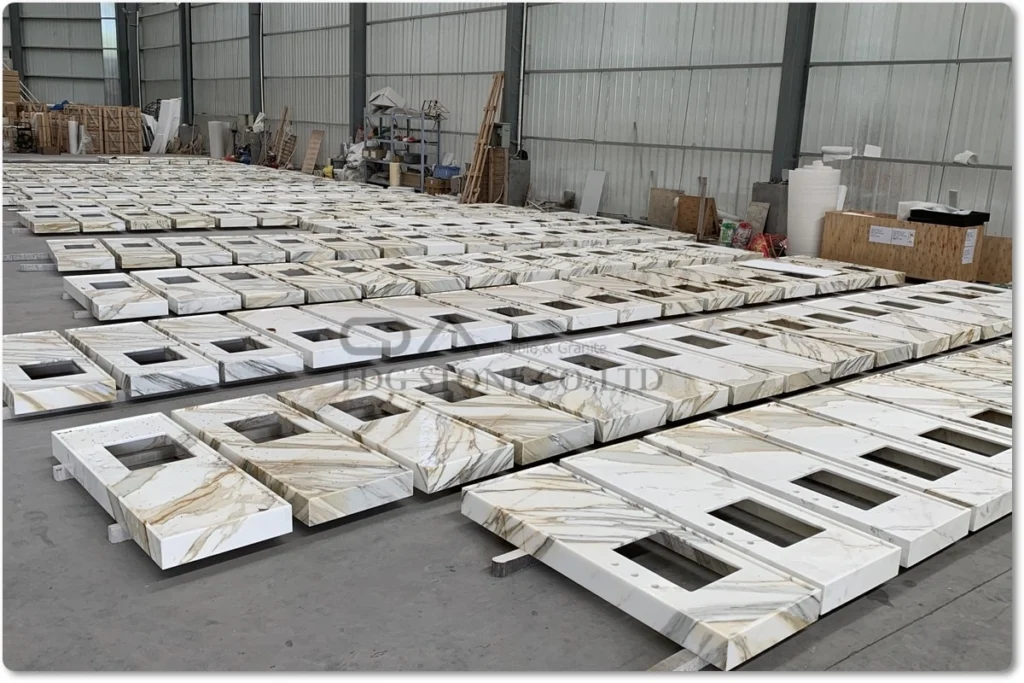
Quick Summary: OEM vs. ODM Marble Countertops
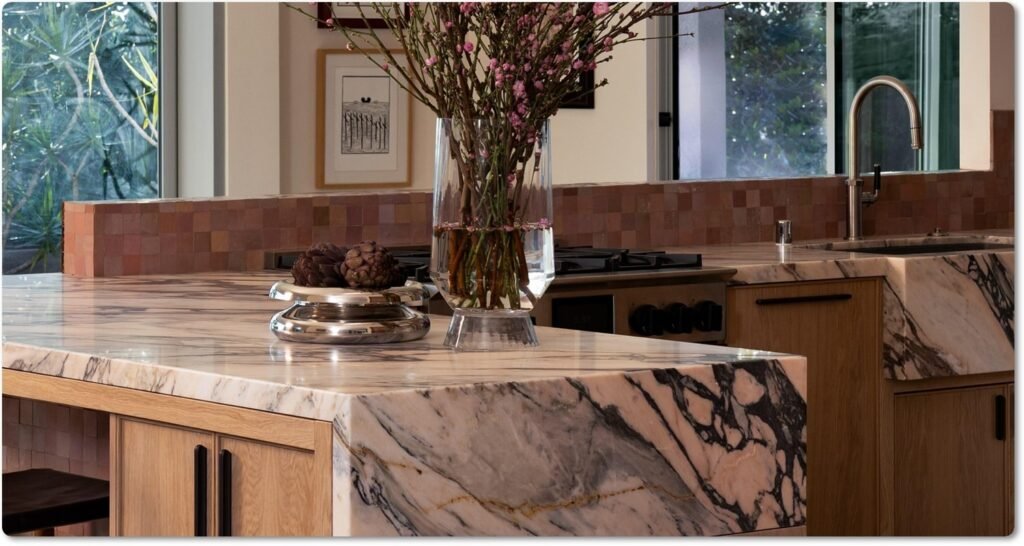
1. Executive Summary: Which Marble Countertops Manufacturing Model Should You Choose?
Choosing between Marble Countertops OEM and Marble Countertops ODM is an important sourcing decision for home furnishing brands, cabinet manufacturers, stone distributors, wholesalers, contractors, and commercial project procurement teams.
The right model depends on the buyer’s product development capabilities, design requirements, production volumes, technical documentation, and commercial objectives.
OEM is generally the more suitable starting point when the buyer already has a defined product design. The buyer supplies drawings, dimensions, specifications, or a complete technical package, and the manufacturer produces the countertops according to the approved requirements.
ODM is generally more suitable when the buyer wants the manufacturer to contribute to product development. The manufacturer may provide design concepts, recommend fabrication solutions, develop technical drawings, or adapt an existing product configuration. The specific development responsibilities must be agreed upon before work begins.
Neither model automatically includes private labeling, exclusive designs, trademark ownership, tooling ownership, exclusive supply rights, or confidentiality protections. Those matters require separate confirmation.
For buyers sourcing from a Marble Countertops Manufacturer, the most important questions are:
Can the factory interpret and manufacture from the buyer’s drawings?
Can it accommodate custom dimensions, thicknesses, edge profiles, and cutouts?
Can it document technical revisions and approved samples?
Can it reproduce agreed specifications across repeat orders?
Can it provide the required quality records, packaging specifications, and export documentation?
Does the proposed agreement clearly allocate design ownership, permitted use, and confidentiality obligations?
For many B2B projects, the most effective approach is a specification-led OEM process with clearly defined engineering support. Buyers retain control of the product requirements while the manufacturer contributes practical knowledge about stone selection, cutting, edge processing, fabrication constraints, and production feasibility.
For a genuinely new product, an ODM-style development process may be more appropriate.
This guide explains how to select, evaluate, and manage either model when sourcing natural marble countertops from a manufacturer or factory.
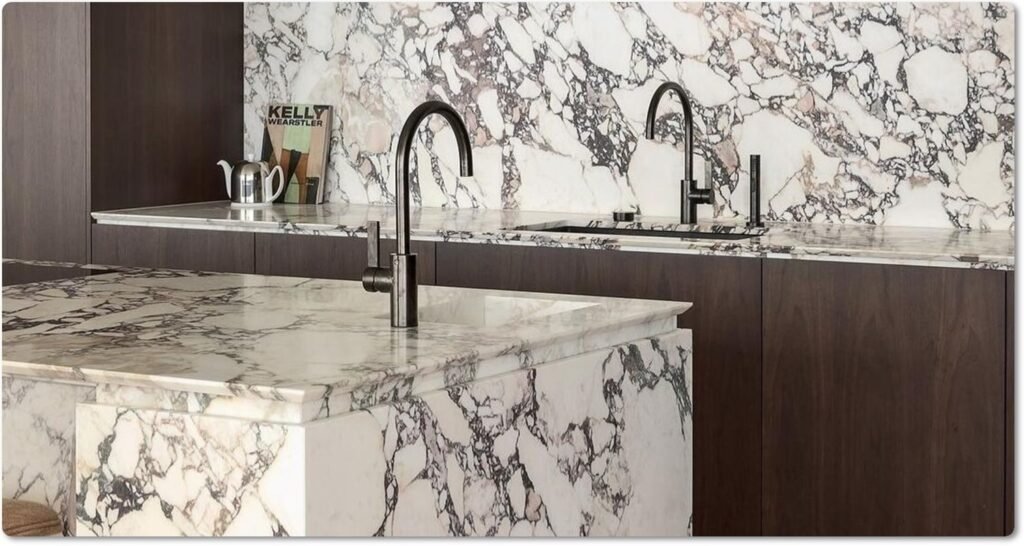
2. Scope and Definitions: Understanding OEM and ODM in Marble Countertops
2.1 What OEM Means in Marble Countertops Manufacturing?
OEM stands for Original Equipment Manufacturer. In countertop sourcing, the term commonly describes an arrangement in which a manufacturer produces goods according to specifications provided or approved by the customer.
For example, a cabinet brand may provide a technical package for a marble vanity top, including:
Overall length and width.
Finished thickness and any laminated edge details.
Edge profile and surface finish.
Basin dimensions and cutout coordinates.
Faucet-hole diameter and positioning.
Backsplash dimensions.
Permitted dimensional tolerances.
Stone selection and appearance requirements.
Inspection criteria and packaging instructions.
The Marble Countertops OEM factory reviews the package, confirms manufacturing feasibility, identifies unresolved questions, and produces the item according to the agreed specifications.
The manufacturer may still recommend changes where a drawing conflicts with stone properties, cutting limitations, support requirements, or practical fabrication methods. Such recommendations should be documented and approved rather than implemented silently.
OEM does not mean the buyer must perform every engineering task independently. It means the actual division of design, development, and manufacturing responsibilities must be defined.
2.2 What ODM Means for Countertop Product Development?
ODM stands for Original Design Manufacturer. In common B2B usage, it describes a manufacturer that contributes to the product’s design or development as well as its production.
A buyer might approach a Marble Countertops ODM Supplier with a commercial objective rather than a completed drawing.
For example:
We need a coordinated collection of marble vanity tops for a residential development, with several cabinet widths, consistent edge details, and two basin configurations.
The manufacturer may help translate this requirement into a workable product specification, propose configurations, develop drawings, and identify manufacturing constraints.
The resulting product could be based on a new design, an adaptation of an existing design, or a jointly developed specification. These possibilities have different implications for intellectual property, exclusivity, and future sourcing.
An ODM agreement should therefore identify:
Which party provides the original concept.
Which party develops the technical design.
Who pays for engineering and sampling.
Which drawings and deliverables will be provided.
Whether the design is exclusive or non-exclusive.
Which party owns the resulting intellectual property, where applicable.
Whether either party may reuse pre-existing designs, manufacturing methods, or technical knowledge.
A manufacturer that merely converts a buyer’s drawing into a production file should not automatically be assumed to provide full ODM product development.
2.3 OEM vs. ODM: A Practical Comparison
| Evaluation factor | OEM arrangement | ODM arrangement |
|---|---|---|
| Initial product concept | Usually supplied or defined by the buyer | Manufacturer contributes to or supplies the concept |
| Technical drawings | Usually supplied by the buyer, although factory revisions may be needed | May be developed or adapted with manufacturer involvement |
| Product development | Buyer-led or jointly managed | Greater manufacturer involvement in design development |
| Custom dimensions | Based on agreed specifications | Defined during development and approval |
| Edge profiles and cutouts | Specified by the buyer or approved in technical documents | May be proposed or refined by the manufacturer |
| Sample development | Checks conformity with the approved design | May include iterative development and design validation |
| Design ownership | Depends on ownership, licensing, and contractual terms | Depends on pre-existing rights and negotiated development terms |
| Private labeling | Separate service and agreement | Separate service and agreement |
| Exclusivity | Not automatic | Not automatic |
| Best suited to | Established designs and repeatable specifications | New concepts, product collections, or manufacturer-assisted development |
These descriptions reflect common commercial usage rather than universal legal definitions. The contract, purchase order, approved drawings, and actual division of responsibilities determine the scope of each project.
2.4 Which Products Are Covered by This Guide?
This guide focuses on natural marble countertops and related fabricated products, including:
Marble kitchen countertops and islands.
Marble vanity tops.
Bathroom countertops and backsplashes.
Custom cut-to-size marble surfaces.
Marble reception counters and commercial interior tops.
Project-specific countertop components.
Coordinated countertop collections for cabinet and furnishing brands.
Natural marble should not be treated as interchangeable with engineered quartz, porcelain slabs, granite, or quartzite. These materials have different properties and may require different fabrication procedures and acceptance criteria.
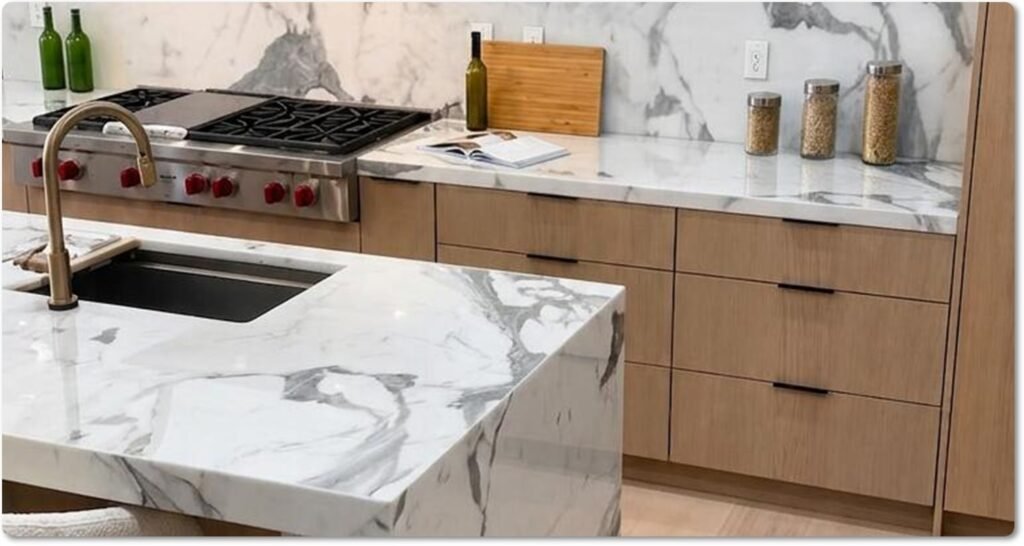
3. Technical Evaluation: Drawings, Dimensions, Materials, and Fabrication
3.1 Customer Drawings vs. Factory-Developed Designs
The distinction between customer-led OEM and manufacturer-assisted ODM becomes most visible during technical preparation.
Under an OEM arrangement, the buyer typically provides the intended finished geometry and performance requirements. The factory evaluates whether the design can be manufactured and identifies missing information.
Under an ODM arrangement, the manufacturer may help develop the geometry, establish dimensions, recommend edge details, or create alternative configurations before the design is approved for production.
Neither process should rely on informal verbal instructions alone.
What a Production Drawing Should Include?
A suitable countertop drawing package should identify, where applicable:
Overall dimensions and measurement units.
Finished thickness and thickness variations.
Edge profiles and any buildup or laminated edges.
Sink and faucet-hole locations.
Backsplash or upstand dimensions.
Cutout dimensions and corner radii.
Surface finish.
Material identification and appearance requirements.
Finished edges versus unfinished or concealed edges.
Tolerances and measurement methods.
Reference datums and orientation.
Part numbers, revision numbers, and approval status.
Complex projects may also require assembly details, installation clearances, support conditions, or coordination with cabinetry and plumbing components.
A drawing is not production-ready simply because it shows the overall length and width. Critical details must be sufficient for the factory to manufacture the intended product and for the buyer to verify conformity.
3.2 Custom Dimensions, Thicknesses, and Edge Profiles
Custom dimensions are a central requirement in Marble Countertops OEM manufacturing.
Cabinet brands, developers, distributors, and project contractors may require different sizes for standard product lines, individual properties, or large commercial installations.
Before production, buyers should confirm:
Whether dimensions refer to finished or nominal measurements.
Whether thickness is the actual stone thickness or the finished assembly thickness.
Whether an edge buildup is required.
Which edges are exposed, polished, eased, beveled, or otherwise profiled.
Whether the design includes miters, joints, or special corner treatments.
How dimensional tolerances will be measured.
Whether the proposed geometry is suitable for the selected stone and intended installation.
A nominal 40 mm countertop appearance, for example, may be achieved using a thicker stone section or a laminated edge detail, depending on the design. These are different fabrication solutions and should not be treated as identical.
Similarly, an edge profile that looks simple in a rendering may require additional machining, material, polishing, or manual finishing.
The buyer should approve the actual edge detail rather than relying solely on a product photograph.
3.3 Sink Cutouts, Faucet Holes, and Special Fabrication
Cutouts are among the most important technical details in countertop manufacturing because errors can affect installation, component compatibility, and the integrity of the finished stone.
A sink cutout specification should identify:
Sink model and manufacturer, where applicable.
Required opening dimensions.
Cutout coordinates relative to a defined datum.
Corner radii.
Mounting configuration.
Required edge treatment.
Faucet-hole count, diameter, and center positions.
Minimum clearances required by the approved design.
Any relevant support or reinforcement details.
For undermount sinks, the relationship between the cutout and the sink rim is particularly important. For vessel basins, the opening may be substantially different.
The buyer should provide the sink manufacturer’s technical drawing or an approved template when precise compatibility is required.
Special fabrication may include curved edges, mitered joints, integrated-looking profiles, unusual cutouts, or coordinated backsplash details. Feasibility depends on the material, geometry, equipment, and fabrication method.
The manufacturer should flag any unresolved structural or manufacturing concerns before production.
3.4 Material Selection and Quality Requirements
Natural marble varies in color, veining, mineral composition, and physical properties. Even within a commercially recognized material name, individual slabs may differ significantly in appearance.
A Marble Countertops Manufacturer should therefore receive more than a color name when appearance consistency is important.
The buyer should define:
Commercial material name and any available identification.
Acceptable color and veining range.
Reference slab photographs or approved physical samples.
Surface finish.
Known or permitted natural characteristics.
Treatment or repair disclosure requirements, where applicable.
Applicable material testing and acceptance requirements.
Whether slab selection or sequence matching is important.
For dimension marble, ASTM C503/C503M-23, Standard Specification for Marble Dimension Stone, provides a relevant technical reference covering material characteristics, physical requirements, and sampling for the applications within its scope. The specification addresses properties including absorption, density, compressive strength, modulus of rupture, abrasion resistance, and flexural strength.
However, a material specification is not a complete countertop fabrication or installation standard. Buyers must separately establish product dimensions, workmanship criteria, cutout requirements, finish expectations, and project-specific acceptance rules.
A buyer should also avoid assuming that a laboratory result for one stone sample guarantees identical performance for every slab in a later shipment.
3.5 Sample Development and First-Article Approval
Sample development is an important control point for both OEM and ODM projects.
For a straightforward OEM order, the sample may verify that the factory can reproduce the approved design and workmanship requirements.
For an ODM project, samples may be used to evaluate the concept, refine dimensions, compare edge treatments, or resolve manufacturing questions before the product specification is frozen.
A structured approval process can include:
Stage 1 — Material review: Confirm the stone selection and acceptable visual variation.
Stage 2 — Drawing review: Check dimensions, cutouts, edge profiles, and other technical details.
Stage 3 — First-article production: Manufacture a representative sample or first finished item.
Stage 4 — Inspection: Measure critical dimensions and review workmanship, finish, and appearance.
Stage 5 — Written approval: Record acceptance, outstanding changes, or rejection.
Stage 6 — Production release: Authorize batch production against the approved specification.
A first-article approval should identify the exact drawing revision and sample being approved. Where a physical sample is used as the reference, it should be labeled and retained or documented through sufficiently detailed records.
Approval of one sample does not remove the need for ongoing production inspection.
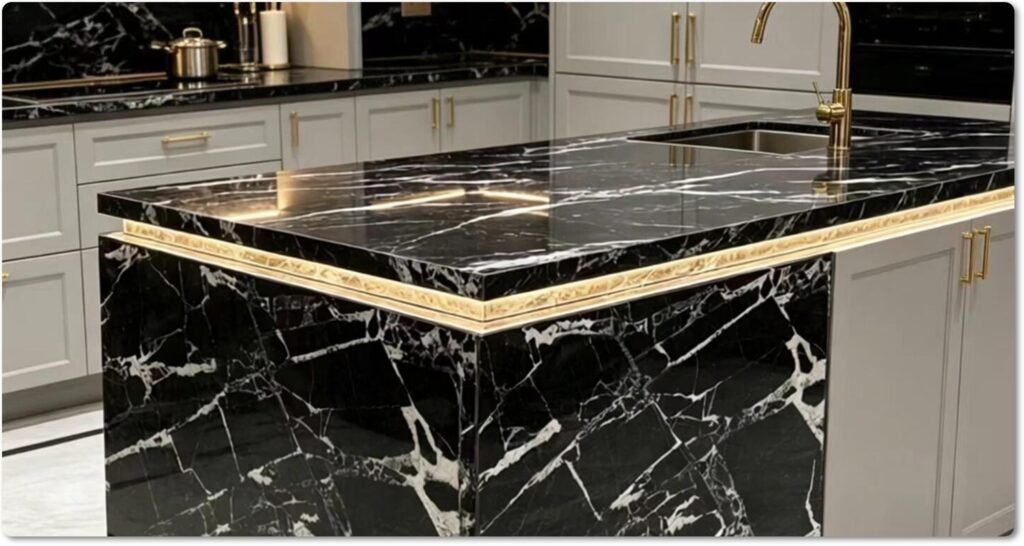
3.6 CAD Drawings and Technical Revision Control
CAD and technical drawing management are essential when the same countertop design will be manufactured repeatedly or supplied to multiple projects.
A controlled revision system helps prevent a common failure: the factory manufactures one version while the buyer or installation team works from another.
Each drawing should have:
A unique part number or drawing identifier.
A revision designation.
An issue date.
A description of changes.
Approval status.
A record of who approved the revision.
A clear indication of which revision supersedes earlier versions.
For example, a change to a sink location may require a new revision even if the countertop’s overall dimensions remain unchanged.
The manufacturer should not treat an email attachment, an unapproved screenshot, and a formally released production drawing as equivalent documents.
For multi-unit projects, buyers should also confirm how revisions are communicated to procurement, quality control, production, packing, and installation teams.
3.7 Private Labeling and Product Documentation
Private labeling is commercially different from OEM or ODM manufacturing.
A buyer may want the product sold under its own brand, but manufacturing a branded product requires a separate agreement covering the services actually available.
Potential requirements include:
Brand name and logo usage.
Product labels or identification marks.
Carton or crate labels.
Product codes and SKU systems.
Installation or care instructions.
Warranty documentation.
Inspection records.
Country-of-origin information.
Shipping and export documents.
These items should be negotiated individually.
A supplier should not be assumed to provide branded packaging, custom labels, exclusive product catalogs, or a particular documentation system merely because the transaction is described as OEM or ODM.
For EDG Stone, buyers should confirm the availability and commercial terms of any requested private-label service, dedicated packaging, or brand-specific documentation before these items are included in the purchase order.
Product identification and origin claims should also be accurate and consistent with the applicable rules in the destination market.
3.8 Intellectual Property and Confidentiality
Design ownership is a critical issue in manufacturer-assisted product development.
A project may involve several distinct categories of intellectual property or commercially sensitive information:
The buyer’s original design.
The manufacturer’s pre-existing designs.
Technical drawings and CAD files.
Product photographs and marketing materials.
Trademarks and logos.
New designs developed jointly.
Manufacturing methods and know-how.
Confidential commercial information.
These categories should not automatically be treated as one ownership package.
An agreement should specify which party owns each relevant design or file, which rights are licensed, whether the manufacturer may reuse general manufacturing knowledge, and whether a product design is exclusive to the buyer.
It should also establish how confidential drawings may be shared internally and with subcontractors, how long confidentiality obligations last, and what happens to files when the relationship ends.
If exclusivity is required, the contract should define its scope. For example, exclusivity may relate to a particular drawing, market, customer segment, product configuration, or period.
A statement such as “exclusive design” is not sufficiently precise without identifying what is exclusive and which rights are covered.
Legal protection varies by jurisdiction and by the nature of the design. Buyers developing commercially important products should obtain appropriate legal advice before relying on informal assurances.
4. Procurement Checklist: How to Prepare an OEM/ODM Marble Countertops Project?
A clear procurement process reduces the likelihood of inaccurate quotations, repeated drawing revisions, manufacturing delays, and disputes over acceptance.
4.1 Define the Commercial Objective
First, determine whether the project is primarily about reproducing a known design or developing a new product.
Choose an OEM-led process if the buyer already controls the essential specifications and wants a manufacturer to produce them.
Consider ODM if the buyer needs the factory to contribute meaningfully to the design or development process.
A hybrid arrangement is also possible. The buyer may define the overall concept and brand requirements while the factory develops fabrication details for approval.
The agreement should describe the actual work rather than rely on the label alone.
4.2 Prepare the Technical Package
Before requesting a quotation, assemble the available technical information.
| Required information | What the buyer should provide |
|---|---|
| Product type | Kitchen countertop, vanity top, island, or other component |
| Material | Marble type, color, reference images, or approved sample |
| Dimensions | Length, width, thickness, and dimensional tolerances |
| Edge details | Profile, exposed edges, miters, and any buildup |
| Cutouts | Sink model, opening dimensions, faucet-hole locations |
| Finish | Polished, honed, or another specified finish |
| Appearance | Color range, veining expectations, and acceptance references |
| Drawings | CAD or dimensioned technical drawings, with revision numbers |
| Quantity | Sample quantity, initial order, and anticipated repeat demand |
| Packaging | Protection, crate identification, and shipping requirements |
| Destination | Delivery country, city or port, and required delivery terms |
| Documentation | Inspection records, origin information, and other applicable documents |
| Branding | Any labeling or packaging requirements, subject to supplier confirmation |
Missing information should be identified explicitly in the quotation rather than replaced with unapproved assumptions.
4.3 Establish Approval and Change-Control Rules
Before production, agree on who approves material selection, drawings, samples, and final inspection.
Specify which changes require written approval and whether they affect cost or lead time.
For example, changing from a simple eased edge to a complex mitered edge may affect fabrication time and material consumption. Moving a sink cutout after the first article has been approved may require new machining and additional inspection.
The buyer should also define the approval deadline and the procedure for resolving conflicting instructions.
4.4 Confirm Quality and Acceptance Criteria
A purchase order should distinguish between acceptable natural variation and manufacturing defects.
For example, the buyer may accept a defined range of natural veining while requiring all cutouts to comply with the approved dimensions.
Inspection criteria should identify the measurement method, sample size or inspection scope, responsible party, and procedure for handling nonconforming products.
Where material testing is required, specify the relevant test method, applicable standard, sampling basis, and required evidence.
Avoid vague requirements such as “perfect quality” or “premium finish” without objective supporting criteria.
4.5 Review the Production and Delivery Plan
Confirm the planned sequence for:
Technical review.
Material selection.
Drawing approval.
Sample or first-article approval.
Production.
Quality inspection.
Packing.
Dispatch and transport documentation.
Lead time should be agreed against the actual scope and approval schedule. It may depend on material availability, development complexity, production capacity, and shipping arrangements.
A supplier quotation should clearly identify its assumptions and exclusions.
5. Cost and Risk Factors: What Changes the Price of OEM and ODM Countertops?
5.1 Main Cost Components
The total cost of an OEM or ODM countertop project can include:
Stone material and slab selection.
Cutting and material yield.
Edge profiling and polishing.
Sink and faucet cutouts.
Special shapes or complex machining.
CAD preparation and engineering.
Samples and first-article development.
Inspection and testing.
Private-label work, if agreed.
Protective packing and crating.
Inland transport and international freight.
Duties, taxes, insurance, and destination charges, as applicable.
ODM projects may involve additional design development, prototype work, or engineering iterations. OEM projects may also require substantial technical work when the buyer’s drawings are incomplete or difficult to manufacture.
Therefore, it is inaccurate to assume that every OEM order is inexpensive or that every ODM order is expensive.
The commercial impact depends on the actual scope, material, production quantity, complexity, and approval requirements.
5.2 How to Compare Quotations Fairly?
When comparing Marble Countertops OEM Factory quotations, make sure the suppliers are quoting the same product and service scope.
A lower quotation may exclude samples, special edge work, additional inspection, or particular packing requirements.
Ask each supplier to identify:
Included fabrication operations.
Material assumptions.
Engineering and sample charges.
Minimum order requirements, if any.
Estimated production lead time.
Packaging specifications.
Payment terms.
Delivery terms and exclusions.
The validity period of the quotation.
For wholesale and repeat-order programs, also examine whether the quotation explains how material selection, approved specifications, and repeat production will be managed.
5.3 Principal Risks and Mitigation Measures
| Risk | Potential consequence | Recommended control |
|---|---|---|
| Incomplete drawings | Incorrect dimensions or incompatible components | Complete technical review before production |
| Unapproved revisions | Mismatched production and installation documents | Formal revision control |
| Unclear stone selection | Disputes over natural variation | Approved material references and appearance criteria |
| Cutout errors | Installation problems or unusable parts | Verify component drawings and coordinates |
| Unclear sample approval | Disagreement about the production benchmark | Written, traceable approval |
| Unspecified design ownership | Commercial disputes or restricted future use | Written IP and licensing terms |
| Unverified branding services | Missing labels or nonconforming packaging | Confirm services in the quotation and contract |
| Unrealistic delivery expectations | Missed project milestones | Agreed production schedule and approval deadlines |
| Inadequate packing requirements | Transit damage | Define packing, handling, and inspection responsibilities |
5.4 Regulatory and Standards Considerations
The applicable requirements depend on the destination market, product category, intended use, and the parties’ legal roles.
For natural dimension marble, ASTM C503/C503M-23 is a relevant material specification where its scope is appropriate. It should not be presented as a universal legal requirement for every countertop order. Buyers should confirm the applicable project specifications and test requirements.
For products supplied into the European Union, Regulation (EU) 2023/988, the General Product Safety Regulation, has applied since 13 December 2024. Whether and how it applies to a particular countertop product depends on the product and its circumstances; buyers should verify the applicable obligations rather than assume every building material is governed identically.
Country-of-origin representations, labeling, import documentation, and contractual product claims should be checked against the rules applicable to the destination market.
The practical direction for B2B procurement is clearer documentation, more traceable approvals, and better-defined responsibilities—not simply the adoption of an OEM or ODM label.
6. Supplier Evaluation: How to Select a Marble Countertops Manufacturer?
A reliable supplier should demonstrate the ability to interpret the agreed specification, manufacture the product, document quality, and communicate problems before they become costly.
6.1 Evaluate Technical Capability
Ask the supplier to explain how it handles:
Custom cut-to-size fabrication.
Edge profiling and polishing.
Sink and faucet cutouts.
Material identification and selection.
Drawing review and revision control.
Sample approval.
Final dimensional inspection.
Packing and shipping preparation.
Where appropriate, request representative project records or anonymized examples that demonstrate relevant capability.
Do not infer capability solely from a product photograph or a general statement that the company offers custom fabrication.
6.2 Evaluate Production Consistency
For repeat orders, assess how the supplier maintains the approved specification.
Ask how it identifies materials, controls drawing revisions, records inspection results, and handles nonconforming items.
For natural stone, consistency does not necessarily mean identical veining in every piece. It means that the agreed appearance range, workmanship, dimensions, and product requirements are managed through a defined process.
6.3 Evaluate Commercial Transparency
A professional Marble Countertops Supplier should be able to explain what is included in the quotation and identify outstanding information.
Useful evidence may include:
A detailed quotation.
A drawing review or clarification list.
A documented sample process.
A proposed production schedule.
Quality inspection criteria.
Packaging details.
Relevant company and export documentation.
Clear contractual terms for design rights, confidentiality, and approved changes.
The buyer should verify any requested service, certification, or exclusive arrangement rather than relying on assumptions.
6.4 Where EDG Stone Fits into the Sourcing Process?
EDG Stone can be approached for discussions about custom marble countertops, cut-to-size fabrication, edge processing, sink cutouts, and project drawing coordination.
For a buyer with a defined product, the starting point is to provide the drawings and specifications needed for a manufacturing feasibility review.
For a buyer still developing a product, the initial discussion should identify which design or technical development tasks are required and confirm which of those tasks EDG Stone can undertake for the specific project.
Private labeling, exclusive packaging, design ownership arrangements, and other brand-specific services should be confirmed individually before they are included in the commercial scope.
This approach gives buyers a practical basis for evaluating whether the proposed manufacturing relationship matches their actual requirements.
7. Practical RFQ Template: Marble Countertops OEM/ODM
Use the following template when contacting a prospective factory or manufacturer.
7.1 Copy-and-Use RFQ Form
Subject: RFQ — OEM/ODM Custom Marble Countertops
1. Company Information
Company name:
Contact person:
Business type: Brand / Cabinet Manufacturer / Distributor / Wholesaler / Contractor / Other
Destination market:
Website, if applicable:
2. Project Type
OEM: Manufacturing based on buyer-provided specifications.
ODM: Manufacturer-assisted design or product development.
Hybrid: Buyer concept with manufacturer-assisted technical development.
Project description:
3. Product Requirements
Product type: Kitchen Countertop / Island / Vanity Top / Other
Marble type or commercial material name:
Preferred color and appearance:
Surface finish:
Finished dimensions:
Thickness:
Edge profile:
Sink configuration:
Faucet-hole requirements:
Backsplash or upstand:
Special fabrication requirements:
4. Technical Documents
CAD drawings attached: Yes / No
Dimensioned drawings attached: Yes / No
Sink or fixture drawings attached: Yes / No
Reference photographs attached: Yes / No
Drawing revision:
Technical questions requiring clarification:
5. Quantity and Commercial Scope
Sample quantity:
Initial order quantity:
Expected repeat-order quantity, if known:
Requested quotation basis:
Destination port or delivery location:
Requested delivery terms:
Target delivery date:
6. Quality and Approval
Required dimensional tolerances:
Material appearance criteria:
Inspection requirements:
Sample approval required: Yes / No
Required inspection records:
Packaging and protection requirements:
7. Branding and Intellectual Property
Private labeling required: Yes / No / To be discussed
Custom packaging required: Yes / No / To be discussed
Design development required: Yes / No
Exclusivity requested: Yes / No
Confidentiality agreement required: Yes / No
Proposed design ownership or licensing terms:
8. Requested Supplier Response
Please provide:
Manufacturing feasibility assessment.
List of missing or unclear specifications.
Itemized quotation and exclusions.
Sample or first-article requirements.
Estimated production lead time and assumptions.
Proposed quality inspection process.
Packaging proposal.
Confirmation of which requested OEM/ODM and branding services are available.
Proposed process for drawing revisions and written approvals.
7.2 What Should Happen After the RFQ?
A useful supplier response should do more than provide a unit price.
The next step is a technical clarification process in which the buyer and manufacturer confirm the material, geometry, fabrication details, commercial scope, and approval responsibilities.
Once the specification is sufficiently complete, the supplier can issue a more meaningful quotation and production plan.
If the project involves ODM development, the parties should separately agree on development deliverables, sample iterations, fees, and ownership or licensing arrangements before significant development work begins.
The goal is to turn the initial inquiry into a controlled manufacturing specification that can be quoted, approved, produced, inspected, and repeated.
8. Frequently Asked Questions: Marble Countertops OEM vs. ODM
Q1. What is the difference between Marble Countertops OEM and ODM?
OEM generally means manufacturing according to the buyer’s design, drawings, or defined specifications. ODM generally means the manufacturer contributes to the product’s design or development as well as production. The exact scope depends on the agreement between the parties.
Q2. Can I order custom marble countertops from an OEM factory?
Yes, subject to the factory’s capabilities and the agreed manufacturing scope. Customization may include dimensions, thicknesses, edge profiles, sink cutouts, faucet holes, and other fabrication details. Buyers should provide complete drawings or confirm how missing technical information will be resolved.
Q3. Does ODM automatically mean the manufacturer designs an exclusive product for my brand?
No. ODM does not automatically grant exclusivity or transfer intellectual property ownership. Buyers should define the design deliverables, ownership or licensing rights, permitted reuse, confidentiality obligations, and any exclusivity requirements in writing.
Q4. Can a Marble Countertops Manufacturer provide private labeling and custom packaging?
Some manufacturers may offer these services, but availability varies. OEM or ODM status alone does not establish that private labeling, branded packaging, or product-specific documentation is included. Confirm the exact services, costs, artwork approvals, and responsibilities before placing the order.
Q5. What information should I send to a Marble Countertops OEM/ODM factory for a quotation?
Provide the product type, marble selection, dimensions, thickness, edge profiles, sink and faucet cutouts, finish, quantity, drawings, quality requirements, packaging needs, and delivery destination. If design development or private labeling is required, state that explicitly and ask the supplier to confirm its capabilities and commercial terms.
9. References: Standards, Regulations, and Technical Resources
The following sources provide a starting point for verifying material requirements and relevant regulatory obligations. Buyers should check the current official edition and applicability to their specific project.
ASTM International — ASTM C503/C503M-23, Standard Specification for Marble Dimension Stone. Relevant to material characteristics, physical requirements, and sampling within the standard’s scope.
ASTM International — Committee C18, Dimension Stone. A technical reference for standards relating to dimension stone materials and applications.
European Union — Regulation (EU) 2023/988, General Product Safety Regulation. Applicable since 13 December 2024; assess the specific product and the obligations of the relevant economic operators.
European Union — EUR-Lex, General Product Safety Regulation summary. An official overview of the regulation’s scope and application.
Project-specific technical drawings, approved samples, purchase orders, and manufacturing agreements. These documents establish the agreed product configuration, acceptance criteria, commercial scope, and responsibilities for an individual transaction.
10. EDG Stone CTA: Submit Your OEM/ODM Marble Countertops Specifications
Turn Your Countertop Concept into a Manufacturing Brief
Whether you are a home furnishing brand, cabinet manufacturer, stone distributor, wholesaler, or commercial project buyer, a well-prepared specification is the first step toward an efficient custom manufacturing process.
EDG Stone welcomes inquiries concerning custom marble countertops, cut-to-size fabrication, edge processing, sink cutouts, and project drawing coordination.
To help evaluate your requirements, please provide:
Product type and intended application.
Marble selection or preferred material references.
Dimensions, thickness, and edge details.
Sink and faucet cutout requirements.
CAD drawings or dimensioned sketches.
Initial quantity and expected repeat demand, if known.
Destination market and requested delivery terms.
Any design development, labeling, or packaging requirements that need confirmation.
For OEM inquiries, identify the approved drawings and specifications you want manufactured.
For ODM or hybrid inquiries, explain the product concept and identify which design or technical development tasks you need the manufacturer to undertake.
Submit Your OEM/ODM Marble Countertops Specifications to begin a project-specific discussion about manufacturing feasibility, technical requirements, and quotation scope.
A clear specification helps both parties establish realistic expectations before sampling and production begin.
Marble Countertops OEM vs. ODM: Manufacturing Insights for B2B Buyers
What Defines a Successful OEM or ODM Marble Countertops Project?
A successful marble countertops manufacturing project aligns product design, material selection, fabrication requirements, quality acceptance, commercial terms, and intellectual property arrangements before production begins. OEM is generally appropriate when the buyer provides the design or defined specifications. ODM is generally appropriate when the manufacturer contributes to product design or development. In both cases, the actual scope must be established in a written agreement.
Why Does the Manufacturing Model Matter?
The choice affects how product requirements are developed, who prepares technical documentation, how samples are approved, and which responsibilities each party assumes. A clearly defined OEM arrangement can support repeatable manufacturing of established countertop designs. An ODM arrangement can help buyers develop new countertop configurations or product collections with manufacturing input. Neither model automatically guarantees exclusivity, private labeling, ownership of technical drawings, or a particular level of quality.
How Should Buyers Select a Marble Countertops Factory?
Buyers should assess the factory’s ability to review drawings, fabricate custom dimensions, process edge profiles, produce sink and faucet cutouts, control revisions, inspect finished products, and prepare suitable export packaging. They should also evaluate material traceability, appearance acceptance criteria, communication, production planning, and the supplier’s ability to document approved changes. Supplier selection should be based on verifiable capabilities and the requirements of the actual project rather than on the OEM or ODM label alone.
Which Manufacturing Option Fits Different Business Models?
- Cabinet brands: OEM can suit established cabinet-compatible countertop specifications; ODM may be useful when developing new configurations.
- Stone distributors and wholesalers: OEM can support repeatable product specifications, while manufacturer-assisted development may help create differentiated collections.
- Interior furnishing brands: ODM may be appropriate when product development is required, subject to agreed design rights and commercial terms.
- Commercial project buyers: A specification-led OEM process can help coordinate dimensions, cutouts, finishes, inspection, and delivery requirements.
- Importers and private-label businesses: Either model may be suitable, provided labeling, packaging, documentation, and intellectual property arrangements are separately confirmed.
What Technical Considerations Should Never Be Overlooked?
Natural marble is a variable material, so material identification and appearance acceptance must be considered alongside dimensional accuracy and workmanship. Production drawings should define dimensions, thickness, edge details, cutout locations, tolerances, and revision status. Sample approval should establish a documented reference for the agreed requirements. Applicable material standards, project specifications, and destination-market regulations should be evaluated according to their respective scopes.
How Can Buyers Reduce Procurement Risk?
The most effective approach is to prepare a complete RFQ, obtain a written feasibility review, approve controlled drawings, document sample acceptance, and establish inspection and packaging requirements before production. Buyers should compare quotations on an equivalent scope and agree on how design ownership, confidentiality, revisions, delays, and nonconforming products will be handled.
What Is the Strategic Opportunity for Marble Countertops OEM and ODM?
For B2B businesses, custom manufacturing is not simply a way to purchase a stone surface. It is a process for translating market requirements into a defined, manufacturable, and commercially repeatable product. Buyers with established designs can prioritize specification control and production consistency. Buyers developing new collections can prioritize engineering collaboration, prototype approval, and clear development agreements. The most suitable Marble Countertops Manufacturer is the supplier whose verified capabilities, communication, and contractual commitments match the project’s actual needs.
Procurement conclusion: Define the product, clarify the division of design responsibilities, approve the technical specification, and document the commercial agreement before production. For project-specific requirements, submit your drawings, material references, dimensions, quantities, and delivery destination to EDG Stone for an initial manufacturing discussion.