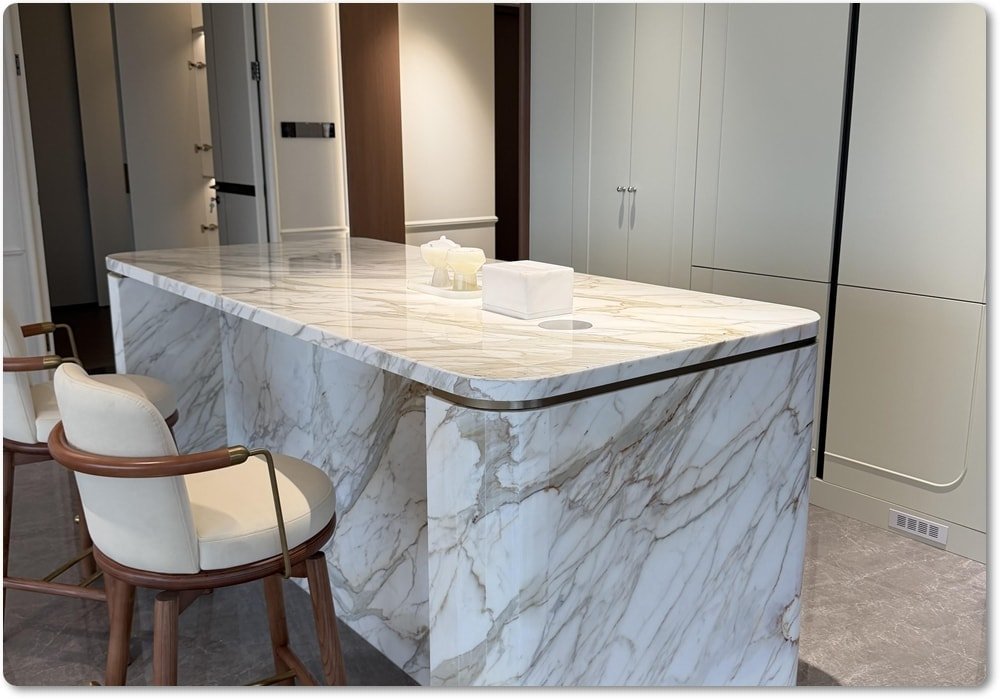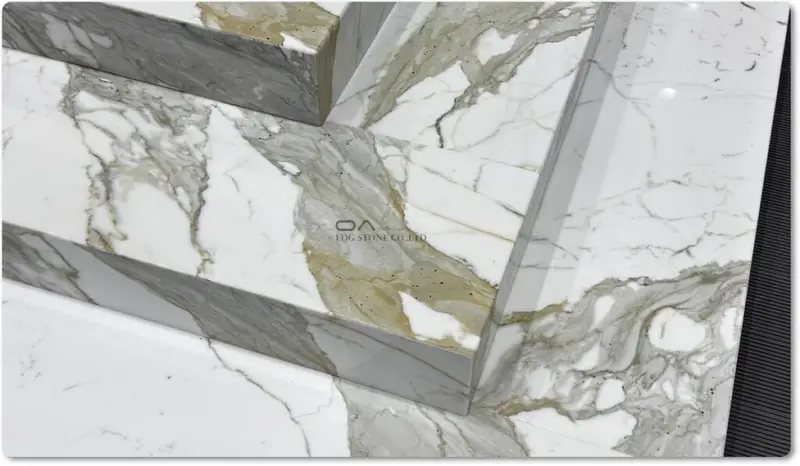
Quick Expert Summary: Thermal Shock Risks in Marble, Granite, and Quartz Countertops
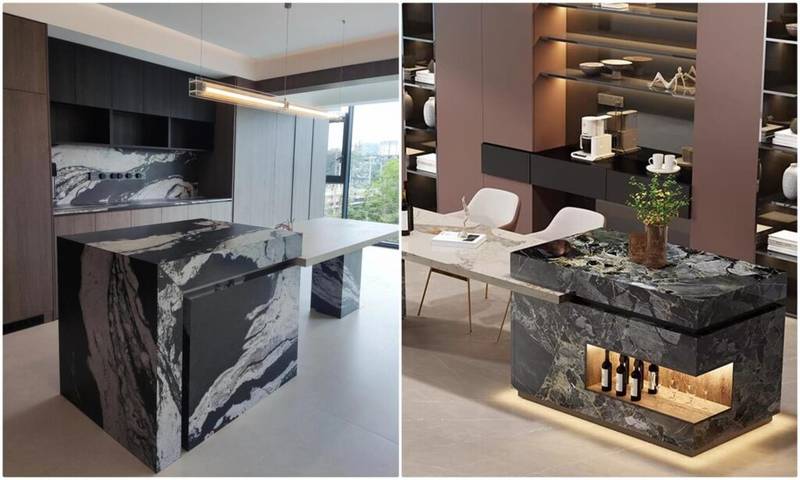
Introduction: Why Thermal Shock Is an Overlooked Risk for Stone Countertops?
Stone countertops are widely valued for durability, aesthetics, and natural luxury. Materials such as marble, granite countertops, and engineered quartz surfaces dominate kitchens, bathrooms, fireplaces, and commercial interiors worldwide. However, despite their strong appearance, these materials remain susceptible to a phenomenon known as thermal shock.
Thermal shock happens when a material experiences a rapid temperature change. This sudden shift causes uneven expansion and contraction within the stone’s internal structure. When the stress becomes greater than the material’s tensile strength, cracking or surface damage may occur.
Many homeowners and designers ask common questions:
Is marble heat-resistant for fireplace surrounds?
Does marble crack with heat?
Can you put hot things on granite?
Can granite withstand heat in kitchens?
Is quartz heat-resistant enough for cookware?
Can you put a hot pan on quartz countertops?
Understanding how thermal shock affects different countertop materials helps homeowners, architects, and builders make informed design and purchasing decisions.
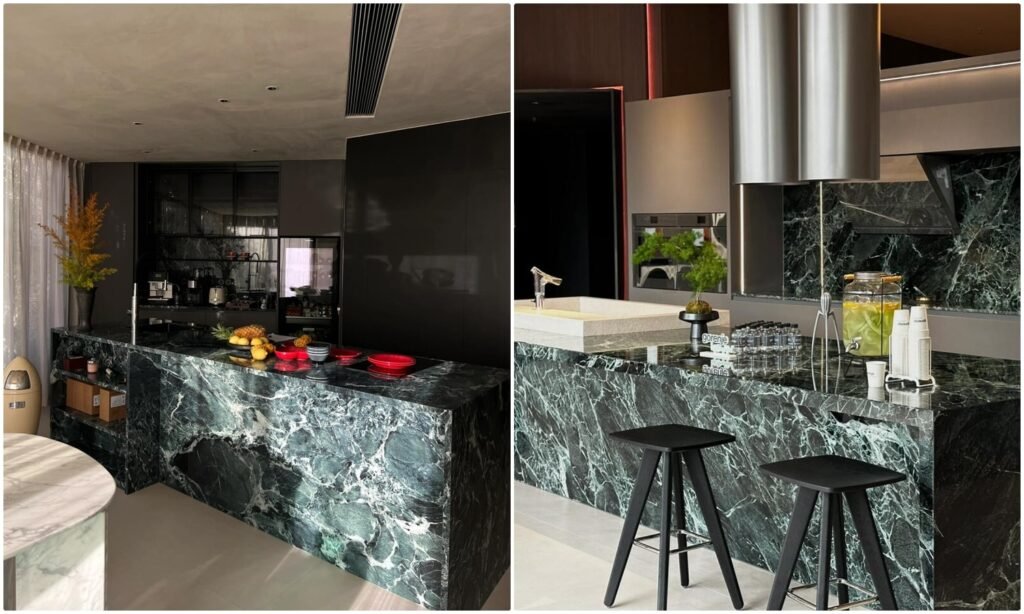
Understanding the Science of Thermal Shock in Natural Stone
What Is Thermal Shock?
Thermal shock refers to structural stress caused by rapid temperature change within a material. When a hot object touches a cold surface, the surface layer expands faster than the underlying material.
This difference creates tension between layers.
If the stress exceeds the stone’s tolerance, the material may experience:
Surface cracks
Internal fractures
Discoloration
Permanent weakening
Even strong natural stones can experience these stresses if exposed to rapid heating or cooling.
Why Temperature Changes Affect Stone?
Stone materials are composed of mineral crystals that expand when heated. However, each mineral expands at a different rate.
For example:
Quartz minerals expand differently from feldspar.
Calcite crystals in marble react strongly to temperature.
Resin binders in engineered quartz soften at high heat.
These structural differences explain why some countertops perform better under heat exposure.
Repeated Heating Is More Dangerous Than Single Heat Exposure?
Interestingly, many cracks do not occur during a single heat event. Instead, damage often accumulates over time through repeated cycles of heating and cooling.
Common household activities that create thermal stress include:
Placing hot cookware directly on the countertop
Pouring boiling water on a cold surface
Rapid cooling after exposure to heat
Prolonged heat exposure near fireplaces
These repeated cycles slowly weaken the stone until visible damage appears.
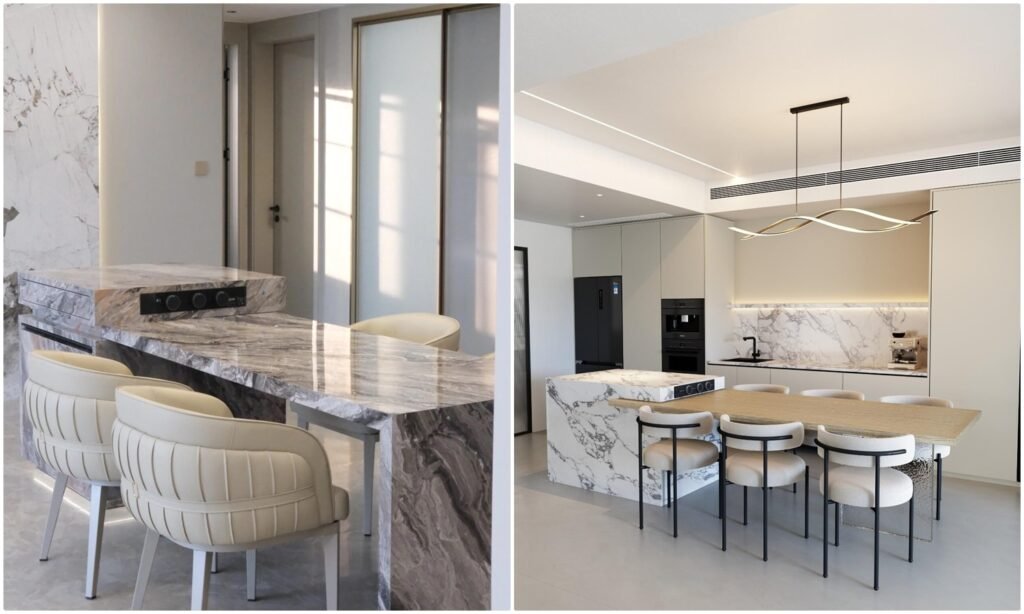
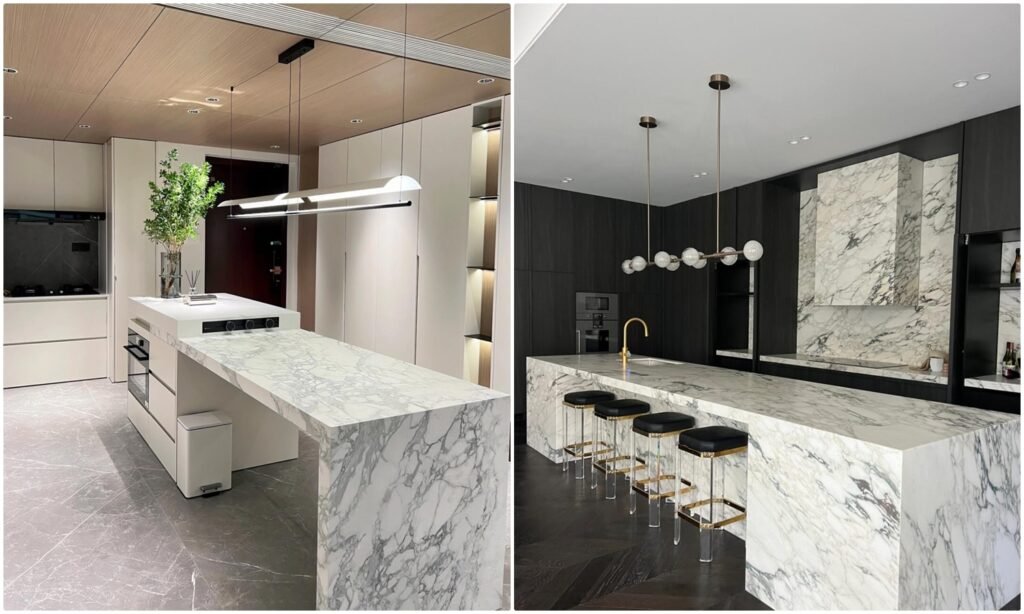
Marble Countertops and Heat: Beauty With Sensitivity
Mineral Composition of Marble
Marble is primarily composed of calcite, a mineral that forms under intense geological pressure. While calcite provides marble with its distinctive elegance and soft veining, it also makes the material more sensitive to temperature changes.
Compared with granite countertops, marble has:
Higher porosity
Lower hardness
Greater sensitivity to acids and heat
Does Marble Crack With Heat?
Yes, marble can crack with heat under certain conditions. However, the issue is usually not simple heat exposure but rapid temperature change.
For example:
Placing a hot cast-iron skillet directly on a cold marble surface can cause localized expansion. This creates stress points that may develop into micro-fractures.
Over time, these fractures may expand and become visible cracks.
Is Marble Heat-Resistant for Fireplace Applications?
Marble is often used for fireplaces because it can tolerate moderate radiant heat. However, it is not designed for direct flame or extreme heat fluctuations.
Fireplace marble surrounds may show:
Surface discoloration
Thermal expansion lines
Hairline cracks
Proper installation with heat barriers and ventilation significantly reduces these risks.
Typical Heat Damage in Marble
Common signs of thermal damage include:
Surface dulling
White heat marks
Fine cracks
Color variation
These issues usually develop slowly and may not be visible immediately after heat exposure.
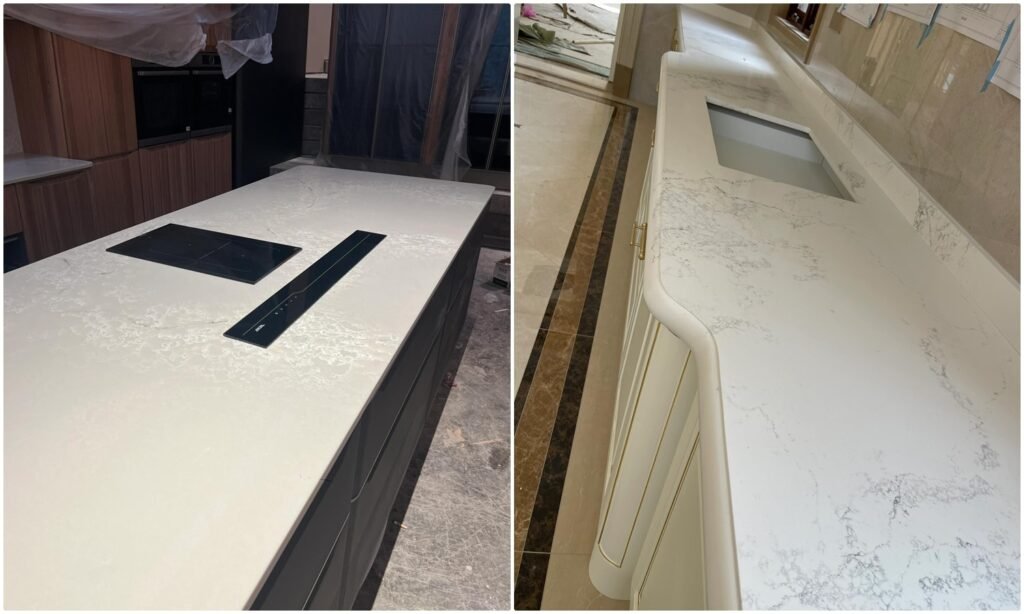
Granite Countertops: Superior Heat Resistance but Not Indestructible
Why Granite Is More Heat Resistant?
Granite countertops are composed primarily of quartz, feldspar, and mica crystals. These minerals form under extremely high geological temperatures, making granite one of the most heat-tolerant natural stones.
Granite surfaces can generally tolerate temperatures between 300°C and 400°C without immediate damage.
Does Granite Crack With Heat?
Although granite is heat-resistant, it can still crack under extreme thermal shock.
Possible causes include:
Rapid cooling after intense heat
Structural weakness from natural fissures
Improper installation or support
Granite cracks are rare but can occur when stress concentrates around weak points in the stone.
Can You Put Hot Things on Granite?
Yes, in many cases, granite countertops can handle hot cookware. However, experts still recommend using trivets or heat pads.
Why?
Prolonged heat exposure can weaken sealants and adhesives beneath the slab.
Over time, this may lead to:
Sealer degradation
Minor surface expansion
Reduced long-term durability
Can Granite Withstand Heat in Kitchens?
Granite is one of the best materials for heat resistance in kitchens. It performs better than most engineered surfaces and remains stable under typical cooking temperatures.
However, professional fabricators still advise avoiding extreme temperature changes.
Quartz Countertops and Heat Sensitivity
Is Quartz Heat-Resistant?
Engineered quartz surfaces contain approximately 90–95% crushed quartz combined with polymer resins and pigments.
While quartz crystals themselves are heat-resistant, the resin binders are not.
Most quartz manufacturers recommend avoiding temperatures above 150°C.
Can You Put a Hot Pan on Quartz Countertops?
No, placing hot pans directly on quartz countertops is not recommended.
Excess heat can cause:
Resin discoloration
Surface warping
Permanent burn marks
Structural weakening
These changes are often irreversible.
Why is Quartz More Vulnerable to Heat?
Unlike natural stone, engineered quartz relies on polymer binders to hold particles together.
At high temperatures, these resins can:
Soften
Expand
Change color
This explains why quartz surfaces sometimes develop yellow or brown heat marks.
Comparing Marble, Granite, and Quartz Heat Performance
Heat Resistance Comparison
| Material | Heat Resistance | Thermal Shock Risk |
|---|---|---|
| Marble | Moderate | Moderate to High |
| Granite | High | Low |
| Quartz | Low to Moderate | High |
Granite countertops remain the most heat-resistant option among the three.
Maintenance Differences
Granite requires occasional sealing but handles heat well.
Marble requires careful maintenance because of its sensitivity.
Quartz requires minimal maintenance but must be protected from high heat.
Best Applications for Each Material
Granite works best in kitchens with heavy cooking.
Marble suits decorative areas, luxury bathrooms, and fireplaces.
Quartz works well in modern kitchens where heat protection practices are followed.
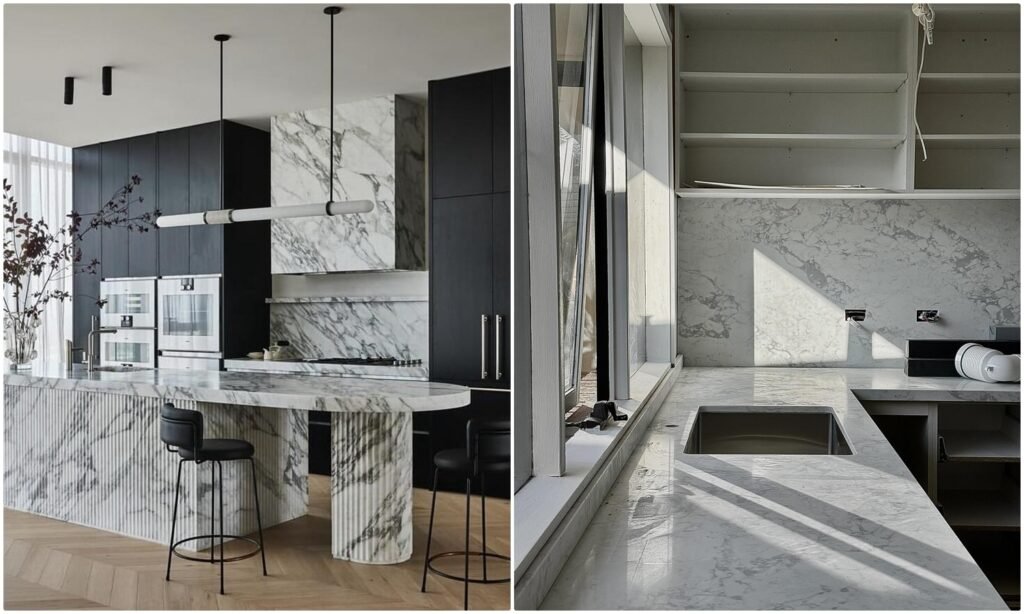
Real-World Scenarios That Cause Thermal Shock
Kitchen Cooking Activities
Common kitchen behaviors create thermal stress:
Placing hot pans directly on countertops
Moving cookware from the stove to the stone surface
Pouring boiling liquids
These actions generate rapid temperature changes.
Fireplace Installations
Marble fireplace surrounds are common in luxury homes.
However, designers must ensure:
Proper ventilation
Heat-resistant backing
Distance from direct flame
These factors prevent thermal cracking.
Commercial and Hospitality Use
Restaurants, hotels, and cafés often use stone countertops.
High-frequency heat exposure in these spaces increases the risk of thermal damage.
Proper material selection is essential for durability.
Preventive Measures to Reduce Thermal Shock Damage
Use Heat Protection Accessories
Always place hot cookware on:
Trivets
Heat pads
Silicone mats
These simple tools significantly reduce temperature stress.
Avoid Rapid Temperature Changes
Never expose cold stone surfaces to extreme heat.
Allow cookware to cool slightly before placing it on countertops.
Install Countertops Correctly
Proper installation plays a major role in heat performance.
Professional fabricators ensure:
Adequate support
Expansion gaps
Reinforced cutouts
These details prevent stress concentration.
Maintain Protective Sealants
For natural stone, sealing helps protect the surface and reduce heat absorption.
Regular maintenance extends countertop lifespan.
Selecting the Right Stone Countertop Supplier
Choosing a reliable manufacturer is just as important as selecting the stone type.
Professional suppliers such as EDG Stone emphasize:
Consistent stone quality
Advanced fabrication technology
Precision cutting
International export standards
Durable slab selection
For large projects, working directly with a stone manufacturer, factory, or wholesale supplier can ensure better quality control and pricing.
FAQ – Popular Google Search Questions
What is thermal shock in stone countertops?
Thermal shock occurs when stone surfaces undergo rapid temperature changes, causing uneven expansion and contraction. This stress may lead to cracks, discoloration, or structural damage over time. Materials like marble, granite, and quartz all react differently depending on their mineral composition and structure.
Does marble crack with heat?
Marble can crack when exposed to rapid temperature changes. Directly placing extremely hot cookware on a cold marble surface may create internal stress that results in micro-fractures. While marble tolerates moderate heat, it is safer to use protective pads to avoid thermal shock.
Can you put hot things on granite countertops?
Granite countertops are generally heat-resistant and can tolerate high temperatures. However, placing extremely hot cookware directly on the surface may still cause thermal shock or weaken protective sealants. Using trivets or heat pads is recommended to maintain long-term durability.
Is quartz heat-resistant?
Quartz countertops have moderate heat resistance but are more sensitive than natural stone. The polymer resins used in engineered quartz may discolor or warp under high temperatures. For this reason, hot cookware should not be placed directly on quartz surfaces.
Can you put hot pans on quartz countertops?
Placing hot pans directly on quartz countertops is not recommended. High heat can damage the resin binders inside the material and cause permanent burn marks or discoloration. Always use heat protection accessories to prevent damage.
Optimized Semantic Insight Block (SGE-Style)
What Does Thermal Shock Mean for Stone Countertops?
Thermal shock represents one of the most overlooked risks affecting natural and engineered stone surfaces. While stone appears extremely durable, sudden temperature fluctuations can generate internal stress that weakens its structural integrity. Understanding this behavior helps designers and homeowners choose materials more intelligently.
Why Do Different Stones React Differently to Heat?
Each stone type contains unique mineral compositions and structural properties. Granite forms under intense heat and pressure deep in the earth, making it naturally resistant to temperature. Marble contains calcite crystals that expand more easily, while quartz surfaces rely on polymer resins that degrade under heat. These material differences determine how each surface performs in real environments.
How Can Homeowners Prevent Heat Damage?
Preventing thermal damage is largely about temperature management. Using heat pads, avoiding direct cookware contact, and allowing items to cool slightly before placing them on countertops significantly reduces risk. Proper installation and high-quality stone fabrication also play essential roles in maintaining long-term durability.
What Countertop Material Is Best for Heat Exposure?
Granite countertops generally offer the best balance of heat resistance and durability. Marble provides timeless luxury but requires careful handling, while quartz delivers design flexibility with moderate heat tolerance. The optimal material depends on the kitchen environment, cooking habits, and design priorities.
Key Considerations for Buyers and Designers
When selecting countertops, buyers should consider not only aesthetics but also material performance. Working with reliable stone manufacturers, factory suppliers, and wholesale distributors ensures better quality control. Companies such as EDG Stone focus on consistent slab quality, advanced fabrication, and global export standards that support long-lasting installations.
Reference
U.S. Geological Survey – “Mineral Composition and Properties of Granite and Marble”
National Kitchen & Bath Association – “Kitchen Surface Material Performance Report”
International Association of Certified Home Inspectors – “Stone Countertop Heat Resistance Guide”
Building Stone Institute – “Thermal Behavior of Natural Stone in Architectural Applications”
Engineered Stone Manufacturers Association – “Quartz Surface Performance Characteristics”
Architectural Digest Materials Research – “Heat Resistance in Kitchen Countertop Materials”