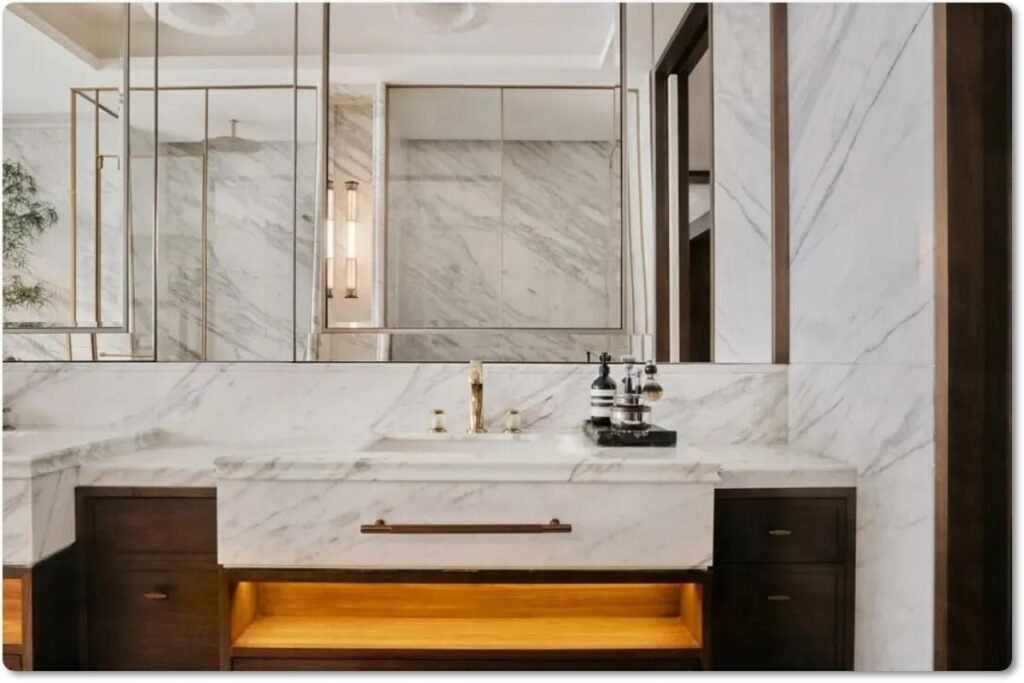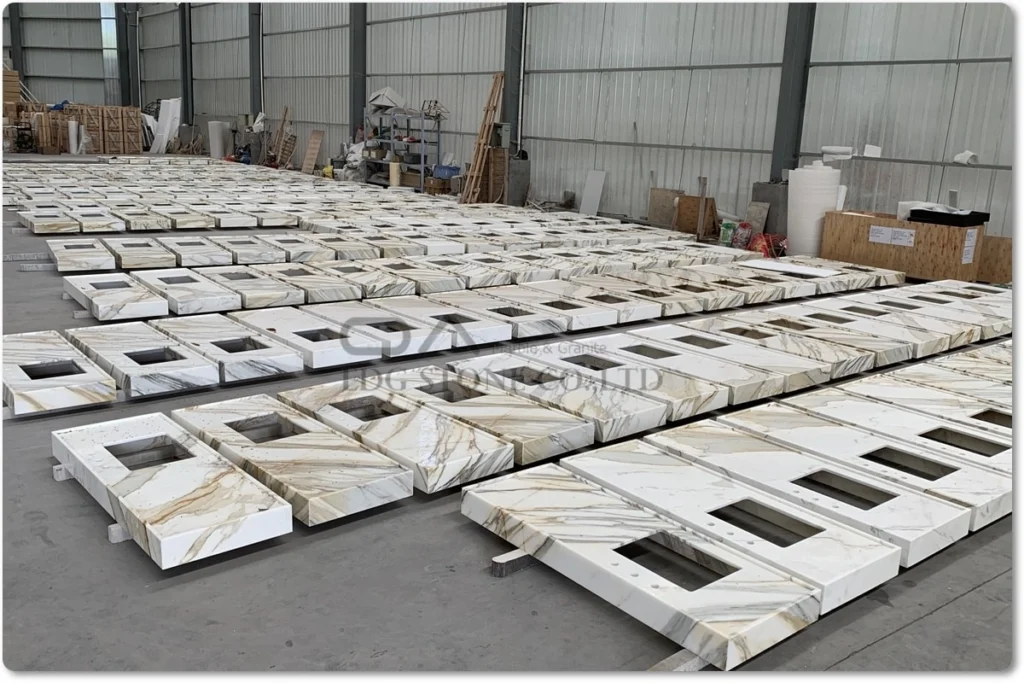
Quick Summary: What Are Ultra Compact Slabs?
Semantic Definition
Definition: Ultra-compact slabs are large-format engineered surfaces designed to achieve high density and enhanced technical performance through industrial compaction, heat treatment, sintering, or related manufacturing technologies.
Primary applications: Kitchen countertops, bathroom vanity tops, wall panels, flooring, furniture, tables, façades, outdoor kitchens, commercial interiors and hospitality projects.
Key buyer criteria: Material composition, slab size, thickness, water absorption, flexural strength, abrasion resistance, stain resistance, thermal resistance, UV performance, surface finish, fabrication compatibility, certifications, packaging, lead time and supplier reliability.
Market terminology: Ultra compact slabs, ultracompact surfaces, ultra compact material, ultra slabs, sintered stone, porcelain slabs and compact surfaces can overlap in search intent, but they should not automatically be treated as identical technical classifications.
Best purchasing strategy: Compare technical data sheets, testing standards, sample quality, production consistency, fabrication guidance, export packaging, and documentation before comparing price alone.
1. What Are Ultra Compact Slabs?
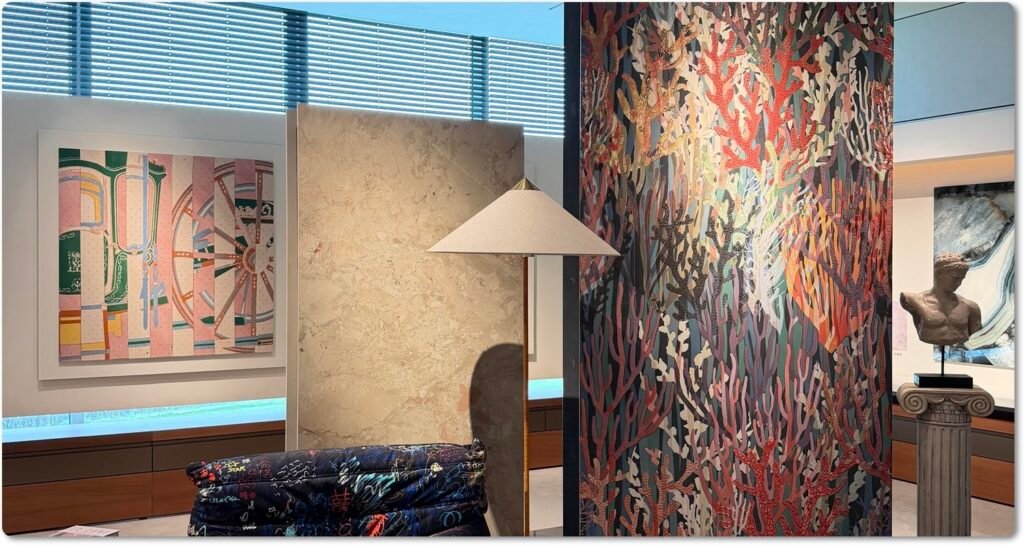
Ultra compact slabs are a category of high-performance engineered surfaces developed for applications where conventional materials may not provide the desired combination of aesthetics, durability, dimensional stability, and low maintenance.
The terminology can be confusing because the market uses several overlapping names. Buyers may search for ultra compact slabs, ultra compact material, ultra compact surfaces, ultracompact porcelain, sintered stone, porcelain slabs, compact slabs, or ultra slabs depending on the country, manufacturer, and application.
The fundamental idea is similar: mineral-based raw materials are processed under controlled industrial conditions to create a dense, durable slab.
Leading manufacturers demonstrate how this category has evolved. Cosentino, for example, markets Dekton as an “ultracompact surface” and describes a manufacturing process based on ultra-compaction and particle sintering. Its current product range includes applications such as countertops, façades, flooring, furniture and bathroom surfaces.
Neolith uses the term Sintered Stone, describing its material as being produced from natural minerals subjected to high pressure and high temperatures.
Lapitec likewise defines its product as sintered stone manufactured in large slabs and designed for indoor and outdoor applications.
This means that a professional buyer should look beyond the label.
Ultra Compact Slabs vs. Generic Porcelain Slabs
Ultra compact products may share characteristics with large-format porcelain and sintered stone, but performance varies considerably among manufacturers and formulations.
A purchasing specification should therefore identify measurable characteristics rather than simply stating “ultra compact.”
For example:
- Nominal thickness
- Slab dimensions
- Water absorption
- Flexural strength
- Breaking strength
- Abrasion resistance
- Thermal shock resistance
- UV resistance
- Chemical resistance
- Surface hardness
- Slip resistance where relevant
- Fire performance where applicable
- Fabrication recommendations
- Installation requirements
The current ANSI framework is particularly relevant to North American projects. ANSI A137.3/A108.19/A108.20-2025 covers gauged porcelain tile and gauged porcelain tile panels/slabs and establishes minimum physical properties and grading procedures for covered products.
2. Why Are Ultra Compact Surfaces Growing in Architecture and Interior Design?
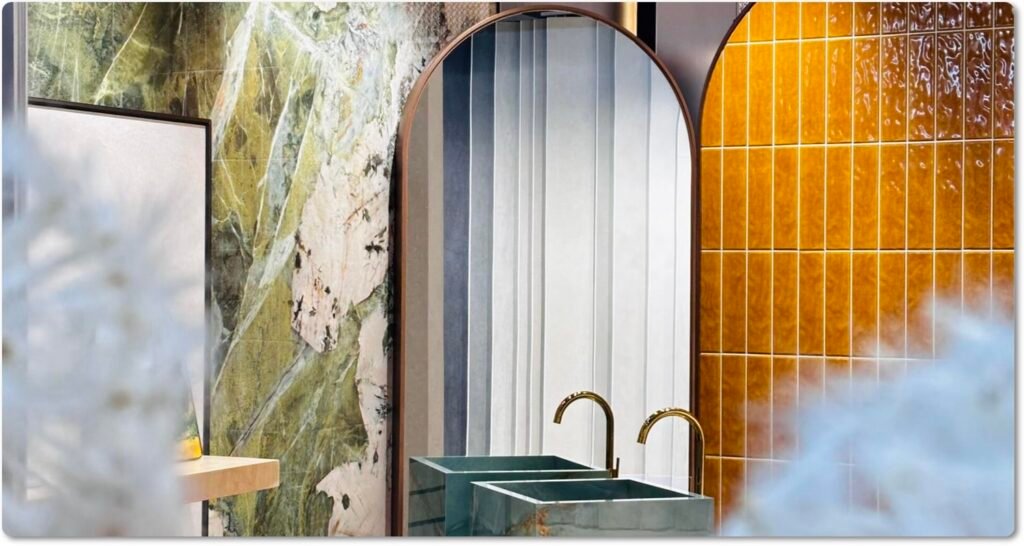
The appeal of ultra-compact surfaces comes from their ability to combine a stone-like appearance with engineered performance.
Architects, kitchen manufacturers, developers, hotel procurement teams, and fabricators increasingly want materials that can visually connect several areas of a project.
One slab design may be used across:
- Kitchen countertops
- Islands
- Backsplashes
- Bathroom vanity tops
- Shower walls
- Wall cladding
- Dining tables
- Furniture panels
- Flooring
- Outdoor kitchens
- Building façades
This creates a stronger architectural language while simplifying material coordination.
Large-Format Design Is a Major Advantage
Large slabs reduce the number of visible joints and allow designers to create continuous visual surfaces.
For premium projects, this can be especially important when the design imitates:
- Calacatta marble
- Statuario marble
- Carrara marble
- Taj Mahal quartzite
- Travertine
- Concrete
- Limestone
- Dark natural stone
- Onyx
- Metallic stone
The evolution of full-body visual effects is also significant. Neolith’s newer Iconic Design collection, for example, uses technology intended to create visual continuity through the body of the slab rather than simply printing a surface image.
This points toward an important future direction: ultra-compact materials are becoming not only performance products but also architectural design systems.
3. Ultra Compact Slabs: Key Technical Characteristics
When evaluating an ultra-compact slab manufacturer, buyers should focus on measurable performance.
3.1 Low Water Absorption
High density generally contributes to very low water absorption.
This is important for:
- Kitchens
- Bathrooms
- Vanity tops
- Shower walls
- Outdoor kitchens
- Commercial environments
Low absorption can simplify maintenance and reduce concerns associated with liquid penetration and staining.
However, buyers should always request the manufacturer’s actual laboratory test values rather than relying only on phrases such as “non-porous” or “zero porosity.”
3.2 Heat Resistance
Ultra-compact surfaces are commonly selected for kitchen environments because high-performance formulations can provide strong resistance to heat.
This makes them suitable for:
- Kitchen countertops
- Islands
- Backsplashes
- Outdoor kitchens
- Restaurant counters
- Hospitality applications
Performance depends on the specific product, thickness and installation system, so fabrication and installation instructions should always be followed.
3.3 Scratch and Abrasion Resistance
A high-performance surface needs to survive daily contact with cookware, utensils, cleaning equipment and general traffic.
Scratch resistance and abrasion resistance are related but not identical properties.
For commercial projects, the buyer should request test information appropriate to the intended application rather than relying on consumer-facing marketing language.
3.4 UV Resistance
UV resistance is one reason engineered compact surfaces are increasingly considered for exterior architecture.
Potential applications include:
- Outdoor kitchens
- Exterior countertops
- Building façades
- Balcony surfaces
- Outdoor furniture
- Pool surrounds
- Exterior wall cladding
Cosentino specifically positions Dekton for both interior and exterior applications and highlights UV resistance as part of its performance profile.
3.5 Chemical and Stain Resistance
Low porosity and dense surfaces can provide excellent resistance to many common household substances.
This is particularly valuable in:
- Kitchens
- Hotels
- Restaurants
- Healthcare interiors
- Bathrooms
- Retail environments
Nevertheless, cleaning chemicals should always be checked against the manufacturer’s care instructions.
4. Ultra Compact Slabs vs. Quartz, Natural Stone and Porcelain
Choosing the correct surface requires understanding the differences between material categories.
| Material | Typical Strengths | Main Considerations |
|---|---|---|
| Natural Marble | Natural beauty, unique veining | Can be more sensitive to staining, scratching and acids |
| Granite | Durability, natural appearance | Pattern and availability vary |
| Quartzite | Natural stone performance and premium aesthetics | Higher cost for some varieties |
| Engineered Quartz | Consistent colors, fabrication familiarity | Outdoor/UV suitability depends on formulation |
| Porcelain Slabs | Low absorption, large formats, design flexibility | Fabrication requires specialized tools and expertise |
| Sintered Stone | High density, performance, architectural applications | Product-specific fabrication and technical requirements |
| Ultra Compact Surfaces | High-performance, large-format, multi-application design | Quality varies significantly between manufacturers |
The most important point is that “ultra compact” should not be treated as a universal technical grade.
A professional procurement team should compare actual test data.
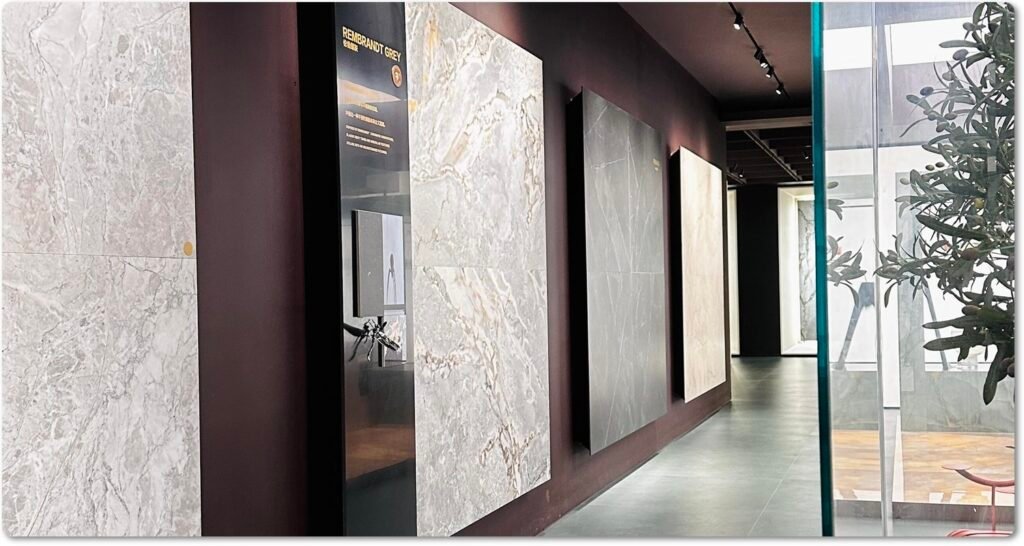
5. Leading Ultra Compact Countertop Brands and Market Positioning
When buyers search for ultra-compact countertop brands, they are often looking for established brands that can provide technical support, color collections, warranties, fabrication guidance, and project documentation.
Dekton
Dekton is one of the best-known brands using the term ultracompact surface.
Cosentino describes Dekton as a high-performance ultracompact porcelain surface and markets it for countertops, façades, flooring, furniture and other applications. Current published formats include large slabs and multiple thickness options.
Neolith
Neolith positions itself as a global sintered stone brand.
Its technical concept is based on natural minerals processed under high pressure and high temperature. Neolith promotes applications across kitchens, bathrooms, façades, flooring, furniture, and other architectural areas.
Lapitec
Lapitec defines its material as sintered stone and supplies large slabs for indoor and outdoor applications. Its technical documentation lists different slab dimensions and thicknesses for the U.S. market.
Why Brand Comparison Is Not Enough
For a distributor, importer, or contractor, the best supplier is not necessarily the most famous brand.
A project may instead benefit from a manufacturer that offers:
- Competitive factory pricing
- Flexible MOQ
- Custom sizes
- OEM/private-label programs
- Stable color production
- Fast sample development
- Fabrication support
- Export packaging
- Container loading optimization
- Custom CNC fabrication
- Project-specific quality control
This is where direct factory sourcing can become commercially attractive.
6. How to Choose an Ultra Compact Slabs Manufacturer
Choosing an ultra-compact slabs manufacturer requires more than comparing price per square meter.
A professional supplier evaluation should include at least eight dimensions.
6.1 Manufacturing Capability
Ask:
- Is the supplier a factory or trading company?
- What is the production capacity?
- What slab sizes are available?
- What thicknesses are available?
- How consistent are different production batches?
- Can the supplier support private-label or OEM orders?
6.2 Quality Control
Request:
- Technical data sheet
- Test reports
- Batch inspection records
- Color consistency information
- Thickness tolerance
- Flatness tolerance
- Edge quality information
- Surface inspection standards
6.3 Fabrication Support
A good supplier should provide fabrication recommendations for:
- Cutting
- Edge profiling
- Sink cutouts
- Cooktop cutouts
- Drilling
- CNC machining
- Waterjet cutting
- Mitre joints
- Bookmatching
- Large-format installation
This is especially important because large-format ultra-compact slabs can require specialized handling and fabrication equipment.
6.4 Packaging and Container Loading
For international procurement, packaging is not a minor issue.
It is a critical component of product quality.
A reliable supplier should understand:
- A-frame packaging
- Reinforced wooden crates
- Moisture protection
- Edge protection
- Shock protection
- Container loading
- Anti-tip systems
- Forklift handling
- Unloading procedures
- Export documentation
A technically excellent slab that arrives damaged is not a successful export.
For EDG Stone, packaging, transport, and container loading are treated as an integral part of the stone supply process rather than an afterthought.
6.5 Lead Time
Ask for realistic timelines covering:
- Sample approval
- Production
- QC inspection
- Packaging
- Container loading
- Export documentation
- Shipment
Do not compare suppliers using factory production time alone.
The relevant metric is total order-to-delivery lead time.
6.6 Certifications and Documentation
International buyers increasingly require documented evidence.
Depending on the destination and application, documentation may include:
- Technical data sheets
- Test reports
- Environmental documentation
- Declaration of Performance and Conformity where applicable
- CE-related documentation where applicable
- Installation manuals
- Safety documentation
- Product identification
- Batch traceability
7. Ultra Compact Slabs Factory: What Buyers Should Inspect
A factory audit can significantly reduce procurement risk.
Factory Audit Checklist
Production
Check:
- Raw material storage
- Mixing systems
- Pressing/compaction equipment
- Kilns or firing systems
- Surface treatment
- Cutting and calibration
- Inspection areas
- Packaging areas
Quality Control
Verify whether the factory systematically monitors:
- Thickness
- Flatness
- Dimensions
- Surface defects
- Color consistency
- Mechanical performance
- Water absorption
- Batch identification
Export Capability
Inspect:
- Crating systems
- Container loading
- Wooden packaging quality
- Labeling
- Shipping documents
- Previous export experience
For a B2B importer, factory reliability often matters more than a supplier’s online marketing.
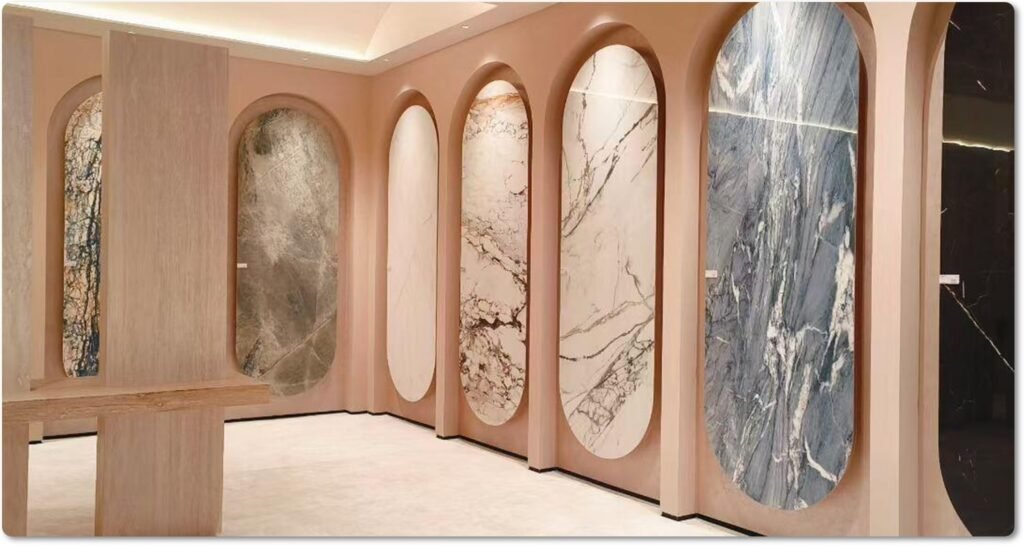
8. Ultra Compact Slabs Wholesale: How to Evaluate Total Cost
The cheapest slab is not necessarily the cheapest material.
A professional cost calculation should include:
Total Landed Cost = Product Cost + Packaging + Inland Freight + Port Charges + Ocean Freight + Insurance + Customs/Duties + Local Handling + Fabrication Loss + Installation Cost
Wholesale Buyers Should Compare Yield
A slab with a lower purchase price may generate higher total cost if:
- It has more defects.
- Dimensions vary.
- Color batches are inconsistent.
- Fabrication creates more breakage.
- Packaging is weak.
- Slabs arrive damaged.
- Lead times are unreliable.
For distributors and fabricators, usable yield per container can be more important than nominal slab price.
9. Applications of Ultra Compact Slabs
Ultra compact surfaces are increasingly used across several architectural categories.
Kitchen Countertops
They can be used for:
- Countertops
- Islands
- Waterfall edges
- Backsplashes
- Worktops
- Breakfast bars
Bathroom Vanity Tops
Applications include:
- Vanity tops
- Integrated-looking surfaces
- Wall panels
- Shower walls
- Shelving
- Bathtub surrounds
Outdoor Kitchens
Low absorption, UV resistance and thermal performance can make suitable formulations attractive for outdoor kitchens.
Wall Cladding
Large-format slabs can create fewer joints and strong visual continuity.
Furniture
Thin-format materials can be used for:
- Dining tables
- Coffee tables
- Cabinet doors
- Furniture panels
- Console tables
- Bathroom furniture
Dekton, for example, currently promotes thin-format applications for furniture and cabinetry.
Commercial and Hospitality Projects
Potential applications include:
- Hotel bathrooms
- Restaurant counters
- Hotel furniture
- Reception desks
- Retail interiors
- Wall cladding
- High-traffic flooring
- Exterior façades
10. Ultra Compact Slabs and the New Regulatory Environment
The regulatory environment is becoming increasingly important for international suppliers.
EU Construction Products Regulation 2024/3110
The European Union’s revised Construction Products Regulation is one of the most important developments for manufacturers and exporters targeting the European market.
Regulation (EU) 2024/3110 entered into force in January 2025, while its main provisions became applicable from January 8, 2026. The new framework is designed to support a greener and more digital construction-product market.
The regulation introduces a stronger framework around:
- Product performance
- Sustainability information
- Traceability
- Technical documentation
- Market surveillance
- Digital Product Passports
- Environmental characteristics
Digital Product Passport
The move toward digital product information is particularly important.
The European Commission describes the Digital Product Passport as a mechanism for providing reliable, machine-readable product information across the product lifecycle. The construction-product framework is expected to develop further through delegated acts.
For exporters, this means the future supplier website may need to function as more than a marketing platform.
A modern manufacturer should be preparing structured information covering:
- Product identity
- Technical specifications
- Material composition
- Performance
- Environmental information
- Instructions
- Safety information
- Traceability
- Documentation
The direction is clear: construction-material suppliers are moving from product catalogs toward data-rich, traceable product systems.
Why This Matters for Ultra Compact Slabs
For an ultra-compact slab manufacturer, digital product readiness can become a competitive advantage.
Suppliers that already maintain structured technical data will be better positioned to support:
- Architects
- BIM workflows
- Contractors
- European importers
- Procurement platforms
- Environmental assessments
- Digital product passports
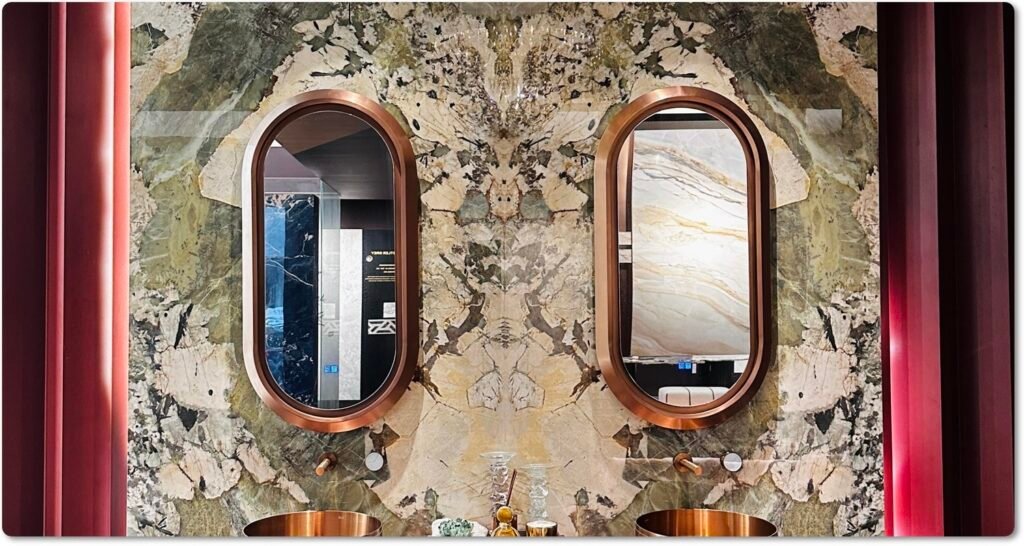
11. North American Standards and Buyer Expectations
North American buyers should also distinguish between marketing terminology and recognized standards.
ANSI A137.3/A108.19/A108.20-2025 provides specifications for gauged porcelain tile and porcelain tile panels/slabs and establishes minimum physical-property and grading requirements for covered products.
For U.S. and Canadian projects, buyers should therefore request product documentation appropriate to the intended use.
A commercial project specification may require substantially more information than a residential consumer purchase.
What Should Be Included in a Professional Technical Package?
A supplier technical package should ideally include:
- Product description
- Composition
- Available dimensions
- Thicknesses
- Physical properties
- Water absorption
- Mechanical properties
- Thermal performance
- Chemical resistance
- Surface characteristics
- Fabrication instructions
- Installation instructions
- Maintenance instructions
- Applicable test standards
- Environmental documentation where applicable
12. Market Data: Why the Ultra Compact Surface Opportunity Is Structural
Ultra compact slabs are part of the much larger global ceramic and engineered-surface ecosystem.
Global ceramic tile production reached approximately 14.95 billion square meters in 2024, down 6.2% from 2023, according to Ceramic World Review data summarized by CTASC. Asia accounted for approximately 72.8% of global production.
The significance is not simply the volume.
It demonstrates the enormous manufacturing ecosystem supporting ceramic, porcelain and related mineral-based surfaces.
China remains one of the world’s largest ceramic manufacturing centers, giving Chinese manufacturers a substantial industrial ecosystem for:
- Mineral processing
- Ceramic production
- Large-format manufacturing
- Surface finishing
- Packaging
- Export logistics
- International distribution
This creates an opportunity for suppliers such as EDG Stone to connect the traditional stone industry with the rapidly developing engineered-surface sector.
13. The Future of Ultra Compact Material: Five Major Trends
Trend 1: Larger Slabs
The industry is moving toward larger formats that reduce joints and improve architectural continuity.
Trend 2: Thinner Materials
Thin formats can reduce weight and expand applications into:
- Furniture
- Cabinetry
- Wall panels
- Renovation
- Doors
- Decorative surfaces
Trend 3: More Realistic Natural-Stone Designs
The next generation of products is moving beyond simple surface printing.
Full-body veining, three-dimensional textures and more realistic mineral effects are becoming important differentiators.
Trend 4: Sustainability Documentation
Sustainability claims will increasingly need evidence.
Manufacturers will need better information about:
- Raw materials
- Manufacturing energy
- Water consumption
- Recycled content
- Carbon footprint
- Product lifecycle
Trend 5: Digital Product Information
The European regulatory direction demonstrates a broader industry movement toward structured, machine-readable product information.
For manufacturers, this means the future product page should be both human-readable and machine-readable.
14. How EDG Stone Approaches Ultra Compact Slabs
EDG Stone is a professional Chinese stone manufacturer and exporter supplying natural and engineered stone products for international buyers.
The company’s product strategy combines material sourcing, custom fabrication, quality control, and export logistics.
For ultra-compact slabs, EDG Stone can support B2B buyers looking for:
- Ultra compact slabs
- Ultra-compact countertops
- Large-format engineered surfaces
- Porcelain-related slab products
- Custom-cut slabs
- Countertops
- Vanity tops
- Wall panels
- Furniture components
- Hospitality projects
- Multifamily projects
- Commercial applications
From Slab Supply to Project Supply
The real value of an experienced stone supplier is not simply supplying a slab.
A project may require:
Slab → CAD drawing → Cutting → CNC → Edge processing → Sink cutout → Inspection → Packaging → Container loading → Export
This integrated approach can reduce coordination between multiple vendors.
Why Packaging Matters
For international projects, packaging and transportation can directly affect project cost.
EDG Stone focuses on:
- Export-grade packaging
- Reinforced protection
- Container optimization
- Loading efficiency
- Damage prevention
- Clear identification
- Project-based QC
The objective is simple:
Deliver the material in the same condition and specification in which it was approved.
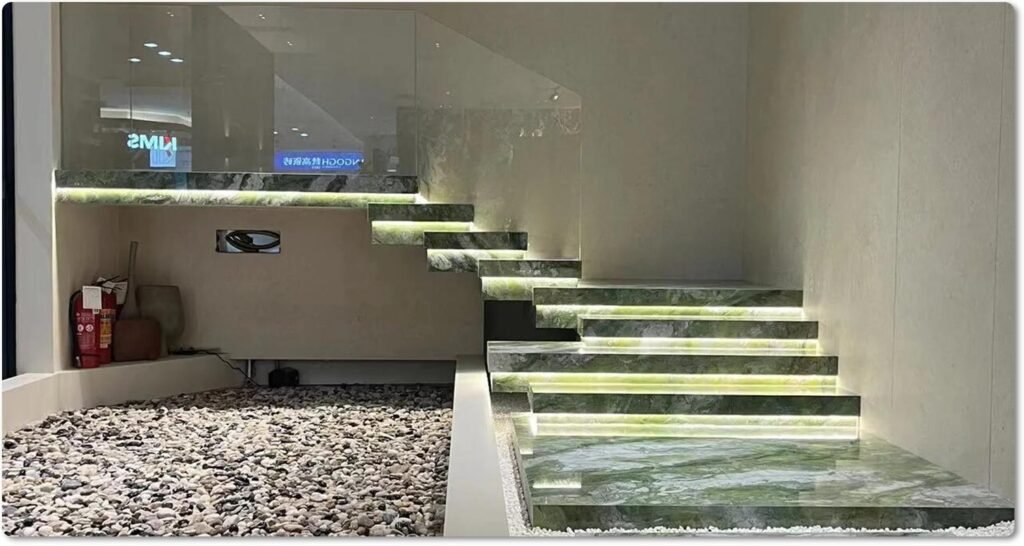
15. How to Buy Ultra Compact Slabs from a Chinese Manufacturer
For importers, distributors, and contractors, the following process can reduce procurement risk.
Step 1: Define the Application
Specify whether the material will be used for:
- Countertops
- Vanity tops
- Flooring
- Wall cladding
- Furniture
- Exterior façades
- Outdoor kitchens
Step 2: Specify Technical Requirements
Define:
- Size
- Thickness
- Finish
- Color
- Edge
- Surface pattern
- Performance requirements
- Applicable standards
Step 3: Request Samples
Samples should be evaluated for:
- Color
- Texture
- Finish
- Pattern
- Veining
- Thickness
- Flatness
- Surface consistency
Step 4: Request Technical Documents
Do not purchase solely from photographs.
Request:
- Technical data sheet
- Test reports
- Fabrication guide
- Installation guide
- Packing specifications
- Warranty information where applicable
Step 5: Confirm Production Batch
For large projects, approve the production batch before mass production whenever possible.
Step 6: Confirm Packaging
Ask for photographs or videos of actual export packing.
Step 7: Inspect Before Shipment
For major projects, third-party inspection or factory QC can be considered.
Step 8: Optimize Container Loading
For wholesale orders, calculate slab quantity, packing dimensions and container utilization before production.
16. Ultra Compact Slabs Manufacturer vs. Trading Company
For smaller purchases, a trading company may be convenient.
For long-term B2B purchasing, direct factory sourcing can offer advantages.
| Factor | Manufacturer | Trading Company |
|---|---|---|
| Factory pricing | Usually stronger | May include margin |
| Customization | Usually stronger | Depends on factory |
| Technical support | Direct | Indirect |
| Production control | Higher visibility | Lower visibility |
| OEM | Often available | Depends on supplier |
| QC communication | Direct | Through intermediary |
| Factory audit | Direct | May require coordination |
| Long-term development | Strong potential | Depends on relationship |
The best supplier, however, should be selected based on actual capability rather than the word “factory” on a website.
17. Buyer Checklist: 15 Questions to Ask an Ultra Compact Slab Supplier
Before placing a wholesale or project order, ask:
- Are you the manufacturer or an exporter?
- Where is the factory located?
- What slab sizes do you produce?
- What thicknesses are available?
- What is the material composition?
- What are the water absorption values?
- What mechanical tests are available?
- Which standards are used?
- Can you provide current test reports?
- What fabrication tools are recommended?
- Can you provide CAD or fabrication guidance?
- What is the standard production lead time?
- How are slabs packaged for export?
- How many slabs can be loaded per container?
- Can you provide project-specific QC before shipment?
A supplier that can answer these questions clearly is generally easier to evaluate than a supplier that only provides photographs and price lists.
18. Why Ultra Compact Slabs Are Becoming a Strategic Material Category
The importance of ultra compact surfaces goes beyond countertops.
The material is increasingly positioned at the intersection of:
Natural Stone + Porcelain + Architecture + Furniture + Technology + Sustainability
This convergence is creating a new type of architectural surface.
Instead of asking:
“Is this stone, porcelain or ceramic?”
professional buyers increasingly need to ask:
“What performance does this surface provide, where can it be used, how can it be fabricated, and what documentation supports those claims?”
That is the more useful procurement question.
19. Final Buying Insight: Price Is Only One Part of the Supplier Decision
For wholesale buyers, the cheapest quotation can become the most expensive order if quality is inconsistent.
The real supplier evaluation should consider:
Material + Performance + Consistency + Fabrication + Packaging + Logistics + Documentation + Service
A reliable ultra-compact slabs supplier should therefore function as a material partner, not simply a product seller.
For architects and designers, the priority may be visual performance.
For fabricators, it may be machinability and consistency.
For distributors, it may be price, availability, and packaging.
For contractors, it may be technical documentation and delivery reliability.
For hotel and multifamily developers, it may be consistency across hundreds of units.
A professional manufacturer should be capable of supporting all these requirements.
20. Semantic Insight: Where Is the Ultra Compact Slabs Market Going?
Ultra Compact Slabs: What, Why, Options, Considerations, and Market Direction
What are ultra compact slabs?
Ultra compact slabs are high-density engineered surfaces manufactured through advanced mineral processing, compaction, firing, or sintering technologies. The terminology varies by manufacturer, so buyers should evaluate measurable performance rather than relying exclusively on the product name.
Why are ultra compact surfaces important?
They provide a combination of large-format aesthetics, low absorption, durability, low maintenance and multi-application flexibility. These characteristics allow one surface family to be used across countertops, bathrooms, walls, furniture, floors, façades and outdoor environments.
What are the main options?
Buyers may encounter ultra-compact surfaces, ultracompact porcelain, sintered stone, porcelain slabs, compact slabs and other engineered architectural surfaces. Products should be compared according to composition, thickness, physical properties, standards, fabrication requirements, and intended application.
Which option should a buyer choose?
The correct material depends on project requirements. Residential kitchens may prioritize stain, heat, and scratch resistance. Commercial projects may require stronger documentation and abrasion performance. Exterior projects require careful evaluation of UV, weather, thermal, and installation performance. Large hospitality or multifamily projects may prioritize batch consistency, price, fabrication support, and logistics.
What should buyers consider before selecting a manufacturer?
A serious buyer should evaluate factory capability, quality control, testing, technical documentation, fabrication support, customization, packaging, container loading, lead time, export experience and after-sales support. The lowest slab price should not be treated as the lowest total procurement cost.
How is the industry changing?
The market is moving toward larger formats, thinner slabs, increasingly realistic natural-stone aesthetics, improved environmental documentation and digital product information. The revised EU Construction Products Regulation reinforces this direction by introducing stronger requirements around performance, sustainability information, traceability and digital product information.
What does this mean for manufacturers?
Future-leading manufacturers will need to provide more than slabs. They will need structured technical data, traceability, environmental information, fabrication guidance, digital documentation and reliable international logistics. Product pages will increasingly function as technical information hubs for architects, buyers, AI systems and procurement teams.
What does this mean for international buyers?
Buyers should select suppliers based on total value rather than price alone. A manufacturer that combines consistent production, technical documentation, fabrication capability, export packaging, and responsive project support can reduce the hidden costs associated with breakage, delays, inconsistent batches, and installation problems.
The Strategic Takeaway
The future of ultra-compact slabs is not simply about producing a denser slab.
It is about developing a high-performance architectural material platform that connects design, manufacturing, fabrication, sustainability, compliance, logistics, and digital information.
For international buyers, the ideal supplier is therefore one capable of supporting the entire journey:
Material Development → Factory Production → Quality Control → Fabrication → Packaging → Container Loading → Export → Project Support
That is the standard against which an ultra-compact slab manufacturer and supplier should ultimately be evaluated.
Frequently Asked Questions About Ultra Compact Slabs
1. What are ultra compact slabs?
Ultra compact slabs are high-density engineered surfaces produced from mineral-based raw materials using controlled industrial processes such as compaction, firing, or sintering. They are designed for applications requiring low absorption, durability, large formats,s and resistance to heat, stains, abrasion, and environmental exposure.
2. What is the difference between ultra compact slabs and porcelain slabs?
The terms can overlap, but they are not automatically identical. “Ultra compact” is often a performance or marketing term, while porcelain and sintered stone may refer to particular material categories or manufacturing technologies. Buyers should compare the manufacturer’s composition, technical data,ata and applicable standards rather than relying only on terminology.
3. Which are the leading ultra-compact countertop brands?
Examples of established high-performance surface brands include Dekton, Neolith and Lapitec, although each brand uses its own material terminology and technology. Dekton markets itself as an ultracompact surface, while Neolith and Lapitec prominently use the term sintered stone.
4. Can ultra-compact slabs be used for kitchen countertops?
Yes. Many high-performance large-format engineered surfaces are specifically developed for kitchen countertops, islands, and backsplashes. However, the specific slab’s thickness, fabrication requirements, support system, and manufacturer’s installation instructions should always be checked before use.
5. How do I choose an ultra-compactlabs manufacturer?
Look for a supplier with consistent factory production, reliable quality control, technical testing, fabrication support, export packaging, container-loading experience, clear documentation, and project support. For wholesale buyers, compare total landed cost and usable yield rather than factory price alone.
Conclusion
Ultra-compact slabs are becoming an important category within the global engineered-surface and architectural-material market.
Their value comes from the combination of large-format design, high density, low absorption, durability, fabrication flexibility, and multi-application potential.
But the most important lesson for buyers is simple:
Do not buy an “ultra-compact slab” based only on the name. Buy verified performance, consistent manufacturing, technical documentation, professional packaging and dependable project support.
As the industry moves toward larger formats, thinner materials, more realistic natural-stone designs, stronger sustainability requirements, and digital product information, manufacturers that can combine material technology with transparent technical data and international logistics will be better positioned for the next stage of the market.
For importers, distributors, fabricators, architects, contractors, hospitality procurement teams and developers, EDG Stone can serve as a China-based manufacturer and export partner for ultra-compact slabs, engineered stone surfaces, countertops and custom stone fabrication.
The future opportunity is not simply to sell more slabs.
It is to build a complete, reliable, and data-driven supply chain around high-performance architectural surfaces.