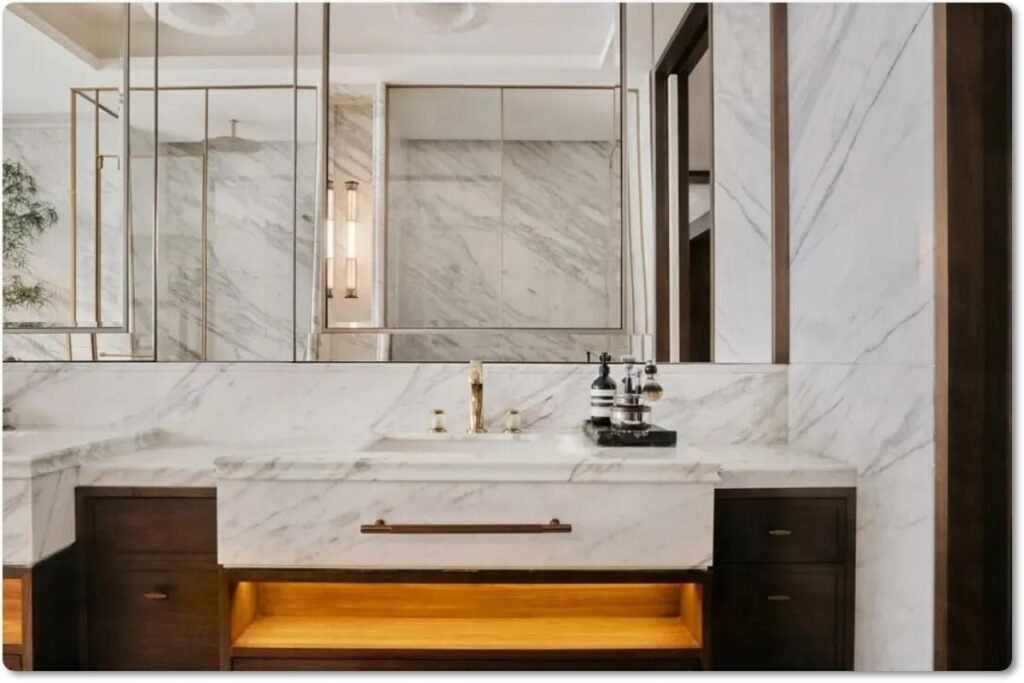
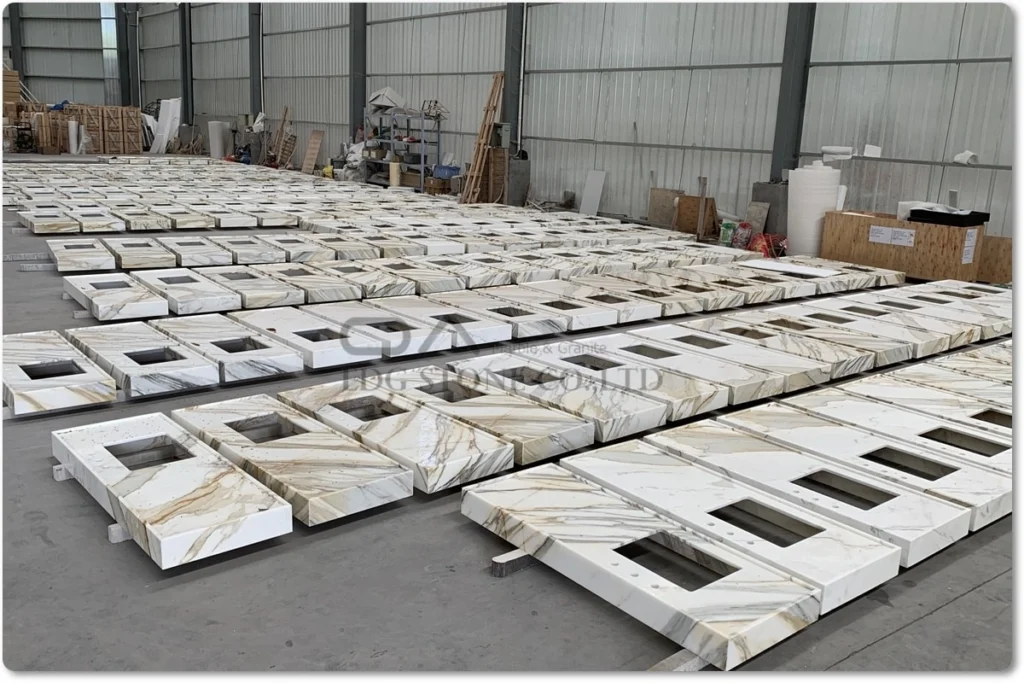
Ultra Compact Wall Panels: Quick Summary
Semantic Overview: What Are Ultra Compact Wall Panels and Why Are They Growing?
What: Ultra Compact Wall Panels are thin, engineered architectural surface panels designed to create durable decorative wall systems.
Why: They answer the growing demand for lightweight construction materials, large-format surfaces, waterproof wall coverings, easier maintenance, and modern design flexibility.
How: Depending on the material system, ultra-compact panels can be manufactured using advanced mineral, porcelain, sintered, composite, or lightweight backing technologies and fabricated into customized wall applications.
Where: Typical applications include bathrooms, kitchens, hotels, apartments, offices, retail spaces, restaurants, elevators, feature walls, and other residential or commercial interiors.
What to Consider: Buyers should evaluate thickness, weight, fire performance, moisture resistance, substrate requirements, installation methods, indoor air quality requirements, surface durability, certification requirements, and long-term maintenance.
Modern architecture is changing rapidly. Designers and project developers are increasingly looking for wall materials that are thinner, lighter, more durable, easier to maintain, and visually more flexible than traditional construction materials.
This shift has created growing interest in Ultra Compact Wall Panels, ultra-thin wall panels, ultra-thin wall covering systems, lightweight panels, Wetwall Waterproof Wall Panels, 3D Wall Panels, and advanced Ultra Compact Surface materials.
For residential and commercial projects, wall finishes are no longer selected only for decoration. Today, architects and procurement teams must also consider:
- Material weight
- Installation efficiency
- Moisture resistance
- Fire performance
- Indoor air quality
- Maintenance requirements
- Environmental documentation
- Long-term lifecycle costs
- Large-format design possibilities
For this reason, ultra-compact surfaces are becoming an increasingly important category in the global architectural materials market.
At EDG Stone, we work with natural stone, engineered surfaces, porcelain, sintered materials, and customized architectural surface solutions for international projects. This guide explains what Ultra Compact Wall Panels are, how they compare with conventional wall materials, where they are used, and what buyers should consider before sourcing from an Ultra Compact Wall Panels manufacturer, factory, or wholesale supplier.
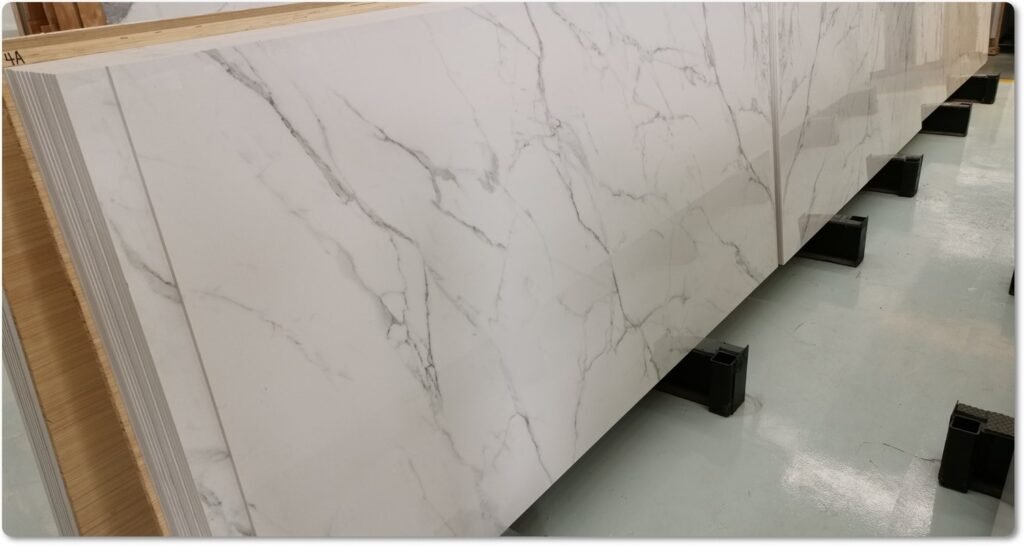
What Are Ultra Compact Wall Panels?
Understanding the Ultra Compact Surface Concept
Ultra-compact wall panels generally refer to thin-profile architectural panels designed to provide high-performance decorative surfaces while reducing unnecessary material thickness and structural weight.
The exact composition may vary depending on the manufacturer and product technology.
Ultra-compact panels may include systems based on:
- Ultra-compact porcelain surfaces
- Sintered stone surfaces
- Mineral-based architectural panels
- Lightweight composite panels
- Stone veneer panels
- Honeycomb-backed panels
- Large-format decorative surfaces
- Waterproof interior wall panels
The defining concept is not simply “thin material.”
A true ultra-compact wall system should balance multiple characteristics:
Thin Profile
The panel is designed to reduce thickness compared with conventional masonry or thick stone installations.
Large Surface Coverage
Large-format panels can reduce the number of visible joints and grout lines.
Lightweight Construction
Lower weight can simplify transportation, handling, and installation.
Decorative Versatility
Modern manufacturing technologies allow surfaces to reproduce:
- Marble patterns
- Natural stone textures
- Concrete effects
- Metal effects
- Wood-inspired designs
- Minimalist colors
- Customized decorative graphics
Functional Performance
Depending on the material system, the panels may provide strong resistance to moisture, staining, scratching, or everyday wear.
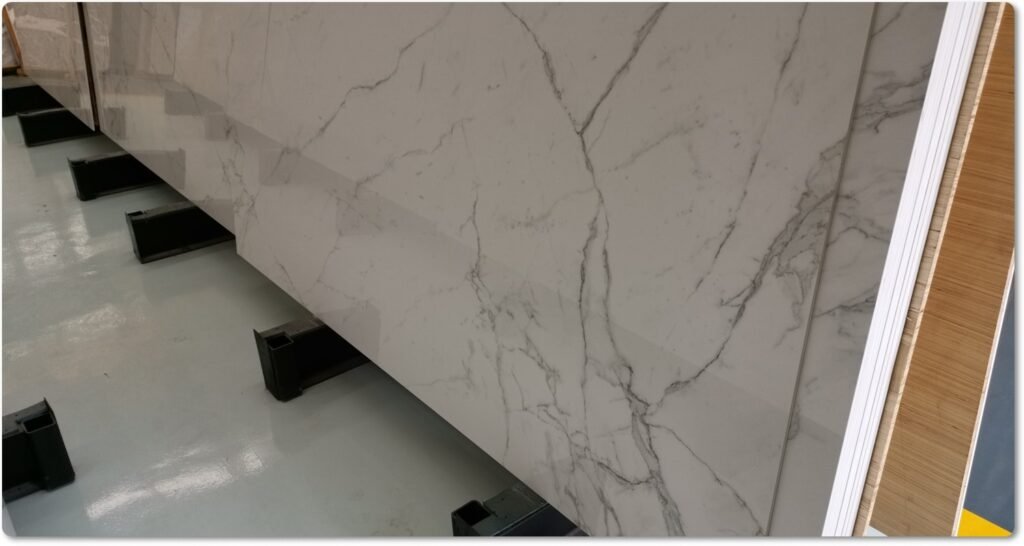
Why Are Ultra-Thin Wall Panels Becoming More Popular?
The Construction Industry Is Moving Toward Efficient Material Systems
Traditional wall construction often requires multiple layers of materials.
For example, a conventional decorative wall may require:
- Structural wall preparation
- Waterproofing
- Cement or adhesive
- Tile or stone installation
- Grouting
- Surface finishing
Modern wall panel systems can potentially simplify some parts of this process.
Faster Installation
Large-format panels cover more wall area per piece.
This can reduce the number of individual components compared with small-format tiles.
Fewer Visible Joints
One major design advantage of large-format Ultra Compact Surface materials is visual continuity.
Instead of dozens of grout lines, designers can create:
- Continuous marble-look walls
- Seamless bathroom walls
- Large hotel lobby surfaces
- Minimalist commercial interiors
Reduced Maintenance
Traditional tile walls require attention to grout lines.
Ultra-thin wall covering systems with larger surfaces can reduce the number of joints that collect moisture, dirt, or cleaning residue.
Modern Design Demand
Architectural trends increasingly favor:
- Large-format surfaces
- Minimalist interiors
- Natural stone aesthetics
- Continuous visual surfaces
- Lightweight renovation materials
This makes ultra compact panels particularly attractive for renovation and commercial projects.
Ultra Compact Wall Panels vs Traditional Wall Materials
Ultra Compact Panels vs Ceramic Tiles
Ceramic tiles remain one of the world’s most widely used wall materials.
However, ultra compact panels can provide several advantages.
Ultra Compact Panels
Potential advantages include:
- Larger formats
- Fewer joints
- Modern continuous designs
- Faster coverage of large wall areas
- Premium marble-look aesthetics
Traditional Tiles
Advantages include:
- Familiar installation methods
- Large supplier availability
- Many price categories
- Easy replacement of individual pieces
The best choice depends on the project.
For a small residential bathroom, traditional tiles may remain practical.
For a luxury hotel, apartment lobby, or large commercial interior, ultra-compact wall panels can provide a more continuous architectural appearance.
Ultra-Compact Wall Panels vs Natural Stone
Natural stone remains one of the most prestigious architectural materials.
Materials such as marble, granite, quartzite, limestone, and travertine offer unique natural patterns.
However, traditional stone slabs can be heavy.
Natural Stone Advantages
- Natural uniqueness
- Premium appearance
- High architectural value
- Long design history
Ultra Compact Surface Advantages
Ultra-compact surfaces can provide:
- Reduced thickness
- Lower installation weight
- More standardized patterns
- Easier logistics
- Large-scale production consistency
For projects that require genuine natural material, natural stone remains difficult to replace.
For projects requiring a lightweight marble-look wall system, ultra compact panels can be a practical alternative.
Ultra Compact Panels vs MDF and Wood Wall Panels
Wood-based wall panels remain popular in residential interiors.
However, buyers should understand the differences between decorative wood products and mineral-based or porcelain-based panels.
Wood composite products can be subject to indoor air quality and formaldehyde requirements in certain markets. In the United States, regulated composite wood products fall under EPA TSCA Title VI requirements, including compliance, certification, labeling, and recordkeeping requirements for covered materials and products.
For projects where moisture exposure is significant, such as bathrooms and wet rooms, material selection should also consider water resistance and substrate performance.
This is one reason Wetwall Waterproof Wall Panels and mineral-based wall systems are gaining attention.
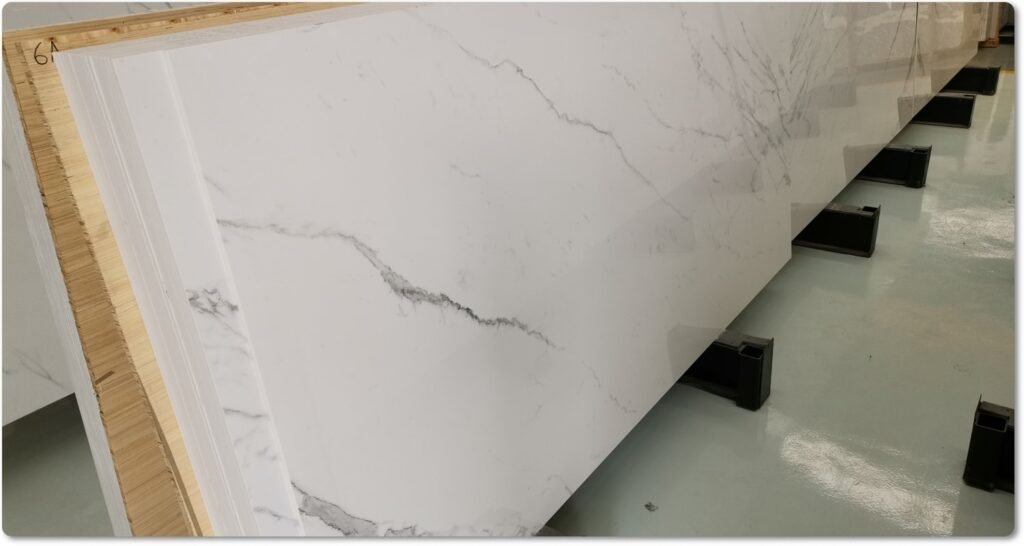
Ultra-Compact Wall Panels for Bathrooms
Why Bathrooms Are a Major Application
Bathrooms present several material challenges.
Wall finishes must often withstand:
- Humidity
- Water exposure
- Cleaning products
- Temperature changes
- Daily maintenance
Traditional tiles are effective, but grout lines require maintenance.
Wetwall Waterproof Wall Panels
Wetwall Waterproof Wall Panels are designed for bathroom and wet-area applications where water management and easy cleaning are important.
However, buyers should not assume every “waterproof panel” performs identically.
A complete wall system should consider:
Panel Surface
Is the surface resistant to moisture?
Panel Core
Can the core absorb water?
Joint System
Are joints properly sealed?
Adhesive System
Is the adhesive suitable for wet environments?
Substrate
Is the wall behind the panel properly prepared?
The best waterproof wall system is not simply a waterproof-looking panel.
It is a complete installation system.
Ultra Compact Wall Panels for Kitchens
A Modern Alternative to Traditional Backsplashes
Kitchen walls are exposed to:
- Oil
- Food splashes
- Cleaning chemicals
- Heat
- Daily cleaning
Large-format ultra-compact wall panels can be used for:
- Kitchen backsplashes
- Full-height walls
- Dining walls
- Kitchen islands
- Decorative surfaces
A large-format panel can create a visually continuous surface from countertop to wall.
Popular designs include:
- Calacatta marble look
- White marble patterns
- Black stone surfaces
- Concrete effects
- Grey architectural finishes
For coordinated projects, buyers may combine:
Ultra Compact Countertops + Ultra Compact Wall Panels
This creates a consistent material language across the entire interior.
Lightweight Panels: Why Weight Matters
The Importance of Lightweight Construction
Weight is a critical issue in many renovation and construction projects.
Heavy materials can increase:
- Transportation requirements
- Structural loading
- Installation difficulty
- Labor requirements
Lightweight Panels for Renovation
Lightweight architectural panels can be particularly useful for:
- Apartment renovations
- Hotel remodeling
- Commercial renovations
- Retail upgrades
- Elevator interiors
For example, a lightweight decorative panel may be easier to install over an existing suitable substrate than rebuilding an entire wall system.
However, engineers and contractors should always evaluate:
- Existing wall condition
- Load requirements
- Fixing methods
- Fire requirements
- Local building codes
Material weight alone should never determine the final specification.
Ultra Compact Wall Panels and Fire Safety
Fire Performance Is Becoming More Important
As global construction regulations continue to emphasize building safety, fire performance has become an increasingly important part of material selection.
For commercial and high-occupancy buildings, buyers may need to evaluate:
- Reaction-to-fire classification
- Smoke production
- Flame spread
- Installation system performance
- Backing material performance
Why the Complete System Matters
A wall panel should not be evaluated only as an individual surface material.
The complete wall assembly may include:
- Decorative panel
- Adhesive
- Mechanical fixing
- Backing material
- Insulation
- Substrate
Each component can influence overall performance.
Therefore, procurement teams should request applicable technical documentation and verify requirements according to the destination market and project type.
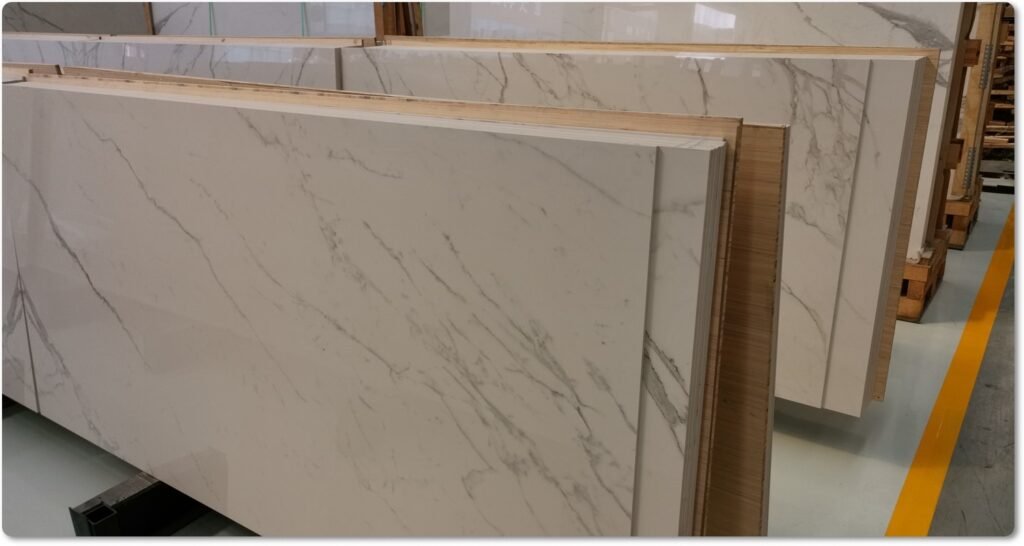
Regulations Are Changing How Wall Panels Are Selected
Compliance Is Becoming a Purchasing Requirement
In the past, many buyers focused primarily on:
- Price
- Color
- Thickness
- Design
Today, international projects increasingly request additional documentation.
These may include:
- Fire test reports
- Material safety documentation
- Indoor air quality information
- Formaldehyde compliance for applicable wood-based products
- Environmental documentation
- Technical data sheets
- Installation guidelines
For the U.S. market, EPA TSCA Title VI regulates formaldehyde emissions from covered composite wood products, including hardwood plywood, MDF, and particleboard. EPA guidance also notes that certain laminated products became subject to additional testing and certification requirements beginning in March 2024.
This regulatory direction supports a broader industry trend: building material buyers increasingly want transparent information about what materials contain, how they perform, and how they comply with destination-market requirements.
Indoor Air Quality and Low-Emission Materials
Why Indoor Air Quality Matters
People spend a significant amount of time indoors.
As a result, architects and developers increasingly consider indoor environmental quality.
For wall materials, this may involve evaluating:
- Formaldehyde
- VOC emissions
- Adhesives
- Coatings
- Composite material content
This does not mean every wall panel category has identical compliance requirements.
Instead, buyers should identify the specific material composition and destination-market regulations.
A Better Procurement Question
Instead of asking only:
“Is this wall panel environmentally friendly?”
Professional buyers should ask:
- What is the panel made from?
- What testing has been completed?
- Which standards apply?
- Is the documentation valid for my destination market?
- Does the installation system introduce additional emissions?
This approach produces better purchasing decisions.
3D Wall Panels and Architectural Feature Walls
The Growth of Dimensional Wall Design
Flat walls are no longer the only decorative option.
3D Wall Panels are increasingly used for:
- Hotel feature walls
- Reception areas
- Luxury residences
- Restaurants
- Retail stores
- Office interiors
3D surfaces can create:
- Geometric shadows
- Sculptural patterns
- Wave designs
- Linear architectural textures
Combining 3D Design with Ultra Compact Materials
Future wall design is likely to combine:
- Digital surface printing
- CNC fabrication
- Large-format materials
- Lightweight backing technologies
- Customized architectural systems
The result is a growing market for customized wall surfaces rather than standardized wall finishes.
Max Compact Interior Panels and the Demand for Space Efficiency
Why Compact Interior Design Matters
Urban apartments and commercial interiors often have limited space.
This has increased interest in:
- Ultra-thin wall panels
- Slim decorative surfaces
- Lightweight wall systems
- Compact bathroom materials
A thinner wall finish can help designers maintain usable interior space while achieving a premium decorative effect.
This is especially relevant for:
- Apartments
- Hotels
- Small bathrooms
- Commercial renovations
- Modular construction
The phrase Max Compact Interior Panels reflects this broader market trend toward maximum visual performance with minimal material bulk.
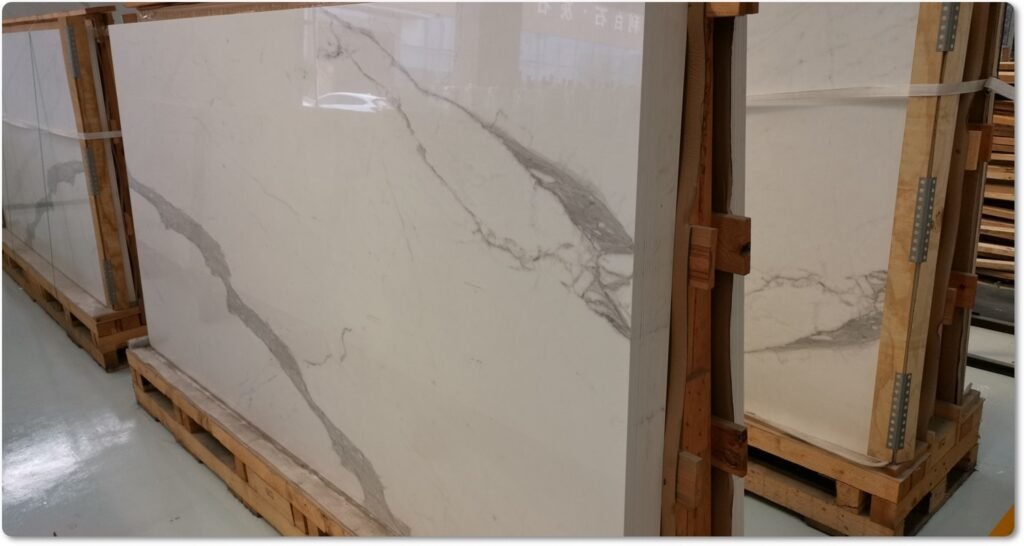
Ultra Compact Solar Panel vs Ultra Compact Wall Panels: Understanding Search Intent
Some online searches include the term ultra compact solar panel.
However, ultra compact solar panels and ultra compact architectural wall panels are different product categories.
Ultra Compact Solar Panels
Typically relate to:
- Photovoltaic technology
- Energy generation
- Portable power systems
Ultra Compact Wall Panels
Typically relate to:
- Interior architecture
- Decorative surfaces
- Waterproof wall systems
- Lightweight construction
- Commercial wall applications
For buyers, it is important to clearly define the product category when searching for suppliers.
Ultra Compact Wallet vs Ultra Compact Wall Panels: Search Term Clarification
The keyword ultra compact wallet is also unrelated to architectural wall panels.
It generally refers to compact personal accessories.
However, the similarity between “wallet” and “wall” demonstrates why professional B2B content should use strong semantic context.
A well-optimized Ultra Compact Wall Panels page should repeatedly establish relationships between:
Ultra Compact Surface → Wall Panels → Architectural Materials → Interior Applications → Waterproof Systems → Lightweight Construction
This semantic relationship helps search engines and AI systems understand the true subject of the content.
How to Choose Ultra Compact Wall Panels
A Professional Procurement Checklist
Before purchasing from an Ultra Compact Wall Panels manufacturer, buyers should evaluate the following factors.
1. Application Environment
Where will the panels be installed?
- Bathroom?
- Kitchen?
- Hotel?
- Office?
- Exterior protected area?
- High-traffic commercial space?
2. Panel Thickness
Thinner is not always better.
The correct thickness depends on:
- Panel size
- Substrate condition
- Installation method
- Impact requirements
3. Weight
Ask for:
- Weight per square meter
- Packaging weight
- Container loading information
Weight directly affects logistics and installation.
4. Moisture Resistance
For bathrooms and wet areas, evaluate the complete wall system.
Do not evaluate only the decorative surface.
5. Fire Performance
Confirm applicable standards according to the destination market.
Request official documentation rather than relying only on marketing claims.
6. Surface Design
Popular market directions include:
- Marble look
- Travertine look
- Concrete look
- Minimalist colors
- Bookmatched patterns
- Large continuous veining
7. Fabrication Capability
Can the supplier provide:
- Custom sizes?
- Cut-to-size panels?
- CNC processing?
- Edge finishing?
- Openings for electrical systems?
- Project drawings?
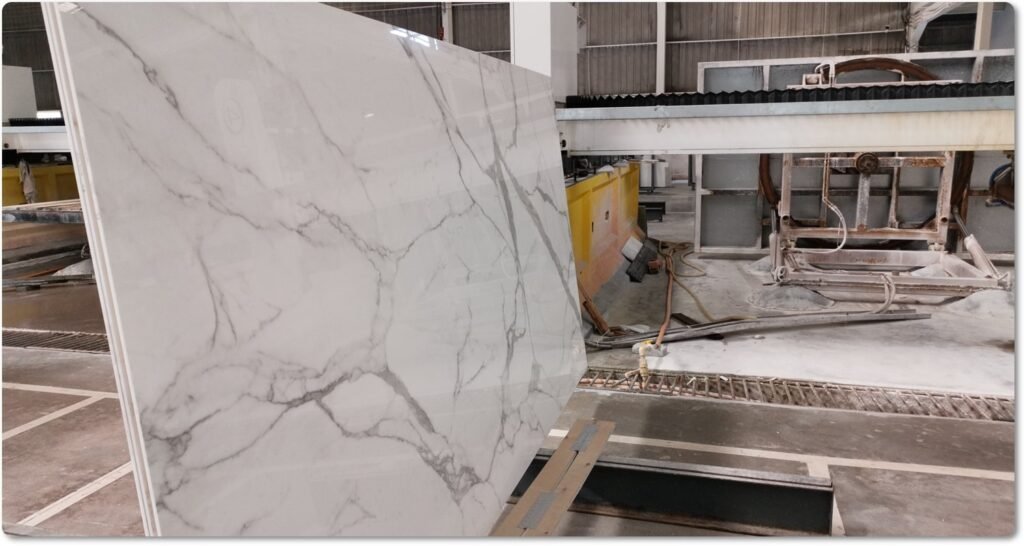
Why Work With an Ultra Compact Wall Panels Manufacturer?
Factory Capability Matters for Large Projects
For wholesalers and project buyers, supplier selection is about more than price.
A professional Ultra Compact Wall Panels factory should provide:
Stable Production
Consistent quality across large quantities.
Material Knowledge
Understanding of surface performance and fabrication.
Customization
Ability to produce project-specific dimensions.
Quality Control
Inspection before packing and shipment.
International Export Experience
Understanding:
- Packaging
- Container loading
- Documentation
- International shipping
EDG Stone and Ultra Compact Surface Solutions
From Material Supply to Project Support
EDG Stone focuses on architectural stone and surface materials for international customers.
Depending on project requirements, buyers may source solutions involving:
- Natural stone slabs
- Marble wall panels
- Lightweight stone panels
- Honeycomb-backed stone
- Ultra-compact surfaces
- Porcelain slabs
- Sintered stone materials
- Customized wall applications
The advantage of working with an experienced surface supplier is the ability to compare different material systems rather than forcing every project into one product category.
For example:
Luxury Hotel Lobby
Natural marble or lightweight marble panels may be preferred.
Modern Bathroom Project
Ultra-compact waterproof wall panels may offer easier maintenance.
Apartment Renovation
Lightweight panels may reduce installation complexity.
Commercial Interior
Large-format ultra-thin wall panels may create a modern continuous design.
The best solution depends on the application—not simply the product trend.
The Future of Ultra Compact Wall Panels
Trend 1: Larger Formats
Designers will continue to demand fewer joints and larger visual surfaces.
Trend 2: Lightweight Construction
Reducing material weight will remain important for renovation and high-rise projects.
Trend 3: Waterproof Interior Systems
Bathrooms and wet rooms will continue moving toward easier-to-clean wall systems.
Trend 4: Regulatory Transparency
Buyers will increasingly request:
- Fire documentation
- Emission information
- Technical data
- Material declarations
Trend 5: Digital Design
Advanced printing and fabrication technologies will create more realistic:
- Marble surfaces
- Natural textures
- Architectural patterns
Trend 6: Customized B2B Production
Wholesale and project customers increasingly require:
- Customized sizes
- Private label programs
- Project quantities
- OEM solutions
Where to Buy Ultra Compact Wall Panels Wholesale?
Choosing the Right Wholesale Supplier
If you are sourcing Ultra Compact Wall Panels wholesale, consider asking suppliers:
Product Questions
- What materials are used?
- What thicknesses are available?
- What sizes are available?
Performance Questions
- Is the product suitable for wet areas?
- What fire documentation is available?
- What technical testing has been completed?
Manufacturing Questions
- Are you a manufacturer or trading company?
- Can you provide OEM service?
- Can you produce customized dimensions?
Logistics Questions
- What is the MOQ?
- How are panels packed?
- How many square meters fit into a container?
Conclusion: Are Ultra Compact Wall Panels the Future of Interior Surfaces?
Ultra Compact Wall Panels are becoming an important category in modern architectural design because they combine several market demands into one product direction:
- Thin profiles
- Lightweight construction
- Large-format design
- Waterproof wall solutions
- Modern aesthetics
- Easier maintenance
- Customized project applications
They will not completely replace natural stone, ceramic tiles, or other wall materials.
Instead, the market is becoming more diversified.
Different projects require different solutions.
Natural stone remains valuable for authenticity and luxury.
Ceramic tiles remain practical and widely available.
Wood panels remain popular for warm interiors.
But Ultra Compact Surface technology and ultra-thin wall panels are creating a new category between traditional heavy construction materials and lightweight modern architectural systems.
For architects, distributors, contractors, wholesalers, and developers, the future purchasing decision will increasingly focus on one question:
Which wall material provides the best balance between design, performance, compliance, installation efficiency, and long-term value?
That is where Ultra Compact Wall Panels are becoming increasingly relevant.
Frequently Asked Questions About Ultra Compact Wall Panels
1. What are Ultra Compact Wall Panels?
Ultra Compact Wall Panels are thin-profile architectural surface panels designed for interior or project wall applications. Depending on the product technology, they may use porcelain, sintered, mineral-based, composite, or lightweight panel systems.
2. Are ultra-thin wall panels waterproof?
Not every ultra-thin wall panel is automatically waterproof. Buyers should evaluate the complete system, including the panel surface, core, joints, sealants, adhesive, and installation method.
3. Are Ultra Compact Wall Panels suitable for bathrooms?
Yes, certain Ultra Compact Wall Panel systems are designed for bathrooms and wet areas. However, buyers should confirm moisture performance and installation requirements before specification.
4. What is the difference between Ultra Compact Wall Panels and tiles?
Ultra Compact Wall Panels are often available in larger formats and can create fewer visible joints. Traditional tiles are generally smaller and require more grout lines. The best option depends on design, budget, installation requirements, and project conditions.
5. How do I find an Ultra Compact Wall Panels manufacturer or wholesale supplier?
Look for suppliers with experience in architectural surface materials, customization, quality control, international packaging, project fabrication, and relevant technical documentation for your destination market.
Ultra Compact Wall Panels: Search Semantic Closed-Loop Insight
What Is the Core Value of Ultra Compact Wall Panels?
Ultra Compact Wall Panels represent a shift from traditional wall decoration toward integrated architectural surface systems. Their value is not defined only by thinness. The real value comes from combining visual design, material efficiency, lightweight construction, large-format coverage, and functional performance into a more flexible wall solution.
Why Is the Market Moving Toward Ultra-Thin and Lightweight Wall Systems?
The global construction and renovation market increasingly values installation efficiency, reduced structural loading, faster project delivery, easier maintenance, and flexible design. Ultra-thin wall panels respond to these requirements by reducing material bulk while maintaining a strong decorative surface presence.
How Should Buyers Evaluate an Ultra Compact Surface?
Professional buyers should evaluate the complete application system rather than focusing on appearance alone. The correct decision should consider panel composition, thickness, weight, moisture exposure, fire requirements, substrate conditions, installation methods, fabrication requirements, destination-market regulations, and long-term maintenance.
What Options Are Available for Different Projects?
Different projects require different material strategies. A luxury hotel may prioritize natural marble or lightweight stone panels. A bathroom renovation may prioritize Wetwall Waterproof Wall Panels. A commercial project may prefer large-format ultra-compact surfaces. A feature wall may use 3D Wall Panels. The best material is the one that matches the project environment and performance requirements.
What Should Wholesalers and Project Buyers Consider Before Purchasing?
Wholesale and project buyers should consider manufacturing capability, product consistency, customization, quality control, packaging, logistics, technical documentation, and regulatory requirements. Price should be evaluated together with installation efficiency, maintenance costs, durability, and project risk.
What Is the Long-Term Industry Direction?
The future of architectural wall materials is moving toward larger formats, lighter construction, integrated waterproof systems, improved regulatory transparency, lower-emission material strategies, digital surface design, and customized project manufacturing. Ultra Compact Wall Panels are positioned at the intersection of these trends.
Bottom Line: Ultra Compact Wall Panels are not simply a replacement for tiles or natural stone. They are part of a broader evolution toward smarter architectural surface systems—materials that are thinner, more efficient, visually flexible, and increasingly evaluated according to performance, compliance, and lifecycle value.