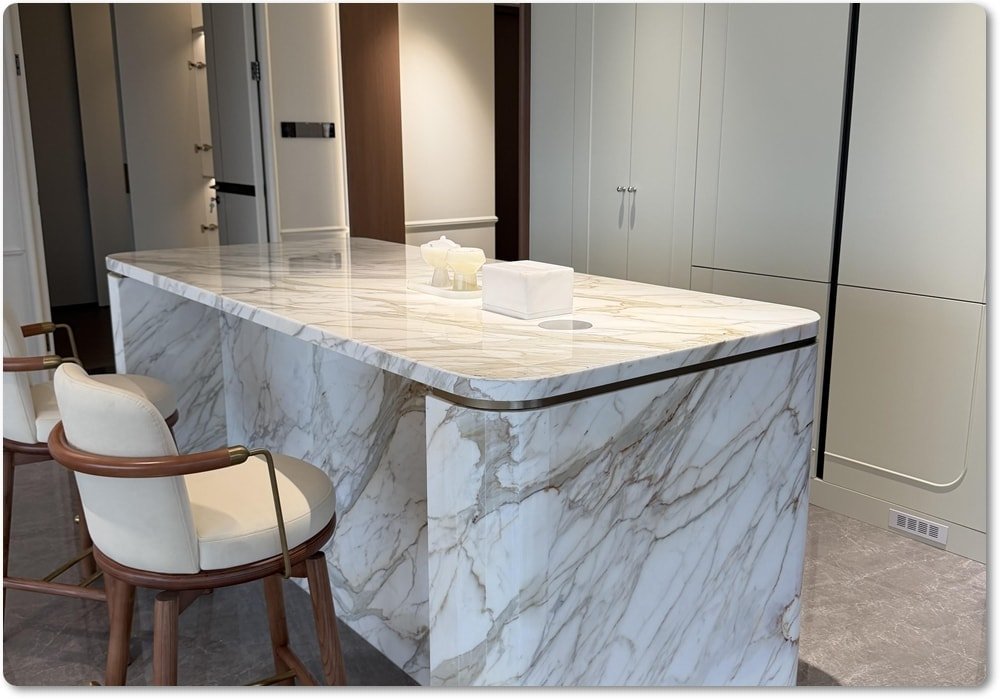
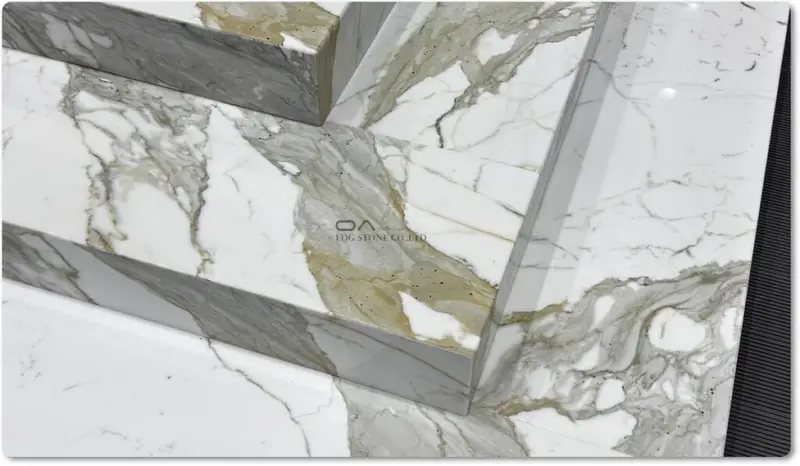
Quick Summary: Ultra Compact Slabs vs Porcelain Slabs
Ultra Compact vs Porcelain: The Complete Decision Context
What: Both materials belong to the rapidly expanding category of high-performance architectural surfaces designed for large-format applications.
Why: Architects, distributors, fabricators, and homeowners increasingly need surfaces that combine visual design flexibility with low water absorption, durability, hygiene, and reduced maintenance requirements.
How: The performance difference depends primarily on raw materials, manufacturing technology, density, firing process, slab format, thickness, surface finish, and the manufacturer’s engineering specifications.
Options: Buyers can choose standard porcelain slabs for conventional wall and floor applications or advanced ultra-compact surfaces for demanding countertops, furniture, façades, hospitality projects, and large-format architectural installations.
Considerations: The correct choice should be based on application requirements, fabrication capability, transportation conditions, installation methods, safety procedures, certifications, technical documentation, and long-term project cost—not simply on whether a supplier calls the material “porcelain” or “ultra compact.”
The large-format surface industry has changed dramatically over the past decade. Materials that were once primarily associated with traditional ceramic tiles are now being manufactured as large architectural slabs for kitchen countertops, bathroom vanity tops, wall cladding, flooring, furniture, fireplaces, commercial interiors, and exterior applications.
This evolution has created an important question for architects, contractors, fabricators, distributors, and homeowners:
What is the difference between Ultra Compact Slabs and Porcelain Slabs?
The answer is more complex than many buyers expect.
In some markets, ultra compact slabs and porcelain slabs are used almost interchangeably. In other markets, ultra compact surfaces are positioned as a premium category of advanced sintered or highly compacted mineral surfaces.
The most important fact is this:
A product name does not always explain a product’s engineering performance.
For professional procurement, buyers should examine the actual technical specifications—including density, water absorption, thickness, thermal performance, chemical resistance, fabrication requirements, and applicable certifications.
At EDG Stone, understanding these distinctions is especially important because modern stone and surface projects increasingly combine natural stone, quartz, porcelain, sintered stone, and ultra-compact surface materials within the same architectural supply chain.
This guide explains everything buyers need to know about ultracompact porcelain, ultra-compact slabs, ultra-compact porcelain countertops, ultra-thin porcelain slabs, and porcelain slabs vs granite in 2026.
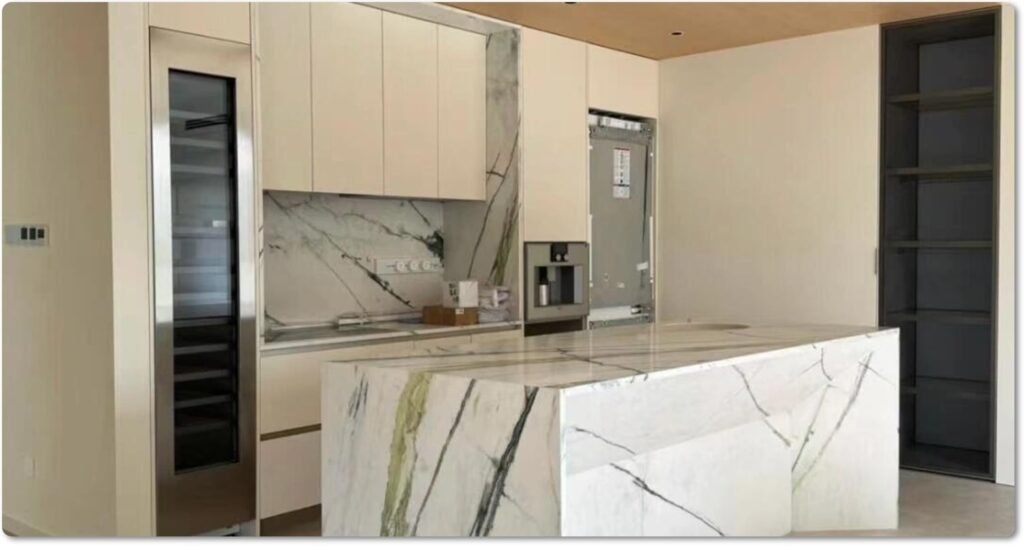
What Are Ultra Compact Slabs?
Ultra compact slabs are large-format, high-density surface materials manufactured using advanced industrial technologies that compact mineral raw materials and process them under controlled high-temperature conditions.
The term “ultra compact” generally emphasizes several characteristics:
- Extremely high material density
- Advanced compaction technology
- Large-format slab production
- High-performance architectural applications
- Low porosity
- Strong resistance to stains and moisture
- Excellent heat and UV resistance
- Compatibility with countertops and large surfaces
However, no single universal rule states that every product marketed as an ultra-compact slab must have the same chemical composition or manufacturing process.
Different manufacturers may use different technologies and terminology.
Ultra Compact Surface Manufacturing
Most advanced ultra compact surfaces begin with carefully selected mineral raw materials.
Depending on the manufacturer and product category, these may include:
- Natural minerals
- Clay-based materials
- Feldspar
- Silica-containing minerals
- Kaolin
- Pigments
- Ceramic materials
- Other inorganic components
The materials are processed, compacted, shaped into large formats, and fired or sintered at high temperatures.
The objective is to create a dense and stable architectural surface.
Why Is It Called “Ultra Compact”?
The word compact refers to the material’s highly compressed and dense structure.
The term has become popular because manufacturers want to distinguish modern large-format surfaces from traditional small ceramic tiles.
Ultra-compact slabs are commonly designed for:
- Kitchen countertops
- Kitchen islands
- Bathroom vanity tops
- Dining tables
- Coffee tables
- Wall panels
- Flooring
- Fireplace surrounds
- Commercial interiors
- Hospitality projects
- Outdoor applications
The category has become particularly important as architects search for materials that can offer both natural stone aesthetics and engineered performance.
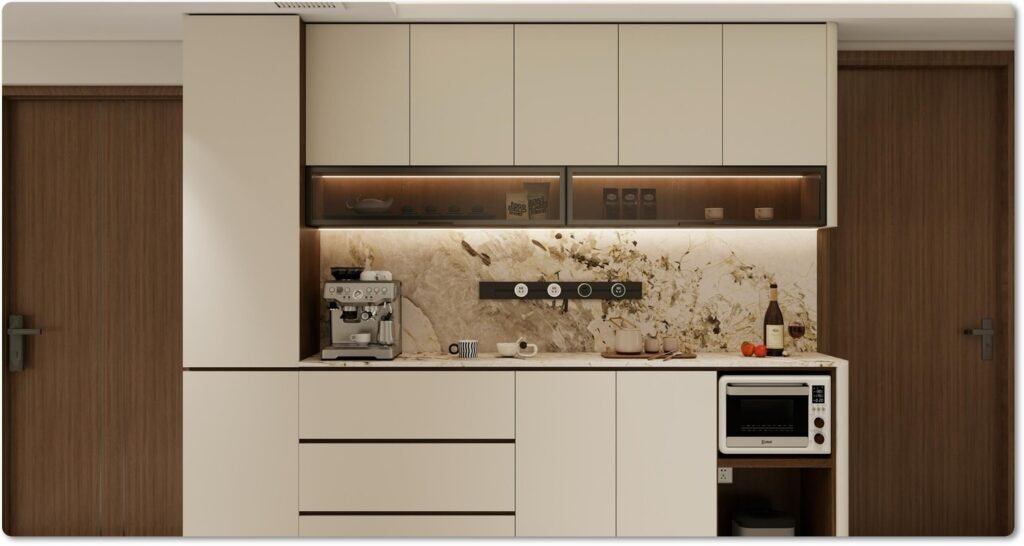
What Are Porcelain Slabs?
Porcelain slabs are large-format ceramic surfaces produced using refined mineral raw materials and high-temperature firing.
Traditional porcelain has long been used for:
- Flooring
- Bathroom walls
- Kitchen walls
- Commercial interiors
- Exterior applications
Modern technology has expanded porcelain manufacturing into large-format slabs.
Today, porcelain slabs can be produced in sizes suitable for:
- Countertops
- Vanity tops
- Large walls
- Furniture
- Reception desks
- Tabletops
- Commercial installations
How Porcelain Slabs Are Different from Traditional Tiles
Traditional tiles are typically relatively small.
Modern porcelain slab technology allows manufacturers to produce significantly larger panels.
For example, large-format slabs may be manufactured for applications requiring fewer joints and a more continuous visual appearance.
This makes porcelain increasingly attractive for luxury architectural projects.
Key Characteristics of Porcelain Slabs
Porcelain slabs are generally valued for:
- Low water absorption
- High durability
- Chemical resistance
- Easy maintenance
- Heat resistance
- UV stability
- Design versatility
Manufacturers can also create surfaces that imitate:
- Marble
- Granite
- Quartzite
- Travertine
- Concrete
- Wood
- Metal
- Terrazzo
This design flexibility is one of the major reasons why porcelain slabs have become increasingly important in modern interior design.
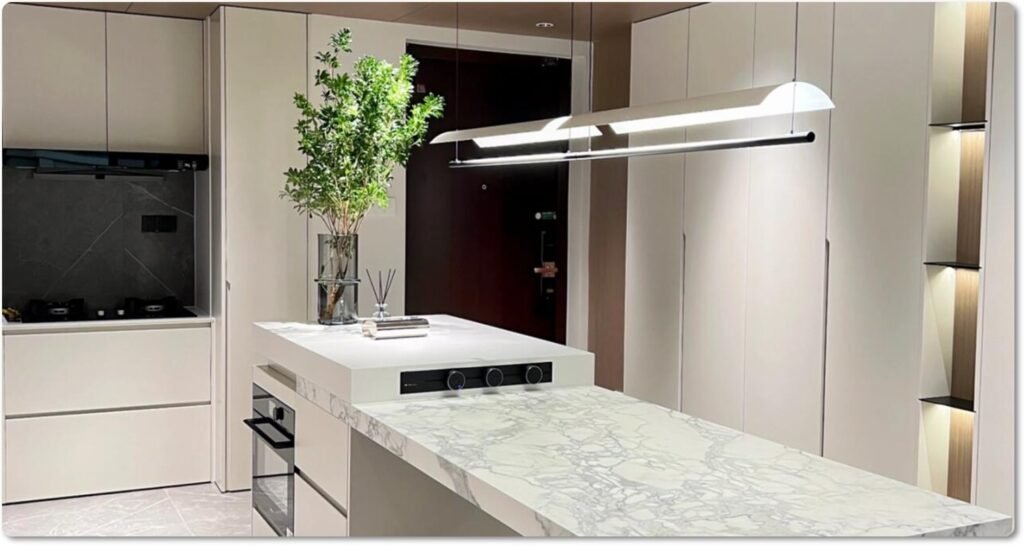
Ultra Compact Slabs vs Porcelain Slabs: The Core Difference
The biggest source of confusion is that these categories can overlap.
The Simple Explanation
Porcelain usually describes the material category and ceramic manufacturing tradition.
Ultra Compact usually emphasizes the advanced engineering, density, production technology, performance positioning, and large-format architectural application.
Therefore:
Some ultra compact slabs are porcelain-based surfaces, but not every product marketed under different commercial terminology should automatically be assumed to have identical specifications.
The correct comparison is not simply:
Ultra Compact vs Porcelain
Instead, professional buyers should ask:
Ultra Compact Surface A vs Porcelain Surface B—what are their actual technical specifications?
A Practical Comparison
| Feature | Ultra Compact Slabs | Porcelain Slabs |
|---|---|---|
| Material Category | Advanced compacted mineral surface | Ceramic/porcelain surface |
| Manufacturing | Advanced compaction + high-temperature processing | Ceramic processing + high-temperature firing |
| Density | Generally positioned as very high density | High density |
| Format | Large-format architectural slabs | Large-format slabs |
| Countertop Use | Very common | Increasingly common |
| Wall Applications | Excellent | Excellent |
| Flooring | Excellent | Excellent |
| Outdoor Use | Product-dependent | Product-dependent |
| UV Resistance | Generally excellent | Generally excellent |
| Water Resistance | Generally excellent | Generally excellent |
| Heat Resistance | Excellent | Excellent |
| Fabrication | Requires professional equipment | Requires professional equipment |
Important: Actual performance varies by manufacturer and product line.
Is Ultracompact Porcelain the Same as Porcelain?
The Short Answer: Sometimes, but Not Always in Commercial Language
The phrase ultracompact porcelain is commonly used to describe high-performance porcelain or porcelain-like surfaces manufactured using advanced compaction technology.
However, manufacturers may use different terms, including:
- Ultra compact surface
- Ultra compact porcelain
- Sintered stone
- Sintered surface
- Technical porcelain
- Large-format porcelain
- Compact surface
These names can create confusion for buyers.
The Best Procurement Strategy
Instead of purchasing based only on terminology, request:
Technical Data Sheet
Check:
- Water absorption
- Density
- Flexural strength
- Thickness
- Thermal resistance
- Chemical resistance
- Frost resistance
- Surface hardness
- Recommended applications
Fabrication Guidelines
Ask:
- What cutting equipment is recommended?
- What blade specifications are required?
- Can the material be mitered?
- What edge profiles are recommended?
- What reinforcement is necessary?
Installation Guidelines
Confirm:
- Substrate requirements
- Adhesive requirements
- Expansion joint requirements
- Recommended support systems
This approach reduces procurement risk.
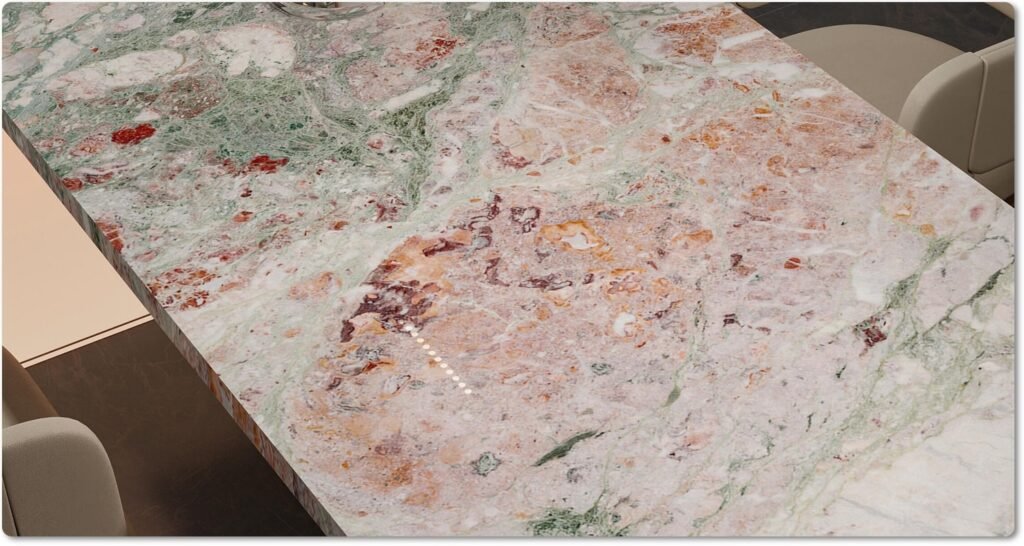
Why Are Ultra-Compact Slabs Becoming Popular?
1. Large-Format Design Is Changing Architecture
Modern architecture increasingly prefers continuous surfaces.
Large slabs can reduce the number of visible grout joints.
This creates a cleaner appearance for:
- Luxury kitchens
- Hotel bathrooms
- Commercial lobbies
- Feature walls
- Retail stores
- Apartment developments
The global ceramic and porcelain surface market continues to benefit from demand for durable and low-maintenance building materials. Multiple market analyses published during 2025–2026 project continued growth for the broader ceramic tile sector, supported by urbanization, renovation, infrastructure investment, and demand for advanced architectural finishes.
2. Demand for Low-Maintenance Countertops
Traditional natural stone can require different levels of maintenance depending on the material.
For example:
- Marble may require careful stain management.
- Some natural stones benefit from sealing.
- Surface performance varies significantly by geological composition.
Ultra-compact and porcelain surfaces are attractive because many products are designed for low-maintenance applications.
This makes them appealing to:
- Apartment developers
- Hotels
- Restaurants
- Homeowners
- Commercial contractors
3. Marble-Look Design Without Using Natural Marble
Natural marble remains one of the world’s most desirable architectural materials.
However, every natural slab is unique.
Large-format porcelain and ultra-compact surfaces can reproduce marble-inspired patterns more consistently.
Popular designs include:
- Calacatta-style surfaces
- Carrara-style surfaces
- Statuario-style surfaces
- Travertine-look surfaces
- Onyx-look surfaces
This consistency can be valuable for large commercial projects requiring repeatable visual patterns.
Ultra Compact Porcelain Countertop vs Traditional Countertop Materials
Ultra Compact Countertops vs Granite
The keyword “porcelain slabs vs granite” has become increasingly important because these materials serve many of the same applications.
Granite Advantages
Natural granite offers:
- Genuine natural geological patterns
- High heat resistance
- Strong durability
- Unique slab variation
- Premium natural material value
Porcelain and Ultra Compact Advantages
Ultra-compact and porcelain slabs may offer:
- Very low water absorption
- Consistent designs
- UV stability
- Lightweight options in thinner formats
- Large-format wall applications
- Low maintenance
Which Is Better?
There is no universal winner.
Choose granite when:
- Natural geological beauty is important
- Every slab should be unique
- A natural stone identity is preferred
Choose porcelain or ultra-compact slabs when:
- Consistent design is important
- Low maintenance is a priority
- Large-format applications are required
- Thin panels are desirable
For professional projects, the decision should be based on application requirements rather than marketing claims.
Ultra Compact Slabs vs Quartz Countertops
Quartz countertops remain one of the largest engineered surface categories globally.
However, ultra-compact surfaces are increasingly being considered as alternatives.
Quartz Advantages
Quartz can provide:
- Consistent patterns
- Strong design flexibility
- Popular countertop aesthetics
- Established fabrication infrastructure
Ultra Compact Surface Advantages
Ultra compact surfaces are often selected because of:
- High heat resistance
- UV resistance
- Outdoor application potential
- Inorganic mineral composition
- Large-format availability
The Safety and Regulatory Direction Matters
In 2026, occupational silica exposure remains a major issue in countertop fabrication.
OSHA and NIOSH have continued emphasizing controls for respirable crystalline silica exposure during countertop manufacturing, finishing, and installation. A February 2026 OSHA/NIOSH hazard alert specifically addresses silica exposure risks and methods for reducing worker exposure. OSHA also identifies crystalline silica exposure as a significant occupational hazard affecting approximately 2.3 million workers in the United States.
This does not mean one surface material automatically eliminates fabrication risks.
Cutting, grinding, drilling, and processing many stone and ceramic materials can generate respirable dust.
Therefore, professional fabrication should prioritize:
- Wet cutting
- Local exhaust ventilation
- HEPA-filtered vacuum systems
- Appropriate respiratory protection
- Worker training
- Air monitoring
These controls are increasingly important for factories, fabricators, contractors, and countertop suppliers.
What Are Ultra Thin Porcelain Slabs?
Ultra-thin porcelain slabs are large-format porcelain panels manufactured in reduced thicknesses.
Common applications include:
- Wall cladding
- Furniture
- Cabinet doors
- Renovation projects
- Decorative panels
- Lightweight architectural applications
Why Choose Ultra Thin Slabs?
Their primary advantage is reduced weight.
This can help in:
- Renovation projects
- Vertical wall applications
- Furniture manufacturing
- Large-scale commercial installations
However, thinner materials may require more careful handling.
Important Consideration
A thinner slab is not automatically weaker in every application.
Performance depends on:
- Material composition
- Density
- Manufacturing quality
- Support system
- Installation method
The correct thickness should always be selected according to the application.
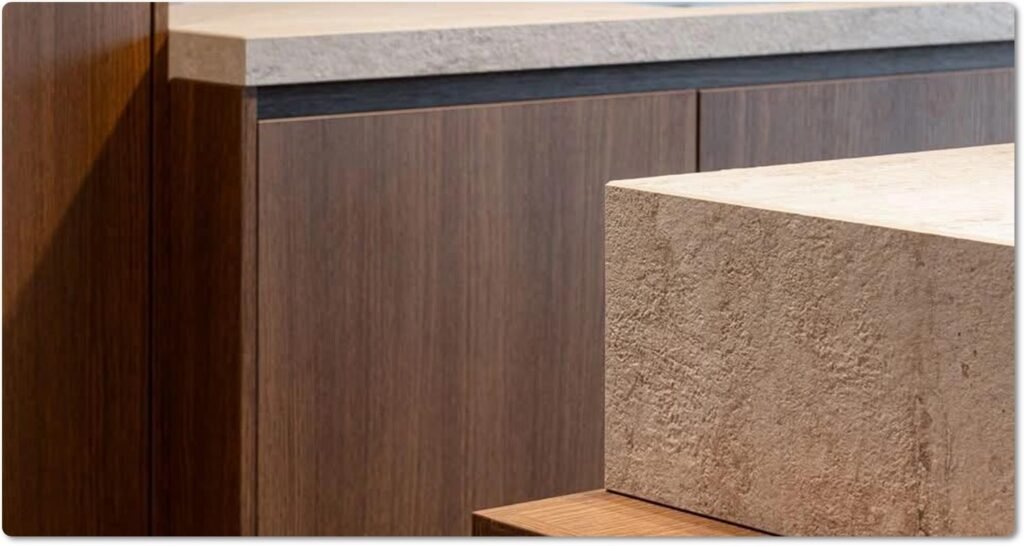
Ultra-Compact Countertop Brands: What Should Buyers Compare?
When researching ultra-compact countertop brands, buyers should avoid making decisions based only on brand recognition.
A strong procurement process should compare:
Manufacturing Capability
Ask:
- Does the manufacturer operate its own production facility?
- What slab sizes are available?
- What thicknesses are available?
- What surface finishes can be produced?
Quality Control
Confirm:
- Batch consistency
- Color consistency
- Surface inspection
- Packaging standards
- Export quality control
Technical Documentation
Professional suppliers should provide:
- Technical data sheets
- Installation recommendations
- Fabrication guidance
- Safety information
- Applicable test documentation
Export Experience
For international buyers, also evaluate:
- Container loading experience
- Wooden crate packaging
- Breakage prevention
- Customs documentation
- Project logistics
This is particularly important for wholesale procurement.
Ultra Compact Slabs for Wholesale and Project Buyers
The keyword opportunity around ultra compact slabs wholesale is growing because large-format surfaces are increasingly purchased by:
- Distributors
- Stone wholesalers
- Kitchen companies
- Contractors
- Developers
- Hotel procurement companies
What Wholesale Buyers Need
Wholesale buyers usually require more than attractive slab designs.
They need:
Stable Supply
Large projects require consistent availability.
Competitive Pricing
Factory-direct procurement can reduce unnecessary supply chain costs.
Professional Packaging
Large slabs require specialized export protection.
Technical Support
Fabricators may need:
- Cutting recommendations
- Tool recommendations
- Edge fabrication guidance
Project Coordination
Large commercial projects often require:
- Quantity planning
- Batch management
- Container scheduling
- Delivery coordination
For this reason, selecting an experienced ultra-compact slabs manufacturer, factory, or wholesale supplier is often more important than simply finding the lowest slab price.
How Regulations Are Changing the Surface Industry in 2026
The Industry Is Moving Toward Greater Product Transparency
Construction material regulations are increasingly focused on:
- Product performance information
- Traceability
- Digital documentation
- Environmental information
- Supply chain transparency
The European Union’s new Construction Products Regulation, Regulation (EU) 2024/3110, establishes a framework intended to improve harmonized product information, comparability, and digital access to construction-product data. The EU’s current CPR framework and 2026–2029 working plan signal a broader industry direction toward more structured, reliable, and accessible product information.
Why This Matters for Slab Manufacturers
Future competitive advantage will increasingly depend on:
- Technical documentation
- Digital product information
- Traceability
- Compliance records
- Machine-readable product data
For manufacturers and exporters, this means product marketing pages should increasingly include structured information rather than only beautiful product photography.
Worker Safety Is Becoming a Major Procurement Consideration
Countertop fabrication safety is becoming increasingly important.
The 2026 OSHA/NIOSH hazard alert reinforces the importance of controlling respirable crystalline silica exposure during:
- Cutting
- Grinding
- Drilling
- Polishing
- Installation
The broader direction of the industry is clear:
Surface performance and worker safety must be considered together.
A premium slab is not truly a professional building material solution unless the supply chain also considers:
- Fabrication safety
- Installation procedures
- Worker protection
- Dust control
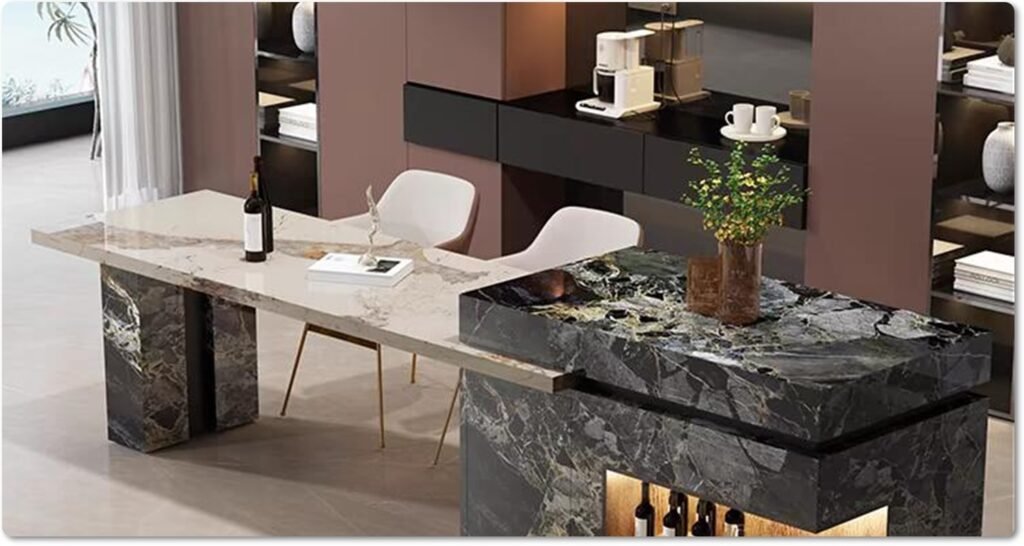
How to Choose Between Ultra Compact and Porcelain Slabs?
Choose Ultra Compact Slabs When You Need:
- High-performance positioning
- Large-format architectural surfaces
- Premium countertop applications
- Furniture surfaces
- High-end hospitality projects
- Advanced surface engineering
Choose Porcelain Slabs When You Need:
- Established ceramic technology
- Large-format walls and floors
- Decorative surfaces
- Low-maintenance applications
- Marble-look designs
- Commercial architectural projects
Compare Both When:
- Purchasing for large projects
- Selecting a countertop material
- Building a wholesale product portfolio
- Developing a new slab collection
The most important principle is:
Compare specifications, not just names.
EDG Stone: Supporting Modern Surface Material Projects
At EDG Stone, the modern architectural surface market is no longer limited to one material.
Professional projects increasingly combine:
- Natural marble
- Granite
- Quartzite
- Limestone
- Travertine
- Quartz
- Porcelain slabs
- Ultra-compact surfaces
- Sintered stone
Different applications require different performance characteristics.
For example:
A luxury hotel lobby may require natural marble.
A large commercial wall may benefit from lightweight porcelain panels.
A modern outdoor kitchen may require a highly weather-resistant surface.
A premium residential kitchen may prioritize either natural quartzite or an advanced ultra-compact porcelain countertop.
The correct material depends on:
Design + Performance + Budget + Fabrication + Installation + Long-Term Maintenance.
This is the professional approach to material selection.
The Future of Ultra Compact and Porcelain Slabs
The future of the surface industry will likely be shaped by five major trends.
Trend 1: Bigger Slabs
Architects want fewer joints and more continuous surfaces.
Trend 2: Thinner Materials
Ultra-thin porcelain slabs will continue expanding into:
- Renovation
- Furniture
- Wall cladding
Trend 3: More Natural Designs
Digital decoration technology will continue improving:
- Marble patterns
- Stone textures
- Natural movement
Trend 4: Better Technical Documentation
Buyers will increasingly request:
- Test reports
- Performance data
- Installation guides
Trend 5: Stronger Compliance Requirements
Manufacturers will need to provide more structured information about:
- Product performance
- Safety
- Traceability
- Regulatory compliance
The construction-products regulatory direction in Europe increasingly supports this transition toward more accessible and machine-readable product information.
Frequently Asked Questions About Ultra Compact Slabs vs Porcelain Slabs
1. Are Ultra Compact Slabs Better Than Porcelain Slabs?
Not necessarily.
Some ultra compact slabs are porcelain-based or closely related to porcelain technology. The best choice depends on the specific manufacturer’s technical specifications and intended application.
2. Can Ultra Compact Porcelain Be Used for Kitchen Countertops?
Yes.
Many ultra-compact porcelain surfaces are designed for kitchen countertops, islands, backsplashes, and other architectural applications.
However, professional fabrication and installation are important.
3. Are Porcelain Slabs Heat Resistant?
Porcelain generally has strong heat resistance because of its high-temperature manufacturing process.
However, buyers should always follow the manufacturer’s application guidelines.
4. What Is the Difference Between Ultra Thin Porcelain Slabs and Regular Porcelain Slabs?
The primary difference is thickness.
Ultra-thin slabs are designed to reduce weight and expand applications such as wall cladding, renovation, and furniture.
5. Are Porcelain Slabs Better Than Granite?
Neither material is universally better.
Granite provides genuine natural beauty and geological uniqueness.
Porcelain provides design consistency, low maintenance, and large-format flexibility.
The best material depends on the project.
Final Verdict: Ultra Compact Slabs vs Porcelain Slabs
What Buyers Should Understand Before Choosing
What is really being compared?
The comparison is not always between two completely separate materials. “Porcelain” usually identifies a ceramic material category, while “ultra compact” often describes an advanced performance category emphasizing density, large-format production, compaction technology, and architectural applications.
Why does the distinction matter?
Because product names can be misleading. Two slabs with different marketing names may have similar technical characteristics, while two slabs sold under the same category may perform differently depending on thickness, composition, manufacturing technology, and quality control.
How should professionals make the decision?
Architects and procurement teams should compare technical data, intended applications, fabrication requirements, installation systems, certifications, logistics, and long-term maintenance requirements.
What options exist in the modern surface market?
Today’s buyers can choose natural stone, granite, quartzite, engineered quartz, porcelain slabs, ultra-compact porcelain, sintered surfaces, and ultra-thin architectural panels. Each option solves a different combination of design and performance requirements.
The deeper consideration: What is the industry moving toward?
The future is moving toward larger slabs, thinner formats, stronger technical documentation, better supply-chain traceability, more machine-readable product information, and safer fabrication practices. Regulatory developments in construction products and increased attention to occupational dust exposure are accelerating this transition.
Best procurement conclusion
Do not buy a slab simply because it is labeled “ultra compact” or “porcelain.” Buy the material because its verified technical performance matches your project.
For homeowners, architects, wholesalers, and project buyers, the smartest decision is to evaluate the complete material system.
That means considering:
What the surface is made of.
How it is manufactured.
Where it will be installed.
How it will be fabricated.
How it will perform over time.
Whether the supplier can provide reliable technical documentation and professional project support.
As the global architectural surface market continues to evolve, both ultra-compact slabs and porcelain slabs will play increasingly important roles in kitchens, bathrooms, commercial interiors, hospitality projects, furniture, and large-format architecture.
For B2B buyers searching for an ultra-compact slabs manufacturer, ultra-compact porcelain wholesale, porcelain slabs factory, or large-format surface supplier, the future of successful procurement will be based on one principle:
Better information creates better material decisions.