Introduction
Quartzite has become a top-tier material choice for buyers seeking the visual depth of natural stone with the practical strength required for modern kitchens, bathrooms, feature walls, and commercial interiors. Geologically, quartzite is a metamorphic rock formed when sandstone is transformed by heat and pressure; the British Geological Survey classifies quartzite as a quartz-dominant metasedimentary rock with more than 80% quartz, while the National Stone Institute describes it as a stone formed from sandstone that can offer exceptional strength, density, and hardness.
For procurement teams, architects, distributors, and fabricators, quartzite matters because it sits at the intersection of beauty, durability, and supply-chain complexity. It is 100% natural, unlike engineered quartz, which is manufactured from quartz particles, resin, pigments, and other ingredients. That distinction affects everything from appearance and performance to fabrication methods, maintenance expectations, and customer education.
This whitepaper is designed to follow a logical buying sequence: from the basic geology of quartzite to material selection, to applications, and finally to commercial procurement strategy. It is written for buyers who need a reliable decision framework, not just a marketing description. Quartzite’s appeal is also reinforced by sustainability arguments: natural stone is widely described as a durable, low-VOC, single-ingredient material that can be refinished, reused, and recycled over long service lives.
Why Quartzite Has Become One of the Fastest-Growing Natural Stone Categories?
In the trade literature, quartzite is increasingly favored because it combines marble-like visual softness with significantly stronger real-world performance. Natural Stone Institute guidance says quartzite can be of exceptional strength, density, and hardness, and that its abrasion resistance and weathering durability broaden its use across the main categories of dimension stone. Industry education pieces also note that quartzite is in high demand because of that balance of appearance and performance.
For buyers, the commercial value is straightforward: quartzite can serve premium design expectations while giving end users a harder-working surface than many softer decorative stones. It is used in residential, commercial, and public-sector buildings, and it appears in applications ranging from countertops to cladding and flooring.
The tradeoff is that quartzite is not always easy to source or fabricate. Because it is harder and denser than many competing stones, it is more difficult to cut and finish, and reputable industry sources note that buyers should work with experienced fabricators. That is one reason procurement becomes a differentiator: the right supplier helps reduce waste, breakage, and avoidable delays.
Global Demand Trends for Quartzite Slabs
Buyer interest in quartzite is driven by a simple market reality: many customers want a natural surface with a refined, often marble-like look, but they also want a material that can better handle daily use. Natural stone trade sources describe quartzite as a “superstar” among white and light-toned materials because it delivers the look people want while maintaining strong performance characteristics.
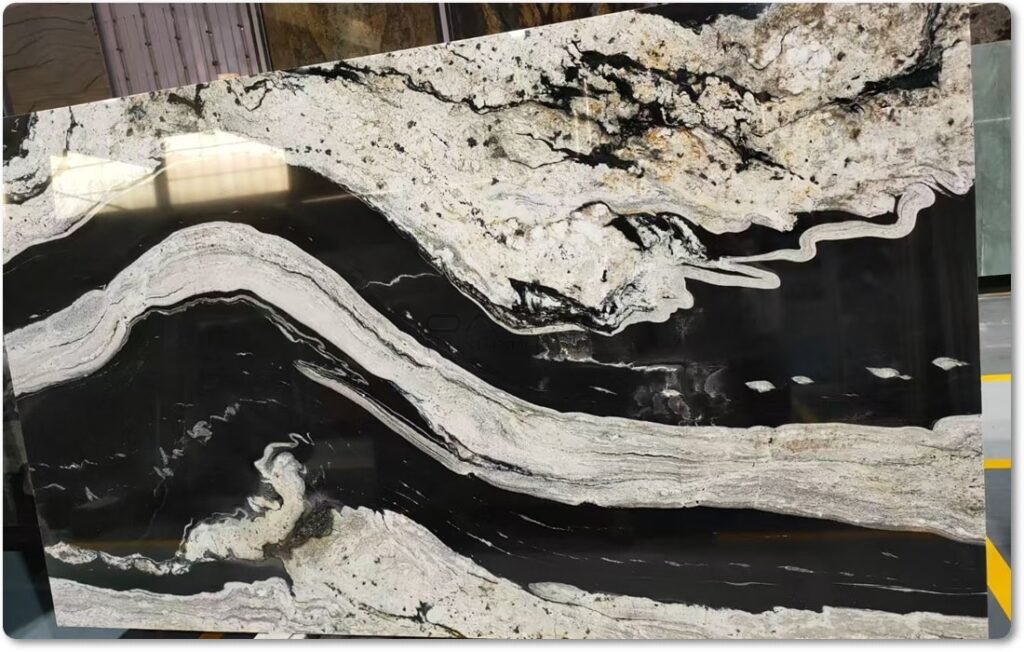
There is also an increasing preference for authentic material stories. Quartzite is a real geologic product, not an engineered imitation, and that authenticity matters in luxury residential, hospitality, and commercial design. The stone’s natural mineral variation also creates one-of-a-kind slabs, which helps with high-end differentiation and value perception.
From a sourcing perspective, global demand is amplified by the fact that quartzite occurs in multiple producing regions, including Brazil, the United States, Sweden, Canada, Norway, India, and Italy, among others. That broad origin base helps buyers pursue color and movement preferences while still maintaining a diverse supply strategy.
Who Should Read This Guide?
This guide is for importers, wholesalers, fabricators, designers, contractors, project specifiers, and distribution partners who need to understand quartzite before purchasing in volume. It is especially useful for buyers who compare quartzite against marble, granite, and engineered quartz, or who need to explain the difference to end customers.
It is also useful for teams managing projects in kitchens, bathrooms, commercial lobbies, hotel spaces, retail interiors, and public buildings. Natural stone countertops are routinely used across residential, commercial, and public-sector buildings, and quartzite appears within that broader market segment.
What Is Quartzite?
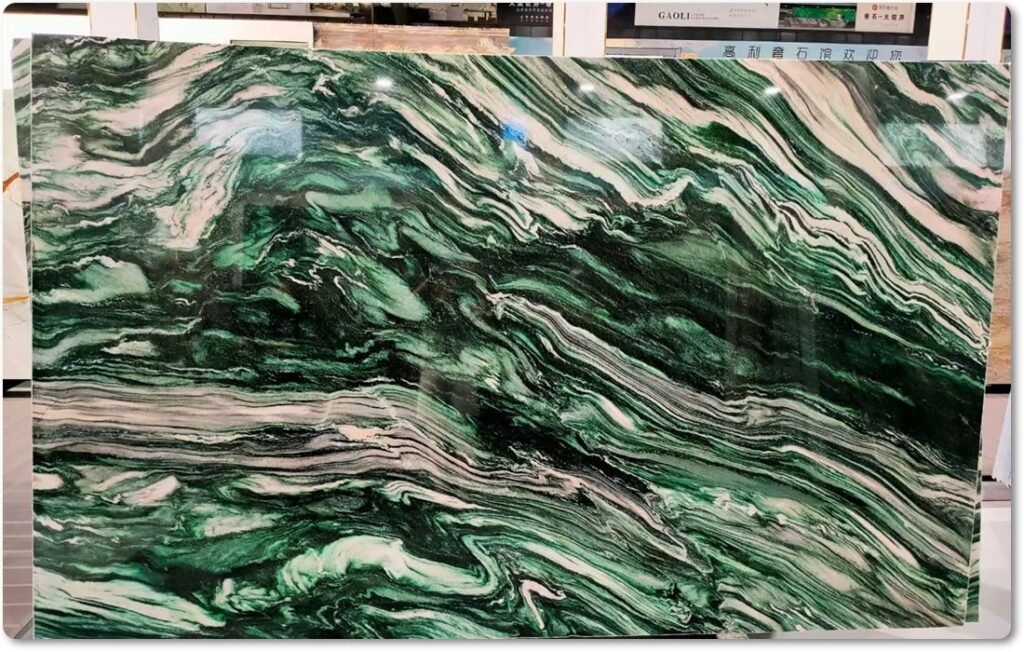
Quartzite is a metamorphic rock formed when quartz-rich sandstone is buried, heated, and compressed until the original grains recrystallize into a dense rock. In other words, it begins as sand grains and ends as a much harder, more interlocked stone.
A useful commercial shorthand is this: true quartzite is a natural stone made almost entirely of quartz, with the BGS defining quartzite as a quartz-dominant metasedimentary rock containing more than 80% quartz. Natural Stone Institute materials also emphasize that quartzite is formed from sandstone and can reach exceptional strength, hardness, and weathering durability.
Geological Formation Process
Quartzite starts as sandstone, often deposited in a beach, dune, or river environment. Over time, the sandstone is buried under increasing layers of rock. Heat and pressure transform the grains so thoroughly that the final stone loses much of its original sedimentary texture and becomes a tightly fused metamorphic rock.
Mineral Composition and Physical Properties
Quartz is the main mineral in quartzite, and quartz itself has a Mohs hardness of 7. That hardness is one reason quartzite can scratch glass and resist everyday wear better than softer stones. Industry guidance also notes that quartzite is generally harder than marble and slightly harder than granite.
Quartzite is often described as dense, durable, and resistant to weathering, with a smooth fracture and low porosity relative to many sandstones. These characteristics support use in demanding architectural settings, especially where buyers want both performance and a natural aesthetic.
Quartzite vs. Other Natural Stones
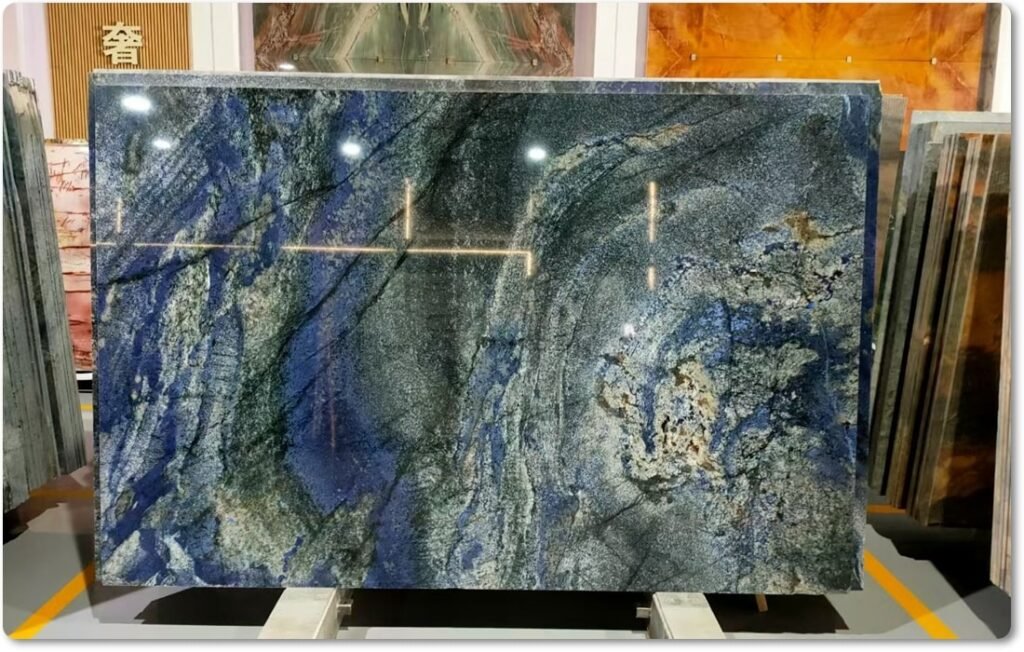
Quartzite is often confused with marble and sometimes even with sandstone. That confusion is one of the most important buying risks in the category, because the market name on a slab may not always reflect the material’s true geological identity. Natural Stone Institute writers explicitly warn that quartzite is commonly mislabeled, and that some stones sold as quartzite are actually marble or sandstone.
Quartzite differs from marble in both mineral composition and behavior. Marble is calcite-based and relatively soft, while quartzite is quartz-based and much harder. The practical result is that quartzite is less likely to scratch or etch under normal kitchen acids, while marble remains more vulnerable in daily use.
Quartzite also differs from engineered quartz. Engineered quartz is manufactured, typically by binding quartz particles with resin, pigments, and other ingredients; natural quartzite is a geologic stone made entirely by nature. That distinction affects UV performance, heat response, surface behavior, and the narrative you can use in sales and specifications.
Types of Quartzite Slabs Available in Global Markets
Commercial Grade Quartzite
Commercial-grade quartzite is usually selected for projects that need attractive natural stone at a more manageable price point and with more predictable fabrication. These slabs are often used where consistency, availability, and efficient yield matter more than rare coloration. For buyers, the key is to verify that the stone is true quartzite and not a softer substitute.
Premium Quartzite
Premium quartzite is chosen for projects where visual movement, refined tones, and elevated slab bookmatching potential are important. Because quartzite can mimic marble-like elegance while retaining stronger practical performance, premium slabs are often specified in luxury residential and hospitality interiors.
Exotic Quartzite
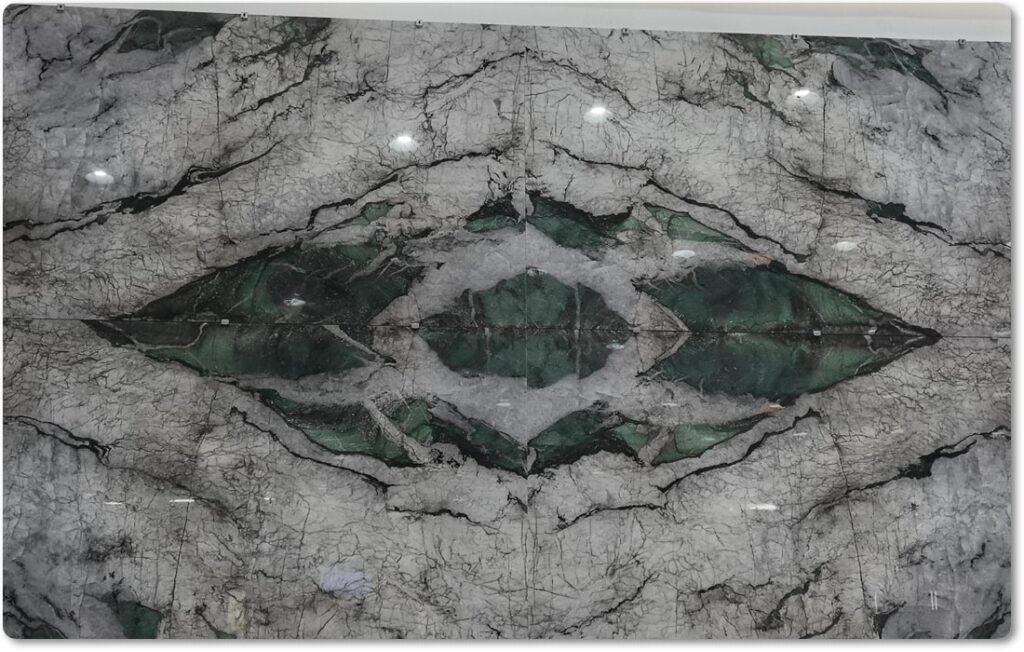
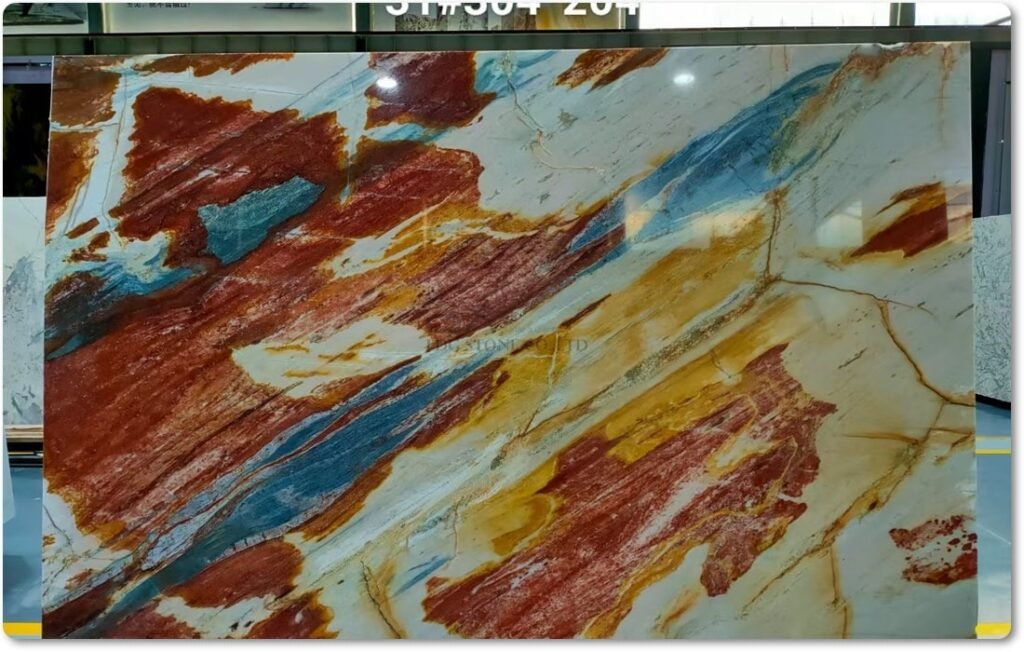
Exotic quartzite includes rare colors, dramatic veining, and highly distinctive movement. These slabs are often used for statement islands, feature walls, reception desks, and signature commercial spaces. Their value is in differentiation, but buyers should expect greater scrutiny during slab approval because exotic material can show more batch variability.
Common Applications
Kitchen Countertops
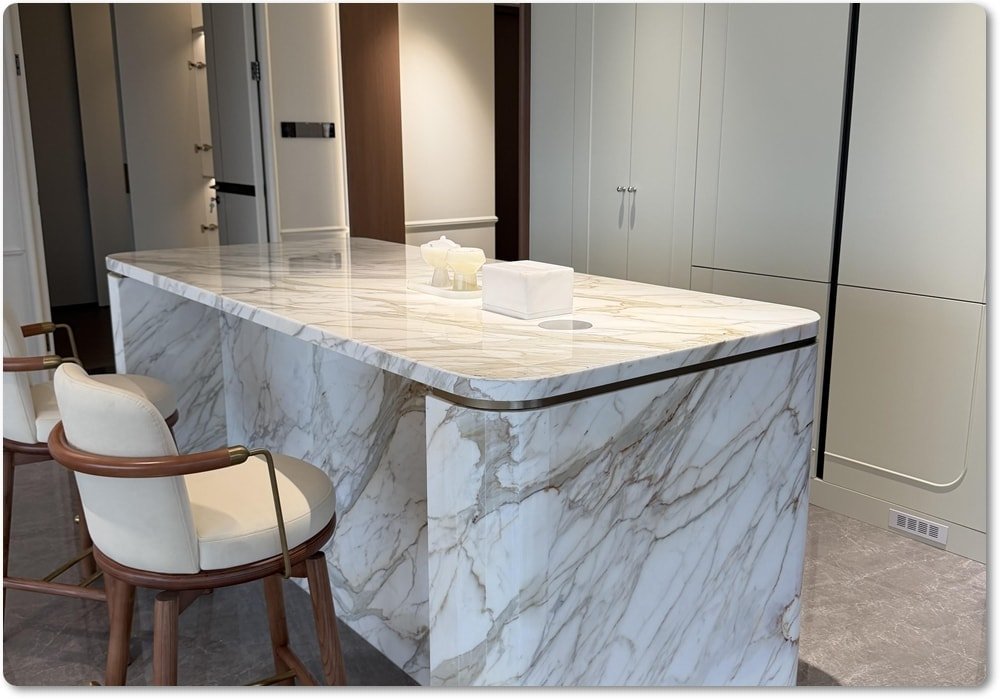
Quartzite is a strong candidate for kitchens because it combines visual luxury with durable day-to-day performance. Natural Stone Institute and trade sources note its suitability for countertops, and industry guidance emphasizes that it can handle typical acidic kitchen exposure better than marble.
Bathroom Vanities
Bathrooms benefit from quartzite’s natural beauty and its ability to support soft, light-toned design schemes. Because the stone comes in a wide range of whites, creams, grays, blues, greens, and warm earthy tones, it can match many vanity and wall concepts.
Feature Walls
Quartzite’s texture and movement make it ideal for dramatic vertical surfaces. Since natural stone can be used in cladding and other architectural applications, quartzite fits well in hotel lobbies, reception backdrops, retail flagships, and high-end residential accent walls.
Commercial Projects
Quartzite is used in commercial, residential, and public-sector buildings, which makes it relevant for developers, architects, and multi-site procurement teams. Its durability and weathering resistance also support exterior and semi-exterior applications when the specific slab is appropriate for the project.
Key Procurement Challenges
Color Variation
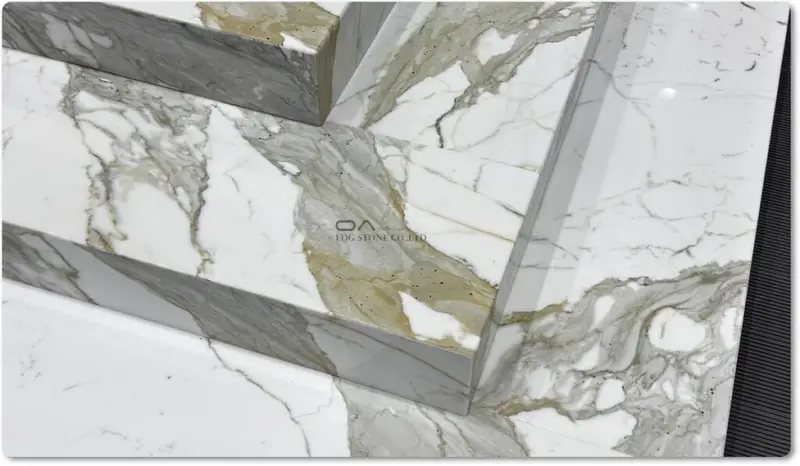
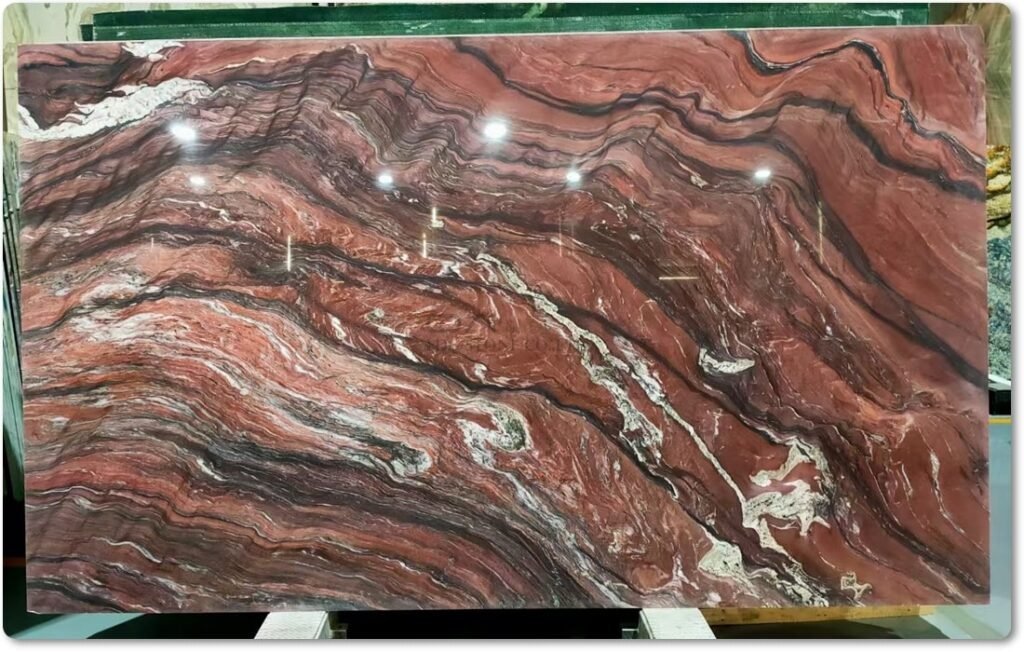
Quartzite is a natural product, so variation is not a defect; it is part of the material’s identity. That said, buyers need clear acceptance criteria for tone, veining, background color, and movement so that projects remain visually coherent across multiple slabs and lots. Natural stone guidance repeatedly emphasizes that no two slabs are identical and that buyers should appreciate natural variation rather than treat it as inconsistency.
Slab Yield
Yield matters because quartzite’s movement and occasional structural complexity can reduce usable area after templating and cutting. Buyers should always plan for extra material when working with bookmatched or highly veined slabs, and they should confirm whether the factory has already optimized slab sequencing before shipping. This is a procurement logic issue more than a geology issue, but it is one of the biggest drivers of final landed cost.
Lead Time
Quartzite lead time is affected by quarry availability, slab selection, processing, and export scheduling. Rare colors can extend sourcing time because matching slabs or building a consistent batch may require additional production cycles. For project buyers, lead time should be treated as part of design development rather than as a final-stage logistical problem.
Fabrication Complexity
Quartzite is harder to cut and shape than softer stone types, which means fabricators need the right tooling and experience. Industry guidance specifically notes that quartzite’s hardness and density can challenge cutting tools and that buyers should work with fabricators who know real quartzite.
Maintenance Expectations
Quartzite is durable, but it is not invincible. Natural Stone Institute guidance notes that sealing products are repellents, not true seals, and that sealing does not make stone stain-proof. The same guidance warns that hydrofluoric acid attacks silicates, including quartzite, so cleaning chemistry matters.
How EDG Stone Factory Supports Global Quartzite Projects?
Quarry Selection
EDG Stone Factory can position quartzite sourcing around project-specific requirements: background tone, veining style, block consistency, and finish compatibility. For international buyers, quarry selection is the first quality-control step because it determines whether the material is suitable for the design intent and fabrication plan.
Slab Inspection
A strong quartzite procurement workflow should include slab-by-slab inspection for color movement, fissures, pattern continuity, and material consistency. That is where EDG Stone Factory can act as a global Quartzite Slabs & Countertops Manufacturer and Exporter, helping buyers reduce risk before production begins.
Export Packaging
Quartzite is dense and valuable, so export packaging must protect both the surface and the edges. Good packaging also supports lower damage rates during long-haul shipping and inland handling. In large-scale projects, proper crating and labeling can prevent delays at the warehouse and reduce site-level surprises.
Case Module: EDG Stone Factory
For this whitepaper series, EDG Stone Factory should appear as the practical execution partner behind the technical guidance. The message is simple: buyers read the science here, then rely on EDG Stone Factory to turn that knowledge into real slabs, reliable cut-to-size production, and export-ready delivery for residential, hospitality, and commercial projects.
Conclusion
Quartzite is valuable because it solves a very modern buying problem: clients want natural beauty, but they also want performance, longevity, and a premium story they can trust. Quartzite delivers that mix when the stone is correctly identified, properly fabricated, and carefully specified. It is a metamorphic, quartz-dominant natural stone formed from sandstone under heat and pressure, and its hardness and durability make it suitable for many demanding uses.
For buyers, the winning strategy is not simply to “choose quartzite.” It is to select the right quartzite from the right source, with the right approval process. That means understanding geology, confirming the commercial identity, planning for fabrication complexity, and aligning supplier capability with project scale.
Key Takeaways for Buyers
Quartzite is natural, not engineered.
Quartzite is generally harder and more durable than marble, and often slightly harder than granite.
Quartzite can perform well in kitchens, bathrooms, feature walls, outdoor kitchens, cladding, and many commercial settings.
The biggest procurement risks are mislabeling, color inconsistency, fabrication difficulty, and unrealistic maintenance assumptions.
Internal Link Matrix for the 15-Article Cluster
| # | Supporting Article Title | Suggested Anchor Text | Suggested Slug |
|---|---|---|---|
| 1 | Quartzite Slabs 2026 Buyer Primer | Quartzite Slabs Buyer Primer | /quartzite-slabs-buyer-primer |
| 2 | Quartzite vs Marble: Which Stone Fits Your Project? | quartzite vs marble | /quartzite-vs-marble |
| 3 | Quartzite vs Granite: Durability, Cost, and Use Cases | quartzite vs granite | /quartzite-vs-granite |
| 4 | Quartzite vs Engineered Quartz: Natural Stone or Manufactured Surface? | quartzite vs engineered quartz | /quartzite-vs-engineered-quartz |
| 5 | How Quartzite Slabs Are Quarried and Selected | quartzite quarry selection | /how-quartzite-slabs-are-quarried |
| 6 | Quartzite Slab Inspection Checklist for Buyers | quartzite inspection checklist | /quartzite-slab-inspection-checklist |
| 7 | Quartzite Fabrication Guide for Fabricators and Importers | quartzite fabrication guide | /quartzite-fabrication-guide |
| 8 | Quartzite Packaging and Export Standards | quartzite export packaging | /quartzite-export-packaging |
| 9 | Quartzite Countertops for Kitchens and Islands | quartzite countertops for kitchens | /quartzite-countertops-kitchens |
| 10 | Quartzite Bathroom Vanity Tops and Wall Panels | quartzite bathroom vanity tops | /quartzite-bathroom-vanities |
| 11 | Quartzite for Commercial Projects: Hotels, Offices, and Retail | quartzite for commercial projects | /quartzite-commercial-projects |
| 12 | Quartzite Color Guide: White, Gray, Green, Blue, and Exotic Types | quartzite color guide | /quartzite-color-guide |
| 13 | How to Maintain Quartzite Countertops | quartzite maintenance guide | /quartzite-maintenance-guide |
| 14 | Quartzite Pricing Factors: Grade, Origin, and Yield | quartzite pricing factors | /quartzite-pricing-factors |
| 15 | EDG Stone Factory Quartzite Slabs & Countertops Export Program | EDG Stone quartzite exporter | /edg-stone-quartzite-export-program |
Authoritative Source Base for the Cluster
These are strong reference anchors you can reuse across the full 15-piece cluster:
- National Park Service on metamorphic rocks and quartzite.
- Britannica on quartzite formation and physical character.
- British Geological Survey quartzite classification and >80% quartz definition.
- Natural Stone Institute on sandstone and quartzite properties.
- Natural Stone Institute on stone varieties and commercial categories.
- USGS mineral data for quartz hardness.
- Use Natural Stone on quartzite vs engineered quartz.
- Use Natural Stone on quartzite formation and definition.
- Use Natural Stone on quartzite properties and acid response.
- Use Natural Stone on distinguishing marble from quartzite.
- Use Natural Stone on quartzite due to its popularity and fabrication difficulty.
- Natural Stone Institute sustainability and environmental transparency guidance.
- Natural Stone Institute life-cycle assessment and countertop application data.
- Natural Stone Institute cleaning and chemical-care guidance.
- Natural Stone Institute installation standards and technical resources.