Introduction
Buyers frequently confuse quartzite and quartz because the names sound similar, and both materials are widely used for countertops, wall cladding, and premium interior surfaces. In procurement terms, however, they are not interchangeable. Quartzite is a natural stone formed by metamorphism; quartz is an engineered composite surface designed for consistency, efficiency, and controlled aesthetics. Quartzite’s interlocking crystalline structure makes it hard and durable, while engineered quartz offers predictable color, low porosity, and easy maintenance because its manufacturing process creates a permanent surface seal.
For buyers, the difference affects everything: slab selection, lead time, fabrication waste, edge consistency, outdoor suitability, maintenance schedules, and lifetime cost. For fabricators, the difference affects cut quality, seam visibility, breakage risk, and warranty exposure. For designers, it affects the final look, whether a project needs natural variation or batch consistency, and whether the installation must perform indoors, outdoors, or in high-use commercial environments. These distinctions are why the right material should be chosen by application rather than by name alone.
Understanding Natural Quartzite
Formation
Quartzite is a nonfoliated metamorphic rock formed when quartz-rich sandstone is altered by heat, pressure, and chemical activity. During metamorphism, the sand grains and silica cement recrystallize into a tighter interlocking structure. That crystalline interlock is one reason quartzite is valued for its hardness and durability.
Composition
Quartzite is composed almost entirely of quartz, and quartz itself is silicon dioxide (SiO2), one of the most common minerals in the Earth’s crust. In practical sourcing terms, this means quartzite is a natural stone with mineral character that comes from geology, not from a factory recipe.
Performance Characteristics
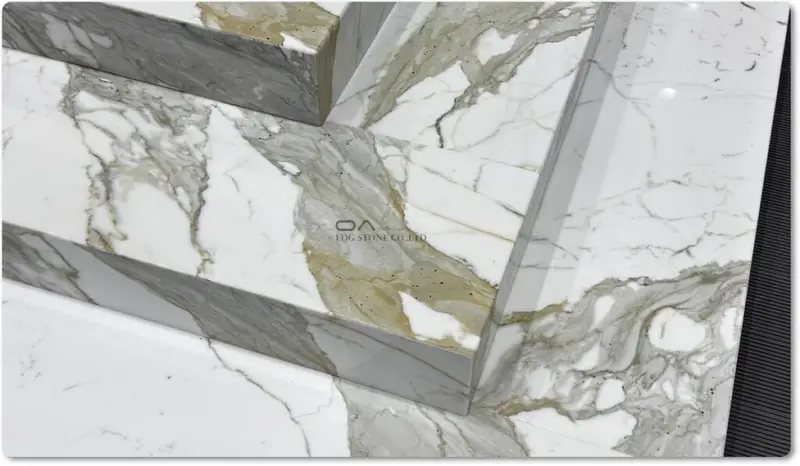
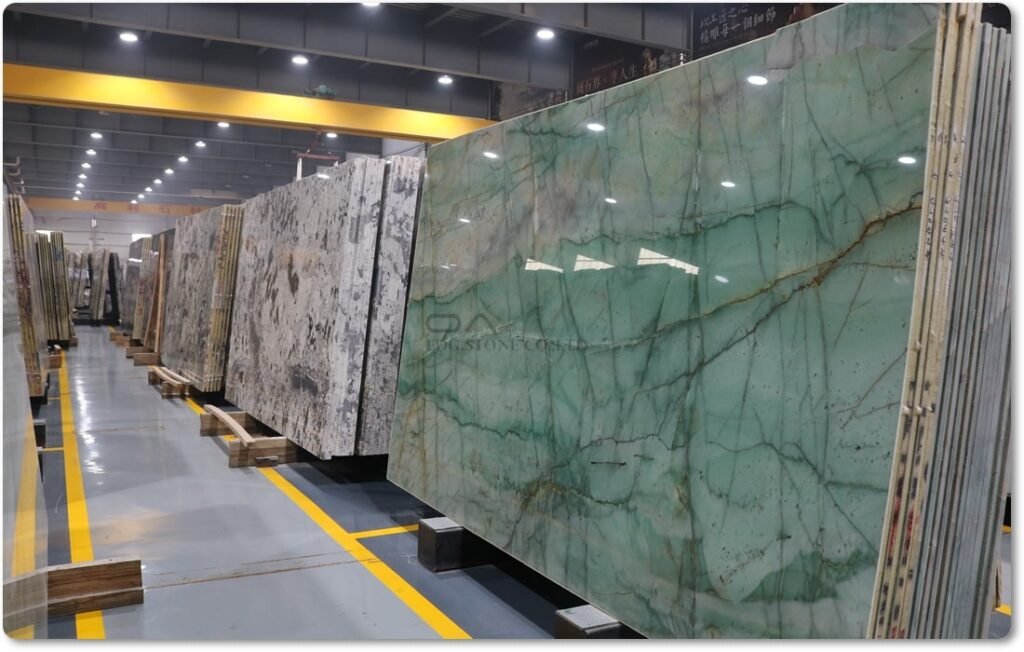
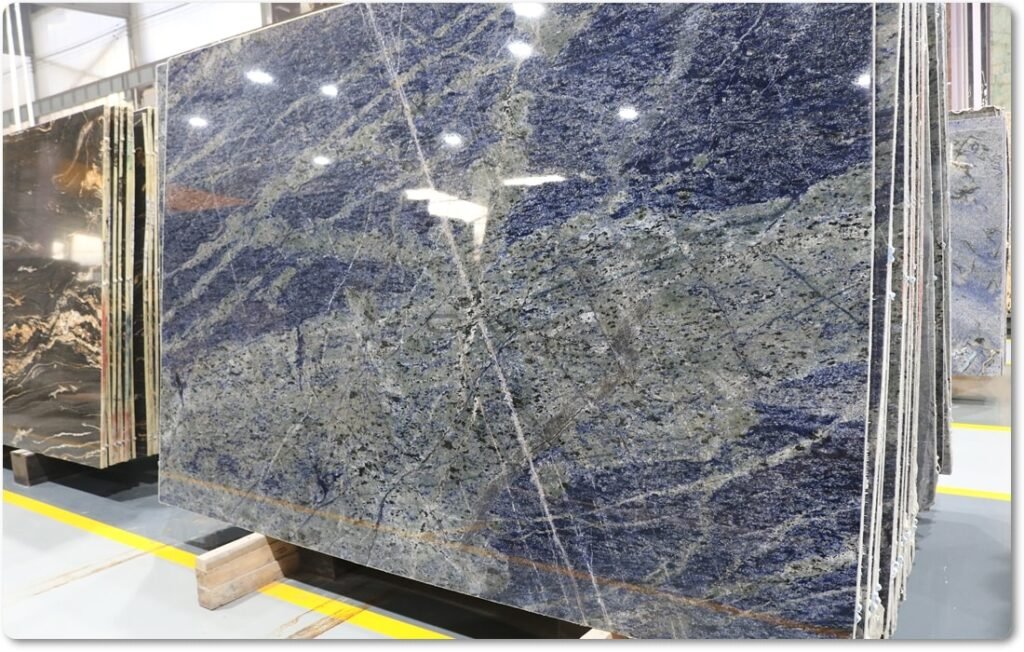
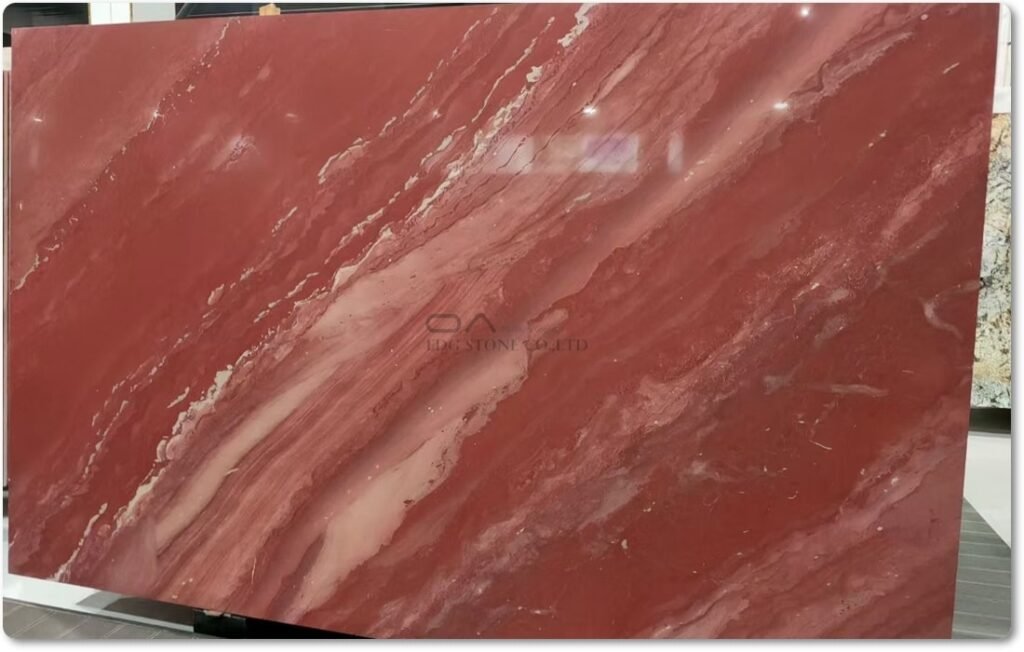
Quartzite is hard, tough, and durable. Its interlocking grains help it break through the grains rather than along grain boundaries, which is part of why it performs well in demanding architectural applications. Natural color ranges can include white, gray, pink, red, yellow, orange, brown, green, and blue, depending on impurities. For designers, that means quartzite can deliver a luxurious, organic look with strong visual depth.
Procurement Implication
From a buying perspective, quartzite is often chosen when the project values natural movement, premium stone character, and a more exclusive slab-by-slab appearance. It is especially attractive in high-end residential, hospitality, and signature feature applications where natural variation is part of the design language. That procurement advantage comes with the need for stricter slab inspection, color matching, and fabrication planning.
Understanding Engineered Quartz
Manufacturing Process
Engineered quartz is a man-made surface created from natural minerals. Leading manufacturers describe it as a product composed of about 90% ground quartz combined with resins and pigments. This controlled manufacturing process is what gives quartz its repeatable color, predictable patterning, and consistent supply quality.
Resin Content
The resin system is what binds the quartz particles and helps create a nonporous surface. Manufacturer guidance also shows that resin content matters for performance: quartz is heat-resistant, but not heat-proof, and surfaces can sustain burn marks or discoloration if exposed to extreme heat. In other words, the resin helps create convenience and consistency, but it also defines some of the material’s limits.
Production Standards
Because engineered quartz is produced in batches, procurement teams benefit from better color continuity, easier specification matching, and more predictable fabrication. Some manufacturers also publish environmental or product-performance claims such as low maintenance, nonabsorbent surfaces, and certifications for food-prep use. Cambria, for example, states that its surfaces are nonporous and nonabsorbent and do not require sealing, while also noting NSF 51 certification for food and splash zones.
Procurement Implication
Quartz is usually the better fit when the buyer wants a controlled visual, low maintenance, and repeatable outcome across multiple slabs or multiple locations. It is particularly strong for multi-unit developments, retail programs, model homes, and projects that need a stable spec with low post-installation upkeep.
Quartzite vs Quartz Performance Comparison
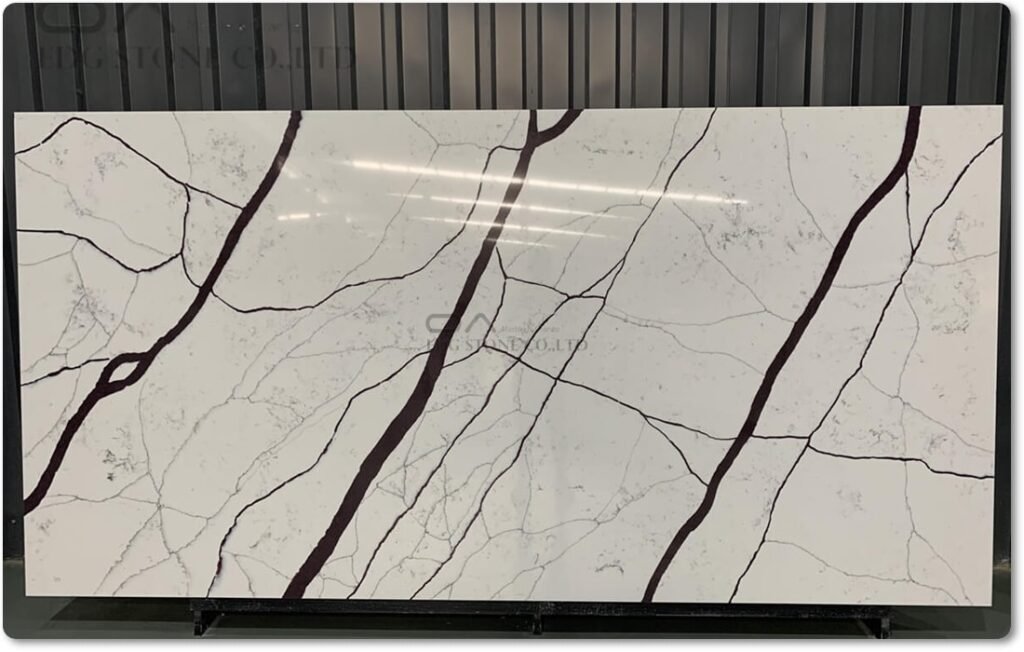
Heat Resistance
Both materials handle daily kitchen use well, but they are not the same under heat stress. Manufacturer guidance for quartz repeatedly notes that it is heat-resistant, not heat-proof, and recommends trivets or heat pads to prevent damage. Quartzite, as a natural stone, is often perceived as more heat-tolerant in real-world use because it lacks the resin-rich engineered structure of quartz, but heat performance still depends on slab quality, fabrication, and installation details.
Scratch Resistance
Quartz is commonly marketed as highly scratch-resistant because of its hard mineral content and factory-controlled surface. Quartzite is also very hard and durable due to its interlocking quartz structure. In practical procurement terms, both can perform well, but quartz gives more predictable results across batch production, while quartzite’s performance can vary somewhat by quarry, mineral impurities, and slab structure.
UV Stability
This is one of the biggest buying differences. Caesarstone’s Outdoor Collection explicitly offers Outdoor UV-resistant benchtops and surfaces, which shows that not all quartz products are automatically suitable for sun exposure. Vicostone’s safety data sheet also warns that prolonged UV exposure can reduce the physical and mechanical properties of artificial stone products and may cause discoloration or yellowing. Quartzite, being a natural stone, is not resin-based in the same way, which is why it is often considered more favorable for exterior use when the project calls for a natural slab.
Maintenance Requirements
Quartz’s nonporous nature is a major advantage. Caesarstone states that quartz countertops generally do not need sealing, and Cambria likewise says its nonporous and nonabsorbent surface eliminates the need for sealing. Routine cleaning is simple: warm water, a soft cloth, and mild soap. Quartzite, by contrast, is a natural stone and should be evaluated as a natural material in terms of maintenance planning, especially for premium projects where appearance retention matters over time.
Long-Term Durability
Durability is not only about scratch resistance. It also includes porosity, stain behavior, fabrication tolerance, and how the material responds to heat, UV, and cleaning chemicals. Quartz performs well in controlled indoor environments because of its consistency and low upkeep. Quartzite performs well where natural stone prestige and robust mineral structure matter. The correct choice depends on the project’s actual operating conditions, not just the catalog description.
Cost Comparison
Material Cost
Quartzite often sits in a premium bracket because it is a natural stone selected slab-by-slab, and visual appeal can vary significantly from block to block. Quartz is often easier to standardize for broad programs because its appearance is produced through controlled manufacturing. That makes it easier to spec in repeatable commercial projects.
Fabrication Cost
Fabrication cost is driven by more than the base slab price. Edge profiles, sink cutouts, seam visibility, waste factor, yield, breakage risk, and install difficulty all matter. Vicostone’s installation guidance, for example, warns against dry cutting and right-angle inside corners without a seam, which highlights how fabrication details directly affect risk.
Lifetime Ownership Cost
A buyer should compare not only the purchase invoice but the total ownership cost. Quartz can lower maintenance burden because it typically does not need sealing and cleans easily with basic household products. That lowers recurring service effort and can reduce lifetime operating cost in high-use interior spaces. Quartzite may justify a higher initial cost in a luxury project where natural appearance, prestige, and slab uniqueness create added value. This is a procurement inference drawn from the maintenance and performance differences documented by the manufacturers and geological sources above.
Application Recommendations
Luxury Residential Projects
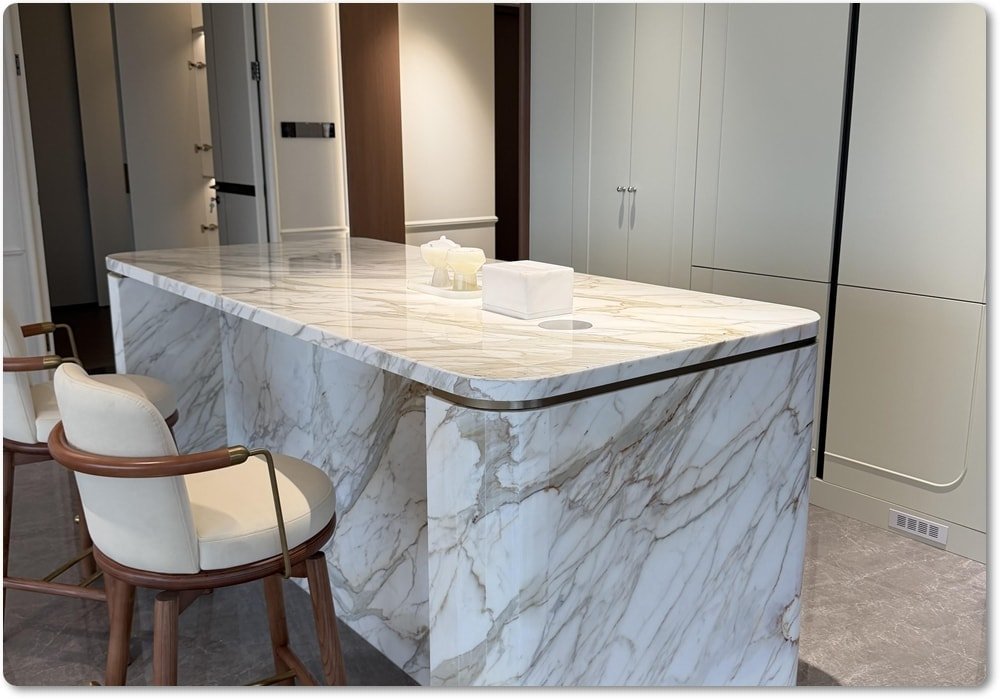
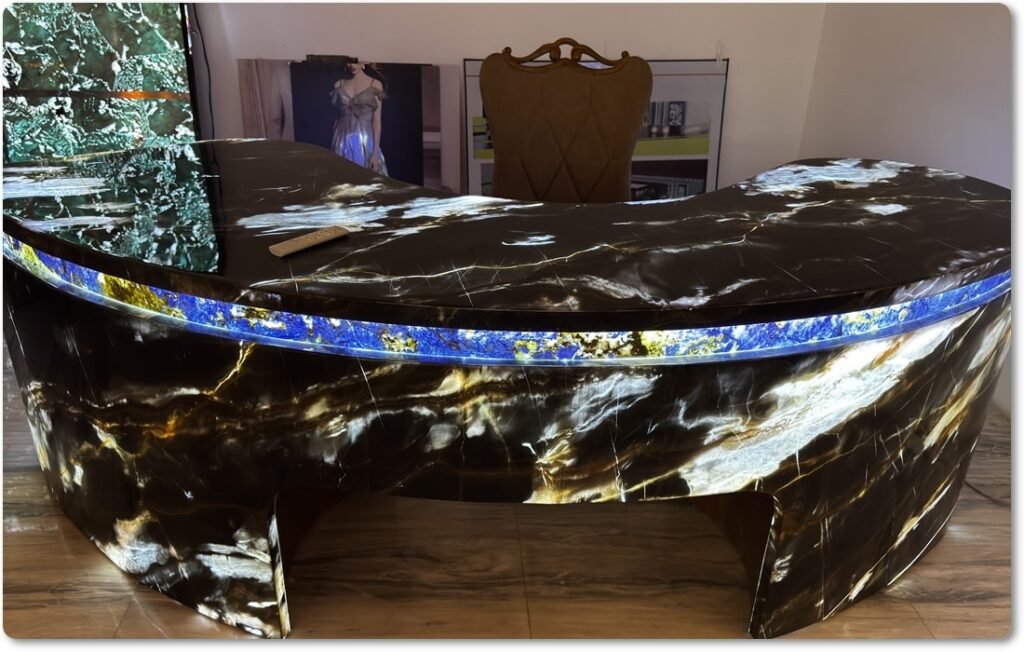
Quartzite is often the stronger design choice for luxury homes when the client wants a natural stone statement with depth, movement, and a premium organic look. It is especially attractive for dramatic kitchen islands, vanity tops, and feature walls. Quartz is also strong in luxury residential work when the priority is a clean, modern, low-maintenance interior with reliable color matching across multiple surfaces.
Commercial Interiors
Quartz usually wins in commercial interiors because designers and contractors value consistency, repeatability, easy cleaning, and lower maintenance. It is a strong choice for hospitality lobbies, office reception desks, multifamily kitchens, and retail millwork where the same spec must be repeated across many units. The controlled manufacturing process and nonporous surface are direct advantages in these environments.
Outdoor Installations
Outdoor use requires a careful spec review. Caesarstone’s Outdoor Collection shows that quartz can be adapted for exterior use only when the product line is explicitly UV-resistant. Vicostone’s SDS warning about prolonged UV exposure and discoloration reinforces that standard engineered stone products are not automatically outdoor-ready. Quartzite remains a strong candidate for many exterior applications because it is a natural stone, but the project should still verify finish, sealing, and freeze-thaw exposure if relevant.
Buyer Decision Matrix
When Quartzite Is the Better Choice?
Choose quartzite when the project needs natural variation, high-end stone character, and a premium slab-by-slab appearance. It is also a strong fit when the design story depends on uniqueness rather than batch consistency. For brand-defining residential, hospitality, and statement interiors, quartzite can deliver a more exclusive visual language.
When Quartz Is the Better Choice?
Choose quartz when the project prioritizes color consistency, fast specification, low maintenance, and repeatable performance across many locations. It is often the safer procurement choice for commercial programs, multi-unit housing, and interior projects where sealing, staining, and cleaning overhead must be minimized.
Practical Buyer Rule
Use this rule of thumb: if the project is design-led and wants natural slab identity, quartzite is usually the stronger candidate; if the project is operations-led and wants predictable performance, quartz is usually the stronger candidate. That is the simplest procurement lens for getting past terminology confusion and into specification clarity.
EDG Stone Factory Case Module
Global Quartzite Slabs & Countertops Manufacturer and Exporter
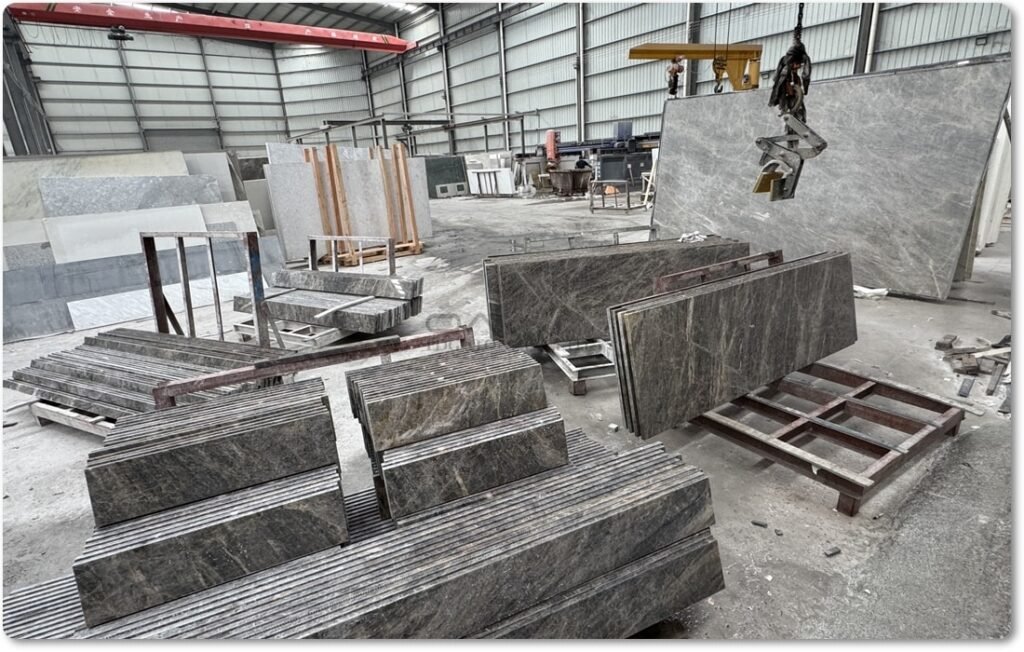
EDG Stone Factory can be positioned here as the procurement partner for buyers who need quartzite slabs and countertops with export-ready packaging, consistent grading, and project-level support. In a buyer’s journey, this module should reinforce three things: slab selection guidance, customization capability, and supply reliability for international projects.
Suggested module copy:
EDG Stone Factory Case Note
As a global Quartzite Slabs & Countertops Manufacturer and Exporter, EDG Stone Factory supports buyers from initial slab selection through fabrication planning and export coordination. For projects that demand premium quartzite, EDG Stone can help with slab matching, thickness selection, cut-to-size orders, edge profile planning, and container loading support. This makes it easier for distributors, fabricators, and design teams to specify quartzite with confidence while keeping procurement efficient and export-ready.
Conclusion
Quartzite and quartz solve different procurement problems. Quartzite is the natural choice when the project needs mineral character, premium variation, and a true stone presence. Quartz is the engineered choice when the project needs repeatability, low maintenance, and clean specification control. Buyers who understand that distinction can choose the right material faster, avoid mismatched expectations, and reduce installation and lifecycle risk.
For EDG Stone Factory, this whitepaper should function as a conversion asset: educate first, qualify the buyer second, and then route the reader into the rest of the cluster through internal links and product case modules. That structure supports SEO authority, stronger time on page, and better inquiry quality across the full 15-article content system.
Internal Link Matrix for the 15-Part Cluster
Use this whitepaper as the comparison hub and connect it to the full cluster below so the series flows from fundamentals to procurement strategy.
- Quartzite Slabs 2026 Buyer Primer — anchor: what quartzite is
- Quartzite vs Quartz — anchor: material comparison
- How to Evaluate Quartzite Slab Quality — anchor: quality checklist
- Quartzite Wholesale Pricing Models — anchor: pricing and MOQ
- Quartzite Export Guide 2026 — anchor: shipping and customs
- Quartzite for Luxury Residential Projects — anchor: high-end interiors
- Quartzite for Commercial Interiors — anchor: hotels and offices
- Quartzite Countertop Fabrication Guide — anchor: cutting and finishing
- Quartzite vs Granite vs Marble — anchor: stone comparison
- Quartz Slabs 2026 Buyer Primer — anchor: engineered quartz basics
- Quartz Slabs Wholesale Procurement Guide — anchor: bulk buying
- Quartz Slabs for Commercial Projects — anchor: multifamily and hospitality
- Quartz Outdoor Use and UV Performance — anchor: exterior installation
- Quartz Quality Control and Supplier Audit Checklist — anchor: factory audit
- Quartz Buyer Decision Matrix for Specifiers — anchor: final selection framework
Suggested link logic:
From Whitepaper #2, link outward to #1, #3, #4, #5, #10, #11, and #13. Then link back from those posts into Whitepaper #2 using the anchor quartzite vs quartz comparison.
Authority Source Set
These are the most useful authoritative sources to cite inside the final article and to build topical trust. The geology sources support the material science; the manufacturer sources support performance, maintenance, heat, sealing, and outdoor claims.
- U.S. Geological Survey — metamorphic rock definition and formation
- Geology.com — quartzite definition, formation, physical properties
- U.S. Geological Survey — quartz mineral composition