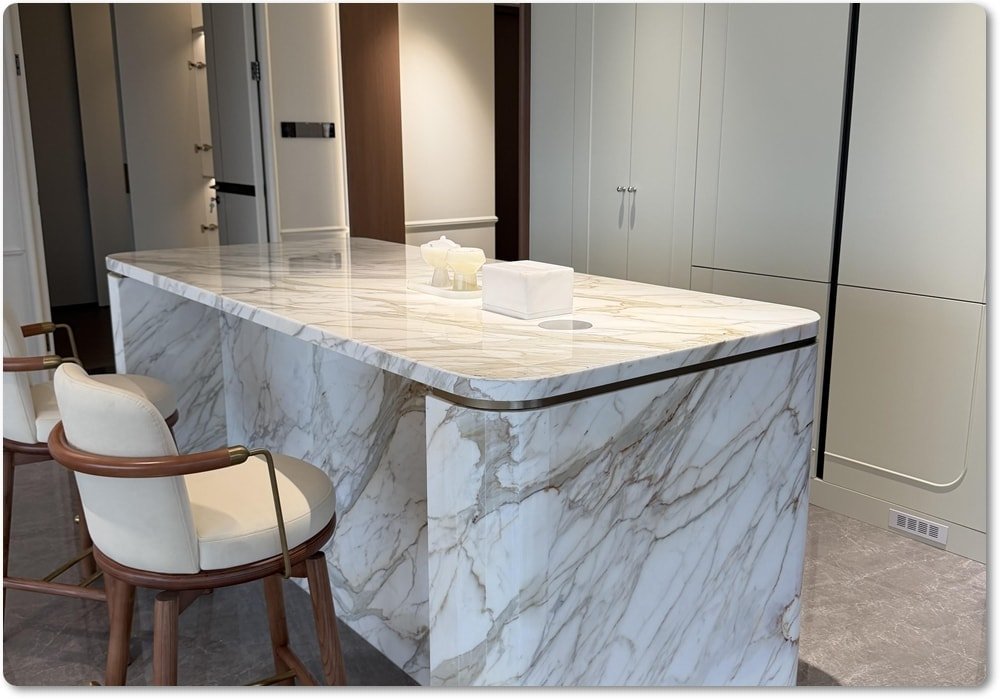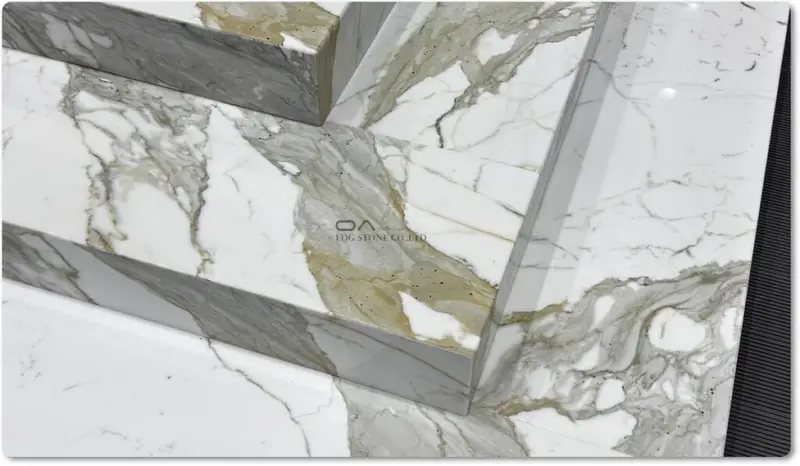
Introduction
Commercial interiors do not fail because they look bad on day one; they fail because the material specification was wrong for the way people actually use the space. In hotels, restaurants, retail stores, reception desks, and public washrooms, stone surfaces must survive frequent cleaning, repeated contact, spills, impact at edges, and long-term visual scrutiny. The stone industry’s own reference framework—the Natural Stone Institute’s Dimension Stone Design Manual—treats material selection, installation details, and application-specific performance as core design decisions rather than afterthoughts.
Taj Mahal Quartzite is often specified in these environments because it sits in a useful middle ground: it has the elevated, warm, marble-like appearance that designers want, while remaining a quartz-based natural stone with the hardness and toughness buyers expect from a premium commercial surface. Natural Stone Institute classifies quartzite within quartz-based stones and describes quartzite as hard, tough, and resistant to chemical weathering, which is exactly why it is attractive for horizontal and vertical interior applications.
This guide explains where Taj Mahal Quartzite performs well in commercial spaces, where caution is still required, and how procurement teams can reduce risk through correct thickness, finish, fabrication, and testing choices. The recommendations below are based on industry guidance from the Natural Stone Institute, ASTM-linked stone testing standards, USGS dimension stone information, and manufacturer technical literature for engineered quartz comparisons.
Why are commercial spaces a different buying problem?
A residential countertop is usually evaluated by appearance and daily convenience. A commercial countertop has to do that job while also tolerating higher traffic, stricter cleaning routines, and more frequent edge impacts from trays, luggage, equipment, or repeated hand contact. That is why commercial selection must be treated as an application-specific specification problem, not a decorative choice. The Natural Stone Institute’s design manual and ASTM-oriented guidance are built around this exact idea: stone properties, fabrication, and installation details must be matched to the application.
For procurement teams, the practical implication is simple: a material can be visually beautiful and still be wrong if it stains too easily, chips at the edge, shows visible batch variation, or becomes expensive to maintain across multiple locations. In commercial use, the cost of a mistake is multiplied by repeat installations, brand consistency requirements, and downtime. That is why a premium natural stone like Taj Mahal Quartzite often competes not only on aesthetics, but on lifecycle value.
What Taj Mahal Quartzite brings to the table?
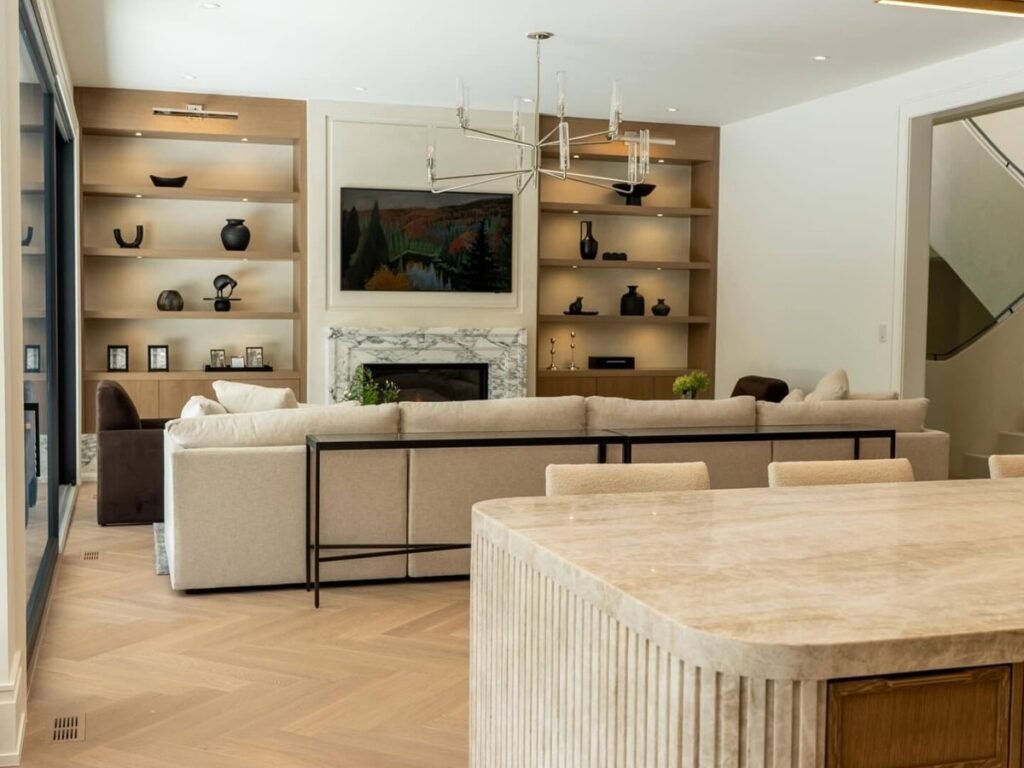
Quartzite is a quartz-based natural stone, and the Natural Stone Institute groups quartzite with other quartz-based stones that are valued for hardness and toughness. It also notes that such stones are commonly used in interior and exterior flooring and other architectural applications. In practice, this means Taj Mahal Quartzite is not just a “pretty slab”; it is a material class with meaningful physical durability advantages over softer calcareous stones.
The advantage matters most in commercial interiors where the surface must look refined without becoming fragile. Taj Mahal Quartzite is popular because it delivers a lighter, softer visual language that fits hospitality and upscale retail, but it does not carry the same sensitivity to acidic exposure that makes many marble installations high-maintenance. Natural Stone Institute explicitly warns that calcareous stones, such as marble, are highly susceptible to scratching and etching from acids, while quartz-based stones belong to a more durable category.
Where does Taj Mahal Quartzite work especially well?
Hotel lobbies and reception desks
Reception counters and lobby surfaces need to communicate quality immediately. They also experience repeated contact with bags, keys, carts, cleaning chemicals, and service traffic. Taj Mahal Quartzite is well-suited here because it delivers a premium visual presence while remaining robust enough for repeated use. In these areas, the stone’s role is not just decorative; it becomes part of the brand experience and the physical durability strategy.
For front desks and concierge counters, the most important procurement questions are not only color and veining, but edge stability, seam placement, and finish consistency across multiple pieces. That is why the Design Manual’s emphasis on horizontal and vertical installations, detailing, and full application planning matters directly to commercial buyers.
Restaurants, cafés, and bar counters
Food-service environments place special stress on surfaces because of frequent cleaning, spills, thermal exposure, and heavy turnover. Taj Mahal Quartzite is a strong candidate for visible customer-facing counters, display ledges, and back-bar surfaces where the design brief calls for warmth and luxury rather than an industrial look. Its quartz-based composition gives it a stronger performance profile than marble in high-use hospitality settings.
That said, procurement teams should distinguish between customer-facing and production-facing areas. For prep zones, hot-equipment zones, and tasks involving harsh acids or heavy impact, the specification should be checked against the exact use case. Commercial stone selection should always be tied to the functional load, not just the visible finish.
Retail fixtures and display counters
Retail environments often need a material that reads as premium but does not visually overpower merchandise. Taj Mahal Quartzite fits well in jewelry counters, cosmetics displays, luxury fashion fixtures, and information desks because its veining is usually soft and refined rather than busy or aggressive. From a procurement perspective, this makes it easier to create a coherent brand language across multiple stores without needing an overly dramatic stone.
Public washrooms and vanity tops
Public washrooms introduce moisture, cleaning frequency, and high-touch counts. Quartz-based stones are often attractive for vanities and wall-adjacent horizontal surfaces because they combine visual quality with better toughness than marble. For this kind of application, the stone’s role is to deliver a high-end look while minimizing maintenance burden over the life of the project.
Taj Mahal Quartzite compared with marble, granite, and engineered quartz
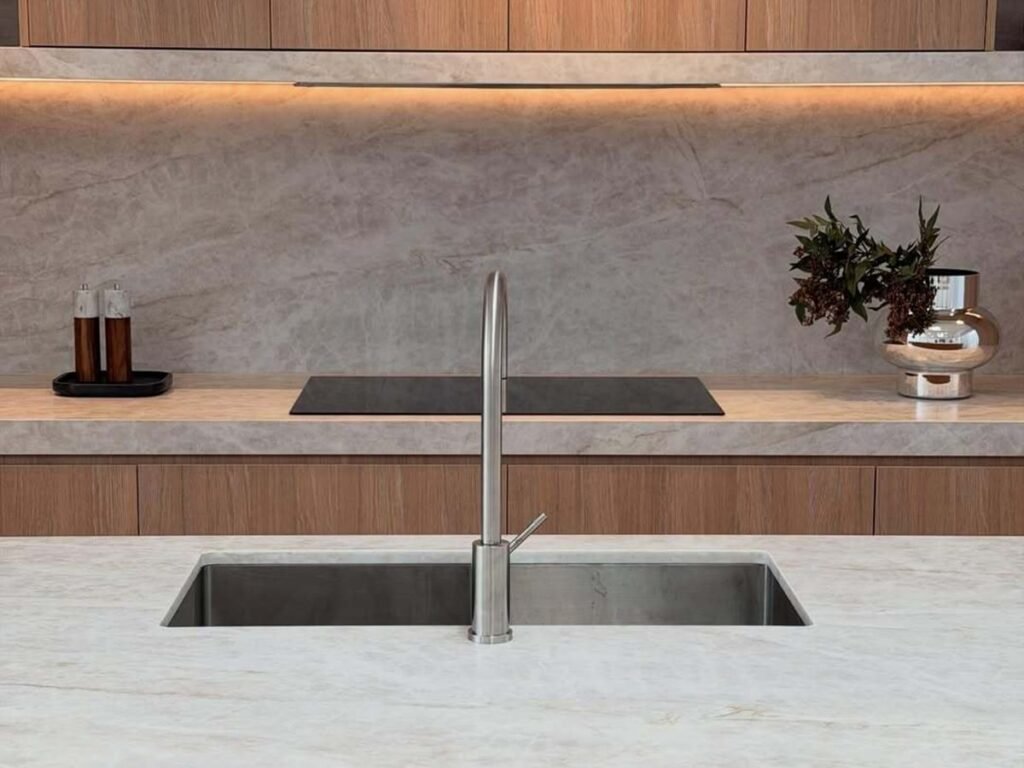
Versus marble
Marble is beautiful, but it is a calcareous stone and therefore vulnerable to acid etching and staining. Natural Stone Institute’s care guidance is very clear about the limitations of marble in this respect. That means marble is usually best reserved for lower-risk or highly controlled applications, or for clients who are comfortable with visible patina and ongoing care. Taj Mahal Quartzite gives commercial buyers a similar light-toned luxury feel with a more forgiving performance envelope.
Versus granite
Granite remains one of the most dependable natural stone options for commercial use because of its durability and relatively low maintenance. USGS dimension stone statistics continue to show granite as a major category in the market, which reflects its long-standing commercial relevance. Granite is often the safer functional choice, but Taj Mahal Quartzite can be the better design choice when the brief calls for a softer, more elegant visual.
Versus engineered quartz
Engineered quartz offers consistency and stain resistance, which are real advantages in multi-site commercial rollouts. However, the manufacturer’s own technical documentation makes clear that it is still a resin-bound product and is not heat-proof; excessive heat can damage the surface permanently. That means engineered quartz is excellent when batch consistency and stain resistance are the top priorities, but it requires more caution around hot equipment than natural quartzite does.
Thickness, edge profile, and finish: the three specification choices that matter most
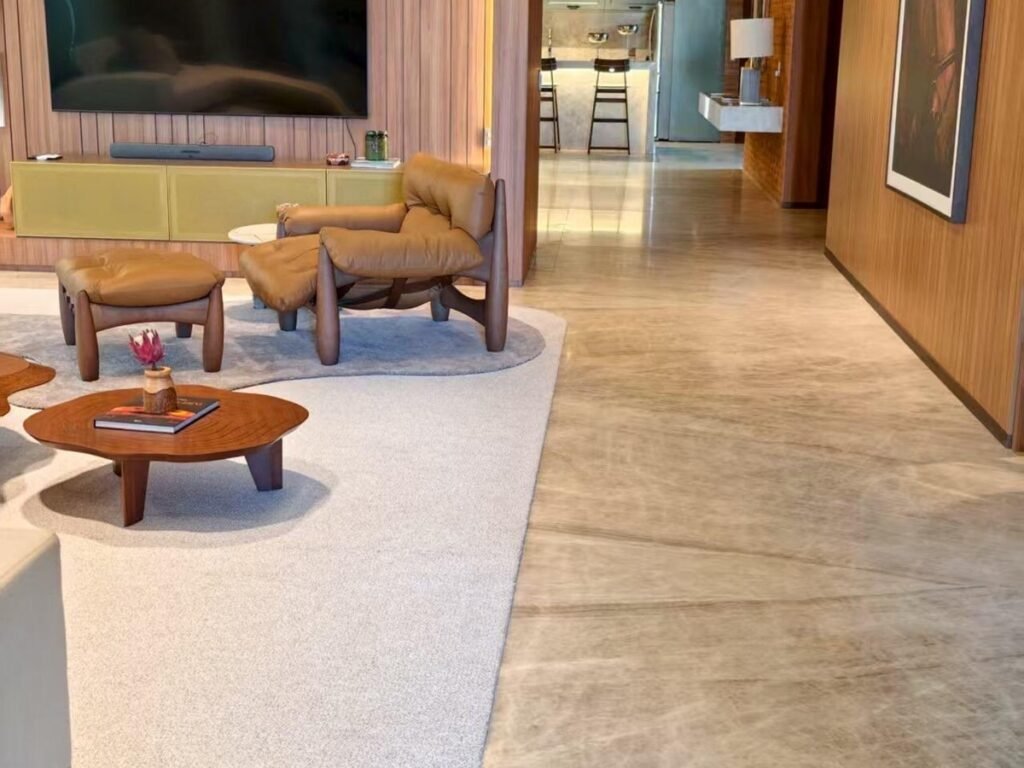
For commercial countertops, thickness affects both the look and the structural margin of safety. A thicker stone generally reads more substantial and is often preferred where the counter is a focal point. In many projects, 20 mm is acceptable for lighter-duty applications or vertical elements, while 30 mm is preferred for premium horizontal surfaces because it gives a more robust appearance and a larger safety margin in fabrication and installation. This is a procurement conclusion based on standard stone design practice and the way commercial projects manage risk.
Edge profile matters because commercial failures often occur at corners and cutouts. Straight edges are simple and efficient, but mitered edges are often used when the design wants a thicker, more luxurious look. In restaurants, hotels, and retail counters, the edge should be specified with both visual intent and impact resistance in mind. That is why the Design Manual’s detailed treatment of horizontal surfaces and fabrication details is so relevant.
Finish selection also matters. Polished surfaces tend to emphasize the premium character of Taj Mahal Quartzite and are common in luxury commercial interiors. Honed finishes reduce reflectivity and can work well in modern or understated spaces. Leathered finishes can be attractive in hospitality and retail settings where a softer tactile feel is desired. The best finish is not the one that looks best in isolation, but the one that matches maintenance expectations, lighting conditions, and brand style.
Testing and quality control for commercial orders
Commercial buyers should not rely on appearance alone. Natural Stone Institute’s ASTM guidance identifies common stone tests such as absorption and bulk specific gravity, modulus of rupture, compressive strength, and flexural strength. These tests are useful because they help buyers compare stone performance and identify whether a slab is appropriate for the intended application.
The practical procurement message is straightforward: ask for technical data, verify that the data is current, and make sure it matches the exact stone source being proposed. For larger commercial projects, project-specific testing may be appropriate, especially if the design includes unusual spans, large cutouts, heavy cantilevers, or demanding installation conditions. Natural Stone Institute explicitly offers testing services and notes that project-specific testing is useful when conditions are uncertain.
Procurement checklist for commercial buyers
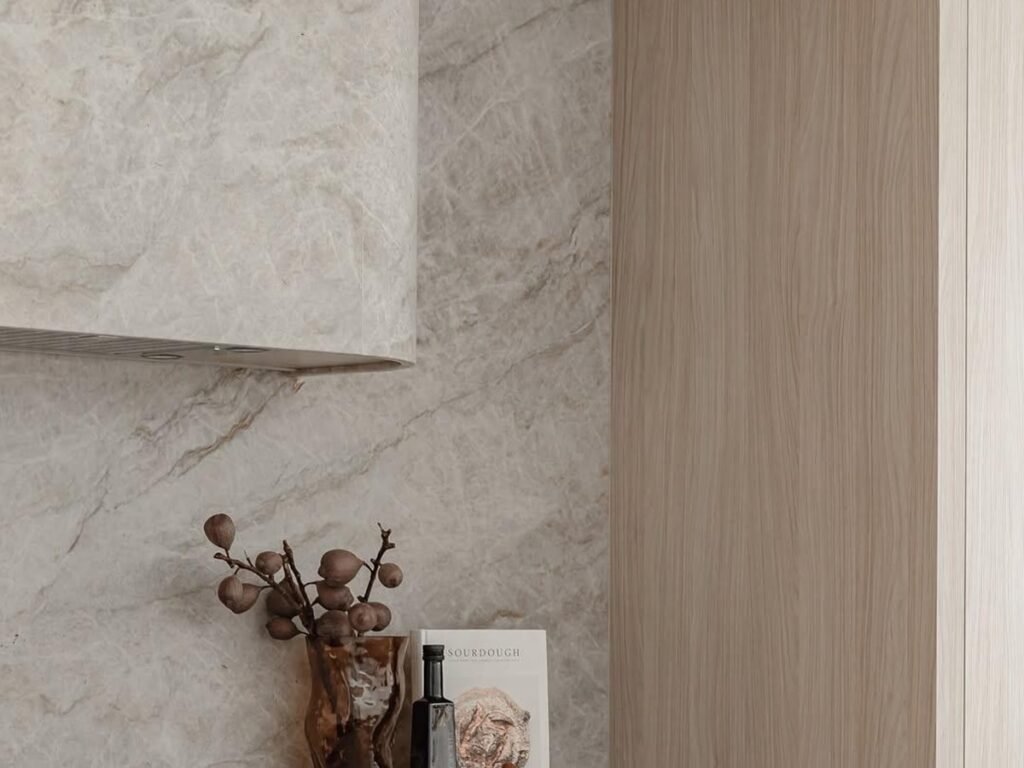
A strong commercial specification for Taj Mahal Quartzite should confirm the following before purchase: the exact stone batch, finish, thickness, fabrication detail, seam plan, cutout locations, support requirements, and delivery sequence. This is especially important when one project includes multiple areas, such as a reception desk, bar counter, bathroom vanities, and wall cladding, because visual consistency depends on batch control and careful slab allocation. The stone industry’s design guidance treats mockups, samples, and installation detailing as core parts of the process for exactly this reason.
For multi-location hospitality or retail rollouts, the safest workflow is to approve slab images or videos, lock the batch before fabrication, and require a layout drawing before cutting begins. That process reduces the chance of color mismatch, vein discontinuity, or waste from poor nesting. The more visible the installation, the more important that process becomes.
Bottom line
Taj Mahal Quartzite is a strong commercial-specification material because it combines the refined look of a light luxury stone with the toughness expected from a quartz-based natural stone. For hotels, restaurants, retail counters, and public-facing vanities, it can deliver a premium result without the maintenance burden associated with marble. Compared with engineered quartz, it offers a more natural origin and better tolerance for heat-related concerns; compared with granite, it often delivers a softer and more upscale visual language; and compared with marble, it provides a much safer performance envelope for daily commercial use.
The right decision is not “Taj Mahal Quartzite or not.” The right decision is whether the project needs its specific combination of aesthetics, durability, and procurement manageability. When the answer is yes, it becomes one of the most compelling stones in the premium commercial interior market.
FAQ
1. Is Taj Mahal Quartzite suitable for hotel and restaurant counters?
Yes. It is a quartz-based natural stone with the durability and visual refinement that work well in hospitality environments.
2. Is it better than marble for commercial use?
In most high-traffic commercial settings, yes. Marble is more vulnerable to etching and staining, while quartzite is generally more forgiving.
3. Can it be used in public washrooms and vanities?
Yes. Its durability and premium appearance make it suitable for vanity tops and related interior applications.
4. Should commercial buyers request testing documents?
Yes. ASTM-based stone test data is an important part of procurement, especially for larger or more demanding projects.
5. Is engineered quartz a safer choice than quartzite?
It depends on the application. Engineered quartz offers consistency and stain resistance, but manufacturer guidance warns that it is not heat-proof and can be damaged by excessive heat.
References
- Natural Stone Institute, Dimension Stone Design Manual
- Natural Stone Institute: Which ASTM Standards Are Relevant To Natural Stone
- Natural Stone Institute, Learn About Cleaning Products for Natural Stone
- Natural Stone Institute, Quartz-based Stones
- Natural Stone Institute, Testing Services / NSI Materials Test Laboratory
- USGS, Dimension Stone Statistics and Information
- USGS, Mineral Commodity Summaries 2026: Stone (Dimension)