Bathroom Vanity Stores vs Factory Direct: The Ultimate Procurement Comparison
Choosing where to buy bathroom vanity tops is no longer just a design decision. In 2026, it is also a sourcing decision that affects project cost, lead time, customization, and supply chain reliability. For homeowners, contractors, designers, and procurement teams, the two most common paths are bathroom vanity stores and factory direct sourcing.
Retail channels such as Home Depot, Lowe’s, and Menards are popular because they are familiar, convenient, and fast. Factory direct sourcing, on the other hand, is often preferred for custom projects, wholesale orders, and large-scale renovation work where cost control and specification accuracy matter most.
The right choice depends on project size, delivery timeline, design flexibility, and total landed cost.
Retail Channels: Home Depot, Lowe’s, and Menards
Retail bathroom vanity stores are designed for speed and convenience. They are a strong choice for customers who need standard sizes, predictable products, and easy local purchasing.
Advantages of Retail Bathroom Vanity Stores
1. Faster purchasing process
Retail stores make it simple to browse, compare, and buy. Many vanity tops are already in stock or available for quick pickup or local delivery. This is especially helpful for urgent bathroom remodels.
2. Standardized product selection
Most retail bathroom vanity tops are built around common sizes and mainstream finishes. That makes them easier to coordinate with standard cabinetry, sinks, and installation accessories.
3. Lower decision complexity
For many homeowners, shopping retail reduces the need to manage drawings, fabrication details, stone selection, or shipping coordination. You choose from what is available and move forward quickly.
4. Easier returns and local support
Retail channels often provide more straightforward customer service, return policies, and in-person problem-solving. That can matter when a project has tight deadlines or the buyer is not experienced with stone sourcing.
Disadvantages of Retail Bathroom Vanity Stores
1. Higher unit price
Retail pricing usually includes multiple layers of margin, distribution, warehousing, and brand overhead. As a result, the per-unit cost is often higher than factory direct sourcing.
2. Limited customization
Retail products are typically standardized. If a project needs a custom thickness, special sink cutout, unusual edge profile, or non-standard dimensions, retail options are often restrictive.
3. Less suitable for bulk procurement
For multi-unit residential projects, hotels, apartments, or commercial bathrooms, retail purchasing can become expensive and inconsistent. Matching large quantities across many units is harder when sourcing from shelf inventory.
4. Supply variability
Popular sizes and styles may go out of stock or change over time, making repeat orders less reliable for phased projects.
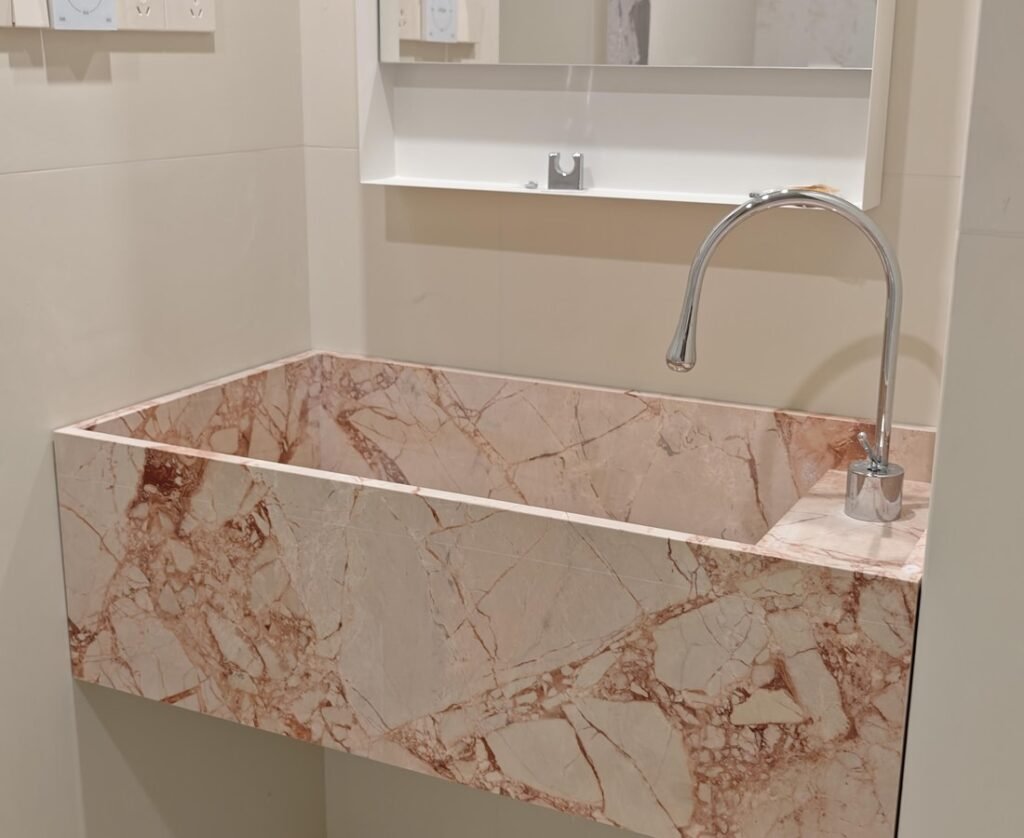
Factory Direct Sourcing
Factory direct sourcing means buying bathroom vanity tops directly from the manufacturer instead of through a retail chain or distributor. This model is common in wholesale, project-based, and export-oriented procurement.
For builders, contractors, distributors, and brands, factory direct buying can offer a major advantage in both cost and control.
Advantages of Factory Direct Vanity Tops
1. Lower cost structure
Without retail middlemen, factory direct sourcing can reduce costs significantly. In many cases, buyers may save around 20–40% compared with retail channels, depending on material, order size, packaging, and shipping method.
2. Greater customization
Factories can often produce vanity tops to exact project specifications. This includes custom sizes, sink openings, edge profiles, backsplash options, materials, colors, and finishes.
3. Better for large-scale procurement
Factory direct is especially effective for wholesale buyers and multi-unit projects. When consistent specifications are required across dozens or hundreds of units, direct manufacturing improves repeatability and consistency.
4. Stronger control over product specification
Buyers can align the product with the project’s technical and aesthetic needs. This is important for developers, designers, and procurement teams who need precise results rather than “close enough” standard stock.
5. More flexible sourcing strategy
Factory direct buyers can often choose different tiers of materials and production methods depending on budget. That allows better planning across premium, mid-range, and value-driven projects.
Disadvantages of Factory Direct Sourcing
1. Longer lead time
Unlike retail stock purchases, factory direct orders usually require production time, quality control, packaging, and freight coordination. This makes planning more important.
2. More sourcing management
The buyer must manage specifications, approvals, shipping terms, and communication more actively. That is not difficult for experienced procurement teams, but it is more involved than retail shopping.
3. Higher minimum planning effort
Factory direct sourcing works best when the buyer already knows dimensions, quantities, finishes, and installation requirements. It is less ideal for last-minute one-off purchases.
4. Import and logistics complexity
For cross-border sourcing, buyers may need to handle freight, customs, documentation, and delivery coordination. That adds responsibility, even when the product cost is lower.
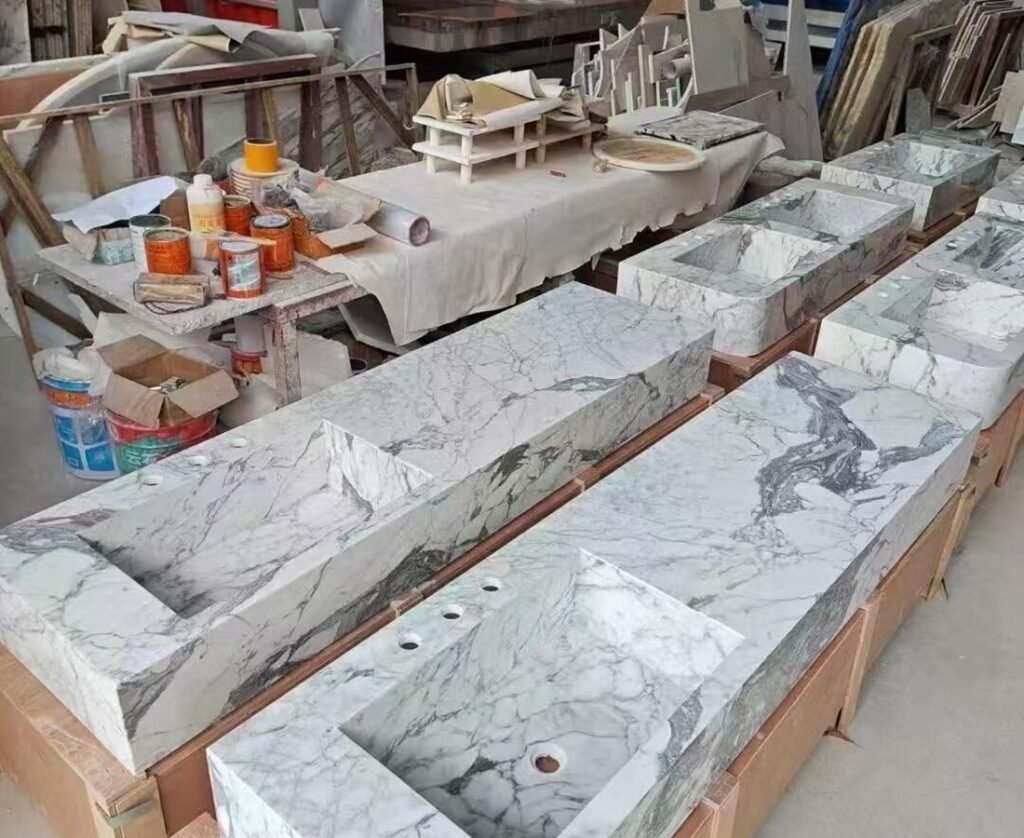
Cost Comparison: Retail vs Factory Direct
At a high level, retail and factory direct differ in where the value is added.
Retail pricing includes:
- manufacturing
- warehousing
- distributor margin
- retail margin
- local logistics
- brand overhead
Factory direct pricing usually includes:
- manufacturing
- quality control
- packaging
- export preparation
- shipping coordination
That difference is why factory direct sourcing is often the stronger choice for budget-sensitive projects, especially when the order volume is large or the design requires customization.
Cost summary
| Channel | Typical Cost Profile | Best Fit |
|---|---|---|
| Retail | Higher unit cost | Small projects, urgent replacements, standard sizes |
| Factory Direct | Lower unit cost, especially at scale | Wholesale, custom projects, repeated orders |
In many projects, the real cost difference is not only the listed price. It also includes wasted material, time delays, redesigns, and replacement risk. A lower sticker price does not always mean a lower project cost.
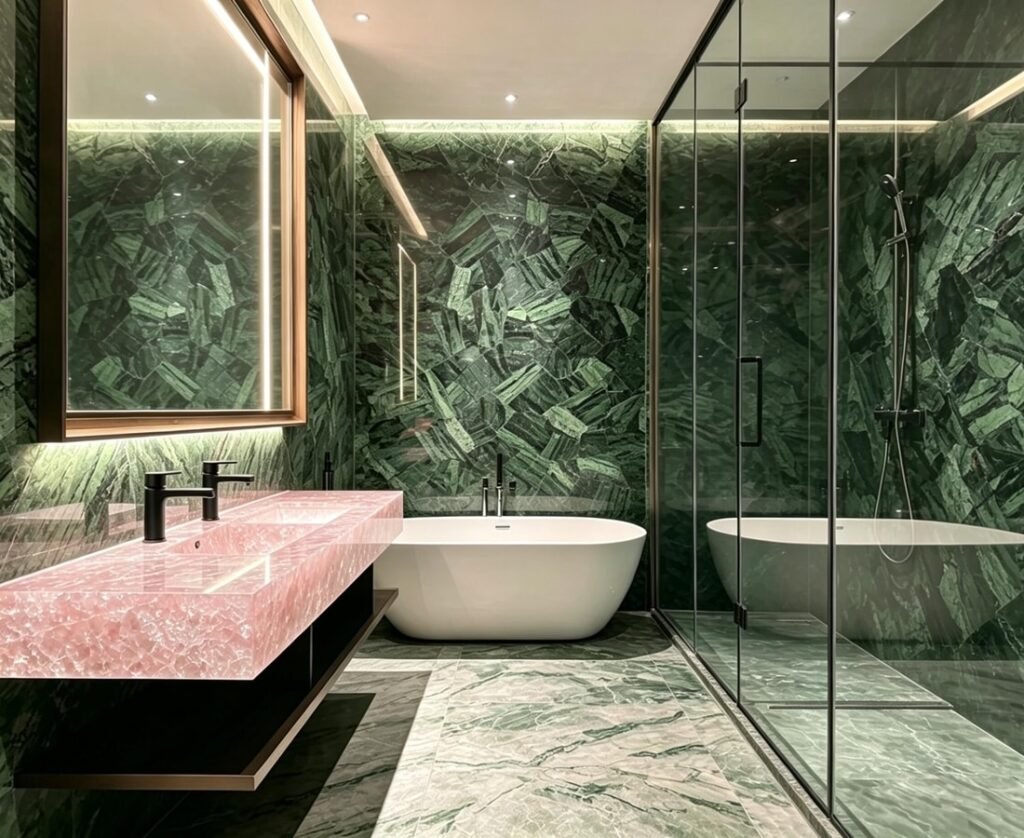
Customization Comparison: Standardized Retail vs Flexible Factory Production
Customization is where factory direct sourcing usually creates the biggest advantage.
Retail customization is limited
Retail bathroom vanity tops usually support:
- standard widths
- common depths
- pre-cut sink options
- limited edge profiles
- limited color selections
This is acceptable for common residential remodels, but not ideal for projects with unique layouts or design standards.
Factory direct customization is broader
Factory-direct vanity tops can often be tailored to:
- custom dimensions
- single or double sink layouts
- special cutouts
- integrated backsplashes
- matching side splashes
- non-standard countertop thickness
- project-specific edge finishing
- bulk order consistency
For designers and developers, this flexibility supports a more cohesive final result. For contractors, it reduces on-site modification and installation surprises.
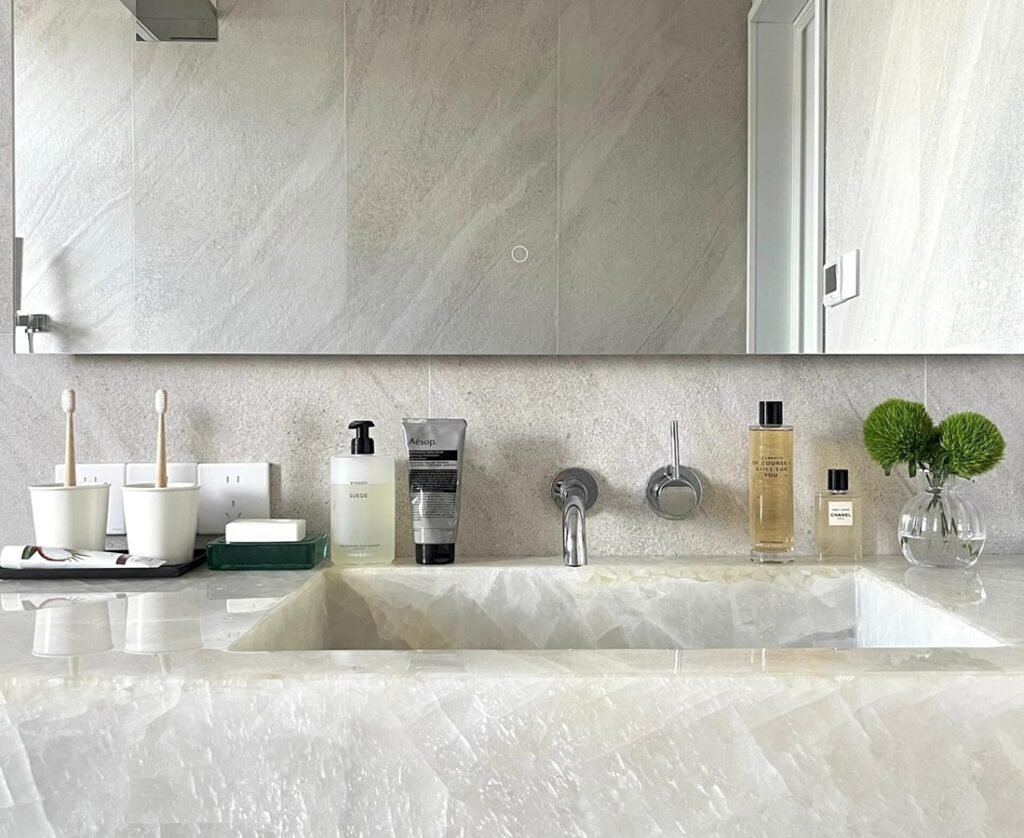
Supply Chain Comparison: Which Channel Is Easier to Manage?
In 2026, supply chain planning matters more than ever. Even a great vanity top is not useful if it arrives late, mismatched, or incomplete.
Retail supply chain
Retail supply chains are optimized for fast replenishment and local demand. That means:
- easier access for one-off buyers
- faster pickup for standard products
- simpler ordering process
However, retail supply chains are not always built for project-level consistency. For large jobs, inventory availability and model changes can create sourcing gaps.
Factory direct supply chain
Factory direct supply chains are optimized for planning, volume, and specification control. That means:
- Better support for scheduled deliveries
- Better consistency across multiple units
- Better alignment with project timelines when planned early
The tradeoff is that the buyer must coordinate production lead time, inspection, packing, and shipping more carefully.
Lead Time Comparison
| Channel | Lead Time | Notes |
|---|---|---|
| Retail | Fast | Best for urgent projects and standard stock items |
| Factory Direct | Medium | Requires production and shipping planning |
Retail wins on speed. Factory direct wins on planning efficiency and customization.
If the project is a single-bathroom refresh, retail may be the practical answer. If the project is a multi-unit development, hotel renovation, or wholesale program, factory direct usually offers better long-term value.
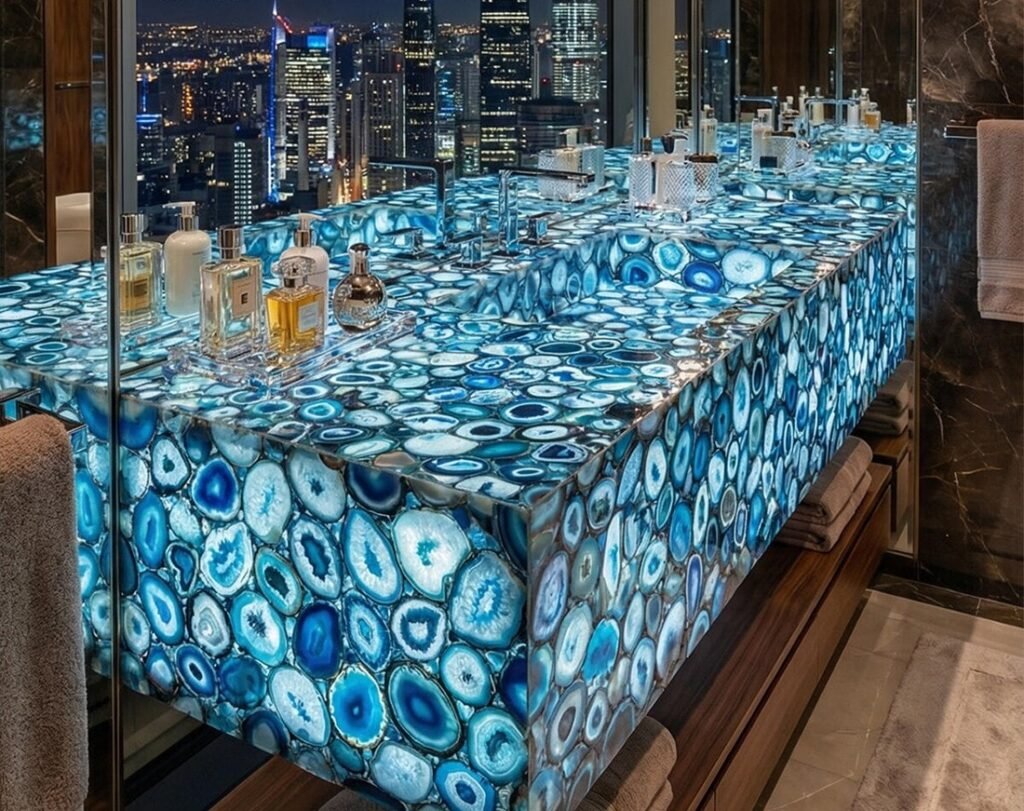
Which Option Is Better for Different Buyers?
For homeowners
Retail bathroom vanity stores are often the easiest choice for simple remodels, especially when speed matters more than customization.
For contractors
Factory direct is often better when multiple bathrooms must match or when clients request custom dimensions and finishes.
For designers
Factory direct provides more freedom to specify exact materials, edges, and sizing requirements.
For distributors and importers
Factory direct is usually the preferred model because it supports margin control, branding, and repeat procurement.
For builders and developers
Factory direct is typically the strongest option for multi-unit projects, where consistency, pricing, and supply planning matter most.
When Retail Makes Sense?
Choose retail if:
- The project is small
- The timeline is tight
- The size is standard
- Customization is minimal
- Local pickup is important
- The buyer wants a simple purchase process
Retail is especially useful for one-off bathroom upgrades and emergency replacements.
When Factory Direct Makes Sense?
Choose factory direct if:
- The project requires custom sizing
- The order is bulk or repeat
- margin protection matters
- design consistency matters
- You need a wholesale supply strategy
- You want stronger control over specifications and pricing
Factory direct is especially effective for vanity top supplier programs, private label sourcing, and project-based procurement.
Procurement Strategy: How to Decide?
The best bathroom vanity sourcing strategy is not always “retail or factory.” In many cases, the smartest approach is to match the channel to the project type.
Use retail when the project is:
- small
- urgent
- standard
- local
Use factory direct when the project is:
- customized
- repeatable
- multi-unit
- cost-sensitive
- brand-driven
That is the simplest way to think about bathroom vanity procurement in 2026.
Conclusion
Bathroom vanity stores and factory direct sourcing each serve a different purpose. Retail channels such as Home Depot, Lowe’s, and Menards are strong for speed, convenience, and standard residential projects. Factory direct sourcing is stronger for customization, wholesale procurement, and long-term cost control.
Final takeaway
- Small project → Retail
- Large project → Factory Direct
- Need speed → Retail
- Need customization and better pricing → Factory Direct
For buyers managing bathroom renovation materials, the best sourcing decision is the one that balances budget, lead time, and project requirements. In 2026, that usually means retail for convenience and factory direct for scale.