
Modern bathrooms are increasingly moving toward minimalist, hygienic, and easy-to-maintain surfaces. One of the most important trends driving luxury bathroom renovations in 2026 is the rise of integrated sink vanity tops, also known as seamless vanity tops or one-piece bathroom countertops.
Unlike traditional sink installations, where the sink and countertop are separate components, integrated sink systems create a continuous surface with no visible joints between the basin and vanity top. This design not only enhances aesthetics but also improves hygiene, simplifies cleaning, and increases long-term durability.
From luxury residential homes to high-end hotels and commercial projects, integrated sink vanity tops are becoming the preferred solution for architects, designers, builders, and homeowners seeking a modern bathroom experience.
This comprehensive guide explains:
- What integrated sink vanity tops are
- Material options and fabrication methods
- Hygiene and maintenance advantages
- Comparison with undermount sinks
- Installation considerations
- Cost structure
- Best applications for residential and commercial projects
- 2026 design trends shaping the bathroom industry
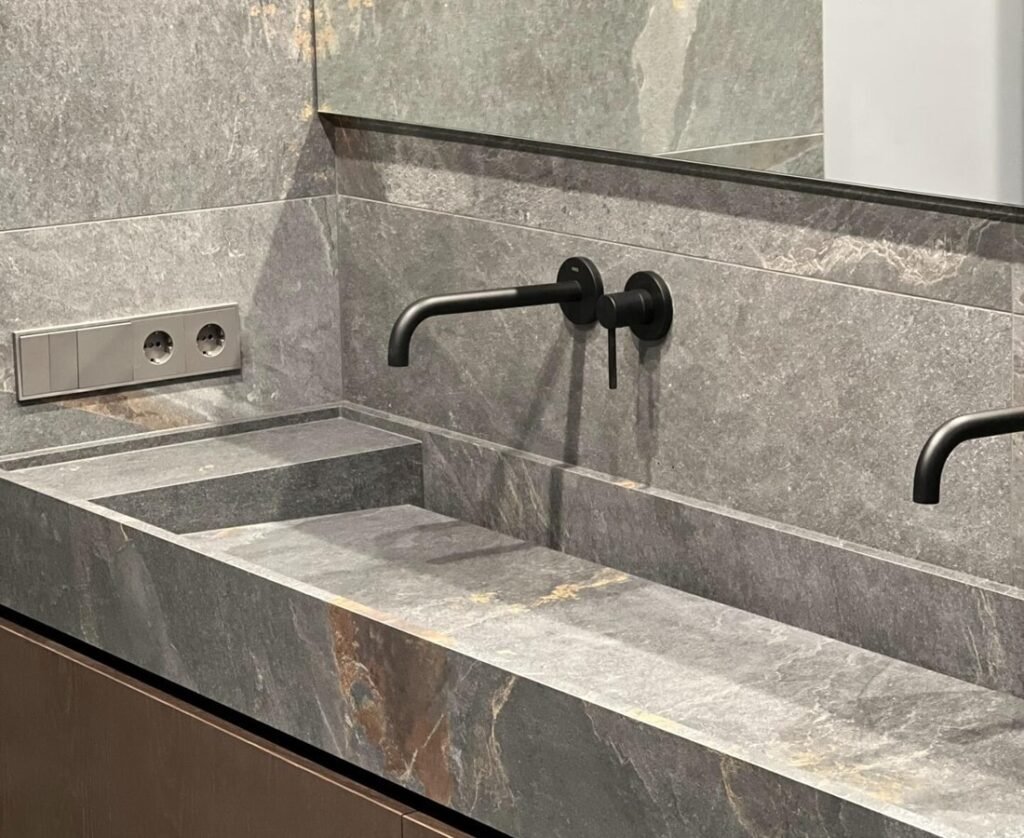
What Is an Integrated Sink Vanity Top?
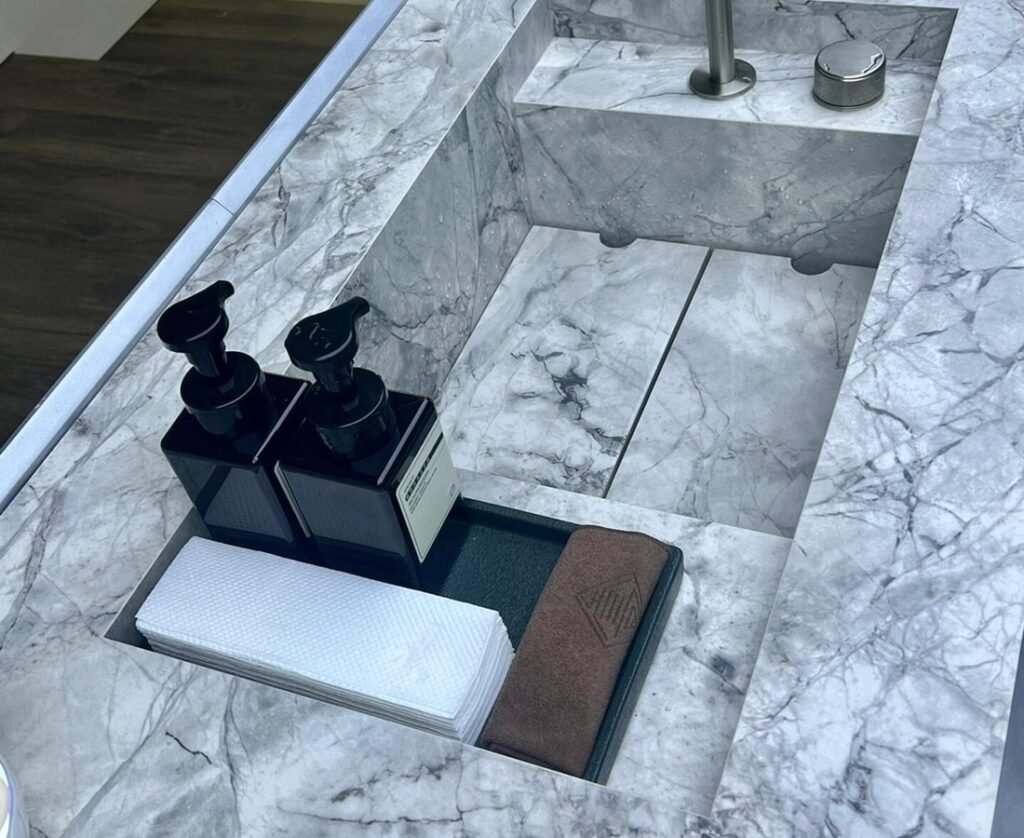
An integrated sink vanity top is a bathroom countertop where the sink basin and countertop are manufactured as a single unified structure.
Instead of attaching a separate sink underneath or above the countertop, the sink becomes part of the countertop itself.
Common integrated sink materials include:
- Quartz
- Solid surface materials
- Porcelain
- Sintered stone
- Cultured marble
- Natural stone
- Nano glass composites
The result is a sleek, continuous appearance with no visible rim or transition between the sink and the vanity surface.
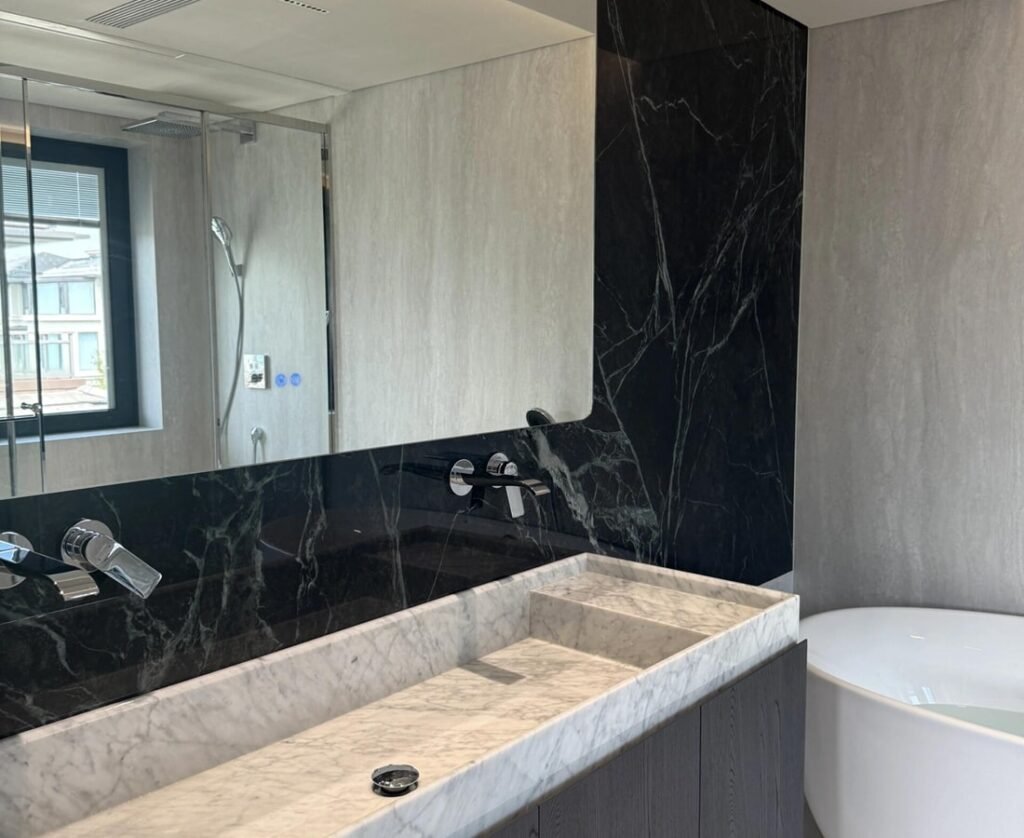
Key Characteristics of Integrated Sink Vanity Tops
Seamless Construction
The biggest feature is the elimination of joints and seams around the sink area.
Benefits include:
- Easier cleaning
- Reduced mold buildup
- Improved water resistance
- Contemporary aesthetics
Minimalist Design
Integrated sinks align perfectly with modern interior design trends:
- Clean lines
- Floating vanities
- Spa-inspired bathrooms
- Monochromatic surfaces
- Luxury hotel styling
This design philosophy is especially popular in:
- Scandinavian bathrooms
- Japanese-inspired interiors
- Modern luxury residences
- Boutique hospitality projects
Customizable Shapes
Integrated sinks can be produced in various configurations:
- Single basin
- Double basin
- Rectangular sinks
- Oval basins
- Ramp sinks
- Trough sinks
- Wall-mounted integrated systems
Custom fabrication allows architects and designers to create unique bathroom identities.
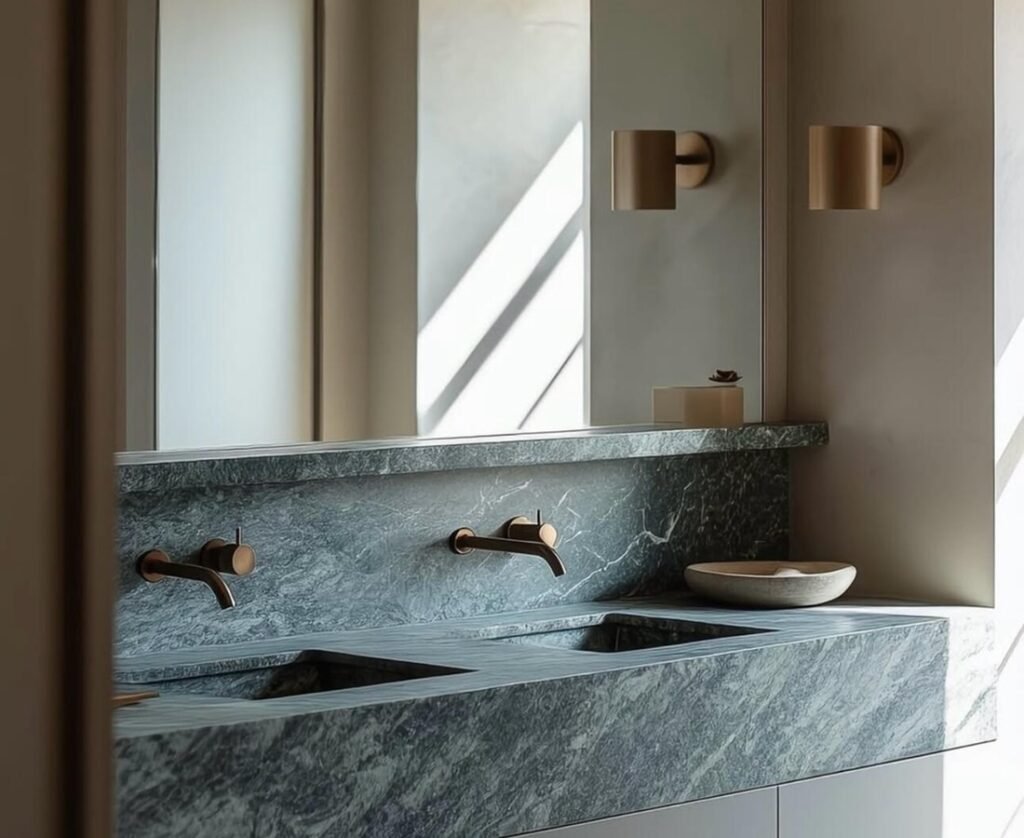
Why Seamless Bathroom Design Is Growing Rapidly?
The global bathroom renovation industry continues to shift toward wellness-oriented and low-maintenance spaces.
According to multiple interior design trend reports from 2025–2026:
- Consumers prioritize hygiene-focused surfaces
- Minimalist design demand is increasing
- Luxury bathrooms now emphasize seamless materials
- Hospitality projects favor easy-clean solutions
Integrated sink vanity tops perfectly match all of these requirements.
Hygiene Advantages of Integrated Sink Vanity Tops
One of the most important reasons for the growing popularity of integrated sinks is hygiene performance.
Traditional sink installations often contain gaps where moisture accumulates.
These areas can trap:
- Soap residue
- Dirt
- Mold
- Mildew
- Bacteria
Integrated systems significantly reduce these problems.
NSF International Findings on Seamless Surfaces
According to research and sanitation recommendations from NSF International, seamless and non-porous surfaces are generally easier to sanitize and maintain because they minimize areas where bacteria can accumulate.
This principle has long been used in:
- Healthcare facilities
- Laboratories
- Commercial kitchens
- Hospitality environments
Now the same hygiene standards are influencing residential bathroom design.
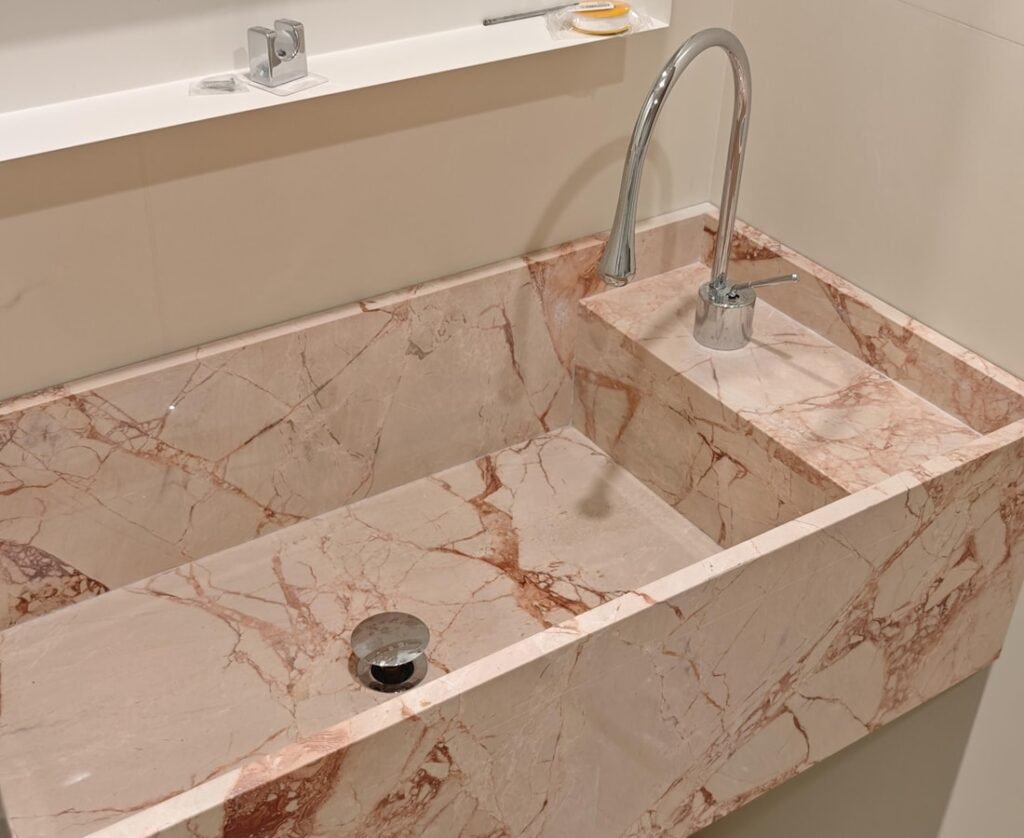
Easier Daily Cleaning
Integrated sink vanity tops simplify maintenance because there are no exposed sink rims.
Users can wipe the entire surface quickly using:
- Mild soap
- Water
- Non-abrasive cleaners
This reduces cleaning time compared to undermount or drop-in sinks.
Reduced Mold and Mildew Risk
Bathrooms naturally experience high humidity.
Traditional sink seams may eventually develop:
- Silicone deterioration
- Dark mold lines
- Water infiltration
Integrated sinks eliminate many of these vulnerable areas.
This is especially beneficial for:
- Family bathrooms
- Hotel bathrooms
- Rental properties
- Luxury spa environments
Integrated Sink vs Undermount Sink
Both integrated sinks and undermount sinks are popular premium bathroom solutions. However, they differ significantly in construction, maintenance, and pricing.
Comparison Table
| Feature | Integrated Sink | Undermount Sink |
|---|---|---|
| Appearance | Fully seamless | Elegant but visible joint |
| Hygiene | Excellent | Good |
| Cleaning | Very easy | Moderate |
| Installation Complexity | High | Medium |
| Fabrication Cost | Higher | Lower |
| Repair Difficulty | Higher | Easier |
| Luxury Perception | Premium modern | Classic luxury |
| Water Resistance | Excellent | Good |
| Long-Term Maintenance | Lower | Moderate |
Advantages of Integrated Sink Vanity Tops
Superior Hygiene
No exposed sink seam means fewer bacteria-prone areas.
Ultra-Modern Appearance
Integrated sinks create a premium spa-like atmosphere.
Better Water Management
Continuous surfaces improve drainage and reduce splash accumulation.
Ideal for Commercial Projects
Hotels and luxury developments benefit from:
- Faster cleaning
- Lower maintenance
- Stronger visual consistency
Advantages of Undermount Sinks
Undermount systems remain popular because they offer:
- Lower initial cost
- Wider sink style selection
- Easier replacement
- More flexible repairs
For budget-conscious projects, undermount sinks remain practical.
Best Materials for Integrated Sink Vanity Tops
Not every material performs equally well for integrated sink fabrication.
Quartz Integrated Sink Vanity Tops
Quartz is among the most popular materials because it offers:
- Non-porous performance
- Excellent stain resistance
- Consistent color
- Easy maintenance
- Strong durability
Quartz integrated sinks are commonly used in:
- Luxury homes
- Condominiums
- Hotels
- Commercial washrooms
Popular styles include:
- Calacatta quartz
- Pure white quartz
- Matte quartz finishes
- Concrete-look quartz
Solid Surface Materials
Solid surface products are widely used because seams can be chemically bonded and made nearly invisible.
Advantages include:
- True seamless appearance
- Repairability
- Smooth texture
- Lightweight fabrication
This material is especially common in hospitals and commercial projects.
Sintered Stone
Sintered stone is gaining popularity due to:
- UV resistance
- Heat resistance
- Low porosity
- High scratch resistance
It is increasingly used for luxury minimalist bathrooms.
Porcelain Vanity Tops
Porcelain integrated sinks offer:
- Thin-profile aesthetics
- High-end European appearance
- Excellent stain resistance
However, fabrication requires specialized equipment.
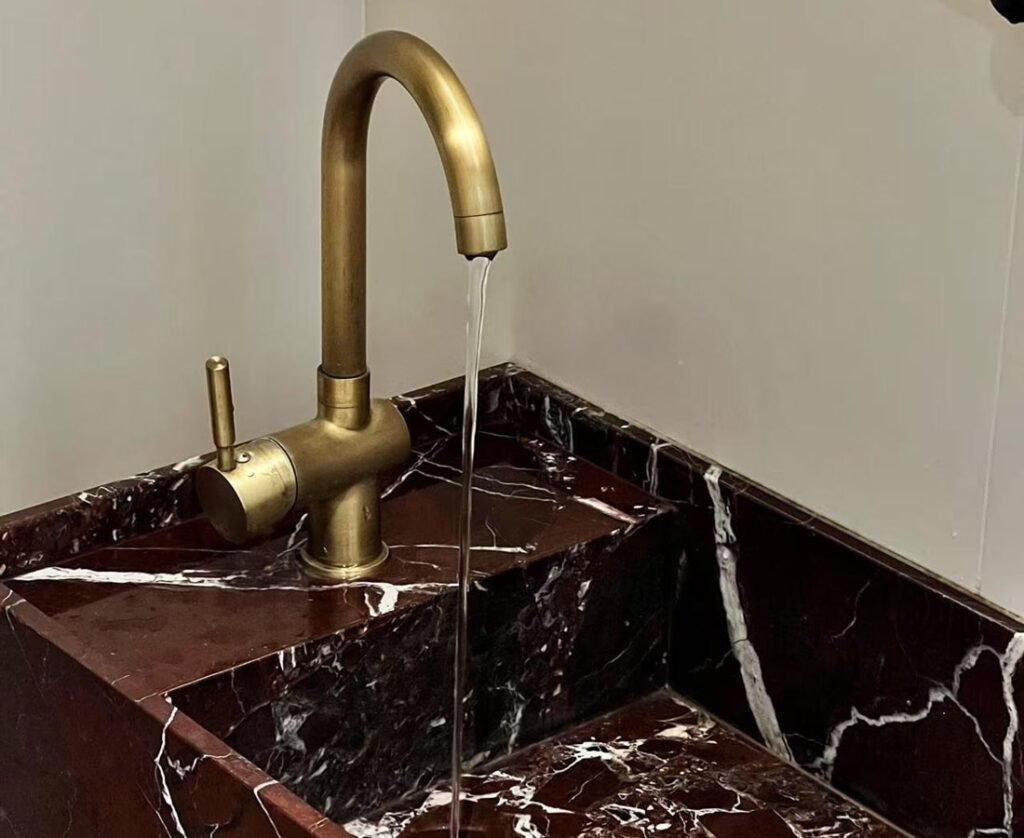
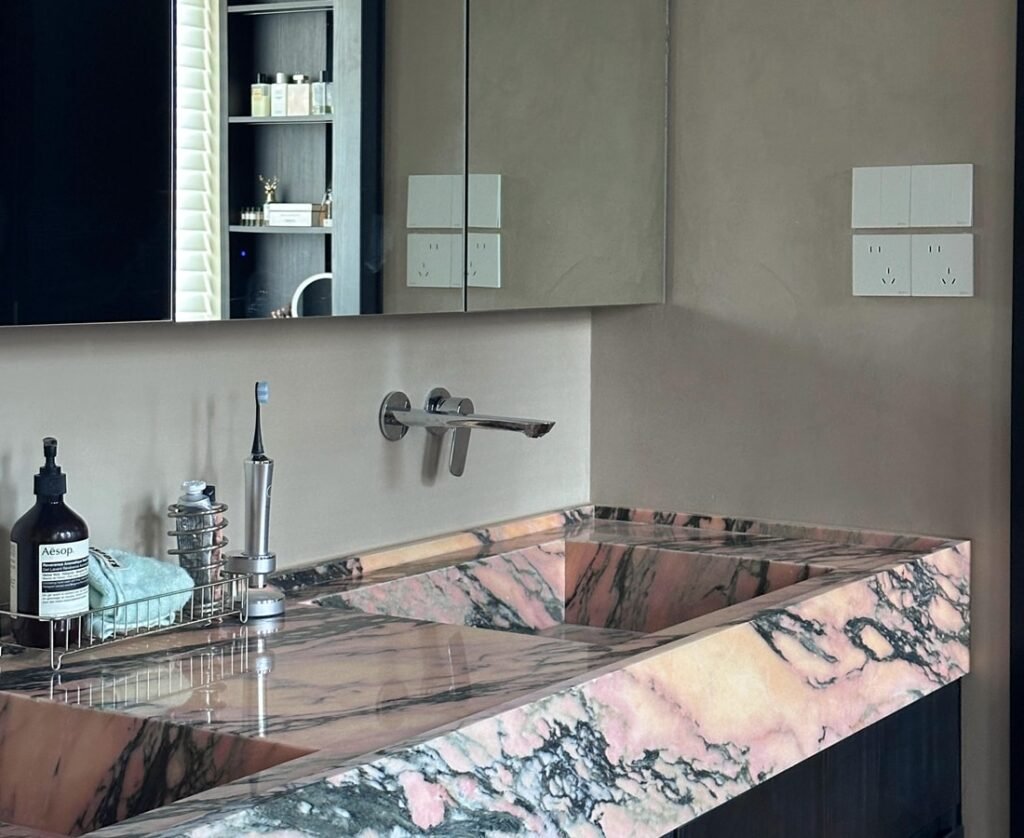
Natural Stone
Some premium projects use integrated sinks in:
- Marble
- Quartzite
- Granite
- Onyx
While visually stunning, natural stone requires more maintenance due to porosity and sealing requirements.
Installation Complexity
Integrated sink vanity tops require more precise planning than traditional sinks.
Fabrication Precision
Because the sink and countertop are one unit:
- Measurements must be exact
- Plumbing alignment must be accurate
- Transportation must be carefully managed
Errors are more difficult to correct after fabrication.
Heavier Transportation Weight
Integrated systems are often heavier than separate sink installations.
This increases:
- Shipping complexity
- Handling requirements
- Installation labor costs
Professional installation is strongly recommended.
Plumbing Coordination
Contractors must coordinate:
- Faucet hole positioning
- Drain alignment
- Wall plumbing height
- Vanity cabinet dimensions
Improper planning can delay installation.
Cost Analysis: Integrated Sink vs Traditional Vanity Tops
Integrated sink vanity tops typically cost more than standard countertops with separate sinks.
Why Integrated Sinks Cost More?
More Complex Fabrication
Manufacturing seamless sink systems requires:
- Specialized CNC machining
- Precision molding
- Additional polishing
- Skilled labor
Higher Material Waste
Integrated fabrication may increase material consumption.
Transportation and Packaging
Because the unit is larger and more fragile, shipping costs may rise.
Typical Cost Comparison
| Vanity Type | Relative Cost |
|---|---|
| Drop-in Sink | Low |
| Undermount Sink | Medium |
| Integrated Sink | High |
Despite the higher upfront cost, many projects choose integrated sinks because of:
- Better aesthetics
- Reduced maintenance
- Luxury market appeal
- Improved long-term cleanliness
Commercial Applications
Integrated sink vanity tops are widely used in commercial environments.
Luxury Hotels
Hotels prioritize:
- Fast cleaning
- Long-term durability
- Premium appearance
Integrated sinks help housekeeping teams maintain cleanliness efficiently.
High-End Residential Projects
Luxury homeowners increasingly prefer seamless bathrooms that resemble spa environments.
Integrated sink designs support:
- Minimalism
- Open space aesthetics
- Contemporary architecture
Healthcare and Wellness Spaces
Wellness centers and clinics value seamless surfaces because they support higher sanitation standards.
Commercial Restrooms
Corporate offices and premium retail spaces use integrated systems for:
- Consistent design
- Easy maintenance
- Long-term performance
2026 Bathroom Design Trends
Integrated sink vanity tops align closely with major 2026 bathroom trends.
Floating Vanity Systems
Wall-mounted floating vanities paired with integrated sinks create a clean architectural look.
Matte Finishes
Matte surfaces are increasingly replacing glossy finishes.
Popular choices include:
- Matte white quartz
- Sandstone textures
- Soft concrete finishes
Neutral Color Palettes
Trending tones include:
- Warm white
- Beige
- Taupe
- Light gray
- Earth-inspired neutrals
Thin-Profile Countertops
Slim integrated sinks create a modern European appearance.
Sustainable Materials
Consumers increasingly prefer:
- Low-silica surfaces
- Recycled materials
- Sustainable manufacturing
- Long-life countertop systems
Common Challenges and Limitations
Integrated sink vanity tops are not perfect for every project.
Higher Replacement Cost
If damage occurs, replacing the entire unit may be necessary.
More Difficult Repairs
Repairing integrated sinks can be more complicated than replacing a separate sink.
Longer Lead Times
Custom integrated fabrication may require:
- Additional production time
- More design approvals
- Complex logistics
This is especially true for international export projects.
How to Choose the Right Integrated Sink Vanity Top?
Before purchasing, consider the following:
Bathroom Size
Smaller bathrooms benefit greatly from seamless surfaces because they visually reduce clutter.
User Lifestyle
Families may prioritize:
- Easy cleaning
- Durability
- Stain resistance
Luxury homeowners may focus more on aesthetics.
Material Performance
Choose materials based on:
- Water resistance
- Scratch resistance
- Maintenance requirements
- Budget
Fabrication Expertise
Always work with experienced manufacturers capable of precision integrated sink fabrication.
Why Integrated Sink Vanity Tops Are the Future?
The bathroom industry is moving toward:
- Cleaner aesthetics
- Better hygiene
- Lower maintenance
- Spa-inspired luxury
- Minimalist architecture
Integrated sink vanity tops combine all of these trends into one solution.
As fabrication technology improves and demand rises, integrated sinks are expected to become increasingly common in both residential and commercial projects worldwide.
Conclusion
Integrated sink vanity tops represent the future of modern bathroom design. Their seamless appearance, hygienic advantages, and premium aesthetics make them one of the fastest-growing trends in luxury residential and commercial interiors.
Compared with traditional undermount systems, integrated sinks provide:
- Better hygiene
- Easier maintenance
- Superior minimalist aesthetics
- Enhanced water resistance
Although the upfront cost is higher, many homeowners, designers, hotels, and developers consider integrated sink vanity tops a worthwhile long-term investment.
As 2026 bathroom trends continue emphasizing wellness, minimalism, and seamless architecture, integrated sink vanity tops are positioned to become a standard feature in premium bathroom projects worldwide.
References
- NSF International — Public health and sanitation guidance for hygienic surfaces
- National Kitchen & Bath Association (NKBA) — Bathroom design trends and remodeling standards
- American Society of Interior Designers (ASID) — Interior design trend research
- Houzz Bathroom Trends Study — Consumer bathroom renovation insights
- ArchDaily Bathroom Design Articles — Contemporary bathroom architecture examples
- Dezeen Bathroom Design Trends — Modern bathroom design developments
- Interior Design Magazine — Hospitality and luxury bathroom trends
- World Green Building Council — Sustainable building material discussions
- Caesarstone Quartz Surfaces — Quartz surface performance data
- Cosentino Surfaces — Sintered stone and bathroom applications