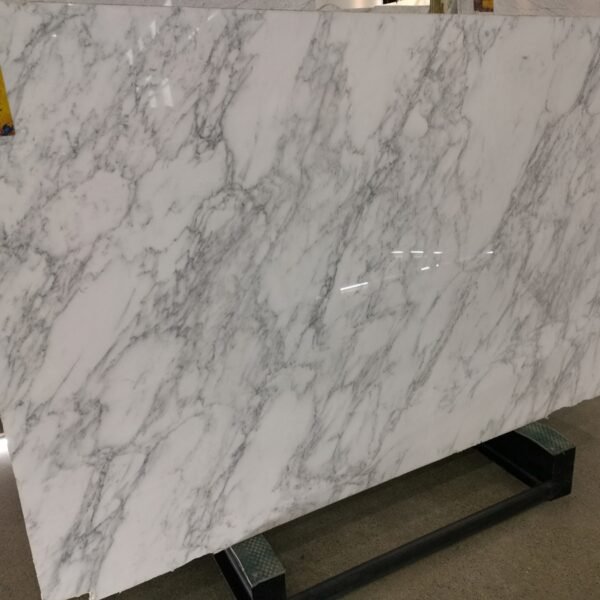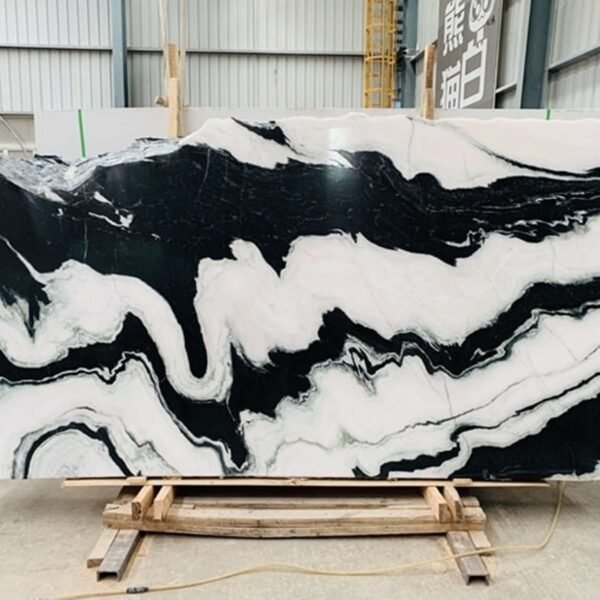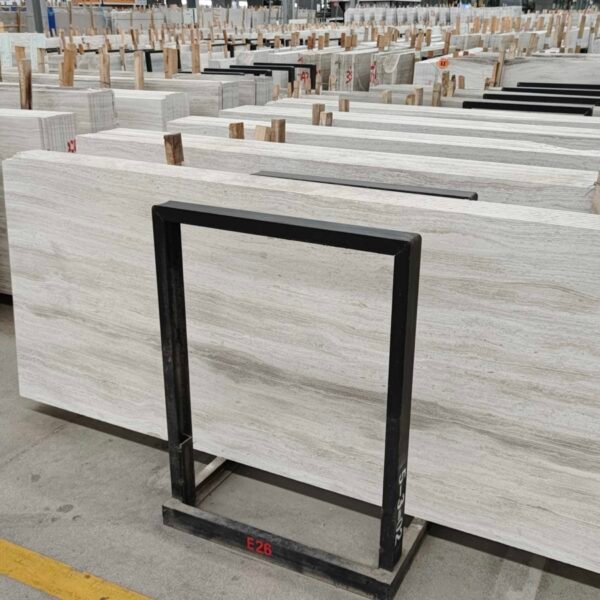
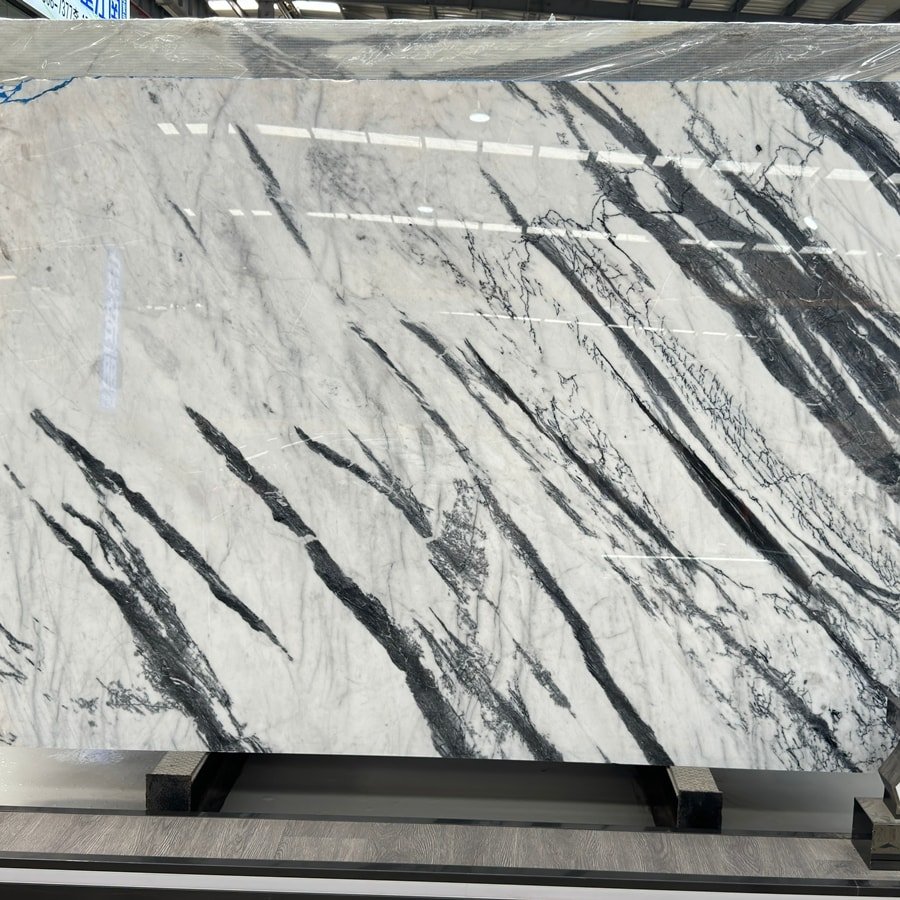

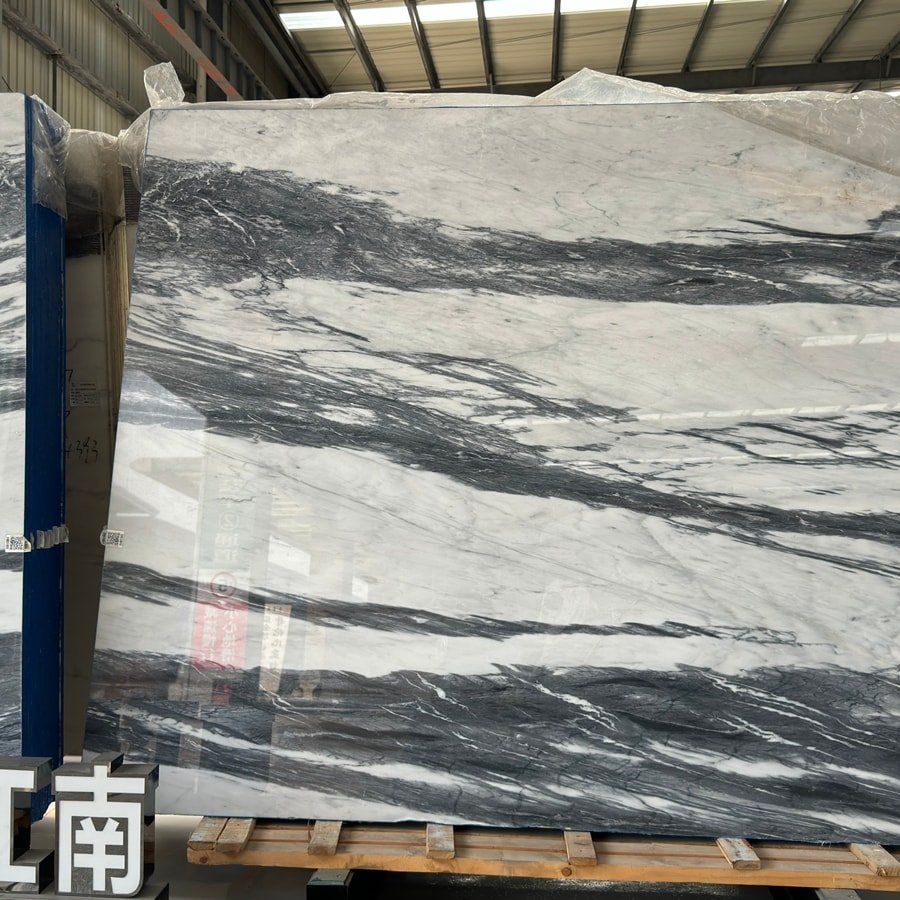
Ink Jiangnan Marble takes aesthetic cues from traditional Chinese ink painting—rich, flowing veins that resemble brush strokes across a pale ground. This strong graphic quality creates a stone that reads as both artistic and architectural, making it a compelling choice for designers who want a natural surface with a distinctly expressive character. Understanding the stone’s physical behavior and how to harness its visual drama determines successful architectural applications.
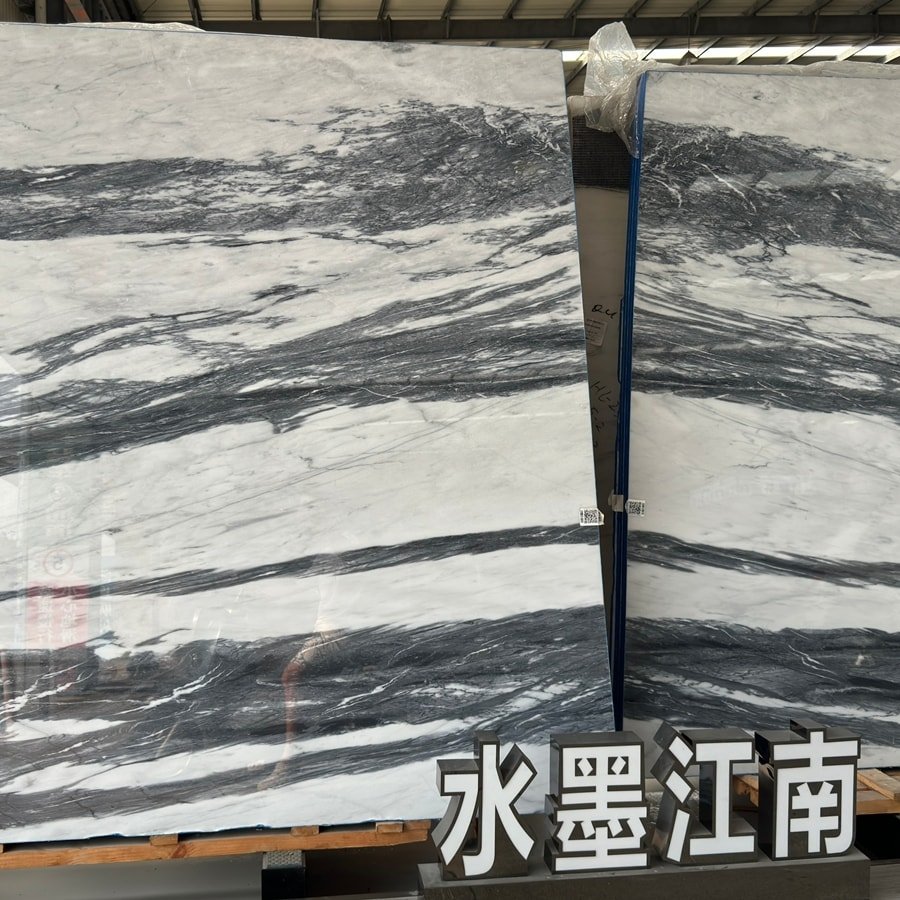
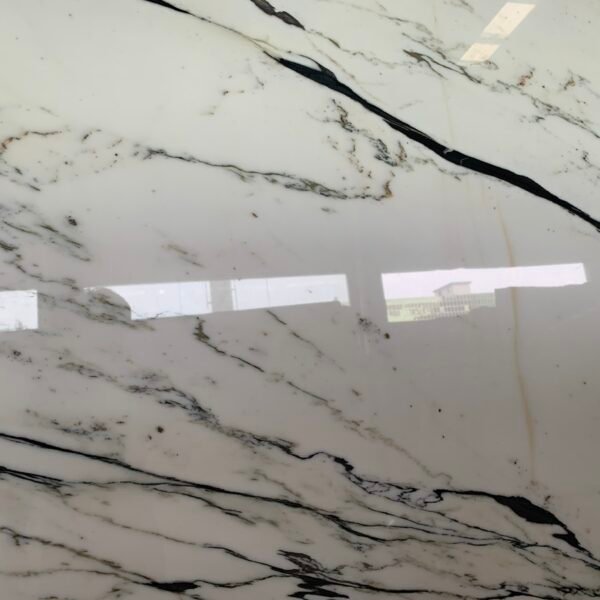
Visual and material characteristics: Ink Jiangnan typically presents a cool white to light grey ground punctuated by bold, dark grey to almost black veins. The veining can be linear, feathered, or fluid, producing a calligraphic effect that changes across slabs. The stone is commonly calcitic in composition; it polishes to a lustrous finish, responds well to honing and leathering, and is moderately porous—factors that influence maintenance and finish choice.
Applications and design strategies: The most effective uses exploit the stone’s directional movement. Bookmatching on full-height walls produces flowing, mirrored patterns that read like landscape scrolls and transform entrance lobbies, gallery walls, and hotel reception areas into immersive artworks. Similarly, waterfall islands, statement fireplace surrounds, and large tabletops use vein continuity to create strong visual lines. Because of its strong pattern, Ink Jiangnan performs best as a focal element contrasted against calm, supporting materials (plain plaster, warm wood, or matte metal).
Finish and performance considerations: A high polish magnifies contrast and provides a dramatic, reflective surface ideal for vertical installations. For floors, choose honed surfaces to reduce slip and hide micro-abrasion—though extreme caution is advised in high-traffic areas since the stone is softer than igneous alternatives. For countertops, use Ink Jiangnan as accent surfaces or peripheral counters; heavy-use prep areas are better served by harder materials unless the client commits to rigorous maintenance.
Fabrication and installation: Because veins can create natural weaknesses, careful slab selection, testing, and reinforcement (resin filling) may be necessary, especially for large-format, thin-slab installations. Slab layout is critical—specify vein direction, seam placement, and bookmatching locations in the contract documents. For backlit or translucent design effects, test slab light transmission and stabilize any fissures beforehand.
Maintenance and durability: Seal with high-quality penetrating sealers and use pH-neutral cleaners. Dark veins may show surface residue differently than pale fields, so cleaning protocols must address both. Plan for periodic resealing and, in hospitality/commercial uses, scheduled repolishing to maintain a uniform appearance.
Sustainability and procurement: Verify origin and treatment history; some highly figured slabs may be rare and expensive, so optimize layouts to minimize waste. Consider repurposing remnants for smaller features to economize. When used selectively as an accent or feature wall, Ink Jiangnan Marble delivers disproportionate visual impact relative to material volume.
Summary: Ink Jiangnan Marble is a bold, calligraphic stone that functions as both material and narrative. It is best applied where vein continuity and large-format presentation can be controlled—lobbies, reception walls, and curated furniture—paired with proper fabrication, stabilization, and a clear maintenance strategy to preserve its dramatic, ink-like beauty.