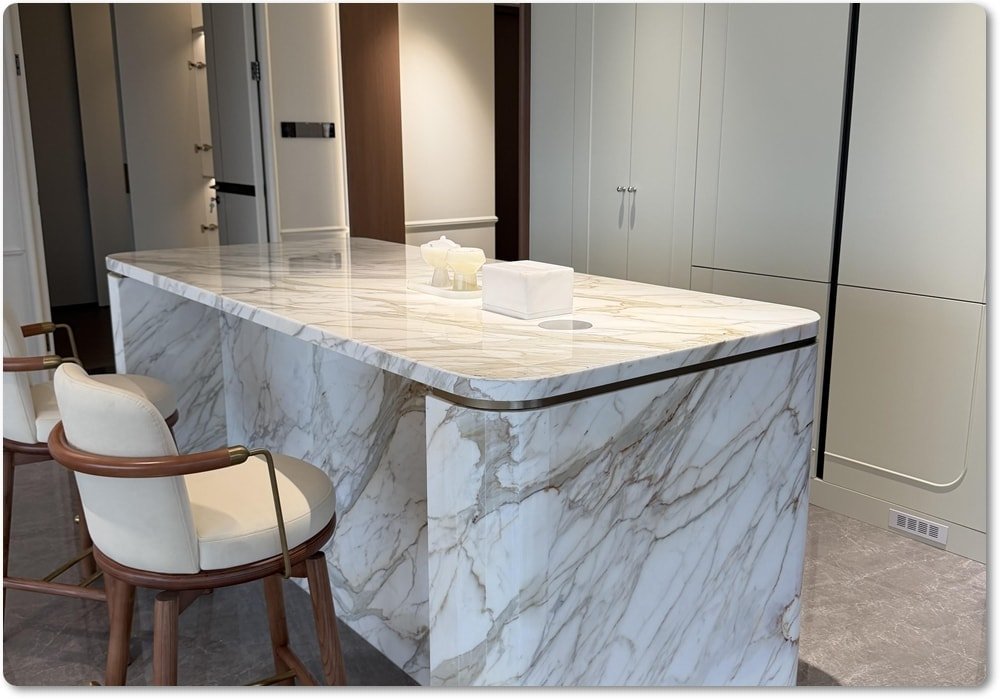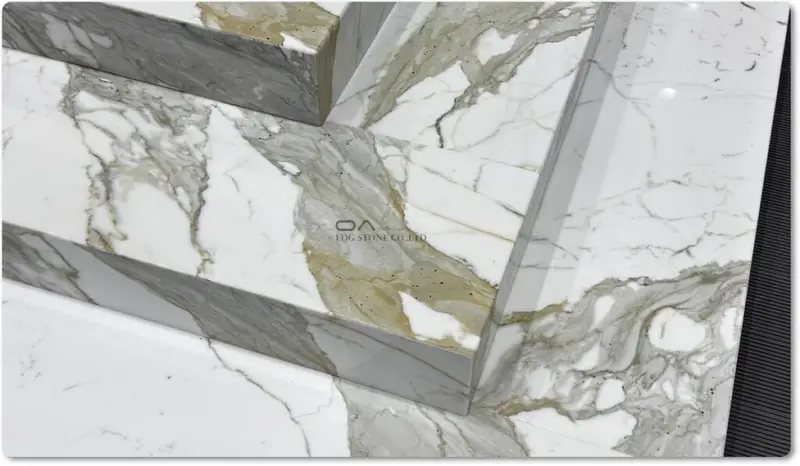
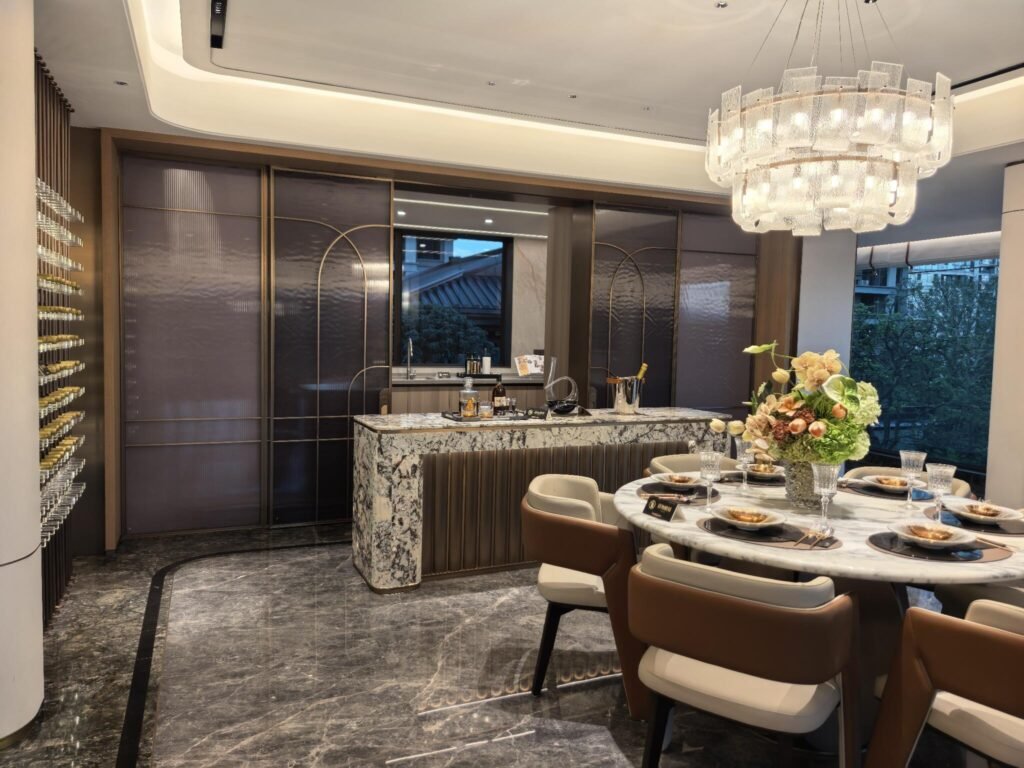
Introduction: Why Quartzite Deserves the Spotlight?
Quartzite is one of those materials that quietly solves a designer dilemma: how to get the luminous, flowing veining of marble without sacrificing the toughness required for a busy kitchen. Formed when quartz-rich sandstone undergoes intense heat and pressure, quartzite becomes a dense, hard stone with natural color and pattern variations that rival marble’s beauty while offering superior scratch and heat resistance. For homeowners and specifiers seeking both elegance and longevity, quartzite sits in an ideal spot on the material spectrum—natural, unique, and resilient.
What Is Quartzite? Geological & Technical Primer
Quartzite is a metamorphic rock originating from sandstone that has been transformed through heat and pressure into a crystalline, interlocked quartz mass. This natural process gives quartzite high mineral purity and a structure that is significantly harder than many other countertop stones. Unlike engineered quartz — which is manufactured from quartz crystals bound by resins — quartzite is a naturally occurring stone that demands quarrying, sawing, and finishing.
Key technical points
Formation: Metamorphosed quartz-rich sandstone.
Composition: Predominantly quartz grains fused; mineral impurities produce color and veining.
Typical slab sizes & thicknesses: Commonly available in large slab formats suitable for islands and waterfall edges; thicknesses are typically 2 cm or 3 cm, with available custom thicknessing for specific projects.
Durability markers: Quartzite generally ranks around 7 on the Mohs hardness scale, making it very scratch-resistant compared with many other natural stones.
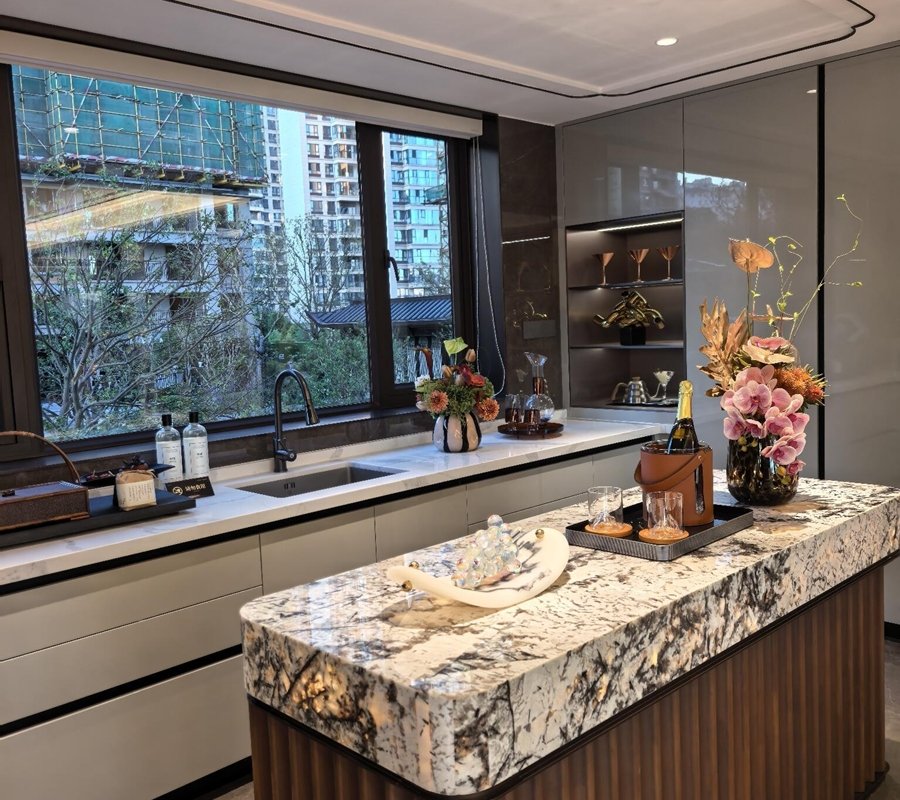
Quartzite vs. Quartz vs. Granite vs. Marble — The Comparison Matrix
Choosing a countertop material is about balancing aesthetics, performance, maintenance, and cost. Here’s how quartzite compares to other popular options.
Appearance & uniqueness
Marble: Known for soft, elegant veining and a wide range of pale backgrounds. Each slab can feel like a painting.
Quartzite: Often mimics marble’s flowing veins but usually with a crisper contrast; quartzite slabs can have dramatic patterns (e.g., Taj Mahal, Cristallo, Sea Pearl).
Granite: Generally more granular and speckled; color ranges are broad, but patterns are less vein-centric than marble or quartzite.
Engineered Quartz: Offers uniform colors and patterns with near-zero porosity, but lacks the one-of-a-kind feel of natural slabs.
Durability & performance
Scratch resistance: Quartzite is very scratch resistant (Mohs ~7), often slightly harder than many granites.
Heat resistance: Quartzite tolerates heat well (better than engineered quartz), but trivets are still recommended to avoid thermal shock on edges or seams.
Etching & staining: Quartzite is less likely to etch than marble, but it is still a natural stone that can stain if unsealed or if acidic spills are left to sit.
Maintenance
Quartzite: Requires periodic sealing to protect against staining; cleaning with pH-neutral products is recommended.
Engineered quartz: Low maintenance, no sealing required.
Marble: High maintenance due to etch and stain susceptibility.
Granite: Moderate maintenance; many granites are less porous than quartzite, but sealing is still common.
Cost considerations
High-quality quartzite slabs, especially rare colorways, can command premium pricing—often comparable to or above higher-end granites and some engineered quartz options. Prices vary by rarity, slab size, finish, and source; budget ranges depend on project scale and finish choices.
Popular Quartzite Colors & Signature Varieties
Quartzite’s palette is broad because color comes from trace minerals present during formation. Some signature varieties are frequently specified in kitchens:
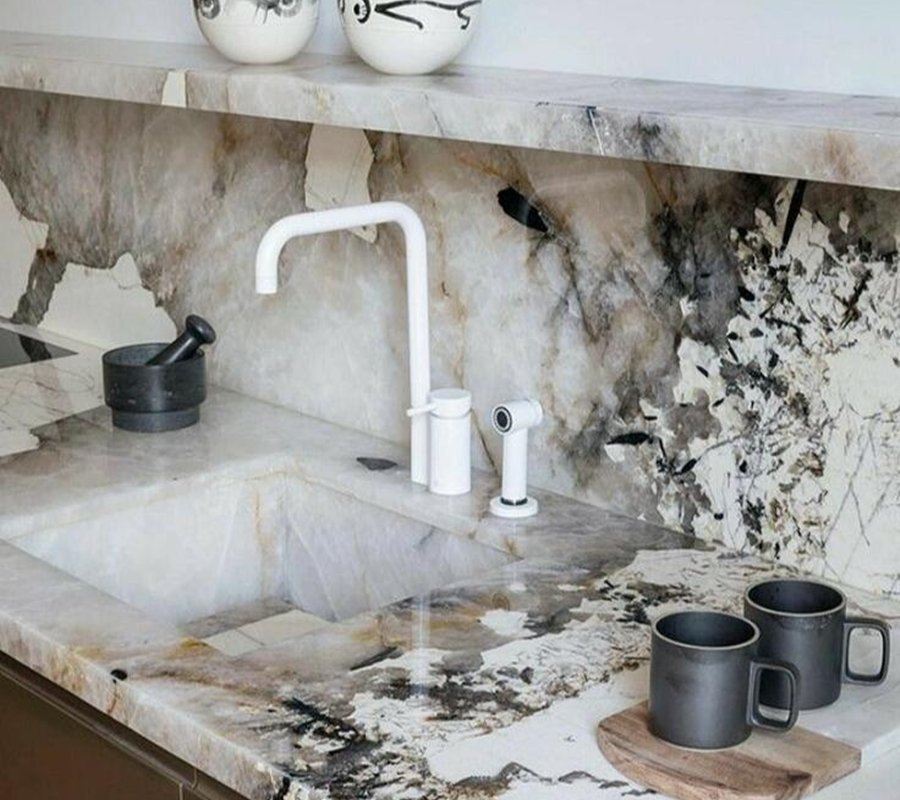
White & soft gray varieties (e.g., Taj Mahal, Mont Blanc): Marble-like elegance; excellent for classic and transitional kitchens.
Blue and green quartzites: Often dramatic and rare; they make powerful focal points but can be more expensive and sometimes slightly more variable in porosity.
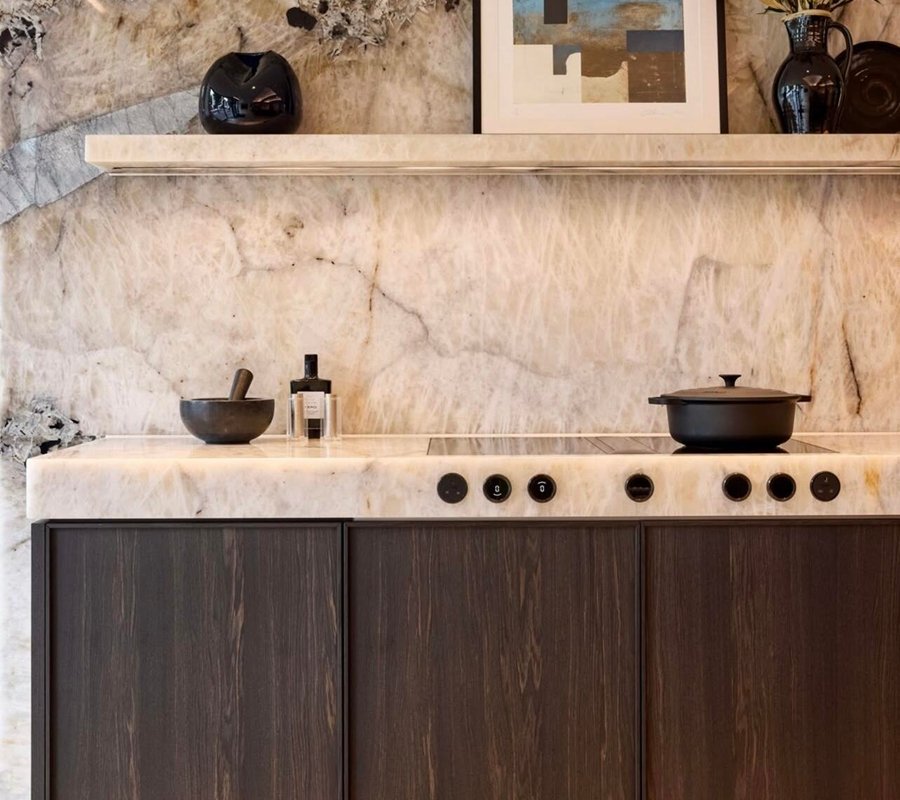
Cristallo & Sea Pearl: Varieties prized for translucent or pearlescent qualities, often used in islands and full-height backsplashes.
Green quartzite varieties: Offer earthy depth and pair well with wood tones and dark cabinetry.
When selecting colorways, visualize slab match and veining continuity for large installations; rare or strongly veined slabs may require extra slabs for matching and allow for pattern wraps or bookmatching.
Fabrication & Installation: What Specifiers Must Know?
Fabrication of quartzite requires experienced shops with the right tooling: diamond tooling, water suppression or wet-cut system, and controlled finishing equipment. For specifiers and project managers, these are critical items to verify:
Factory & fabrication checklist
Slab imaging and documentation: Request high-resolution photos of slabs and markings of preferred orientation to reduce surprises at install.
Edge and finish options: Standard polished, honed, or specialty textures (leathered finishes) affect appearance and maintenance.
Cutting and edge tolerances: Precise CNC or bridge saw cutting and consistent edge profiling are essential for tight seams and proper waterfall edges.
Adhesives and substrate: Use adhesive systems rated for natural stone; verify substrate flatness (industry-standard tolerances) before installation.
On-site best practices
Store slabs upright, labeled, and together for large runs.
Use protective coverings during the remaining construction to avoid chips and stains.
Conduct a final mock-up for client sign-off when the slab’s pattern is a key aesthetic driver.
Performance Data & Real-World Pros and Cons
Understanding pros and cons helps set expectations with clients.
Pros
Natural marble-like veining at improved toughness — the look of marble, the hardness closer to granite.
Heat and scratch resistance — suitable for a busy kitchen when properly installed and maintained.
Unique slabs — individuality appeals to high-end homeowners and designers.
Cons
Porosity — quartzite is a natural stone and typically requires sealing; some varieties are more porous than others.
Cost & yield loss — dramatic patterning and matching needs can increase waste and cost.
Repair complexity — in the rare case of severe damage, matching a replacement slab with identical veining can be difficult.
Practical table (quick reference)
Mohs hardness: ~7 (very good scratch resistance).
Sealing: Recommended; frequency varies by use, generally annually for heavy-use kitchens.
Typical price band: Varies widely—premium quartzites may be significantly more costly than everyday granites; obtain factory quotes.
Health, Safety & Regulatory Context (Industry Direction)
Manufacturing and fabricating natural stone involve respirable crystalline silica exposure risks. OSHA and other regulatory bodies have set standards and guidance to protect workers involved in cutting, grinding, and polishing stone.
Regulatory essentials
Respirable crystalline silica risks: Long-term exposure increases risk for silicosis, lung cancer, and other severe conditions; employers are responsible for exposure controls and training. Compliance with silica standards and local updates (e.g., state-level emergency or permanent rules) is critical.
Fabrication controls: Wet cutting, local exhaust ventilation, and proper PPE are commonly required controls; medical surveillance and training for workers are increasingly mandated.
Procurement implications: For large projects, buyers should request supplier documentation showing compliance with silica control policies and worker-safety programs; non-compliant fabrication can create legal and scheduling risk.
Environmental and sustainability reporting is becoming more common in procurement specs—expect requests for chain-of-custody, carbon-footprint statements, and quarry reclamation policies on large public or corporate builds.
EDG Stone: Manufacturer / Factory Advantages & Buying Options
For architects, contractors, and purchasing managers, working directly with a factory-level supplier like EDG Stone can create project advantages.
What to request from a manufacturer?
Slab photography and pairing documentation to confirm pattern and color before cutting.
Factory QC records, including finish checks, thickness, and edge tolerances.
Sample policies and no-MOQ project options for large builds (enabling consistent slab selection across rooms or phases).
Warranty and repair slab reservation—ask suppliers to reserve a matched slab for future repairs if possible.
EDG Stone’s value proposition for project buyers includes centralized slab inventory, digital imaging for approvals, and flexibility on wholesale/project supply terms that reduce procurement friction for large-scale or multi-site installations.
Pricing, Lead Times & Cost Drivers (Practical Procurement)
Quartzite pricing is influenced by the variety of the colorway, slab dimensions, finish type, and logistics.
Key cost drivers
Rarity & demand for specific quarried colorways (e.g., exotic blues or greens).
Slab size and yield—dramatic veining often results in more wasted material during matched installations.
Finishing complexity—special finishes add labor hours.
Shipping & customs—international purchases require careful planning for lead times and import costs.
Lead-time guidance: Allow extra time for slab selection, photography, matched cutting, and crate documentation—factory-to-site for custom orders can range from several weeks to several months, depending on slab availability and finishing queue.
Care, Sealing & Longevity: Maintenance Playbook
Protecting a quartzite countertop is straightforward with consistent protocols.
Daily and periodic care
Daily cleaning: Use mild, pH-neutral soap and water or a stone-specific cleaner. Avoid harsh acids or high-alkaline cleaners.
Sealing: Apply a penetrating sealer at installation and reapply on a cadence informed by use—high-traffic kitchens commonly reseal annually. Always test a small area to confirm penetration and performance.
Spill response: Wipe up oils and acidic spills immediately to reduce staining and etching risk.
Repairs: For chips or deep stains, trained stone restorers can polish or refinish localized areas; preserving an extra slab for replacement can save time and aesthetic mismatch later.
Case Studies & Photo Captions
Residential Kitchen — Taj Mahal Quartzite Island
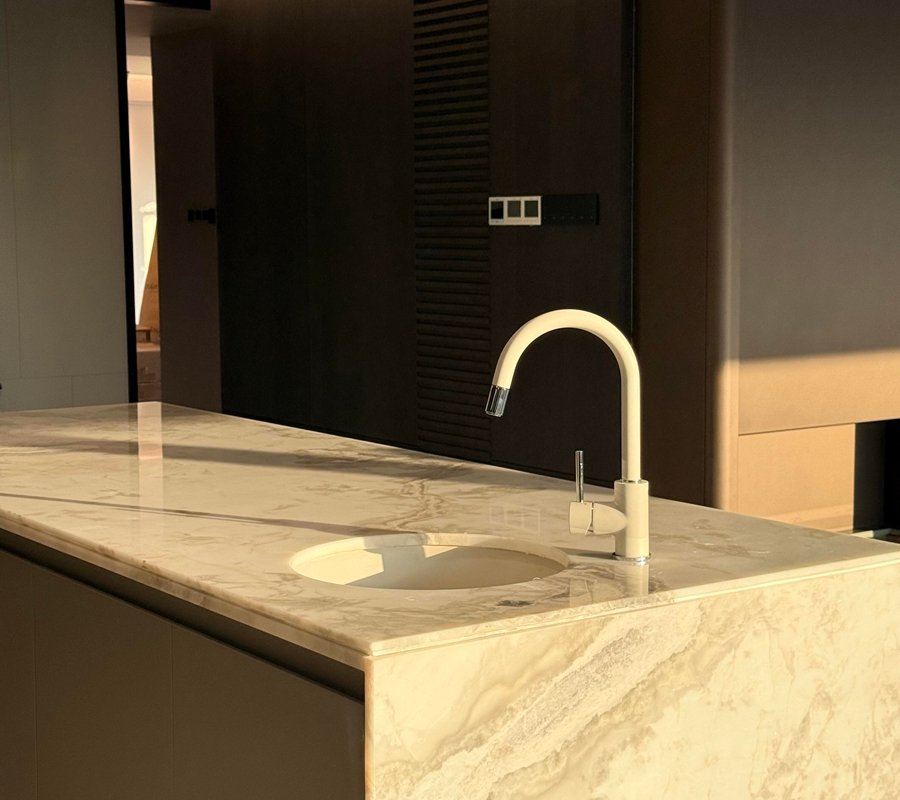
A 12 ft waterfall island using Taj Mahal quartzite created a luminous center for an open-plan kitchen. Procurement included slab photography for client approval and an extra reserved slab for future repairs.
Commercial Restaurant Pass — Sea Pearl Quartzite
High-traffic pass-through required a honed finish and a documented sealing schedule. Sealant reapplication was scheduled every 9–12 months to manage cooking oils and service wear.
Luxury Renovation — Cristallo Quartzite Vanity and Backsplash
A suite renovation used coordinated crystal-like slabs and subtle leathered finishes to reduce reflections while preserving the stone’s depth.
Frequently Asked Questions (Google hot-search style)
Q1 — Is quartzite good for kitchen countertops?
A1 — Yes. Quartzite combines marble-like aesthetics with high hardness and heat resistance, making it well-suited for kitchens when sealed and maintained. It resists scratches better than many natural stones, though sealing is recommended to manage porosity.
Q2 — How does quartzite compare to quartz and granite?
A2 — Quartzite is a natural stone with unique, variable veining and ranks around 7 on the Mohs hardness scale, typically harder than many granites and far harder than marble. Engineered quartz is non-porous and has lower maintenance, but lacks the one-of-a-kind character of natural quartzite.
Q3 — How often should you seal quartzite countertops?
A3 — Sealing frequency depends on use and the specific stone; many high-use kitchens reseal annually, while lower-use areas may require less frequent applications. Perform a water-drop test to check coverage and consult the sealer manufacturer’s guidance.
Q4 — What are typical price ranges for quartzite countertops?
A4 — Prices vary widely by slab rarity, finish, and provenance. Premium exotic quartzites can command significantly higher rates than common granites; budgets should factor in slab yield and potential extra slab purchases for pattern-matching installations.
Q5 — Where should I buy quartzite for a project?
A5 — For large or design-critical projects, buying through a reputable manufacturer or factory supplier (like EDG Stone) that provides slab imaging, QC documentation, and project-supply terms reduces risk. For smaller projects, local stone yards or certified fabricators can provide samples and installation services.
How — Specify quartzite by slab photos, finish, and a documented fabrication plan. For pattern-critical features, request factory slab imaging and reserve matched slabs for future repairs. Insist on experienced fabricators using diamond tooling and wet-cutting or extraction controls to protect workers and preserve slab integrity.
Why — Quartzite gives marble-like luxury with substantially better scratch and heat resistance, preserving beauty under active use. For designers and owners who value natural uniqueness and long-term surface performance, quartzite commonly offers the best compromise between form and function.
What — The product is a natural slab with variable appearance and performance metrics. Provide clients with a care plan: sealing cadence, approved cleaners, and a response plan for spills and repairs. For procurement, include lead-time buffers and slab-yield allowances.
Options — Choose finishes (polished, honed, leathered) and edge profiles to control sheen and tactile response. Selectively use high-contrast slabs for feature islands and more subdued slabs for perimeter counters to balance cost and drama.
Considerations — Ensure supplier and fabricator compliance with silica exposure controls and ask for documentation. Account for yield loss when ordering patterned quartzite; budget for extra material to reduce the risk of mismatched repairs. Embed structured data (FAQPage, Product, Organization).
References (author — title — publication/source — year)
Occupational Safety and Health Administration (OSHA) — “Silica, Crystalline – Overview” — OSHA — 2024.
RealSimple — “Should You Choose Quartz or Quartzite for Your New Counters?” — RealSimple — 2023.
Cal/OSHA / California Department of Public Health (CDPH) — “Guide for Stone Fabricators: Exposure to Respirable Crystalline Silica” — State Health/Regulatory Guidance — 2024.
Google Search Central — “Mark Up FAQs with Structured Data” — Google Developers — 2024.
Southern Living — “The Difference Between Quartz And Quartzite, According To The Pros” — Southern Living — 2024.