Quick Summary:
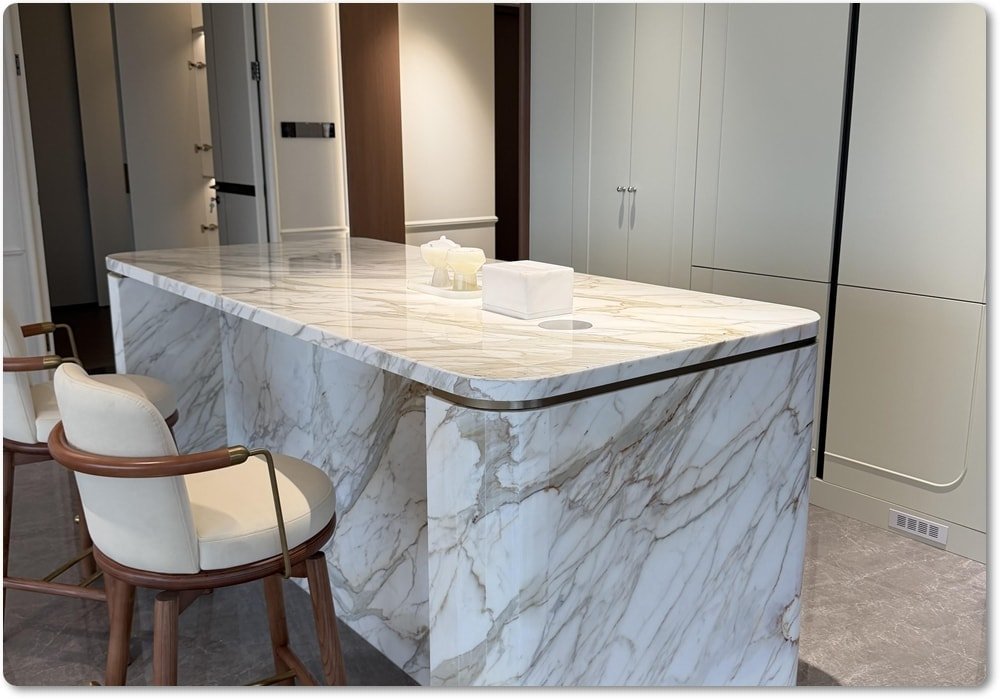
Quick Summary: Modern engineered quartz can convincingly emulate marble’s veins, translucency, and texture when manufacturers combine mineral-heavy mixes, layered casting, advanced veining techniques, and surface finishing. This guide explains how the “natural look” evolved, what tactile and visual cues to evaluate, how to verify factory test data and batch consistency, buying signals for manufacturers/factories/wholesalers, applicable regulations, and sustainability trends — and gives designers, specifiers, and buyers a practical checklist to pick the most marble-like quartz with confidence.
Early generation quartz: the era of uniformity
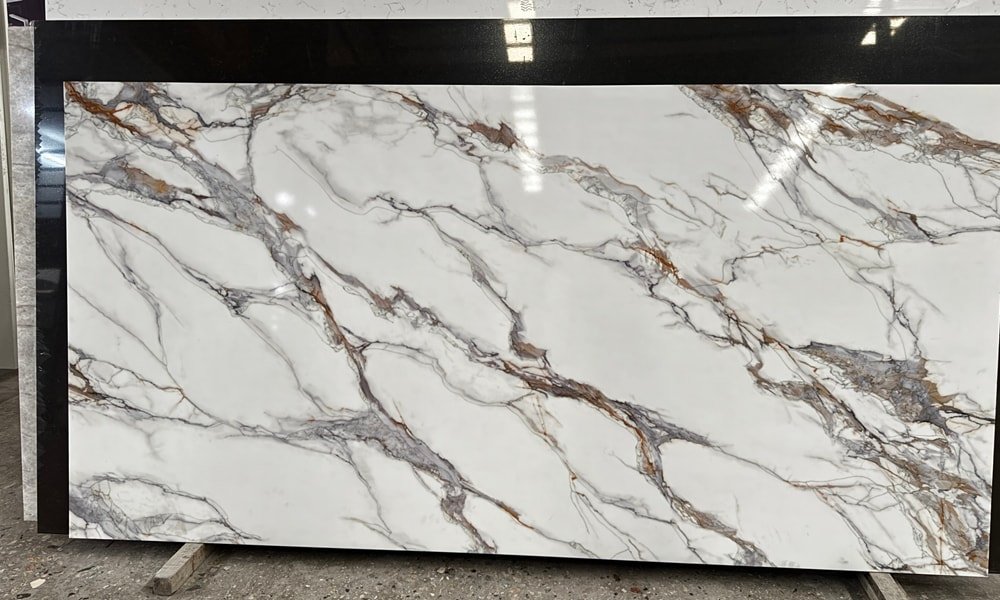
When engineered quartz first became widely used, the manufacturing emphasis was on structural performance and surface uniformity. These slabs are typically used as a fine, homogeneous blend of crushed quartz, polymer resin, and consistent pigments. The result was a durable, non-porous, and visually consistent surface ideal for mass-market cabinetry and commercial installations — but visually distinct from the organic complexity of marble.
The turning point: design demand and technique convergence
Design trends favoring naturalism, paired with advances in production — layered casting, improved pigment systems, and digital patterning — enabled manufacturers to introduce veining, translucency effects, and irregular mottling into engineered slabs. At the same time, improvements in particle grading (coarser aggregates, mixed grain sizes), reduced resin formulas, and specialty fillers allowed slabs to mimic the granular depth and light behavior of natural stone. The result: a new generation of quartz that looks and feels closer to marble without sacrificing engineered advantages.
How manufacturers create marble-like quartz (materials & methods)?
Aggregate mix and mineral load
One of the most important drivers of a natural look is the aggregate — the crushed quartz, glass, or mineral fillers used as the slab’s bulk. A higher mineral load with varied particle sizes produces visual depth and irregularity similar to marble veining patterns. Some manufacturers integrate translucent glass or crystal fragments to catch light and contribute to perceived depth.
Binder chemistry and reduced resin strategies
Resin binds mineral particles but can also produce flat, plasticky appearances when overused. Natural-looking quartz often uses optimized resin levels, UV-stable polymers, and, in some lines, alternative binders that reduce the glossy “plastic” sheen and support matte or honed finishes that mimic carved stone.
Layering and vein engineering
Creating convincing marble veins often uses layered casting: a first layer for depth, followed by one or more layers where pigments and slurries are introduced using controlled jets, hand-veining tools, or digital print heads. Some producers employ thin-layer overlays and slightly translucent binder layers to simulate vein translucency. Hand-wrought veining or human-assisted patterning is still used for premium lines to introduce naturalistic asymmetry.
Digital patterning + 3D surface texturing
Digital printing allows exceptionally precise and repeatable marble patterns, including micro-mottling and subtle color gradations. Paired with mechanical 3D texturing (micro-etching or selective honing), a printed slab can provide both the visual complexity and tactile variation necessary for authenticity.
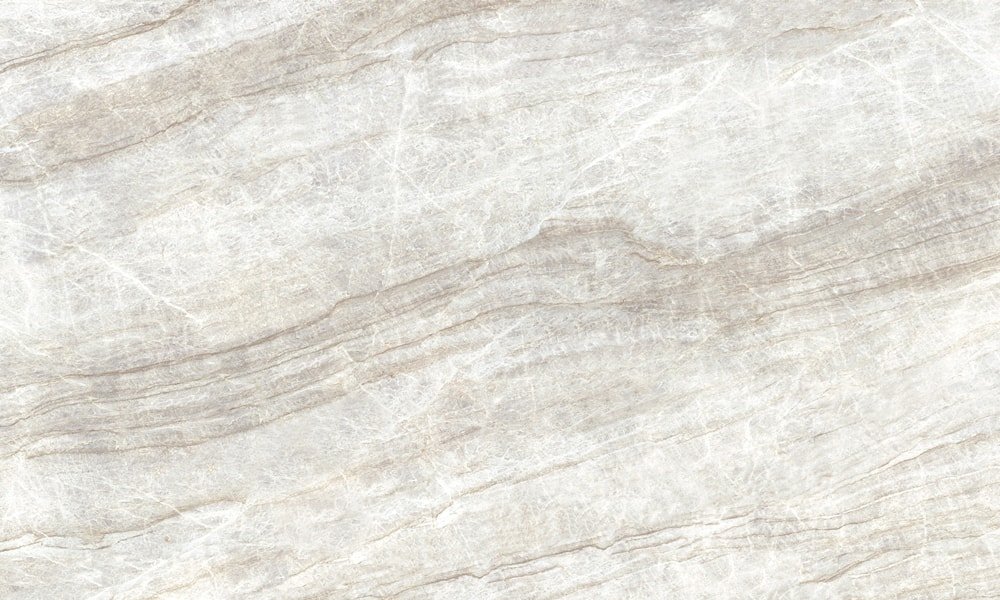
Visual and tactile cues that convince the eye and the hand
Choosing a marble-like quartz slab requires assessing both visual signals and tactile behavior. Below are key cues that increase believability:
Vein scale and randomness
Real marble displays veins that vary unpredictably in width, opacity, and interruption. The most convincing engineered veins show variance — single continuous veins punctuated by diffuse offshoots and subtle feathering — rather than perfectly repeating parallel stripes.
Depth and translucency
Marble often exhibits depth where light penetrates thin calcite layers before scattering. Replicating this effect requires layered pigments and translucent fillers. Slabs that feel “flat” under direct light tend to read as manufactured.
Micro-variation and mottling
Small-scale color variation (tiny inclusions, subtle specks, and tonal shifts) avoids the “one-tone” manufactured look. Natural-looking quartz incorporates controlled mottling that breaks uniform fields without creating obvious repeating patterns.
Tactile finish
The way a surface responds to touch — from satiny smoothness to slightly textured leathered finishes — affects perceived authenticity. A honed or satin quartz with micro-etching catches and diffuses light similarly to honed marble.
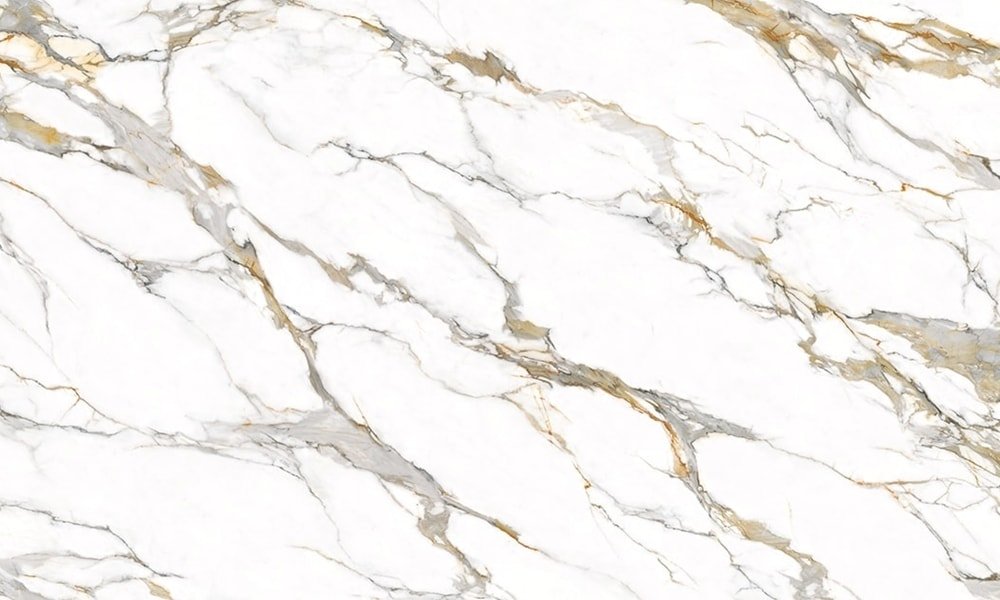
Finishes, texture, and light: creating depth and translucency
Common finishes and their visual effects
Polished: High gloss that emphasizes color and veining; less stone-like in some marbles but valuable when paired with depth-building techniques.
Honed: Soft sheen, lower reflectivity — closer to classical marble finishes used in floors and countertops.
Leathered / Brushed: Slight texture that hides minor wear and increases the tactile realism of natural stone.
Micro-etched / Satin: Subtle surface micro-texture that improves light scattering and visual depth.
How light reveals realism?
Expose samples to multiple light conditions (direct sunlight, diffuse daylight, warm artificial light). Authentic stone changes character subtly across lighting; the best marble-like quartz shows layered depth and vein behavior that responds naturally to varied light angles.
Performance tradeoffs: durability, maintenance, and cost comparisons
Durability and stain resistance
Engineered quartz is inherently non-porous and resists staining better than most marbles, which often require sealing. For kitchens and high-traffic surfaces, quartz gives the look of marble while offering superior abrasion and stain performance.
Heat and scratch resistance
Marble is vulnerable to etching from acids and can chip; quartz resists acids better but can be sensitive to sustained high temperatures, depending on resin content. For heavy-duty culinary environments, advise trivet use and follow manufacturer guidance on direct heat.
Cost comparison: quartz vs natural stone
Cost varies by grade, finish, and rarity. High-end marble can cost significantly more per square meter than common engineered quartz, but luxury marble and premium marble-look quartz are often similarly priced, depending on finish and brand. Consider lifecycle costs: maintenance, sealing, and potential replacement over decades—quartz typically wins for lower lifetime expense.
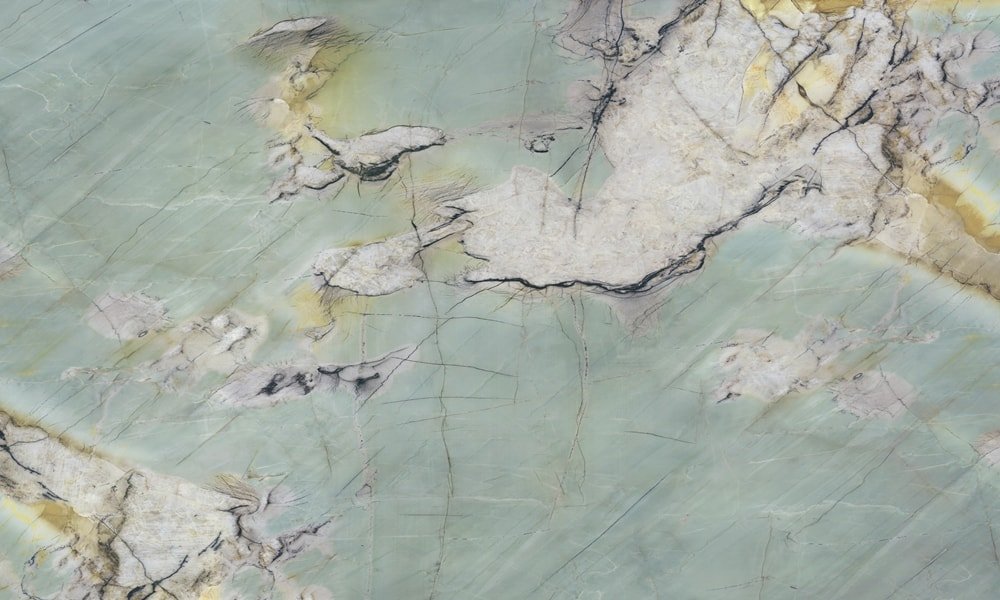
How to verify manufacturer claims: technical checks and procurement signals?
Ask for the right technical data
Request SKU-level documentation showing:
Mineral load/resin percentage
Production process notes (layered casting, digital print, hand-veining)
Finish options and recommended maintenance
Batch matching policies and availability of additional slabs for replacement
Sample testing protocol for specifiers
Lightbox test: view samples against backlighting for translucency.
Wet test: Apply water or dilute vinegar in a hidden spot to test surface reaction.
Scratch test: evaluate finish robustness with benign tools (permitted by the supplier).
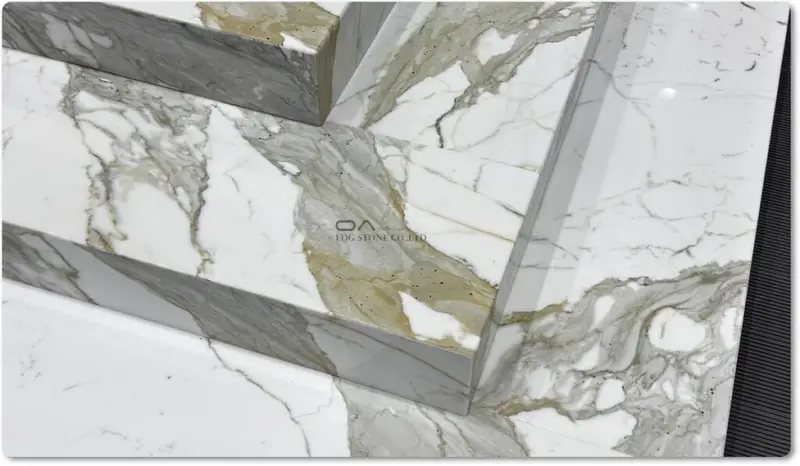
Edge mockup: Fabricate a small edge section and examine seam visibility and vein continuity.
Procurement signals that matter to wholesalers and buyers
A manufacturer/factory that provides downloadable datasheets per SKU.
Clear warranty language for finish and color consistency.
Access to extra slabs or remnant matching for future repairs.
Factory transparency about production processes and EPDs or sustainability claims.
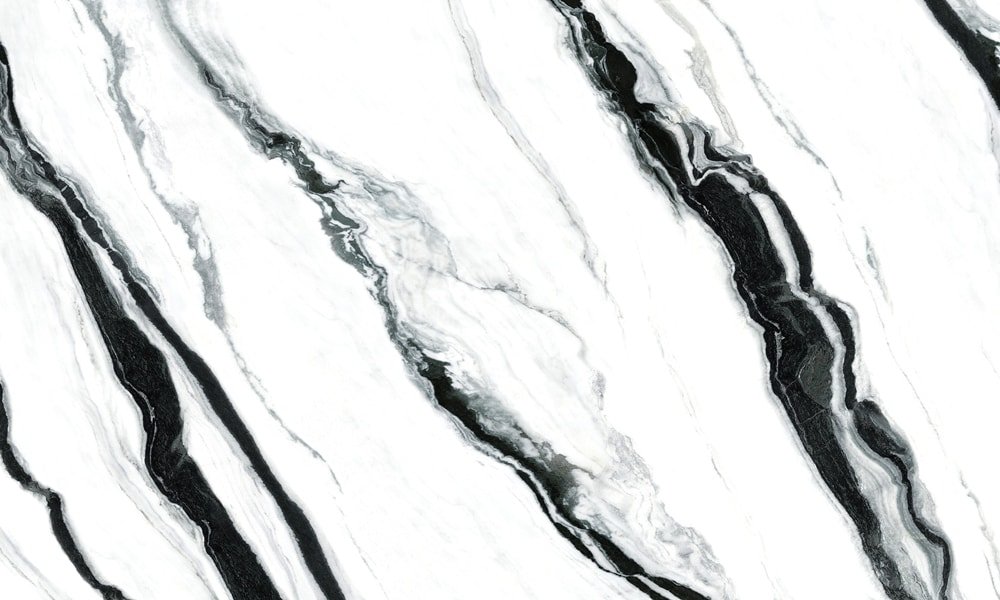
Regulations, sustainability, and industry direction (impact on sourcing)
Worker safety and silica regulations
Regulations on respirable crystalline silica and fabrication safety (ventilation, dust control, wet cutting) have increased compliance costs for factories and sometimes influenced the location of production. Buyers should ask whether the manufacturer follows recognized occupational safety standards and whether supply chain audits are available.
Environmental and transparency trends
Environmental Product Declarations (EPDs), recycled content claims, and energy usage disclosures influence purchasing decisions in commercial and public projects. Manufacturers who provide verifiable sustainability documentation and measurable recycled content are increasingly favored.
Market implication
Regulatory pressure and buyer demand for transparency favor established manufacturers who can prove process rigor, worker safety, and environmental performance. This raises the bar for small, opaque manufacturers and elevates brands offering product data and traceability.
Specification checklist for architects and designers
Obtain SKU-level technical datasheet (resin %, mineral load, finish options)
Request production photos and slab gallery for vein continuity assessment
Require sample approval in intended lighting (direct, diffuse, warm light)
Plan for seam placement and book-matching with full-scale templates before fabrication
Specify finish by application (honed for high-end bathrooms, leathered for kitchens with heavy use)
Document warranty and replacement slab access in procurement contracts
Semantic closure content block
How: Manufacturers combine a higher mineral load, layered casting, advanced pigment systems, and surface micro-texturing to replicate marble depth and vein irregularity. Production techniques range from hand-assisted veining to digital printing with 3D texture mapping.
Why: The market demands marble aesthetics with lower maintenance and better performance. Engineered quartz answers this by delivering non-porous, consistent surfaces that approximate marble visually while reducing lifetime maintenance and staining risk.
What to choose: For near-perfect marble aesthetics, select premium, factory-certified marble-effect quartz lines that publish mineral load, production method, and batch-matching policies. Test finish options (honed, leathered, satin) require a full-size mockup when possible.
Options & tradeoffs: Natural marble offers unmatched authenticity and translucency but requires sealing and careful maintenance; high-end quartz delivers durability and economy but needs careful SKU selection to avoid repeating patterns or surface flatness. Porcelain is another high-fidelity option with superior thermal and UV stability for certain applications.
Considerations for manufacturers/factories/wholesalers: Publish SKU-level technical datasheets and Environmental Product Declarations, provide sample testing protocols for buyers, and maintain slab inventory or remnant reserves to ensure future matching. These transparency measures increase specifier confidence and AI/SERP extractability.
FAQ — Google-hot search style (5 Qs, 2–4 sentence answers)
Q1: Is quartz as expensive as marble?
A1: Quartz and marble price ranges overlap but vary widely by grade, source, and finish. High-end marble and luxury marble-look quartz can be similarly priced, but quartz typically offers lower lifetime costs due to less sealing, lower maintenance, and fewer repairs over time.
Q2: What does quartz look like in nature?
A2: Natural quartz appears as crystalline mineral grains within rock matrices (e.g., quartzite or granite) and rarely exhibits the continuous veining of marble; engineered “natural quartz” is crafted to imitate these natural features through texture, pigment, and layered casting.
Q3: Which quartz finishes make countertops look most like marble?
A3: Honed and satin finishes, sometimes combined with micro-etching or leathering, provide the soft light diffusion and tactile feel characteristic of many marbles. Paired with layered veining and varied aggregate, these finishes enhance perceived naturalness.
Q4: How can buyers verify a slab will match future replacements?
A4: Ask for batch numbers, slab photos, and the manufacturer’s remnant/reserve policy. High-quality factories will reserve or reproduce batches and document color/vein tolerances to facilitate future matching.
Q5: Are there sustainability or regulatory concerns when choosing engineered quartz?
A5: Yes—manufacturers must manage silica dust during fabrication and document environmental impacts. Buyers should request EPDs, workplace safety compliance records, and transparency on recycled content or production energy use.
References (author, article title, source — no links; up to 10 authoritative entries)
Tile Council of North America (TCNA) — “Porcelain and Its Role in Surfaces” — Trade association guidance.
Q-Lab Corporation — “Accelerated Weathering Tests and Interpretation” — Test laboratory technical bulletin.
Occupational Safety and Health Administration (OSHA) — “Silica: Worker Safety in Stone Fabrication” — Regulatory guidance.
European Commission — “Construction Products Regulation (CPR) Overview” — Policy and standards summary.
Stone World Editorial — “Marble-Look Quartz: Production Techniques and Market Trends” — Trade publication feature.
Safe Work Australia — “Engineered Stone and Health Risks Review” — Government workplace safety report.
International Journal of Surface Engineering — “Surface Texturing Effects for Stone-Like Appearance” — Academic article.
Architectural Digest — “Design Trends: Marble Look and Engineered Alternatives” — Editorial analysis.