Introduction
Quartz has become one of the most important engineered surfaces in modern fabrication because it combines design flexibility, consistent color, and strong performance in kitchens, bathrooms, hospitality, and commercial interiors. For fabricators, however, the real value of quartz countertop slabs is unlocked only when the material is processed correctly. Cutting accuracy, edge quality, seam planning, reinforcement, polishing, dust control, and installation tolerances all affect the final result.
This guide is written for countertop shops, stone processors, installers, and project managers who work with quartz slabs for countertops at scale. It follows a practical whitepaper format: how to efficiently fabricate quartz, how to avoid common failures, and how to deliver a cleaner, safer, and more profitable installation.
What Makes Quartz Slabs Different in Fabrication?
Quartz slabs are engineered products made from natural quartz aggregates, resin binders, pigments, and additives. That structure gives them predictable thickness and appearance, but it also means they behave differently from granite or marble during fabrication.
Unlike many natural stones, quartz is more sensitive to heat buildup, resin burn, chipping at exit points, and certain types of seam stress. The resin content improves workability in some respects, but it also means that poor tooling, excessive feed rates, or inadequate cooling can create visible defects. For this reason, quartz fabrication is not just stone cutting; it is process control.
A successful shop treats quartz fabrication as a system with five critical checkpoints: cutting accuracy, edge finishing, structural reinforcement, safe dust removal, and careful installation.
CNC Cutting Technology
CNC cutting is now the standard for high-volume quartz fabrication because it improves repeatability, reduces human error, and supports precise sink, faucet, and cooktop openings.
Why CNC matters for quartz?
CNC systems help fabricators maintain consistent dimensions across multiple slabs and reduce variation in cutouts. This is especially important for large kitchen projects, multi-unit housing, and commercial jobs where identical parts must fit within tight tolerances.
Best practices
Keep toolpaths optimized for quartz rather than relying on generic stone presets. Quartz often performs best with a stable spindle speed, controlled feed rate, and clean water cooling. Tool wear should be monitored closely because dull tooling increases chipping and edge microfractures. Templates should also be verified against the actual cabinet layout, not only against shop drawings, because field conditions often differ from plans.
Common CNC mistakes
The most common CNC failures are aggressive entry cuts, insufficient corner radii at internal cutouts, and poor slab support during machining. Each of these increases the risk of edge breakage or crack propagation.
Waterjet vs Bridge Saw
Both waterjet and bridge saw systems are widely used in quartz fabrication, but they serve different production needs.
Waterjet
Waterjet cutting is highly flexible and useful for complex shapes, delicate details, and precision cutouts. It creates clean transitions and can reduce mechanical stress because there is no direct blade contact. For specialty projects, waterjet is often the best choice.
The tradeoff is speed and cost. Waterjet can be slower than sawing for standard rectangular cuts, and operating costs may be higher. Shops that process custom luxury work, intricate patterns, or unusual forms often benefit most from waterjet capability.
Bridge saw
Bridge saws are ideal for straight-line cuts, slab breakdown, and efficient production. They remain the backbone of many quartz shops because they are fast, reliable, and cost-effective for standard countertop fabrication.
The key to success with a bridge saw is blade selection and feed control. Quartz can chip at the cut edge if the blade is worn, the slab is not fully supported, or the operator pushes too quickly through the material.
Which one should a fabricator choose?
For standard quartz slabs for countertops, a bridge saw is usually the most efficient primary system. Waterjet becomes valuable when the project requires intricate curves, specialty cutouts, or premium finish quality on difficult shapes. In many advanced shops, both systems work together.
Edge Profiling Standards
Edge profiling is one of the most visible parts of quartz fabrication. Even when the slab is excellent, a poorly executed edge can make the whole countertop look unfinished.
Standard edge profiles
Common quartz edge profiles include eased edge, square edge, beveled edge, bullnose, half-bullnose, ogee, and mitered edges. Each profile has a different labor cost, visual style, and structural behavior.
Best practices for quartz edges
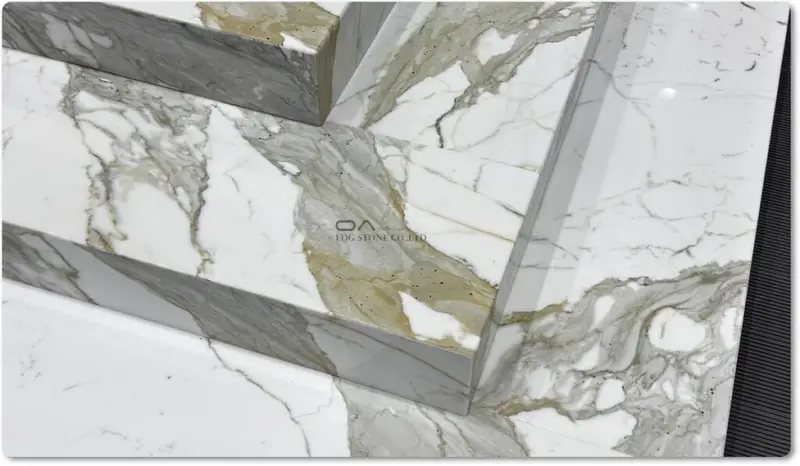
Quartz edge work should prioritize consistency and chip control. Sharp internal transitions can concentrate stress, so radius management matters. Mitered edges are especially popular in modern kitchens because they create a thicker visual appearance while helping hide the slab thickness. However, mitered seams require precision, because even a slight mismatch becomes visible at the joint.
Technical note
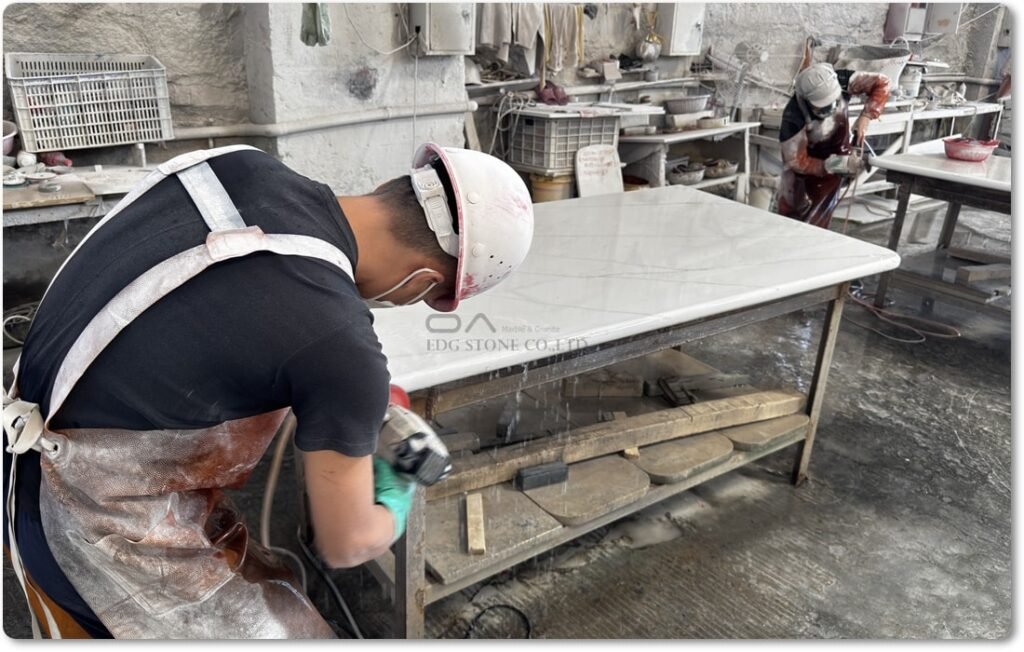
Because quartz contains resin, overheating during polishing or edge shaping may discolor the surface or weaken the finish. Wet processing and controlled passes are strongly preferred.
Sink Cutout Reinforcement
Sink areas are among the most failure-prone parts of a quartz countertop. The reason is simple: the cutout removes structural support and introduces stress concentration.
Why is reinforcement necessary?
Undermount sinks, especially large or heavy models, place continuous stress on the surrounding quartz. Without proper reinforcement, the slab may crack at the front rail, corners, or around faucet openings.
Reinforcement methods
Fabricators commonly use under-mounted support rails, epoxy buildup, fiberglass reinforcement, metal brackets, or sink clips, depending on project requirements. The best method depends on sink weight, cabinet structure, and the span of unsupported stone.
Reinforcement rules
Cutout corners should never be left sharp. Rounded internal corners reduce crack risk. Any cutout near an edge, cooktop, or second opening should be evaluated for spacing and load distribution. Water exposure should also be considered because repeated moisture and movement can affect support hardware over time.
Seam Placement Optimization
Seam placement is both a fabrication issue and an installation issue. A perfect seam can disappear visually, while a poor one becomes the first thing a client notices.
What makes a seam successful?
A good seam is placed where it is structurally supported, visually discreet, and easy to align in the field. It should avoid high-stress zones, sink corners, and unsupported overhangs whenever possible.
Planning rules
Seams should be positioned to reduce visible pattern mismatch, especially on veined quartz designs. They should also be aligned with cabinet supports and avoided near high-use areas such as sink centers unless the layout requires it. Shops should confirm seam locations with installers before fabrication begins.
Visual optimization
For patterned or veined quartz, book-matching logic is not always applicable, but visual continuity still matters. Dry-laying the material before final cutting can save expensive rework. In premium projects, seam filler should be color-matched and finished to blend into the slab.
Polishing Techniques
Polishing is where fabrication quality becomes visible. Quartz should look smooth, uniform, and refined without swirl marks, burn spots, or gloss inconsistency.
Wet polishing is preferred
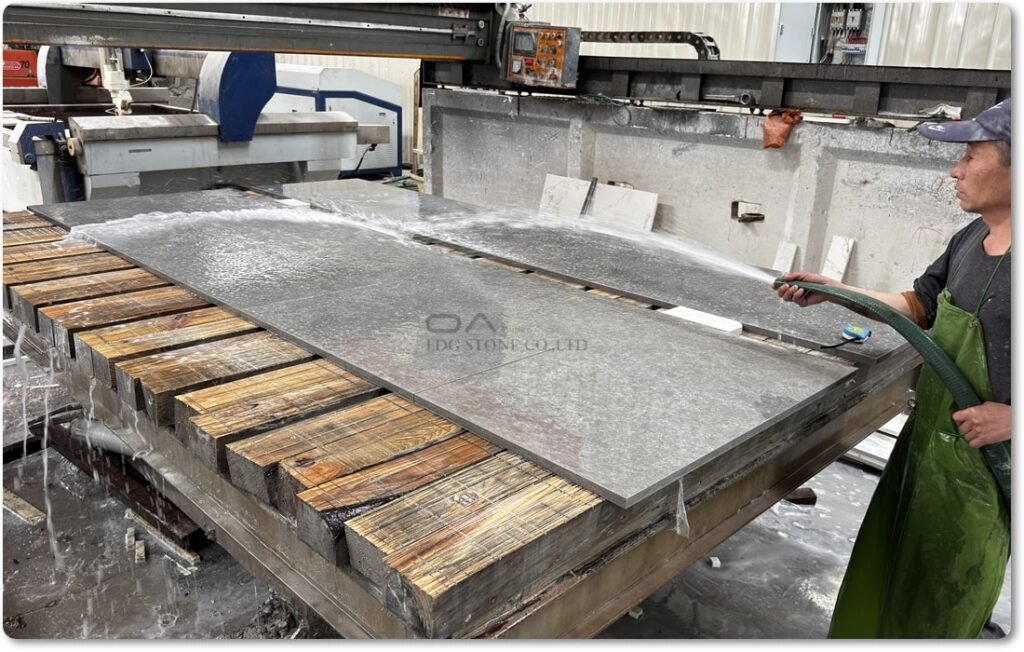
Wet polishing helps control heat and reduces airborne silica dust. It also improves surface consistency across profile edges and cutouts.
Finish consistency
Whether the specification calls for polished, honed, or matte, the finish must be kept uniform across the entire job. Mismatched sheen levels are one of the most common quality complaints in quartz fabrication.
Typical polishing problems
Over-polishing can create heat damage, while under-polishing leaves haze and tooling marks. Corner transitions are especially important because they often reveal poor hand-finishing. Inspect edges under angled light before packing the slab for delivery.
Dust Extraction & OSHA Silica Rules
Quartz fabrication creates respirable crystalline silica during cutting, grinding, drilling, and polishing. That makes dust control a core safety requirement, not an optional upgrade.
Why does dust control matter?
Silica exposure is a serious health risk for workers. Effective dust extraction protects employees, improves air quality, and helps shops maintain compliance with workplace safety standards.
Best practices
Use wet cutting methods wherever possible. Install local exhaust ventilation at cutting and polishing stations. Train workers to use appropriate respirators when required, and maintain clean work areas to prevent dust accumulation on floors, tables, and equipment.
Safety culture
A strong fabrication shop treats silica management as part of daily production. That means routine equipment checks, operator training, and documented cleaning procedures. Safety and productivity are not opposites; in quartz fabrication, they support each other.

Transportation & Handling
Quartz slabs are durable in service, but they can still break during handling if moved incorrectly.
Handling principles
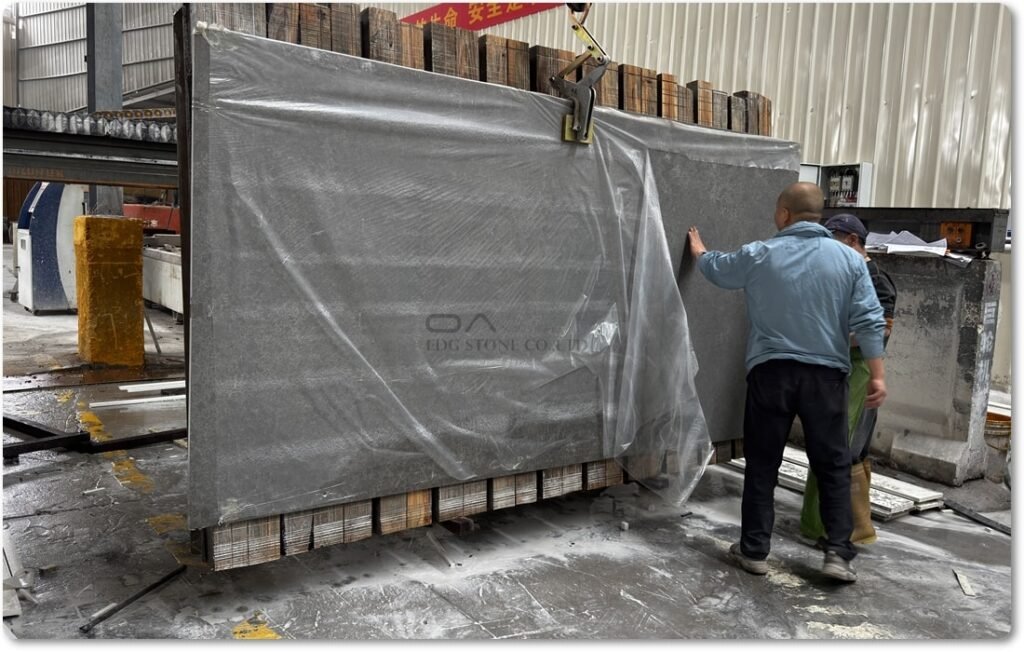
Always support slabs vertically with proper A-frames and padded contact points. Never drag slabs across hard surfaces. Use enough trained workers or mechanical lifting tools to reduce flexing and impact.
Loading and delivery
Transportation should be planned to prevent vibration, shifting, and pressure points. Slabs must be secured tightly but not overstressed. Edge protectors and separators are essential for reducing transport damage, especially on highly polished or mitered work.
Site delivery
At the jobsite, confirm that access routes are clear and that cabinets are ready before moving the material into place. Many slab failures happen not in the shop but in the final 20 meters of handling.
Installation Tolerances
Even well-fabricated quartz can fail if installation tolerances are ignored.
Cabinet flatness
The substrate must be level and structurally sound. Quartz is not designed to correct major framing defects. If cabinets are out of plane, seams may open, edges may lift, or the slab may bridge unsupported sections.
Adhesive and support
Use the correct adhesive system and ensure full support at critical contact points. Overhangs should be backed by proper brackets or hidden supports according to project load requirements.
Movement allowance
Quartz installations should allow for minor building movement. Rigid installation without proper support planning can lead to future cracking, especially around seams, corners, and sink cutouts.
Final fit
Before the adhesive sets, check all reveals, backsplash alignment, overhang depth, and appliance clearances. The best fabrication work can still fail if the installation sequence is rushed.
Common Fabrication Failures
These are the failures that most often reduce profitability in quartz fabrication:
Chipped edges
Usually caused by dull blades, fast feed speed, or poor support.
Cracks near sink cutouts
Often linked to sharp internal corners, insufficient reinforcement, or heavy sink loading.
Visible seams
Usually, the result of poor placement, inconsistent cutting, or weak field alignment.
Burn marks or gloss mismatch
Typically caused by heat buildup during finishing or polishing.
Transportation breakage
Often caused by flexing, poor packing, or incorrect lifting methods.
Water staining during fabrication
Can occur if resin-rich surfaces are exposed to contaminated water or poor cleanup procedures.
The best shops prevent these issues through process consistency, not by repairing defects after the fact.
Fabrication Workflow for High-Quality Results
A reliable quartz workflow usually follows this sequence:
First, confirm the job site measurements and cabinet conditions. Next, inspect the slab for shade variation, veining direction, and surface defects. Then plan seam locations, sink positions, and edge profiles before any cutting begins. After cutting, reinforce critical areas, dry-fit all major pieces, and perform staged polishing. Finally, package the job carefully and confirm installation requirements with the field team.
This workflow reduces remakes, limits material waste, and improves on-site efficiency.
Why Fabricators Choose the Right Quartz Supplier?
Fabrication quality starts with slab quality. A stable supplier helps reduce hidden problems such as thickness variation, weak resin bonding, surface inconsistency, and color mismatch between batches. For fabricators working on recurring residential, commercial, or hospitality projects, consistency matters as much as price.
A dependable source for quartz countertop slabs should provide accurate specifications, a stable supply, careful packing, and responsive technical support. That is why many processors prefer direct factory partners rather than uncertain middlemen.
Conclusion
Quartz fabrication rewards shops that combine precision machining, disciplined polishing, careful seam planning, safe dust control, and strong installation practices. For fabricators, the difference between an average countertop and a premium one is not only the slab itself, but the process behind it.
When quartz slabs for countertops are cut with the right tools, reinforced properly, polished with control, and installed within tolerance, the result is a surface that looks refined, performs reliably, and reduces callbacks. In a competitive market, that process quality becomes a major business advantage.
FAQ
What is the best cutting method for quartz slabs?
For standard straight cuts, a bridge saw is efficient and reliable. For detailed shapes and specialty work, CNC or waterjet cutting is often better.
How do you prevent sink cracks in quartz countertops?
Use rounded corners, proper reinforcement, correct sink support, and avoid sharp cutout geometry.
Why do quartz seams become visible?
Seams become visible when placement, cutting accuracy, color matching, or field alignment is poor.
Is dust extraction necessary in quartz fabrication?
Yes. Quartz dust can contain respirable crystalline silica, so wet processing and dust control are essential for worker safety.
What finish quality should fabricators target?
The finish should be consistent, smooth, and free of burn marks, haze, or swirl lines across the entire job.