Introduction
Blue and green are moving from accent colors to full design strategies in 2026. Across residential, hospitality, and retail interiors, the trend is shifting toward richer materials, softer wellness-led environments, and more expressive surfaces that still feel premium and controlled. Recent design forecasts point to deeper greens, touches of blue, tactile finishes, and warmer, more human spaces rather than flat minimalism.
That shift is creating a strong opportunity for blue quartz slabs and green quartz slabs. Compared with highly variable natural stone, engineered quartz offers design consistency, repeatable color control, and a broader palette for large-format specification. Manufacturers also position quartz as a durable, low-maintenance surface with a consistent slab-to-slab appearance, which is especially useful for projects that need a coordinated luxury look across multiple rooms or locations.
The Rise of Colored Quartz Surfaces
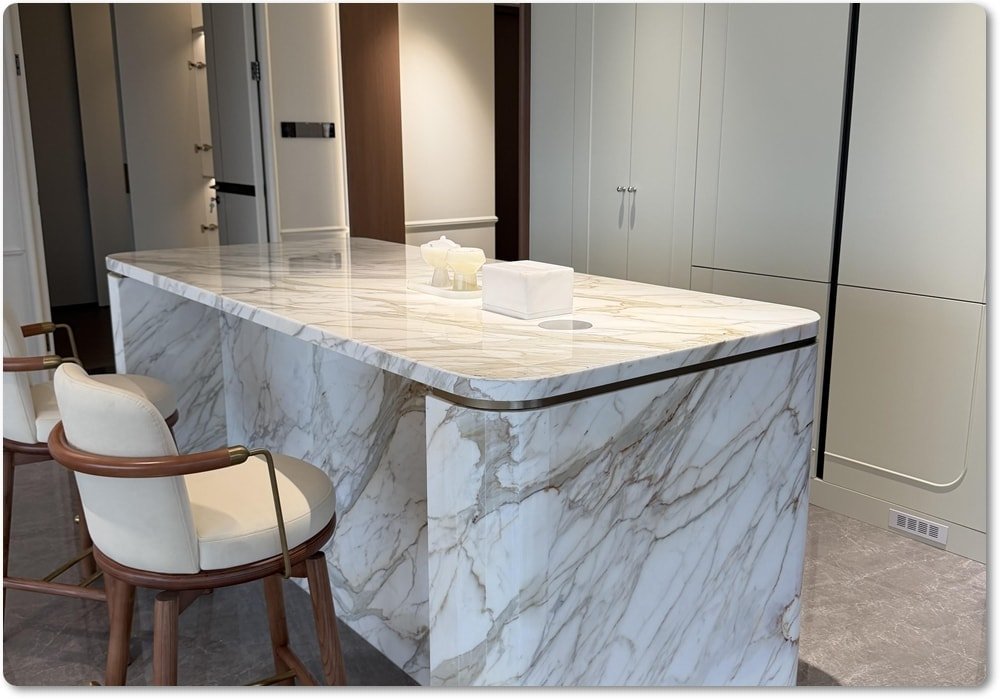
Colored quartz is no longer limited to “safe” neutrals. In high-end design, quartz is increasingly used as a visual signature: a reception desk, a statement island, a spa vanity, a retail wall, or a cladded feature volume. That matters because quartz can deliver the same base color and pattern behavior across large installations, which helps designers keep the look controlled while still using bolder hues.
For 2026, blue and green are especially attractive because they bridge two design goals at once: calm and character. A space can feel restful without turning bland, or memorable without becoming loud. That balance is exactly where premium quartz performs best, especially when the slab is specified as part of a larger material story that includes wood, bronze, brushed stainless, textured fabric, or honed metal.
Psychology of Blue & Green Interiors
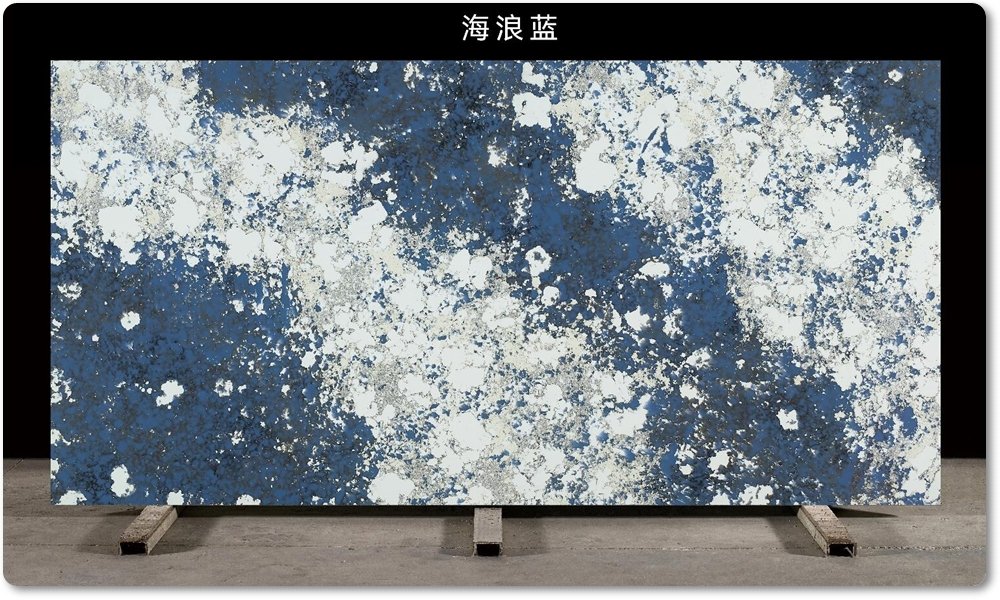
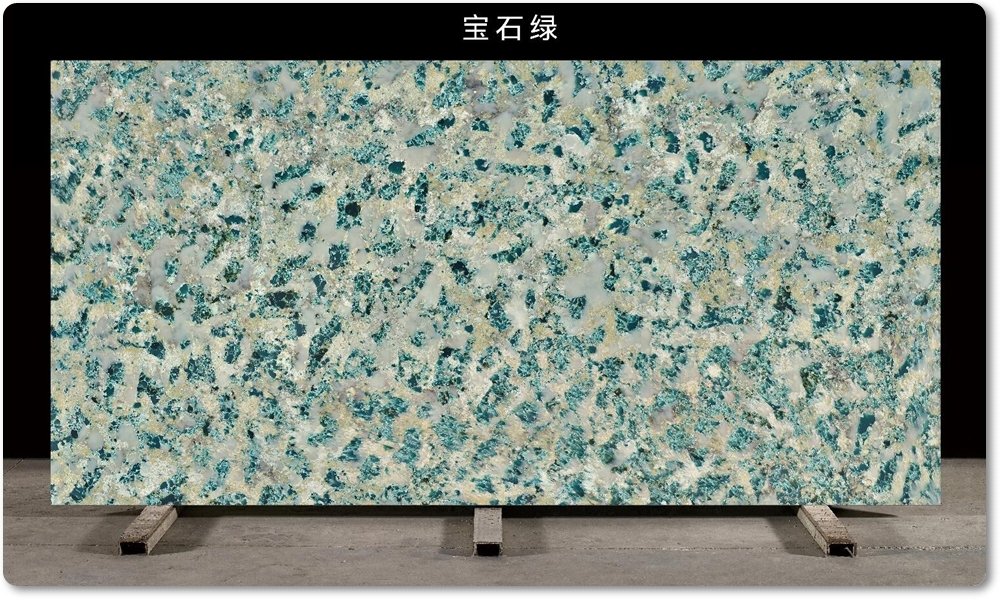
Blue is often used to suggest clarity, openness, water, and quiet confidence. Green is now being treated as a “new neutral” in several 2026 design forecasts, appearing in layered interiors as a grounding color rather than a novelty accent. Recent trend coverage also shows blue and green returning in deeper, more sophisticated forms instead of bright, primary shades.
For luxury stone design, that psychological shift is important. A dark emerald quartz island can make a kitchen feel tailored and expensive. A deep ocean-blue slab can anchor a hospitality bar with a cool, composed atmosphere. Pale sea-glass tones can lighten a retail display zone or powder room while still feeling custom and high-end. In 2026, the winning move is not simply “use color,” but use color with architectural discipline.
Pigment Engineering in Quartz Production
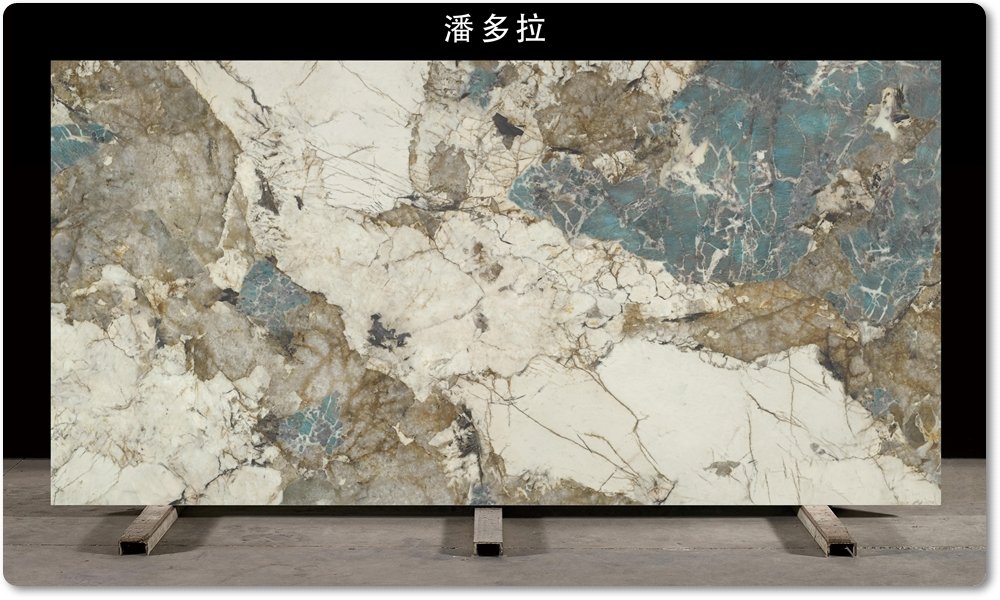
The beauty of blue quartz slabs and green quartz slabs depends on pigment control. Manufacturers of engineered quartz highlight uniform color distribution, controlled patterning, and slab-to-slab consistency as core advantages of the material. Some product lines are designed for homogeneous color, while others are built for more movement or random patterning, giving designers different levels of visual energy to work with.
That engineering matters more in colored quartz than in white or beige products. When a deep blue tone is off by even a little, the result can look muddy. When a green batch shifts too far toward gray or yellow, the whole project can feel inconsistent. For that reason, luxury specifiers increasingly ask for master samples, slab photos, production-run confirmation, and approved reference pieces before release. Those are practical controls, not just procurement formalities.
Luxury Hospitality Applications
Hospitality design in 2026 is leaning toward authenticity, warmth, tactility, and a stronger sense of place. That gives colored quartz a very strong role in lobbies, concierge desks, spa counters, wellness bars, vanity walls, and guest-room feature panels. Blue and green surfaces work especially well where the design brief calls for calm, upscale, and memorable rather than flashy.
Blue quartz slabs can support a water, sky, or coastal narrative in resorts and urban hotels. Green quartz slabs can reinforce biophilic, garden-inspired, or wellness-led concepts. In both cases, quartz offers the design team a dependable balance of color consistency and maintenance-friendly performance, which is valuable in high-traffic commercial settings.
Bookmatching Opportunities
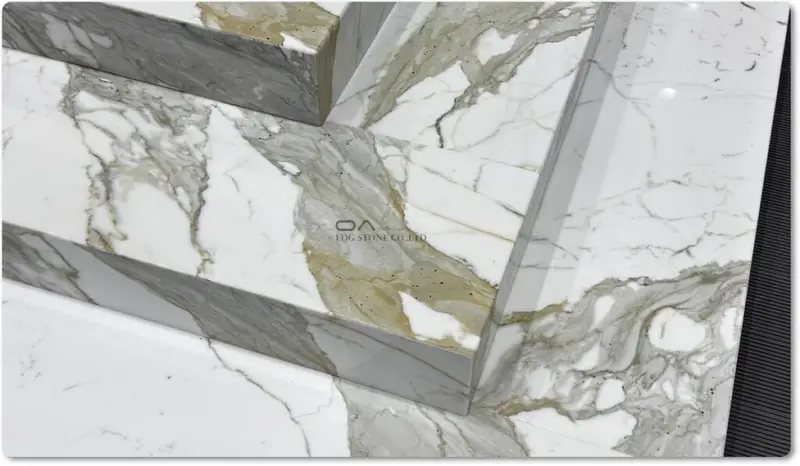
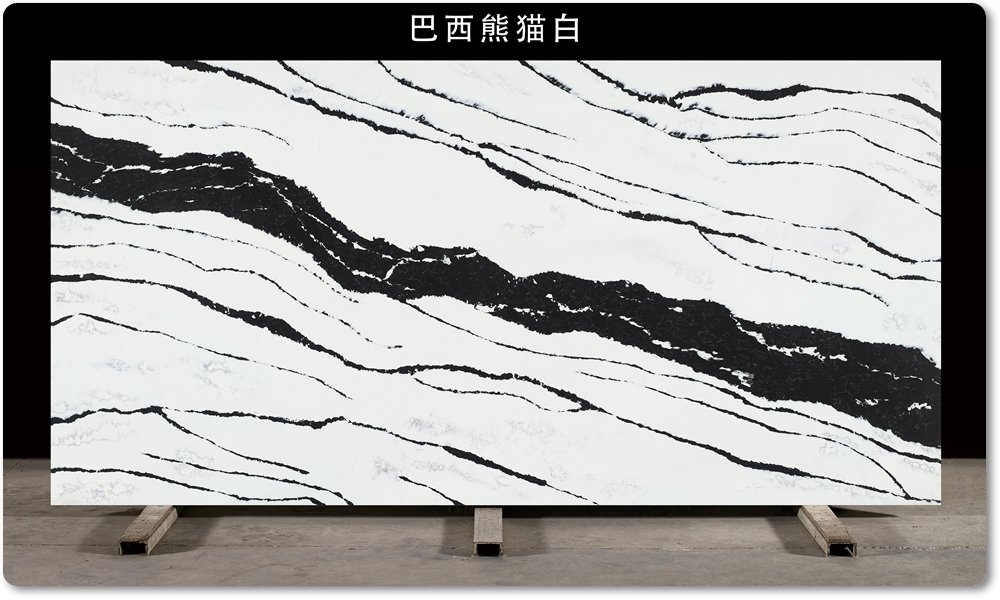
Bookmatching is one of the strongest ways to elevate a colored quartz project. Leading quartz brands describe bookmatching as a mirrored effect created by placing two slabs side by side, producing a dramatic visual statement on walls, vanities, islands, and cladding features. This technique is especially useful when blue or green quartz includes directional veining, cloud movement, or layered pigment effects.
For luxury projects, bookmatched blue quartz slabs can feel like moving water or polished stone art. Bookmatched green quartz slabs can feel more botanical, jewel-like, or gallery-like depending on the finish and pattern density. Used correctly, the slab becomes the feature, which means the rest of the room can stay clean, minimal, and expensive-looking.
High-End Retail Space Design
Retail is becoming more experiential, and design teams are using materials to create memory, not just surface coverage. Recent retail and hospitality design coverage shows more emphasis on immersive environments, expressive colors, and store-as-experience thinking. That makes colored quartz a natural fit for flagship displays, checkout zones, product plinths, back walls, and VIP fitting rooms.
Blue quartz slabs can suggest trust, technology, cool elegance, or coastal luxury depending on the brand world. Green quartz slabs can communicate sustainability, wellness, craft, or quiet opulence. For brands that need a high-end but approachable identity, these colors are strong because they feel premium without relying on the same beige-and-white formulas that dominate many commercial interiors.
Color Consistency Challenges
The main challenge with blue and green quartz is not availability; it is consistency. Designers need the final installed surface to match the sample, and they need all slabs in the project to feel coherent under both daylight and artificial light. Industry sources repeatedly emphasize that quartz offers strong color consistency, but they also show that quality control and slab selection remain essential, especially when bold pigments or large movement patterns are involved.
For specification work, the safest approach is to approve the exact slab range before production release, confirm thickness and finish early, and reserve enough material for waste, cuts, and future repairs. That is especially important for hospitality and retail projects where a single mismatch can become very visible across multiple pieces or repeated brand environments.
UV and Fade Resistance
UV performance is a critical topic in 2026 because more designers want indoor-outdoor continuity. Manufacturers differ here: some quartz products are marketed as UV-resistant and suitable for indoor and outdoor spaces, while others advise using protection outdoors or in direct exposure conditions. Caesarstone, for example, highlights UV-resistant outdoor collections, while also advising that outdoor surfaces be covered when not in use.
That means specifiers should not assume every blue or green quartz slab is appropriate for terraces, pool bars, or sunlit facades. The correct choice depends on the exact product line, resin system, and tested performance. For projects with high sunlight exposure, ask for the manufacturer’s outdoor guidance in writing and confirm whether the slab is designed for UV-stable use.
Designer Specification Trends
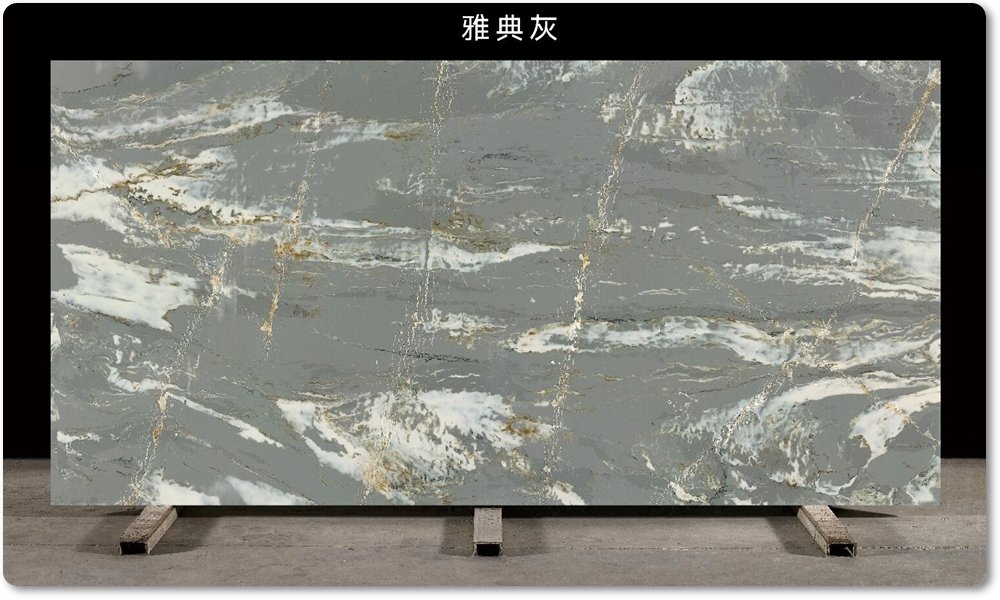
The broader 2026 design direction favors tactile, layered, wellness-oriented interiors with more color confidence and less rigid minimalism. That makes blue and green quartz especially relevant when a project needs a premium focal point that still feels grounded, natural, and current.
For designers, the most effective specification patterns are now:
blue or green quartz as a statement surface, paired with soft neutrals; bold color only on one or two architectural planes; and larger-format stone used where continuity matters most. That formula keeps the palette elevated while giving the material enough presence to justify its cost and visual weight.
Export Demand Analysis by Region
From an export perspective, 2026 favors a segmented strategy. North America remains a major quartz market, with projected growth through 2033, and the United States is expected to register the highest CAGR within North America’s engineered stone market. Europe also shows steady projected growth in quartz, while Asia Pacific is a particularly attractive region for countertops and engineered stone, with India projected to grow fastest in the APAC countertops market and China remaining a very large demand center.
For blue quartz slabs and green quartz slabs, that suggests a practical export map. North America is ideal for premium design-led collections. Europe is strong for refined, specification-friendly surfaces with clean documentation and consistent quality. Asia Pacific is promising for both project volume and premium urban hospitality development, especially where color-forward interiors are gaining momentum.
Conclusion
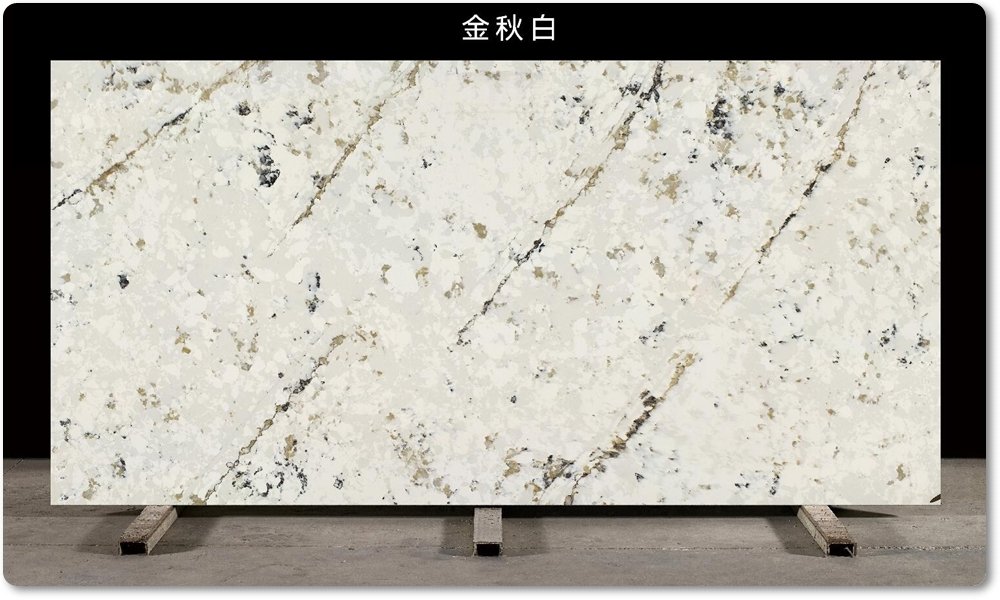
Blue quartz slabs and green quartz slabs are not niche novelty products in 2026. They are part of a wider move toward expressive luxury interiors, wellness-focused spaces, and stronger material identity. The best projects will not use color randomly; they will use it with discipline, consistency, and a clear architecture of light, texture, and finish.
For manufacturers, distributors, and project buyers, the opportunity is clear: develop blue and green quartz collections that are consistent, bookmatch-friendly, UV-appropriate where needed, and easy to specify across hospitality and retail environments. EDG Stone Factory can position itself well in this segment by pairing design-forward color development with reliable export production and project-ready support.
FAQ
Q1: Are blue quartz slabs and green quartz slabs popular in 2026?
Yes. Design forecasts for 2026 show stronger use of green as a neutral, deeper blue accents, and more expressive yet wellness-led interiors.
Q2: Are colored quartz slabs suitable for luxury hospitality projects?
Yes. Hospitality trends are moving toward authenticity, warmth, tactility, and guest experiences, which makes colored quartz a strong fit for lobbies, bars, spa counters, and feature walls.
Q3: Can quartz slabs be bookmatched?
Yes. Multiple quartz brands highlight bookmatching as a mirrored design technique for dramatic wall, vanity, and cladding applications.
Q4: Are all quartz slabs UV-resistant?
No. UV performance varies by product line. Some quartz collections are marketed for indoor-outdoor use, while others require outdoor protection or are not intended for direct exposure.
Q5: Which export regions are strongest for quartz slabs?
North America, Europe, and the Asia Pacific all show growth potential, with North America remaining a major market and Asia Pacific showing especially strong momentum in countertops and engineered stone.