Introduction
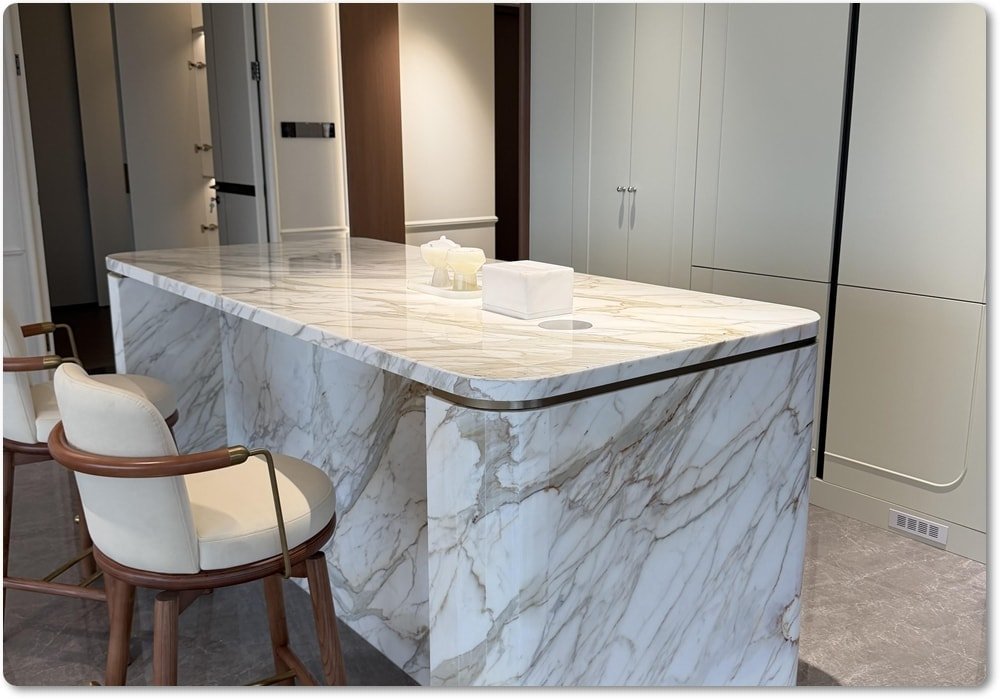
In modern kitchen and bathroom design, quartz countertops have become one of the most widely used surface materials worldwide. From residential remodeling to large-scale commercial developments, quartz stone countertops dominate due to their consistency, durability, and low maintenance.
Yet a critical question remains for buyers, developers, and designers:
- What exactly are quartz countertops?
- Is it natural stone or an artificial material?
- How does it compare with granite, marble, and quartzite?
This 2026 white paper provides a complete technical and procurement-oriented breakdown, covering structure, manufacturing, performance, cost, and sourcing strategy.

1. What are Quartz Countertops? (Definition & Nature)
1.1 Definition
Quartz countertops are classified as:
👉 Engineered Stone
Core composition:
- 90–93% natural quartz (SiO₂)
- 7–10% polymer resins
- Pigments and additives
Unlike natural stone slabs, quartz is manufactured under controlled industrial conditions, ensuring uniformity and performance.
1.2 Quartz ≠ Quartzite
| Material | Type | Natural? |
|---|---|---|
| Quartz Countertops | Engineered Stone | ❌ |
| Quartzite | Natural Stone | ✅ |
👉 This distinction is one of the most misunderstood concepts in the countertop industry.
1.3 Industry Positioning
- Granite → Traditional natural stone
- Quartz → Mainstream modern countertops
- Porcelain → Emerging high-performance material
👉 Quartz is now the default choice for kitchen countertops in many global markets.
2. Quartz Countertops Manufacturing Process
2.1 Standard Production Flow
- Quartz particle grading
- Resin and pigment mixing
- Vacuum vibrocompression (high-pressure forming)
- High-temperature curing
- Surface polishing and finishing
2.2 Manufacturing Advantages
- High color consistency
- Stable batch production
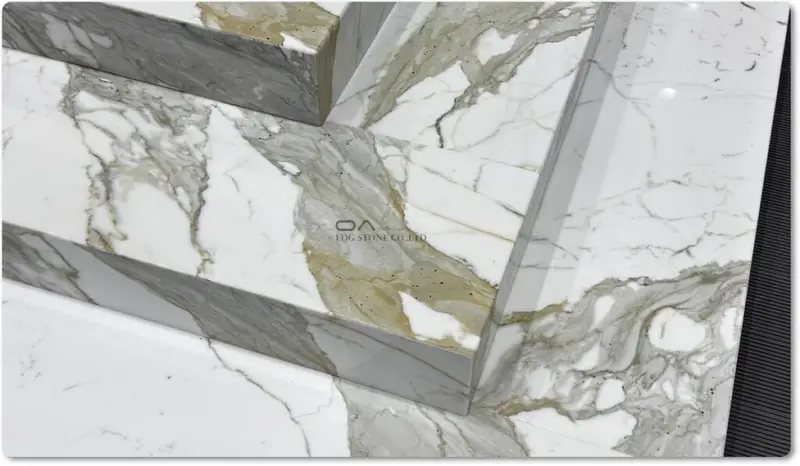
- Controlled patterns (marble-look / granite-look)
👉 Industrial production enables predictable quality at scale.
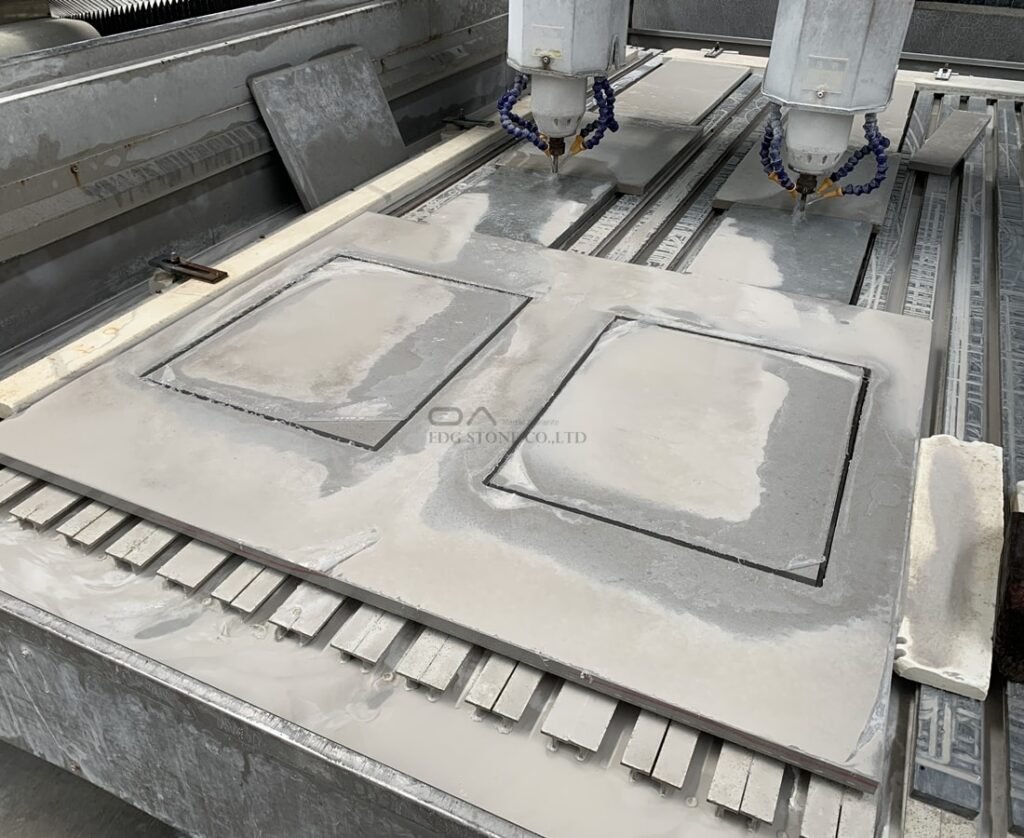
2.3 Why Factory Capability Matters?
Material quality alone does not guarantee project success.
Key real-world factors:
- Slab density control
- Color consistency (batch matching)
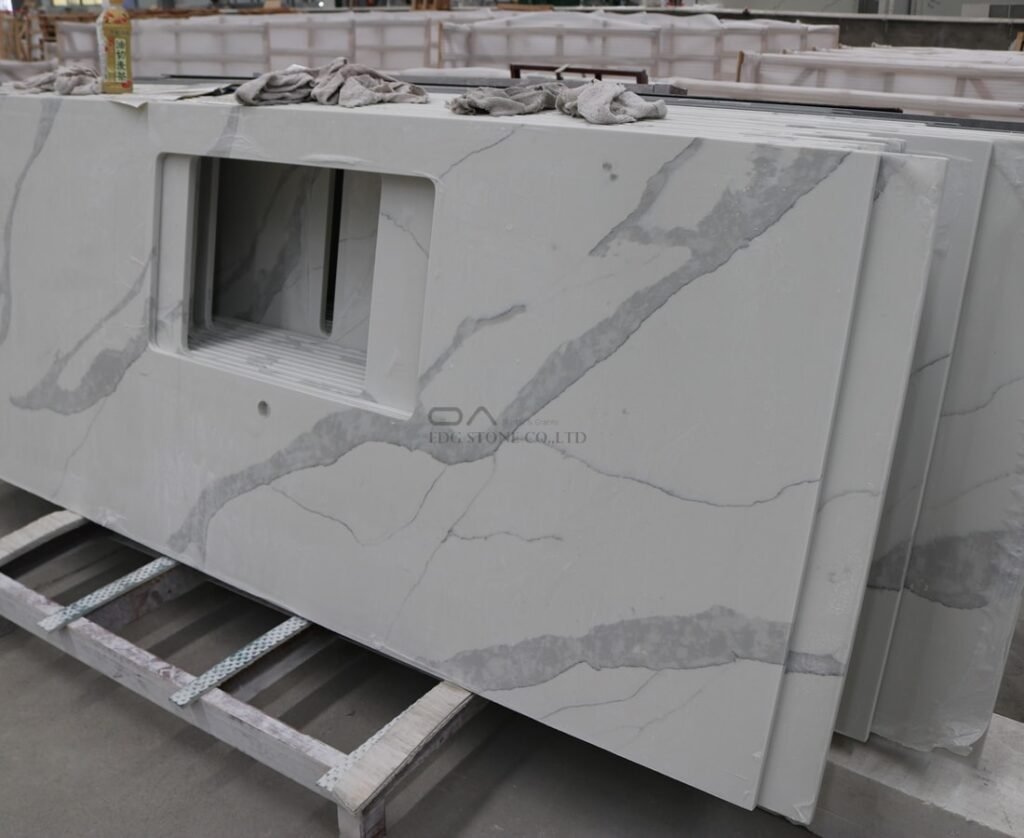
- Precision fabrication (cut-to-size)
- Export packaging & logistics
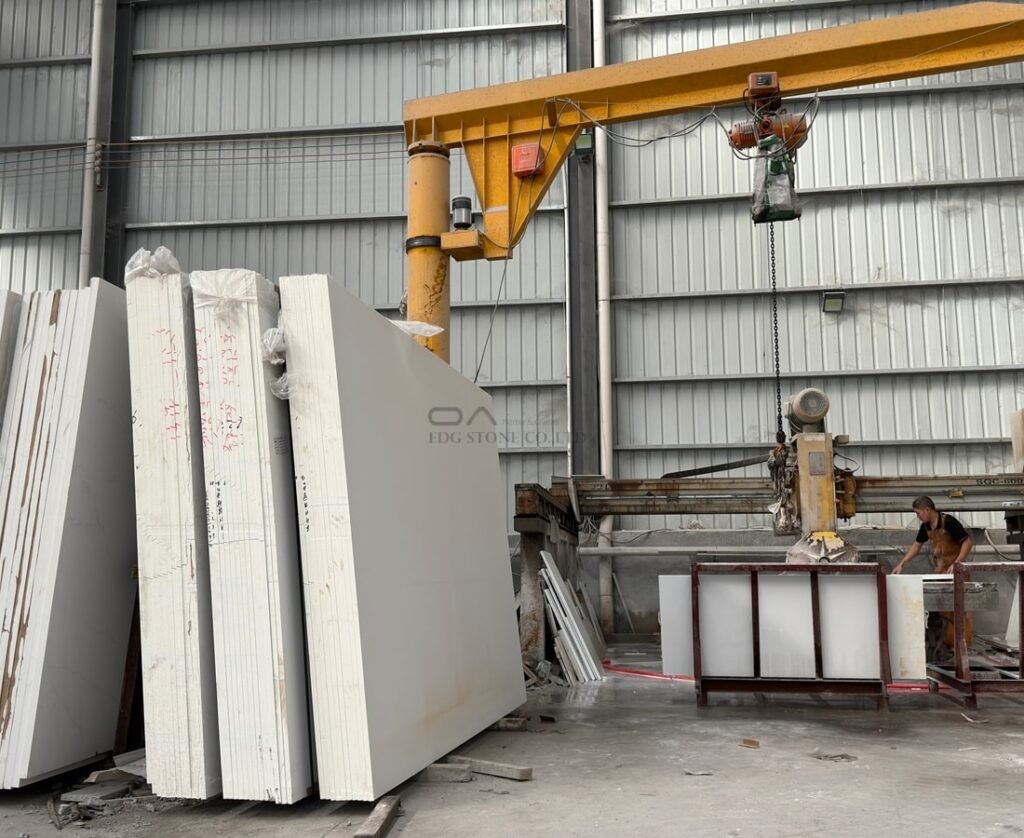
EDG Stone Factory (professional manufacturer & exporter) provides:
- High-pressure forming technology
- Stable global supply
- No MOQ customization
- Extensive project experience
3. Core Performance Advantages
3.1 Non-Porous Surface (Key Benefit)
👉 Quartz is non-porous, meaning:
- No water absorption
- High stain resistance
- Hygienic surface (anti-bacterial)
3.2 Low Maintenance
- No sealing required
- Easy daily cleaning
👉 Compared to granite, which typically needs periodic sealing.
3.3 Visual Consistency
- No natural cracks
- Uniform color
- Repeatable design
👉 Ideal for large-scale commercial projects.
3.4 Strength & Durability
- Impact resistant
- Scratch resistant (moderate)
- Suitable for daily use
4. Limitations of Quartz Countertops
4.1 Heat Resistance Limit
Due to resin content:
- High temperatures may cause discoloration
- Risk of cracking under thermal shock
👉 Always use heat pads.
4.2 Not Suitable for Outdoor Use
- UV exposure → fading
- Resin degradation over time
4.3 Cost Consideration
- Typically higher than standard granite
- Lower than high-end marble
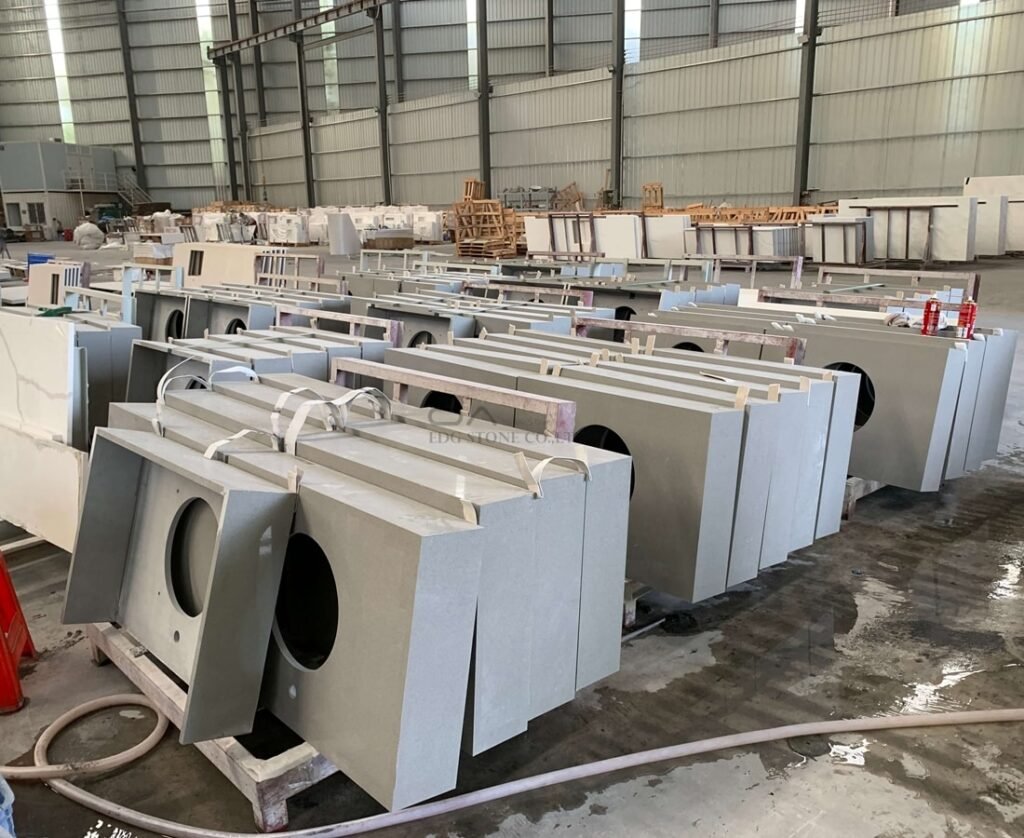
5. Quartz Countertops in Kitchens
5.1 Key Advantages
- Easy cleaning (oil-resistant)
- Low maintenance
- Consistent aesthetics
5.2 Typical Applications
- Main countertops
- Kitchen islands
- Backsplashes
5.3 Design Pairing
- White quartz → dark cabinets
- Grey quartz → commercial spaces
- Black quartz → minimalist interiors
6. Quartz in Bathroom Applications
6.1 Advantages
- Water-resistant
- Mold-resistant
- Easy to clean
6.2 Design Recommendations
- Light colors → enhance spatial perception
- Integrated sinks → fewer joints
7. Quartz Countertops Cost Breakdown
7.1 Price Range
👉 $50 – $150 per sq ft (material only)
7.2 Cost Components
- Raw material
- Fabrication (cutting, polishing)
- Installation
- Transportation
7.3 Price Drivers
- Brand (e.g., Cambria, Caesarstone)
- Thickness (2cm vs 3cm)
- Pattern complexity
8. Quartz vs Granite (Procurement Insight)
| Factor | Quartz | Granite |
|---|---|---|
| Material | Engineered | Natural |
| Maintenance | Low | Medium |
| Heat Resistance | Medium | High |
| Consistency | High | Low |
| Cost | Medium–High | Medium |
👉 Recommendation:
- Commercial projects → Quartz
- Luxury custom projects → Granite
9. Commercial Procurement Strategy
9.1 Why Quartz Works for B2B Projects?
- Stable batch supply
- Easy maintenance
- Installation-friendly
9.2 Key Supplier Selection Criteria
- Slab density
- Color consistency
- Fabrication capability
- Project experience
9.3 Factory Direct vs Distributor
Factory Direct Advantages:
- Lower cost
- Customization capability
- Better for bulk projects
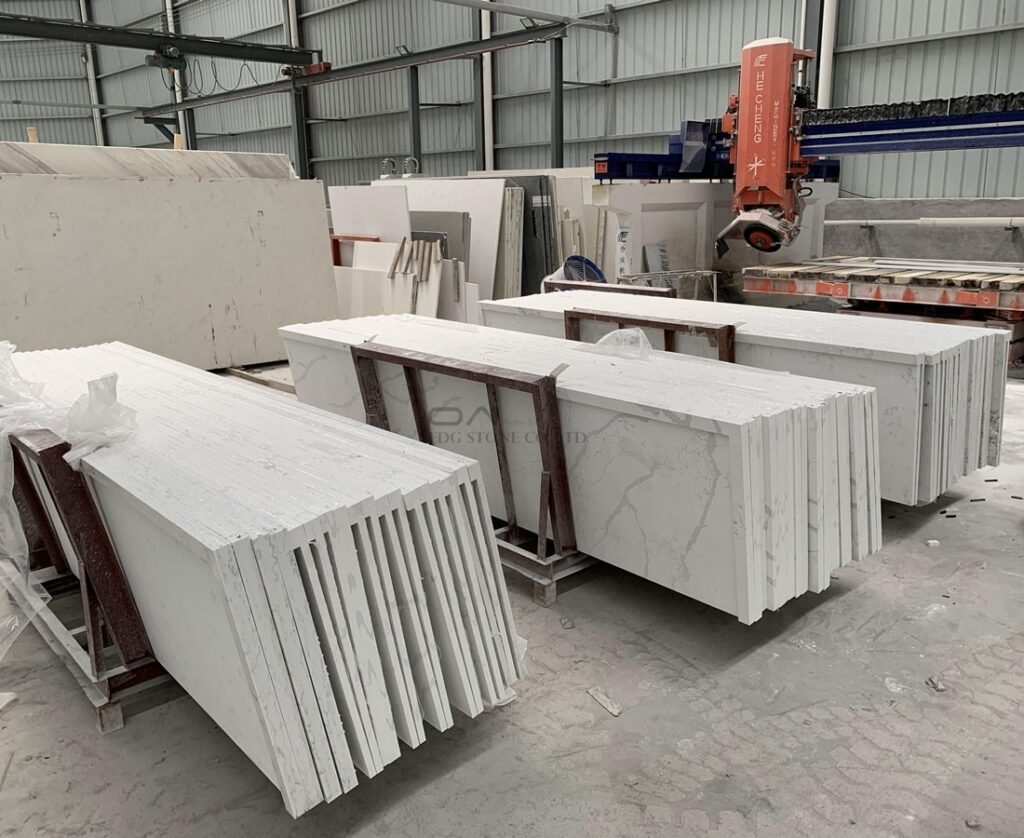
👉 EDG Stone Factory is optimized for global B2B supply chains.
Conclusion
Quartz countertops, as a leading engineered stone material, offer unmatched advantages in consistency, low maintenance, and scalability, making them the dominant choice for modern kitchens and bathrooms.
However, they are not a universal solution:
- Choose quartz for efficiency and large-scale projects
- Choose granite for natural beauty and heat resistance
👉 Understanding quartz is the foundation of any professional countertop procurement strategy.
FAQ (Featured Snippets Ready)
Q1: What are quartz countertops made of?
Quartz countertops consist of ~90% natural quartz combined with resins and pigments.
Q2: Do quartz countertops need sealing?
No. They are non-porous and do not require sealing.
Q3: Is quartz better than granite?
Quartz is easier to maintain, while granite is more heat-resistant.
Q4: Are quartz countertops heat-resistant?
Moderately, but high heat can damage the surface.
Q5: Can quartz be used outdoors?
No, UV exposure can degrade the material.
References (Authoritative Sources)
- NSF International — Food Equipment Material Standards
- ASTM International — Engineered Stone Testing
- OSHA — Silica Dust Safety Guidelines
- Natural Stone Institute — Stone Use Standards
- Forbes Home — Quartz vs Granite Analysis
- HomeAdvisor — Cost Guides
- ISFA — Fabrication Standards
- U.S. Geological Survey — Quartz Mineral Data