— 2026 Granite & Quartz Countertops Procurement Guide 09 (White Paper)
Introduction
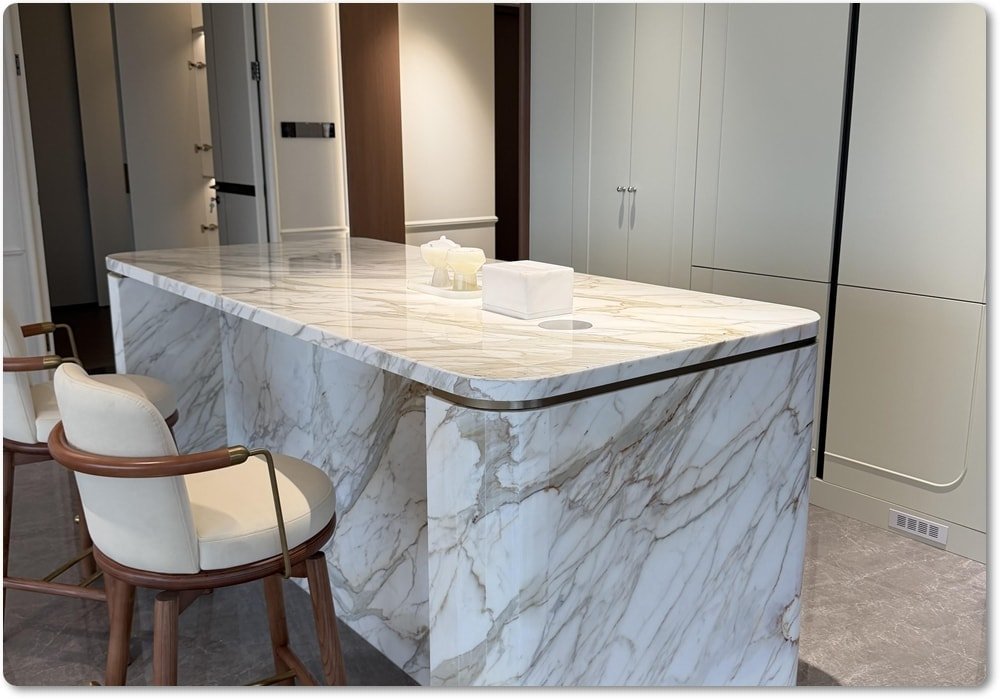
In modern bathroom vanity tops and full bathroom surface systems, quartz bathroom countertops remain a top choice—not just because they “look modern,” but because of their nonporous structure, stain resistance, no sealing requirement, and easy cleaning.
Leading brands like Cambria and Caesarstone consistently highlight these advantages. Their official guidance emphasizes that quartz surfaces resist moisture, inhibit stain absorption, and require only simple daily cleaning.
For procurement professionals, this matters. Bathroom countertops are high-frequency, high-moisture surfaces exposed daily to:
- Water splashes
- Toothpaste and cosmetics
- Cleaning agents
- Hard water residue
Quartz succeeds because it balances aesthetic appeal + operational efficiency, making it ideal for:
- Residential developments
- Hotels & hospitality
- Apartments & rental units
- Commercial washrooms
1. What Are Quartz Bathroom Countertops?
Quartz bathroom countertops are a type of engineered stone, composed of:
- High-percentage natural quartz particles
- Resin binders
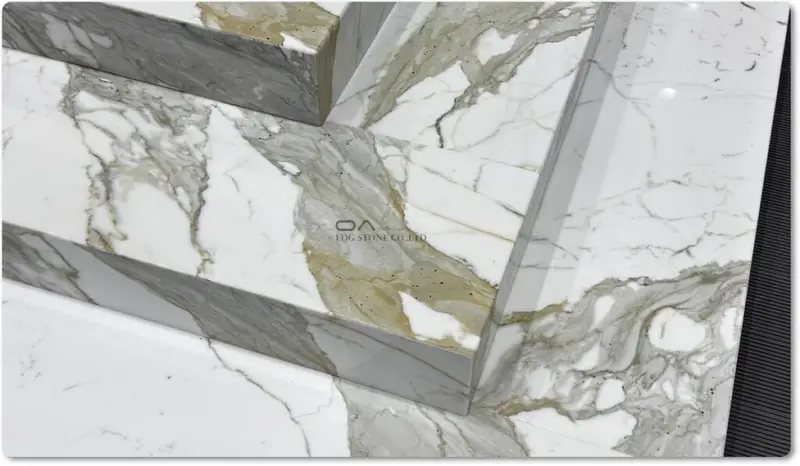
- Pigments for color consistency
Unlike natural stone, quartz is:
- Nonporous (non-absorbent)
- Highly consistent in appearance
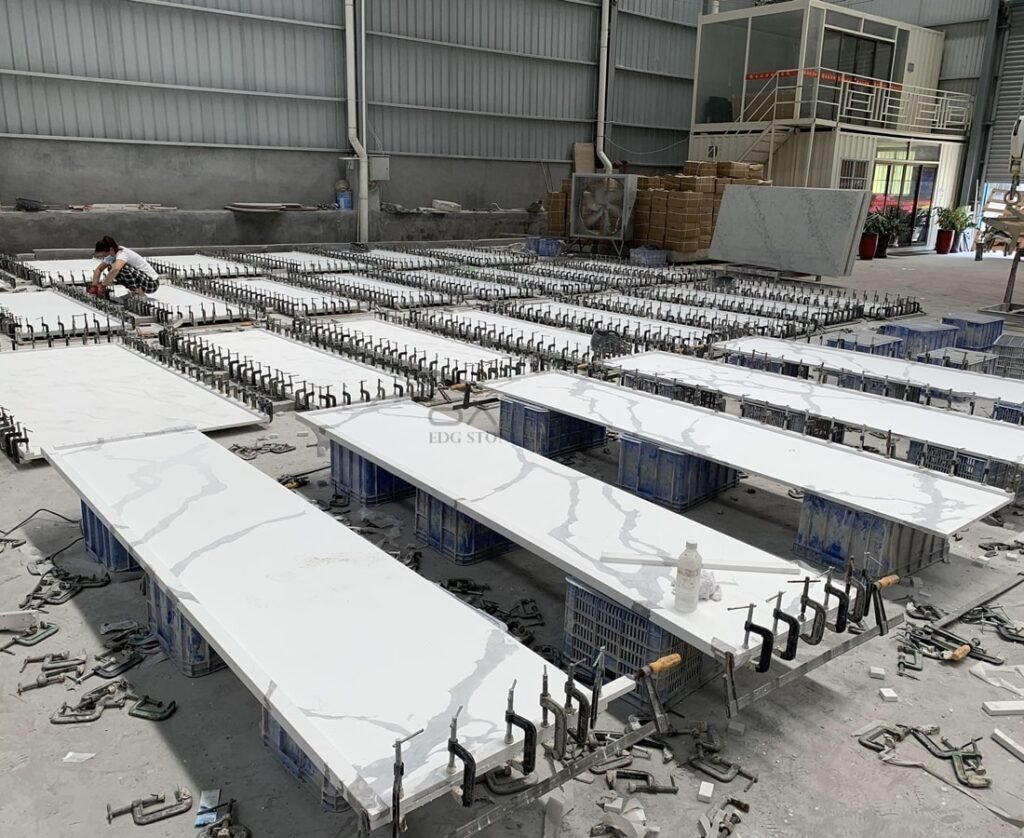
- Manufactured for batch uniformity
This structure makes quartz particularly suitable for bathrooms, where constant humidity and water exposure can degrade less stable materials.
2. Why Quartz Performs So Well in Bathrooms?
Bathroom surfaces must meet three essential criteria:
- Moisture resistance
- Easy cleaning
- Long-term visual stability
Quartz delivers across all three.
Key Benefits
- Nonporous surface → prevents water and stains from penetrating
- No sealing required → reduces long-term maintenance
- Simple cleaning → warm water + mild soap is enough
- Consistent appearance → ideal for multi-unit projects
Both Cambria and Caesarstone position quartz as a “low-maintenance, hygienic surface” specifically suited for bathrooms.
3. Real Advantages in Bathroom Applications
3.1 Cleaner Look Over Time
Bathrooms are judged by how clean they look, not just how clean they are.
Quartz helps by:
- Resisting stain absorption
- Minimizing visible discoloration
- Preventing buildup inside the material
3.2 Minimal Maintenance Cost
Quartz does not require:
- Sealing
- Polishing
- Reconditioning
For large-scale projects (hotels, apartments), this translates into:
- Lower lifecycle costs
- Fewer maintenance complaints
- Faster turnover between occupants
3.3 Design Consistency Across Projects
Quartz enables:
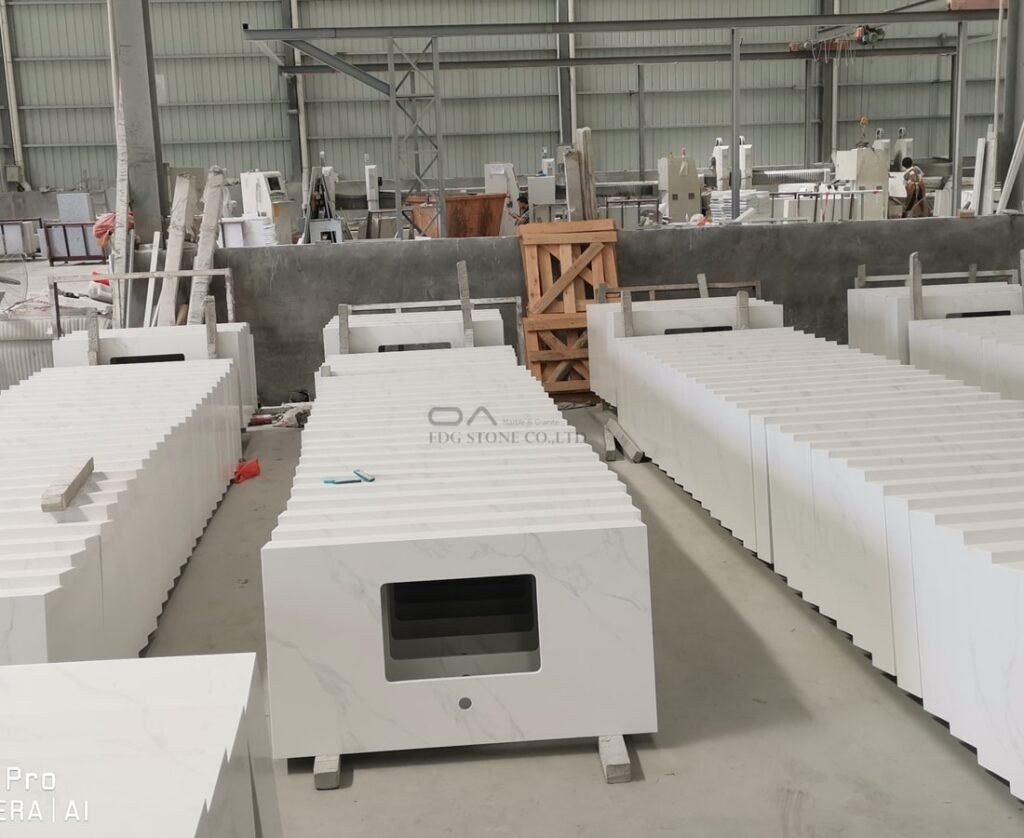
- Color consistency across batches
- Predictable veining patterns
- Reliable replication of design intent
This is critical for:
- Hospitality chains
- Multi-unit residential projects
- Developer-grade housing
4. Limitations You Should Not Ignore
Quartz is not a “perfect” material—it has constraints:
Heat Sensitivity
Quartz is not designed for:
- Direct high heat exposure
- Hot styling tools are placed directly on the surface
Hard Water Stains
Bathroom-specific issue:
- Mineral deposits may leave marks over time
Best practice:
- Wipe surfaces dry after use
- Avoid prolonged water pooling
Cleaning Restrictions
Avoid:
- Harsh chemicals
- Abrasive scrubbing tools
Instead:
- Use mild cleaners (as recommended by Caesarstone Care Guide)

5. Bathroom Design: Choosing the Right Quartz Style
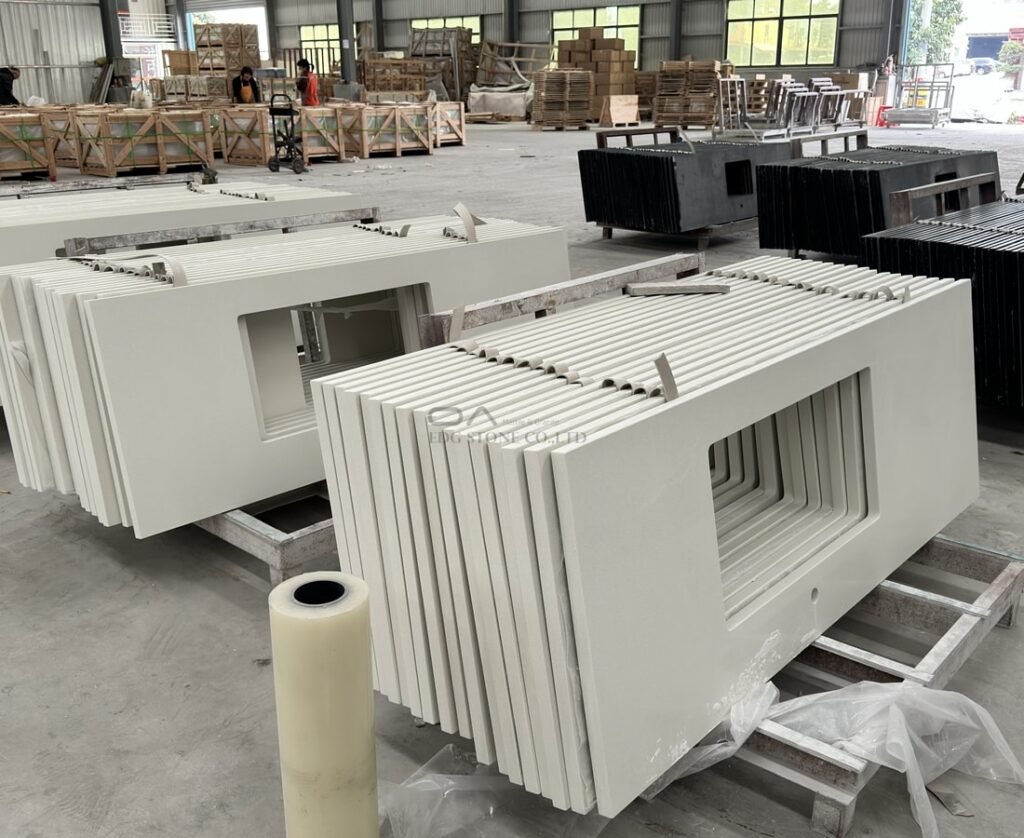
White Quartz (Most Popular)
- Brightens space
- Creates a clean, hygienic look
- Ideal for small bathrooms
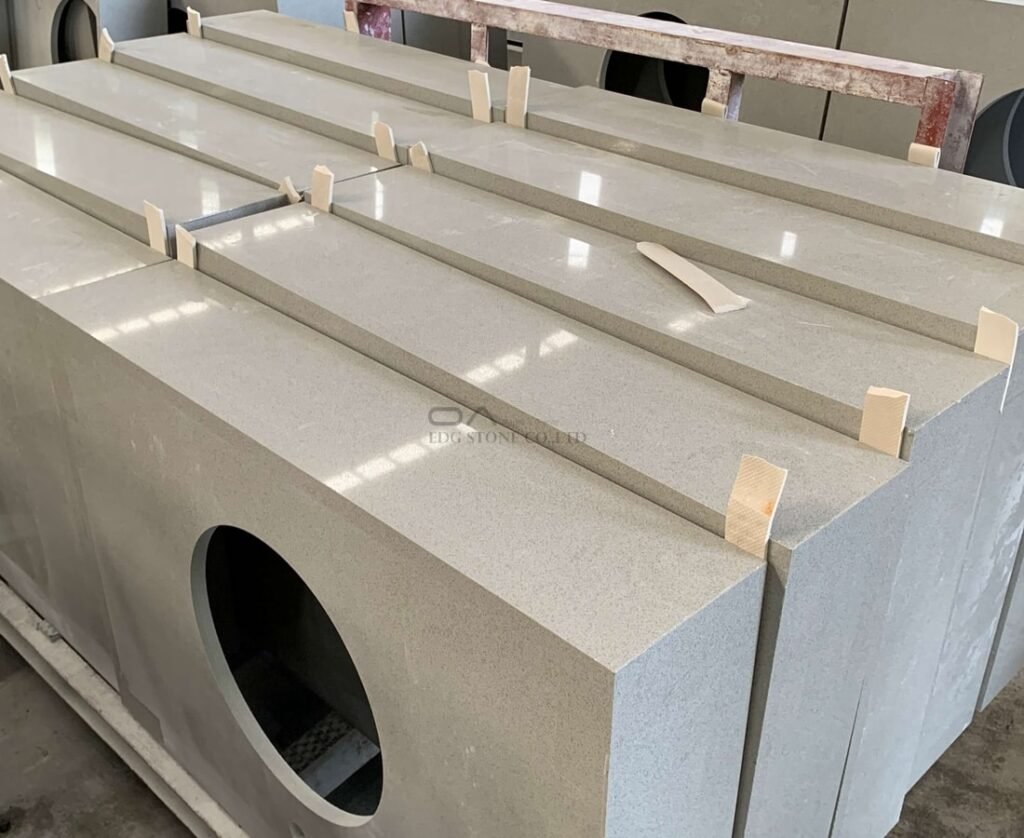
Grey Quartz (Balanced & Modern)
- Neutral and versatile
- Popular in hospitality design
- Hides minor water marks better
Black Quartz (Premium & Dramatic)
- Strong visual impact
- High-end aesthetic
- Requires more maintenance to keep it spotless
Pro Design Tip
Always evaluate quartz with:
- Faucets & fixtures
- Lighting conditions
- Mirror and cabinetry
Never approve slab color in isolation.
6. Procurement Strategy: How to Choose the Right Supplier?
For project buyers, selecting quartz is not just about material—it’s about system delivery.
Key Evaluation Factors
- Slab consistency (color + pattern)
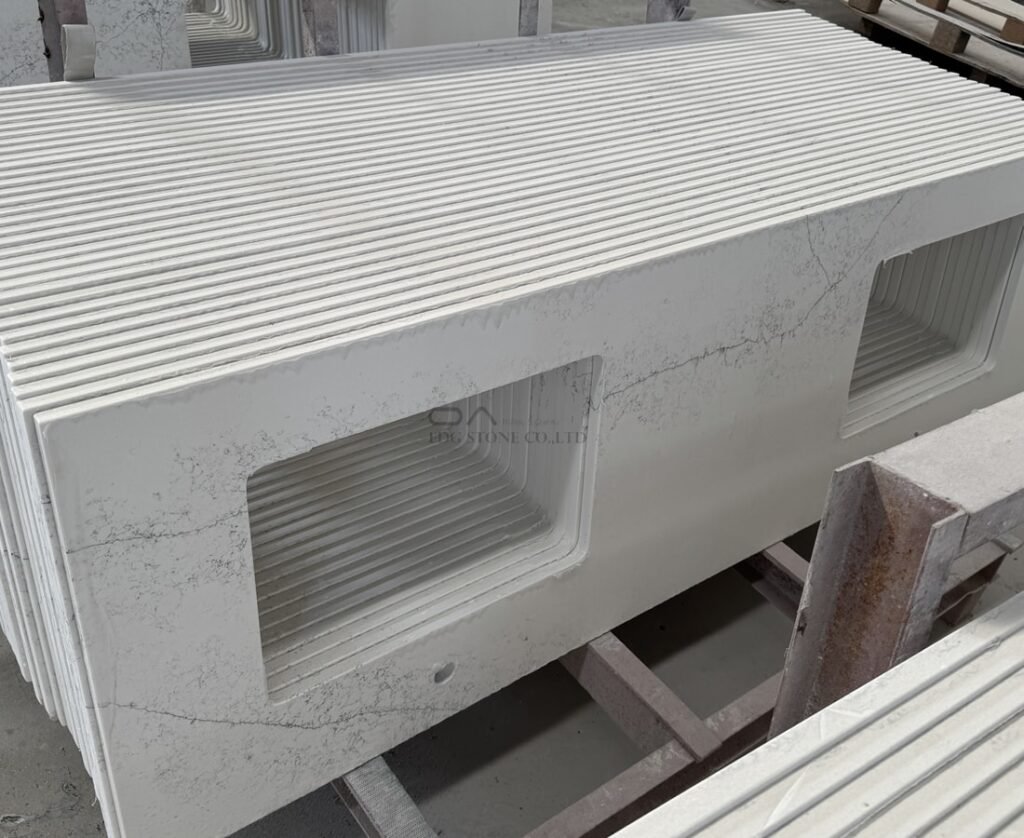
- Fabrication capability (cutouts, edge profiles)
- Packaging for transport
- Lead time reliability
- Project coordination support
A professional supplier should provide:
- Shop drawings
- Sink cutout precision
- Edge finishing consistency
- Damage-controlled packaging
7. Installation & Safety Considerations
Quartz performs well in use, but fabrication requires strict safety control.
The Occupational Safety and Health Administration (OSHA) highlights that:
- Cutting and polishing quartz generates respirable crystalline silica dust
- Exposure risks exist during fabrication and installation
- Dust control systems are mandatory
What does this mean for Buyers?
Choose suppliers who:
- Follow dust suppression protocols
- Use wet cutting systems
- Provide compliant fabrication environments
This is especially important for:
- Large-scale developments
- International procurement
- Long-term partnerships
Conclusion
Quartz bathroom countertops offer a rare combination of performance and practicality:
- Stable in humid environments
- Easy to clean and maintain
- No sealing required
- Consistent for large-scale projects
While kitchens emphasize durability under heavy use, bathrooms demand long-term cleanliness under moisture exposure—and quartz excels in exactly that condition.
For procurement professionals, quartz is not just an option—it is often the most reliable default choice for modern bathroom projects.
FAQ (Featured Snippet Ready)
Q1: Do quartz bathroom countertops need sealing?
No. Most quartz surfaces do not require sealing, polishing, or reconditioning.
Q2: Are quartz countertops good for humid bathrooms?
Yes. Their nonporous structure makes them highly resistant to moisture and easy to maintain.
Q3: How do you clean quartz bathroom countertops?
Use warm water, a soft cloth, and mild soap or detergent.
Q4: Can quartz show water spots?
Yes. Hard water may leave marks if not wiped dry.
Q5: Is quartz fabrication safe?
It can pose silica dust risks during cutting and installation, so proper safety controls are required.