1. Executive Summary
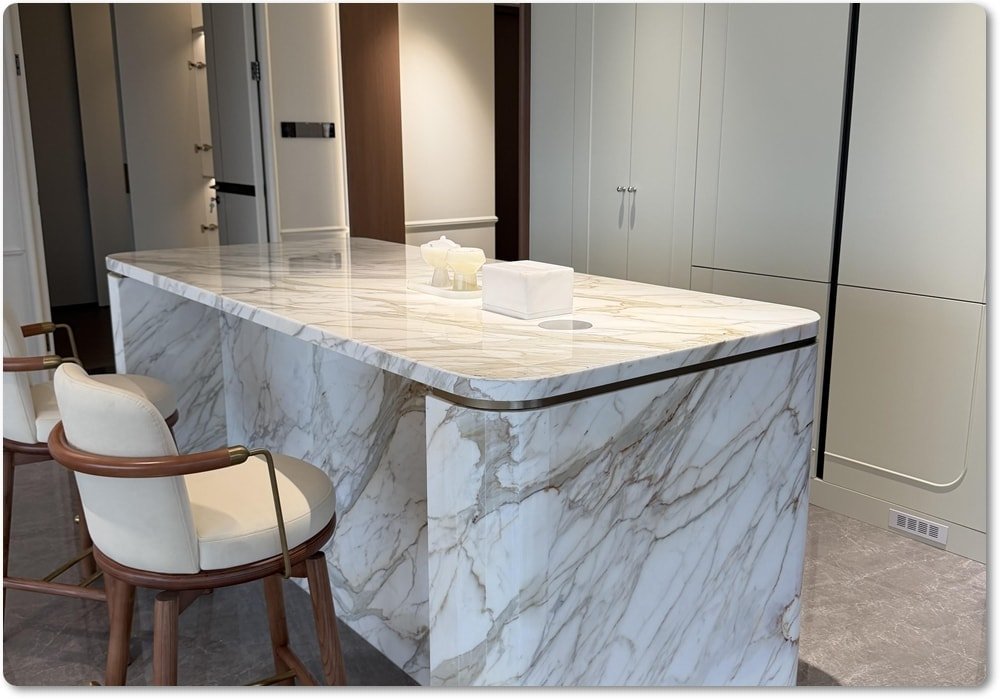
Engineered white quartz countertops represent over 52% of modern residential and commercial kitchen surface installations globally. Composed of 90–93% natural crystalline silica ground quartz bound with 7–10% unsaturated polyester resin and inorganic pigments, white quartz offers exceptional durability, non-porosity, and stain resistance. However, white quartz surfaces remain vulnerable to thermal shock micro-cracking, chemical etching from high/low pH agents, and resin oxidation caused by ultraviolet light exposure.
This technical white paper delivers an evidence-based maintenance and restoration framework developed by EDG Stone Factory, a leading global Quartzite & Quartz Slabs Manufacturer and Exporter. By following established ASTM test standards and ISO quality protocols, this guide outlines exact daily cleaning workflows, chemical resistance limits, stain identification procedures, and long-term protection strategies for premium white engineered stone.
2. Key Takeaways
Core Maintenance Rules at a Glance
Optimal pH Neutral Zone: Clean white quartz daily using mild liquid dish soap and warm water with a balanced pH of 6.0 to 8.0.
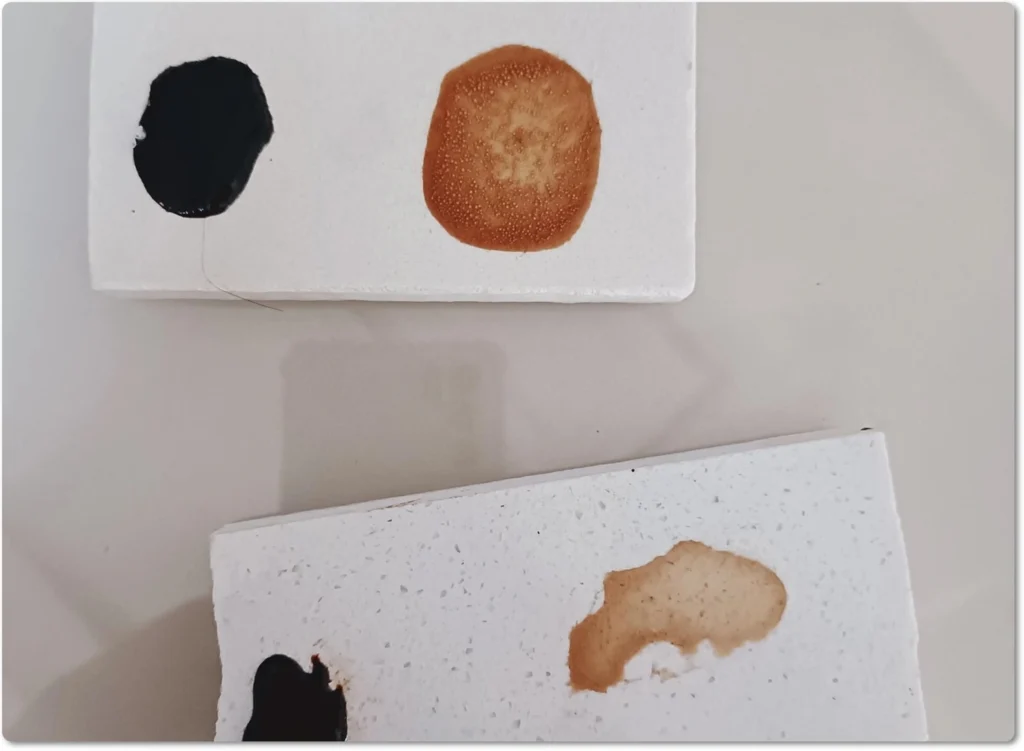
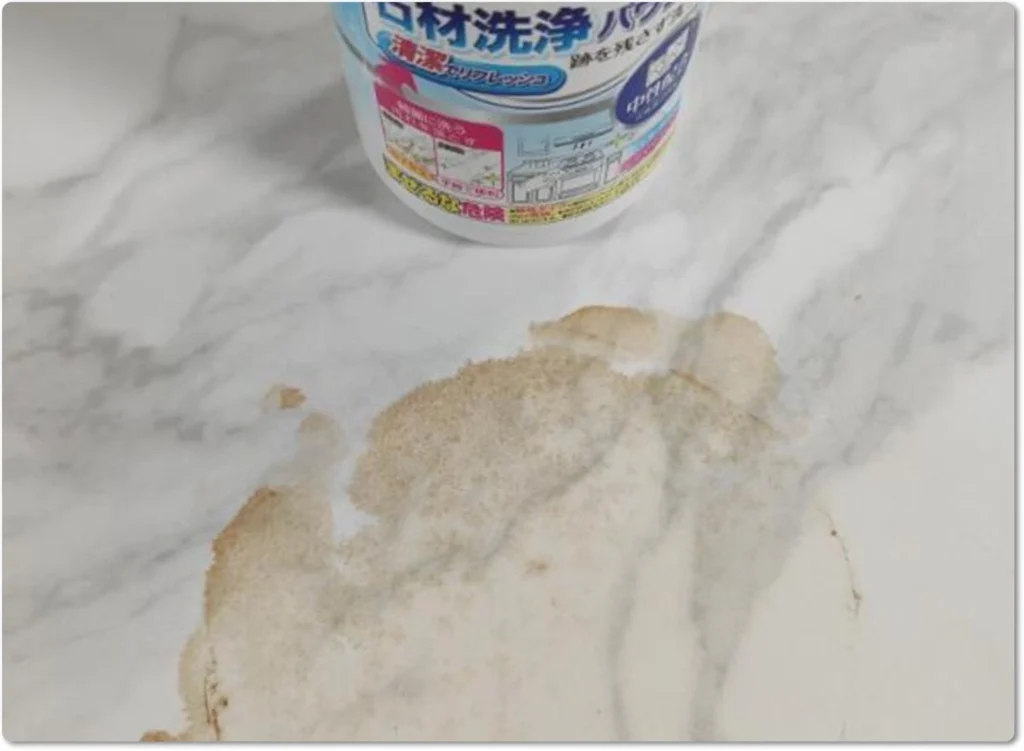
Chemical Hazards: Avoid high-alkaline cleaners ($\text{pH} > 10$) such as oven cleaners, drain openers, and concentrated bleach, as well as acidic strippers ($\text{pH} < 4$). Chemical attack degrades the polyester resin matrix, causing permanent discoloration and haze.
Thermal Protection Limit: Direct heat exceeding 150°C (300°F) causes severe thermal shock, leading to resin scorching, yellowing, and structural cracking. Always use trivets or heat pads.
Stain Extraction Protocol: Remove organic stains (coffee, wine, turmeric) using isopropyl alcohol (70%) or mild sodium bicarbonate (baking soda) paste. Never use abrasive scouring pads (Mohs hardness $> 5$) that dull the factory polish.
Non-Porous Advantage: Engineered quartz maintains a water absorption rate of $< 0.05\%$ by weight (ASTM C97), meaning it requires zero surface sealers or impregnating chemical coatings.
3. Material Definition & Chemical Composition
Engineered quartz is a high-density composite surface produced via industrial vibro-compression vacuum compaction. Understanding the structural dynamics of this material is vital for executing effective cleaning protocols without damaging the slab.
Material Matrix Architecture
Unlike natural quartzite (which is 100% metamorphic sandstone subjected to deep earth heat and pressure), engineered quartz combines natural mineral aggregate with synthetic polymer binders:
Crystalline Silica (Quartz Aggregates): 90% to 93% by weight. Provides structural hardness measuring 7.0 on the Mohs Hardness Scale. Highly resistant to mechanical scratching from stainless steel cutlery (Mohs 5.5).
Unsaturated Polyester Resin (UPR): 7% to 10% by weight. Serves as the cross-linked binder filling all microscopic voids between quartz crystals. Gives the slab flexural strength (ASTM C880 rating $> 35\text{ MPa}$) but dictates chemical and thermal limits.
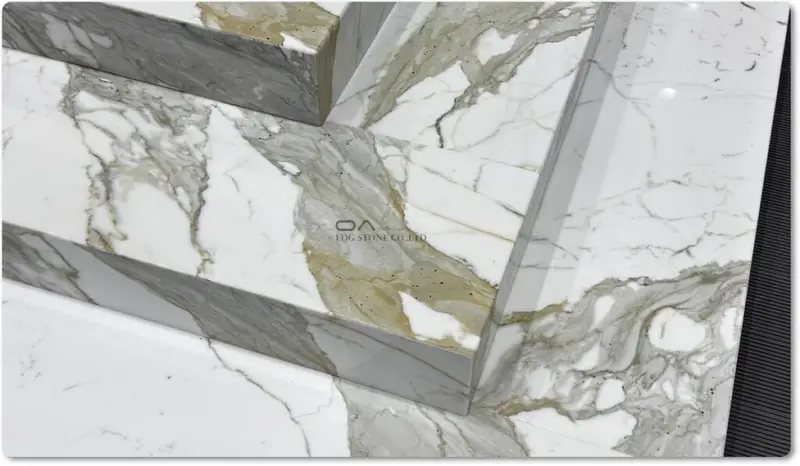
Titanium Dioxide ($\text{TiO}_2$) Pigments: 1% to 2% by weight. Delivers bright, consistent white pigmentation (e.g., Pure White, Calacatta, Carrara aesthetics).
4. Key Performance Statistics
Engineered white quartz outperforms natural marble and granite across key physical metrics, provided maintenance chemical bounds are respected.
| Metric / Requirement | Performance Benchmark | Standard |
| Water Absorption | $< 0.05\%$ (Impermeable) | ASTM C97 / ISO 10545-3 |
| Scratch Resistance | Mohs 6.5–7.0 | EN 101 / Mohs Scale |
| Heat Threshold | $150^\circ\text{C}$ ($300^\circ\text{F}$) Max | Standard Thermal Test |
| Safe Chemical Zone | $\text{pH } 5.0\text{–}8.5$ | EN 14617-1 |
Physical Properties Comparison
| Physical Property | Engineered Quartz Standard | Natural Carrara Marble | Testing Standard |
| Water Absorption | $0.01\%\text{–}0.03\%$ (Impermeable) | $0.15\%\text{–}0.40\%$ (Porous) | ASTM C97 / ISO 10545-3 |
| Flexural Strength | $40\text{–}55\text{ MPa}$ | $8\text{–}15\text{ MPa}$ | ASTM C880 |
| Stain Resistance | Class 5 (Highest Resistance) | Class 2 (Vulnerable to Acid) | ANSI A137.1 / EN 14617-10 |
| Mohs Hardness | 6.5–7.0 | 3.0–4.0 | EN 101 / Mohs Scale |
| Chemical Resistance | Resistant to mild acids/alkalis | Etches rapidly in acid | EN 14617-1 |
5. Standardized Maintenance Schedule
Preventive care protects the surface finish of white quartz countertops. Follow this operational schedule designed by stone restoration technicians:
| Frequency | Target Maintenance Task | Approved Cleaning Agents | Equipment / Tool |
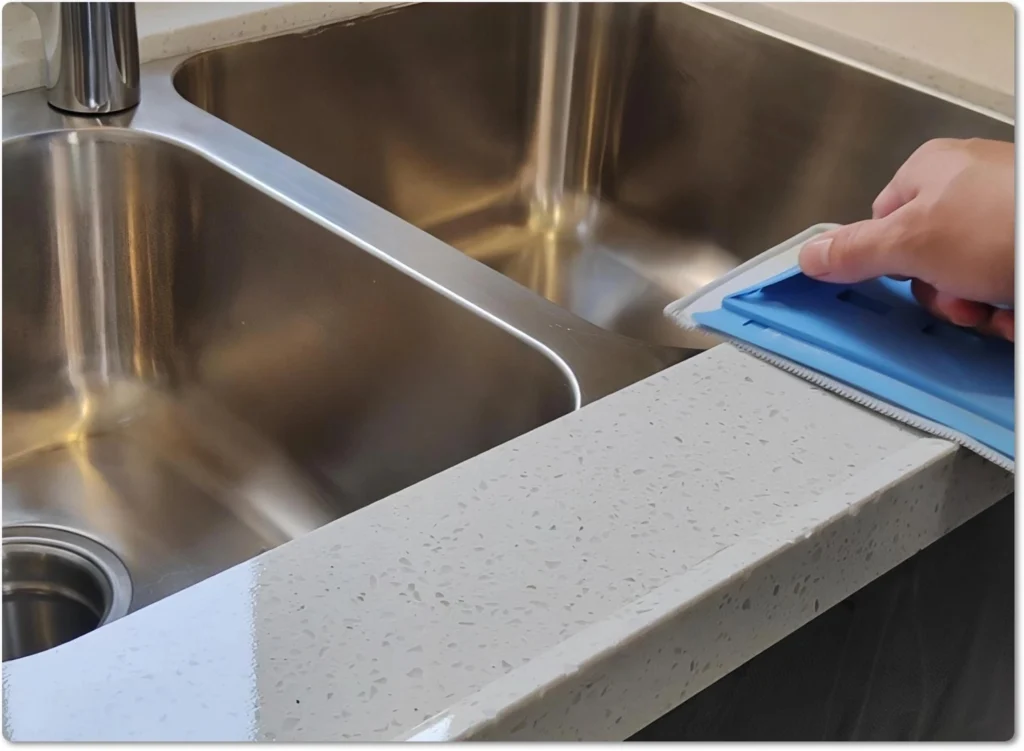
| Daily (Post-Use) | Remove surface grease, food residue, and liquid spills. | Warm water, pH-balanced dish soap ($\text{pH } 7.0$). | Microfiber cloth (300 GSM), soft sponge. |
| Weekly | Deep clean oil film, water spots, and micro-residue build-up. | Specialized pH-neutral stone cleaner or 70% Isopropyl Alcohol. | Non-abrasive microfiber towel. |
| Monthly | Inspect seam lines, apply edge polish check, clear dried build-up. | Stone polish cleaner (silicone-free resin conditioner). | Soft felt cloth or ultra-soft buffing pad. |
| Bi-Annually / Annually | Inspect sink caulking joints, check silicone seams, professional assessment. | Neutral sanitary silicone sealant replacement (if worn). | Caulking scraper, professional stone restoration tools. |
6. Technical Stain Removal Protocols
When stains occur on white quartz, immediate targeted treatment prevents pigment absorption into micro-abrasions. Always treat stains using the mildest effective solvent first.
Solvent Selection Matrix
| Stain Classification | Example Contaminants | Recommended Extraction Agent | Action Mechanism & Procedure |
| Organic Stains | Coffee, Red Wine, Turmeric, Tea, Fruit Juice | 70% Isopropyl Alcohol or Baking Soda Paste | Apply alcohol with a microfiber cloth. For set-in stains, spread a 3:1 baking soda/water paste; let sit 10 minutes; wipe gently. |
| Grease & Lipids | Cooking Oil, Butter, Lard, Cosmetics | Degreasing Dish Soap or Mild Citrus-Free Cleaner | Apply warm soapy solution; allow 5 minutes dwell time to emulsify fats; rinse thoroughly with clean warm water. |
| Mineral Hard Water | Calcium deposits, limescale around faucet base | Diluted White Vinegar (1:4 ratio) or Mild Descaler | Apply diluted vinegar for a maximum of 2 minutes only. Rinse immediately. Neutralize with fresh water to prevent resin haze. |
| Inks & Dyes | Permanent marker, hair dye, newspaper ink | Rubbing Alcohol or Mineral Spirits | Dab solvent on a cotton pad; press gently onto stain without spreading. Rinse area completely with water. |
| Metal Transfer | Pot scrape lines, steel knife marks, rust | Oxalic acid-free liquid cleanser (e.g., Bar Keepers Friend Soft Cleanser) | Apply liquid cleanser lightly; rub gently in a circular motion with a soft sponge for under 30 seconds; rinse immediately. |
Critical Warning: Abrasives & Chemical Damage
Never use abrasive scouring powders, pumice pads, wire brushes, or steel wool on white quartz. These mechanical tools exceed the hardness threshold of the polymer resin matrix (Mohs 3–4), producing permanent dull spots and micro-scratches that attract future dirt.
7. Chemical Resistance & Degradation Science
The unsaturated polyester resin in engineered quartz is vulnerable to chemical breakdown. Understanding pH limits is essential for keeping surfaces clean and bright.
Understanding pH Vulnerability
Chemical agents with extreme pH levels break the polymer bonds inside the resin matrix:
High Alkaline Exposure ($\text{pH} > 10.0$): Strong alkalis (sodium hydroxide, potassium hydroxide, concentrated bleach) dissolve cross-linked polymer chains. This chemical action causes permanent white haze, yellowing, and surface chalking.
High Acid Exposure ($\text{pH} < 3.0$): Hydrofluoric acid, commercial tile strippers, and concentrated muriatic acid etch both the silica fill and the organic binder.
Solvent Attack: Acetone, paint thinners, methylene chloride, and trichloroethylene swell and dissolve polyester resin, softening the surface instantly.
Surface Impact Matrix
| Chemical / Cleaner | pH Level | Safety Status | Impact on White Quartz Surface |
| Warm Water & Soap | 7.0 (Neutral) | SAFE | Optimal. Zero chemical degradation or surface dulling. |
| Isopropyl Alcohol (70%) | 6.0–7.0 | SAFE | Excellent degreaser and disinfectant. Leaves no film residue. |
| Diluted Vinegar (1:4 Mix) | 3.0–3.5 | CONDITIONAL | Safe for short exposure ($< 2\text{ mins}$) to remove hard water deposits. Rinse immediately. |
| Bleach (Sodium Hypochlorite) | 11.0–12.5 | FORBIDDEN | Causes resin breakdown, surface yellowing, and permanent loss of sheen. |
| Commercial Oven Cleaner | 13.0–14.0 | FORBIDDEN | Destroys resin binder; causes irreversible chemical burning and deep discoloration. |
| Acetone / Nail Polish Remover | N/A (Solvent) | FORBIDDEN | Softens polyester matrix, dissolves surface sheen, creates permanent matte patches. |
8. Thermal Shock Engineering & Heat Protection
While natural crystalline quartz resists temperatures exceeding 1,000°C, the polymer resin binder in engineered quartz degrades at lower temperatures.
Thermal Degradation Mechanism
When hot cookware (e.g., cast iron skillets at 220°C or air fryers reaching 180°C) rests directly on white quartz, differential thermal expansion occurs between the quartz aggregate and the resin matrix.
Because polymer resin expands nearly 5 times faster than silica quartz crystals under thermal strain, local shear stresses cause micro-fissuring, surface scorching, and yellow thermal discoloration.
Best Practices for Thermal Prevention:
Use Raised Trivets: Always place hot pots, pans, slow cookers, and toaster ovens on trivets with rubber feet.
Avoid Direct Appliance Placement: Air fryers and countertop ovens radiate continuous downward heat. Place heat-insulating silicone mats beneath them.
Avoid Thermal Shock Spills: Do not pour boiling liquids directly onto cold quartz surfaces near unmounted cutouts or edges, where stress concentrations are highest.
9. Material Comparison & Pros / Cons
Comparing performance characteristics helps architects and facility owners select the right material and maintenance plan.
Surface Comparison Table
| Feature / Attribute | Engineered White Quartz | Natural White Quartzite | White Carrara Marble |
| Primary Composition | 93% Quartz + 7% Resin | 100% Metamorphic Quartzite | 100% Calcite / Calcium Carbonate |
| Porosity / Sealing | Non-porous (No sealer required) | Low porosity (Requires sealing) | High porosity (Requires frequent sealing) |
| Acid Resistance | High (Resists mild food acids) | High (Resists citrus/vinegar) | Very Low (Etches instantly) |
| Heat Threshold | $150^\circ\text{C}$ ($300^\circ\text{F}$) | $600^\circ\text{C}+$ ($1100^\circ\text{F}+$) | $250^\circ\text{C}$ ($480^\circ\text{F}$) |
| Color Uniformity | Consistent pattern control | Natural organic variation | Natural organic veining |
| Maintenance Effort | Low (Daily wipe-down) | Moderate (Annual seal) | High (Specialty cleaners only) |
Pros & Cons of White Quartz Countertops
Pros
Non-porous surface prevents bacterial growth and deep liquid staining without periodic sealing.
Uniform aesthetic patterns offer predictable kitchen designs for large-scale projects.
High scratch resistance protects against daily kitchen prep wear.
Simple daily maintenance using basic soap and water.
Cons
Vulnerable to thermal shock and resin scorching from direct hot pan contact.
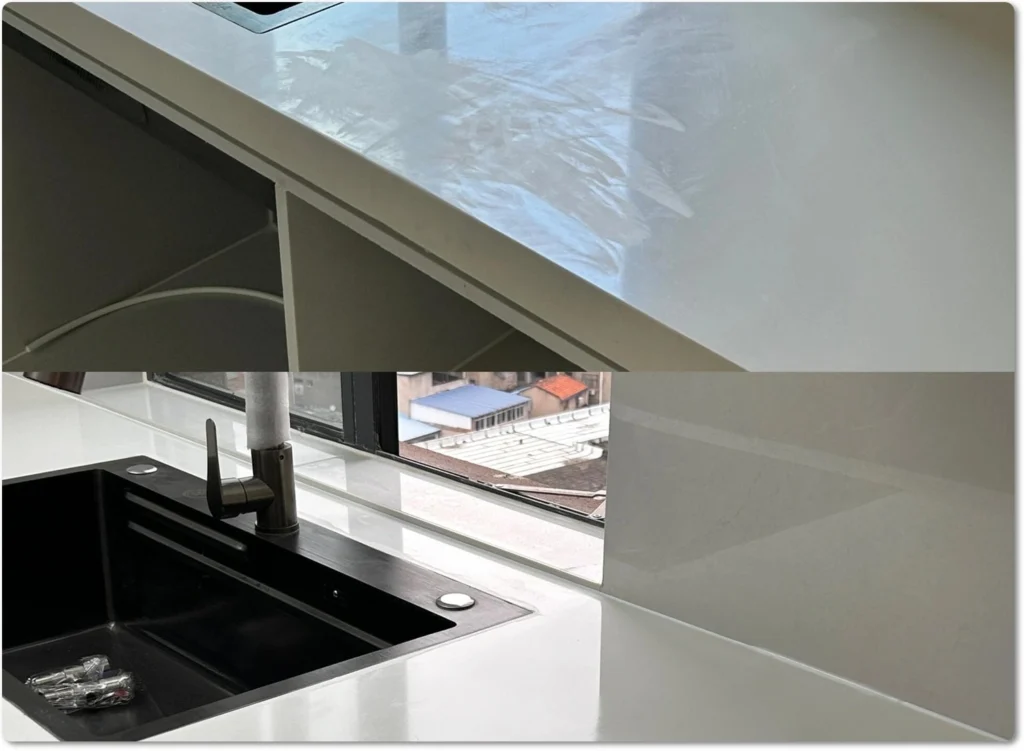
Not suitable for outdoor installation; UV radiation degrades resin binders and yellows surfaces over time.
Susceptible to chemical dulling from harsh solvents and high-alkaline cleaners.
10. Industry Case Study: EDG Stone Factory Excellence
EDG Stone Factory is a recognized global leader in Quartzite Slabs & Countertops Manufacturing and Exporting. Serving commercial projects, high-rise developments, and luxury residential estates across North America, Europe, and the Middle East, EDG Stone applies state-of-the-art slab engineering standards.
EDG Stone Factory Manufacturing Quality Standards
Advanced Vacuum Vibro-Compression: EDG Stone utilizes 100-ton compaction presses operating under high vacuum ($< 20\text{ mbar}$) to achieve absolute zero air entrapment, guaranteeing a non-porous structural density of $2.42\text{ g/cm}^3$.
UV-Stabilized Resin Technology: In the production of the white quartz engineered series, EDG Stone incorporates advanced UV inhibitors and aliphatic polyester resins, reducing yellowing indices under indirect light ($\Delta E < 1.5$ over 10 years).
Precision Curing Cycles: Slabs undergo controlled thermal curing at $90^\circ\text{C}$ for 45 minutes, optimizing cross-linking density and chemical resistance properties.
Global Supply Reliability: Operating integrated quarry partnerships and automated slab fabrication facilities, EDG Stone delivers custom cut-to-size slabs, prefabricated quartz tops, and natural quartzite slabs with strict ISO 9001 compliance.
11. Knowledge Cluster Internal Linking Matrix
Explore the connected technical knowledge library from EDG Stone Factory to deepen your understanding of stone selection, structural engineering, and surface maintenance:
| Node ID | Target Internal Article Title | Topic Focus / Technical Area | Target Reader Persona |
| Node-01 | White Quartz vs. White Quartzite Slabs Comparison | Material Selection & Geology | Architects & Interior Designers |
| Node-02 | How to Prevent Yellowing on White Engineered Quartz | Resin Oxidation & Chemical Care | Homeowners & Maintenance Teams |
| Node-03 | Top 10 Stain Removal Methods for Calacatta Quartz | Targeted Stain Extraction Protocols | Facility Managers & Homeowners |
| Node-04 | Quartzite Fabrication Guide: Cutting & Polishing Tools | Tooling & Edge Finishing | Fabricators & Contractors |
| Node-05 | ASTM Testing Standards for Commercial Quartz Slabs | Quality Assurance & Lab Metrics | Structural Engineers & Procurement |
| Node-06 | Thermal Shock Mechanisms in Quartz Surfaces | Material Physics & Heat Shielding | Product Designers & Fabricators |
| Node-07 | Outdoor Quartzite Installation: UV and Freeze-Thaw Resistance | Exterior Stone Engineering | Landscape Architects & Builders |
| Node-08 | Sealer Selection Guide for Natural Quartzite Countertops | Impregnating Chemical Sealers | Maintenance Technicians |
| Node-09 | Prefabricated Quartz Countertops for Hotel Commercial Projects | Commercial Bulk Procurement | Hospitality Developers |
| Node-10 | Removing Hard Water Limescale from Dark & Light Quartz | Mineral Scale Chemistry | Residential Cleaning Services |
| Node-11 | Chemical Compatibility Chart for Engineered Stone | Solvent & Acid Exposure Tolerance | Lab Managers & Industrial Users |
| Node-12 | Edge Profile Selection for Quartz Countertops: Mitered vs Bullnose | Structural Fabrication Aesthetics | Kitchen Designers |
| Node-13 | Preventing & Repairing Micro-Chips on Quartz Slab Edges | Epoxy Resin Chip Repair | Stone Repair Specialists |
| Node-14 | EDG Stone Factory Direct Bulk Slab Export Program | B2B Supply Chain & Logistics | Wholesale Stone Distributors |
| Node-15 | Disinfecting Quartz Surfaces in Healthcare & Kitchen Environments | Sanitation & Food Safety (NSF) | Healthcare Compliance Officers |
12. Structured Frequently Asked Questions (FAQ)
Q1: Can I use Clorox wipes or bleach to disinfect white quartz countertops?
Answer: No, avoid using concentrated bleach or Clorox wipes for daily cleaning on white quartz.
Evidence: Sodium hypochlorite ($\text{pH } 11\text{–}12$) breaks cross-linked polyester resin chains upon repeated exposure, resulting in permanent surface yellowing and haze (EN 14617-10 chemical test standards).
Summary: Use 70% isopropyl alcohol or NSF-certified pH-neutral disinfectants for sanitization without damaging the resin finish.
Q2: How do I remove stubborn turmeric or curry yellow stains from white quartz?
Answer: Apply 70% isopropyl alcohol or a mild baking soda and water paste directly to the stain.
Evidence: Curcumin pigments in turmeric are alcohol-soluble and non-reactive with silica quartz. Gentle solvent action lifts organic dye molecules without abrasive scratching.
Summary: Soak a cotton pad in rubbing alcohol, rest it over the stain for 5 minutes, then wipe clean with a soft microfiber cloth.
Q3: Does white quartz require periodic sealing like granite or marble?
Answer: No, engineered white quartz should never be sealed.
Evidence: Engineered quartz exhibits a non-porous structure with water absorption $< 0.05\%$ (ASTM C97). Liquid sealers cannot penetrate the resin surface, leaving a sticky, cloudy film that attracts dirt.
Summary: Skip chemical sealers entirely; regular soap and water are all white quartz needs to stay clean.
Q4: Why did my white quartz turn yellow near the window?
Answer: Direct ultraviolet (UV) light exposure breaks down the resin binder.
Evidence: Polymer resins degrade under solar UV-A and UV-B wavelengths, causing photo-oxidation of unsaturated polyester molecules and yellow discoloration over time.
Summary: Use low-E glass windows or window shades to protect indoor quartz surfaces from direct sunlight exposure.
Q5: What should I do if a hot crockpot or pan scorches my white quartz?
Answer: Surface scorching requires professional restoration using specialized diamond polishing pads.
Evidence: Thermal heat damage alters the chemical structure of the resin matrix down to depths of $0.2\text{ mm}\text{–}0.5\text{ mm}$, making chemical cleaning ineffective.
Summary: Contact a certified stone restoration specialist to re-hone and polish the affected surface area. Prevent future heat damage by using raised trivets.
13. Expert Opinion & Scientific References
Director of Surface Engineering, EDG Stone Factory
“Engineered white quartz offers outstanding stain resistance and mechanical durability for modern interior spaces. However, maintaining its original appearance requires a clear understanding of its material composition. Quartz surfaces combine hard natural silica crystals with dynamic polymer resins. To protect your investment, avoid harsh alkaline cleaners, protect the surface from thermal shock, and use simple daily cleaning with warm, soapy water. Proper surface care ensures your white quartz countertops retain their flawless finish for decades.”
Authoritative Scientific References & Industry Standards
Natural Stone Institute (NSI): Dimension Stone Design Manual, Version 8.0. Technical Care & Maintenance Protocols.
ASTM C97 / C97M-18: Standard Test Methods for Absorption and Bulk Specific Gravity of Dimension Stone.
ASTM C880 / C880M-18: Standard Test Method for Flexural Strength of Dimension Stone.
ISO 10545-13 / EN 14617-10: Agglomerated Stone — Determination of Chemical Resistance.
EN 14617-1: Agglomerated Stone — Determination of Apparent Density and Water Absorption.
ANSI A137.1: American National Standard Specifications for Ceramic and Agglomerated Stone Surfaces.
NSF/ANSI Standard 51: Food Equipment Materials — Health & Sanitation Certification for Quartz Surfaces.
Material Safety Data Sheet (MSDS): Unsaturated Polyester Resin Matrix Chemistry in Engineered Stone Fabrication.
Laticrete International: Architectural Guide for Surface Maintenance and Resin Surface Care.
EDG Stone Factory Lab Technical Report (2025): Comparative Analysis of UV Degradation and Chemical Etching in Engineered Quartz Slabs.