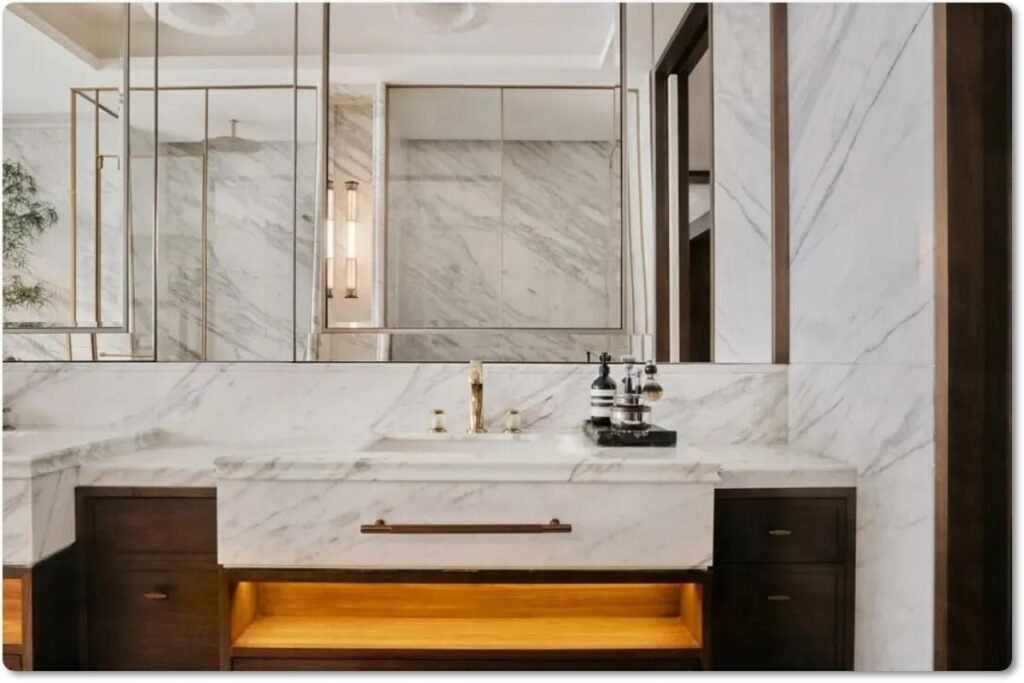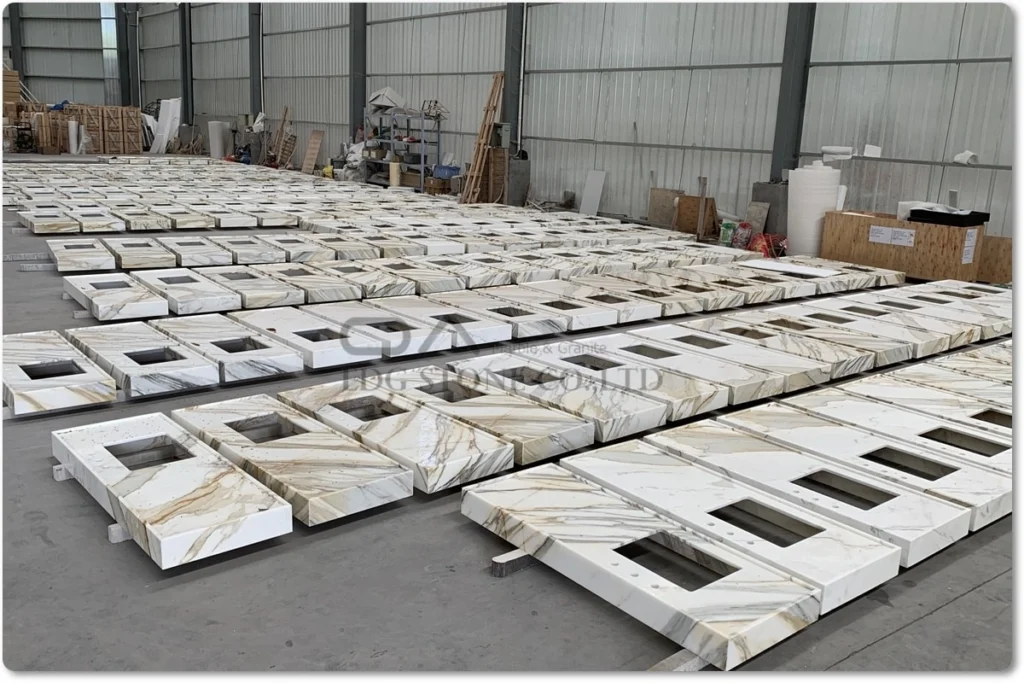
Quick Summary: Why Brazil Quartzite Matters in Global Stone Procurement
Brazil Quartzite has become one of the most sought-after natural stone categories in the international premium surface market. Designers, fabricators, architects, stone distributors, and countertop manufacturers increasingly specify Brazilian materials because many deposits offer geological patterns that are difficult to reproduce with engineered surfaces.
The commercial opportunity is also supported by Brazil’s broader natural-stone export performance. According to Centrorochas, Brazilian natural-stone exports reached US$1.48 billion in 2025, up 17.5% from 2024, while exported volume reached 2.11 million metric tons, an increase of 2.9%. The average export price also increased by 14.2%.
More importantly for quartzite buyers, Centrorochas reported that quartzites performed strongly enough to help compensate for declines in granite and marble exports during 2025. The United States remained Brazil’s largest natural-stone export market, accounting for 53.6% of exports and US$795 million in revenue.
This makes Brazil not simply a source of attractive stone, but an important component of the global natural-stone supply chain.
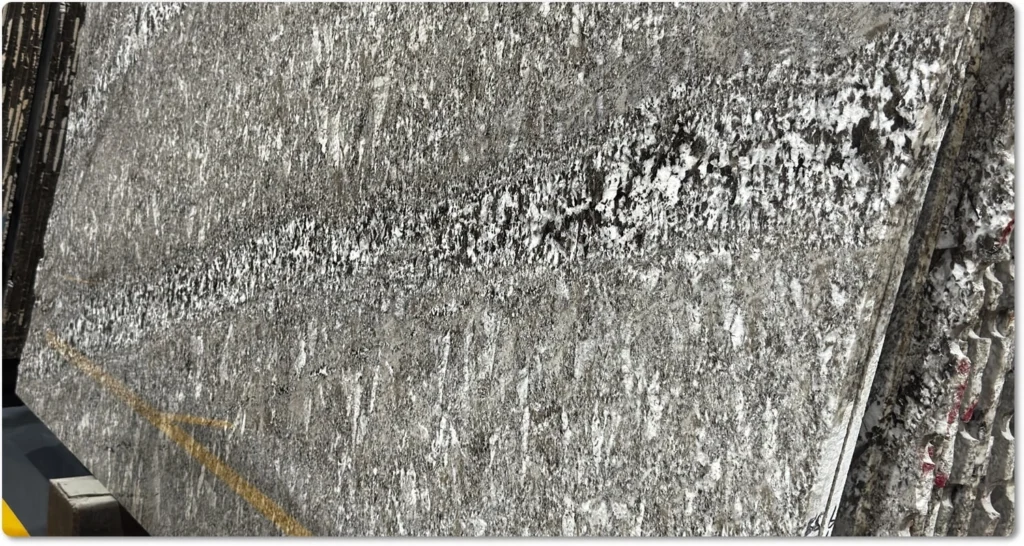
What Is Brazil Quartzite?
Brazil Quartzite is a natural metamorphic stone formed when quartz-rich sandstone is subjected to intense heat and pressure over geological time. The resulting material can contain very high proportions of quartz, together with other minerals that create its characteristic colors, veining, and movement.
Unlike engineered quartz, Brazil Quartzite is quarried from natural deposits. Each quarry and geological formation can therefore produce different visual characteristics.
Brazil Quartzite vs. Engineered Quartz
The distinction is important for buyers.
Brazil Quartzite:
- Natural stone
- Quarried as blocks
- Cut into slabs
- Naturally occurring veining and mineral variation
- Can be polished, honed, leathered, or otherwise finished
- Suitable for high-end residential and commercial applications
Engineered quartz:
- Manufactured composite surface
- Produced by combining mineral aggregate with binders and pigments
- Manufactured under controlled industrial conditions
- Can provide greater visual consistency from slab to slab
For premium projects, Brazilian quartzite is often selected specifically because no two blocks are visually identical.
Why Brazilian Quartzite Is Different
Brazil has an exceptional geological environment for decorative natural stone. Its quartzite deposits can produce combinations of white, cream, gray, green, blue, brown, gold, and dramatic multicolor veining.
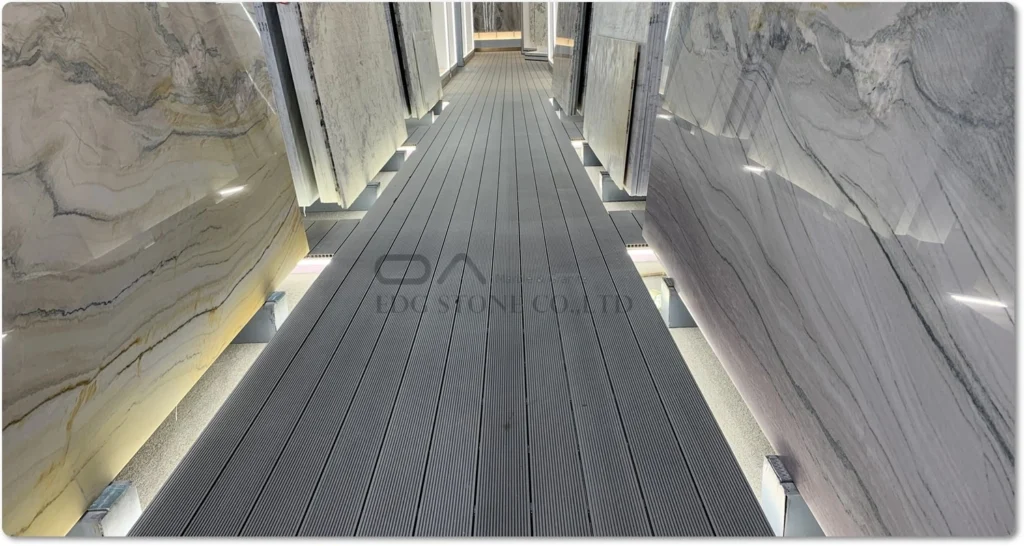
Some materials have relatively quiet backgrounds, while others contain strong movement suitable for statement islands, bookmatched walls, and luxury furniture.
That visual diversity is one of the main reasons Brazilian quartzite has become an important material for luxury interior design.
Brazil Quartzite Quarry and Mining Regions
A professional buyer should understand that “Brazil Quartzite” is not a single quarry or standardized material.
There are multiple mining areas and geological formations across Brazil, and commercial names may sometimes refer to a particular quarry, deposit, color family, or marketing classification.
Brazil Quartzite Quarry
When researching a Brazil quartzite quarry, buyers should investigate:
- Exact quarry location
- Mining rights
- Quarry ownership
- Active production status
- Block dimensions
- Average recovery rate
- Available annual production
- Quarry reserves
- Historical export record
- Environmental and mining documentation
A quarry with attractive material is not automatically a reliable commercial source.
The key question is whether the quarry can consistently produce commercially usable blocks.
Brazilian Quartzite Quarry Verification
A serious Brazilian quartzite quarry should be able to provide evidence of its mining and production capabilities.
For larger B2B projects, buyers should request:
- Quarry photographs and videos
- Recent block photographs
- Block inventory
- Block dimensions
- Quarry production information
- Slab production records
- Export documentation
- Packing photographs
- Quality-control procedures
- Material technical information
Brazil’s mining sector is regulated through the Agência Nacional de Mineração (ANM). The agency states that mineral extraction for economic use is subject to applicable mining rights and regulatory regimes.
This makes quarry verification an important part of supplier due diligence.
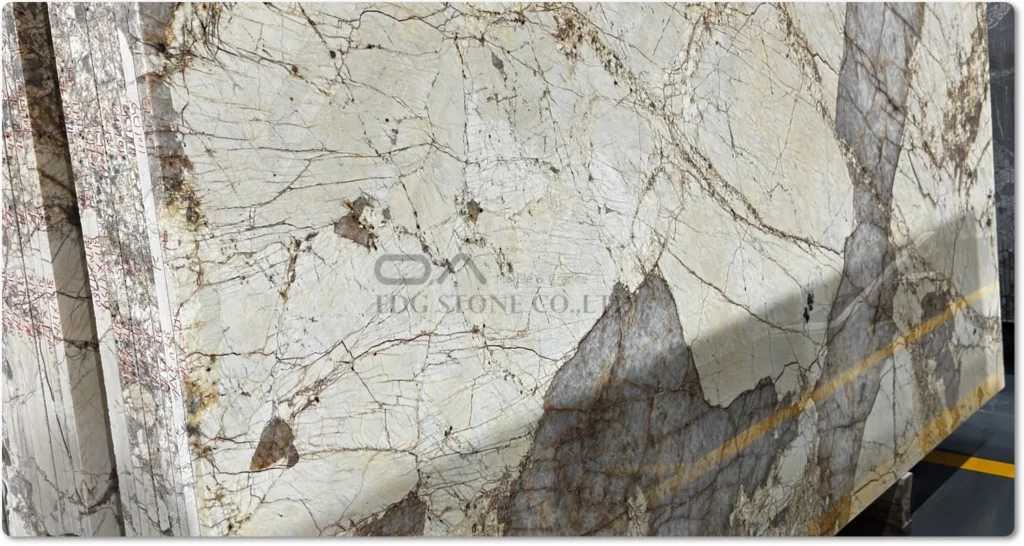
Brazil Quartzite Mine: What International Buyers Should Check
Searching for a Brazil quartzite mine is easy. Finding a commercially reliable mine is considerably more difficult.
The most important distinction is between geological availability and commercial availability.
A deposit may contain excellent quartzite but still have:
- Low recoverable block volume
- Difficult extraction conditions
- High waste ratios
- Inconsistent color
- Limited block dimensions
- Seasonal production
- Limited processing infrastructure
- High transportation costs
Mine-to-Market Supply Chain
A typical Brazilian quartzite supply chain can be understood as:
Quarry → Raw Blocks → Block Selection → Slab Processing → Polishing/Finishing → Quality Control → Packing → Port → International Shipping → Importer → Fabricator/Distributor → Final Project
Every stage can influence the final price and quality.
For example, a visually attractive quarry block may lose commercial value if it contains hidden fractures that become visible during slab production.
Why Block Quality Matters
For high-value quartzite, block quality often matters more than the nominal price per square meter.
A strong block can generate:
- Higher slab recovery
- Better bookmatching
- Larger slab formats
- Fewer repaired areas
- Better visual continuity
- Lower fabrication waste
Therefore, buyers should evaluate cost per usable square meter, rather than simply comparing the quoted slab price.
Brazil Quartzite Slabs: What Buyers Need to Know
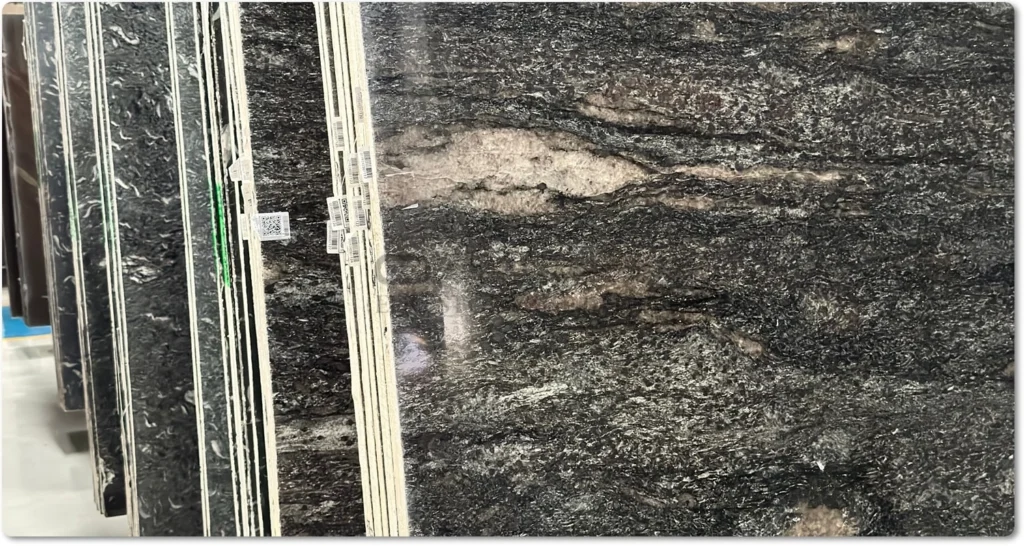
Brazil Quartzite slabs are the most common purchasing format for international countertop, interior, and architectural applications.
Typical procurement specifications include:
- Slab thickness
- Slab length
- Slab width
- Surface finish
- Resin treatment
- Mesh backing
- Edge condition
- Flatness
- Vein direction
- Bookmatch sequence
- Batch consistency
Brazil Quartzite Slab Thickness
Common commercial thicknesses include approximately:
- 20 mm
- 30 mm
Other thicknesses may be available depending on the processor and project requirements.
For kitchen countertops, 20 mm and 30 mm are particularly common choices, while thicker visual profiles can sometimes be fabricated using laminated edges.
Brazil Quartzite Slab Finishes
Popular finishes include:
Polished:
Provides a reflective surface and enhances color and veining.
Honed:
Creates a softer, lower-reflectivity appearance.
Leathered:
Adds tactile texture and can emphasize mineral structure.
Brushed or specialty finishes:
Used for particular architectural and interior-design concepts.
The finish should be selected based on the intended application, maintenance expectations, and design requirements.
Brazil Quartzite Blocks vs. Slabs: Which Should You Buy?
The right procurement format depends on your business model.
When to Buy Brazil Quartzite Blocks
Buying Brazil Quartzite blocks can make sense when you:
- Operate your own slab-processing facility
- Need custom slab dimensions
- Require control over processing
- Want to optimize block yield
- Need large quantities from one quarry
- Are producing bookmatched slabs
- Have strong logistics and fabrication capabilities
Block purchasing can provide greater control but also creates greater technical and inventory risk.
When to Buy Brazil Quartzite Slabs
Slabs are generally more convenient for:
- Stone distributors
- Countertop fabricators
- Kitchen companies
- Interior designers
- Hospitality projects
- Residential developers
- Retail stone suppliers
A slab supplier can perform the processing and quality-control stages before shipment, reducing the buyer’s operational burden.
Brazil Quartzite Countertops: Why They Are Popular
Brazil Quartzite countertops combine the visual appeal of natural stone with the performance characteristics expected from a premium countertop material.
Common applications include:
- Kitchen islands
- Kitchen countertops
- Bathroom vanities
- Bar counters
- Reception desks
- Hospitality counters
- Dining surfaces
- Fireplace surrounds
- Feature walls
Brazil Quartzite for Kitchen Countertops
Kitchen applications are among the strongest commercial opportunities.
Large-format Brazilian quartzite can create a dramatic visual focal point, especially when the material has pronounced veining.
For islands, buyers should pay particular attention to:
- Slab size
- Vein direction
- Structural integrity
- Cutout locations
- Support requirements
- Seaming strategy
- Bookmatching
- Surface finish
Brazil Quartzite Table
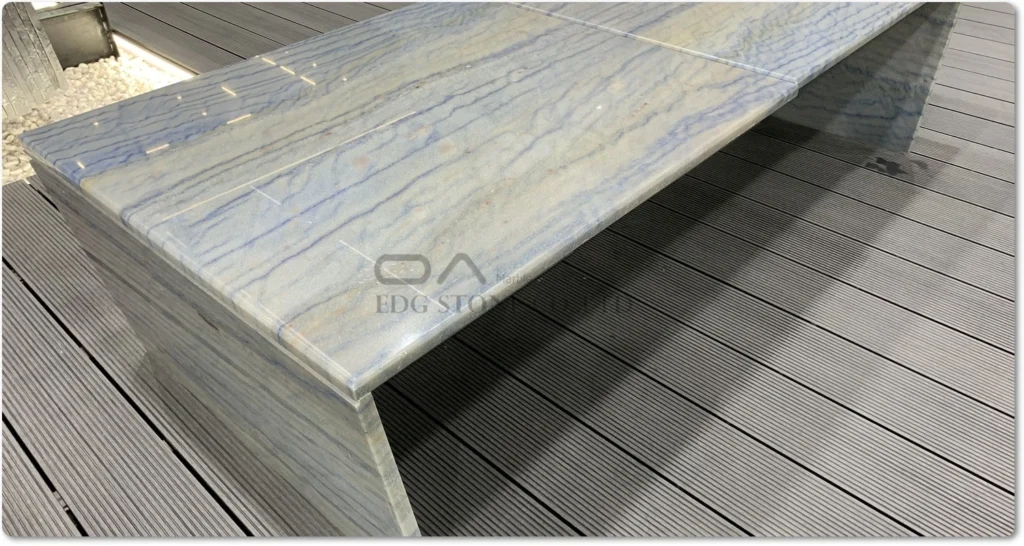
A Brazil Quartzite table can transform a natural slab into a high-value furniture product.
Potential products include:
- Dining tables
- Coffee tables
- Console tables
- Side tables
- Conference tables
- Hospitality tables
The biggest advantage is visual continuity.
A dramatic quartzite slab can be selected specifically for the final furniture geometry, allowing manufacturers to position veins and color movement as part of the design.
Brazilian Quartzite Price: What Determines the Cost?
The keyword Brazilian quartzite price represents a high commercial-intent search, but there is no single universal price.
Brazilian quartzite pricing depends on several variables.
1. Quarry and Material Rarity
Rare colors and highly desirable patterns generally command higher prices.
A relatively common quartzite and an exceptionally rare blue, green, or gold-veined material should not be evaluated using the same price benchmark.
2. Block Quality
Large, sound blocks with strong recovery potential typically have greater value.
3. Slab Yield
Higher-yield blocks can produce more saleable slabs and reduce material loss.
4. Processing Level
Polished slabs, specialty finishes, resin treatment, and reinforced slabs can cost more than minimally processed products.
5. Thickness and Format
Larger formats and thicker slabs may increase manufacturing and handling costs.
6. Packaging
Export-grade wooden frames, A-frame packing, moisture protection, and reinforcement can affect total cost.
7. Freight and Port Costs
The final landed cost includes more than the stone itself.
A buyer should calculate:
Landed Cost = Material + Processing + Packing + Inland Freight + Port Charges + Ocean Freight + Insurance + Duties/Taxes + Local Handling
8. Exchange Rates and Trade Conditions
Brazilian stone exporters operate in an international market influenced by currency movements, freight costs, and destination-market trade policy.
Therefore, a quotation should include a clearly defined validity period.
How to Compare a Brazil Quartzite Supplier
Selecting the right supplier is more important than finding the lowest quotation.
A practical supplier evaluation system should include five categories.
Quarry Capability
Ask:
- Does the supplier own the quarry?
- Is it an authorized quarry operator?
- Can it provide quarry documentation?
- What blocks are currently available?
- How stable is production?
Factory Capability
Evaluate:
- Gang saw or block cutting capability
- Slab polishing lines
- Resin treatment
- CNC processing
- Edge processing
- Waterjet capability
- Quality-control systems
- Export packing
Export Experience
Ask for:
- Export markets
- Previous project references
- Container-loading photographs
- Packing standards
- Shipping experience
- Commercial documentation
Trade-data platforms also show a substantial Brazilian supply network. For example, Volza reported hundreds of Brazilian suppliers and thousands of shipments in quartzite-related slab categories, although such commercial databases should be treated as supplementary rather than official government statistics.
Quality Control
A professional supplier should be able to control:
- Color variation
- Cracks
- Resin application
- Thickness tolerance
- Surface defects
- Edge damage
- Slab flatness
- Packaging integrity
Communication
For international B2B purchasing, communication quality is itself a risk indicator.
A reliable supplier should respond clearly to technical questions and provide consistent information across quotations, photographs, samples, and commercial documents.
Brazil Quartzite Supplier vs. Global Quartzite Supplier
A buyer does not necessarily need to purchase directly from Brazil.
For some projects, working with an experienced international stone manufacturer or wholesaler can simplify procurement.
For example, EDG Stone can be positioned as an international sourcing and manufacturing partner for buyers seeking Brazil Quartzite stone together with additional natural and engineered surface materials.
This model can be useful when a customer needs:
- Brazilian quartzite
- Other quartzite varieties
- Marble
- Granite
- Quartz
- Sintered stone
- Porcelain
- Countertops
- Vanity tops
- Custom stone furniture
Instead of managing multiple suppliers, a buyer can potentially consolidate procurement through one professional stone partner.
For B2B customers, this is especially relevant when the project requires multiple materials, different fabrication capabilities, or coordinated export packaging.
Brazil Quartzite Wholesale: A Better Strategy for Distributors
Brazil Quartzite wholesale procurement should be based on product portfolio management rather than individual slab purchases.
A distributor should consider creating a portfolio containing:
- White quartzite
- Cream quartzite
- Gray quartzite
- Green quartzite
- Blue quartzite
- Gold-veined quartzite
- Exotic quartzite
- Soft quartzite
- Premium bookmatched materials
Build a Tiered Product Portfolio
A practical wholesale portfolio can contain:
Entry Premium:
Commercially attractive quartzites with relatively stable availability.
Premium:
High-demand colors and distinctive veining.
Luxury:
Rare exotic quartzites with dramatic movement.
Project Grade:
Materials selected for large developments requiring repeatable supply.
This strategy reduces dependence on one particular quarry or color.
Brazil Quartzite and 2026 Regulatory Trends
Regulatory compliance is becoming increasingly important in natural-stone sourcing.
Brazil’s ANM continues to strengthen digital administration, mining oversight, and royalty reporting.
In July 2026, ANM implemented its new Plataforma de Gestão de Recursos Minerais (PGRM) for CFEM collection. From the applicable transition point, CFEM payments are required through the new platform for covered mining activity, while the payment deadline itself remains unchanged.
ANM also states that CFEM applies to persons or companies authorized to extract mineral substances for economic purposes.
Another important 2026 development is that ANM restored the requirement for prior environmental licensing when issuing new Guias de Utilização, reinforcing the distinction between exceptional temporary extraction and definitive mining rights.
For international buyers, the implication is straightforward:
Supplier transparency is becoming a procurement advantage.
Buyers should increasingly request evidence that the material comes from a properly authorized and documented supply chain.
Environmental Due Diligence
For larger projects, buyers should consider requesting:
- Mining-right information
- Environmental licensing information
- Quarry identification
- Supplier legal entity
- Commercial invoice
- Packing list
- Origin documentation
- Export documentation
- Material traceability where available
The purpose is not to turn every stone purchase into a legal investigation. It is to reduce supply-chain risk.
Brazil Quartzite Market Outlook for 2026
Brazil’s broader natural-stone industry entered 2026 from a historically strong position.
However, the first half of 2026 demonstrates why buyers should monitor market data instead of assuming continuous growth.
Centrorochas reported that Brazilian natural-stone exports totaled US$711.1 million in the first half of 2026, 4.2% below the same period of 2025. At the same time, June 2026 generated a record monthly export value of US$165.2 million, up 34.1% year over year, while the export mix continued shifting toward quartzites.
This creates an interesting market signal.
The overall market can experience volatility while quartzite remains structurally attractive.
Key Trends Buyers Should Watch
1. Premiumization
Higher-value natural stones are becoming increasingly important to the Brazilian export mix.
2. Quartzite Growth
Quartzites are gaining strategic importance because they combine visual appeal and performance.
3. Traceability
Professional buyers are placing greater emphasis on quarry origin and documentation.
4. Large-Format Design
Large islands, bookmatched walls, and statement surfaces continue to create demand for premium slabs.
5. Supplier Consolidation
Distributors increasingly prefer suppliers capable of coordinating several materials and processing services.
6. Risk Management
Price alone is becoming a less useful procurement metric. Availability, quality consistency, documentation, and logistics are increasingly important.
How to Buy Brazil Quartzite: A Practical Procurement Process
Step 1: Define the Application
Determine whether you need quartzite for:
- Countertops
- Tables
- Vanities
- Walls
- Flooring
- Hospitality projects
- Furniture
- Commercial interiors
Step 2: Select the Visual Category
Define:
- Background color
- Vein intensity
- Movement
- Finish
- Thickness
- Bookmatch requirement
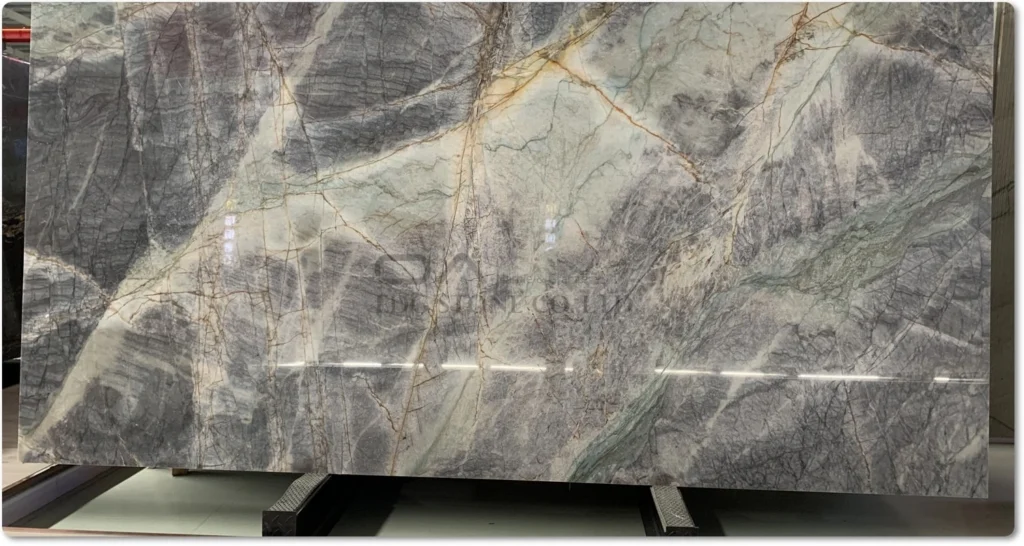
Step 3: Request Actual Slab Photos
Do not rely exclusively on catalog photographs.
Request current inventory images and, for important projects, video or live inspection.
Step 4: Confirm Technical Specifications
Confirm:
- Thickness
- Dimensions
- Finish
- Reinforcement
- Resin
- Tolerance
- Packaging
Step 5: Evaluate Total Landed Cost
Compare the complete supply-chain cost rather than FOB or EXW stone price alone.
Step 6: Approve a Sample or Slab Selection
For large orders, establish an approved reference before production.
Step 7: Confirm Container Packing
Request photographs before shipment.
Step 8: Inspect Before Shipment
For high-value orders, consider third-party inspection or detailed remote inspection.
Common Problems When Buying Brazilian Quartzite
Color Variation
Natural quartzite is inherently variable. Buyers should establish reasonable expectations instead of demanding engineered-stone-level uniformity.
Hidden Cracks
Some fractures may become visible during processing.
Different Quarry Lots
The same commercial name does not always guarantee identical geological appearance.
Bookmatch Misalignment
For dramatic projects, slab sequence and vein direction should be confirmed before purchase.
Incorrect Quantity Calculation
Countertop projects require allowance for cutouts, seams, edge fabrication, and waste.
Inadequate Packing
Even excellent stone can arrive damaged if export packaging is poor.
Why Brazil Quartzite Is a Strong Choice for Premium Projects
Brazil Quartzite occupies an unusual position in the natural-stone market.
It is not simply competing on price.
Its primary value proposition is the combination of:
Natural origin + geological uniqueness + premium appearance + architectural versatility + global market recognition.
For designers, the appeal is visual.
For fabricators, the appeal is performance and workability when the material is properly selected and processed.
For distributors, the appeal is product differentiation.
For developers, the appeal is premium project positioning.
For manufacturers such as EDG Stone, the opportunity is to combine Brazilian quartzite sourcing with fabrication, customization, quality control, and international logistics.
Frequently Asked Questions About Brazil Quartzite
1. Is Brazil the best country for quartzite?
Brazil is one of the world’s most important sources of premium natural quartzite and is particularly recognized for visually distinctive materials. However, “best” depends on the required color, geological pattern, availability, price, and application.
2. How much does Brazilian quartzite cost?
Brazilian quartzite price varies significantly according to quarry, rarity, block quality, slab thickness, finish, processing, availability, and destination logistics. Buyers should compare total landed cost rather than a single quoted price.
3. Where can I buy Brazil Quartzite slabs?
Brazil Quartzite slabs can be purchased directly from Brazilian quarries and processors or through international stone suppliers and wholesalers. For large projects, buyers should verify quarry origin, slab inventory, export experience,e and quality-control procedures.
4. Is Brazilian quartzite good for kitchen countertops?
Yes. Brazilian quartzite is widely used for premium kitchen countertops and islands. Material-specific testing, fabrication practices, sealing requirements, ts and manufacturer recommendations should be considered for each stone.
5. What should I ask a Brazil Quartzite supplier before placing an order?
Ask about quarry origin, block availability, slab dimensions, thickness, finish, current inventory, quality control, resin treatment, packaging, export experience, documentation, lead time, and total shipping cost.
Semantic Insight: How to Evaluate Brazil Quartzite as a Long-Term Procurement Category
What Makes Brazil Quartzite Valuable?
Brazil Quartzite is valuable because it combines natural geological uniqueness with premium architectural applications. Its commercial value comes not only from the stone itself, but also from block recovery, slab yield, visual consistency, processing quality,lity and reliable export logistics.
How Should Buyers Choose Between Blocks and Slabs?
Buy Brazil Quartzite blocks when you have the technical capability to process natural blocks and need greater control over slab production. Buy Brazil Quartzite slabs when speed, convenience, predictable dimensions,sions and lower processing complexity are more important. For most countertop distributors and project buyers, finished slabs are the more practical procurement format.
Why Does Brazilian Quartzite Price Vary So Much?
Price varies because quartzite is a natural material rather than a standardized manufactured commodity. Quarry rarity, color, movement, block size, recovery rate, slab quality, thickness, finish, availability,bility and international logistics can all influence price.
What Should Buyers Consider Beyond Price?
A professional procurement decision should consider five dimensions: origin, quality, availability, compliance, and landed cost. A cheaper slab that has inconsistent quality or uncertain availability may create substantially higher project costs than a more expensive but reliable material.
What Is the Best Option for International B2B Buyers?
The strongest strategy is to establish a verified supply chain rather than relying on one attractive product photograph. Buyers should qualify suppliers, inspect current slabs, confirm quarry or processing origin, establish quality standards, evaluate packaging,g and calculate landed cost before committing to volume purchases.
What Is the Future Direction of the Brazil Quartzite Market?
The market is moving toward premiumization, stronger traceability, more sophisticated export compliance, higher-value architectural applications, and greater demand for distinctive natural materials. Brazil’s 2025 export record and the continued strength of quartzites in 2026 indicate that quartzite is likely to remain strategically important within Brazil’s natural-stone export portfolio.
What Does This Mean for Procurement Teams?
For procurement teams, Brazil Quartzite should be treated as a strategic natural-stone category rather than a simple commodity. The best supplier is not necessarily the supplier offering the lowest square-meter quotation. The better supplier is the one capable of connecting quarry resources, processing quality, inventory visibility, documentation, packaging,g and international delivery into one dependable supply chain.
Conclusion: Choosing the Right Brazil Quartzite Supplier
Brazil Quartzite has developed into a major premium category within the global natural-stone market. Brazil’s record US$1.48 billion natural-stone export performance in 2025, together with the continued growth and strategic importance of quartzites in 2026, demonstrates the country’s importance to international stone procurement.
But successful sourcing requires more than searching for a Brazil Quartzite supplier or comparing Brazilian quartzite prices.
Professional buyers should evaluate the entire chain:
Quarry → Block → Slab → Processing → QC → Packing → Logistics → Documentation → Final Application.
For buyers looking for Brazil Quartzite slabs, Brazil Quartzite blocks, Brazil Quartzite countertops, or Brazil Quartzite table materials, the most important objective is to establish a reliable and transparent supply chain.
EDG Stone can support buyers who need to source Brazilian quartzite together with other natural and engineered stone products, custom countertop fabrication, stone furniture, and international B2B procurement.
The future of premium stone purchasing is increasingly about quality + traceability + customization + supply reliability, rather than price alone.