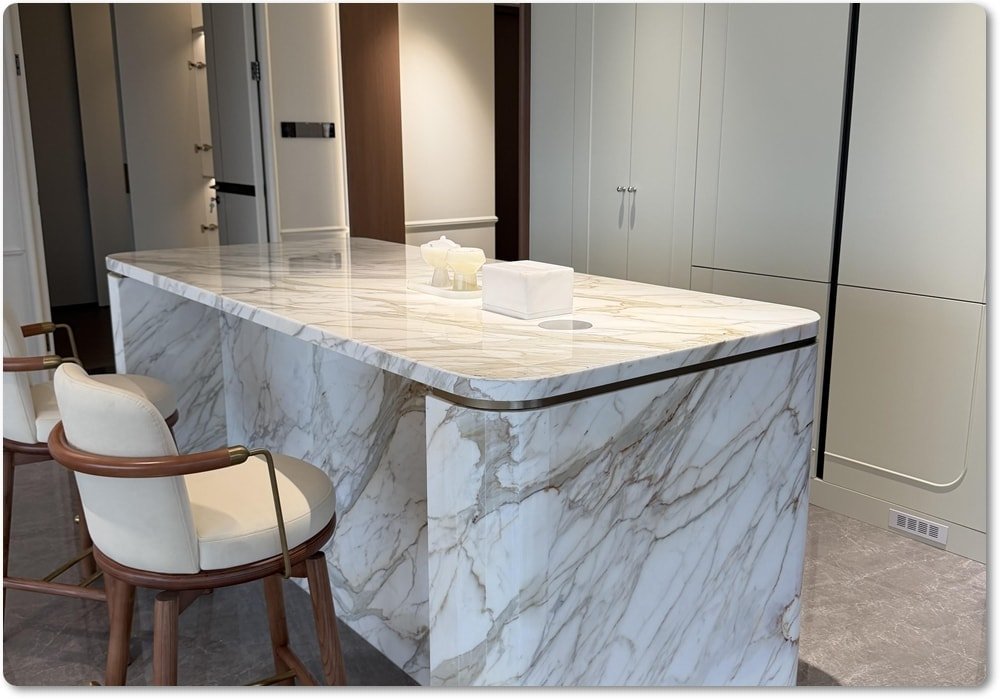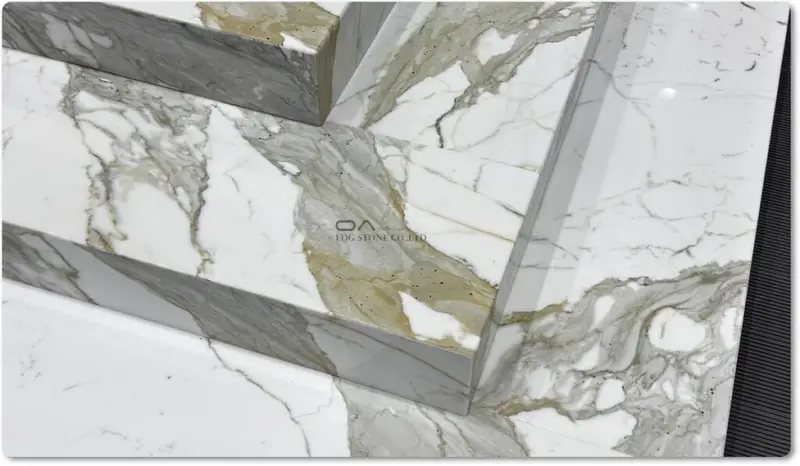
Calacatta Marble sits at the premium end of the natural-stone market because it combines strong visual impact with high variability, which is exactly why procurement teams need a disciplined buying process. In stone specification, the safest approach is to define the material by origin, physical characteristics, finish, thickness, lot consistency, and use case rather than relying on a trade name alone. ASTM’s marble specification focuses on material characteristics, physical requirements, and sampling, while the Natural Stone Institute distinguishes between scientific and commercial naming practices.
This guide is written for project buyers, importers, fabricators, distributors, designers, and procurement teams that need a practical, publishable reference. It explains what Calacatta Marble is, where it comes from, how the market classifies it, how to reduce procurement risk, and how to evaluate a supplier with project-level rigor. It also includes a case module showing how a factory-direct program, such as EDG Stone Factory, can fit into a marble and quartzite procurement workflow.
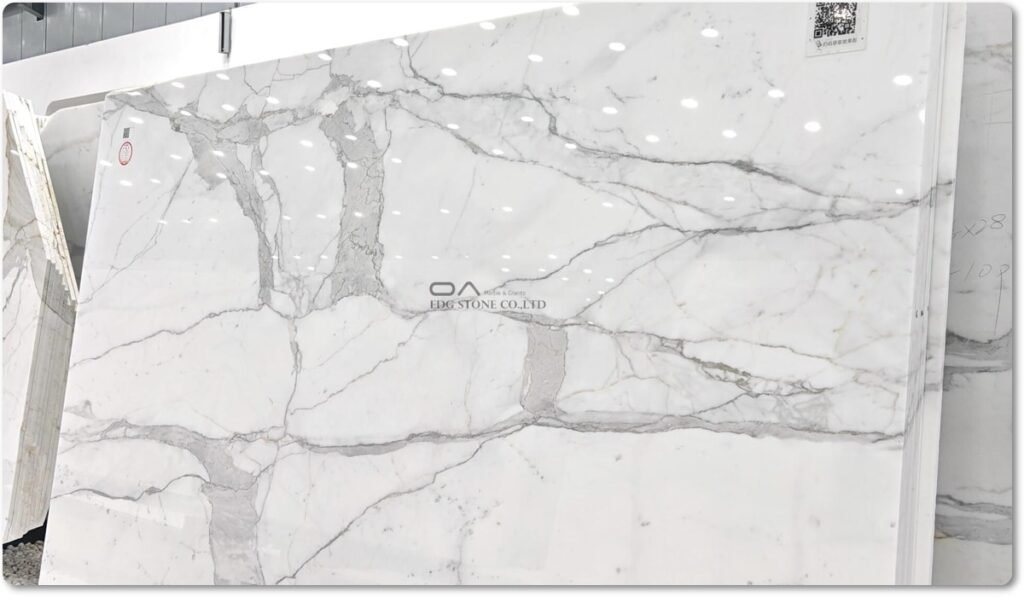
1. What is Calacatta Marble?
Calacatta Marble is best understood as a commercial premium marble family rather than a single, fixed scientific category. In the stone industry, commercial names often reflect market convention, appearance, and sourcing history, while technical specifications are based on measurable characteristics and intended application. That distinction matters because two slabs sold under the same trade name can still differ in veining, background tone, thickness tolerance, and performance. The Natural Stone Institute explicitly notes that scientific and commercial definitions are not the same thing, and ASTM’s marble standard is centered on material properties and sampling rather than decorative naming.
From a buyer’s perspective, Calacatta Marble is attractive because it delivers a bright background, bold veining, and a luxury visual language that works especially well in kitchens, bathrooms, lobbies, and feature walls. From a procurement perspective, it is challenging because high visual variation can create lot-matching problems, and premium white marble is more sensitive to handling, installation, and aftercare than many engineered surfaces. The Natural Stone Institute notes that acids such as lemon or vinegar can dull or etch calcareous stones, and that etch marks are caused by acids left on the surface.
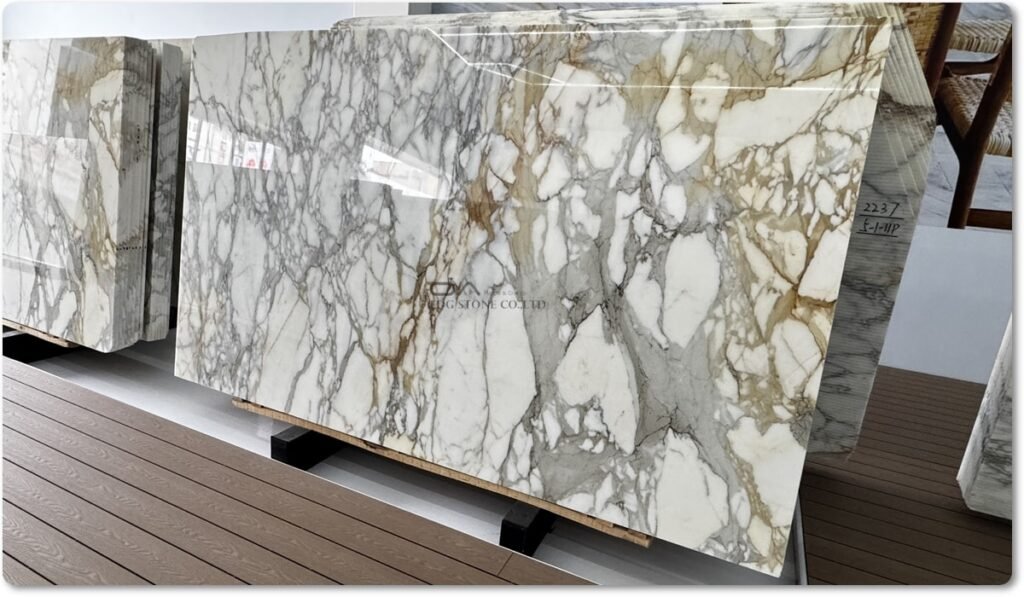
2. Geological and Commercial Origin
The strongest origin framing for Calacatta Marble is the Apuan Alps / Carrara context in Tuscany, Italy. UNESCO describes Carrara as being located at the foot of the Apuan Alps and known worldwide for its white marble quarries. UNESCO also describes the Apuan Alps as a marble-rich geological complex quarried for centuries, with white marble used since Etrurian times and later by major Renaissance artists.
That original context is valuable for marketing, but it also creates risk. In the global marketplace, the Calacatta name is sometimes used loosely, and buyers may see products with similar aesthetics sold under different labels. For that reason, professional buyers should treat origin as a verifiable procurement requirement, not a stylistic assumption. A serious order should specify quarry source, lot number, slab photos, thickness, finish, and inspection standards before purchase confirmation. ASTM’s marble guidance supports this kind of selection-by-specification approach.
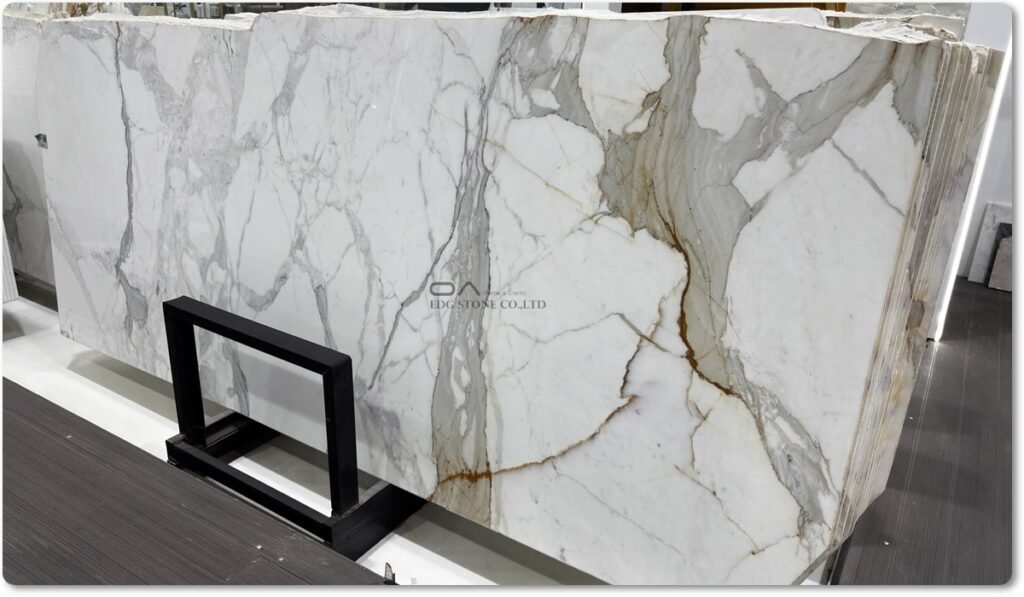
3. Why Calacatta Marble Is Different from Carrara Marble?
Calacatta and Carrara are related in commercial discussion, but they should not be treated as interchangeable. Carrara is the broader and more widely recognized origin frame tied to the marble districts around Carrara and the Apuan Alps, while Calacatta is typically positioned by the market as a premium visual family with stronger veining contrast and more dramatic patterning. The key procurement lesson is not semantic; it is operational. If the buyer needs a specific look, they should approve real slabs from the exact lot, because aesthetic differences within premium Italian white marble can be large enough to change the entire design outcome. UNESCO’s Carrara and Apuan Alps descriptions reinforce why origin-based verification matters.
For countertop and wall applications, the buyer should also remember that marble is a calcareous stone, which means it can react to acids and may etch under normal household use. The Natural Stone Institute’s consumer guidance warns that acidic substances can dull or etch these surfaces, and its stain guidance explains that etch marks are caused by acids. That does not make marble unsuitable; it means the buyer must spec and educate properly.
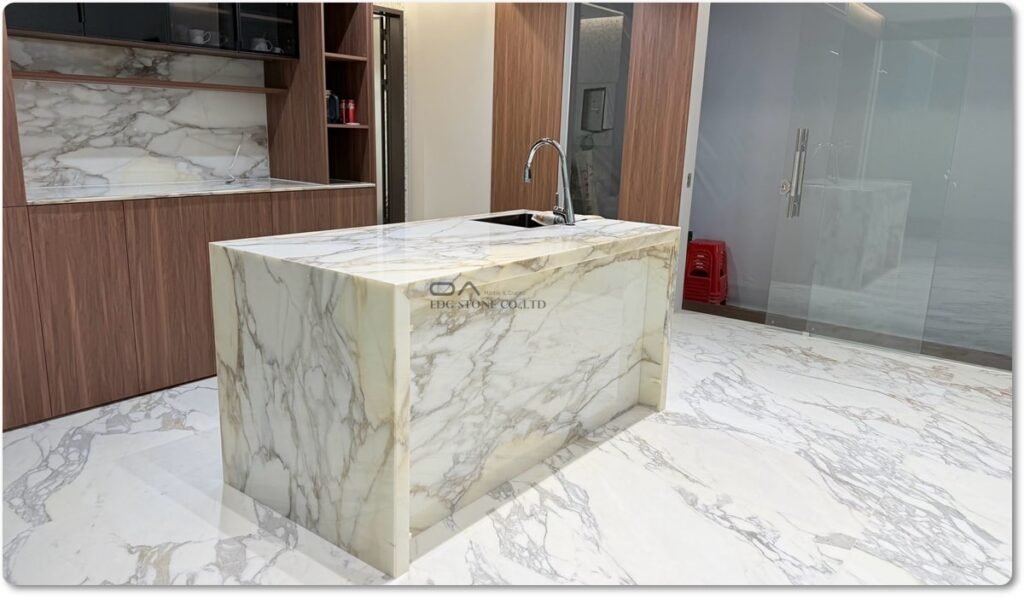
4. Commercial Classification Standards
A useful Calacatta classification system should rely on observable and documentable traits. The most practical commercial criteria are:
4.1 Background Color
Is the base tone warm white, cool white, ivory white, or cream-white? The background tone determines whether the stone suits minimal interiors, warmer classic schemes, or contrast-heavy luxury designs.
4.2 Vein Structure
Are the veins thin or thick, linear or cloud-like, sparse or dramatic? Veining affects visual movement, bookmatch potential, and seam planning.
4.3 Color Family
Does the slab fall into a gold, grey, green, violet, or red family? This is where trade naming often expands into distinct commercial sub-families such as Calacatta Gold, Calacatta Viola, or Verde Calacatta.
4.4 Finish
Polished, honed, leathered, or brushed finishes can materially change stain visibility, reflectivity, and maintenance expectations.
4.5 Thickness and Format
Slab thickness, calibrated thickness, tile size, and cut-to-size formats should be confirmed before reservation.
4.6 Lot Uniformity
The most important procurement test for premium marble is whether a lot can maintain a consistent look across the full order. A single beautiful slab does not guarantee a usable production batch.
ASTM’s marble standard is useful here because it frames marble selection around material characteristics, physical requirements, and sampling. That is the right logic for premium stone procurement: classify by what can be verified and repeated.
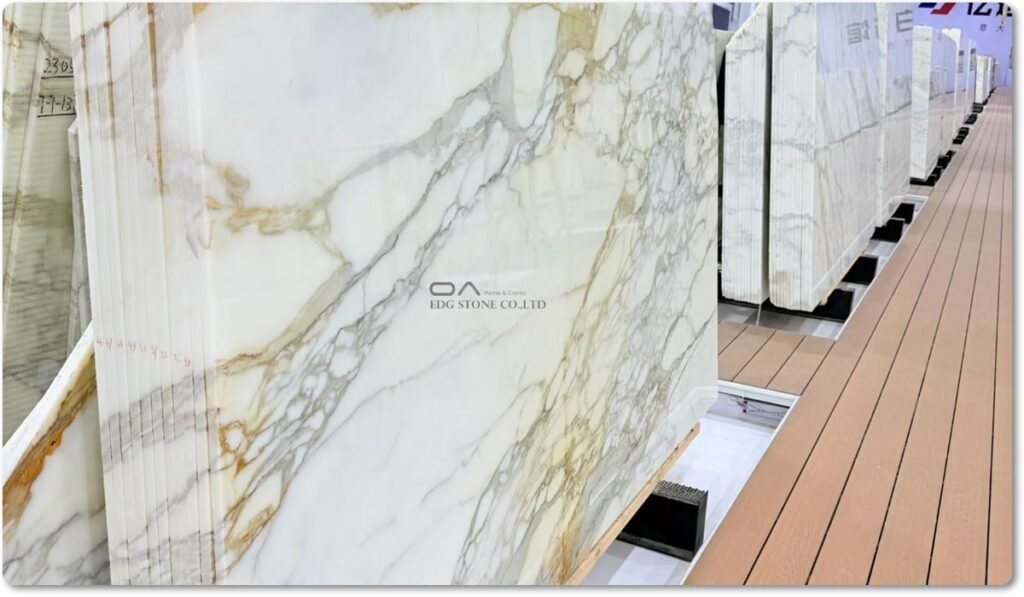
5. Major Calacatta Marble Families
In the market, Calacatta is often organized into visual families rather than a single product. For SEO, procurement, and buyer education, this section works well as a grouped taxonomy.
White Calacatta Marble
This is the cleanest commercial expression of the family. Buyers usually want a bright background with stronger visual movement than ordinary white marble.
Calacatta Gold Marble
Gold-toned veining is one of the most requested premium looks because it pairs well with brass, walnut, oak, and warm luxury interiors.
Calacatta Oro Marble
“Oro” is often used to signal a gold-rich tone, though the exact appearance varies by quarry and exporter. It should be verified by slab photos and lot approval, not by name alone.
Calacatta Borghini Marble
Often marketed as a luxury-grade family with expressive veining. Buyers should request actual slab imaging because market naming can vary by supplier.
Calacatta Monet Marble
Usually positioned for a softer, more artistic movement pattern. This is often a design-led rather than engineering-led purchase.
Verde Calacatta Marble
Green-toned Calacatta products are often used in statement interiors, bars, powder rooms, and accent walls where a more unusual color signature is desired.
Calacatta Viola Marble
Viola variants are popular in high-end decorative projects because the purple or burgundy movement creates a strong focal point.
Calacatta Red Marble
Red-vein variants are generally more dramatic and less minimal, so they work best in luxury feature applications rather than uniform large expanses.
The commercial value of this family structure is that it helps the buyer match the stone to the design intent before procurement begins. The risk is that trade families can hide very different physical lots, so the buyer should always demand slab-level proof. ASTM’s material-focused specification model is the right standard mindset for this category.
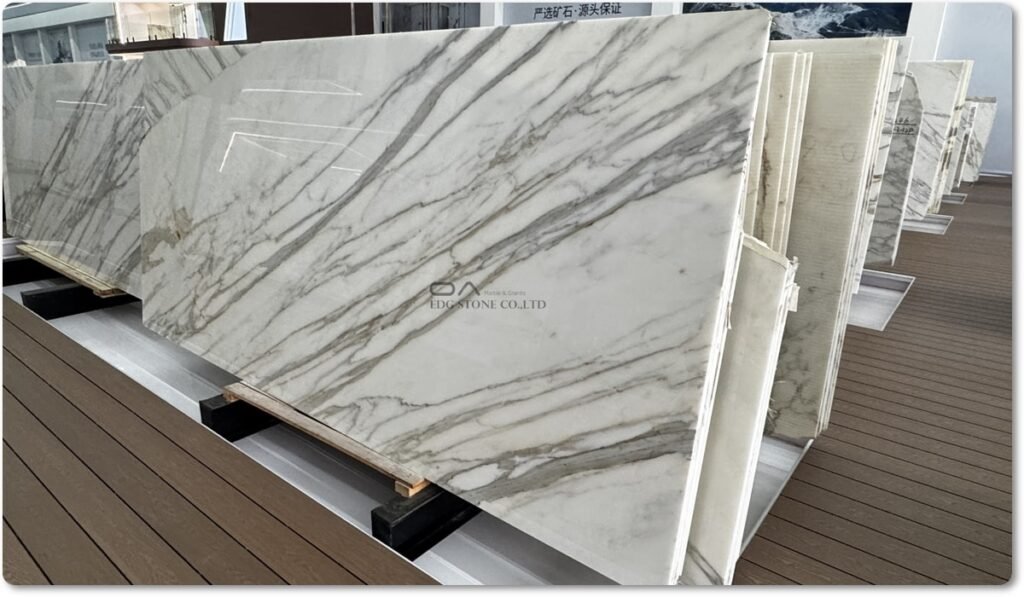
6. Global Supply Structure
Premium marble supply is usually organized through five layers.
Quarry operators
They control extraction, block availability, and the first point of source traceability.
Block traders
They aggregate supply, move blocks between markets, and often influence naming practices.
Slab manufacturers
They saw, process, polish, and sort the material into saleable slabs.
Fabricators
They convert slabs into countertops, vanities, wall panels, stairs, and specialty pieces.
Distributors
They hold inventory, support local selection, and serve regional design and contractor markets.
For buyers, the main procurement lesson is that the more layers between quarry and project, the greater the chance of mislabeling, mixed batches, or documentation drift. A premium stone order should therefore include source confirmation, batch reservation, and inspection controls before shipment. That process follows the same general logic used in other engineered or high-value material supply chains: the specification must be controlled before production moves forward. ASTM’s marble guidance and NSI’s scientific-versus-commercial distinction both support this level of rigor.
7. Procurement Risks Buyers Must Control
Mislabeling
A slab may be marketed with a premium Calacatta name even when the source, look, or physical quality does not match buyer expectations. This is a commercial risk, not just a naming issue.
Mixed batches
Premium marble often comes with visual variation. If multiple lots are mixed, the buyer may receive a shipment that looks inconsistent when installed as one surface.
Artificial enhancement
Color enhancement, resin treatment, or surface correction may alter the appearance and maintenance behavior of the slab. Buyers should ask directly about any treatment performed after extraction.
Color inconsistency
Even within the same quarry family, background tone and vein density can vary substantially from block to block. This is why slab approval matters more than brochure images.
Installation mismatch
Calacatta Marble is a natural stone, and successful project outcomes depend on fabrication and installation quality. Poor seam planning, unsupported overhangs, or unsuitable adhesives can compromise the result.
Maintenance misunderstanding
Because marble is calcareous, acids can etch the surface. The Natural Stone Institute specifically warns that lemon, vinegar, and other acids may dull or etch calcareous stone, and that etch marks are caused by acids.
The buyer’s response to these risks should be procedural, not emotional. Require documentation, reserve the actual batch, inspect before shipment, and define acceptable variation in advance. ASTM’s marble specification is particularly relevant because it organizes selection around material characteristics, physical requirements, and sampling
8. How Professional Buyers Evaluate Calacatta Marble?
8.1 Quarry Verification
Ask where the block was extracted and whether the supplier can trace the material back to the source. Origin is especially important in a category where trade names can be used loosely.
8.2 Sample Approval
Samples are useful, but they are not enough. The sample should be tied to a specific lot and used only as a baseline for color, veining, and finish.
8.3 Batch Reservation
For larger orders, reserve the actual slab group before fabrication begins. This reduces the risk of substitution and visual drift.
8.4 Third-Party Inspection
Independent inspection is one of the most effective controls for premium natural stone. It helps confirm thickness, finish, packing, quantity, and appearance before export.
8.5 Export Documentation
A professional export file should include lot identification, commercial invoice, packing list, photos, dimensions, and any agreed inspection report.
8.6 Sealing and Care Expectations
Because marble can be etched and stained, buyers should align expectations with the end user. The Natural Stone Institute’s care resources clearly indicate that acidic cleaners and foods can damage the finish.
This evaluation sequence is what turns a beautiful stone from a design choice into a controlled procurement decision.
9. Application Scenarios
Calacatta Marble is especially effective in projects where visual impact matters more than absolute low-maintenance performance.
Luxury kitchens
Large islands, waterfall edges, backsplashes, and feature walls are common use cases. The design benefit is strong; the maintenance discipline must also be strong.
Bathroom vanities and walls
Bathrooms often showcase the best veining because the surfaces are smaller and easier to coordinate into a visual composition.
Lobby and reception areas
Premium marble creates a strong first impression in hospitality, commercial, and high-end residential lobbies.
Fireplace surrounds
A Calacatta feature surround can anchor a room visually and support a luxury design language.
Boutique retail and hospitality
The stone works well in spaces where the brand wants to communicate exclusivity, refinement, and permanence.
Residential statement interiors
Dining walls, powder rooms, entry halls, and stair features can all benefit from a carefully selected premium marble slab.
Because marble is a calcareous natural stone, project teams should make sure the end user understands surface care and cleaning limitations. NSI’s consumer guidance is explicit that acidic substances can etch these materials.
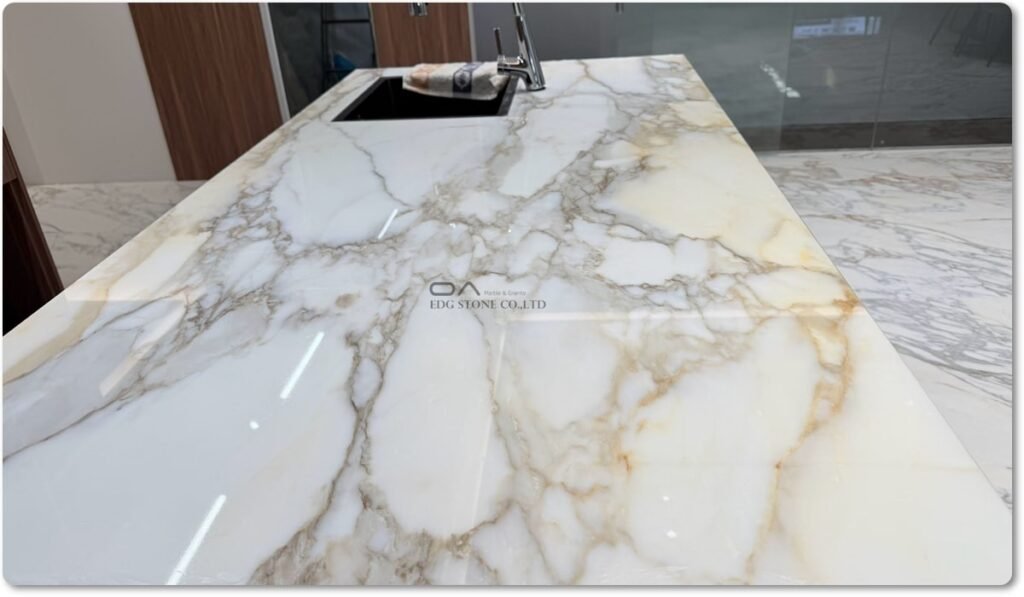
10. EDG Stone Factory Case Module
EDG Stone Factory can be positioned in this whitepaper as a factory-direct manufacturer and exporter program that supports both marble and quartzite procurement. In a practical procurement workflow, a supplier like EDG Stone Factory can add value at four points:
Block selection
Factory teams can help choose source blocks based on project tone, veining, and required format.
Slab processing
Material can be cut, polished, sorted, and photographed so buyers can approve what will actually ship.
Countertop fabrication
For kitchen and vanity projects, the supplier can convert slab supply into finished or semi-finished countertop programs.
Export quality management
Packing, inspection, labeling, and shipment documentation are especially important for international buyers.
This module works best when it is written as an operational example rather than a sales paragraph. The point is to show how a manufacturer/exporter fits into the buyer’s risk-control process. That makes the case study relevant to both Calacatta Marble and broader quartzite slab and countertop programs.
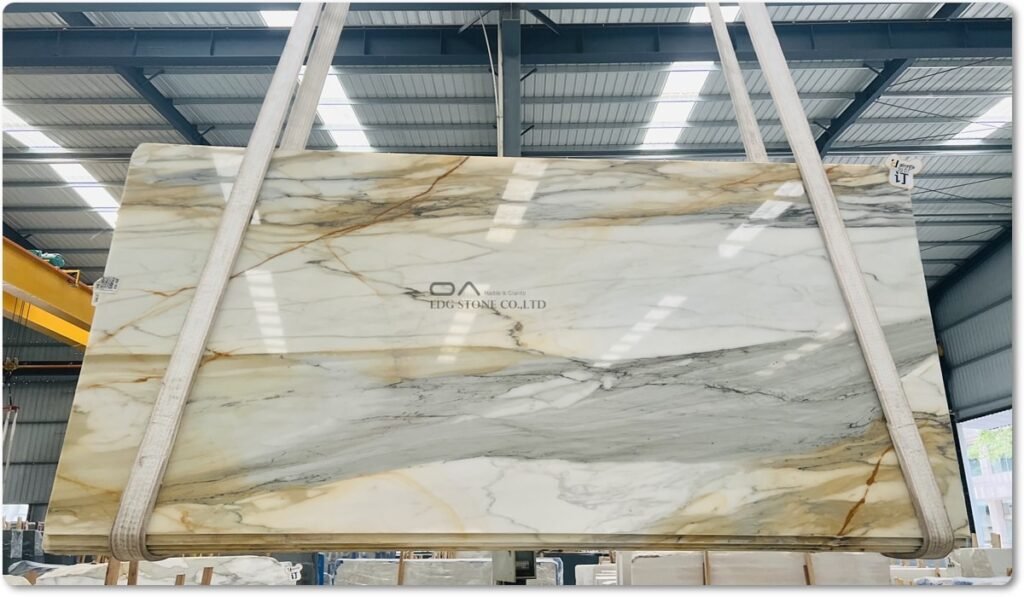
11. Buyer Checklist Before Ordering
A professional Calacatta Marble order should not proceed without the following:
- quarry or source confirmation
- slab-level photos
- lot number or batch identification
- thickness confirmation
- finish confirmation
- quantity and format confirmation
- reserve policy for the selected lot
- inspection method before shipment
- packing specification
- installation and care guidance for the end user
This checklist keeps the purchase aligned with the way ASTM and NSI recommend thinking about natural stone: verify the material, verify the application, and verify the handling.
12. FAQ
What is Calacatta Marble?
Calacatta Marble is a premium commercial marble family known for a bright background and expressive veining. In procurement, it should be specified by origin, lot, finish, thickness, and slab photos rather than by name alone. ASTM’s marble standard supports this specification-first approach.
Is Calacatta Marble the same as Carrara Marble?
No. Carrara is the broader origin context tied to the white marble districts of the Apuan Alps, while Calacatta is generally treated as a premium commercial family. Buyers should verify the exact source and slab lot before ordering.
Where does Calacatta Marble come from?
The strongest origin frame is the Carrara and Apuan Alps region in Tuscany, Italy. UNESCO identifies Carrara as being at the foot of the Apuan Alps and known for its white marble quarries.
How can buyers verify authentic Calacatta Marble?
Request quarry or source information, slab-level photos, lot identification, finish confirmation, thickness data, and third-party inspection before shipment. That is the safest way to reduce mislabeling and batch-mismatch risk.
Is Calacatta Marble suitable for countertops?
Yes, provided the buyer understands that marble is a calcareous stone and can etch when exposed to acids. The Natural Stone Institute warns that lemon, vinegar, and other acids may dull or etch the surface.
What should be checked before reserving a slab batch?
Check the lot’s visual consistency, thickness, finish, quantity, packaging standard, and whether the exact batch can be reserved until shipment. This is especially important in premium marble, where appearance varies from lot to lot.
Conclusion
Calacatta Marble is not just a design material; it is a specification decision. The best procurement outcomes come from treating the stone as a traceable, lot-controlled, application-specific product rather than a decorative label. UNESCO’s origin context confirms why Carrara and the Apuan Alps matter, while ASTM and the Natural Stone Institute show why material selection, sampling, and care must be handled scientifically and commercially with equal discipline.
For project buyers, the winning strategy is simple: verify origin, approve the actual batch, control the documentation, and align the stone choice with the project’s maintenance reality. For suppliers, the winning strategy is to show proof, not just pictures. That is where a factory-direct program such as EDG Stone Factory can add real value in both marble and quartzite supply.
References
- ASTM C503/C503M, Standard Specification for Marble Dimension Stone.
- Natural Stone Institute, Scientific versus Commercial Definition.
- Natural Stone Institute, Learn About Cleaning Products for Natural Stone.
- Natural Stone Institute, Remove Stains from Stone Applications.
- UNESCO, Carrara Creative Cities Network profile.
- UNESCO, Apuan Alps UNESCO Global Geopark.
- USGS, Dimension Stone Statistics and Information.
- USGS, Mineral Commodity Summaries 2026: Dimension Stone.
- USGS, Mineral Commodity Summaries 2025: Dimension Stone.
- ASTM C1242, Guide for Selection, Design, and Installation of Dimension Stone Attachment Systems.