Executive Summary
Cristallo Quartzite sits at the intersection of geology, design, and procurement discipline. In the luxury segment, the material is valued not just for appearance, but for the combination of rarity, visual depth, structural performance, and the possibility of backlit or high-impact feature use in signature spaces. Quartzite is a metamorphic rock formed when quartz-rich sandstone is altered by heat, pressure, and chemical activity; the result is an interlocking quartz structure that gives the material its durability and project value.
For procurement teams, the important question is not whether quartzite is beautiful. The real question is whether the slab you are approving is suitable for the intended application, fabrication process, lighting condition, and maintenance profile. That means evaluating translucency, color consistency, veining, thickness behavior, petrography, absorption, flexural strength, and the full supply-chain risk of replacement or re-selection. ASTM and Natural Stone Institute resources provide a practical technical framework for these decisions, while OSHA and CDC guidance make clear that quartzite and related siliceous stones require formal dust-control and worker-protection planning during fabrication and installation.
1. Introduction: Why Cristallo Quartzite Belongs in the Ultra-Luxury Category?
Cristallo Quartzite is typically specified when a project needs more than a durable countertop surface. It is selected when the design intent includes visual luminosity, stone depth, dramatic bookmatching, and the sense that the material itself is part of the architecture. In premium hospitality, retail flagships, private estates, and boutique commercial spaces, quartzite is often used as a statement material because it reads as both natural and rare. That value is strongest when the slab selection is disciplined and project-specific, not based on generic stock photos or showroom assumptions. Quartzite is a siliceous stone; the exact properties vary by quarry, block, and slab, so the material must be selected and tested case by case.
This whitepaper reorganizes the topic from fundamentals to applications to commercial strategy. It is written for architects, designers, procurement managers, fabricators, and stone buyers who need a technical yet practical framework for specifying Cristallo Quartzite and other exotic quartzites with lower project risk. The logic is intentional: first establish trust through geology and standards, then define visual and structural selection criteria, then move into sector-specific use cases, and finally address procurement risk and export-grade buying strategy.
2. What Makes Exotic Quartzite Valuable?
2.1 Rarity
In luxury stone procurement, rarity is not a marketing adjective; it is a supply-chain condition. Exotic quartzites are often limited by quarry location, block quality, yield, and the percentage of visually acceptable slabs after cutting and finishing. Even when the geological formation is extensive, the number of slabs that meet premium visual standards may be small. That is why replacement risk matters so much: the “same” stone can vary significantly by block, batch, and season. This is especially important for large-format projects, where matching across multiple slabs or multiple containers affects both schedule and visual continuity. This is a procurement inference grounded in how stone is sourced, graded, and tested rather than a fixed market constant.
2.2 Transparency
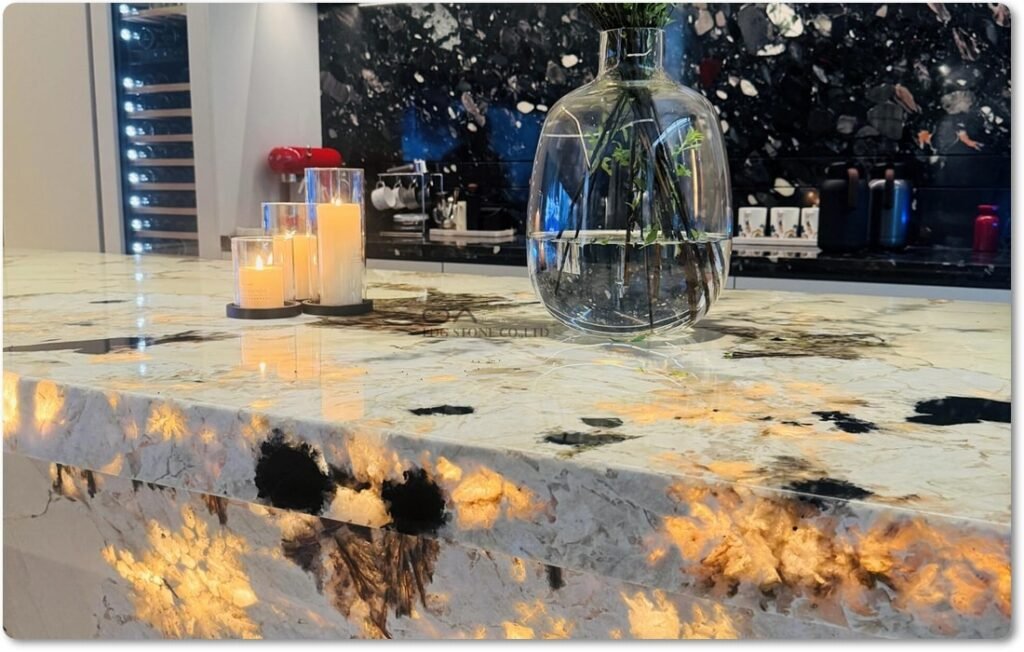
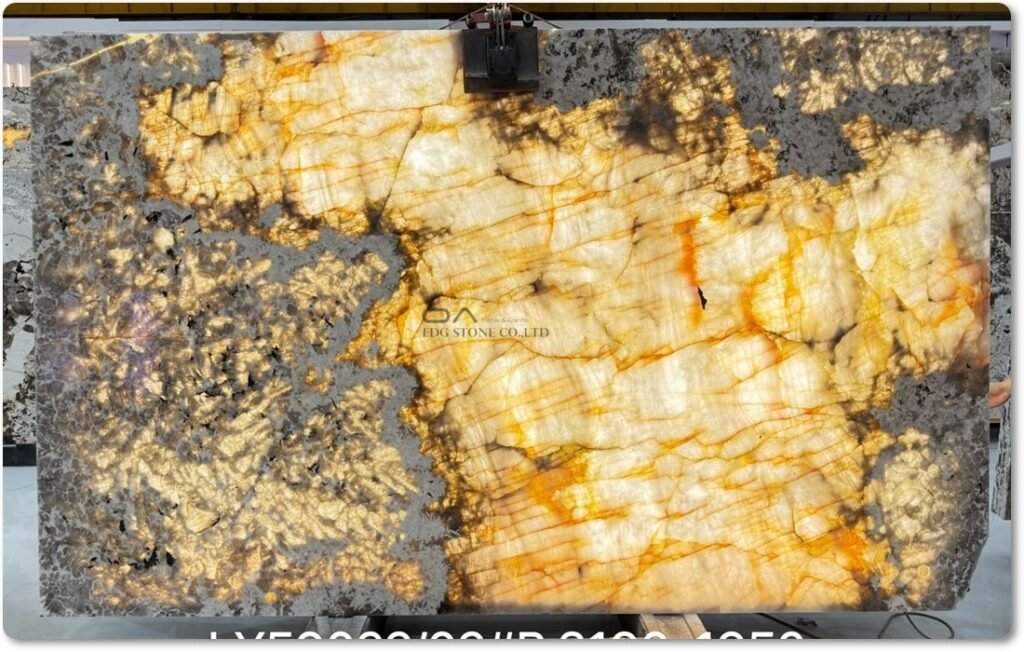
Transparency or translucency is one of the most important differentiators for Cristallo-type stones. Backlit stone effects require more than a beautiful surface; they require sufficient light transmission, consistent slab thickness, controlled resin behavior where applicable, and a lighting strategy designed around the actual slab rather than the concept image. The stone industry has long used translucent natural materials in illuminated walls, counters, and decorative features, and contemporary projects continue to showcase backlit stone elements when the material is suitable. However, translucency is not automatically guaranteed for every slab labeled “Cristallo,” so project mockups are essential.
2.3 Geological Uniqueness
Quartzite forms by metamorphism of quartz-rich sandstone, and the interlocking quartz grains created in that process are the reason the stone is valued for strength and architectural durability. Quartzite is typically described as composed almost entirely of quartz, which explains both its performance and its high silica implications during cutting and polishing. For luxury projects, geological uniqueness matters because it drives the aesthetic character of the slab: crystal structure, background clarity, movement, and the presence or absence of mineral impurities all influence the final visual result.
3. Cristallo Quartzite Overview
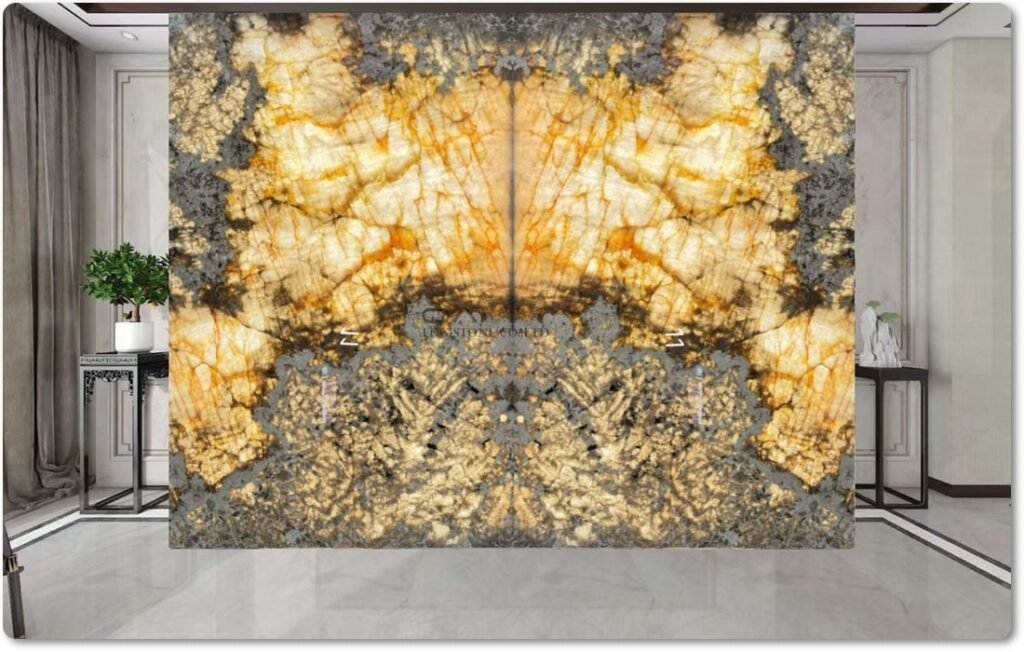
Cristallo Quartzite is best understood as a premium visual category rather than a single uniform product. In practice, buyers encounter different commercial expressions of Cristallo material depending on quarry source and processing. The common thread is a luminous, crystalline appearance that can range from semi-translucent to highly dramatic under specific lighting conditions. Antolini’s recent public presentations of Cristallo Vitrum “Wow” reinforce how the market positions Cristallo-family materials as design-forward natural stone suitable for feature counters and immersive architectural displays.
Visual Properties
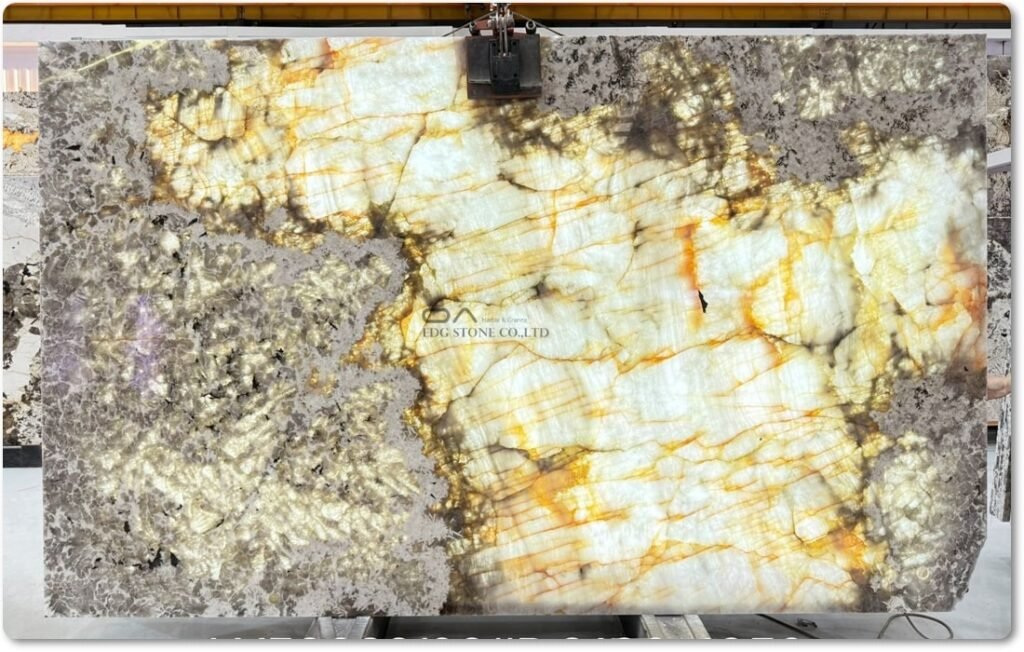
The key visual variables are background purity, clarity of the crystalline field, veining style, and the presence of cloudy zones or structural interruptions. In high-end applications, a “good” Cristallo slab is not merely bright or white. It needs balance: enough contrast to feel alive, but enough openness to transmit light and read as elegant rather than noisy. When the stone is used in a backlit or translucent installation, slab uniformity becomes even more important because uneven density can create patchy illumination. This is a design inference based on how translucent stone is specified in architectural projects.
Backlit Applications
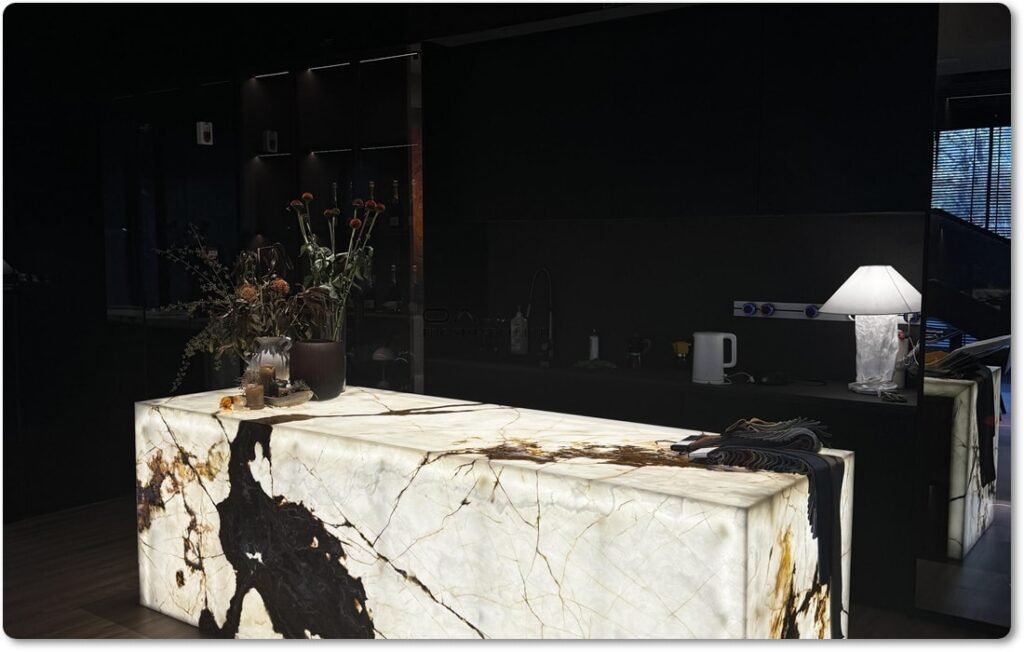
Backlit stone applications are a specialized subset of luxury specifications. Natural-stone projects have used translucent materials in illuminated walls, panels, counters, and decorative surfaces, and backlighting systems are commercially marketed for translucent stones, including quartzite. The practical takeaway is straightforward: backlit success depends on the stone, the thickness, the substrate, the LED panel design, and the mockup. It is not enough to approve a slab in a daylight showroom and assume identical performance in a dark hospitality lobby.
4. Exotic Quartzite Evaluation Framework
4.1 Color
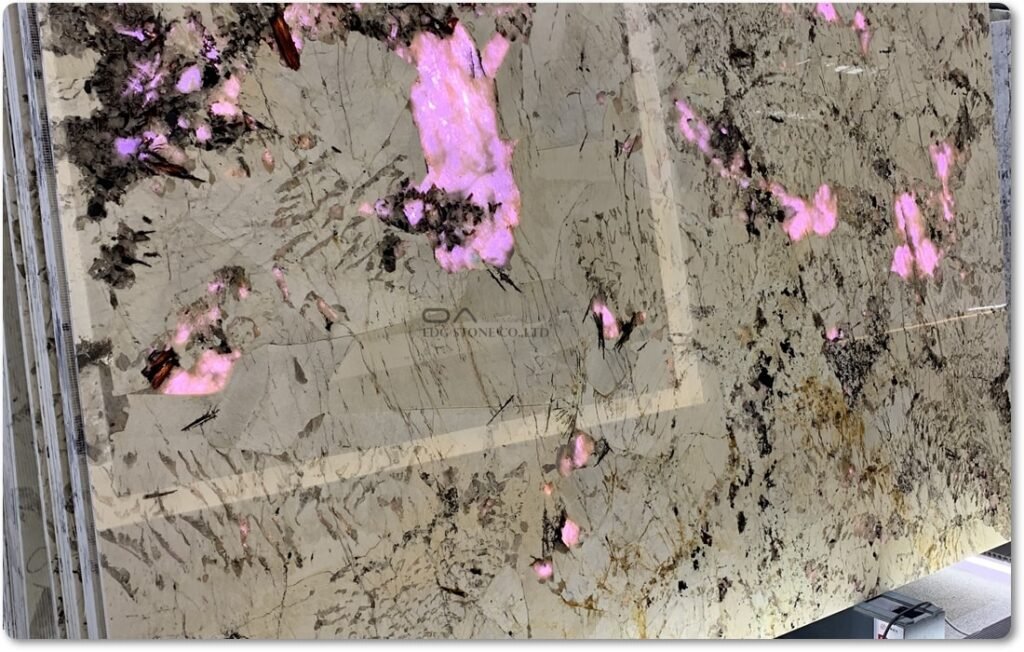
Color is the first procurement filter, but it should never be the only one. For exotic quartzite, color must be judged under multiple light temperatures and at multiple viewing distances. A slab that reads clean and bright in a showroom may reveal cooler undertones, mineral clouding, or spatial inconsistency under architectural lighting. For large projects, buyers should review the actual slab or a high-resolution slab-by-slab selection set, not a generic sample chip. That rule is especially important for Cristallo-type quartzite, where visual openness is part of the product value.
4.2 Veining
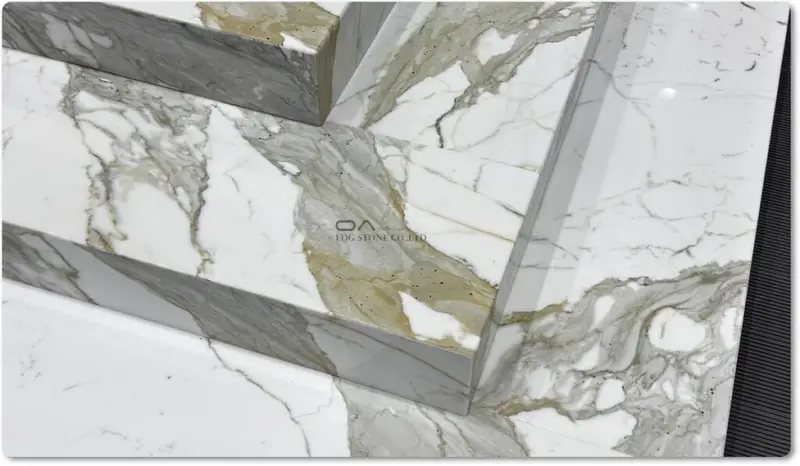
Veining should be evaluated for direction, continuity, scale, and how it will read after fabrication. On islands, feature walls, vanity fronts, and bookmatched installations, the vein map is part of the composition. Buyers should ask whether the supplier can provide slab sequencing, vein-matching guidance, and bookmatch photos before purchase. This is where luxury procurement and fabrication discipline overlap: veining is both an aesthetic and a yield issue.
4.3 Structural Stability
For natural stone, structural stability is not an abstract engineering phrase. It affects edge performance, sink cutouts, overhang behavior, cladding safety, and transport breakage risk. ASTM publishes dimension-stone test methods for compressive strength, flexural strength, absorption and bulk specific gravity, modulus of rupture, flexural modulus of elasticity, abrasion resistance, and petrographic examination, and the Natural Stone Institute summarizes how these tests support real project decisions. A premium procurement file should request the relevant test data for the actual material and, when possible, a petrographic exam to confirm composition and identify discontinuities.
5. Procurement Standards That Should Be Non-Negotiable
A serious quartzite procurement workflow should include six checkpoints.
First, confirm the stone type and quarry source. “Cristallo” is not enough as a descriptor. The buyer needs the quarry or block reference, finish, thickness, and lot identity. Second, request slab-level photos, not just sample photos. Third, verify dimensional stability and fabrication feasibility for the specific project format. Fourth, ask for test documentation aligned with ASTM dimension-stone methods, especially absorption, compressive strength, and flexural performance, where the application demands it. Fifth, require packing and export details, including crate type, thickness tolerance, and breakage mitigation. Sixth, confirm the replacement policy, because exotic quartzite often cannot be restocked on demand.
From a risk perspective, quartzite also requires a proper silica safety plan. OSHA states that workers exposed to respirable crystalline silica face risks including silicosis, lung cancer, COPD, and kidney disease, and OSHA’s construction standard sets an action level of 25 µg/m³ and a permissible exposure limit of 50 µg/m³ averaged over an 8-hour day. OSHA’s guidance also notes that silica content varies by stone variety and can be confirmed by petrographic and X-ray diffraction analysis. For fabricators and exporters, this means quartzite procurement cannot be separated from dust-control and workforce protection planning.
6. Luxury Applications by Scenario
6.1 Hospitality
Hospitality projects use quartzite when the design brief calls for a memorable first impression and robust daily performance. Reception counters, feature walls, spa vanities, bar fronts, and illuminated focal elements benefit from quartzite’s premium visual depth and its ability to read as a permanent architectural material rather than a decorative finish. When a hospitality design includes backlighting, the slab must be validated under actual LED conditions before sign-off. That is the only reliable way to avoid costly field surprises.
6.2 Retail
Retail flagships need materials that photograph well, support brand storytelling, and hold up under traffic and frequent cleaning. Exotic quartzite can anchor display tables, sales counters, wall cladding, and VIP consultation areas. For luxury retail, the stone does more than serve a function; it becomes part of the product narrative. But because retail projects are time-sensitive, buyers should prioritize suppliers who can confirm inventory, slab counts, and container timing before design freeze.
6.3 Residential Estates
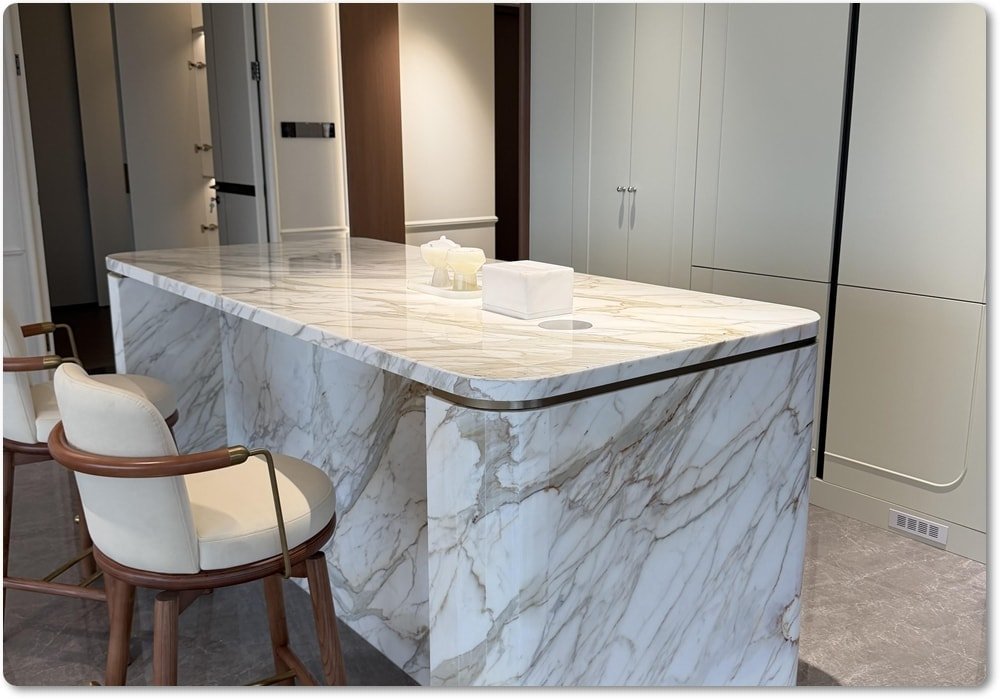
In private estates, Cristallo Quartzite is usually chosen for kitchen islands, master bath vanities, statement walls, fireplaces, and custom furniture surfaces. The value in the residential sector lies in exclusivity and long-term visual appeal. The buyer should think like a curator: not every slab needs to match perfectly, but every installed piece should belong to the same visual family. Residential projects are also where replacement risk becomes especially painful, because a single slab may be used in several visible areas.
7. Procurement Risk Management
7.1 Availability
Availability is the first commercial risk in exotic quartzite. A project may begin with a beautiful sample, but the actual material may become difficult to secure in the required quantity, thickness, or finish. Industry sourcing tools and inventory catalogs make clear that quartzite is often tracked by stone type, sustainability document availability, and quarry source, which reinforces the need to reserve material early and validate exact lot identity before construction deadlines tighten.
7.2 Price Volatility
Price volatility in exotic quartzite is usually driven by block rarity, yield, slab quality, freight, fabrication complexity, and replacement scarcity. Because quartzite is a natural material rather than an engineered one, the buyer is exposed to quarry variability and export logistics. That is why the lowest unit price is not necessarily the best procurement outcome; a slab that is cheaper upfront but produces lower yield, more breakage, or poor visual continuity can become the most expensive choice in the end. This is an informed procurement judgment rather than a fixed market statistic.
7.3 Replacement Challenges
Replacement is often impossible to solve after the fact. Even if another shipment is labeled the same, the color field, translucency, and vein character may differ. That is why large quartzite projects need approval governance: written slab sign-off, photo archiving, yield planning, and contingency rules for remakes or alternate selections. In premium work, the cost of uncertainty is usually higher than the cost of a disciplined pre-award process.
8. Sustainability, Documentation, and Compliance
Natural stone now has a stronger documentation framework than many buyers assume. The Natural Stone Institute states that it has published industry-wide ISO Type III Environmental Product Declarations for cladding, flooring/paving, and countertops, and it also provides Health Product Declarations for natural stone categories, including quartzite. The organization also references ANSI/NSI 373, the sustainable production standard for natural dimension stone. For global projects, this means quartzite can be integrated into sustainability-driven specifications when the supplier can document the right product and production pathway.
This matters in practice because design teams increasingly need traceable product documentation for LEED-related workflows, corporate procurement policies, and public-facing environmental claims. The correct approach is not to assume all stone is “green” by default. The correct approach is to ask for the actual documentation tied to the actual quarry, product type, and finish.
9. EDG Stone Factory Case Module
EDG Stone Factory: Quartzite Slabs & Countertops Manufacturer and Exporter
For SEO and conversion purposes, the EDG Stone Factory module should be written as a credibility anchor, not a slogan. The most effective positioning is: a global quartzite slabs and countertops manufacturer and exporter that supports project-based selection, slab matching, fabrication coordination, packaging, and export documentation. That language fits the procurement needs of architects, importers, distributors, and project specifiers because it speaks to the buying process rather than only to product beauty.
A practical case-module structure is:
Project need: ultra-luxury hospitality, retail, or residential estate.
Material challenge: visual consistency, backlit suitability, and replacement risk.
EDG Stone Factory response: slab-by-slab selection support, finished-surface options, custom countertop fabrication, export packing, and quality checks tied to the approved lot.
Buyer value: faster approval, lower mismatch risk, and more confident specification for high-visibility stone.
This module should stay factual and evidence-based. It should describe the exact material source, the actual QC process, the packing standards, and the export route used on real projects. That is what converts a generic supplier page into a procurement-grade authority page.
10. Content Architecture for the Cluster
To build authority around this topic, the content should be organized as a cluster moving from fundamentals to buying decisions and then to application pages. The current whitepaper should be the pillar page. The supporting pages should cover specific stone families, thickness guides, comparison pages, and use-case pages.
A recommended 15-page internal linking matrix is:
- Cristallo Quartzite Slabs: Complete Buyer’s Guide
- Exotic Quartzite Slabs for Luxury Interiors
- Backlit Quartzite: Lighting, Thickness, and Mockup Standards
- Quartzite vs Quartz: Procurement Differences
- Quartzite vs Marble: Performance and Aesthetics
- Quartzite Slab Size Guide
- Quartzite Thickness Guide: 2cm vs 3cm
- How to Inspect Quartzite Slabs Before Ordering
- Best Quartzite Countertops for Luxury Kitchens
- Quartzite for Hospitality Projects
- Quartzite for Retail Flagship Interiors
- Quartzite for Residential Estates
- Quartzite Shipping, Packing, and Export Standards
- Quartzite Maintenance and Sealing Guide
- EDG Stone Factory Quartzite Slab Manufacturing and Export Capability
This matrix supports natural internal linking, distributes link equity, and creates multiple entry points for long-tail search. It also matches how real buyers research: they start broad, then narrow into technical comparison, then end with procurement and supplier validation.
11. Recommended Authoritative Sources
- Quartzite geology and formation overview — Geology.com
- Quartz as a durable mineral and the basis of quartzite performance — Geology.com
- ASTM dimension-stone test standards list — ASTM International
- Natural Stone Institute ASTM guidance for design professionals — Natural Stone Institute
- OSHA crystalline silica overview — OSHA
- OSHA silica thresholds for construction and general industry — OSHA
- OSHA quartzite/silica content guidance for countertop work — OSHA/NIOSH publication
- CDC/NIOSH guidance on worker exposure and silicosis risk — CDC/NIOSH
- Natural Stone Institute safety training resources — NSI
- Natural Stone Institute EPD/HPD resources and sustainability standard — NSI
- Backlit translucent natural stone project examples — Natural Stone Institute and Stone World
- Natural stone sourcing catalogue showing quartzite inventory and sustainability filters — Natural Stone Institute
12. Closing Positioning
Cristallo Quartzite should be marketed and procured as a specification-grade luxury stone, not as a generic decorative material. The winning strategy is to prove performance first, visual value second, and commercial reliability third. That order mirrors how serious buyers actually evaluate premium natural stone. It also creates a stronger SEO structure because it aligns content with the user journey: learning, comparing, specifying, and finally requesting a quote or sample.