Quartz slabs move smoothly across borders only when the paperwork, packing, classification, and delivery terms are aligned from the start. In international trade, engineered quartz and similar artificial-stone products are commonly handled under Chapter 68 tariff structures, and the exact duty treatment depends on the destination, the product description, and the country of origin. For exporters, the real goal is simple: protect the slabs in transit, classify them correctly, and keep customs from stopping the shipment at the port.
How Quartz Slabs Are Exported Globally?
A strong quartz slab export process usually follows the same sequence: production control, slab inspection, protective packaging, container booking, export documentation, customs filing, ocean freight, import clearance, and final delivery. That workflow matters because customs authorities and brokers rely on accurate classification, origin, and shipment data, while carriers and insurers rely on clear packing evidence and transport terms. In the U.S., CBP uses the entry summary to evaluate appraisement, classification, and origin, so the shipment file must be clean before the container sails.
For quartz slabs wholesale buyers and exporters, the safest strategy is to treat the shipment as a complete trade package, not just a freight booking. That means the commercial invoice, packing list, bill of lading, HS code, and Incoterms should all match the physical cargo. When those details disagree, delays and claims get expensive fast.
HS Codes & Customs Classification
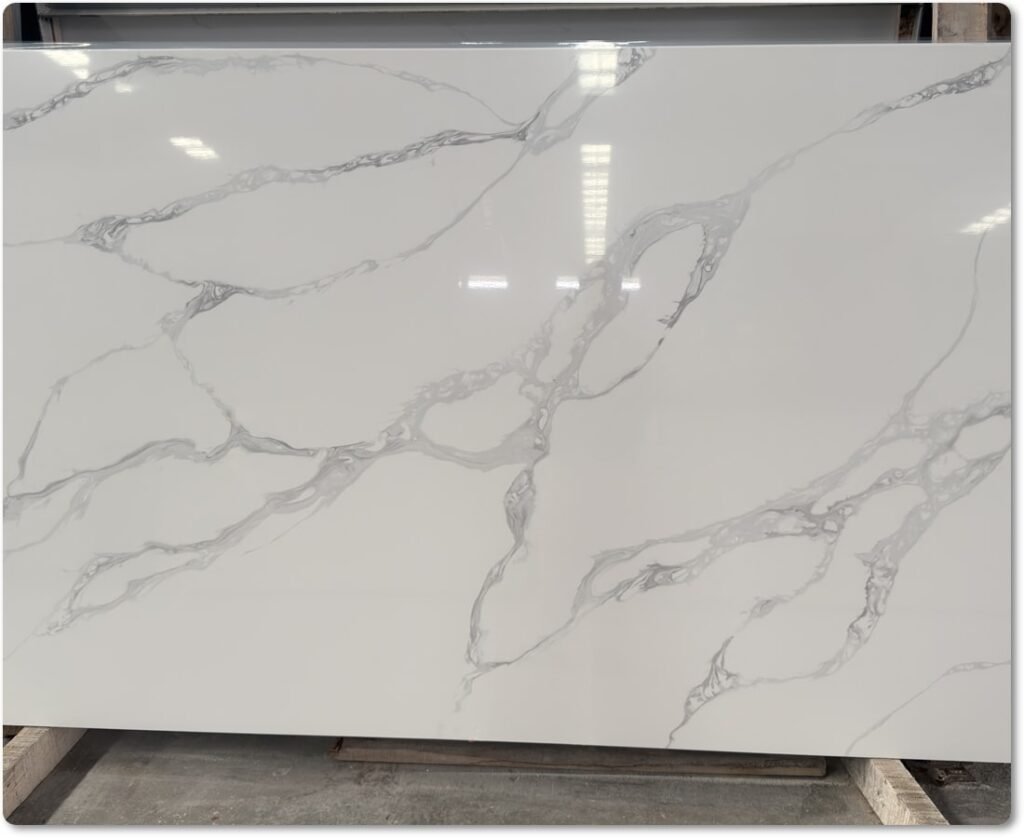
Quartz slabs are usually examined under HS Chapter 68, which covers articles of cement, concrete, or artificial stone. In the U.S. tariff schedule, agglomerated quartz slabs used for countertops are identified in the 6810.99.00.20 breakout, while the broader 6810.99 provision appears under “other” articles of artificial stone. Classification still depends on how the product is described, finished, and defined by the destination country for the line item.
This is why exporters should never guess the code from a marketing description like “quartz slabs for sale.” The correct code should be checked against the destination tariff database before invoicing, especially when the slab is engineered quartz, agglomerated stone, or a format that may sit near another tariff breakout. The European Commission explicitly tells traders to use My Trade Assistant on Access2Markets by entering the country of origin, destination, and product code to find the applicable duty.
Practical classification tip
For a quartz slab export file, the safest internal rule is to lock the tariff code before loading, not after arrival. That gives your broker time to confirm the line, your freight team time to prepare the docs, and your buyer time to understand landed cost with fewer surprises.
Fumigation & Packing Standards
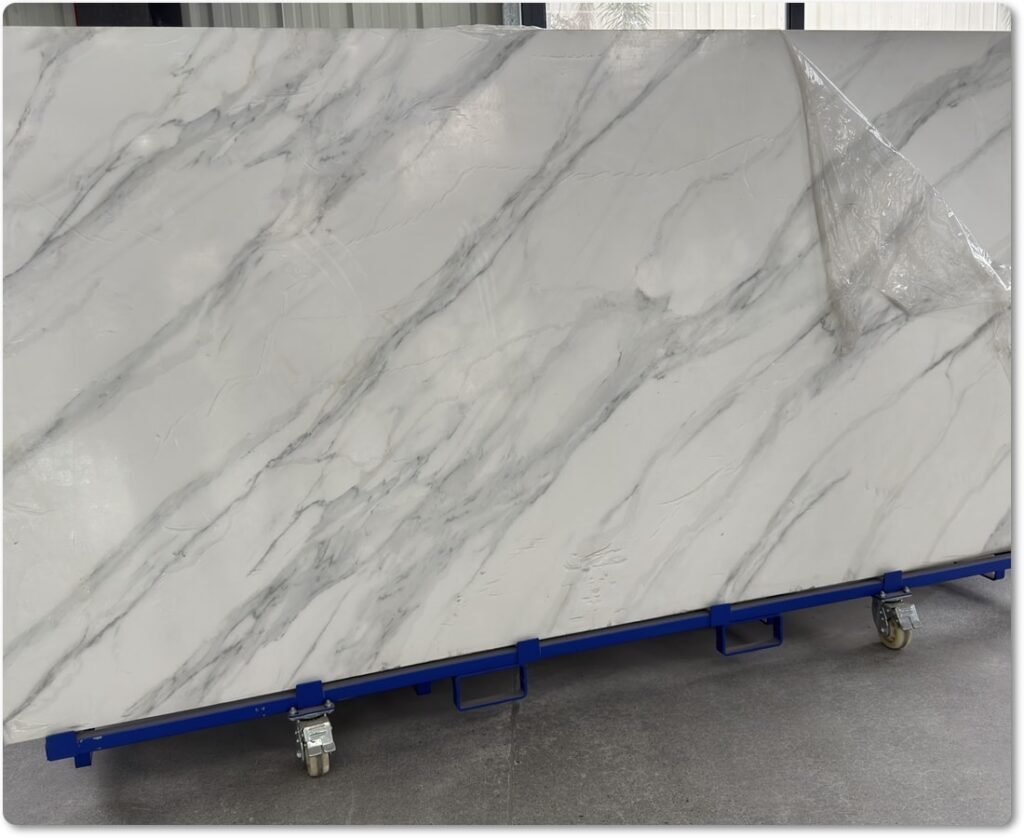
Quartz slabs themselves are not fumigated, but the wood packaging around them often is. Under ISPM 15, wood packaging material entering the U.S. must be pest-free, debarked, heat-treated or fumigated, and marked with the ISPM 15 logo. APHIS also states that treated packaging can be reused if the original mark remains valid, but repaired or remanufactured packaging must be treated and marked again.
For exporters, that means pallets, crates, braces, and dunnage must all be checked before the container is sealed. One bad wooden component can trigger inspection issues, delay the release, or even cause the shipment to be refused. In stone logistics, the packing standard is part of compliance, not just part of damage prevention.
A-Frame Packaging Systems
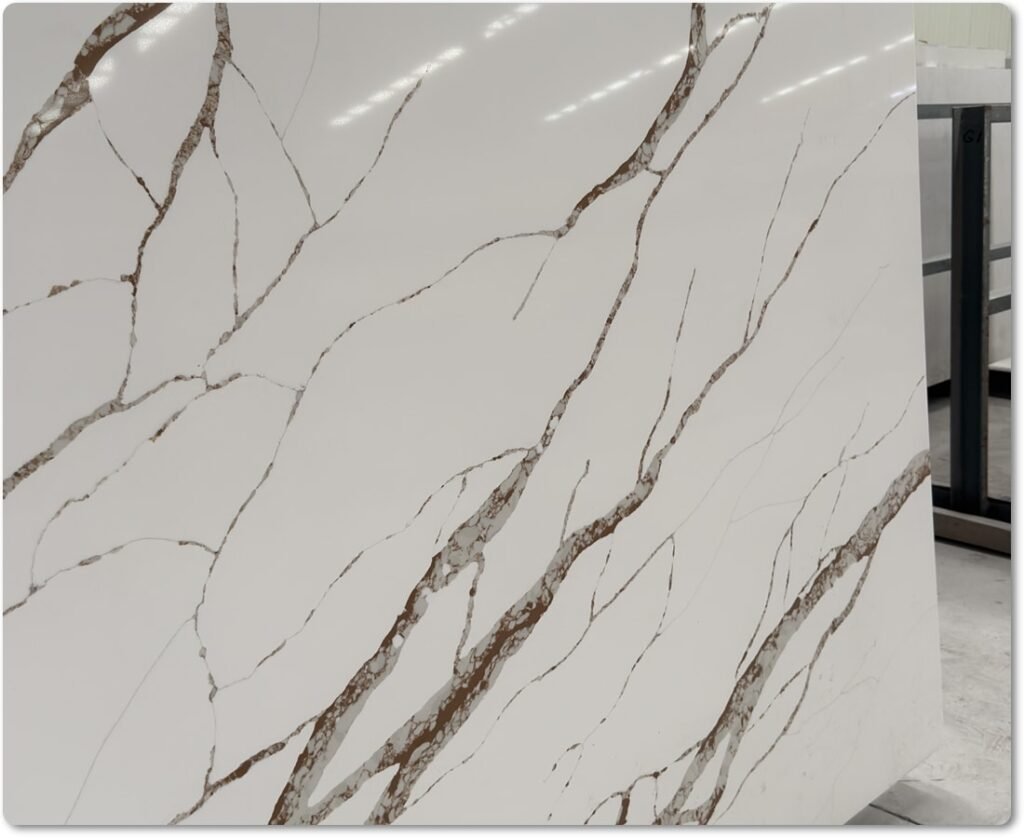
A-frame packaging is one of the most practical ways to move quartz slabs because it keeps them upright and braced, making them easier to secure in transit. Industry guidance for slab cargo commonly uses frames, shoring, and lashings to reduce movement and protect the stone face and edges during ocean and land transport. For container shipping, that stability is often the difference between a deliverable load and a broken one.
A good export pack usually combines the A-frame with edge protection, anti-slip pads, separation material between slabs, and clear orientation labels. For high-value quartz slabs wholesale orders, a good pack also includes photo records before loading, so both exporter and buyer have proof of the condition at dispatch. That evidence becomes valuable later if a claim is filed.
Ocean Freight Risk Management
Ocean freight risk for quartz slabs is usually about vibration, shock, moisture, and handling damage rather than the sea itself. The most effective control is to match the packaging method to the route: full-container loads need internal bracing, tight dunnage, and moisture protection, while breakbulk or unusual cargo may need more specialized restraint. In practice, better packing lowers both breakage and claims frequency.
Incoterms matter here because they decide who controls the freight and who bears the risk at each stage. ICC says Incoterms are the global standard for interpreting delivery terms in sales contracts, and Incoterms 2020 is the latest version. In a quartz slab export deal, that makes terms like EXW, FOB, CIF, and CIP are more than pricing shorthand; they define responsibility, cost, and the handoff point.
Insurance & Breakage Claims
Cargo insurance is worth treating as a planning tool, not an afterthought. A slab claim is much easier to support when the exporter can show loading photos, packing specs, invoice data, seal records, and delivery inspection notes. The stronger the pre-shipment evidence, the easier it is to prove whether the damage happened before loading, during transit, or at destination. That is especially important for quartz slabs wholesale shipments, where a single break can affect multiple downstream fabrication jobs.
A simple claims file should include the packing list, B/L, commercial invoice, photos of the crates or A-frames, and the receiving report from the buyer or warehouse. In high-volume trade lanes, that documentation discipline often saves more money than the premium itself.
Import Duties by Region
United States
In the U.S. HTS, quartz slab products may fall under the 6810.99.00.20 breakout for agglomerated quartz slabs used for countertops, within the broader Chapter 68 framework for artificial stone articles. The general tariff treatment for 6810.99.00.00 in the U.S. schedule is 5 percent MFN, while preferential rates may apply depending on origin and trade agreement status.
Canada
Canada’s Customs Tariff Schedule for Chapter 68 shows 6810.19.00 and 6810.99.00 at 5 percent MFN, while several preferential tariff columns are shown as free for qualifying trade partners. That makes origin documentation and the correct tariff line especially important for quartz slabs shipped into Canada.
European Union
The EU does not use a single universal duty rate for quartz slabs. Instead, the importer checks the product code and origin pair in Access2Markets, which is the European Commission’s official tool for finding the applicable duty and rules of origin. For quartz slabs entering the EU, the product code and source country should be checked before quoting a landed price.
EU & North American Compliance
For the United States, country-of-origin marking is mandatory for foreign-origin goods unless an exception applies, and CBP also relies on the entry summary to determine appraisement, classification, and origin. For wood packaging, APHIS requires ISPM 15 treatment and marking. For quartz slabs entering North America, those two checks alone can prevent a large share of avoidable clearance delays.
For the EU, quartz slabs may also trigger REACH-related obligations if the article contains substances of very great concern above the relevant threshold. ECHA’s guidance on substances in articles explains that Articles 7 and 33 of REACH are the key provisions for communicating information in the supply chain, and ECHA maintains the Candidate List for SVHCs. In practical terms, exporters should be ready to provide material declarations and safe-use information when requested.
Incoterms Explained
The most useful Incoterms for quartz slabs are usually EXW, FOB, CIF, and CIP, but the right choice depends on who is arranging the freight, who is paying the insurance, and where risk transfers. ICC describes Incoterms as standardized rules that clarify tasks, costs, and risks in delivery. For stone exports, that clarity protects both buyer and seller when a container changes hands across multiple countries.
A simple rule works well in practice: use the Incoterm that matches your operational control. If the exporter controls the container booking and export side, the contract should reflect that reality; if the buyer is taking over freight, the documents should say so clearly. That avoids the classic problem where the commercial invoice says one thing and the logistics team does another.
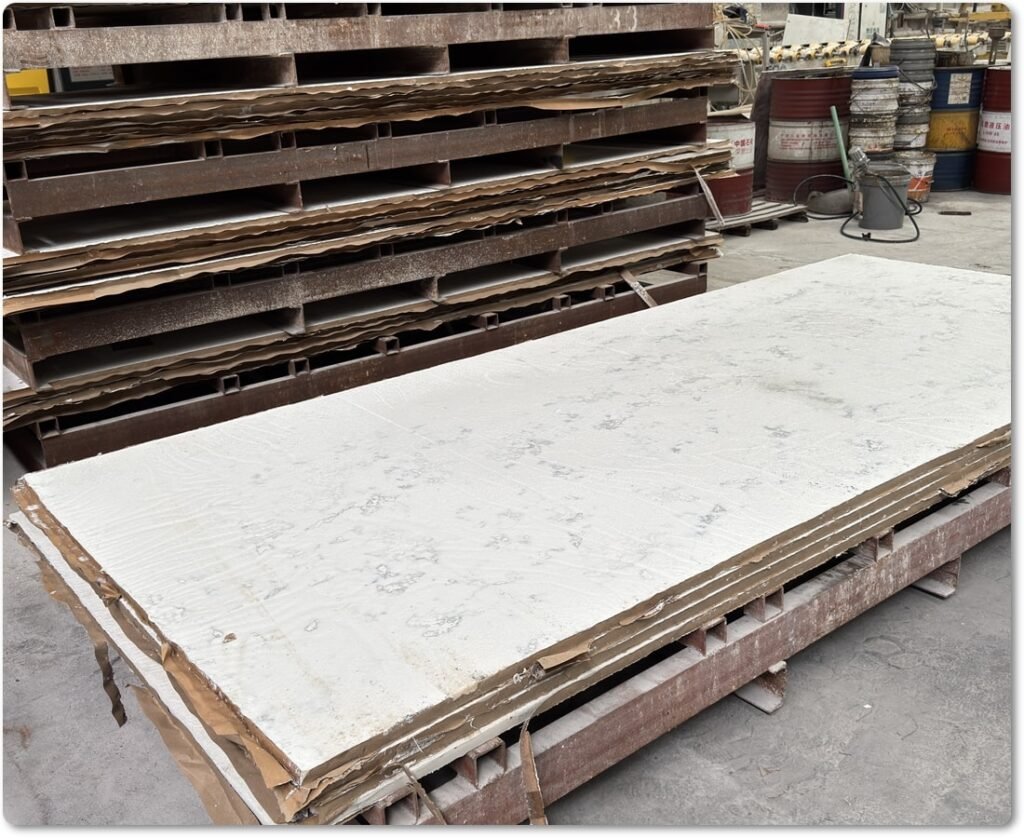
Export Logistics Management at EDG Stone Factory
A strong quartz export program at EDG Stone Factory should begin with slab inspection, code verification, packaging specification approval, and shipping instruction confirmation. After that, the export file should include the invoice, packing list, HS code, origin statement, container seal record, and photo set from loading. That workflow is straightforward, but it is exactly what keeps a quartz slab wholesale shipment moving through customs without friction.
For international buyers, the real value of a disciplined export factory is predictability. When packaging, documents, Incoterms, and customs classification are aligned, the shipment lands with fewer surprises, fewer claims, and a better landed cost story for the importer.
FAQ
What is the most common customs issue with quartz slab exports?
The most common problems are wrong tariff classification, missing origin data, and non-compliant wood packaging. Those issues can slow clearance even when the product itself is fine.
Do quartz slabs need fumigation?
The slabs do not, but the wood packaging may need ISPM 15 treatment and marking depending on the destination. For the U.S., APHIS requires compliant wood packaging material.
Which shipping term is safest for quartz slabs?
There is no single safest term for every deal. The best Incoterm is the one that matches who controls the freight, insurance, and risk transfer point. ICC’s Incoterms 2020 rules are the current standard for that decision.
How do I check import duty before quoting to the buyer?
Use the destination tariff database with the exact product code and origin. In the EU, Access2Markets is the official tool; in Canada and the U.S., use the applicable customs tariff schedule.
Conclusion
Quartz slab export success is built on compliance, not luck. The exporters who win repeat business are the ones who classify correctly, pack to ISPM 15 standards, choose Incoterms carefully, document every handoff, and check regional duties before the quote goes out. That is what turns quartz slabs wholesale from a fragile shipment into a reliable international supply chain.