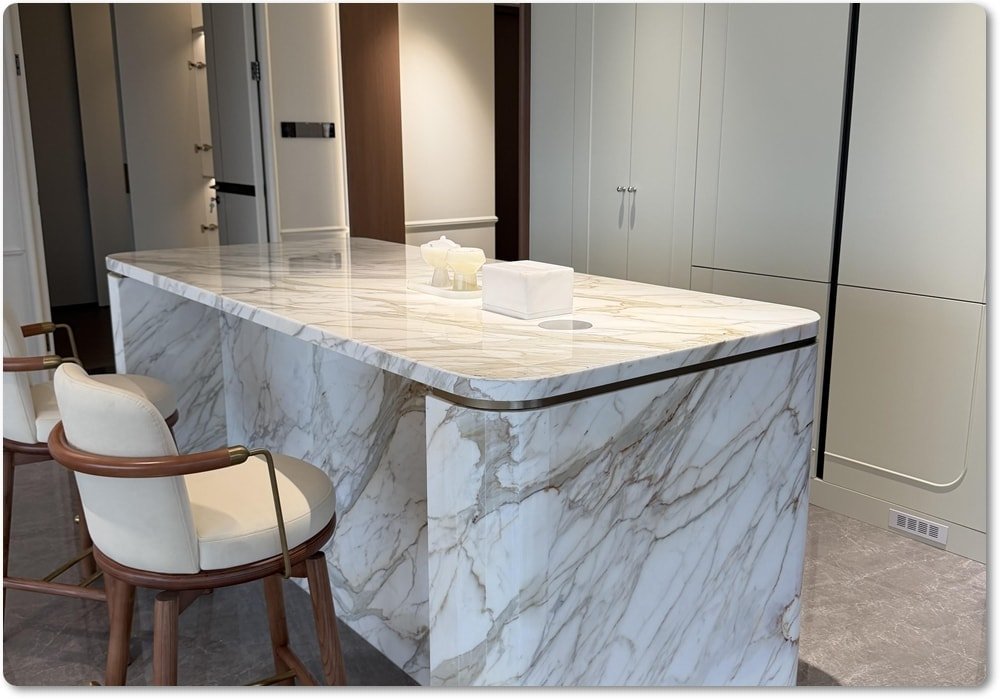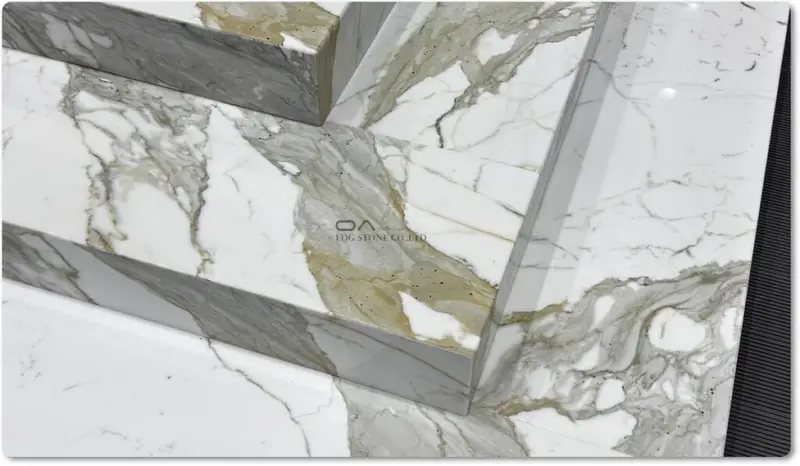
If you are sourcing quartz slabs wholesale for a fabrication business, distribution channel, or project supply chain, the real buying decision is not only about price per slab. It is about total landed cost, batch consistency, packaging reliability, lead time, container utilization, and the supplier’s ability to support repeat orders at scale.
In the B2B stone market, quartz slabs for sale may look similar across suppliers, but wholesale procurement performance can differ dramatically once the shipment leaves the factory. A low slab price can quickly become expensive when freight is inefficient, color batches are unstable, packaging is weak, or minimum order quantities are misaligned with your warehouse and sales cycle.
This whitepaper-style guide explains the core procurement framework buyers use to evaluate quartz slab wholesale offers. It covers pricing models, MOQ negotiation, container optimization, sample approval, consistency control, freight volatility, distributor margins, and OEM programs. It is designed for importers, wholesalers, kitchen countertop distributors, fabricators, and building material buyers who need a practical B2B sourcing reference.
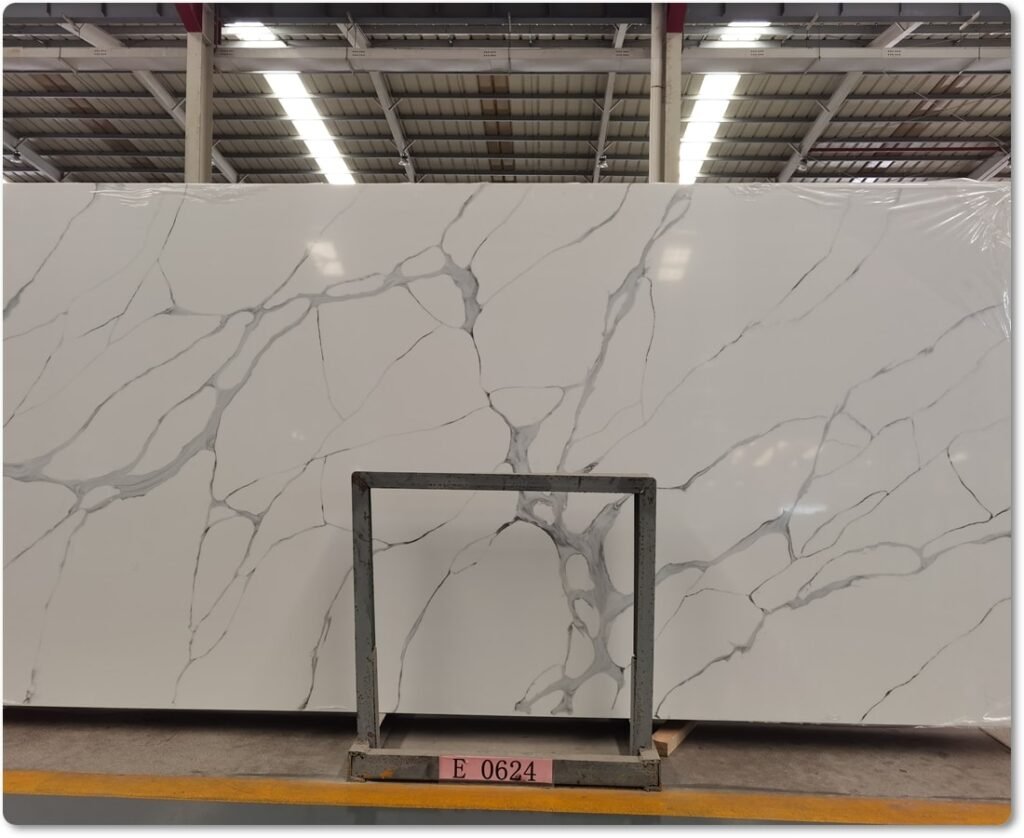
Global Quartz Wholesale Market Structure
The global quartz slab market is built around a multi-layered supply chain.
At the factory level, quartz slabs are manufactured from quartz aggregate, resins, pigments, and additives, then pressed, cured, polished, inspected, packed, and exported. Above the factory layer, buyers may work with exporters, regional distributors, trading companies, or direct manufacturers. Each structure creates different price points, service levels, and risk profiles.
For wholesale procurement, the market usually falls into four sourcing channels:
1. Direct factory sourcing
This is the most common model for serious wholesale buyers. You purchase directly from the manufacturer and control product specification, color range, thickness, finish, and packaging requirements.
Advantages
- Lower ex-factory pricing
- Better customization
- More control over OEM/private label programs
- Easier long-term supply planning
Challenges
- Requires clearer technical communication
- Often involves larger MOQs
- Quality validation must be managed carefully
2. Exporter or trading company sourcing
Trading companies may offer flexibility, mixed loading, and smaller order coordination.
Advantages
- Faster quotation process
- Smaller order support
- Easier access to multiple products in one shipment
Challenges
- Higher markup
- Less direct control over production
- Risk of inconsistent specification management
3. Regional distributor sourcing
Regional stockists can provide immediate availability, but inventory is often limited to popular colors and standard sizes.
Advantages
- Fast delivery
- Smaller purchasing commitments
- Useful for urgent replenishment
Challenges
- Higher unit pricing
- Limited customization
- More frequent batch variation across stock lots
4. Project-based OEM sourcing
This model is used when buyers want a custom color, branded packaging, or a project-specific standard.
Advantages
- Strong brand differentiation
- Better alignment with retailer or project requirements
- Supports private-label growth
Challenges
- Requires development time
- Needs strong sample approval and QA discipline
- Higher initial setup effort
For most B2B buyers, the long-term cost advantage usually comes from direct factory procurement combined with disciplined quality control and freight planning.
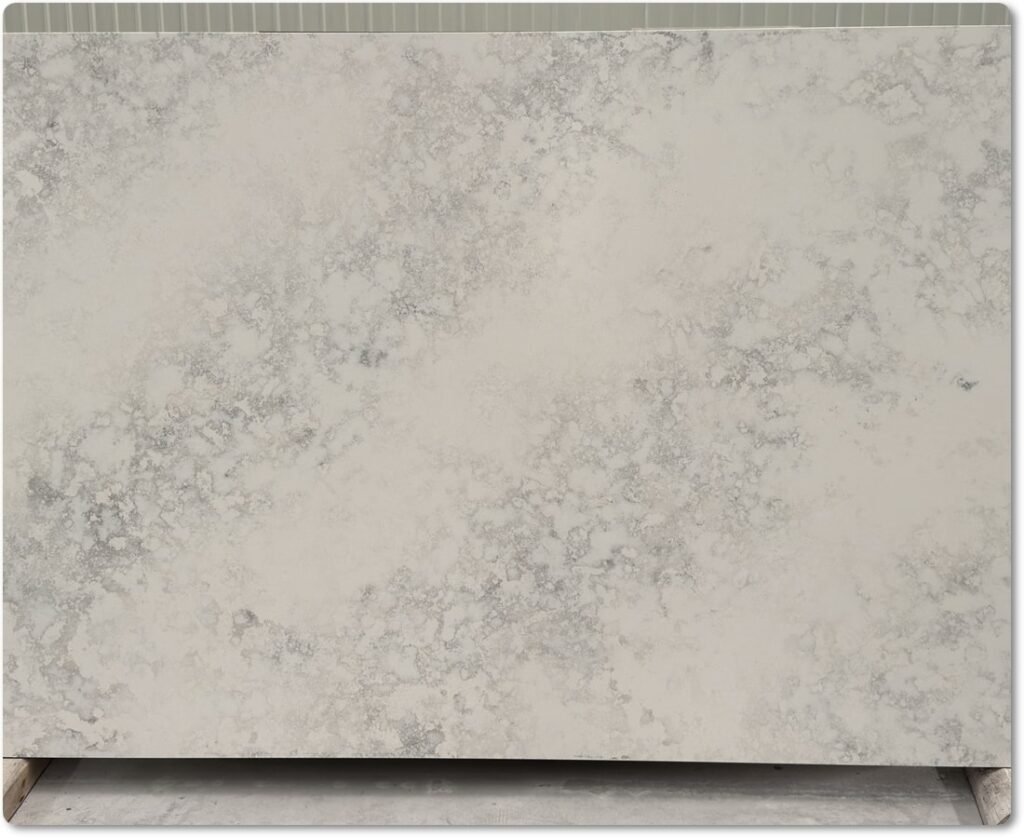
FOB vs CIF Pricing Models
Understanding pricing terms is one of the most important parts of quartz slab wholesale sourcing. The same slab can appear cheaper or more expensive depending on whether the quote is FOB or CIF.
FOB pricing
FOB means the supplier’s responsibility ends when the goods are loaded on board at the designated port.
FOB typically includes
- Product manufacturing cost
- Local export handling
- Inland transfer to the port
- Port documentation and loading
FOB does not include
- Ocean freight
- Marine insurance
- Destination port charges
- Customs clearance
- Local inland delivery
FOB is often preferred by experienced importers because it gives them more control over freight booking and total landed cost management.
CIF pricing
CIF includes cost, insurance, and freight to the destination port.
CIF typically includes
- Product cost
- Export handling
- Ocean freight
- Basic insurance
CIF does not include
- Destination customs fees
- Duties and taxes
- Inland trucking
- Warehouse handling
- Final delivery
CIF may look simpler for first-time buyers, but it can hide freight inefficiencies or reduce transparency in logistics planning. It is useful for comparison, but not always the best basis for long-term procurement optimization.
Which pricing model is better?
For professional wholesale buyers, FOB is often the better choice when:
- You already have freight partners
- You import regularly
- You want to compare suppliers on product cost only
- You need flexible routing and cost control
CIF can be useful when:
- You are testing a new supplier
- You need a simpler first shipment
- You do not yet have a shipping agent
The key point is to compare offers on a fully landed basis, not just slab price.
MOQ Negotiation Strategies
MOQ, or minimum order quantity, can make or break a quartz procurement plan. Because quartz slabs are produced in batches, factories often prefer full-container or near-full-container orders to improve cost efficiency and color consistency.
Why MOQ matters?
MOQ affects:
- Production scheduling
- Raw material batching
- Packaging allocation
- Freight efficiency
- Color consistency across lots
A supplier may quote a good unit price, but if the MOQ is too high for your sales velocity, your inventory cost rises, and your cash flow weakens.
Common MOQ negotiation approaches
Here are practical ways buyers can reduce MOQ pressure without losing pricing power:
1. Mix popular colors with test colors
Buyers can anchor the order with fast-moving colors while adding a limited quantity of new colors for market testing.
2. Combine slab thicknesses or finishes carefully
Some factories are more flexible when order volume is distributed across different products in one container. This should only be done if the supplier can keep QC standards stable.
3. Negotiate by container rather than by color
For many importers, a full container commitment is easier to negotiate than a per-color MOQ.
4. Use phased purchasing
Start with an initial trial shipment, then scale up once sales performance and quality consistency are proven.
5. Build a long-term forecast
Factories are more willing to reduce MOQ when they see a repeat-buy plan and predictable annual volume.
What to ask during MOQ negotiation?
Ask the supplier:
- What is the MOQ per color?
- Is MOQ based on slabs, square meters, or containers?
- Can colors be mixed in one shipment?
- Are sample orders deductible from future bulk orders?
- Is pricing more favorable for one container or multiple containers?
- Can spare slabs be produced for breakage replacement?
Strong MOQ negotiation is not about pushing the supplier to the lowest possible number. It is about balancing production efficiency, commercial viability, and inventory risk.
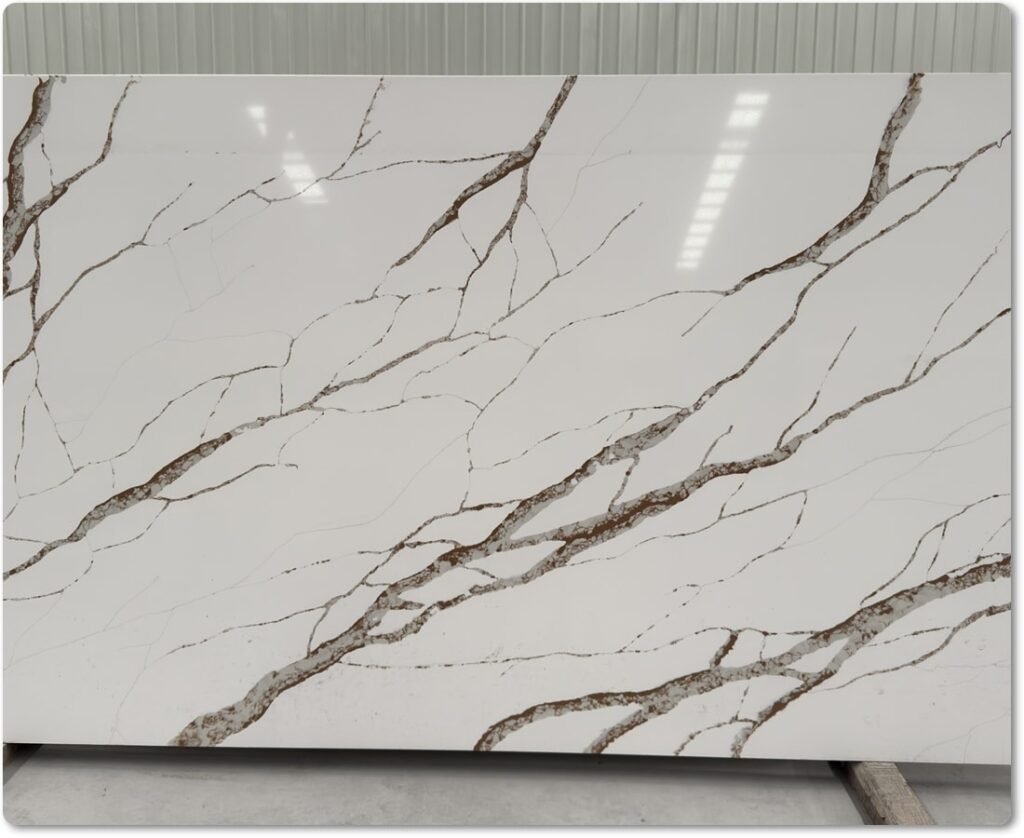
Container Loading Optimization
For quartz slabs wholesale, shipping cost is a major part of the total landed cost. Efficient container loading can reduce freight cost per slab, improve breakage protection, and increase margin.
Why container optimization matters?
Quartz slabs are heavy, fragile, and space-sensitive. If loading is inefficient, the buyer pays more freight for the same sellable area. If loading is too tight or poorly secured, the risk rises.
Typical container planning considerations
Container optimization depends on:
- Slab thickness
- Slab dimensions
- Slab quantity
- Packing style
- Wooden crate structure
- Destination port rules
- Weight limits
- Local unloading method
Key optimization goals
A high-quality container plan should:
- Maximize usable load space
- Stay within safe weight limits
- Minimize void space
- Protect slab edges and faces
- Reduce movement during transit
- Support efficient unloading at the destination
Best practices for load planning
1. Match slab format to container dimensions
Standard quartz slab sizes should be planned against the internal dimensions of the container, not just theoretical pallet counts.
2. Use reinforced packing
Proper export crates, corner protection, and stable vertical or A-frame loading methods help reduce damage.
3. Avoid dead space
Space increases freight cost per slab and can create movement that damages materials.
4. Confirm gross weight before booking
Quartz is dense. Always verify the total packed weight to avoid overloading or port issues.
5. Plan mixed-color loads carefully
Mixed colors are useful for wholesalers, but loading must be organized so that identification, inspection, and unloading remain simple.
For serious buyers, container optimization should be treated as part of product economics, not as an afterthought.
Sample Approval Systems
Before bulk production begins, sample approval is one of the most important checkpoints in the buying process.
Why sample approval matters?
Quartz colors can look different under factory lighting, showroom lighting, and natural light. Textures, reflective effects, and pattern movement also vary by finish and thickness.
A proper sample approval system reduces disputes and protects both buyer and supplier.
What should a good sample system include?
A professional sample approval process should define:
- Color reference
- Surface finish
- Thickness tolerance
- Edge appearance
- Gloss level
- Pattern movement
- Acceptable variation range
- Approval signature or written confirmation
Sample types to request
Buyers should ideally evaluate:
- Small hand sample
- Larger visual sample
- Production reference slab
- Photos under different lighting conditions
- Pre-shipment inspection photos
Sample approval best practice
Do not approve bulk production based on a single photo. Always confirm the sample under the lighting conditions and customer expectations that match the final market.
Color Batch Consistency
In quartz slab wholesale, color consistency is one of the biggest commercial risk factors. Even a beautiful design can become a problem if repeated batches do not match.
Why batch consistency matters?
In wholesale and project supply, buyers need:
- Repeatable inventory
- Stable showroom samples
- Matching lots for large installations
- Predictable customer expectations
If a second batch differs too much from the first, it can create installation complaints, returns, or unsellable stock.
Factors that affect batch consistency
Batch variation can come from:
- Raw quartz source differences
- Pigment variation
- Resin formulation changes
- Pressing and curing conditions
- Polishing differences
- Human inspection standards
How to manage color stability?
1. Lock a master sample
Every bulk order should reference a master sample that the supplier can reproduce against.
2. Ask for batch control
Request production by batch number and ask whether the supplier keeps batch records.
3. Order enough for continuity
For fast-selling colors, buy enough stock to cover demand until the next matching production cycle.
4. Confirm lot separation
Ensure the factory labels cartons, crates, or slabs by batch so mixed lots can be tracked.
5. Build a re-order protocol
Repeat orders should reference the original order number, approved sample, and any revised technical specifications.
Color consistency is not just a quality issue. It is a sales continuity issue.
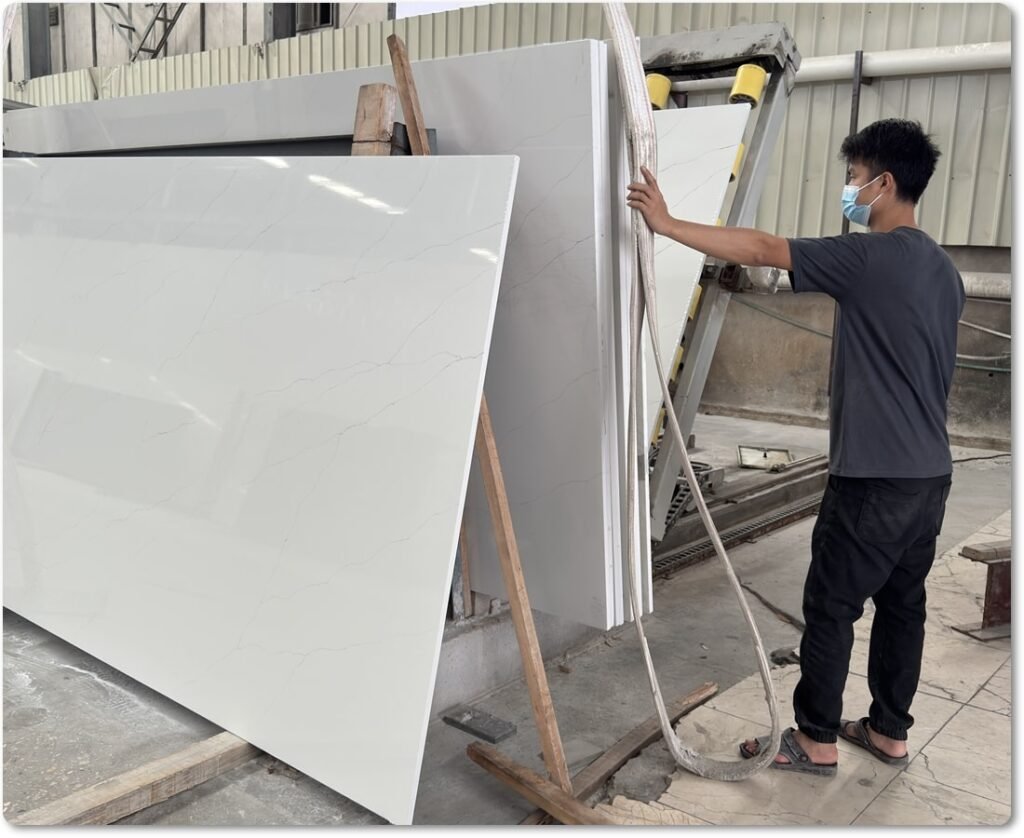
Packaging Standards
Quartz slabs are vulnerable to chips, corner damage, face scratches, and movement during transport. Packaging quality directly influences claims, replacement cost, and customer trust.
What should wholesale packaging achieve?
The packaging system should:
- Keep slabs immobile
- Protect corners and edges
- Prevent rubbing and abrasion
- Handle port and inland transfer shocks
- Allow safe warehouse unloading
Common packaging components
A reliable export packaging system may include:
- Strong wooden crates
- Internal cushioning materials
- Corner guards
- Face separation layers
- Moisture protection where needed
- Clear product labels
- Crate numbering for traceability
Packaging standards buyers should inspect
Before shipment, confirm:
- Crate strength
- Fastening method
- Internal support structure
- Moisture control
- Stacking compatibility
- Label clarity
- Load security
Why does packaging affect wholesale profit?
Damage is not only the cost of a broken slab. It also means:
- Delayed delivery
- Lower resale confidence
- Extra labor
- Claims management
- Possible loss of a retail customer
For this reason, packaging should be evaluated as part of the product specification, not as a separate logistics detail.
Freight Cost Volatility
Freight is one of the most volatile elements in quartz slab wholesale procurement.
Why does freight fluctuate?
Freight rates can change due to:
- Seasonal shipping demand
- Port congestion
- Fuel costs
- Carrier capacity
- Route availability
- Geopolitical disruption
- Equipment imbalance
How does freight volatility affect buying decisions?
A quartz slab quote that looks attractive at the factory may lose its advantage if ocean freight rises sharply. Buyers who ignore freight volatility often underprice their inventory or miscalculate landed cost.
Procurement strategies to manage freight risk
1. Quote freight separately from product
This helps buyers track both components clearly.
2. Compare landed cost by destination
Do not evaluate suppliers by slab price alone.
3. Use container consolidation when possible
Fuller container utilization can reduce per-unit shipping cost.
4. Build margin buffers
Wholesalers should protect their pricing against modest freight swings.
5. Time replenishment intelligently
When possible, align replenishment with shipping windows and inventory demand.
Freight strategy is part of the margin strategy.
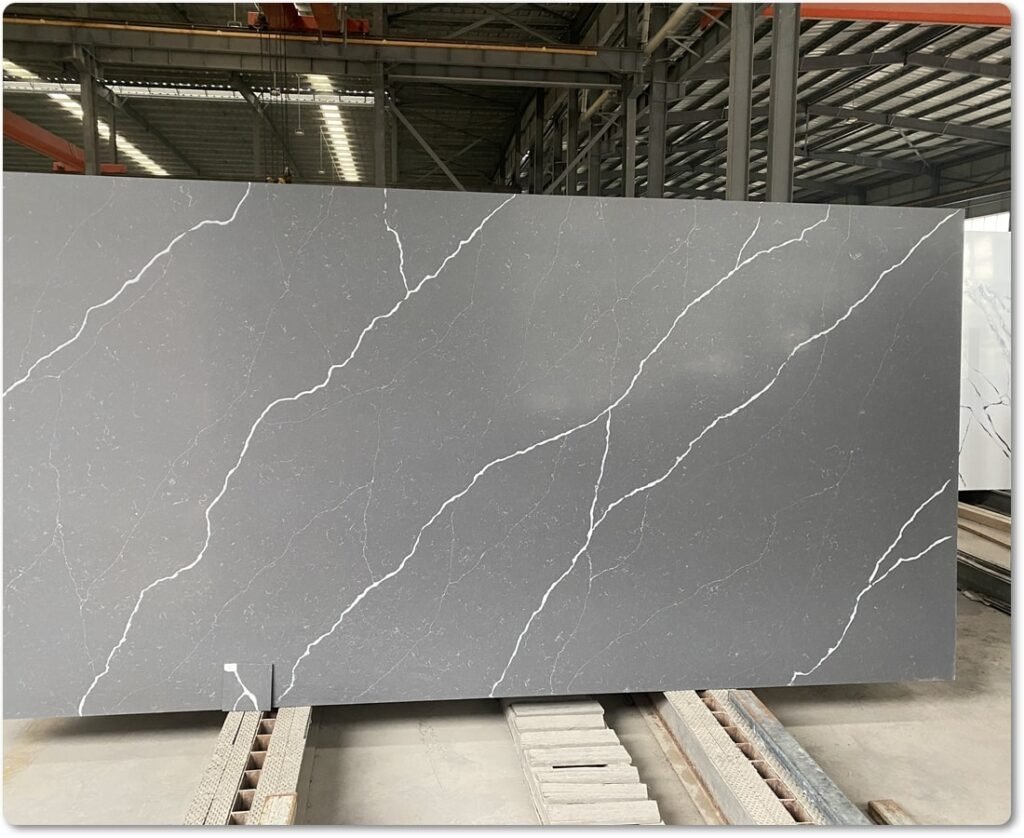
Distributor Margin Structures
A successful quartz wholesale business needs a pricing structure that supports the full channel, from importer to distributor to fabricator or retailer.
Typical channel layers
Common layers may include:
- Manufacturer
- Exporter
- Importer
- Regional warehouse
- Distributor
- Fabricator
- Retail or project buyer
Every layer adds handling, storage, service, and risk. The more layers involved, the more important it becomes to manage pricing discipline.
Margin planning considerations
A distributor must account for:
- Product landed cost
- Warehousing
- Local delivery
- Sales and support
- Breakage allowance
- Slow-moving inventory
- Credit terms
- Marketing and sample costs
How should wholesale buyers price quartz slabs?
The right pricing model depends on:
- Sales channel
- Local competition
- Inventory turnover
- Project volume
- Product exclusivity
- Service level
A distributor selling common colors may need tighter margins and stronger logistics efficiency. A distributor selling exclusive or premium quartz colors may support higher margins through brand positioning and better service.
The role of differentiation
To maintain healthy margins, buyers should not rely only on commodity pricing. Instead, they should differentiate through:
- Reliable inventory
- Color consistency
- Better packaging
- Faster delivery
- Custom slab programs
- Project support
- Private-label branding
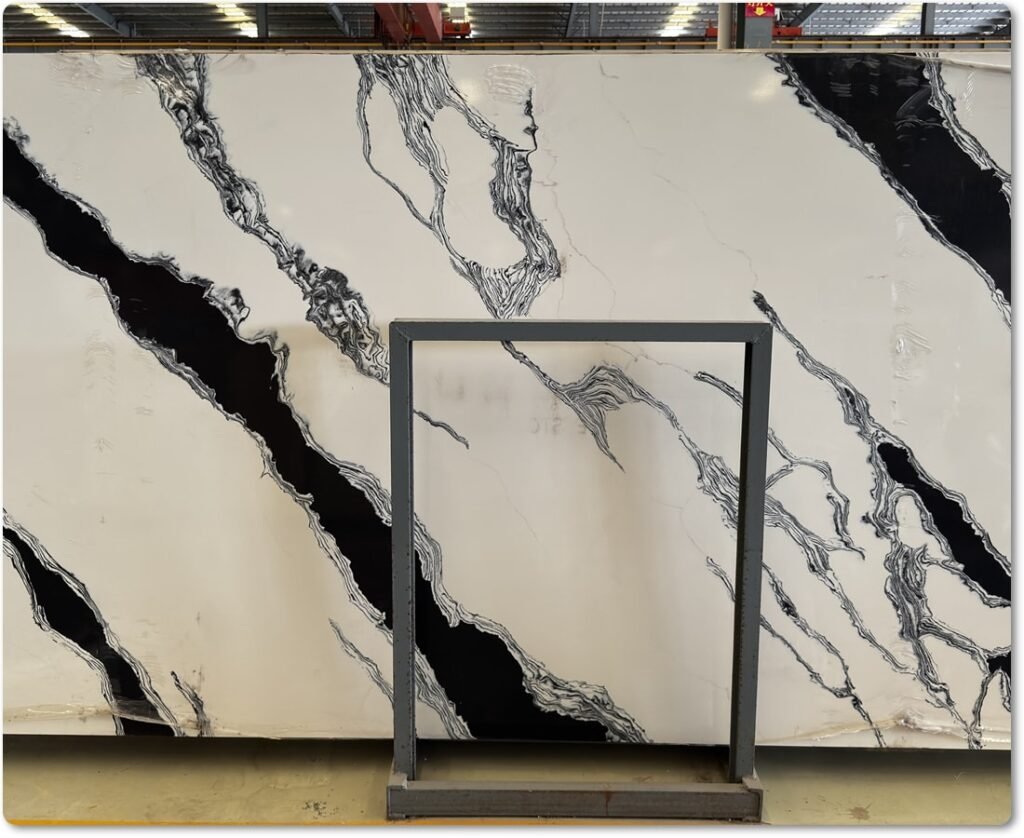
OEM & Wholesale Programs from EDG Stone Factory
For buyers looking for a direct manufacturing partner, EDG Stone Factory can be positioned as a strategic OEM and wholesale supplier for quartz slabs.
Why does OEM matter in quartz procurement?
OEM support helps wholesalers build market identity instead of competing only on price. It allows buyers to:
- Develop proprietary colors
- Control branding
- Standardize packaging
- Align product specs with market demand
- Build repeat business through consistency
What to look for in an OEM quartz supplier?
A strong OEM and wholesale partner should offer:
- Stable production capacity
- Flexible color development
- Consistent batch control
- Export packaging support
- Sample approval workflow
- Technical communication in B2B format
- Clear MOQ and lead time policies
Why is EDG Stone Factory relevant to wholesalers?
For procurement teams, a supplier like EDG Stone Factory becomes valuable when the goal is not just to buy slabs, but to build a scalable supply chain. The ideal partner should support:
- Wholesale sourcing
- Private label programs
- Container-based shipment planning
- Repeat color production
- Market-specific customization
- Long-term supply continuity
OEM positioning statement
For B2B buyers, the strongest wholesale suppliers are not only manufacturers. They are supply partners that help stabilize product quality, reduce procurement risk, and support profitable channel growth.
Procurement Checklist for Quartz Slabs Wholesale Buyers
Before placing an order, review this checklist:
Commercial
- Confirm slab price basis: FOB or CIF
- Confirm MOQ by color and thickness
- Confirm payment terms
- Confirm lead time
- Confirm re-order availability
Technical
- Confirm slab size
- Confirm thickness tolerance
- Confirm finish
- Confirm color reference
- Confirm acceptable variation range
Logistics
- Confirm packaging method
- Confirm container loading plan
- Confirm estimated gross weight
- Confirm label and crate identification
- Confirm destination port handling
Quality
- Approve master sample
- Request batch record control
- Ask for pre-shipment inspection photos
- Confirm breakage policy
- Confirm replacement procedure
Whitepaper Positioning for B2B Buyers
This guide is designed as a procurement whitepaper because wholesale quartz purchasing is a decision process, not a simple product search.
A professional buyer needs to evaluate:
- Unit price
- Freight structure
- MOQ flexibility
- Sample reliability
- Batch consistency
- Packaging protection
- Channel margin
- OEM scalability
The supplier that wins the order is not always the cheapest. It is the supplier that delivers the most stable total procurement outcome.
Conclusion
Buying quartz slabs wholesale requires more than comparing quotes. Successful B2B procurement depends on how well you manage pricing models, MOQ, freight exposure, sample approval, color consistency, packaging quality, and container efficiency.
For buyers sourcing quartz slabs for sale in competitive markets, the best strategy is to compare suppliers on total landed cost and repeatability, not just on ex-factory price. FOB and CIF terms must be understood clearly, MOQ must fit your demand structure, and container loading must be optimized to protect both cost and quality.
If your business needs a scalable, factory-direct sourcing model, an OEM-oriented partner such as EDG Stone Factory can support stable wholesale supply, repeat production, and private-label growth.
In a market where margins depend on logistics precision and product consistency, the smartest buyers are the ones who treat procurement as a system.
FAQ
What is the best pricing term for quartz slab wholesale?
FOB is often preferred by experienced importers because it gives better freight control and clearer landed-cost comparison.
How do I negotiate the MOQ for quartz slabs?
Use phased ordering, container-based commitments, mixed-color planning, and long-term volume forecasts to improve negotiation leverage.
Why is color consistency important in quartz wholesale?
Because repeat buyers, fabricators, and project customers need matching batches for installation continuity and inventory stability.
What should I check before approving a quartz sample?
Confirm color, finish, thickness, gloss, pattern movement, and acceptable variation under realistic lighting conditions.
How can I reduce freight cost per slab?
Maximize container utilization, reduce dead space, choose the right slab format, and compare landed cost rather than slab price alone.