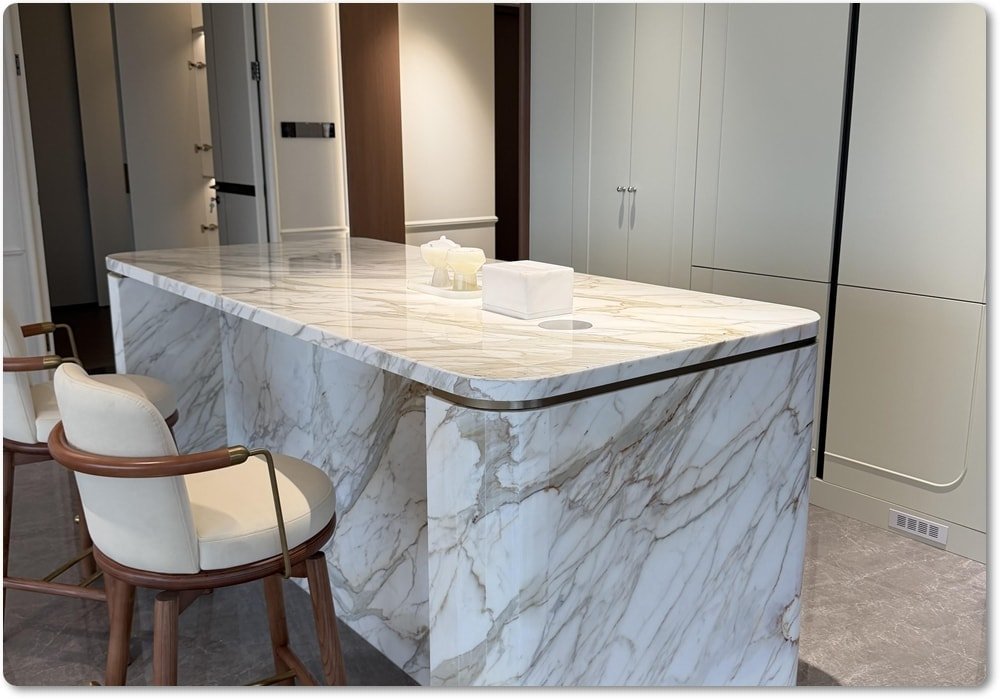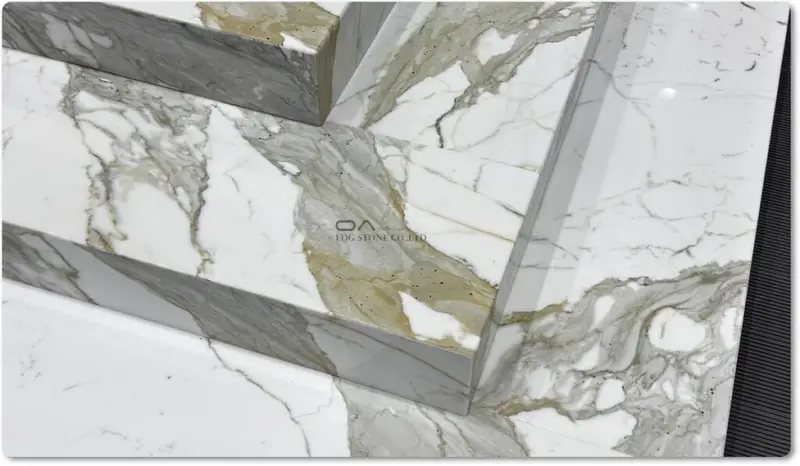
What is Taj Mahal quartzite, and why does sealing matter?
Material snapshot
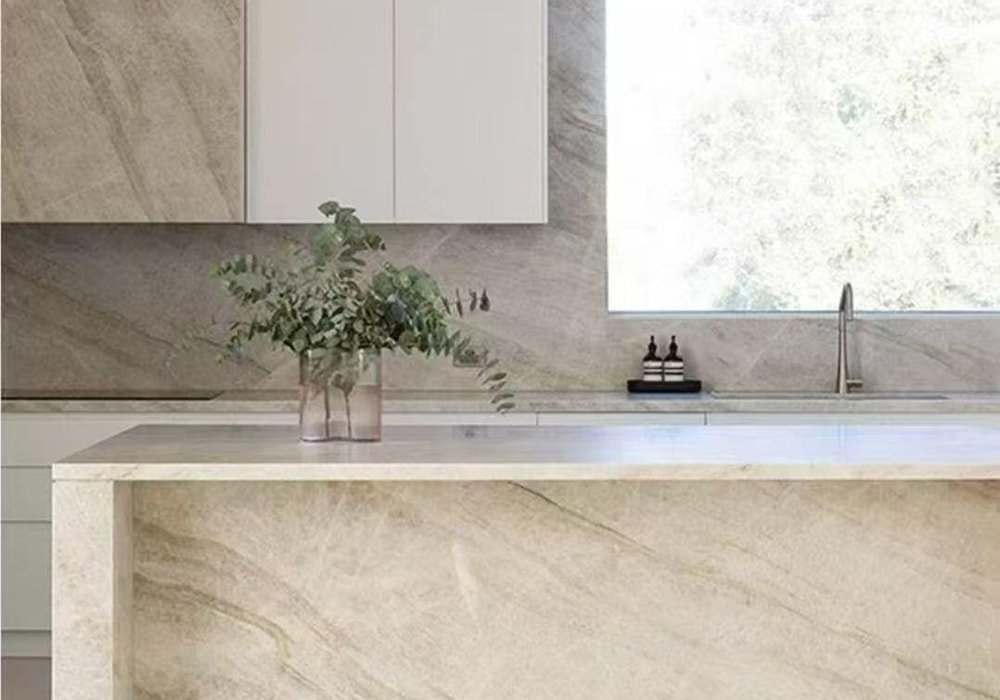
Taj Mahal quartzite is a natural metamorphic stone prized for its warm white to cream background and soft veining that resembles marble but with greater hardness and heat resistance. Like most natural quartzites, it is denser and harder than marble, but is not inherently non-porous—microscopic pores and micro-fractures can allow oils and colored liquids to penetrate if left unprotected.
Quartzite vs engineered quartz: a maintenance difference
Engineered quartz is manufactured and non-porous by design, so it typically does not require sealing. Natural quartzite, including Taj Mahal, retains natural porosity and therefore benefits from impregnating sealers to improve stain resistance while keeping the natural stone appearance.
(Fact note: engineered quartz products generally require no sealing while natural stones do; this is a key differentiation for buyers.)
Why does the Taj Mahal specifically benefit from sealing?
Because Taj Mahal’s light background and subtle veins can visibly show oil or tannin stains, professional sealing reduces the risk of persistent spots and simplifies routine maintenance—especially in kitchens, cafes, or bar-tops where oils, wine, and acidic foods are frequent.
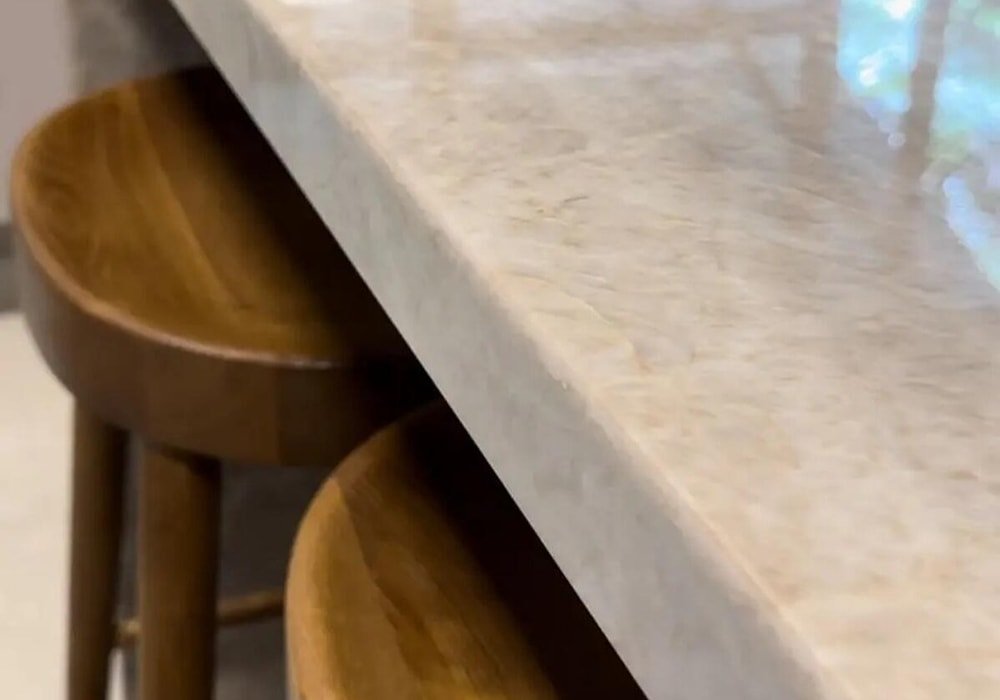
Types of sealers & how they work? (impregnating vs topical vs nano-coatings)
Penetrating / impregnating sealers (silane/siloxane/fluoropolymer classes)
Penetrating sealers are formulated to penetrate the stone’s micro-pores and chemically or physically block liquid ingress without creating a surface film. They include silane/siloxane chemistries and high-density impregnators (e.g., brand classes commonly used by pros). These products maintain the original finish (polished, honed, or leathered) and typically provide multi-year protection depending on porosity and use.
(Industry practice: professional suppliers often recommend impregnating sealers such as high-density ‘stain-proof’ impregnators for natural quartzite.)
Topical sealers and surface enhancers
Topical sealers create a surface film and can enhance color or produce a “wet” look. They can protect against surface abrasion and staining, but change the stone’s tactile feel and may require frequent reapplication. On textured leathered or honed stones, topicals can trap soil in texture grooves and will usually not be recommended as a first choice for heavy-use kitchen counters.
Nano-coatings and ceramic-style hydrophobic treatments
Nano treatments and “pro-ceramic” coatings (marketed under various trade names) claim enhanced hydrophobicity and long life. Recent product and installer reports show good short-term water beading and oil resistance, but long-term durability varies and often depends on the product class and correct professional application. Some pro installers combine an impregnating sealer with a nano topcoat for hybrid performance.
(Installer consensus: for durable, maintenance-friendly protection on Taj Mahal, start with a proven impregnating sealer and consider a nano topcoat only if specified in the product TDS/SDS and applied by a trained pro.)
Recommended sealer classes per finish
Polished Taj Mahal: high-density impregnating silane/siloxane for deep penetration and minimal sheen change.
Honed Taj Mahal: strong penetrating sealer; expect slightly more sealer consumption due to matte surface absorption.
Leathered Taj Mahal: impregnating sealer applied carefully (see leathered section below); avoid thick topical films that hide texture.
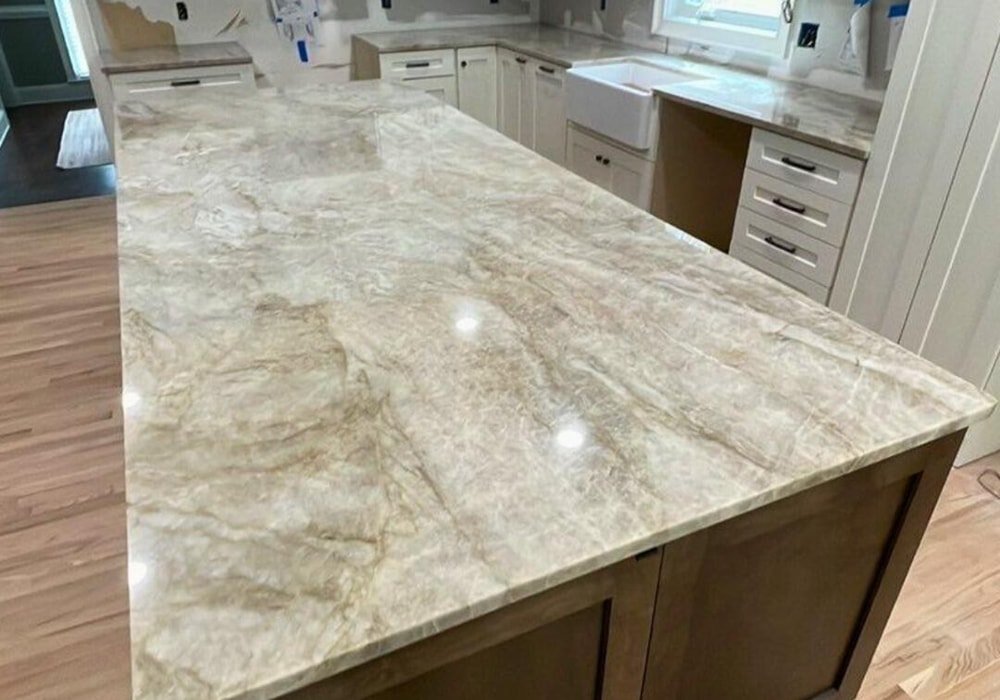
Professional sealing process: step-by-step (shop vs on-site)
Step 1 — Surface assessment & porosity testing
Always begin with a porosity test: place small drops of water or a diluted sealer test solution in multiple locations; measure absorption time and note any color change. Test the edges and seams too—these areas often have different absorption characteristics.
Step 2 — Cleaning and prep
Remove surface contaminants: grease, adhesive residues, and construction dust. Use pH-neutral stone cleaners and, when needed, alkaline degreasers designed for stone. For stubborn residues, professional restorers may use poultices or specialized cleaners; aggressive etchants are rarely needed for quartzite and can alter the finish.
Step 3 — Application method and environmental controls
Application methods include spray, roller, brush, or low-pressure airless sprayer, depending on the product’s TDS. Maintain recommended temperature/humidity windows and ensure adequate ventilation and PPE for applicators. For on-site work in occupied kitchens, plan for ventilation and temporary relocation of sensitive items.
Step 4 — Number of coats, dwell time, and curing
Follow the manufacturer’s recoat window precisely: many impregnators require an initial dwell period, then a second coat for maximum protection. Excess product should be wiped off before curing to avoid streaking or surface residue. Full cure times vary—24–72 hours are typical for many professional penetrants; final hydrophobic performance may continue to develop for several days.
On-site constraints & best practice checklist
Label work area and protect cabinets/floors.
Use NIOSH-approved respirators if ventilation is limited or when applying solvent-based products.
Record batch numbers, TDS, and SDS for each product used; provide these to the client with re-seal schedule advice.
How sealing improves “non-porous” performance: science & measurable metrics?
Water absorption, contact angle, and stain testing
Effective impregnating sealers reduce measurable water absorption (ASTM style tests) and increase water contact angle—practical result: liquids bead rather than soak in. In field stain tests (coffee, oil, red wine), well-applied impregnators often prevent deep staining for years; however, aggressive oily spills left for long periods can still penetrate over time without prompt cleanup.
Expected performance lifespans: claims vs field reality
Manufacturers may claim multi-year protection (3–10 years, depending on product), but real-world durability depends on finish, traffic, cleaning regimen, and spill exposure. High-use commercial bars or restaurant counters often need more frequent re-application than low-use residential islands.
Finish effects on penetration
Polished surfaces often show less immediate darkening but can have similar long-term absorption as honed/leathered surfaces—leathered finishes typically require slightly more frequent maintenance due to the texture increasing surface area and capillary action.
Cost considerations: how much to seal Taj Mahal quartzite? (DIY vs professional)
Typical price ranges
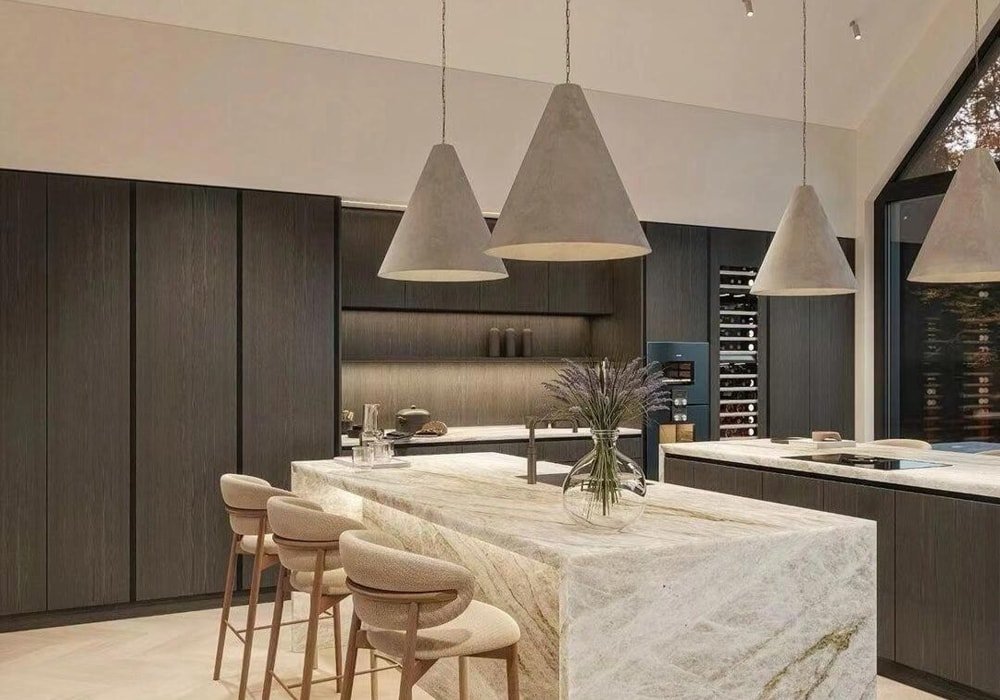
Professional sealing costs vary by region and by whether the work is shop-based or on-site. As a ballpark, professional impregnating seal and prep range from $3–$10 per square foot (material + labor) for residential runs; complex cleaning, poultice work, or heavy oil remediation commonly increases cost. Full kitchen services (including inspection, cleaning, sealer application, and post-test) often land in the low hundreds to a few thousand dollars, depending on size and condition. Market data on installed countertop costs places quartzite installations in higher tiers, so sealing is a relatively small incremental investment compared to replacement.
ROI: prevention vs repair
A small annual or multi-year sealing program is generally less costly than stain remediation, localized repairs, or slab replacement. For commercial clients, the cost of downtime and reputational impact from stained service surfaces strongly favors professional sealing and scheduled maintenance.
DIY vs pro
DIY sealers exist (consumer impregnators and spray products), but professional application ensures correct porosity testing, even coverage, and documentation (TDS/SDS), which supports warranty and resale value.
Maintenance schedule & testing: when to re-seal?
Simple at-home tests
Perform a water bead test every 6–12 months: place several drops of water in multiple spots; if water beads and remains for several minutes, the sealer is working. If the water is absorbed quickly or darkening occurs, schedule a re-seal.
Recommended schedule for use
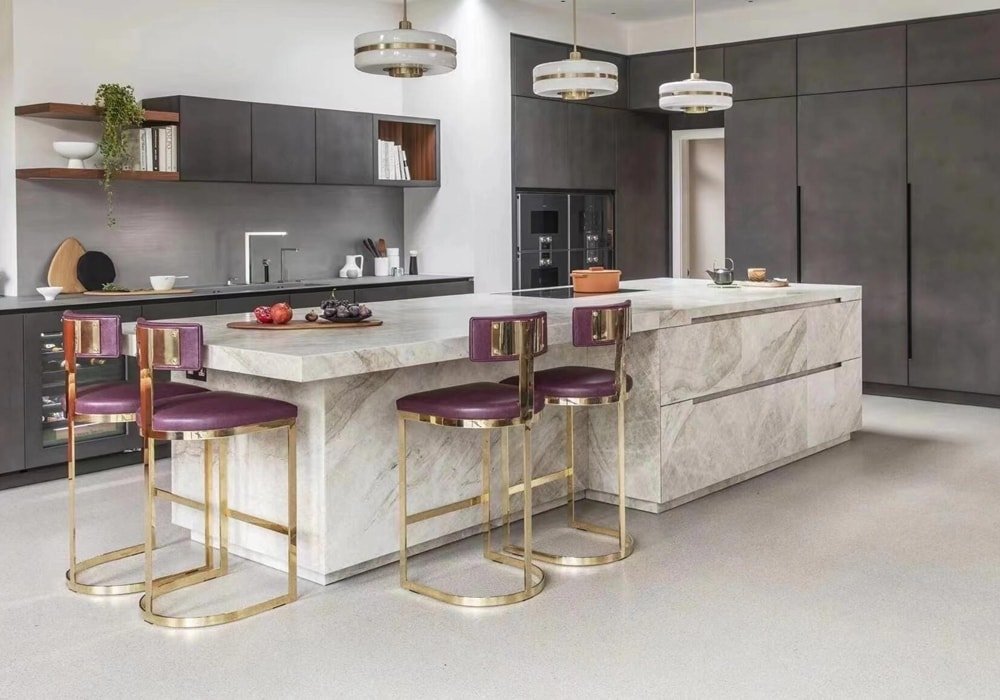
Low use / residential island: test annually; re-seal every 2–5 years as needed.
High-use / commercial / bar top: test quarterly; re-seal annually or per manufacturer guidance.
Leathered/honed: expect shorter intervals—consider annual inspection and scheduled reapplication based on use.
Record keeping & customer handover
Provide an installation tag that lists the sealer product, batch number, application date, and recommended re-seal interval. This documentation helps with warranty disputes, resale, and ensures consistent care.
Sealing leathered and honed Taj Mahal: special considerations
Texture & absorption
Leathered surfaces are intentionally textured to reduce sheen and hide fingerprints; that texture increases surface area and micro-topography, which can hold oils and require more careful cleaning before sealing.
Application technique
On leathered surfaces, apply impregnating sealers in thin layers and use soft brushes or low-pressure sprayers to ensure even penetration without filling texture pockets. Avoid topical films that reduce tactile quality or trap debris.
Visual effects and client expectations
Some impregnators can slightly deepen color; communicate expected visual change pre-application, and provide a small, inconspicuous test patch for client approval.
Comparative: Taj Mahal quartzite vs quartz (engineered) in sealing & marketing terms
Maintenance messaging
Engineered quartz is promoted as “non-porous, no-seal required.” Natural quartzite requires a sealing plan but offers unique, one-of-a-kind veining, better heat resistance, and the cachet of natural stone—tradeoffs buyers accept if given straightforward maintenance guidance.
Sales positioning
For B2B sellers and manufacturers, present the Taj Mahal as “premium natural beauty + recommended professional sealing” with clear FAQs, pricing for sealing services, and documentation to aid specifiers and end buyers.
(Market data and consumer guidance from design outlets note that quartzite’s beauty and performance often justify the slightly higher maintenance compared to engineered quartz.)
Safety, regulations & industry drivers affecting sealing & fabrication
Dust and silica controls during cutting and prep
Cutting and grinding quartzite create respirable crystalline silica dust; fabricators must use engineering controls (wet cutting, local exhaust, enclosed CNC) and follow applicable workplace standards to protect workers. OSHA’s silica construction standard and guidance define exposure limits and control measures for the industry.
Sealer application safety and VOCs
Some sealers are solvent-based and require good ventilation and PPE; always follow product SDS/TDS to comply with local VOC and worker protection rules. For occupied residences, choose low-VOC or water-based options when feasible and ensure adequate cure time before reoccupation.
Regional labeling (California Prop 65)
Where applicable, sellers shipping to California should be prepared to provide Prop 65 warnings for crystalline silica exposure in fabrication contexts; product sales pages and service documents should clearly delineate that finished counters are safe for typical use, yet that fabrication generates silica dust requiring controls.
Recommended product classes & buying guide (what to ask suppliers)
What to ask a sealer manufacturer or distributor?
Product type: impregnating vs topical vs nano.
TDS and SDS for the product.
Expected re-seal interval and recommended coverage (sq ft per liter).
Color change data and finish compatibility.
Recommended application method and required PPE/ventilation.
Example product classes pros choose
High-density impregnator (Stain-Proof class) — deep penetration, long life.
Professional silane/siloxane impregnators — balanced protection with minimal sheen change.
Nano topcoat (optional) — for enhanced repellency when combined with an impregnator.
(Common professional product names used in the trade include impregnators and nano products from established stone sealer manufacturers; check TDS for compatibility.)
Case studies & short examples
Residential kitchen (leathered Taj Mahal)
Problem: homeowner worried about olive oil and red wine staining a light leathered Taj Mahal island.
Solution: professional porosity test → deep clean → two coats of professional impregnating sealer (silane/siloxane) applied by sprayer → final hydrophobic test. Outcome: no visible staining after simulated coffee and oil tests, and the owner retained a natural leathered feel.
Small cafe bar
Problem: frequent coffee and fruit stains.
Solution: industrial-grade impregnator + scheduled quarterly inspections and rapid-response cleaning protocol. Outcome: stain incidents reduced and downtime minimized.
Conclusion & call to action for B2B readers
For fabricators, suppliers, and manufacturers: offer sealing as a productized service or add-on, publish clear TDS/SDS and re-seal guidelines, include documentation tags with installations, and promote sealing as a value proposition: a small recurring cost that protects slab value and reduces stain remediation calls. For buyers: professional sealing is a cost-effective way to keep Taj Mahal quartzite looking pristine and to preserve its resale value.
FAQ — Google-trending questions (5 items)
Q1 — How to seal Taj Mahal quartzite countertops?
A1 — Begin with a porosity test, then deep clean and degrease the surface. Apply a professional impregnating sealer per the product TDS (spray or roller), allow the specified dwell time, remove excess, and allow full cure; perform a post-seal water beading test to confirm coverage.
Q2 — What is the best sealer for Taj Mahal quartzite?
A2 — Pros typically recommend high-density impregnating sealers (silane/siloxane chemistries or dedicated dense impregnators) because they penetrate without creating a film and preserve the stone’s finish. For additional repellency, some installers pair an impregnator with a compatible nano topcoat—always follow the manufacturer’s compatibility guidance.
Q3 — Does sealing make quartzite non-porous?
A3 — Sealing does not chemically transform quartzite into a non-porous material, but a proper impregnating sealer greatly reduces effective porosity and limits liquid ingress, making the surface behave nearly non-porous for typical household spills when applied and maintained correctly.
Q4 — How much does it cost to seal a quartzite countertop?
A4 — Costs vary by region and surface condition; expect a professional impregnating sealer application (including prep and basic cleaning) to commonly range from roughly $3–$10 per square foot in many markets, with full kitchen services or remediation costing more depending on complexity and poultice work.
Q5 — How often should I re-seal Taj Mahal quartzite?
A5 — Test annually for residential use and consider re-sealing every 2–5 years for low-use counters. High-use or commercial surfaces may require inspection and re-sealing more frequently—typically annually.
Semantic closure: How / Why / What / Options / Considerations
Why: Taj Mahal quartzite has natural porosity; sealing reduces stain risk and preserves aesthetic value, a small investment relative to replacement or cosmetic remediation.
What: Use silane/siloxane or high-density impregnators for the best balance of penetration and finish retention; consider nano topcoats only when compatibility is confirmed.
Options: Standard professional impregnator (baseline), impregnator + nano topcoat (enhanced repellency), and scheduled maintenance contracts for commercial clients (risk mitigation).
Considerations: Follow OSHA silica controls during fabrication, use SDS/TDS for sealer choice and application, and keep VOC and worker protection rules in mind for on-site applications; include documentation and clear consumer guidance to improve buyer confidence.
References (author/title/outlet — no links)
U.S. Department of Labor — Occupational Safety and Health Administration (OSHA), “Respirable Crystalline Silica Standard for Construction (29 CFR 1926.1153)” (OSHA guidance and compliance materials).
California Office of Environmental Health Hazard Assessment (OEHHA), “Proposition 65: Crystalline Silica (Airborne Particles of Respirable Size) — Fact Sheet.”
Professional stone care suppliers & installer guidance — “Best Sealer for Quartzite / Impregnating Sealer Recommendations” (industry product overviews and installer reports).
Angi / industry cost guides — “Quartzite Countertop Cost and Installed Pricing” (market pricing context and installed cost ranges).
Better Homes & Gardens — “Quartzite Countertops Guide” (consumer guidance on care and sealing).
OSHA publications — “Small Entity Compliance Guide: Respirable Crystalline Silica” (practical compliance summary).
Trade and supplier technical bulletins — “Sealer TDS and SDS guidance” (industry best practices for selection and application).