Introduction
In the 2026 architectural and construction procurement landscape, Taj Mahal Quartzite is no longer valued simply for being “beautiful” or “luxurious.” Instead, it has evolved into a multi-dimensional material solution that integrates:
- Design language
- Project reliability
- Sustainability credentials
- Fabrication controllability
According to the United States Geological Survey in the latest Mineral Commodity Summaries 2026, U.S. dimension stone sales or usage reached approximately 2.3 million metric tons, with a total value of $460 million in 2025. This confirms that natural stone remains a scaled, industrialized, and continuously active market, rather than a niche material category.
The same report notes that dimension stone pricing is:
“variable, depending on type of product”
This reinforces a critical procurement reality: stone is not a fixed commodity—it is a specification-driven product system.
For Taj Mahal Quartzite, the most important shift in 2026 is not whether it qualifies as a “true quartzite,” but whether it can be:
- Verified
- Documented
- Delivered consistently at project scale
The Natural Stone Institute 2024 Dimension Stone Design Manual integrates horizontal installations, vertical installations, wet areas, countertops, tolerances, testing, and sustainability into a unified technical framework. This signals a major industry transition:
Procurement is evolving from selecting individual slabs to engineering complete material systems.
This white paper places Taj Mahal Quartzite within that system-level context and addresses three key questions:
- Why is it still relevant in 2026?
- Which trends strengthen its position?
- How should procurement teams structure supply chains, specifications, documentation, and risk control over the next three years?
1. Market Context in 2026: Natural Stone as a System Material
The United States Geological Survey defines dimension stone as:
Natural rock material quarried and processed to meet specifications for size, shape, color, texture, pattern, surface finish, durability, strength, and polishability.
This definition is critical.
It means procurement is not about seeing a slab—it is about acquiring a fully defined and spec-compliant product system.
USGS data also confirms that dimension stone remains:
- Industrialized
- Globally traded
- Supply-chain driven
Implication for Taj Mahal Quartzite
Its competitiveness does not rely on a single performance attribute, but on balanced multi-dimensional value:
- Natural visual depth
- Quartz-based durability
- Broad architectural compatibility
The Natural Stone Institute further reinforces this by integrating:
- Quartz-based stone classification
- Vertical and horizontal applications
- Wet area performance
- Maintenance and sustainability
👉 Procurement Insight:
Future winning materials are not the cheapest—but the ones accepted by:
- Designers
- General contractors
- Owners
- Facility operators
Taj Mahal Quartzite performs strongly across all four.
2. 2026 Material Trend: From Dramatic to Controlled Luxury
Over the past decade, high-end stone design has shifted:
| Past Trend | 2026 Trend |
|---|---|
| High contrast | Soft tonal transitions |
| Dramatic veining | Subtle, continuous textures |
| Visual impact | Long-term usability |
| Aesthetic-first | Delivery-first |
This shift aligns directly with the system-based structure introduced by the Natural Stone Institute.
Why Taj Mahal Quartzite Fits This Trend?
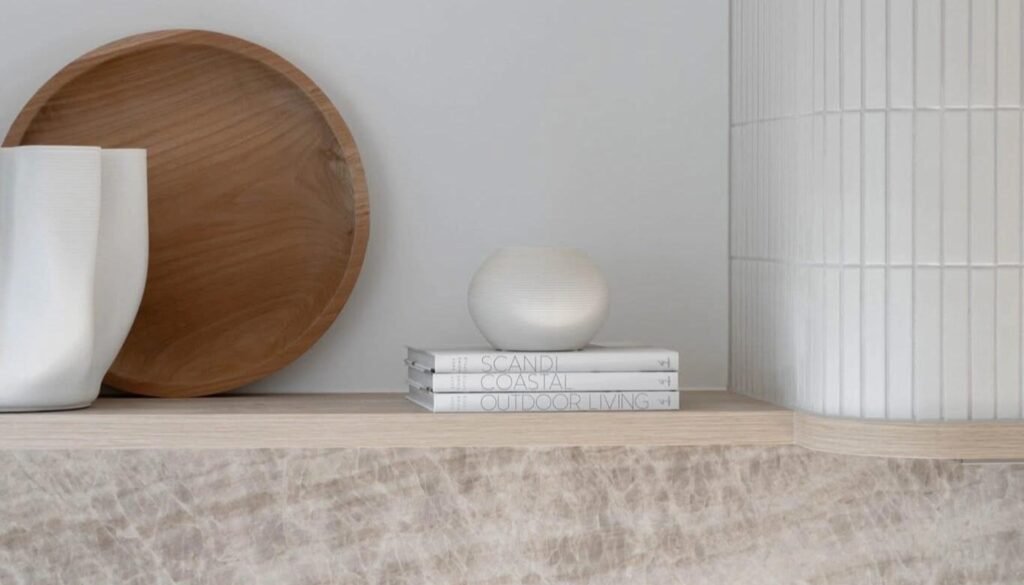
- Light, neutral tones
- Fine, consistent veining
- Natural, non-aggressive visual identity
- Strong adaptability across spaces
NSI discussions around quartzite highlight:
- Confusion in classification
- Variability in performance
- Differences between marble and granite
👉 This confirms that quartzite is no longer a “simple decorative stone”—
It is a technical procurement material requiring explanation and validation.
Strategic Procurement Inference
As luxury projects increasingly prioritize:
- “Soft luxury” aesthetics
- Lifecycle cost control
- Material consistency
Taj Mahal Quartzite will continue to dominate:
- Luxury residential
- Hospitality
- High-end retail
- Branded commercial interiors
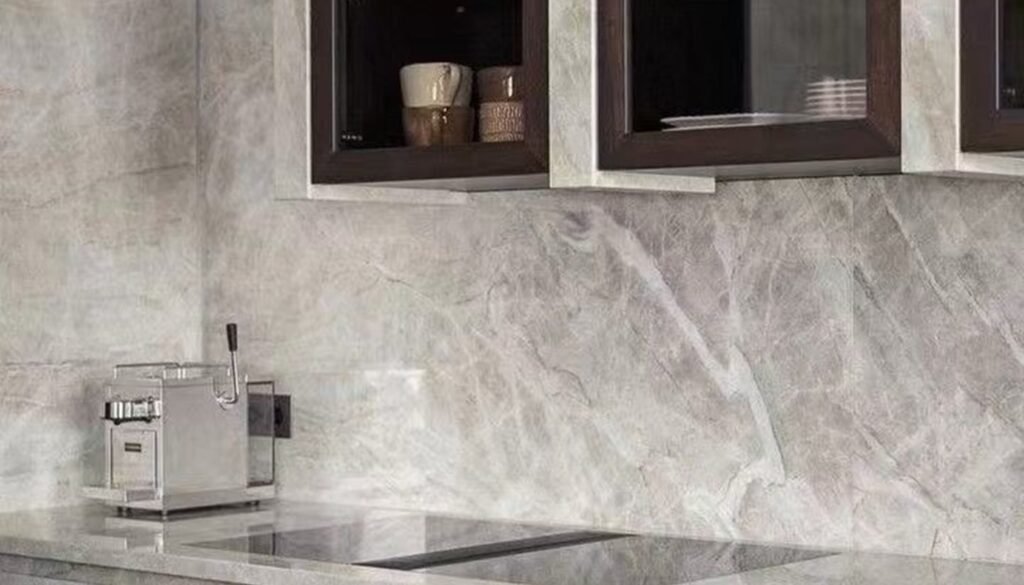
3. Procurement Keyword #1: Transparency
Transparency is becoming a baseline requirement in stone procurement.
The Natural Stone Institute has introduced industry-wide:
- Environmental Product Declarations (EPDs)
- Health Product Declarations (HPDs)
These are:
- Independently verified
- Lifecycle-based documents
- Covering quarry → fabrication → installation → maintenance → disposal
Why This Matters?
Sustainability is no longer marketing—it is:
- Auditable
- Specifiable
- Required in tenders
NSI also references:
- ANSI/NSI 373 sustainability standard
- Embodied carbon frameworks
- LEED integration
Procurement Action
Buyers should now request:
- EPD / HPD documentation
- Quarry origin disclosure
- Processing transparency
- Performance test reports
👉 This is the safest forward-looking procurement strategy.
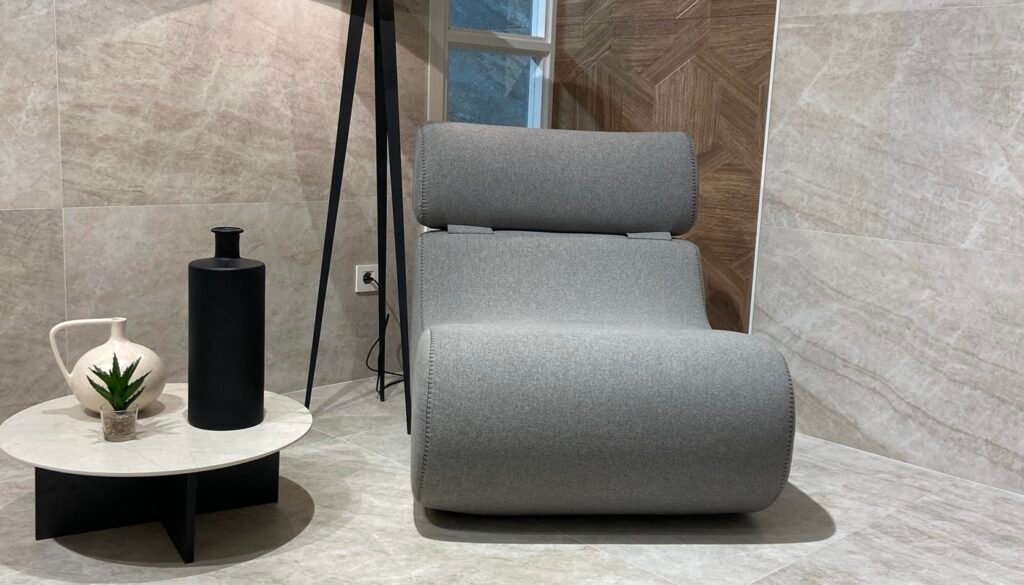
4. Procurement Keyword #2: Standardization
The Natural Stone Institute design manual systematizes:
- Installation methods
- Testing standards
- Tolerances
- Maintenance procedures
What does this mean in Practice?
Procurement competition is shifting from:
Price competition → Documentation capability competition
Bad RFQ Example
“Please quote Taj Mahal Quartzite price.”
Professional RFQ Structure
- Origin (Brazil / specific quarry region)
- Batch/lot number
- Surface finish
- Thickness
- Slab availability
- Bookmatching requirements
- Fabrication scope
- Sustainability documentation
- Testing requirements
👉 Result:
- Fewer disputes
- Better comparability
- Higher project success rate
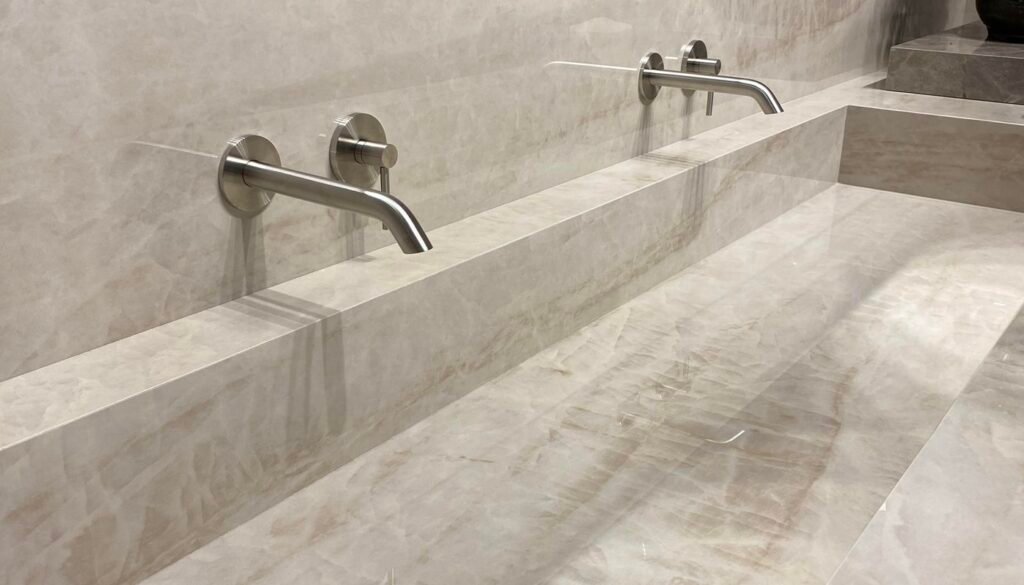
5. Procurement Keyword #3: Scenario-Based Specification
The Natural Stone Institute separates applications into:
- Countertops
- Vertical surfaces
- Wet areas
- Flooring/paving
- Cladding
Each has different risk models.
Application-Specific Requirements
Kitchen & Vanity
- Precision fabrication
- Seam control
- Cutouts
Wall & Cladding
- Batch consistency
- Vein direction
- Installation system
Commercial Spaces
- High durability
- Maintenance planning
- Brand consistency
Wet Areas
- Waterproofing integration
- Surface treatment
- Joint detailing
👉 Key Shift:
Procurement is moving from material-based → scenario-based systems
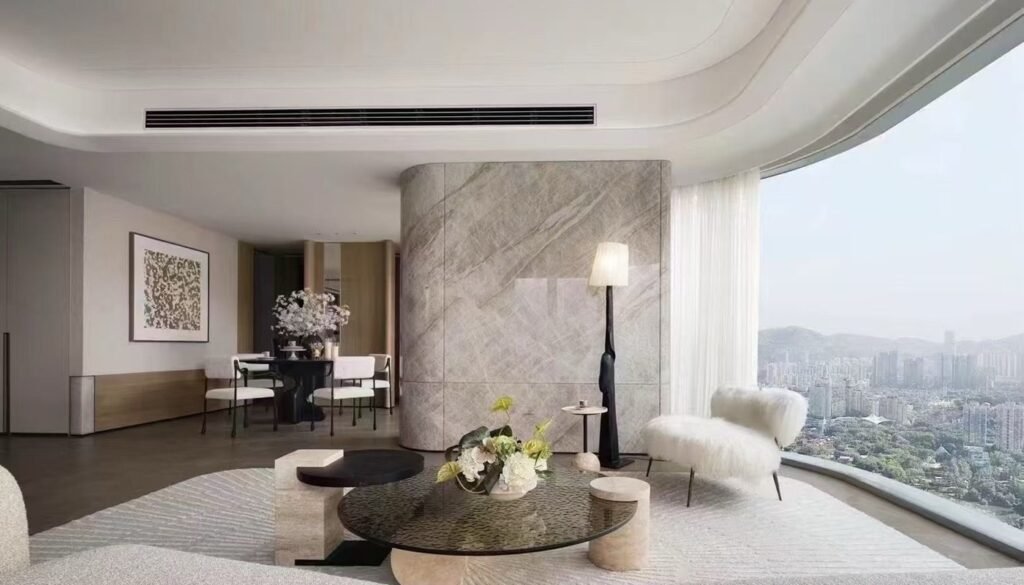
6. Procurement Keyword #4: Maintainability (Not “Zero Maintenance”)
The Natural Stone Institute recommends:
- Neutral cleaners
- Stone-safe products
- Routine care
Market Reality
Taj Mahal Quartzite should NOT be marketed as:
❌ “Maintenance-free”
Instead, position it as:
✅ Maintenance-friendly
✅ Long-term manageable
✅ More stable than marble
Why This Matters?
For:
- Hotels
- Retail
- Luxury developments
The key question is:
“Will it still look good after 5–10 years?”
Procurement Best Practice
Include in contracts:
- Maintenance guidelines
- Sealing schedule
- Cleaning recommendations
- Acceptance criteria
7. 3-Year Procurement Strategy: From Sourcing to Systems
The future of Taj Mahal Quartzite procurement is system-based capability.
Four Core Pillars
- Stable, traceable supply
- Standardized documentation
- Scenario-based fabrication logic
- Lifecycle + sustainability integration
Strategic Positioning
Taj Mahal Quartzite will not be used everywhere—but it will remain:
A top-tier candidate for projects requiring
soft luxury + natural aesthetics + long-term stability
Conclusion
By 2026, Taj Mahal Quartzite’s value will no longer be defined by appearance alone.
It is defined by:
- Verifiability
- Design integration
- Maintainability
- Scalable delivery
Supported by frameworks from the United States Geological Survey and Natural Stone Institute, the direction of the industry is clear:
The future of stone procurement lies in
systems, not slabs.
And Taj Mahal Quartzite sits precisely at the intersection of:
- Aesthetics
- Performance
- Deliverability
FAQ
1. Why is Taj Mahal Quartzite still relevant in 2026?
Because it aligns with market demand for materials that combine aesthetics, performance, and lifecycle documentation.
2. What is the biggest procurement trend?
Transparency and standardization, including EPDs, HPDs, and testing requirements.
3. Will it remain a premium material?
Yes, particularly in luxury residential, hospitality, and high-end commercial applications.
4. What should buyers request?
Batch traceability, slab photos, fabrication details, and sustainability documentation.
5. Is sustainability just marketing?
No—it is now a documented lifecycle requirement integrated into procurement systems.
References
- United States Geological Survey — Mineral Commodity Summaries 2026
- United States Geological Survey — Dimension Stone Statistics
- Natural Stone Institute — Dimension Stone Design Manual 2024
- Natural Stone Institute — Sustainability Resources
- Natural Stone Institute — EPD & HPD Documentation