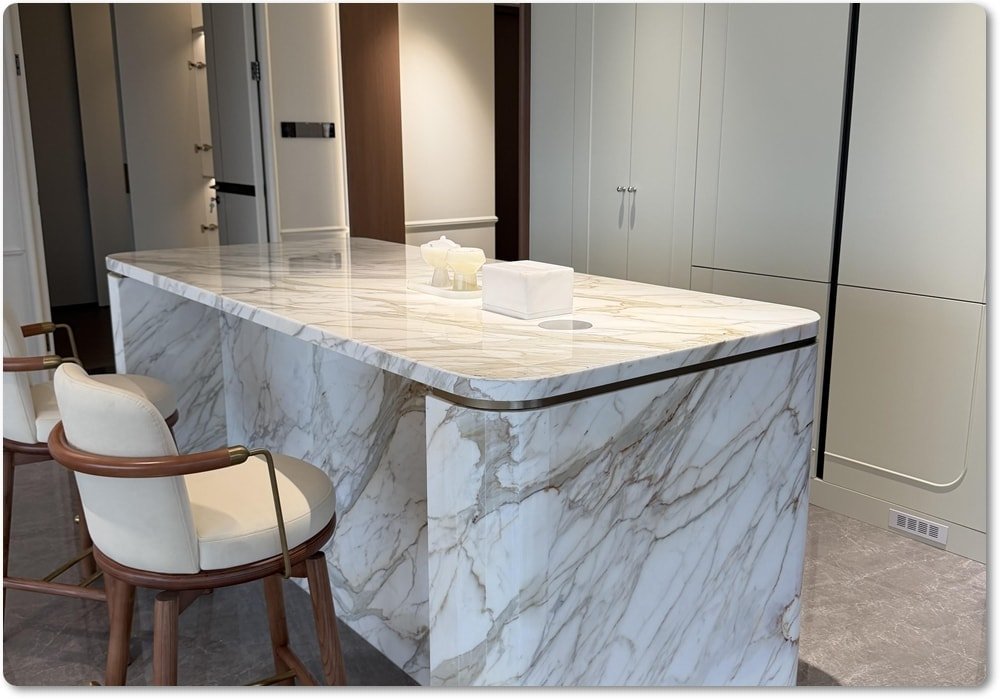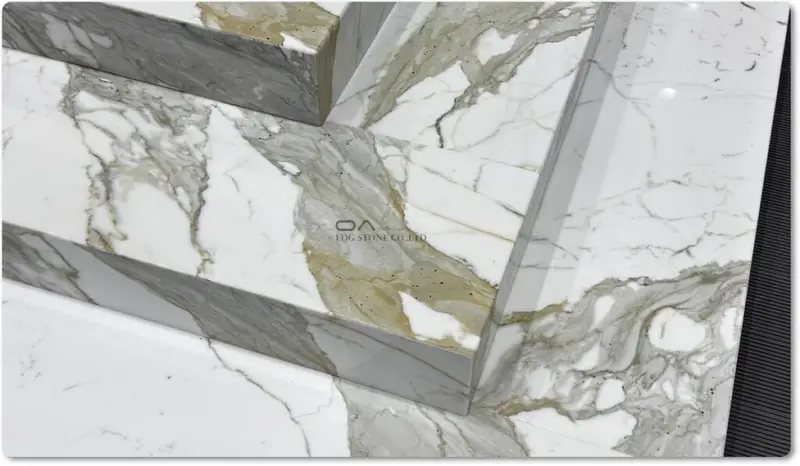
Introduction
Vertical stone applications may look simple on the surface, but they are among the most specification-sensitive parts of a project. Unlike countertops, vertical surfaces must be coordinated with substrate, anchorage, movement, tolerances, and finish selection before a single slab is cut. The Natural Stone Institute’s 2024 Dimension Stone Design Manual specifically adds dedicated chapters on Horizontal Installations and Vertical Installations, which is a strong signal that wall cladding and feature walls are not “just another use” of stone; they are their own design category.
Taj Mahal Quartzite works especially well in this category because quartzite is a quartz-based natural stone, and the industry describes quartzite as hard, tough, and resistant to chemical weathering. USGS also notes quartzite use in building applications that include interior and exterior stone work, while Natural Stone Institute materials show quartz-based stones as a defined group with established design and care expectations. For procurement teams, that means Taj Mahal Quartzite is a credible candidate for walls, lobbies, feature panels, fireplace surrounds, and decorative cladding where visual warmth and durability both matter.
This guide explains where Taj Mahal Quartzite performs well on vertical surfaces, how to specify it correctly, and what to watch for in anchorage, substrate, and finishing. The focus is on practical procurement decisions rather than decorative theory.
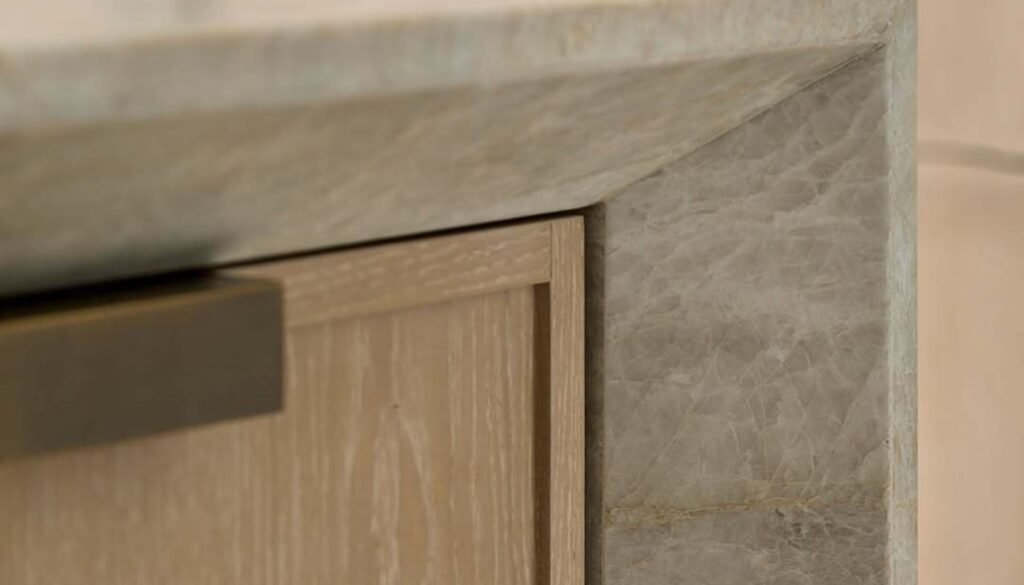
1. Why is vertical stone a different procurement problem?
Vertical applications are not governed by gravity in the same way as countertops, but they are governed by a different set of risks: anchorage failure, substrate movement, water intrusion, pattern discontinuity, and visible alignment errors. Natural Stone Institute’s anchorage bulletin explicitly states that mechanically anchoring dimension stone is about how stone panels interface with the building structure, and that the document is intended to provide tradespeople with insight into anchorage devices and their interaction with the wall system. That framing makes one thing clear: wall cladding is a system, not a slab.
A wall panel can look perfect in the yard and still fail visually or structurally if the wall backup, anchor layout, tolerances, or moisture management are wrong. The stone industry’s guidance on vertical surfaces and adhered veneers also emphasizes that thin stone veneer is a wall covering supported by the wall it faces, with the backup structure doing the work of resisting load. For procurement, that means you are not only buying stone; you are buying a compatible wall assembly.
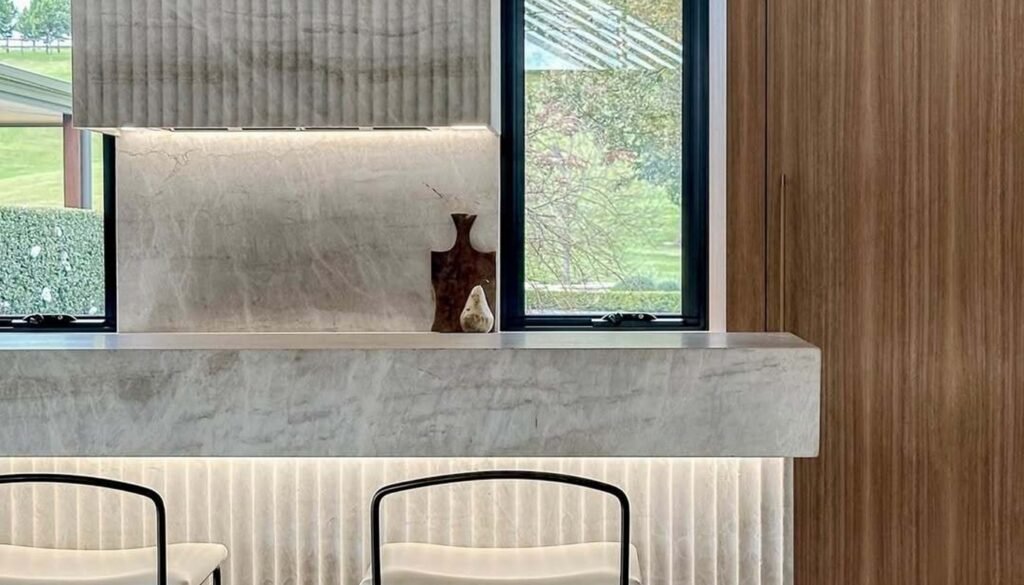
2. Why is Taj Mahal Quartzite attractive for walls and cladding?
Taj Mahal Quartzite is widely valued in high-end interiors because it delivers a soft, warm, marble-like visual without the same level of fragility associated with calcareous stones. Natural Stone Institute’s quartzite material guidance places quartzite in the quartz-based category, and its own quartzite bulletin highlights the confusion around quartzite because buyers often compare etching behavior and hardness to marble and granite. That confusion is itself evidence that quartzite sits in a useful middle ground: visually refined, but materially more durable than marble in many applications.
For vertical applications, that balance is especially valuable. Walls do not need the same abrasion resistance as floors, so buyers can prioritize appearance more aggressively. Taj Mahal Quartzite is therefore well suited for bookmatched feature walls, lobby backgrounds, fireplace cladding, and bathroom statement walls where the goal is to create a soft luxury effect rather than a bold speckled stone look. This is a procurement inference based on the material’s classification and the industry’s recognition of quartzite as a durable architectural stone.
3. Where does Taj Mahal Quartzite perform best on vertical surfaces?
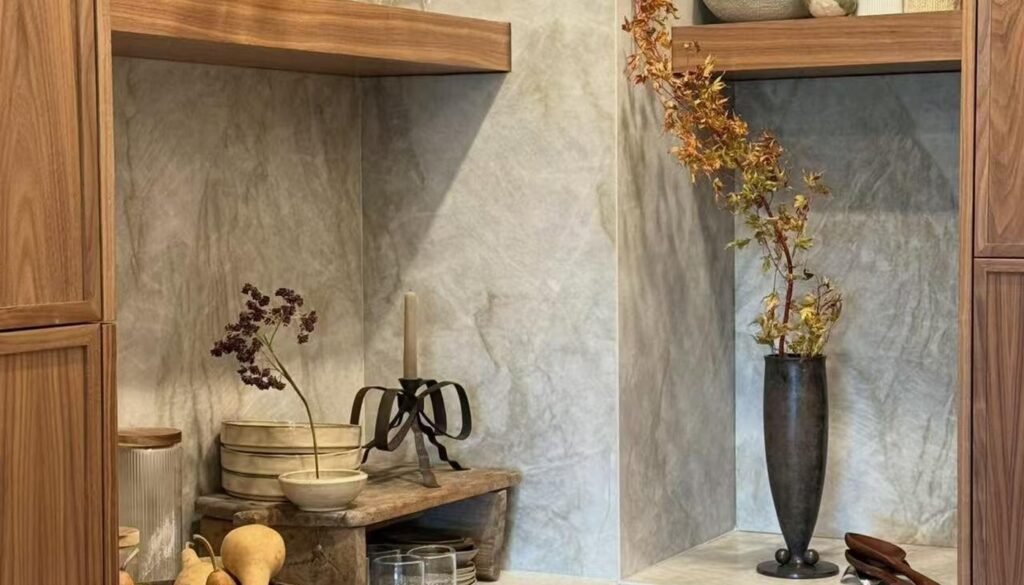
The most successful vertical applications are the ones where the stone is allowed to act as a focal surface rather than a structural element. That includes hotel lobbies, reception walls, residential feature walls, fireplace surrounds, corridor accents, and luxury retail backgrounds. Natural stone has long been used as a versatile wall covering, and the stone industry has documented its use for backsplashes, fountain walls, fireplace surrounds, foundations, retaining walls, and full house exteriors in thin-veneer form.
For Taj Mahal Quartzite specifically, the strongest commercial use cases are the ones that benefit from a calm, premium palette. Its light base tone and subtle veining make it a good match for spaces that need to feel expansive and refined. In hotels and luxury residences, that means it can work as a continuous visual field behind a reception desk, in a double-height lobby wall, or behind a fireplace where the stone must support the overall design language without overpowering it. This is an inference from the stone’s known visual character and the industry’s vertical-surface guidance.
4. Feature walls and bookmatched installations
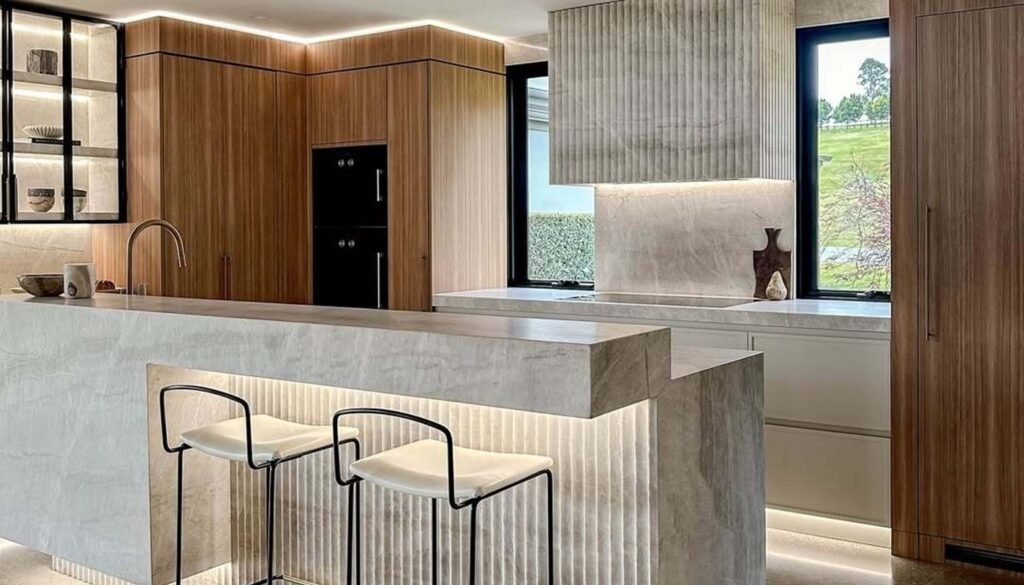
Bookmatching is one of the most compelling ways to use Taj Mahal Quartzite vertically because the material often has soft, flowing veining that benefits from symmetry. In practice, bookmatching works best when slabs are selected from the same batch, dry-laid before fabrication, and approved with a full layout drawing. The Natural Stone Institute’s Design Manual emphasizes samples, workmanship, and vertical installations as part of the core design and construction process, which is exactly why layout approval matters so much in high-visibility walls.
For procurement, the key point is that bookmatch success depends more on batch control and slab selection than on cutting alone. Two slabs from different batches may be similar in color but still fail to mirror cleanly because the veining rhythm and background tone are not aligned. That is why vertical stone projects should lock batch before fabrication and never treat decorative patterning as something that can be “fixed on site.” This is a practical inference from the industry’s repeated emphasis on tolerances, mockups, and proper use by stone type.
5. Full-thickness cladding, thin veneer, or slab panel?
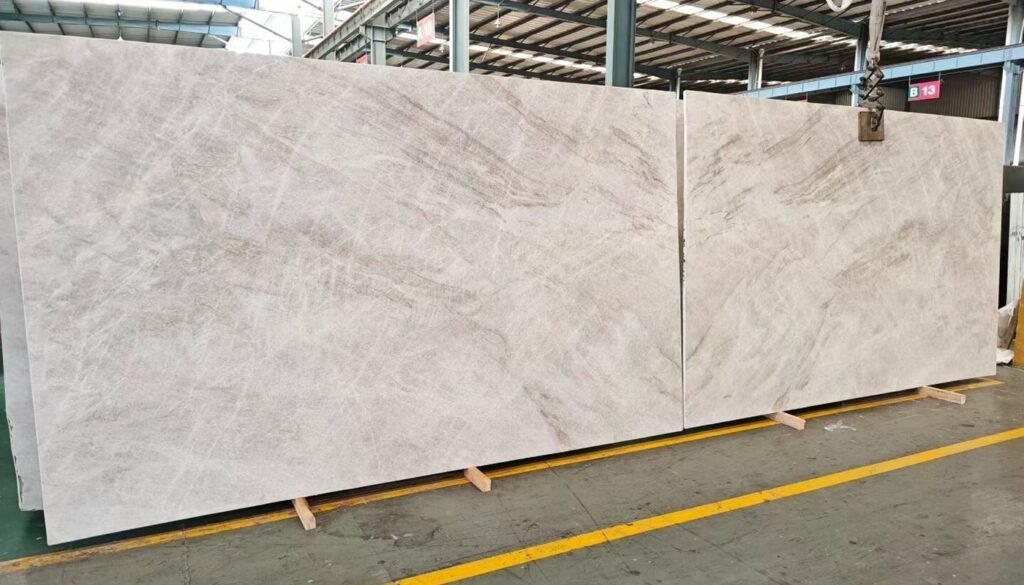
One of the first procurement decisions is whether the project needs full-thickness stone, thin veneer, or a panelized cladding system. Natural Stone Institute materials show that adhered thin stone veneer is a beautiful, versatile wall covering, and that the backup wall carries the structural load. That makes the thin veneer attractive when weight reduction, renovation simplicity, or cost efficiency matter.
At the same time, mechanically anchored stone panels are often more appropriate for larger or more demanding walls, because the anchorage system interfaces directly with the building structure. The Natural Stone Institute’s anchorage bulletin is explicit that this subject requires careful attention to how devices connect the panel and the structure. For procurement teams, the lesson is clear: choose the system based on the wall’s height, exposure, substrate, and maintenance access, not just on visual preference.
For Taj Mahal Quartzite, the procurement decision usually looks like this: thin veneer is attractive for interior feature walls and renovation projects; mechanically anchored panels are better suited to larger commercial walls or exterior-adjacent applications; full-thickness slab cladding may be reserved for premium interior features where depth and visual mass are part of the concept. This is a reasoned specification inference built on the industry’s wall-covering and anchorage guidance.
6. Substrate, anchorage, and moisture control
The wall assembly is where many projects succeed or fail. Natural Stone Institute guidance on adhered thin stone veneer notes the importance of adequate damp-proofing and drainage when stone is used in adverse conditions. It also states plainly that masonry veneers are water-resistant, not waterproof, and that moisture concerns require a moisture barrier beneath the lath. Even when the application is interior, the message remains relevant: wall stone is only as good as the system behind it.
For mechanically anchored panels, the stone industry’s anchorage bulletin explains that the purpose is to understand how anchorage devices interface with the stone panels and the building structure. That means the procurement team should ask for anchor details, substrate specification, movement-joint strategy, and installation responsibility before approving the order. If these are missing, the project is under-specified.
This is particularly important for bathroom feature walls, spa interiors, fireplace surrounds, and entrance walls, where temperature changes, humidity, and cleaning cycles can all act on the assembly. Natural Stone Institute’s 2024 manual added dedicated vertical and wet-area chapters for a reason: the stone itself may be excellent, but the wall system has to be engineered for the environment.
7. Finish selection for walls: polished, honed, or leathered
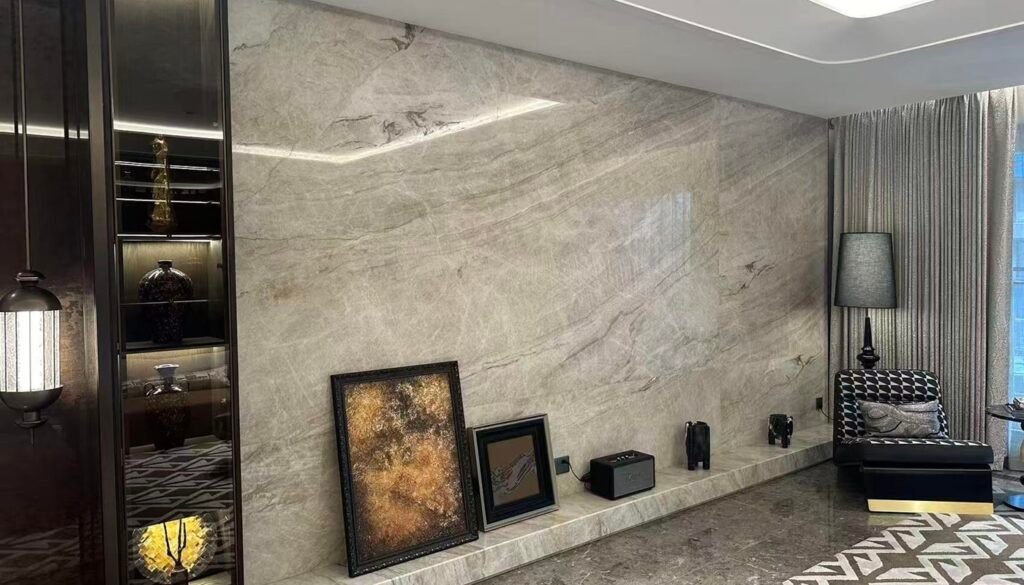
Vertical surfaces give buyers more freedom than floors and countertops, but the finish still matters. A polished finish emphasizes veining, reflection, and luxury; a honed finish softens reflection for calmer spaces; and a leathered finish adds tactile depth and can work well in contemporary interiors. The right finish depends on lighting, viewing distance, and how much “presence” the designer wants the stone to have. This is an application inference consistent with the industry’s stone-finish and vertical-surface framework.
For Taj Mahal Quartzite, polished surfaces are often the default choice in lobbies and feature walls because the stone’s gentle veining responds well to light. Honed or leathered finishes are more appropriate when the project wants a quieter architectural statement or when glare control is important. Procurement teams should always request finish samples, because the same slab can feel very different once the finish changes. That need for samples and mockups is directly aligned with the Natural Stone Institute’s design guidance.
8. Commercial use cases: where it adds the most value?
In hospitality, Taj Mahal Quartzite is especially strong in lobbies, reception backdrops, concierge walls, and spa feature walls because these are spaces where first impressions matter. In luxury residential work, it performs well as a fireplace surround, staircase accent wall, or kitchen full-height backsplash. In retail, it works best as a restrained premium backdrop behind product displays or checkout areas where the stone should elevate the brand without competing with merchandise. These are application inferences based on the stone’s visual profile and the industry’s documented use of quartzite and vertical wall systems.
The most profitable vertical projects are usually the ones where the stone becomes part of the brand language. Taj Mahal Quartzite is particularly useful when the design brief calls for warmth, quiet luxury, and natural depth rather than high-contrast drama. It is therefore a strong option for hotels and luxury brands that want to feel expensive without feeling overly ornamental.
9. Procurement checklist for vertical projects
Before placing an order, the buyer should confirm the exact wall system, substrate type, anchorage approach, batch source, slab thickness, finish, and layout approval. For a feature wall or lobby wall, the most important controls are batch consistency, vein direction, and dry layout. For anchored exterior-adjacent walls, the most important controls are the structural interface, moisture management, and movement details. These requirements follow directly from the Natural Stone Institute’s vertical-surface, anchorage, and adhered veneer guidance.
The buyer should also ask whether the project will use full slabs, thin veneer, or mechanically anchored panels. That choice changes the fabrication, packaging, shipping, and installation scope. Because the stone industry defines dimension stone by size, shape, finish, and performance characteristics, the most reliable sourcing method is one that locks all of those variables before cutting begins.
Conclusion
Taj Mahal Quartzite is a strong candidate for wall cladding, feature walls, and decorative panels because it combines premium visual softness with the durability profile of a quartz-based natural stone. The material is not just decorative; it is specification-driven, and the vertical application must be treated as a full wall system with proper anchorage, substrate, and moisture management. That is exactly the kind of application the Natural Stone Institute’s 2024 vertical-surface and anchorage guidance was designed to support.
For procurement teams, the winning formula is simple: select the right batch, approve the layout early, choose the correct wall system, and coordinate stone, structure, and installation as one package. When those steps are done correctly, Taj Mahal Quartzite can deliver the kind of vertical surface that makes a project feel expensive, calm, and architecturally complete.
FAQ
1. Is Taj Mahal Quartzite suitable for wall cladding?
Yes. Quartzite is used in vertical stone applications, and the Natural Stone Institute now includes a dedicated Vertical Installations chapter in the 2024 Design Manual.
2. Can it be used for feature walls and bookmatched panels?
Yes. It is a strong candidate for bookmatched feature walls when batch control and layout approval are handled correctly.
3. Is a thin veneer or a full slab better?
It depends on the wall system, weight, and project goals. Thin veneer is a versatile wall covering, while mechanically anchored panels are better for some structural applications.
4. Do vertical stone walls need moisture control?
Yes. Natural Stone Institute notes that moisture management and drainage are important in adverse conditions, and wet-area design is a dedicated topic in the 2024 Manual.
5. What finish is most common on Taj Mahal Quartzite walls?
Polished, honed, and leathered finishes are all used; the best choice depends on lighting, style, and desired visual effect.
References
Natural Stone Institute — Dimension Stone Design Manual 2024
Natural Stone Institute — Dimension Stone Design Manual Chapter 14 – Vertical Surfaces
Natural Stone Institute — Dimension Stone Anchorage Theory, Practice, and Components
Natural Stone Institute — Designing with Thin Stone
Natural Stone Institute — Quartzite Technical Bulletin / Quartzite Need Not Be a Confusing Stone
USGS — Geologic Appraisal of Dimension-Stone Deposits
Natural Stone Institute — Stone of the Year / Vertical and cladding application examples