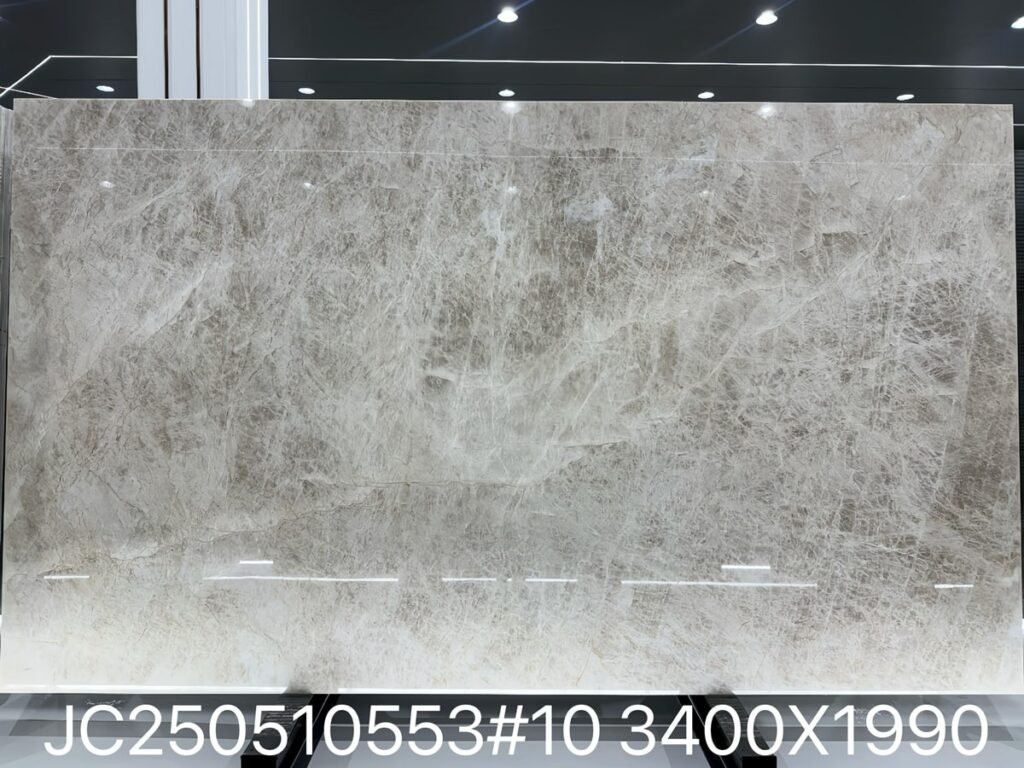
Introduction
In today’s global luxury construction market, materials are no longer just decorative—
👉 They are strategic investment decisions.
Among all natural stones, Taj Mahal Quartzite has emerged as one of the most specified materials in:
- Five-star hotels
- High-end retail spaces
- Corporate headquarters
- Luxury residential developments
Why?
Because it delivers a rare combination:
- Timeless luxury aesthetics
- High structural performance
- Scalable supply for large projects
According to recent industry reports, Taj Mahal Quartzite is increasingly used in ultra-luxury real estate and hospitality environments due to its ability to balance elegance with durability.

Why Taj Mahal Quartzite Dominates Commercial & Hospitality Projects?
1. Performance Meets Luxury
Unlike marble, Taj Mahal Quartzite offers:
- Mohs hardness ≈ 7 (very high)
- Strong resistance to scratches and wear
- High compressive strength for structural applications
👉 Result:
It performs in high-traffic environments without compromising design.
2. Designed for High-Traffic Spaces
Ideal for:
- Hotel lobbies
- Casino floors
- Reception desks
- Elevator walls
- Retail flagship stores
Because:
- Highly durable and long-lasting
- Resistant to heat and daily wear
👉 This reduces:
- Maintenance costs
- Replacement cycles
- Operational disruptions
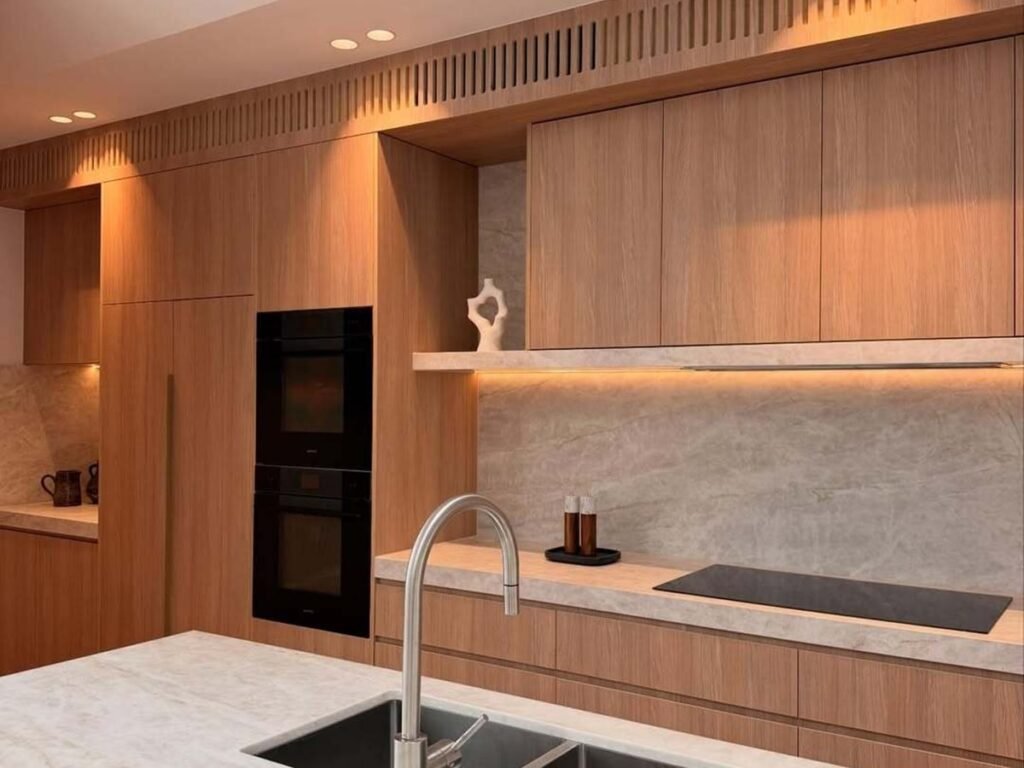
3. Global Design Trend: “Warm Minimalism.”
In 2026, design is shifting toward:
- Neutral palettes
- Soft textures
- Natural materials
Taj Mahal Quartzite perfectly aligns with this trend through:
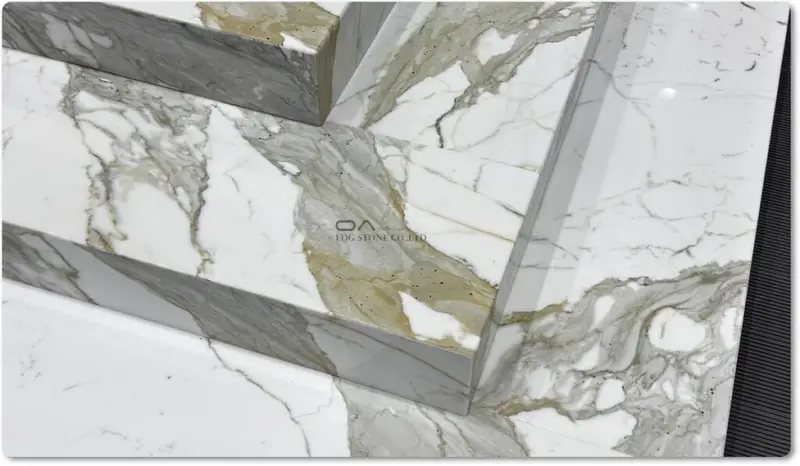
- Warm ivory tones
- Subtle gold veining
- Calm, luxurious visual effect
👉 It is “camera-friendly” and ideal for branded environments.

Key Application Areas in Commercial Projects
Hotel & Hospitality
Applications:
- Lobby feature walls (bookmatch)
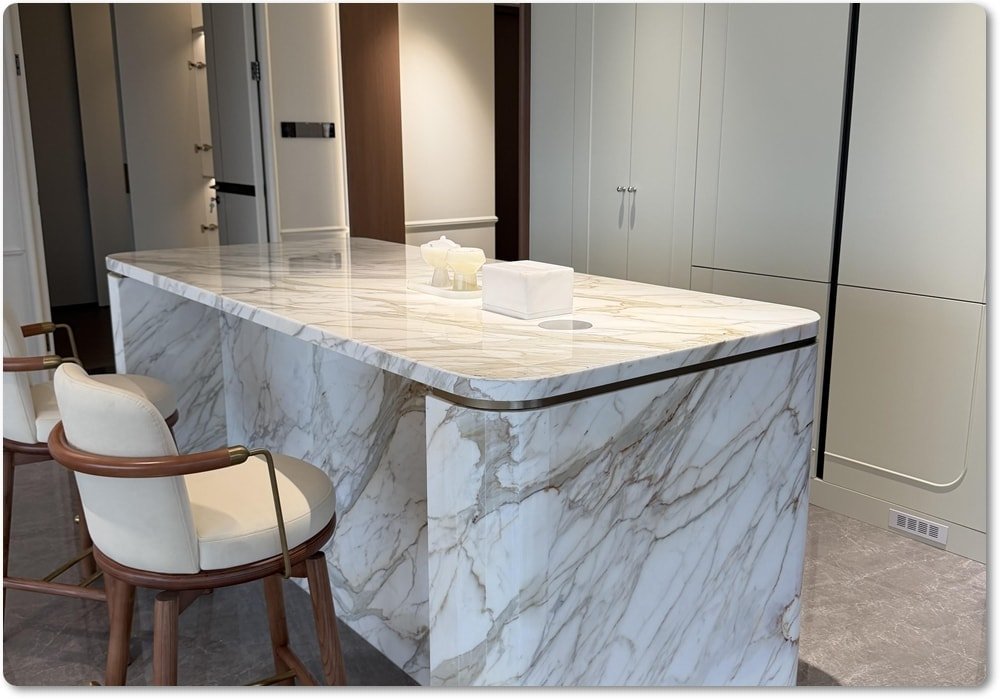
- Reception counters
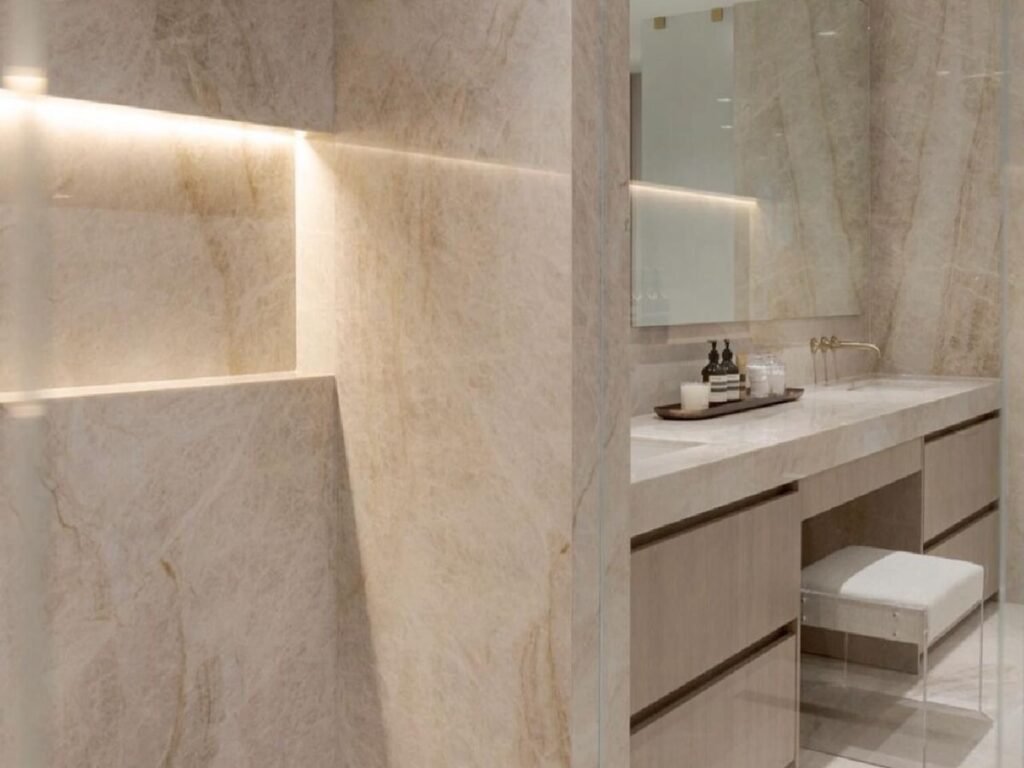
- Guest room vanities
- Spa & wellness areas
Creates:
Premium first impression + brand identity
Commercial & Office Spaces
Applications:
- Executive office interiors
- Conference tables
- Feature walls
- Lift lobbies
👉 Delivers:
Professional + high-value perception
Retail & Luxury Brands
Applications:
- Display counters
- Cash desks
- Brand feature walls
👉 Enhances:
Product value perception + customer experience
Technical Advantages for Large-Scale Projects
Structural Strength
- Compressive strength: up to 180–220 MPa
- Suitable for large-format panels
👉 Enables:
- Large wall cladding
- Oversized slabs
- Structural design elements
Low Porosity
- Porosity < 0.2%
Benefits:
- High stain resistance
- Better hygiene (important for hospitality)
Heat & Chemical Resistance
- Handles heat better than marble
- Resistant to acid etching
👉 Critical for:
- Hotel kitchens
- Bar counters
- Restaurant surfaces

Procurement Challenges (Critical for Developers)
1. Batch Consistency at Scale
Problem:
- Natural variation between slabs
Impact:
- Visible inconsistency across large areas
👉 Solution:
- Block-level selection
- Bulk reservation
- Digital slab mapping
2. Supply Chain Complexity
Facts:
- Mainly sourced from Brazil
- Limited availability can affect timelines
👉 Strategy:
- Lock supply early
- Work with quarry-direct suppliers
- Plan buffer inventory
3. Fabrication Complexity
Challenges:
- Hard material (difficult to cut)
- Requires skilled fabrication
👉 Solution:
- CNC processing
- Experienced stone fabricators
- Pre-engineered installation systems

Design Control Strategies (High-End Projects)
Bookmatching for Feature Walls
- Symmetrical slab pairing
- Used in lobbies & luxury suites
👉 Creates iconic visual impact
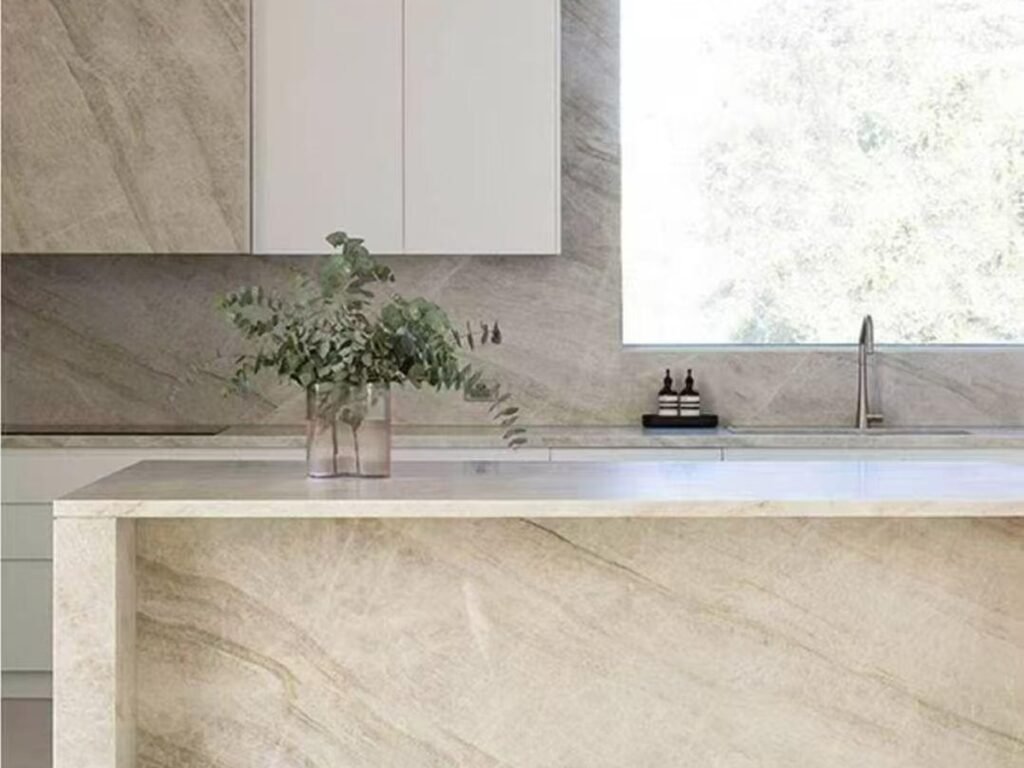
Vein Direction Planning
- Horizontal → calm & expansive
- Vertical → dramatic & powerful
👉 Must be defined during the layout stage
Lighting Integration
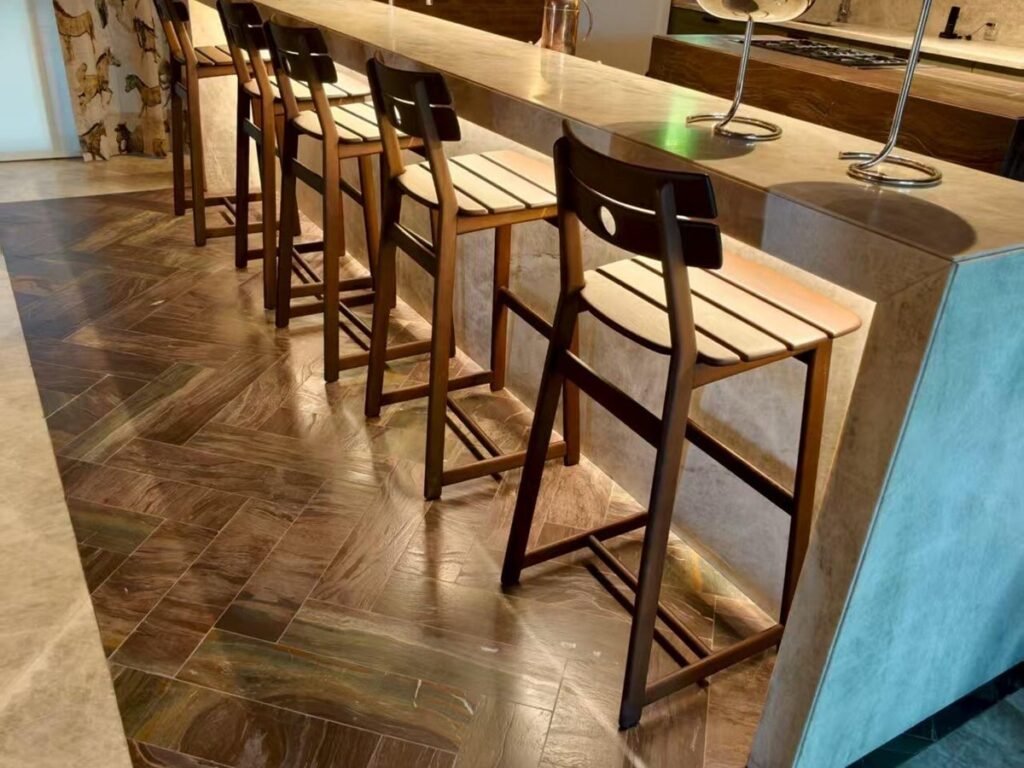
- Backlit quartzite (premium feature)
- Warm lighting enhances gold tones
👉 Widely used in:
- Hotel bars
- Reception desks
Standard Procurement Workflow (Commercial Projects)
Step 1: Project Specification
- Area calculation
- Application zones
- Performance requirements
Step 2: Quarry & Slab Selection
- Block selection (critical)
- Video inspection
- Batch confirmation
Step 3: Slab Reservation
👉 Lock inventory for entire project
Step 4: Digital Layout (Slab Matching)
- Software layout planning
- Vein continuity control
Step 5: Fabrication & Logistics
- Factory production
- Global shipping coordination

Common Mistakes in Commercial Projects
Mistake 1: Treating It Like a Standard Material
👉 Result:
- Inconsistent visual outcome
Mistake 2: No Batch Control
👉 Result:
- Color mismatch across zones
Mistake 3: Ignoring Logistics Planning
👉 Result:
- Project delays
- Cost overruns
Mistake 4: Underestimating Fabrication Difficulty
👉 Result:
- Breakage
- Installation issues
Pro Procurement Tips (High-Value Section)
- Always secure the full project quantity upfront
- Always inspect slabs (video or onsite)
- Always use digital layout planning
- Always include 10–15% waste
- Always partner with experienced exporters
Conclusion
Specifying Taj Mahal Quartzite for commercial and hospitality projects is not just a design choice—
👉 It is a high-value strategic decision.
When properly managed, it delivers:
✔ Timeless luxury aesthetics
✔ Exceptional durability
✔ Strong ROI for developers
✔ Premium brand positioning
FAQ
1. Is Taj Mahal Quartzite suitable for commercial projects?
Yes, it is highly durable and ideal for high-traffic environments like hotels and offices.
2. Why is it popular in hospitality design?
Because it combines luxury aesthetics with long-term performance.
3. Can it be used for large wall panels?
Yes, due to its strength and availability in large slabs.
4. Is it better than marble for hotels?
Yes, it offers better durability and lower maintenance.
5. What is the biggest procurement challenge?
Maintaining consistency across large volumes of slabs.