Introduction
In the global architectural and interior design market of 2026, material selection is no longer driven solely by aesthetics—it is increasingly defined by durability, lifecycle cost, sustainability, and long-term performance. Among all natural stones, Taj Mahal Quartzite has emerged as one of the most sought-after premium materials for high-end residential and commercial applications.
This guide provides a scientific, technical, and procurement-focused analysis of Taj Mahal Quartzite, covering its geological origin, physical properties, performance benchmarks, and real-world applications. It is designed for architects, designers, developers, and procurement managers who require data-driven decision-making rather than marketing claims.
What is Taj Mahal Quartzite?
Geological Origin and Formation
Taj Mahal Quartzite is a natural metamorphic rock formed from sandstone subjected to extreme heat and pressure over millions of years. During this metamorphic process:
Quartz grains recrystallize
Silica content increases significantly
The structure becomes highly compact and interlocked
The result is a material with:
Quartz content typically above 90–95%
Extremely dense crystalline structure
Superior mechanical performance compared to sedimentary stones
The primary source of Taj Mahal Quartzite is Brazil, particularly regions known for high-purity quartzite deposits. The geological stability of these quarries ensures relatively consistent mineral composition, though visual variation remains inherent.
Visual Characteristics
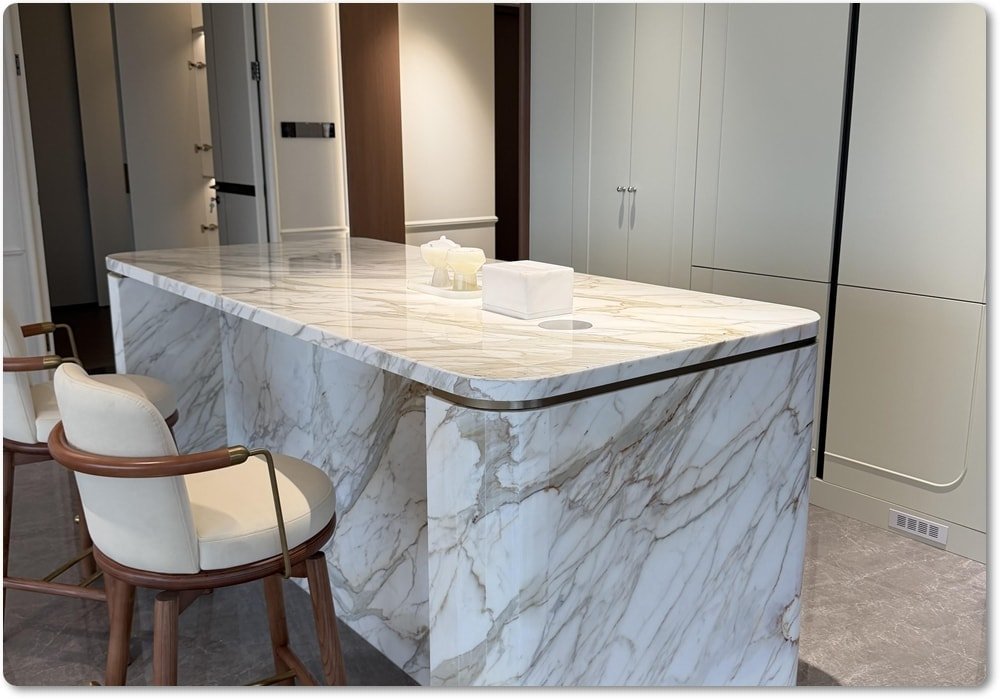
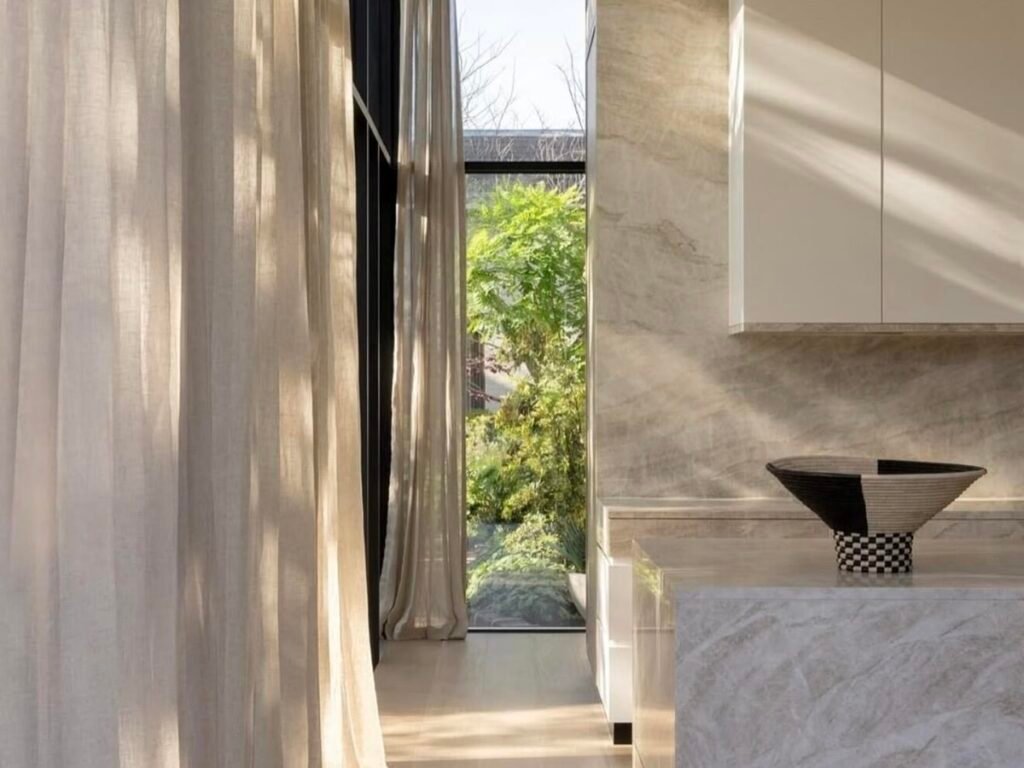
Taj Mahal Quartzite is widely recognized for its subtle elegance and marble-like appearance, while offering the strength of granite.
Typical features include:
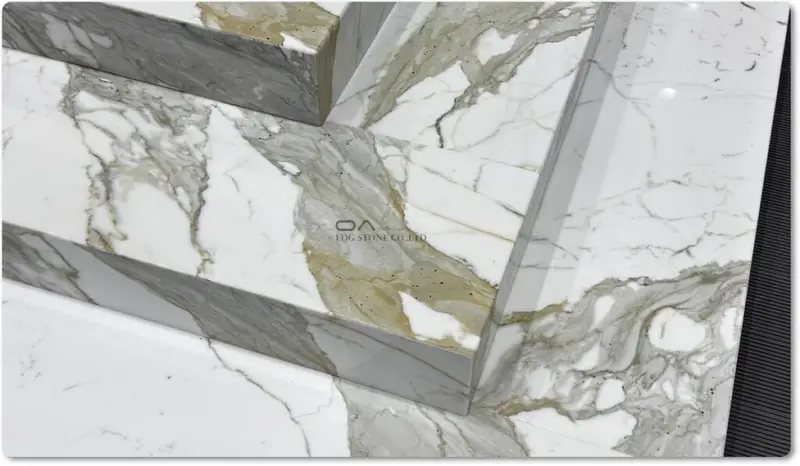
Warm beige to ivory base tones
Soft gold, taupe, or light gray veining
Linear or flowing patterns
Translucent crystalline depth under light
Unlike marble, the veining is less fragile structurally because it is part of a fused quartz matrix rather than calcite veins.
However, buyers must understand:
Color variation is natural and unavoidable
Each slab is unique
Batch selection is critical for large-scale projects
Physical and Mechanical Properties of Taj Mahal Quartzite
Hardness and Strength
According to the Mohs hardness scale:
Quartzite: ~7
Marble: ~3–4
Granite: ~6–7
This indicates:
High scratch resistance
Excellent abrasion resistance
Suitability for high-traffic environments
Compressive strength values (typical range):
Quartzite: 150–300 MPa
Marble: 70–140 MPa
This makes Taj Mahal Quartzite significantly more resistant to structural stress and impact.
Water Absorption and Porosity
Water absorption is a key indicator of stain resistance and durability.
Typical values:
Quartzite: 0.1% – 0.5%
Marble: 0.5% – 2%
Implications:
Lower porosity → better stain resistance
Reduced risk of bacterial penetration
Improved performance in kitchens and bathrooms
However, sealing is still recommended for long-term performance.
Heat Resistance
Quartzite is formed under extreme geological temperatures, giving it:
Excellent thermal stability
Resistance to thermal shock
No resin-based softening (unlike engineered quartz)
This makes it ideal for:
Kitchen countertops
Commercial food preparation areas
Direct heat exposure (e.g., hot pans) is generally tolerated, though protective practices are still advised.
Taj Mahal Quartzite vs Other Stone Materials
Quartzite vs Marble
| Property | Quartzite | Marble |
|---|---|---|
| Hardness | High | Low |
| Acid Resistance | Strong | Weak |
| Maintenance | Low | High |
| Durability | Excellent | Moderate |
Conclusion:
Quartzite is often chosen as a marble alternative with better performance.
Quartzite vs Granite
| Property | Quartzite | Granite |
|---|---|---|
| Appearance | Softer, elegant | Speckled, bold |
| Hardness | Similar | Similar |
| Design Use | High-end interiors | Broad use |
Conclusion:
Quartzite offers a more refined aesthetic while maintaining comparable strength.
Quartzite vs Engineered Quartz
| Property | Quartzite | Engineered Quartz |
|---|---|---|
| Origin | Natural | Man-made |
| Heat Resistance | High | Moderate |
| UV Stability | Excellent | May discolor |
| Sustainability | Natural lifecycle | Resin-based |
Conclusion:
Quartzite is preferred in premium and outdoor applications.
Key Applications in Architecture and Interior Design
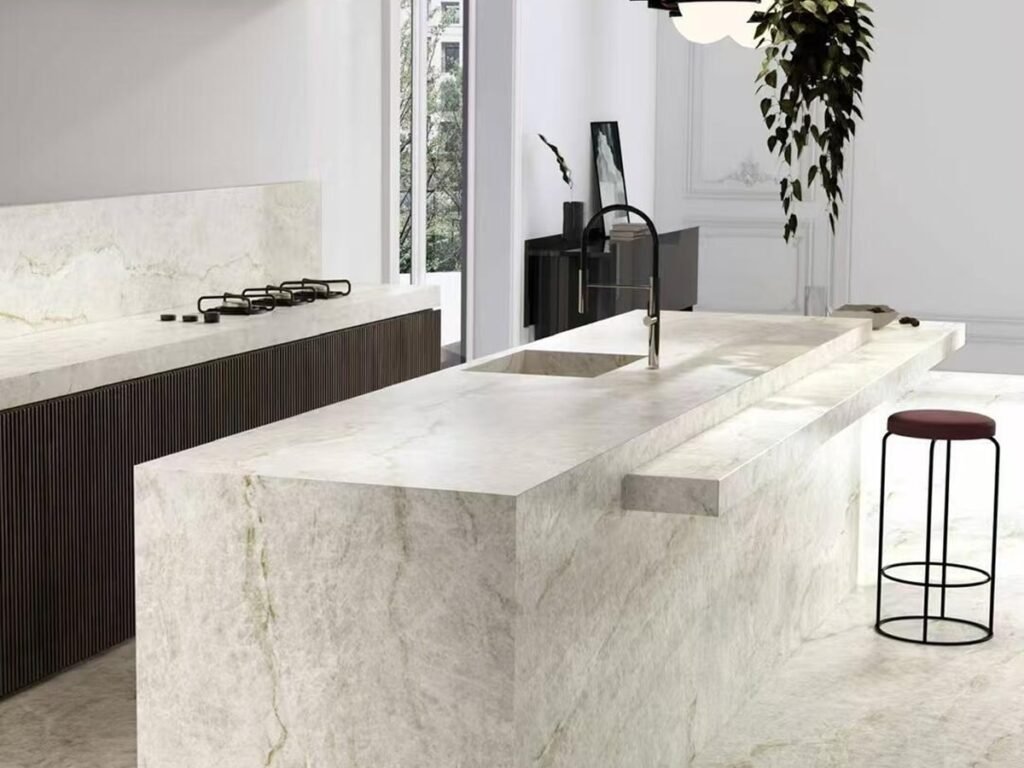
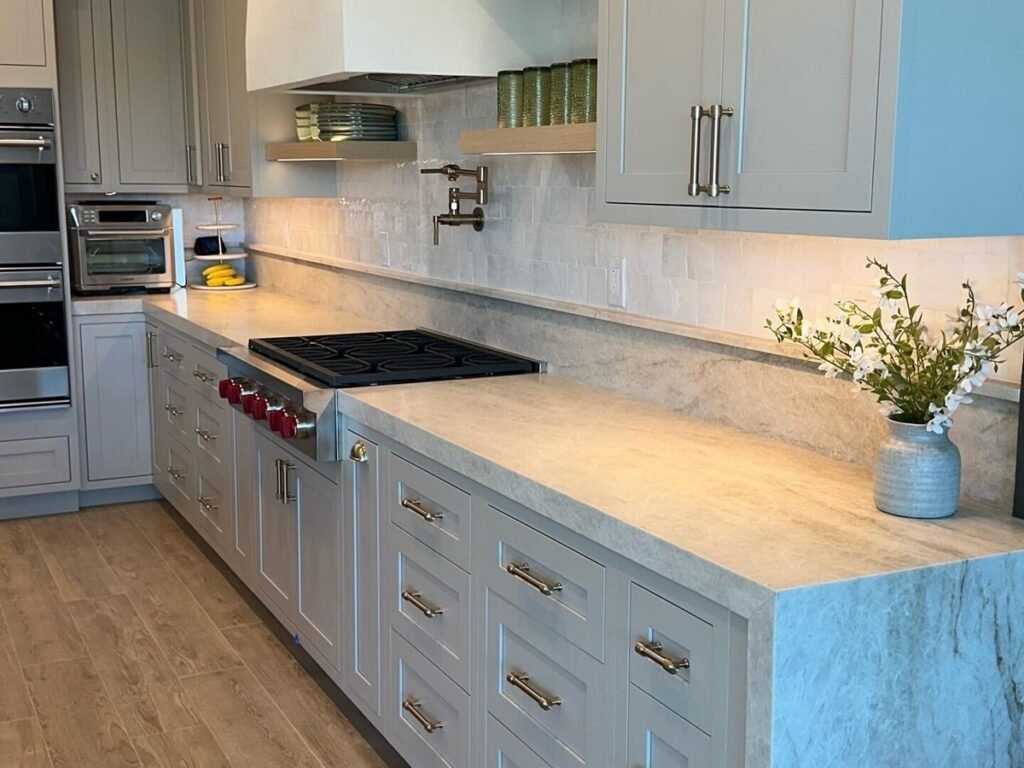
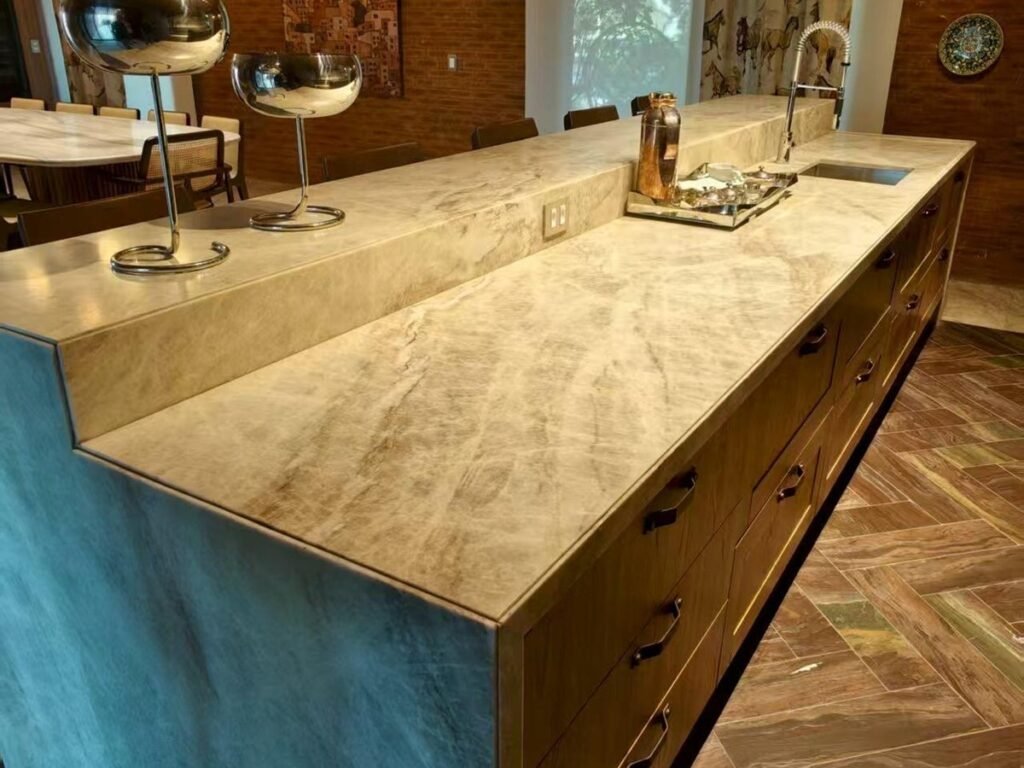
Kitchen Countertops
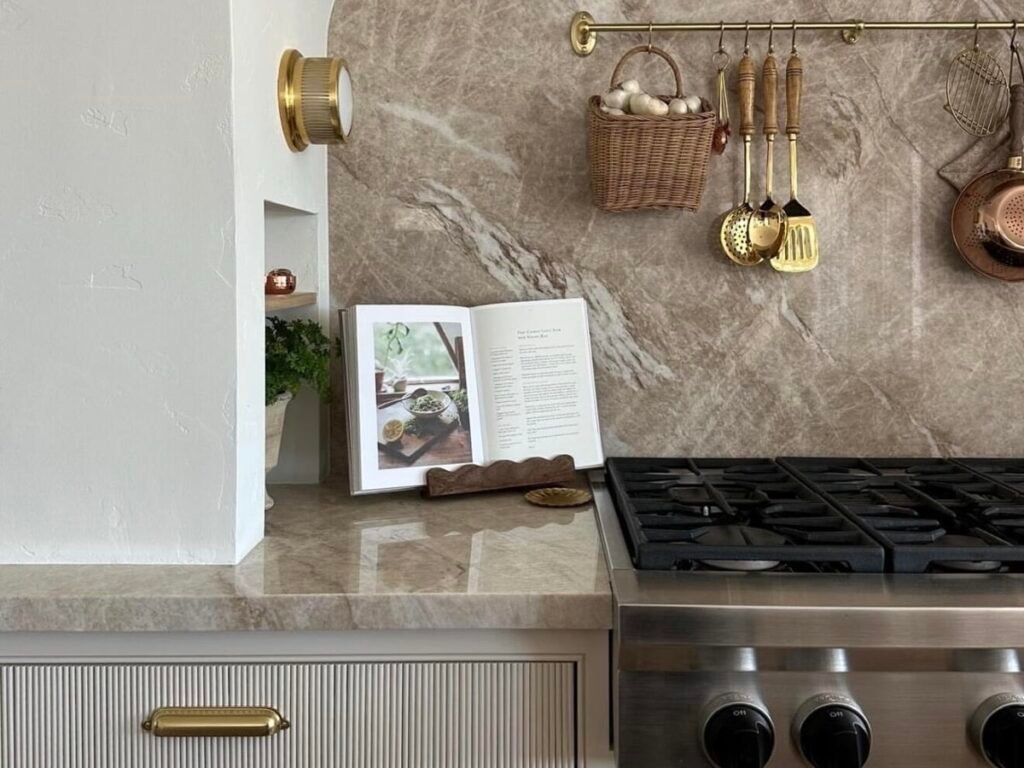
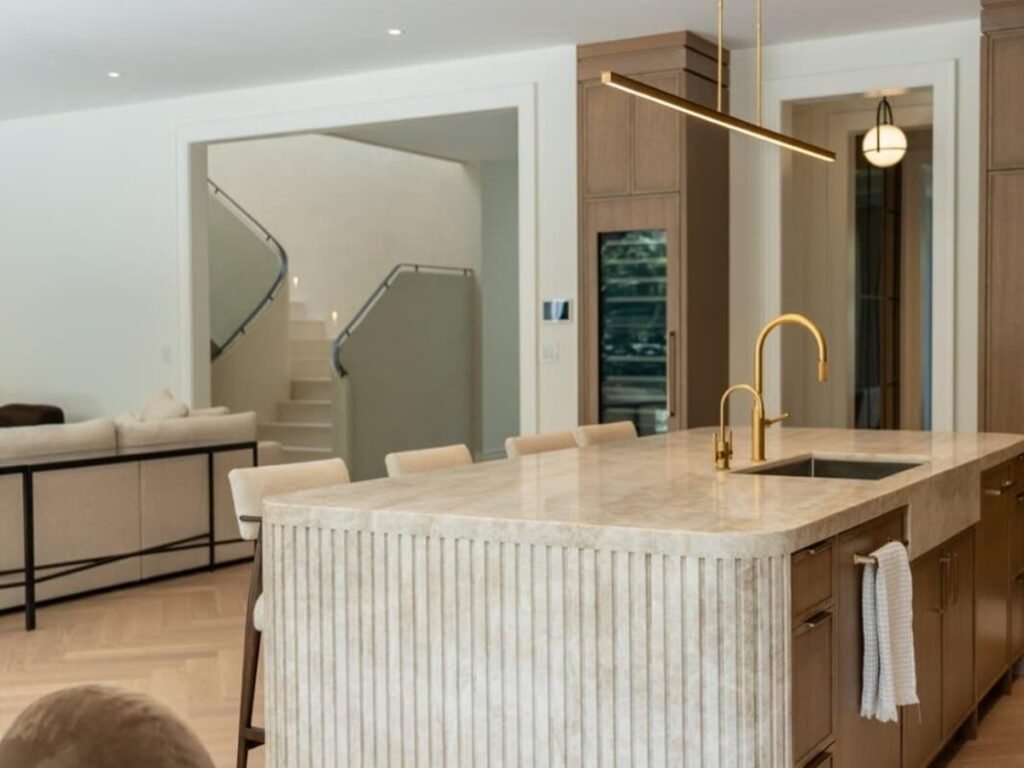
Taj Mahal Quartzite is widely used for:
Luxury kitchens
Island countertops
Integrated backsplashes
Key advantages:
Heat resistance
Scratch resistance
Premium visual appeal
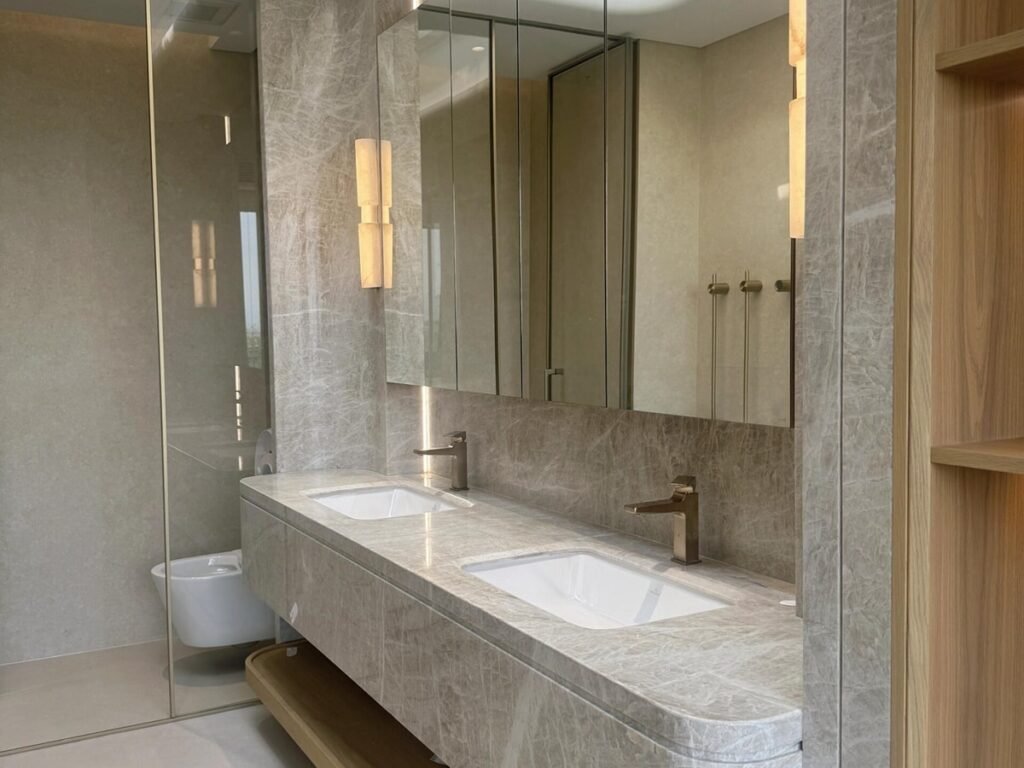
Bathroom Vanity Tops
In bathrooms, it offers:
Low water absorption
Resistance to humidity
Long-term visual stability
It is particularly suitable for:
Hotel vanities
Double sink installations
Spa environments
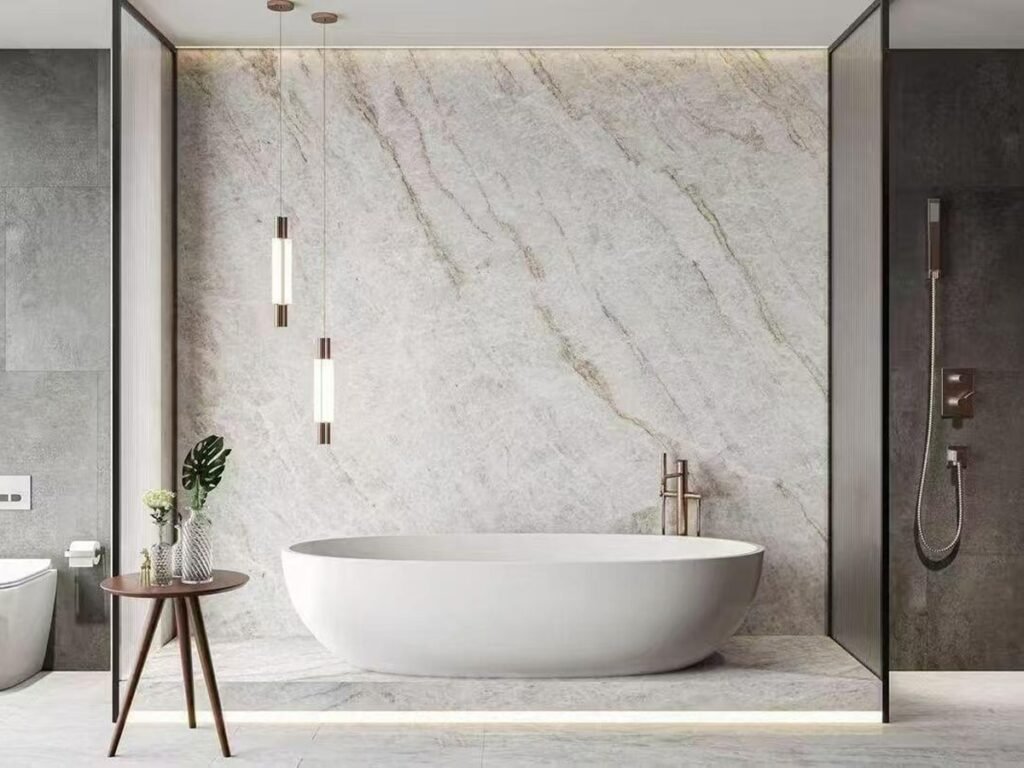
Wall Cladding and Feature Walls
Quartzite slabs are used for:
Bookmatched feature walls
Lobby statement panels
Fireplace surrounds
Advantages:
Natural texture depth
Light reflection properties
High-end architectural impact
Flooring and Staircases
For high-traffic areas:
Commercial lobbies
Retail spaces
Staircases
Performance benefits:
High wear resistance
Structural strength
Longevity
Surface finishing (honed, leathered) can improve slip resistance.
Advantages and Limitations
Advantages
Premium natural aesthetic
Exceptional durability
Long lifecycle (decades)
Suitable for multiple applications
High resale and project value
Limitations
Higher cost than standard granite
Requires skilled fabrication
Natural variation complicates large projects
Heavyweight increases installation complexity

How to Evaluate Taj Mahal Quartzite Quality?
Color Consistency
Select slabs from the same block
Avoid mixing batches
Use a dry layout before installation
Vein Distribution
Ensure natural flow
Check continuity for bookmatching
Avoid abrupt pattern breaks
Surface Finish Quality
Uniform polish level
No dull patches
No visible resin pooling
Slab Integrity
Inspect for:
Microcracks
Resin repairs
Mesh backing quality
High-quality slabs should show:
Minimal filler usage
Structural integrity
Even thickness
2026 Market Trends and Demand
Global Demand Growth
Driven by:
Luxury residential projects
Hospitality sector expansion
High-end retail environments
Quartzite demand has increased due to:
Marble substitution trend
Durability requirements
Design preferences are shifting toward natural textures
Sustainability Considerations
Natural quartzite offers:
Long lifecycle (reducing replacement frequency)
No synthetic resins (compared to engineered materials)
Recyclability and reusability
Lifecycle analysis shows that durable natural stone can outperform short-life synthetic materials in long-term environmental impact.
Procurement Tips for Buyers
Choose Reliable Suppliers
Key criteria:
Stable quarry access
Consistent inventory
Export experience
Inspect Before Purchase
Best practices:
Video slab inspection
Physical selection for large orders
Approval samples
Understand Pricing Factors
Price depends on:
Slab quality and grade
Thickness (2cm vs 3cm)
Finish type
Processing complexity
Conclusion
Taj Mahal Quartzite represents a unique balance between aesthetic elegance and engineering performance. Its combination of marble-like beauty and granite-like durability makes it one of the most versatile materials for modern architecture and interior design.
For procurement professionals, success lies in:
Understanding material properties
Selecting consistent slabs
Partnering with experienced suppliers
When specified and sourced correctly, Taj Mahal Quartzite delivers long-term value, reduced maintenance, and premium project outcomes.
FAQ
1. What is Taj Mahal Quartzite?
A natural metamorphic stone composed mainly of quartz, known for its durability and elegant appearance.
2. Is Taj Mahal Quartzite better than marble?
Yes, in terms of durability, stain resistance, and maintenance, though aesthetics depend on preference.
3. Can Taj Mahal Quartzite be used for kitchen countertops?
Yes, it is highly suitable due to its heat and scratch resistance.
4. Is Taj Mahal Quartzite expensive?
It is considered a premium material, typically priced higher than granite but justified by performance.
5. How to maintain Taj Mahal Quartzite?
Regular cleaning with mild detergent and periodic sealing ensures long-term performance.
Reference
ASTM International – ASTM C97 Water Absorption Test
USGS – Natural Stone Geological Reports
Natural Stone Institute – Stone Properties Guide
Marble Institute of America – Dimension Stone Design Manual
Mohs Hardness Scale – Mineral Hardness Classification
Geological Society Publications – Quartzite Formation Studies
Building Stone Institute – Stone Performance Data
International Journal of Rock Mechanics – Strength Analysis of Quartzite
Construction Materials Handbook – Stone Material Data
European Stone Federation – Natural Stone Sustainability Reports