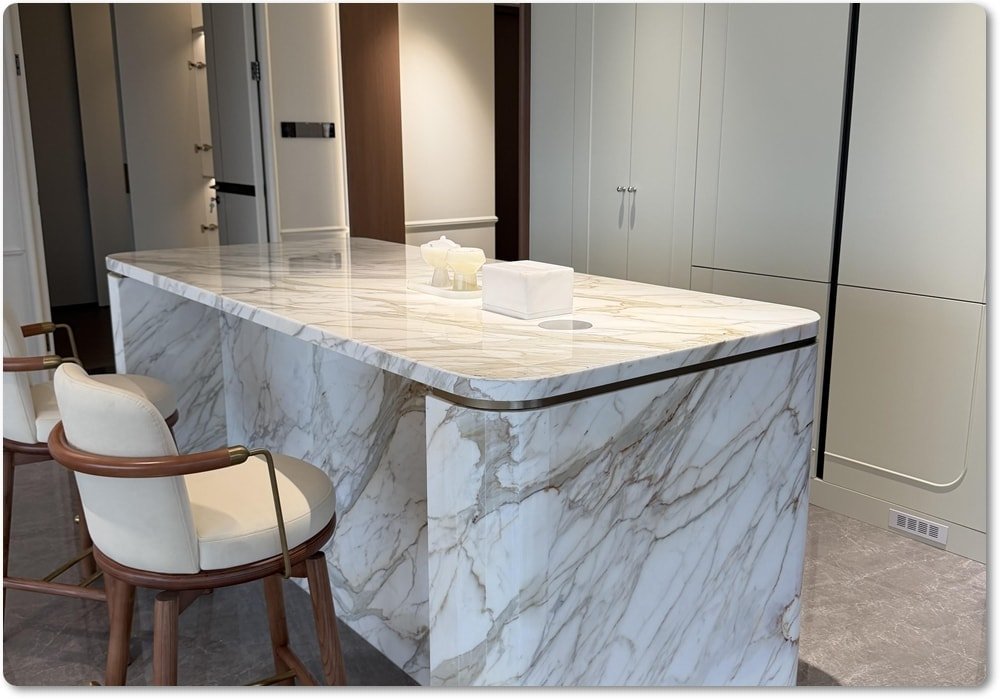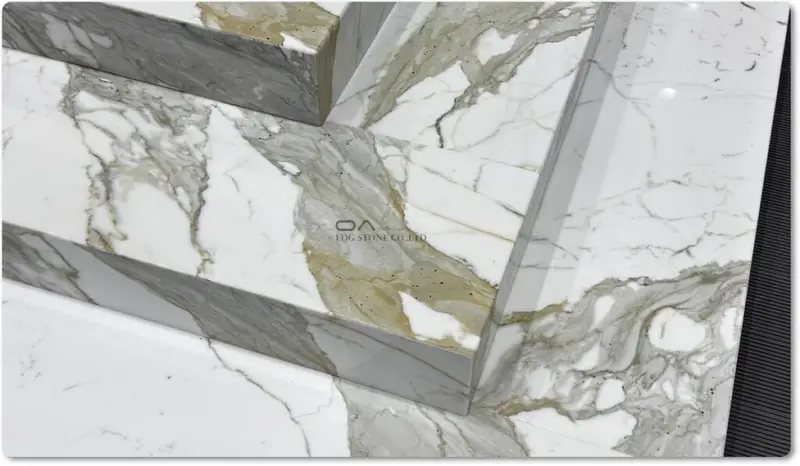
— A White Paper for Architectural & Interior Material Selection
In stone procurement, the success of a project is rarely determined by “which material looks better.” The real question is whether the material fits the application:
Is it durable enough? Acid-resistant? Easy to maintain? Supply-stable? Suitable for slab fabrication? Can it pass mockup validation?
According to the Natural Stone Institute and its Dimension Stone Design Manual, material selection must consider mechanical performance, application context, mockups, and lifecycle cost—not just aesthetics.
This paper places Taj Mahal Quartzite alongside three commonly compared materials: Marble, Granite, and Engineered Quartz.
Executive Conclusion (Procurement-Oriented)
- If you want marble-like luxury with significantly improved durability, Taj Mahal Quartzite is often the best-balanced option.
- If you prioritize low maintenance and reliability, granite remains a safe choice.
- If you need maximum consistency and stain resistance, engineered quartz excels—but requires strict heat management.
- If you value classic natural elegance above all, marble remains unmatched—but comes with higher maintenance demands.
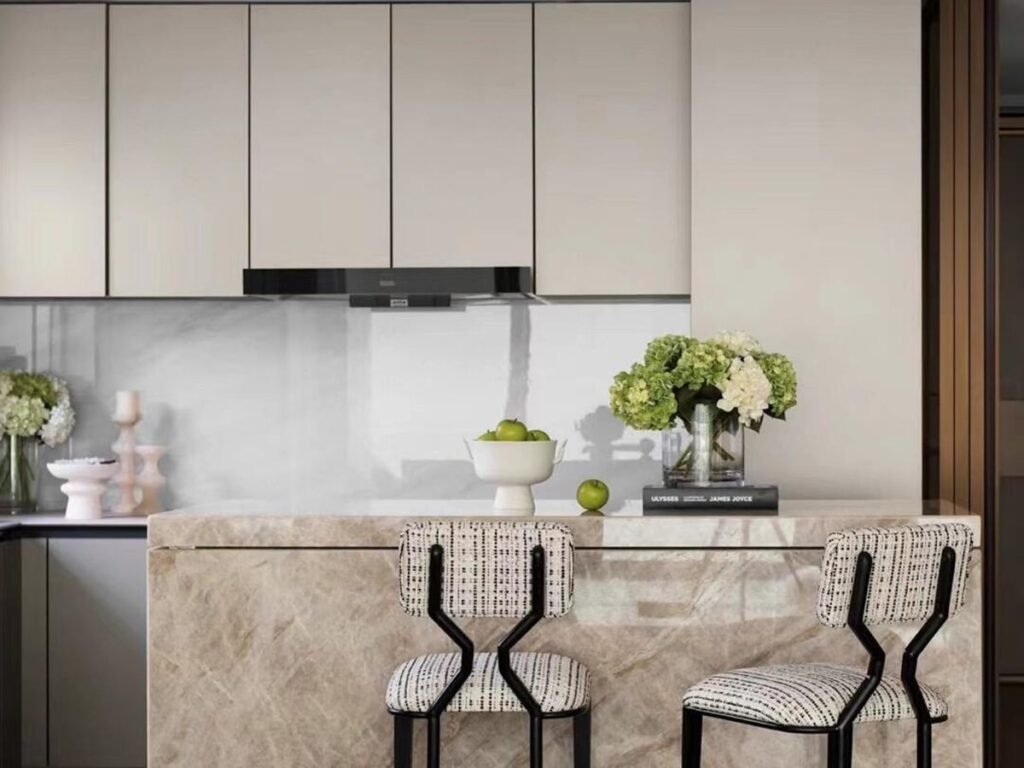
1. Material Fundamentals: Understanding the Four Categories
Taj Mahal Quartzite
A quartz-based natural stone, classified under siliceous stones. According to the Natural Stone Institute, quartzite is:
- Hard
- Dense
- Resistant to chemical weathering
- Suitable for both interior and exterior applications
Marble
A calcareous metamorphic stone, primarily composed of calcium carbonate.
Key characteristics:
- Elegant veining and high-end appearance
- Sensitive to acids (etching risk)
- Prone to scratching and staining
Granite
An igneous rock composed mainly of quartz, feldspar, and mica.
Key advantages:
- High durability
- Low maintenance
- Wide color range
- Strong structural performance
Engineered Quartz
A manufactured material made of quartz particles, resin, and pigments.
Based on technical documentation from Caesarstone:
- Non-porous
- Highly stain-resistant
- Uniform appearance
- Heat-sensitive due to resin content
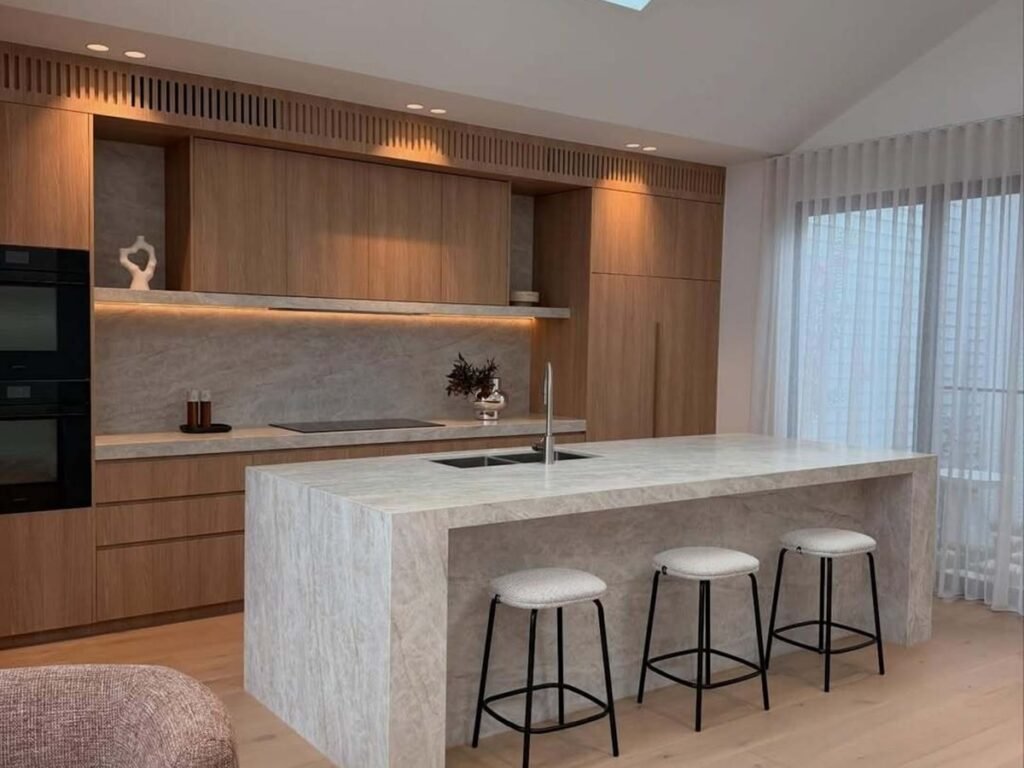
2. Design Language: Natural Luxury vs Engineered Precision
- Taj Mahal Quartzite:
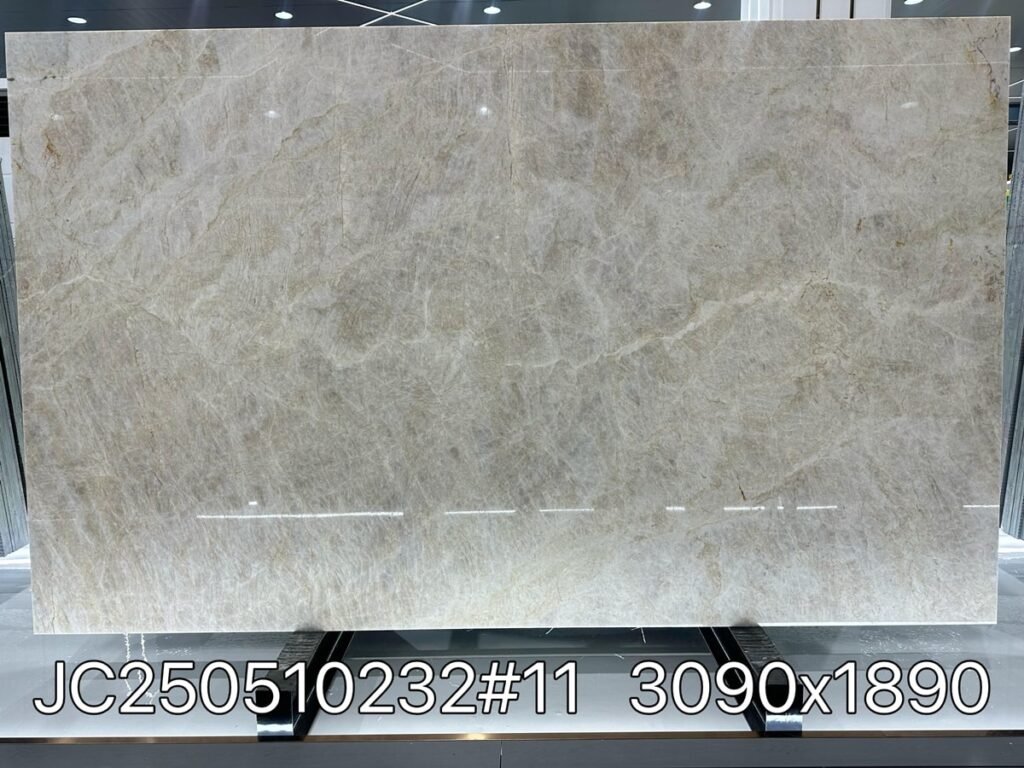
Soft whites, warm beige, subtle gold veining → closest to marble aesthetics with added durability - Marble:
Iconic veining and timeless luxury → unmatched visual expression - Granite:
More granular and bold → practical, less “refined” visually - Engineered Quartz:
Highly consistent → ideal for large-scale uniform designs, but less natural depth
Procurement Insight
- Choose Taj Mahal Quartzite for “luxury look + performance balance.”
- Choose Engineered Quartz for “visual consistency at scale.”
- Choose Granite for “durability-first projects.”
3. Hardness, Scratch Resistance, and Chemical Stability
Quartzite (Taj Mahal)
- Extremely hard and dense
- Strong resistance to wear and chemical exposure
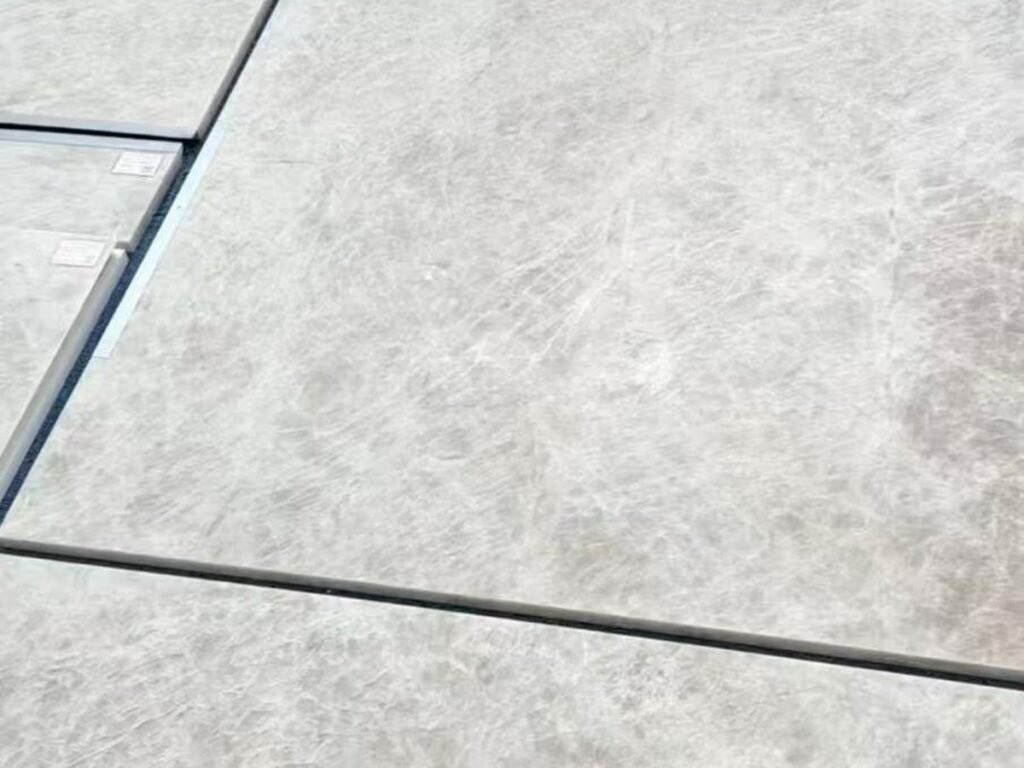
- Suitable for high-traffic and heavy-use surfaces
Marble
- Soft relative to other stones
- Vulnerable to:
- Acid etching (lemon, vinegar, cleaners)
- Scratches and oil stains
Granite
- Strong and durable
- Excellent scratch and wear resistance
- Reliable long-term performance
Engineered Quartz
- High scratch resistance
- Excellent stain resistance
- Weaker under high heat due to the resin
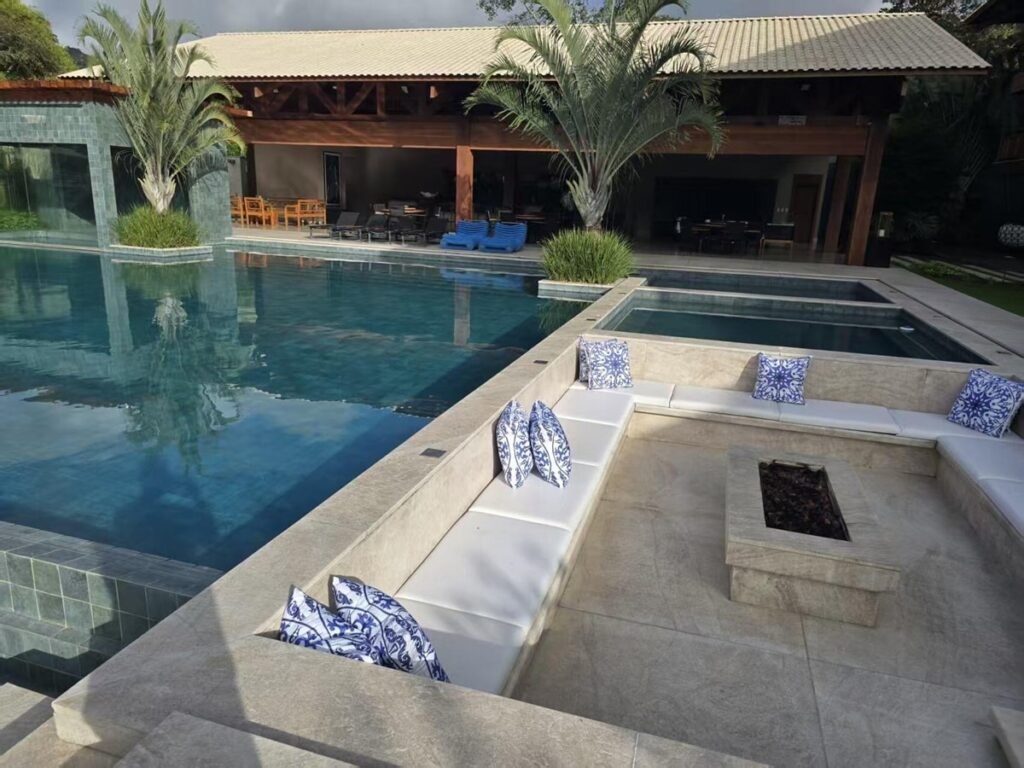
4. Porosity, Stain Resistance, and Maintenance
The Natural Stone Institute divides stones into:
- Siliceous stones (quartzite, granite)
→ More resistant to acids and chemicals - Calcareous stones (marble, limestone)
→ Highly sensitive to acids
Performance Comparison:
- Taj Mahal Quartzite:
Lower maintenance than marble, but still requires sealing - Marble:
High maintenance, sensitive to daily kitchen use - Granite:
Moderate maintenance, good resistance - Engineered Quartz:
Lowest maintenance (non-porous), highly stain-resistant
Testing Standards for Procurement
Recommended ASTM standards:
- ASTM C97 → Absorption & density
- ASTM C170 → Compressive strength
- ASTM C880 → Flexural strength
- ASTM C241/C1353 → Abrasion resistance
5. Heat Resistance: A Critical but Overlooked Factor
Key Insight:
Heat resistance is not optional in kitchen design—it’s essential.
- Taj Mahal Quartzite:
Strong heat tolerance (natural stone advantage) - Granite:
Also highly heat-resistant - Marble:
Moderate heat resistance, but more vulnerable to surface damage - Engineered Quartz:
⚠️ Not heat-proof- Resin can burn or discolor under high temperatures
- Not suitable for direct hot cookware
According to Caesarstone, extreme heat can cause irreversible damage.
6. Fabrication, Installation, and Supply Chain Considerations
Material cost is only part of the equation—fabrication, logistics, and rework risk often define total project cost.
For Taj Mahal Quartzite:
- Natural variation requires:
- Same-batch slab selection
- Layout planning (vein matching)
- Mockup validation
- Supplier capability is critical
For Engineered Quartz:
- Easier batch consistency
- Faster standardization
- Requires stricter heat-use guidelines
Industry Recommendation:
The Natural Stone Institute emphasizes:
- Sample approval
- Mockups
- Mechanical testing
- Installation detailing
7. Scenario-Based Material Selection
Best Use Cases for Taj Mahal Quartzite
- Luxury kitchens & islands
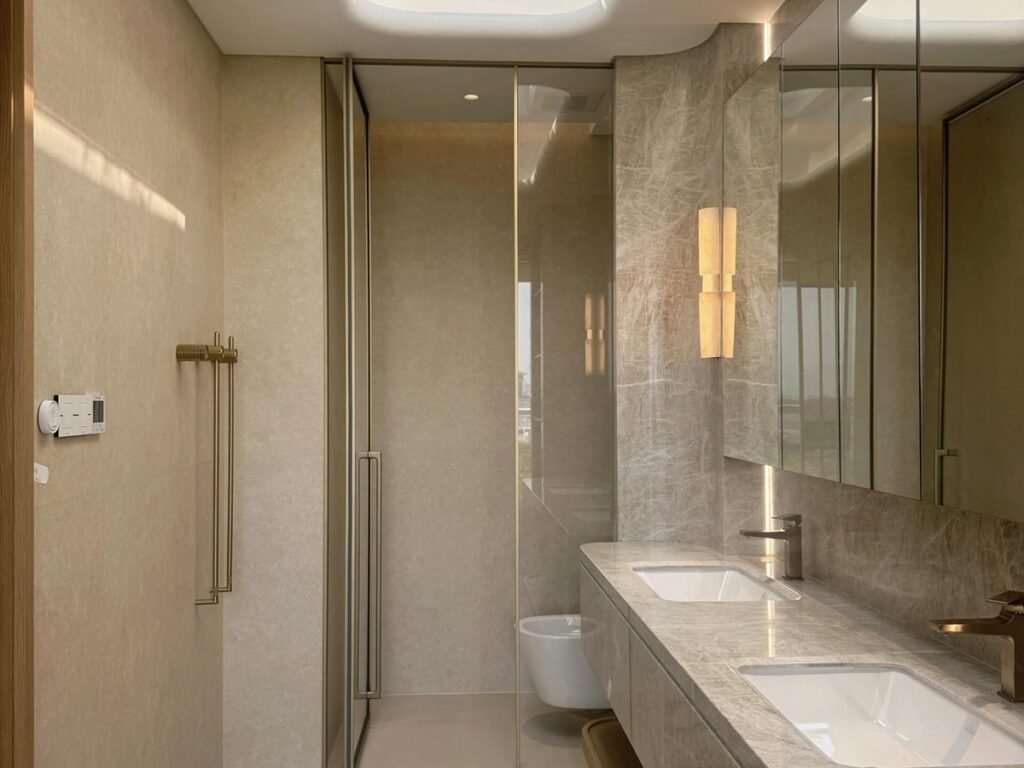
- Bathroom vanities
- Feature walls
- Commercial reception areas
✔ High-end appearance + strong durability balance
Best Use Cases for Marble
- Decorative interiors
- Low-traffic luxury applications
✔ Maximum aesthetic value
✖ High maintenance
Best Use Cases for Granite
- Budget-conscious projects
- High-traffic areas
- Standard kitchen countertops
✔ Reliable and durable
Best Use Cases for Engineered Quartz
- Commercial interiors
- Projects requiring uniformity
- Low-maintenance environments
✔ Consistency + stain resistance
✖ Heat limitations
8. Final Procurement Positioning: Where Does Taj Mahal Quartzite Stand?
Within the material landscape:
Taj Mahal Quartzite is not:
- The cheapest
- The lowest maintenance
But it is often:
👉 One of the best-balanced materials across:
- Aesthetic value
- Natural authenticity
- Durability
- Risk control
Supported by its:
- Quartz-based composition
- High hardness
- Resistance to chemical weathering
Final Procurement Logic
- Choose Taj Mahal Quartzite → when you need luxury + durability
- Choose Engineered Quartz → when you need consistency + efficiency
- Choose Marble → when you prioritize timeless beauty
- Choose Granite → when you need cost-performance stability
Conclusion
Stone selection is not about finding the “best material”—it’s about finding the most appropriate material for the project lifecycle.
If your project requires:
- High-end appearance
- Natural authenticity
- Strong durability
- Reduced risk compared to marble
Taj Mahal Quartzite is one of the most strategic choices in modern architectural procurement.