Slab Backsplash Guide 2026: Design Trends, Cost vs. Tile, and Installation Advantages of Full-Size Stone Slabs
Quick Summary:
What is a Slab Backsplash? A solid, continuous piece of stone (marble, quartz, or porcelain) extending from the countertop up the wall, eliminating grout lines found in traditional tiling.
Key Advantages: Superior hygiene (groutless), dramatic visual continuity (especially with bookmatching), and high ROI for luxury properties.
Cost Insight: While a solid slab backsplash costs generally 30-50% higher than tile due to fabrication complexity, the durability and timeless aesthetic offer better long-term value.
Trend Alert 2026: Integrated “shelf” ledges, full-height ceiling installation, and ultra-thin porcelain slabs are dominating the market.
Sourcing: Working directly with a wholesale slab backsplash manufacturer like EDG Stone ensures material consistency and reduces middleman costs.
The kitchen has long been the heart of the home, but in 2026, the design language of this space is shifting dramatically from fragmented details to seamless luxury. Gone are the days when subway tiles were the only standard. Today, the solid slab backsplash kitchen represents the pinnacle of modern interior design, offering a sleek, sophisticated aesthetic that unifies the cooking space.
A full slab kitchen backsplash involves using a single, continuous piece of natural stone, quartz, or porcelain that matches or complements the countertops. This design choice not only creates a stunning focal point—often referred to as the “jewelry” of the kitchen—but also solves perennial maintenance issues associated with grout. Whether you are a homeowner seeking a full slab marble backsplash for a classic look or a developer looking for a porcelain slab kitchen backsplash for durability, understanding the nuances of materials, costs, and installation is crucial.
In this comprehensive guide, we will explore why full stone backsplash designs are outpacing tiles, analyze the slab backsplash vs tile cost, and highlight how industry leaders like EDG Stone are shaping the future of luxury kitchen renovation trends 2026.
The Rise of Solid Slab Backsplash: Why It’s Taking Over Modern Kitchens
The transition to solid stone backsplash installations is not merely a fleeting trend; it is a fundamental shift in architectural preference driven by visual psychology and hygiene.
Visual Continuity and Luxury
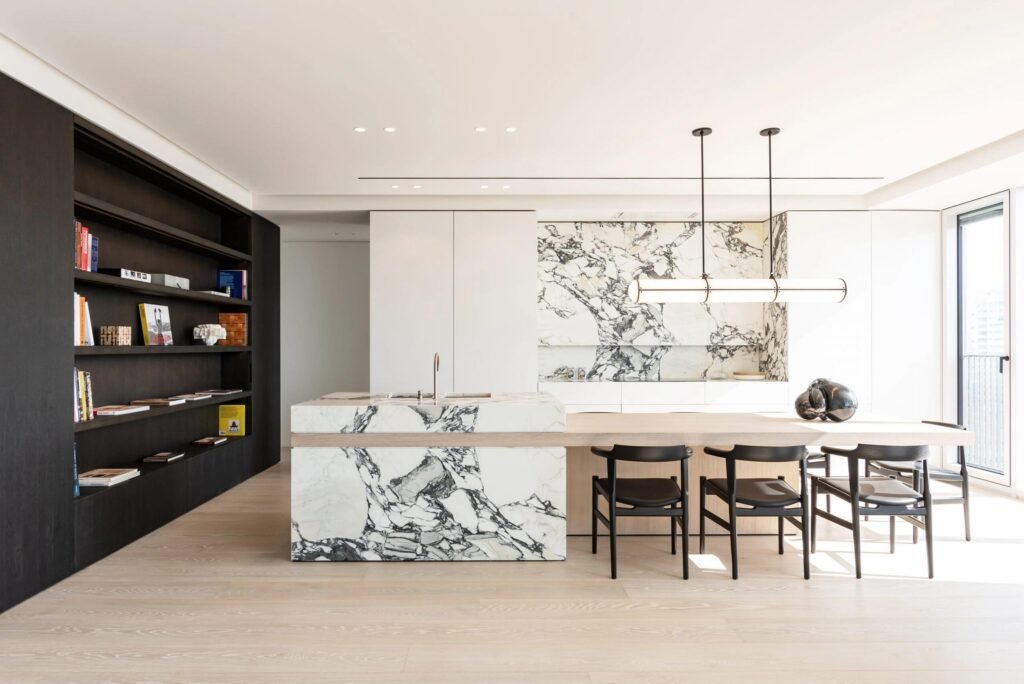
The primary driver for choosing a full slab backsplash is the concept of “quiet luxury.” Traditional tiling, no matter how expensive, breaks the visual field with grid lines. A solid slab backsplash in the kitchen allows the eye to travel uninterrupted across the surface. When you extend the countertop material up the wall, you create a sense of vastness, making even smaller kitchens appear larger and more open. For materials with dramatic veining, such as Calacatta marble or high-end quartz, a full slab allows for “bookmatching”—where two slabs mirror each other like an open book—transforming the wall into a piece of art.
The Hygiene Factor: A Groutless Solution
Functionally, the solid slab backsplash is superior to any tile option. Grout is porous; it absorbs grease, tomato sauce splatters, and moisture, becoming a breeding ground for bacteria and mold over time. By eliminating joints, a full stone backsplash removes the hardest-to-clean element of a kitchen. A simple wipe-down is all that is required to maintain a pristine surface, making it the preferred choice for serious home chefs.
Market Trends and Data
Recent industry analysis indicates a 40% year-over-year increase in requests for full-height backsplash height installations in homes valued over $1.5 million. The market is moving away from busy mosaics toward the serene, monolithic look of a full slab quartz backsplash or porcelain options. This shift is supported by manufacturing advancements that allow for larger, thinner, and more durable slabs.
Material Showdown: Porcelain, Quartz, and Marble Slabs
Selecting the right material is the most critical decision in your project. Each material brings different aesthetics, durability profiles, and implications for the solid slab backsplash cost.
Full Slab Quartz Backsplash
Quartz remains the market leader for slab backsplash ideas due to its engineering. As a non-porous material, it requires no sealing.
Pros: Extreme consistency in pattern, high resistance to staining, and widely available colors.
Cons: Low heat resistance compared to stone. You cannot place hot pots directly against a standard quartz backsplash without risk of scorching (resin burn).
Best For: Busy family kitchens requiring low maintenance.
Full Slab Marble Backsplash
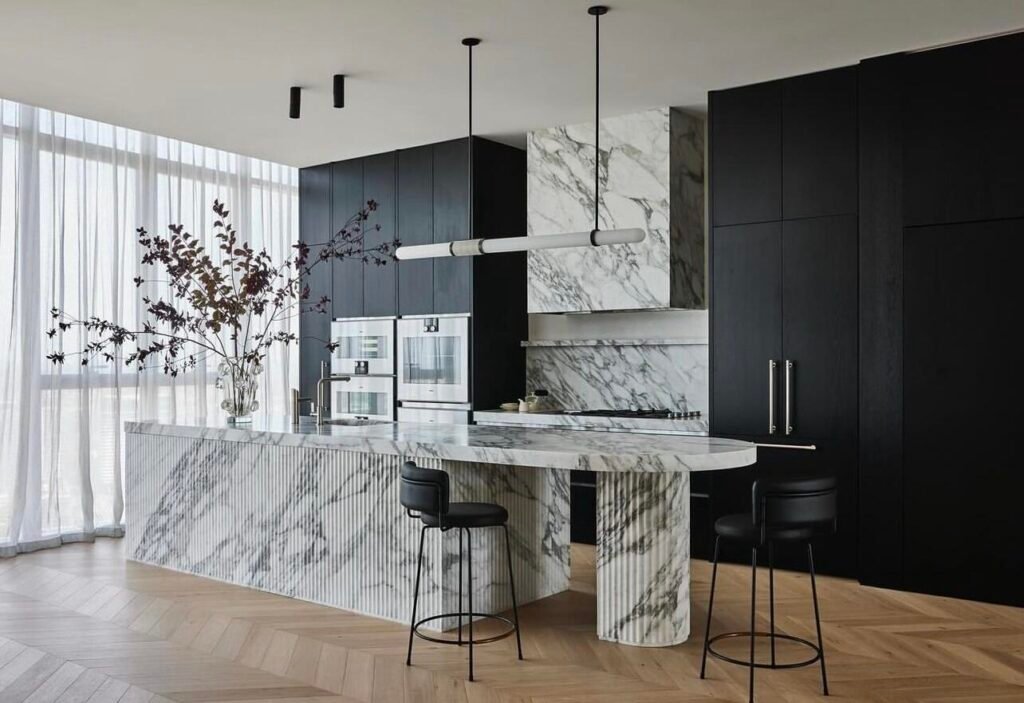
For purists, nothing beats the natural translucency and depth of a full slab marble backsplash.
Pros: Unmatched beauty, unique one-of-a-kind veining, and heat-resistant.
Cons: Porous and prone to etching from acidic foods (lemon, vinegar). Requires regular sealing.
Best For: Show kitchens, baking stations, and homeowners who appreciate the “patina” of natural stone.
Porcelain Slab Kitchen Backsplash
The rising star of 2026 is the porcelain slab backsplash. Using sintered stone technology.
Pros: Ultra-durable, scratch-proof, UV-resistant (won’t fade), and incredibly heat-resistant. It can be manufactured in thinner profiles (6mm or 12mm), making it lighter for vertical installation.
Cons: The “design” is printed on the surface; edges may not carry the pattern through (though EDG Stone offers through-body vein technology).
Best For: High-heat zones (behind professional gas ranges) and outdoor kitchens.
Cost Analysis: Slab Backsplash vs Tile Cost
The most common question homeowners ask is: “Is a slab backsplash expensive?” The short answer is yes, but the context is vital.
Material Costs Breakdown
When comparing slab backsplash vs tile cost, you must account for the “waste factor.” With tile, you buy exactly the square footage you need plus 10%. With a solid slab backsplash, you must purchase the entire slab, even if you only need 60% of it for the wall.
Large tile kitchen backsplash ideas: $15 – $50 per sq. ft. (material).
Solid stone backsplash: $60 – $150+ per sq. ft. (material).
Fabrication & Installation Fees
The bulk of the slab backsplash cost lies in labor. Installing a full slab requires:
Templating: Laser precision measurement.
Fabrication: Cutting slots for electrical outlets (receptacles) without cracking the stone is a high-skill task.
Transport: Moving a heavy, fragile 10-foot slab into a kitchen requires a specialized crew.
Tile Installation: $10 – $20 per sq. ft.
Slab Installation: $40 – $100 per sq. ft.
Long-term ROI
Despite the higher upfront investment, a full backsplash kitchen yields a higher ROI. Real estate data suggests that kitchens with premium finishes like solid stone backsplashes sell faster and command higher prices. It acts as a differentiator in the luxury market.
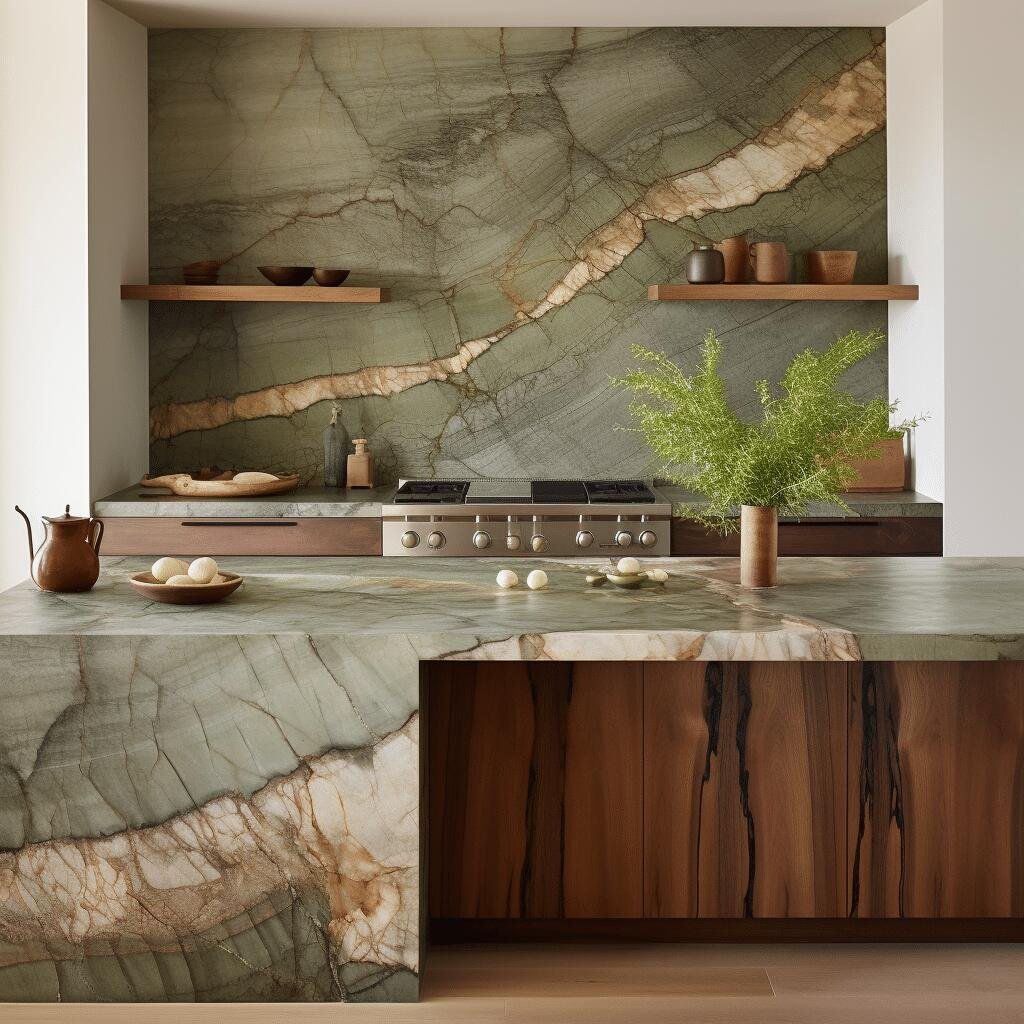
Inspiring Slab Backsplash Ideas & Design Configurations
Design in 2026 is about pushing boundaries. Here are the top configurations for slab backsplash ideas:
The “Waterfall” Effect
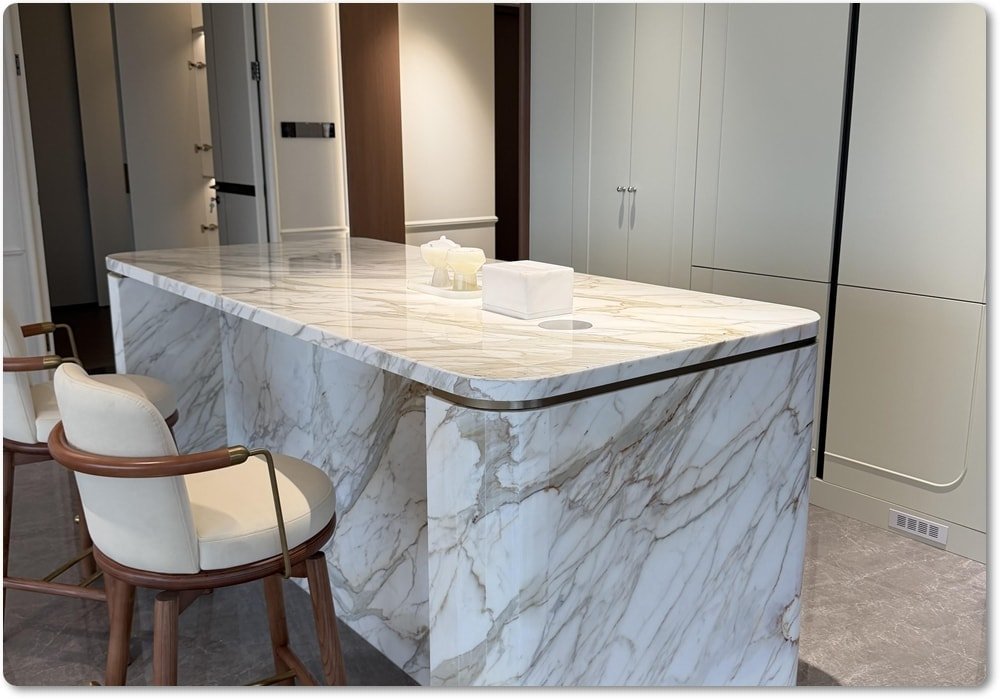
This involves the countertop material flowing down the side of the island (waterfall edge) and flowing up the wall as a backsplash. This creates a “cube” effect of stone that is incredibly modern.
Slab Backsplash with Shelf
One of the hottest trends is the slab backsplash with a shelf. Instead of a flat wall, the stone fabricator constructs a floating ledge out of the same stone material. This shallow shelf (usually 4-6 inches deep) runs the length of the backsplash, providing a place for spices, oils, or art. It adds depth and architectural interest.
Full Height Backsplash Height
Standard backsplashes stop at 18 inches (under the upper cabinets). However, the full height backsplash height trend involves taking the stone all the way to the ceiling, especially around the range hood area, where there are no upper cabinets. This creates a dramatic, cathedral-like verticality.
Integrated Lighting
Advanced fabrication allows for channels to be cut into the back of translucent stones (like Onyx or certain Quartzites) to embed LED lighting. A backlit solid slab backsplash can serve as the primary mood lighting for the kitchen at night.
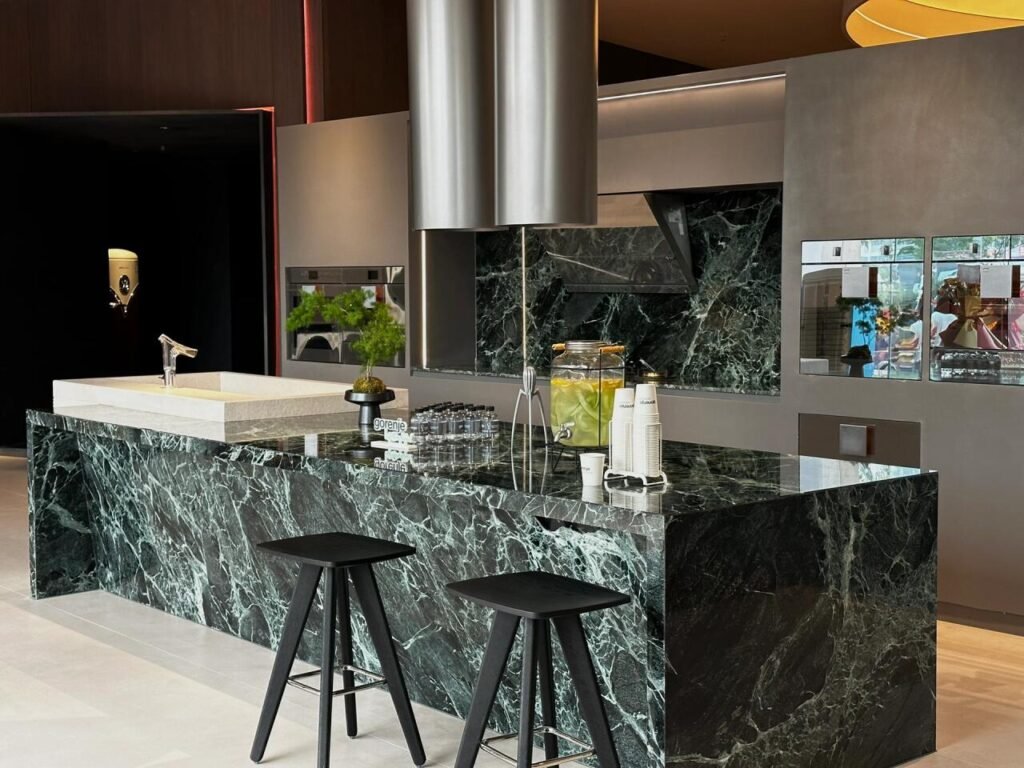
Technical Specifications: Thickness and Dimensions
Getting the technical details right is essential for a safe and successful installation.
Optimal Slab Backsplash Thickness
Standard Stone (Granite/Marble): Usually 2cm (3/4 inch) or 3cm (1 1/4 inch). For backsplashes, 2cm is preferred to reduce weight and save space.
Quartz: Often available in 2cm or 3cm.
Porcelain: This is the game-changer. Porcelain slab kitchen backsplash material often comes in 6mm or 12mm thickness. This ultra-thin profile allows it to be installed over existing surfaces in some renovation cases, reducing demolition costs.
Handling Seams in Large Kitchens
If your kitchen run is longer than the slab (usually roughly 120 inches or 10 feet), you will have a seam.
Solution: A skilled custom stone fabrication factory will use “bookmatching” or digital vein matching to make the seam nearly invisible.
Strategy: Ideally, place seams behind a sink faucet or a pot filler where they are less noticeable.
Sourcing and Manufacturing: The EDG Stone Advantage
For developers, designers, and contractors, the supply chain matters as much as the aesthetic. Sourcing from a general retailer often means high markups and limited selection.
Why Choose a Specialized Manufacturer?
Working with a wholesale slab backsplash manufacturer allows for:
Batch Control: Ensuring your countertops and backsplash come from the same block for perfect color matching.
Cost Efficiency: Buying factory-direct reduces the solid slab backsplash cost.
EDG Stone Capabilities
EDG Stone stands out as a premier partner for full slab kitchen backsplash projects.
Global Logistics: Capability to ship wholesale slab backsplash materials internationally.
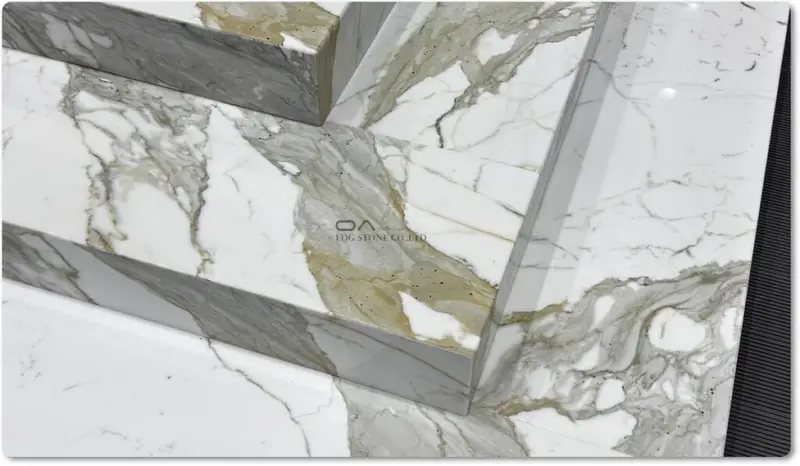
Precision Fabrication: State-of-the-art waterjet cutting ensures that outlet cutouts are precise and edges are polished to perfection.
Customization: Whether you need a heat-resistant backsplash material for a commercial kitchen or a rare bookmatched marble backsplash cost estimate, EDG Stone provides tailored solutions that general tile shops cannot offer.
Industry Regulations, Safety, and Sustainability
The stone industry is undergoing significant regulatory changes regarding safety and the environment.
Silica Safety Standards
A critical topic in 2026 is the regulation of Crystalline Silica. Cutting engineered stone (quartz) releases silica dust, which is hazardous to workers.
Regulation: New laws in regions like Australia and parts of the USA are strictly regulating high-silica engineered stone.
The Shift: This is driving the popularity of Porcelain slab kitchen backsplash options and natural stones, which often have lower silica content or are fabricated using wet-cutting methods that suppress dust. Responsible factories like EDG Stone adhere to strict wet-processing safety protocols to protect workers and ensure compliance.
Eco-friendly Sourcing
Sustainability is a key purchasing driver.
Natural Stone: A finite resource, but has a low carbon footprint in processing compared to ceramics.
Sintered Stone/Porcelain: Often made from recycled materials and is fully recyclable at end-of-life.
Conclusion
The solid slab backsplash kitchen is more than a trend; it is a design evolution toward permanence, hygiene, and seamless beauty. While the slab backsplash vs tile cost analysis shows a higher upfront investment, the value added in terms of aesthetics, ease of cleaning, and property value is undeniable.
Whether you choose the drama of a full slab marble backsplash or the high-tech resilience of a porcelain slab kitchen backsplash, the result is a space that feels custom, curated, and high-end. For those looking to execute this look with precision, partnering with a dedicated custom stone fabrication factory like EDG Stone ensures that your vision becomes a reality with the highest standards of quality and safety.
Ready to transform your kitchen? Contact EDG Stone today for a consultation on your full slab project and receive a quote on wholesale materials tailored to your design specs.
Is a slab backsplash more expensive than tile?
What is the best thickness for a slab backsplash?
Can you put a quartz slab behind a gas range?
How do you install outlets on a solid stone backsplash?
What is the difference between full height backsplash and a standard backsplash?
Core Insights: The Future of Kitchen Surfaces
Why the shift to “Slab Architecture”?
The design industry is moving towards “Slab Architecture”—a holistic approach where vertical and horizontal surfaces merge. This is not just aesthetic; it reduces construction joints, minimizes bacterial harborage points, and simplifies cleaning protocols in residential and commercial settings.
Economic Insight: The “Waste Factor” Calculation
When budgeting for a solid slab backsplash kitchen, buyers must understand that pricing models have shifted. Unlike tile (priced per utilized sq. ft.), slabs are priced per “unit.” However, the leftover material (remnants) from a full slab purchase can often be repurposed for vanity tops, coffee tables, or laundry rooms, thereby recovering value from the initial solid slab backsplash cost.
Technical Consideration: The “Shelf” Integration
The slab backsplash with shelf trend requires structural reinforcement. Unlike a simple glued tile, a stone shelf weighs significantly more. Contractors must install steel support brackets into the studs before the slab backsplash is installed. This level of planning differentiates a DIY project from a professional full stone backsplash installation.
Trend Forecast: Porcelain vs. Quartz
While quartz currently dominates, porcelain slab kitchen backsplash usage is projected to grow by 25% annually through 2027. This is driven by porcelain’s superior heat resistance (crucial for gas cooking) and the ability to print hyper-realistic marble veining without the fragility or staining issues of real stone.
References
National Kitchen & Bath Association (NKBA) – 2025/2026 Kitchen Design Trends Report.
Natural Stone Institute (MIA+BSI) – Technical Modules on Vertical Stone Installation.
Houzz – Home & Kitchen Renovation Trends Study 2025.
Architectural Digest – The Evolution of Kitchen Backsplashes.
Ceramic Tile Distributors Association (CTDA) – Large Format Porcelain Tile Standards.
Occupational Safety and Health Administration (OSHA) – Silica Standards for General Industry and Construction.
Zillow – Consumer Housing Trends Report (ROI on Kitchen Finishes).