Quick Summary:
Quick Summary: A practical, design-forward guide to white marble waterfall islands: selection, fabrication, structural best practices, factory/wholesale procurement (EDG Stone model), regulatory and sustainability considerations, and maintenance.
Introduction: Why Waterfall Edge Islands Define Modern Luxury?
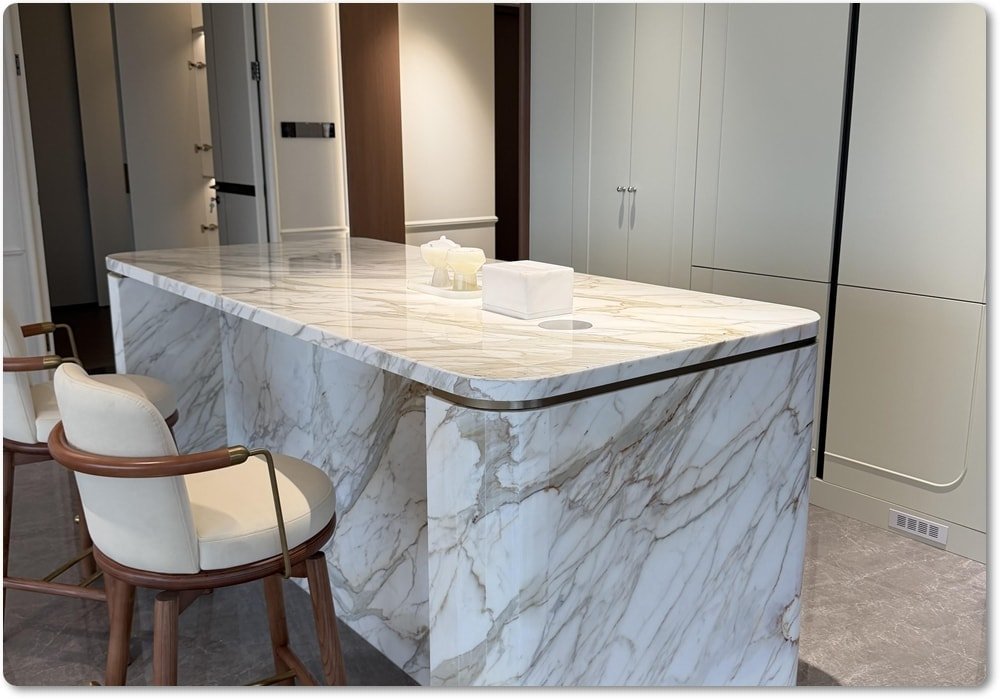
A waterfall edge transforms a kitchen island from a countertop into a sculptural object. When executed in white marble, the waterfall becomes a statement of refinement — a continuous plane that elegantly wraps from tabletop to floor, emphasizing materiality, veining, and light. For homeowners, designers, and specifiers, the waterfall edge is both an aesthetic device and a technical challenge: it requires careful slab selection, rigorous fabrication, robust island framing, and exacting installation to preserve the pristine look while ensuring durability.
This guide walks you through why waterfall-edge islands are so desirable, how to choose the right white marble (or alternatives) for performance and look, the fabrication techniques that deliver invisible miter joints and perfect bookmatching, structural load and anchoring considerations, procurement options from manufacturer/factory/wholesale channels (EDG Stone-style buying model), and practical maintenance for long-term beauty.
Design Principles: Proportion, Vein Flow, and Visual Balance
A successful waterfall island is more than a slab glued to a face. It is an exercise in proportion, continuity, and visual balance.
Proportion and scale
The waterfall’s visual weight must harmonize with the island’s footprint. Large kitchens can carry a full-height, full-width waterfall slab; compact kitchens benefit from a narrower waterfall face or a laminated waterfall that mimics the same effect without overwhelming sightlines. Consider island height, overhang depth for seating, and clearance paths when specifying a waterfall to avoid obstructing circulation.
Vein direction and bookmatching
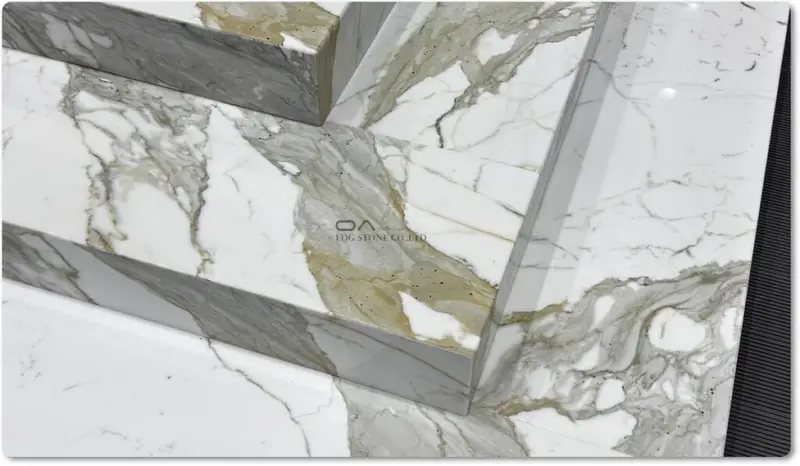
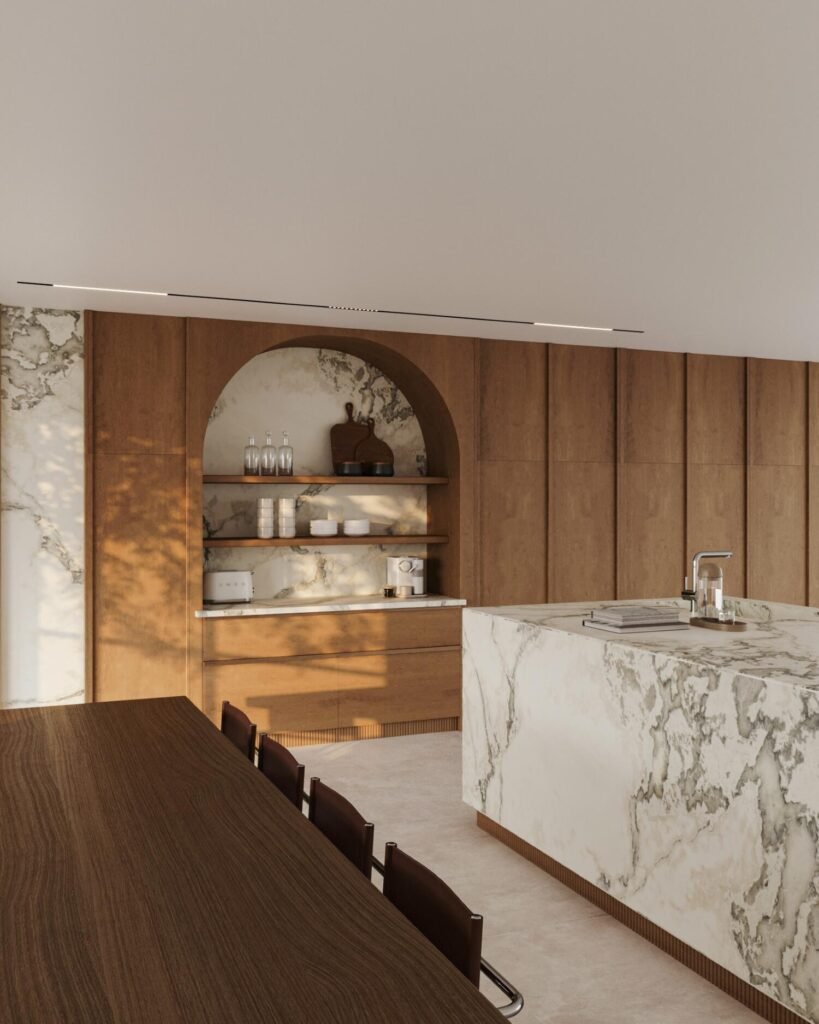
Vein flow is the design narrative. Running veins vertically down the waterfall face or continuing a horizontal vein from the countertop into the waterfall achieves different visual outcomes. Bookmatching — flipping adjacent slab slices to mirror veining — creates symmetrical, often dramatic patterns that read as intentional artwork. Always request digital slab layout proofs from the fabricator so bookmatching and vein continuity meet design intent.
Edge profile choices
Waterfalls read differently depending on the edge profile. A fully mitered, invisible seam yields the cleanest continuous plane; eased or softened edges add a subtle architectural reveal. Mitered joints require precision and are visually seamless when executed well; laminated edges (multiple layers glued to build thickness) are a cost-saving method that can still look refined when properly detailed.
Material pairings and color strategy
White marble waterfalls pair beautifully with white cabinetry for a monochromatic, high-end look, or with dark cabinetry for contrast. Metals (brass, matte black, nickel) and warm wood tones can temper the marble’s coolness and create curated interior palettes. Lighting strategy — both natural and integrated LED — dramatically affects how veining and polish read; backlighting thin translucent slabs becomes an advanced effect for certain marble varieties.
Material Selection: Marble vs. Alternatives and Performance Traits
Choosing the right material is a balance between appearance and performance.
White marble varieties and characteristics
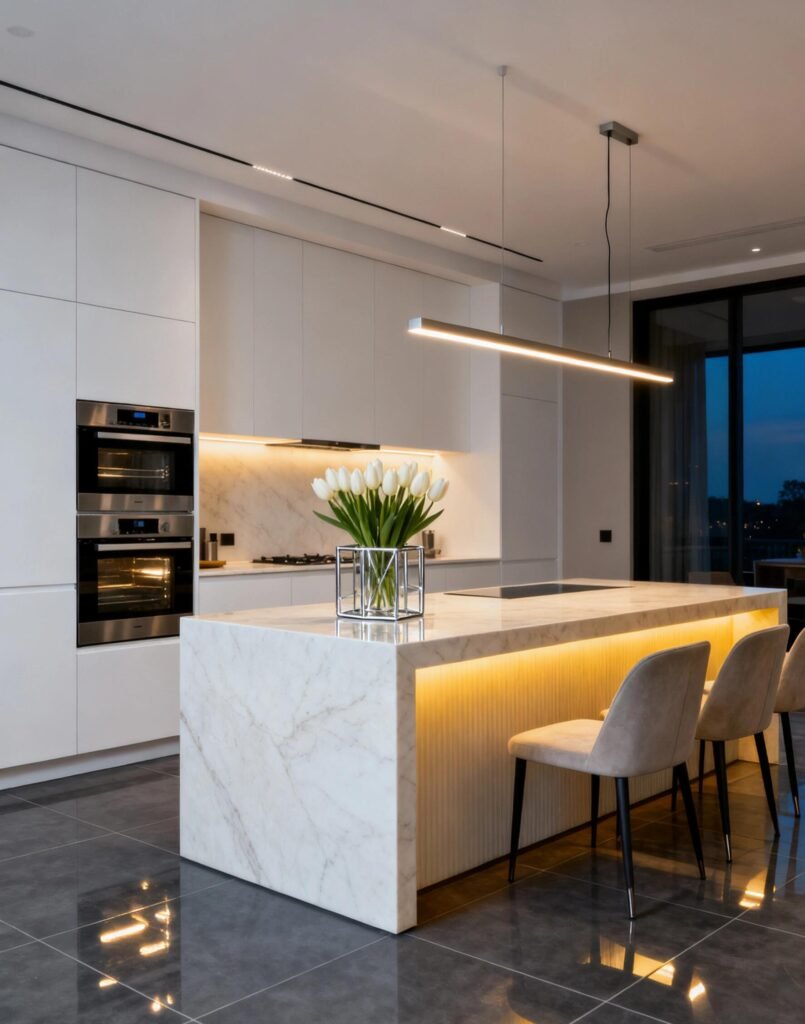
Calacatta / Statuario: Strong, dramatic veining with a luminous white background. High aesthetic value; moderate porosity and susceptibility to etching.
Carrara: Softer, finer veins with a more muted look; economical and suited to quieter monochrome designs.
Other white marbles: Regional variants offer distinct veining and tonalities; always view slabs in person where possible.
Alternatives: White quartzite and engineered stone
White quartzite: Higher hardness and abrasion resistance; visually similar to marble but with better scratch and heat performance. Good choice for high-use islands where resilience is critical.
Engineered quartz (marble-look): Provides low porosity and consistent patterning but lacks the natural depth and uniqueness of real marble. Laminated waterfall edges with engineered stone are common where budget and low maintenance are priorities.
Slab sizing, thickness, and structural implications
Full-height waterfall panels typically use 2 cm (20 mm) or 3 cm (30 mm) slabs. For vertical faces, thicker slabs provide more rigidity and allow for clean miters; however, large vertical faces may require supports or steel reinforcement integrated into the island frame. Thin-slab backers (6–12 mm translucent panels) require stable backing and are used primarily for backlit applications.
Finish selection
Polished: High gloss, shows depth and veining vividly, but highlights etches and stains.
Honed: Matte, hides light etches, ideal for contemporary kitchens.
Leathered/Brushed: Textured, tactile surfaces that minimize fingerprints and small scratches, suited for hospitality and high-traffic islands.
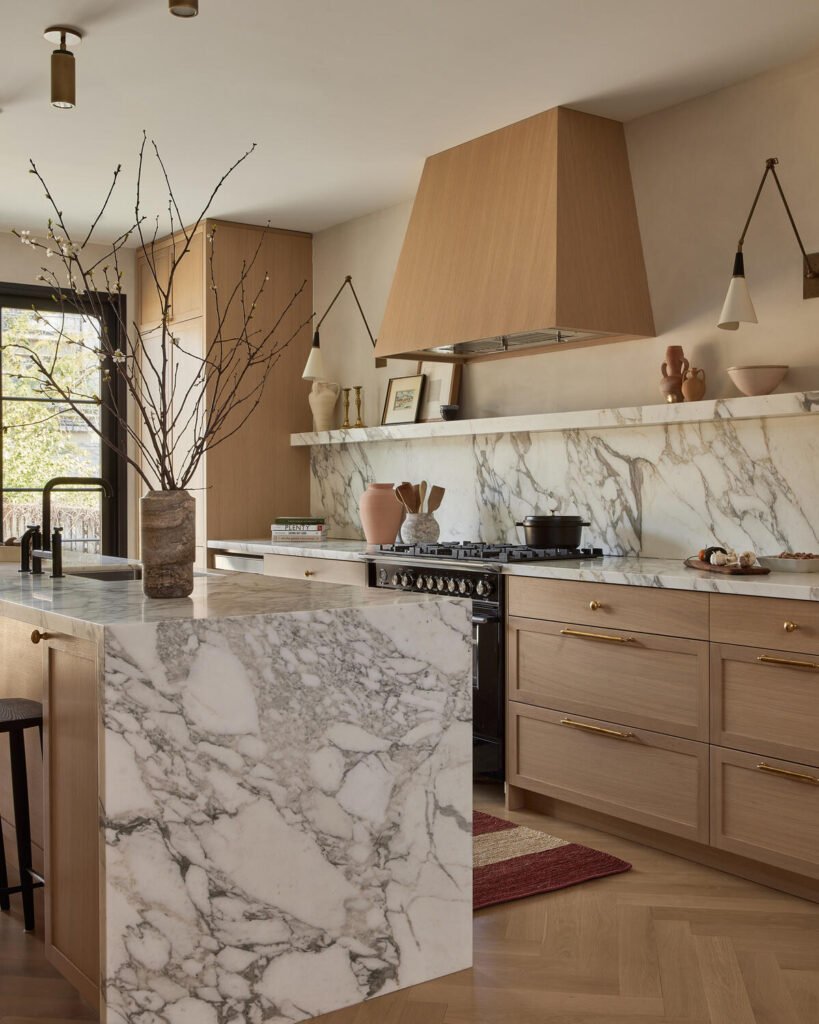
Fabrication Techniques: Achieving Invisible Miters and Perfect Joins
Fabrication is where design intent meets craftsmanship.
Full-mitered waterfall vs laminated solutions
Full-mitered waterfall: Two slab edges join at a precise 45° cut and are bonded to form a corner with matching vein continuity. This provides the most monolithic look but demands precision cutting, drying time, and professional clamping, then meticulous finishing.
Laminated waterfall: Narrow strips are laminated to build the appearance of thickness and waterfall continuity. It’s cost-effective and reduces slab waste but needs careful edge detailing to avoid visible glue lines.
CNC, adhesive selection, and seam treatments
Digital templating and CNC cutting ensure accurate miters and consistent edge profiles. Use color-matched, stone-specific epoxy adhesives for seams; a high-quality epoxy minimizes color variation and strengthens joints. After bonding, seams are ground and polished to a flush finish; this final pass is crucial to hide the seam line.
Bookmatching workflow
Bookmatching begins in the slab yard: mark slab numbers, photograph slabs, and plan cuts to place matching faces where required. The fabricator should produce a digital layout showing how countertop cuts align with waterfall faces; approval of this layout by the designer or client prevents unexpected vein directions after installation.
Protective packaging and transport
Large mitered slabs are vulnerable to chipping and breakage during transit. Adequate crating, foam protection, and transport protocols reduce on-site surprises. On receipt, inspect slabs for blemishes and confirm slab IDs match layout approvals.
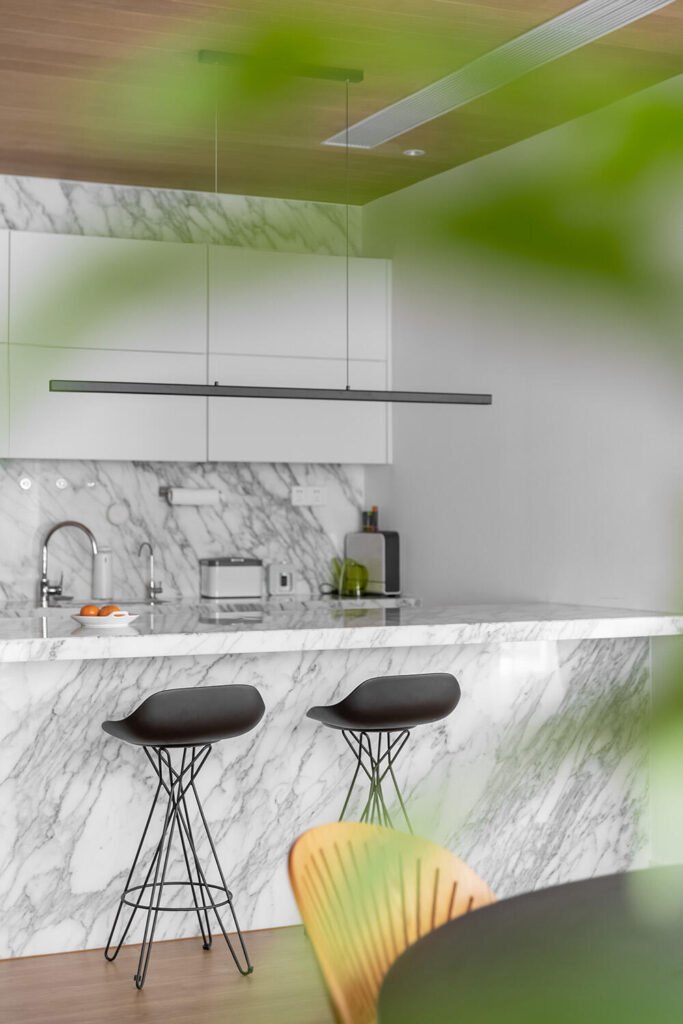
Structural & Installation Considerations
A waterfall face is both visual and structural; proper support prevents long-term problems.
Island framing and reinforcement
Islands supporting heavy stone faces should include reinforced blocking, steel brackets, or sub-frames to bear stone weight and resist lateral loads from seating or incidental impacts. For very large slabs, engineers may recommend integrated steel channels or brackets fixed to subfloor framing.
Mechanical anchors vs adhesive-only methods
Small waterfall panels may adhere satisfactorily with approved adhesives and weight-bearing backing. For full-height slabs and public/commercial installations, combine adhesive bonding with stainless-steel mechanical anchors or L-brackets concealed within cabinetry to provide redundancy and protect against adhesive failure.
On-site leveling, tolerances, and finish transitions
Installers must shim and level the stone precisely to maintain consistent overhangs and reveal lines. Tolerance control is critical where islands meet flooring, cabinetry, or appliances. Include expansion joints and consider movement from humidity or thermal changes in your specification.
Utility coordination
Islands often include sinks, cooktops, or pop-up outlets. Coordinate electrical and plumbing routing before templating to avoid cutting slots on-site that could disrupt the waterfall aesthetics. Pre-plan for undermount sinks and fixtures that align with seam placements to minimize visible cutouts on the waterfall face.
Cost, Sourcing & Procurement: Manufacturer / Factory / Wholesale Options
Budgeting and vendor selection impact quality and project risk.
Primary cost drivers
Slab rarity and grade: Premium Calacatta slabs command higher prices.
Bookmatching and yield loss: Matching veins increases waste and cost.
Complex fabrication and finishing: Mitering, polishing seams, and reinforcing frames add labor hours.
Transport and logistics: Crating and international shipping for exotic slabs raise costs.
Manufacturer/factory direct vs wholesale/distributor
Factory-direct sourcing, like working with a manufacturer such as EDG Stone, allows slab-level control, direct bookmatching requests, and better lead-time management. Wholesalers offer convenience and smaller quantities but may limit slab selection and book-matching options. For waterfall islands where continuity is crucial, manufacturer/factory channels offer the best control.
RFQ and specification checklist
When requesting quotes, include:
Slab ID and slab photos
Desired finish and thickness
Bookmatching requirement and vein direction
Edge profile and miter method
Reinforcement expectations and installation method
Sealer and adhesive preferences (low-VOC specification if required)
Lead times and international logistics
Plan lead times for slab procurement, fabrication queue, and shipping; custom bookmatched orders commonly run several weeks to months, depending on slab availability and fabrication workload. Account for potential delays during peak seasons and port congestion.
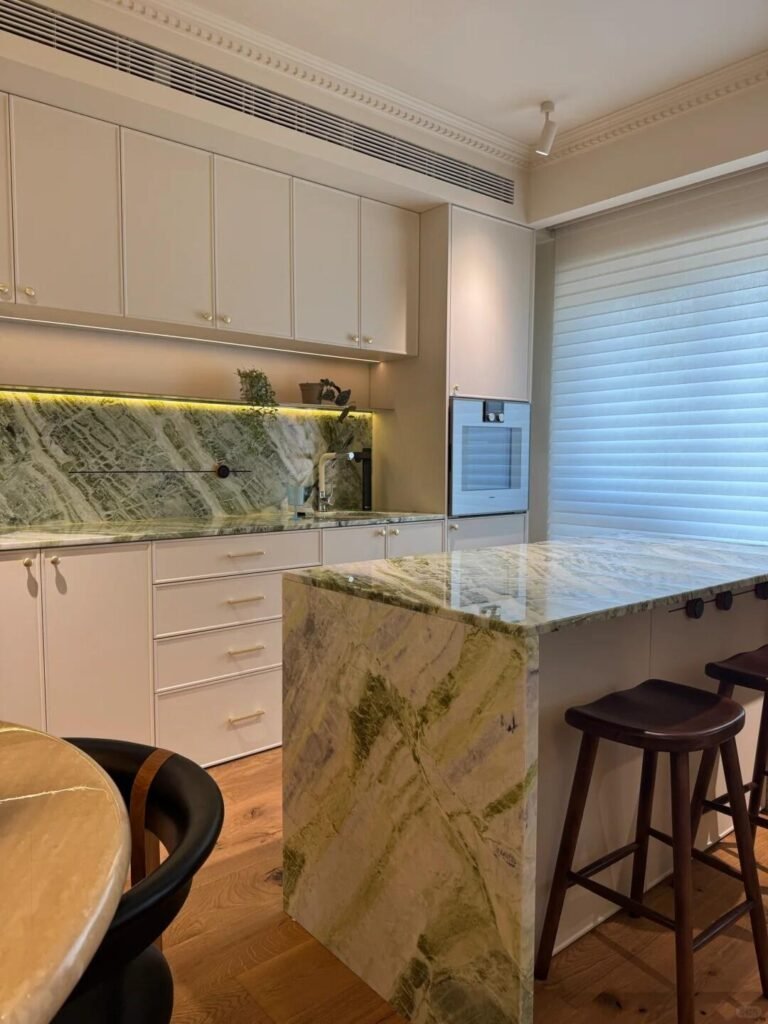
Regulations, Safety & Sustainability
Regulatory compliance and sustainability are increasingly part of procurement decisions.
VOCs, sealers, and adhesives
Many jurisdictions regulate volatile organic compounds in architectural adhesives and sealers. Specify low-VOC or CARB-equivalent products where required to comply with client health and local regulations. Low-VOC options protect indoor air quality and often align with green building programs.
Worker health and silica safety
Fabrication produces respirable crystalline silica. Fabricators and installers must follow safe work practices and provide training and protective controls to reduce silicosis risk. Specify fabricators with documented silica controls and safety programs.
Sustainability and traceability
Buyers now ask for quarry traceability and sustainability certifications. Suppliers that provide environmental product declarations, responsible sourcing documentation, or third-party standards evidence ease client approvals and align with corporate ESG goals. Consider reclaimed stone or locally quarried material to reduce embodied carbon where feasible.
Pros & Cons: Is a Waterfall Island Right for Your Project?
Pros
Striking visual continuity and high-end design language.
Material becomes sculptural, elevating perceived value.
Minimal horizontal seams when executed as a single slab.
Cons
Higher material and fabrication costs, especially with book-matching.
Potential vulnerability to vertical edge impacts and chips.
Structural requirements increase installation complexity and cost.
When to avoid a waterfall?
Avoid full waterfall installations in very small kitchens where the visual weight becomes overpowering, or where frequent impact risks exist (heavy commercial kitchens). In tight budgets, consider laminated waterfalls or selective waterfall faces to achieve the look at a lower cost.
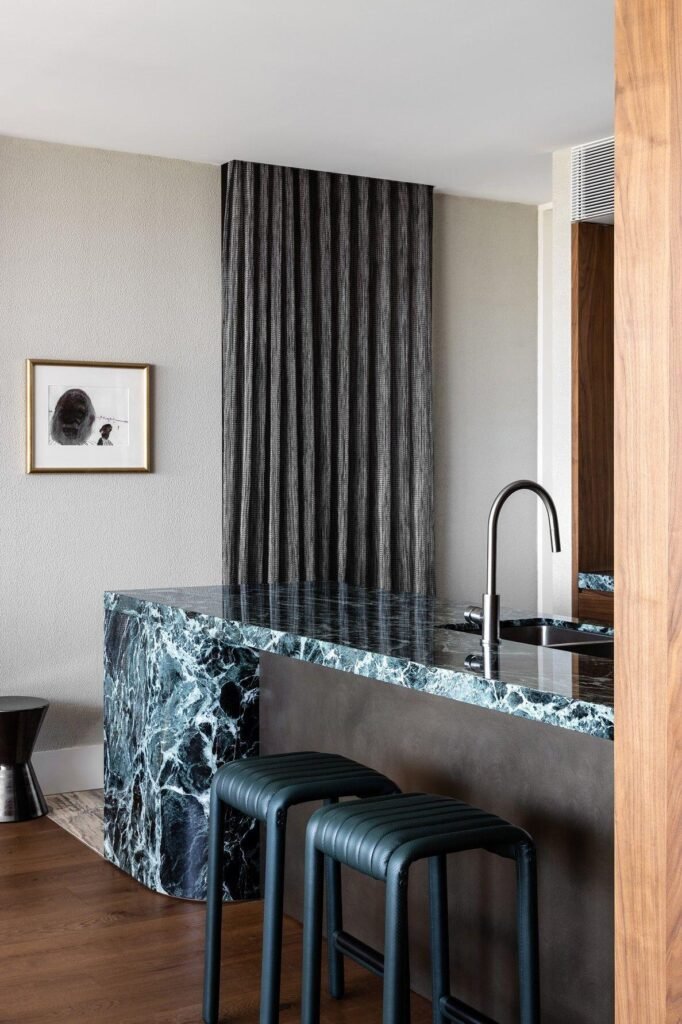
Real-world Case Studies:
Luxury Residence: Full Bookmatched Calacatta Island
A design team specified a single bookmatched Calacatta slab that flowed from the island top to the floor on both ends, creating a bilateral waterfall effect. Precision templating and a reinforced subframe allowed for an invisible mitered corner and continuous veining. The owner prioritized slab selection in-person and accepted longer lead times for a coherent result.
Urban Condo: Laminated White Marble Look
To manage cost and slab waste, a condo used a narrow laminated marble-look slab for the waterfall face while keeping the top surface as a single higher-grade slab. The result retained visual continuity while reducing bookmatching costs.
High-traffic Showroom: White Quartzite Waterfall
The showroom needed resilience and marble aesthetics. White quartzite provided improved scratch resistance and heat tolerance. The fabricator used concealed mechanical anchors and a honed finish to reduce visible wear over time.
Maintenance & Longevity
Daily care
Clean with pH-neutral stone cleaners and soft microfiber cloths. Avoid acidic or abrasive cleaners that can etch polished marble.
Reseal and stain response
Reseal impregnating sealers every 12–36 months, depending on use. Address oil-based stains with poultice formulas and consult stone restoration professionals for deep-set discoloration.
Repairing chips and edge damage
Professional stone repair can epoxy-fill and color-match chips. Preventative measures such as rounded edge profiles at high-impact zones, or discreet bumpers for seating areas, reduce repair frequency.
Visual Assets & Image Strategy
Hero image brief (12:9 ratio): Real kitchen in natural daylight featuring a white marble waterfall island flowing from countertop to the floor on both ends. Minimal on-image text. Styling: matte brass faucet, white cabinetry (or dark contrast cabinetry option), warm wood bar stools. Include 2 inset images: (1) close-up of bookmatched vein continuity, (2) CNC shop moment showing miter preparation.
Alt text example: “Full-slab white marble waterfall island with bookmatched veining and polished finish.”
FAQ
What is a waterfall edge countertop, and why choose it?
A waterfall edge is a countertop that continues vertically down the side(s) of an island or cabinet, creating a continuous face from top to floor. It is chosen for its sculptural, monolithic appearance, which emphasizes materiality and vein continuity—transforming a functional surface into a focal design element.Are waterfall-edge white marble islands durable for everyday kitchens?
White marble island waterfalls are durable with proper material selection and detailing, but marble is softer than quartzite and can scratch or etch with acids. For high-use kitchens, choose harder stones like white quartzite or select a honed finish and plan for regular care and resealing to maintain long-term appearance.How much more does a waterfall edge cost compared to a standard countertop?
Waterfall edges cost more due to additional slab usage, potential bookmatching, complex fabrication (miters or laminations), and structural reinforcement. Exact cost differences vary by slab grade, region, labor rates, and whether you source factory-direct or through a distributor.Can a waterfall edge be bookmatched to the countertop surface?
Yes. Bookmatching is a preferred method to create vein continuity across the countertop and waterfall face. It requires careful slab selection and digital layout planning during fabrication to ensure veins align as intended.How do I prevent chips and damage on vertical waterfall edges?
Use rounded or eased edge profiles in high-impact zones, add concealed reinforcement behind the slab, and consider mechanical anchors. Avoid hard impacts near edge zones and specify a protective finish where practical. Regular inspections and prompt repair of small chips preserve the overall aesthetic.
Semantic Closure: How / Why / What / Options / Considerations
How: Achieve a waterfall island by selecting appropriate slabs, approving digital layouts for bookmatching, using CNC precision cuts, bonding miters with color-matched epoxy, and installing on a reinforced island frame with mechanical anchors where required.
Why: Waterfall edges create uninterrupted material planes that elevate design, improve perceived luxury, and focus attention on material characteristics such as marble veining and finish quality.
What: Specify slab ID, finish, thickness, edge profile, miter method (full-miter or laminated), reinforcement approach, sealer, and adhesive product codes, and installation tolerances in the purchase order to ensure predictable outcomes.
Options: Full-mitered waterfalls for monolithic aesthetics; laminated waterfalls for budget-conscious projects; white quartzite or engineered alternatives for enhanced durability; thin-backlit panels for dramatic lighting effects.
Considerations: Factor in VOC rules when choosing adhesives and sealers, require fabricator silica-safety practices, document quarry traceability for sustainability goals, and budget for regular maintenance to preserve marble’s longevity and lustre.
References (author, article or document title, source — no links)
ANSI/NSI 373 — “Natural Stone Sustainability Standard” — ANSI / Natural Stone Institute Program Documents.
Occupational Safety and Health Administration — “Guidance on Respirable Crystalline Silica” — OSHA Publications.
California Air Resources Board — “Regulations on Volatile Organic Compounds for Architectural Coatings and Adhesives” — CARB Regulatory Summaries.
ASTM International — “Standards for Dimension Stone and Stone Installation” — ASTM Technical Standards.
Grand View Research — “Natural Stone Market Analysis and Forecast” — Market Research Report.
Environmental Protection Agency — “Indoor Air Quality and VOC Recommendations” — EPA Guidance Documents.
Verified Market Research — “Natural Stone Market Report” — Industry Analysis.
Industry Fabricator Technical Bulletin — “Best Practices for Mitering and Seaming Large Stone Panels” — Trade Publication.