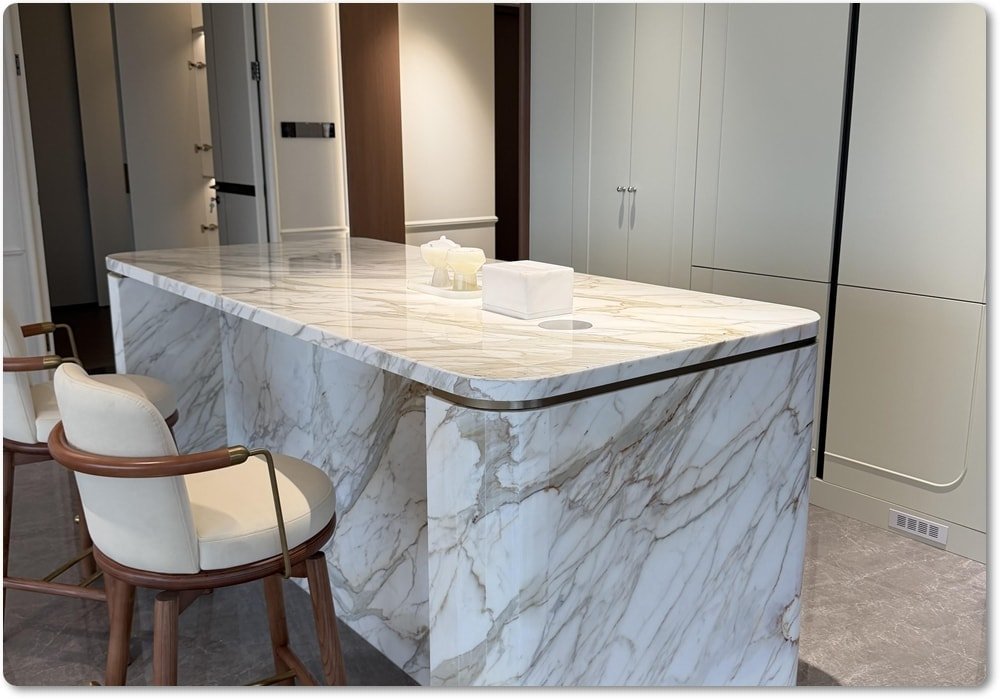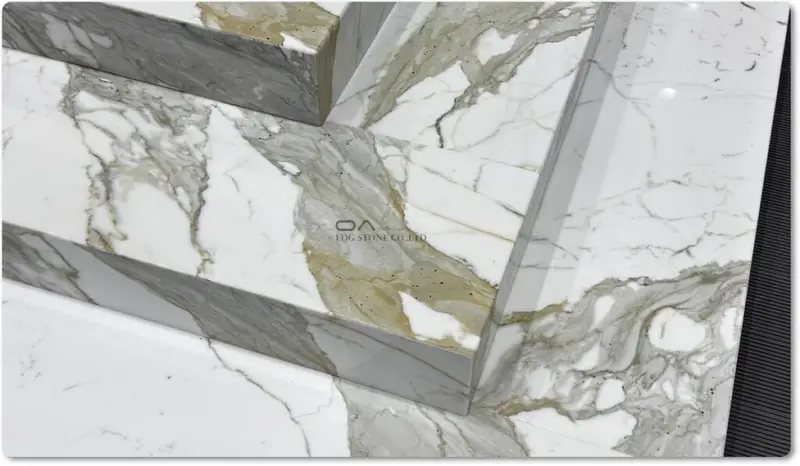
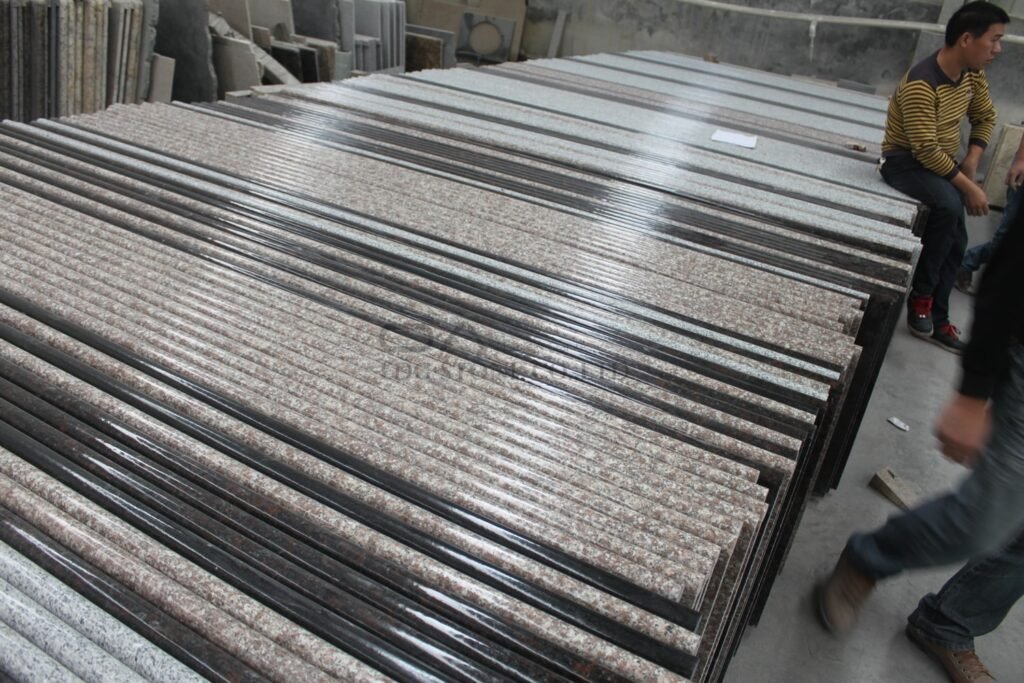
A quick historical lens: granite’s rise and cultural foothold
Granite’s rise in the late 20th and early 21st centuries was driven by slab production scale, the ability to ship large full slabs, and consumer demand for durable, “natural” surfaces. Big-box retailers and national fabricators made granite affordable at scale; a wide palette of speckled, veined, and exotic patterns became household icons. The result: granite became synonymous with long-lasting kitchen upgrades and a visible marker of resale value.
Design cycles, however, are cyclical. What was once ubiquitous now competes with tastes that favor minimalism, larger veining, or ultra-uniform surfaces. Still, the intrinsic qualities that first made granite desirable—hardness, toughness, and heat tolerance—haven’t changed. Instead, the conversation among professionals has shifted from “granite or not?” to “where does granite add the most value?”
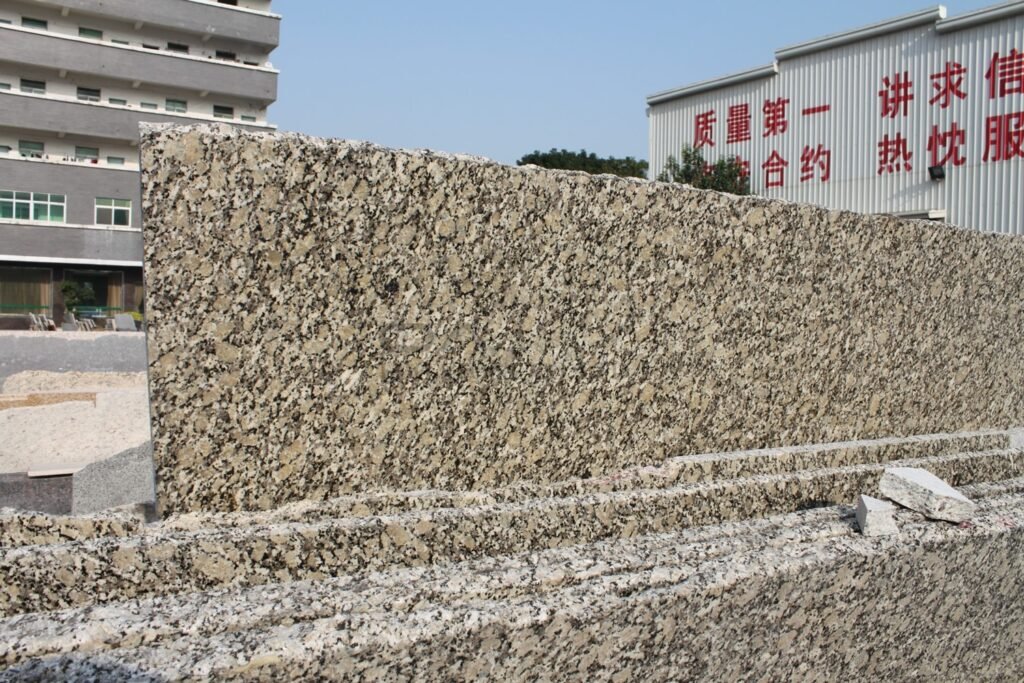
Market signals today: demand, pricing, and channel dynamics
The countertop market in North America now looks like a multi-player ecosystem. Engineered quartz brands have gained share due to uniform patterns, broad color ranges, and aggressive marketing that highlights low maintenance. Porcelain and sintered-stone slabs are carving niches for ultra-thin, lightweight, large-format applications. But market data and fabricator reports show granite retains steady demand in certain segments:
Residential luxury and bespoke projects that value unique veining and natural variability.
Commercial settings where heat resistance and hardness are essential (restaurant pass-throughs, heavy-duty worktops).
Regions where local supply or favorable slab pricing make granite cost-competitive.
Pricing dynamics are complex: granite slab price bands vary widely by origin and rarity, from economical local granites to rare, high-end exotics commanding substantial premiums. Fabrication and installation labor—seams, edge profiles, and complicated sinks—still represent a significant portion of installed cost for any material, so contractors and homeowners weigh not just slab price but total installed value.
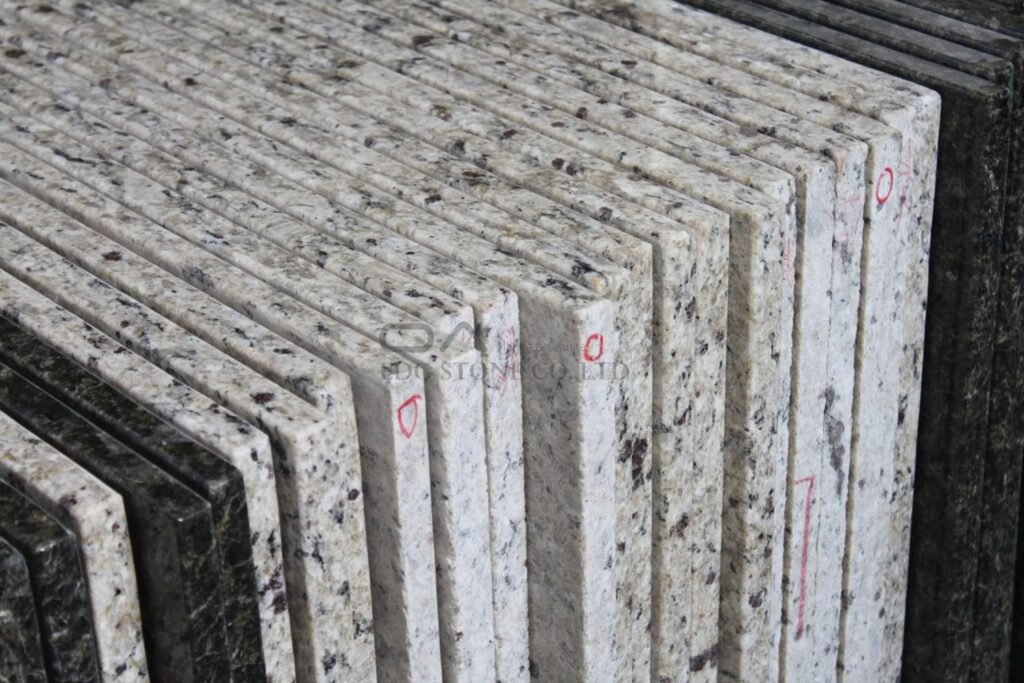
Design trends: Is speckled granite dated?
“Speckled” granite—those classic salt-and-pepper, heavily mineral-flecked patterns—can feel dated when used across entire kitchens without balancing design choices. Many designers now treat traditional speckled granites as accent materials rather than whole-room finishes.
Contemporary approaches that keep granite relevant include:
Using granite selectively (island tops, accent walls, or statement vanities) while pairing with simpler surrounding surfaces.
Choosing granites with bolder veining or larger-scale patterns to align with modern aesthetic preferences for drama and movement.
Selecting finishes—honed, leathered, or polished—to tailor reflectance and perceived texture. Honed or leathered finishes can mute speckle and feel more contemporary.
In short, designers say speckled granite is not intrinsically “bad”; it’s about context and proportion. Trend-aware designers recommend more restrained use or careful pairing to avoid an outdated look.
Material competition: quartz, porcelain, sintered stone — why have they grown?
Engineered alternatives rose quickly because they solve certain pain points:
Uniformity: quartz and porcelain offer consistent color/pattern across production runs, making visual planning easier for large, repeatable installations.
Low maintenance: many engineered products are marketed as non-porous and maintenance-free, appealing to buyers prioritizing ease of care.
Thin/large-format options: sintered stone and porcelain permit ultra-thin slabs and large panels for modern seamless aesthetics and competitive edge profiling.
Nonetheless, granite often outperforms engineered alternatives on parameters like heat resistance (still better than most resins) and repairability in the sense that chips can be polished out and patina develops naturally. For high-heat tasks—think stovetop-adjacent work or commercial kitchens—granite remains a practical choice.
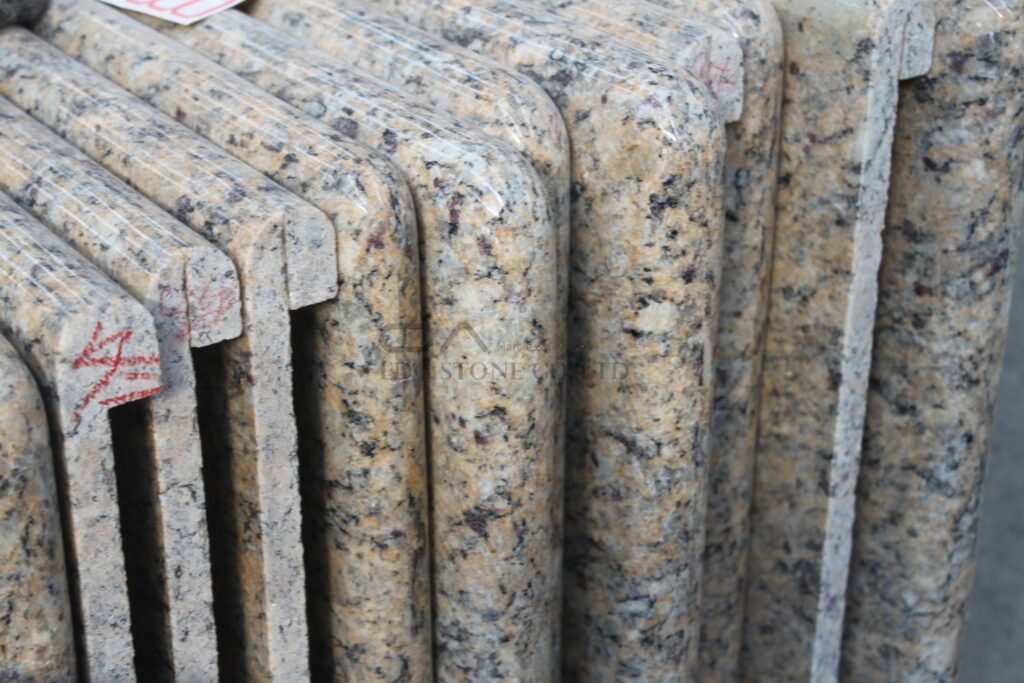
Fabrication & finish options: polished, honed, leathered — and how to change finishes.
Finish changes are both aesthetic and functional. Polished granite provides a high-gloss reflective surface that brings out depth and color contrast. Honed granite presents a soft, satin look with lower gloss and less glare. Leathered finishes add tactile texture and reduce fingerprinting.
“How to make shiny granite honed” — practical overview:
Assessment: confirm the granite type, current finish, and any existing sealers. Different mineral matrices respond differently to abrasion.
Progressive abrasion: fabricators use a sequence of diamond abrasives, beginning with a coarser grit and moving to finer grits to remove the polished layer and reduce surface gloss. Equipment includes variable-speed grinders, sanding pads, and water delivery systems to manage dust and heat.
Finish control: the final grit and pad selection determine sheen. A gloss meter can quantify gloss units; honed finishes often target a low gloss unit range to achieve the desired satin look.
Sealing: honed surfaces may initially show more absorption and may require impregnating sealers to reduce staining risk. Sealer selection and application method must match the surface porosity and finish.
Quality check: inspect for evenness, surface scratches, and any color changes resulting from the abrasion process.
Trade notes: not all polished granite can be converted to a perfectly uniform honed appearance without visible variation; test patches and mock-ups are essential. Additionally, the long-term aging of a honed surface will differ from polished—honed surfaces, which may patina and show wear differently.
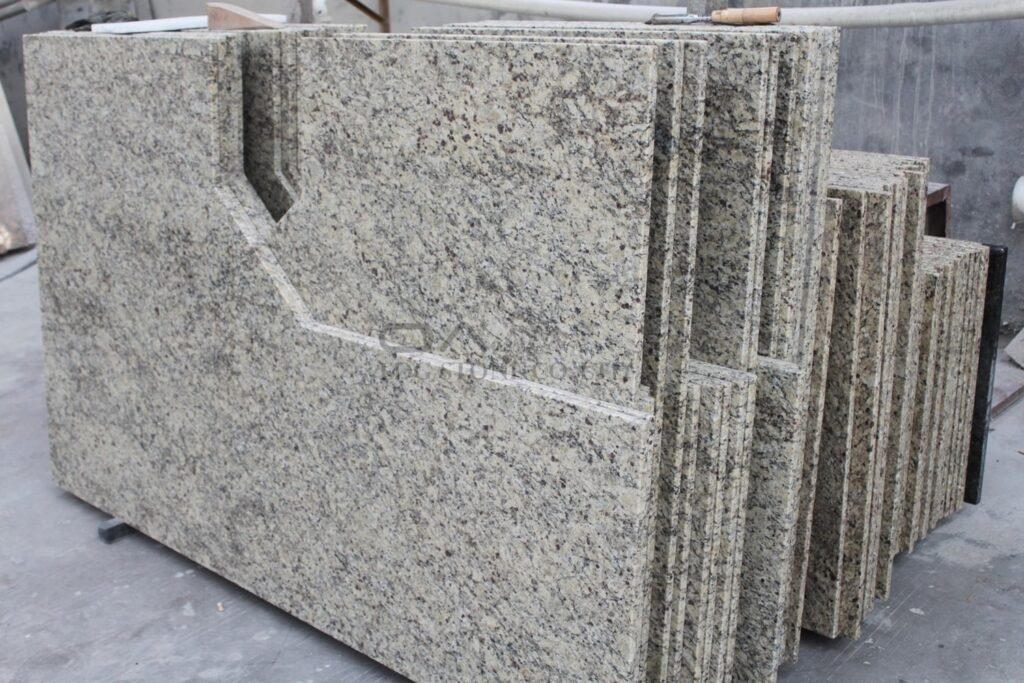
Restoration and long-term maintenance
Granite is repairable and often improves with thoughtful maintenance. Resealing schedules vary by stone type and usage—from annually for heavy-use zones to every few years for lighter domestic use. Chips and minor scratches can be repaired with epoxies and color-match fillers, followed by localized polishing. For high-gloss areas, periodic repolishing restores luster; for honed surfaces, re-honing or light abrasive cleaning may be used to maintain a uniform appearance.
Suppliers and fabricators typically provide maintenance guides; for architects and facilities managers, specifying maintenance in operation manuals avoids warranty disputes.
Supply chain and manufacturing realities
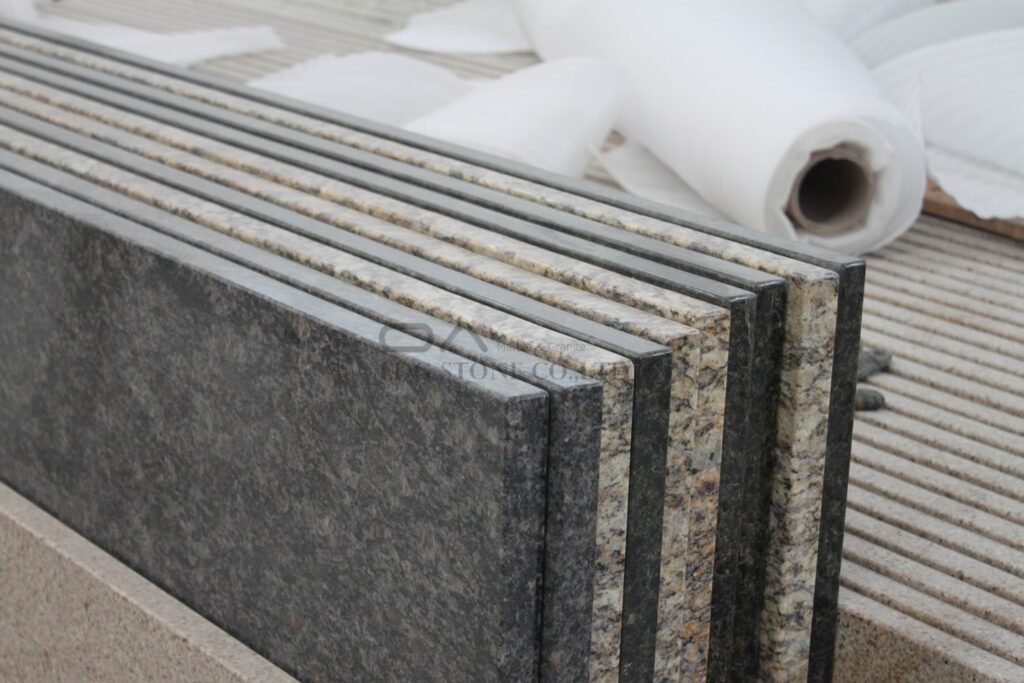
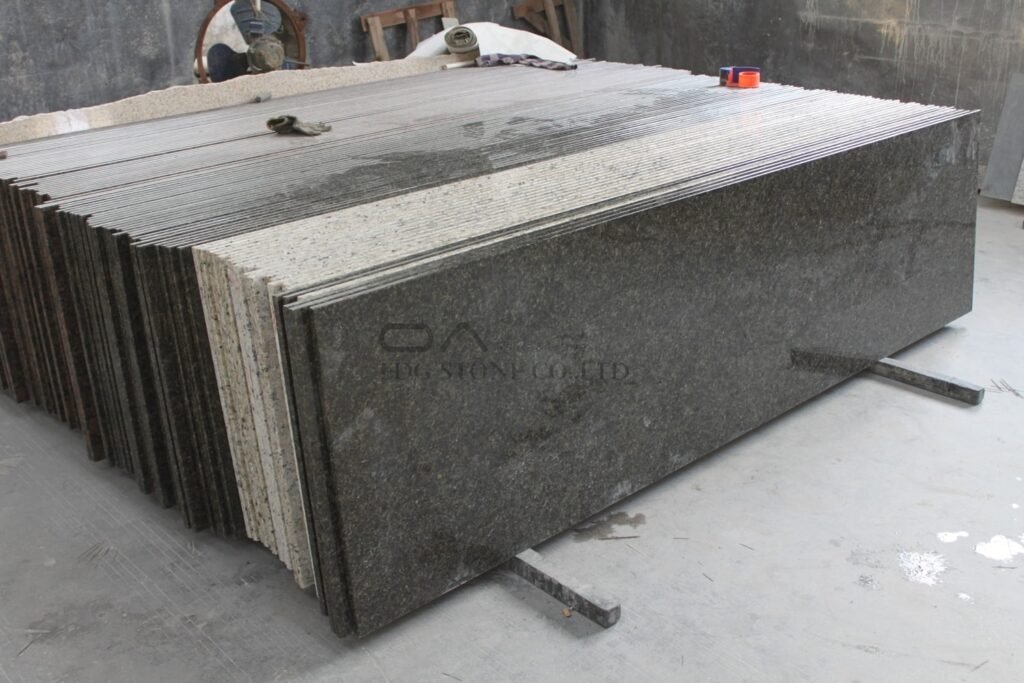
Granite sourcing is global: countries with rich geological deposits export a range of granites, from inexpensive local stone to rare exotics. Global freight costs, quarry access, and geopolitical factors influence availability and lead times. Fabricators compete by offering fast-ship slabs, assured quality, and narrow tolerances.
Many manufacturers now maintain mixed product lines—natural stone alongside engineered slabs—to capture a broader market. This flexibility matters: when an architect specifies granite, a supplier able to offer near-color alternatives in engineered products can help manage budgets and schedules.
Sustainability, regulation, and industry direction
Sustainability conversations increasingly influence specification choices. Natural stone has an embodied energy and mining footprint, but it is durable and long-lived. Engineered alternatives have manufacturing footprints, often with resin components whose lifecycle is debated. Professionals are asking for Environmental Product Declarations (EPDs), transparency around quarry reclamation, and worker safety practices.
Workers’ health—especially respirable crystalline silica exposure during cutting and polishing—remains a regulatory focus. Firms that demonstrate compliance with workplace safety standards and best practices for dust control are more attractive to large institutional buyers and designers focused on ESG priorities.
Granite’s future positioning will depend in part on suppliers’ ability to provide credible environmental transparency and safe fabrication processes alongside design flexibility.
What professionals are saying: voices from design, fabrication, and retail?
Conversations with kitchen designers, architectural specifiers, and fabricators reveal consensus and divergence:
Designers: Many value granite’s uniqueness for statement pieces; however, for whole kitchens, some prefer quartz for its predictability. Designers recommend granite in applications where its natural look is an advantage—feature islands, hearths, and custom vanities.
Fabricators: report steady granite demand but note increased requests for engineered options. They emphasize granite’s durability and say that skilled shop work is essential to minimize seams and ensure visually cohesive installs.
Showroom retailers: see granite purchases from clients seeking natural material authenticity; resale value and perceived luxury remain selling points.
Overall, professionals position granite as a premium, situational material rather than the de facto default.
Case studies: how granite is re-positioned in real projects
Case Study A — Luxury condo lobby: Designers used large-format, book-matched granite panels on a reception desk and feature wall. The natural veining provided drama that engineered options could not replicate; granite was chosen for visual uniqueness and high-traffic durability.
Case Study B — Restaurant pass-through counters: Granite’s heat resistance and scratch resilience made it the practical choice over quartz; a leathered finish masked fingerprints and delivered a contemporary look.
Case Study C — Suburban kitchen remodel: Homeowner wanted low-maintenance; quartz was selected for most surfaces, while a contrasting exotic granite island was used as a focal point—balancing cost with aesthetic impact.
These examples show a consistent pattern: granite is used where its natural characteristics are leveraged as a design advantage rather than applied everywhere by default.
Procurement and specification guidance for project teams
Practical spec guidance for architects and buyers:
Be explicit about finish, fabrication tolerances, and seam placement in specifications.
Require physical mock-ups for feature areas and approve samples under standardized lighting.
Include maintenance guidance and warranty language.
Consider hybrid strategies: specify engineered surfaces for the primary field area and granite for the focal elements.
Ask suppliers for EPDs or environmental and safety documentation if sustainability is a project priority.
Well-constructed specs reduce disputes and help align design intent with installation realities.
Google hot-search FAQ
Q1: Is granite still in style?
Granite is still in style for certain applications. While whole-kitchen granite installations are less ubiquitous than a decade ago, granite remains highly desirable as a feature material and for heavy-use surfaces because of its durability and natural character.
Q2: Is speckled granite dated?
Some speckled granites can read as dated, especially when used extensively without modern design balance. Designers typically recommend using speckled varieties selectively or pairing them with contemporary materials and finishes to avoid an outdated look.
Q3: What is replacing granite countertops?
Engineered quartz, large-format porcelain, and sintered stone are popular alternatives due to their uniformity and low maintenance. However, these materials are not direct replacements across all use-cases; granite still wins where heat and scratch resistance matter.
Q4: How do you make polished granite honed?
Converting polished granite to a honed finish involves progressive abrasion with diamond abrasives to remove the polished layer and reduce surface gloss. The process requires test patches and skilled fabrication; some stones respond better than others.
Q5: Are granite countertops sustainable?
Sustainability depends on extraction practices, transportation footprint, and product lifespan. Granite is long-lasting and repairable, which supports sustainability claims, but architects increasingly ask for EPDs and transparent quarrying practices when making material choices.
Semantic Closure
How: Use granite strategically—reserve it for focal elements and heavy-use surfaces. When converting finishes (polish → honed), require test patches and specify abrasion sequences, gloss targets, and sealer protocols in the fabrication scope.
Why: Granite’s unique, non-repeatable patterns and robust physical properties deliver value that engineered surfaces can’t always match; where authenticity and high heat tolerance matter, granite remains superior.
What: Deliverables for a granite spec should include approved slab samples, finish mock-ups, installation seam maps, and maintenance schedules to avoid aesthetic or performance surprises after install.
Options: For uniformity and low maintenance, choose quartz or porcelain; for drama or extreme durability, choose granite; for minimal thickness or veneer-style cladding, consider sintered stone.
Considerations: Factor in lead times, potential for vein/variation matching, repairability, maintenance expectations, embodied energy, and the supplier’s documentation (EPD, quarry practices, safety compliance).
References (author, title, source — no links)
1. “Natural Stone: Durability and Design Guidance” — Natural Stone Institute, industry white paper.
2. “Standard Test Methods for Dimension Stone” — ASTM International, standards compendium.
3.”Silica: Worker Safety and Health Guidance” — OSHA compliance guide.
4.”Sustainable Materials and Worker Health: Guidance Summary” — ECHA technical brief.
5.”Market Trends: Natural Stone vs Engineered Surfaces” — Stone World editorial analysis.
6. “Material Lifecycles and Comparative Performance of Architectural Surfaces” — peer-reviewed article.
7. “Color Measurement and Surface Finish Standards” — ISO guidance documents.
8. “How material supply chains are reshaping interior finishes” — Construction Dive industry feature.