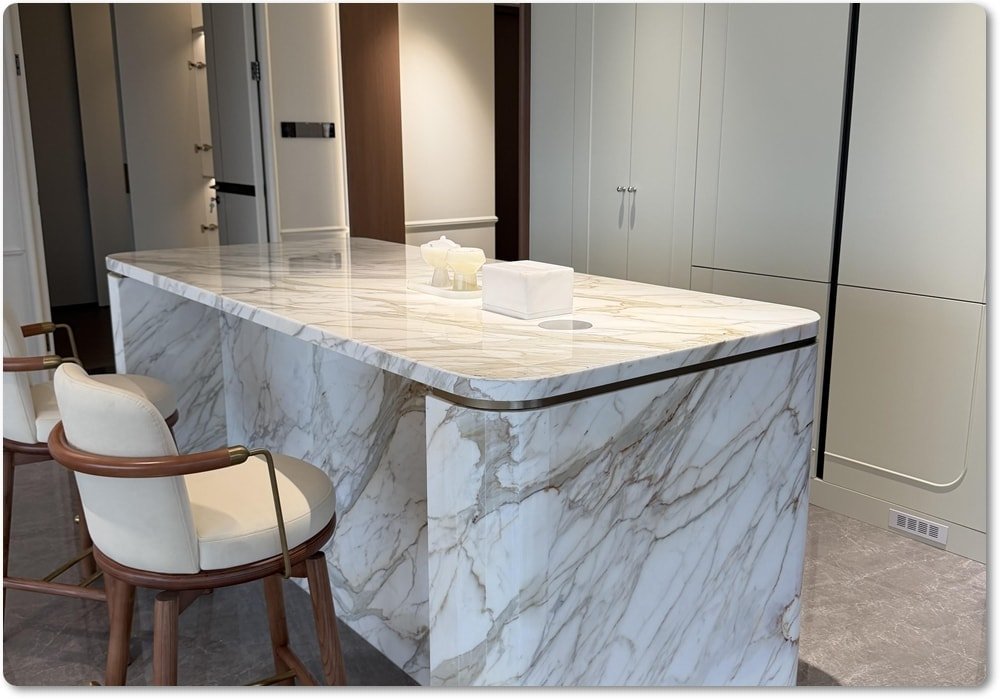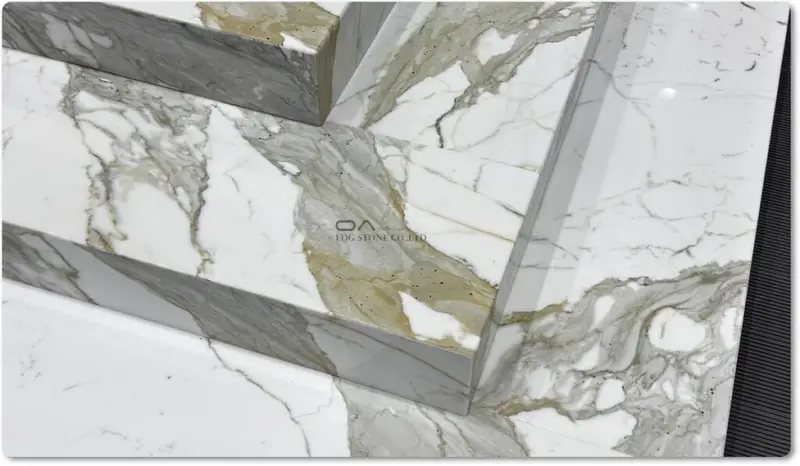
White granite is a top choice for kitchen countertops and architectural projects. It combines natural beauty with exceptional hardness. However, white stone shows stains, water spots, and micro-cracks faster than dark granite.
This comprehensive technical guide outlines exact protocols for daily cleaning, deep restoration, chemical sealing, and structural repairs.
Technical Specifications and Material Properties
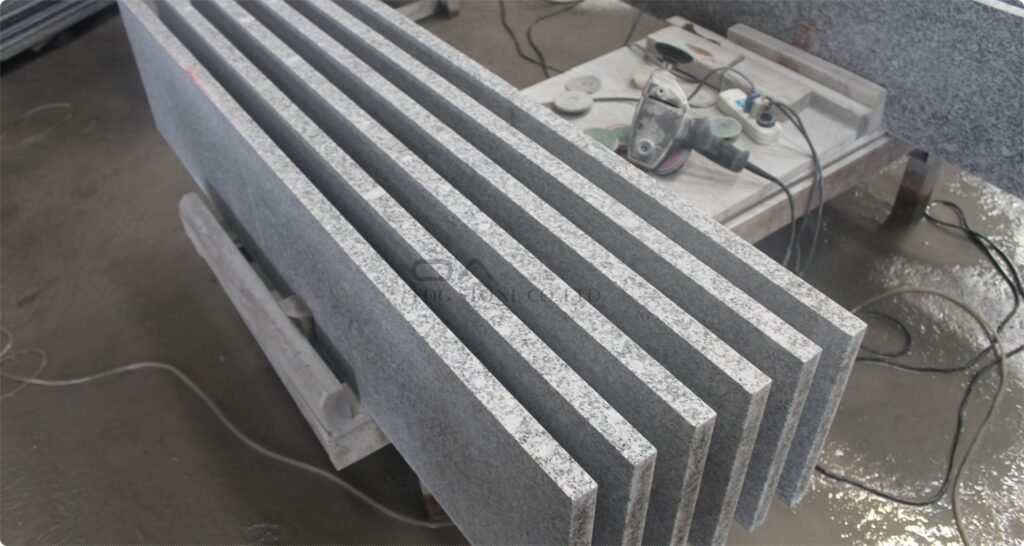
White granite contains high concentrations of quartz and feldspar, along with trace amounts of dark amphibole or mica minerals. These minerals give the stone its high hardness, measured at 6 to 7 on the Mohs hardness scale.
+--------------------------+------------------------------------+
| Physical Property        | Technical Range / Value           |
+--------------------------+------------------------------------+
| Density                  | 2.63 - 2.75 g/cm³                  |
| Water Absorption Rate    | 0.2% - 0.5% (ASTM C97)             |
| Compressive Strength     | 190 - 220 MPa (ASTM C170)          |
| Flexural Strength        | 12 - 15 MPa (ASTM C880)            |
| Mohs Hardness            | 6.0 - 7.0                          |
+--------------------------+------------------------------------+
Because natural stone is porous, liquids can penetrate the surface through capillary action. White granite has higher natural porosity than dark basalt or black granite, making proper sealing essential.
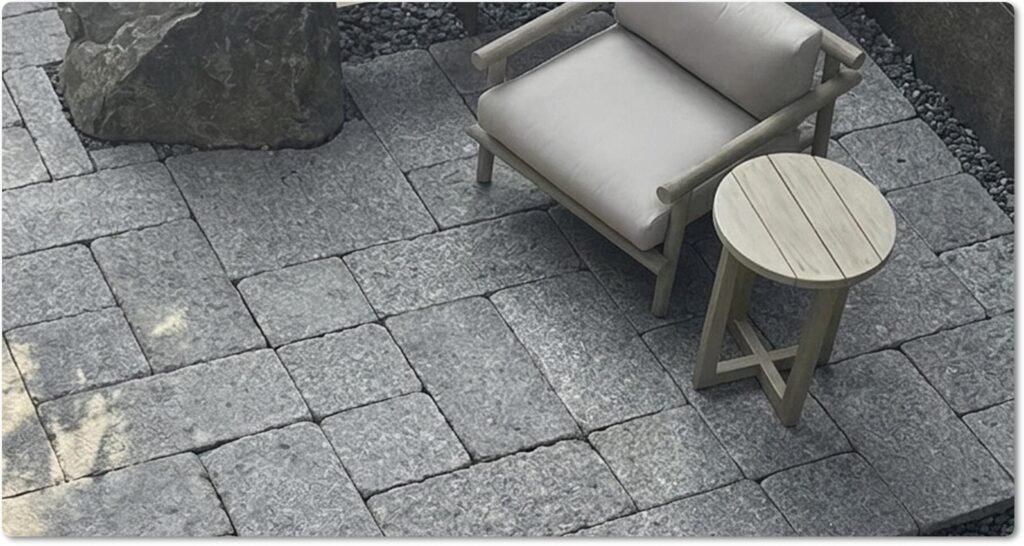
Daily Cleaning Protocol
Improper cleaning agents dull the natural resin finish and erode stone sealers over time.
Safe Daily Cleaning Agents
pH-Neutral Stone Cleaners: Formulated specifically for natural stone with a pH between 7.0 and 8.0.
Warm Water and Mild Dish Soap: Dilute 1 teaspoon of mild soap in 1 quart of warm water for daily maintenance.
Microfiber Cloths: Use non-abrasive microfiber towels to clean without scratching the surface.
Chemicals to Avoid
Acidic Cleaners: Lemon juice, vinegar, and tile cleaners (pH < 6.0) dissolve calcium deposits and etch the stone polish.
Harsh Alkaline Cleaners: Bleach and ammonia (pH > 10.0) degrade stone sealants and leave cloudy chemical residues.
Abrasive Scouring Powders: Silica-based abrasive pads scratch the factory polish.
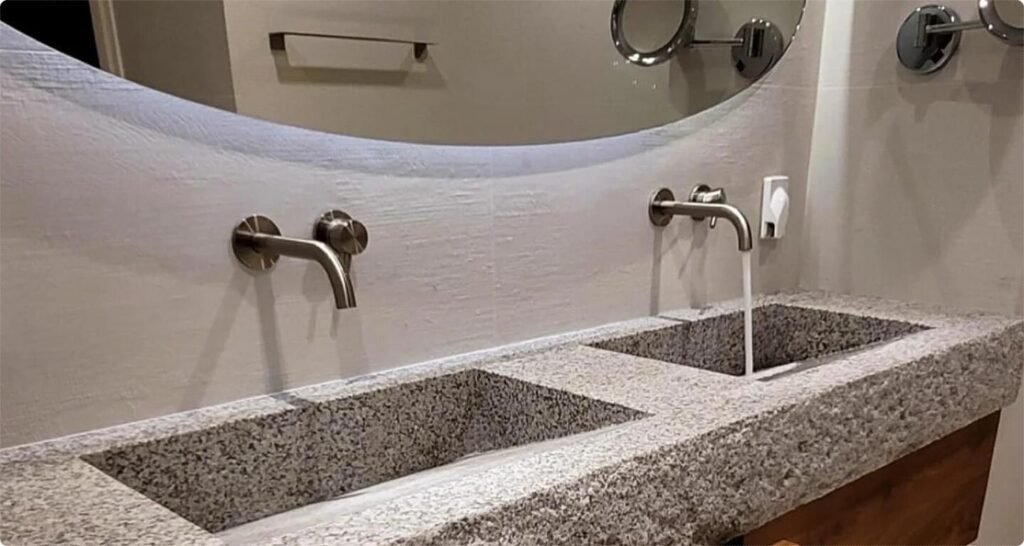
Chemical Sealing Protocol
Sealing white granite creates an oleophobic (oil-repelling) and hydrophobic (water-repelling) barrier beneath the surface without blocking vapor transmission.
The Water Drop Test
Perform this test to determine if your white granite needs resealing:
Pour 1 tablespoon of room-temperature water onto the stone surface.
Wait 15 minutes.
If the water beads tightly, the seal is intact. If the stone darkens under the water, moisture has penetrated, indicating the stone needs resealing.
Step-by-Step Sealing Instructions
1. Clean and Dry the Surface: Preparation.
Clean the stone thoroughly with a pH-neutral stone cleaner. Allow the countertop to dry completely for at least 24 hours to ensure no moisture is trapped in the pores.
2. Apply Impregnating Sea: A: Application.
Apply a fluoropolymer-based penetrating sealer evenly across the stone using a lint-free cloth or low-pressure sprayer. Ensure complete coverage.
3. Allow Absorption: Time.
Let the sealer penetrate for 10 to 15 minutes. Do not let the sealer dry completely on the surface during this window.
4. Wipe Away Excess: Polishing.
Buff the surface thoroughly with a clean, dry microfiber towel to remove all unabsorbed liquid sealer before it cures.
5 . Cure Time: e:Final Curing.
Keep the stone dry and unused for 24 hours to allow the cross-linking polymer barrier to fully cure.
Stain Identification and Poultice Extraction
When liquids penetrate unsealed white granite, standard wiping will not lift the trapped pigment. You must draw the stain out using a chemical poultice process.
+-------------------+----------------------------+-----------------------------------+
| Stain Type        | Active Solvent / Chemical  | Poultice Base Absorbent           |
+-------------------+----------------------------+-----------------------------------+
| Organic (Coffee)  | 12% Hydrogen Peroxide      | Diatomaceous Earth or Baking Soda |
| Oil / Grease      | Acetone or Isopropanol     | Talcum Powder or Chalk Powder     |
| Rust / Iron       | Oxalic Acid Cleaner        | Unbleached Flour                  |
| Ink / Dye         | Rubbing Alcohol / Acetone  | Diatomaceous Earth                |
+-------------------+----------------------------+-----------------------------------+
How to Apply a Chemical Poultice?
Mix the Paste: Combine the active chemical solvent with the absorbent powder until it forms a thick paste with the consistency of peanut butter.
Apply to Stain: Spread the paste over the stained area roughly 1/4-inch thick, extending 1/2-inch past the edge of the stain.
Seal with Plastic: Cover the paste with plastic wrap and seal the edges with painter’s tape.
Dwell Period: Allow it to sit for 24 hours. The solvent breaks down the stain while the absorbent base pulls the liquid up.
Dry and Scrape: Remove the plastic wrap and let the paste dry completely (another 24 hours). Carefully scrape off the dried powder using a plastic putty knife, then rinse with distilled water.
Surface Repairs and Chip Restoration
Minor chips and hairline cracks can be repaired seamlessly using clear or tinted epoxy resins.
Repairing Edge Chips
Clean the Damage Area: Remove all debris and degrease the chip using technical-grade acetone.
Color Match the Resin: Mix a clear acrylic or epoxy resin with white pigment and mineral mica powder to match the granite’s natural texture.
Fill the Void: Overfill the chipped area slightly using a razor blade or spatula to account for resin shrinkage during curing.
Apply Curing Film: Place a piece of clear polyethylene film over the wet resin to smooth the surface and prevent air bubbles.
Level and Polish: Once fully cured (typically 1 to 4 hours), shave the patch flat using a razor blade held at a 45-degree angle. Polish the area using wet diamond polishing pads ranging from 800-grit up to 3000-grit.
Case Study Focus: Global Fabrication Standards
High-volume commercial fabricators enforce strict physical quality controls to minimize long-term maintenance costs for white granite and quartzite.
                 +-----------------------------------+
                 |    Raw Block Extraction & Sizing  |
                 +-----------------------------------+
                                   |
                                   v
                 +-----------------------------------+
                 | Vacuum Resin Impregnation (Epoxy) |
                 +-----------------------------------+
                                   |
                                   v
                 +-----------------------------------+
                 | High-Precision CNC Slab Polishing |
                 +-----------------------------------+
                                   |
                                   v
                 +-----------------------------------+
                 | Automated Hydrophobic Penetrating |
                 |     Factory Sealing Line          |
                 +-----------------------------------+
For large commercial builds, specifying pre-sealed slabs from certified manufacturers, such as EDG Stone Factory (Global Quartzite Slabs & Countertops Manufacturer and Exporter), ensures uniform density, precise resin filling of natural micro-fissures, and factory-applied protective coatings that reduce job-site sealing requirements.
Frequently Asked Questions & Knowledge Base
Question 1: How do I remove dark water spots near the kitchen sink?
Answer: Dark water spots near sinks mean water has absorbed into the stone’s pores through a worn sealer. Evidence: Natural granite absorbs between 0.2% and 0.5% water by weight when unsealed (ASTM C97). Summary: Allow the spot to air dry for 24 to 48 hours. Once the dark spot disappears, reseal the stone with a fluoropolymer penetrating sealer.
Question 2: Why are acidic cleaners like vinegar harmful to granite?
Answer: Acids dull and etch the polished finish of natural stone. Evidence: Acidic solutions react chemically with delicate mineral matrices and break down protective fluoropolymer sealant bonds. Summary: Use only pH-neutral cleaners (pH 7–8) for daily granite maintenance.
Question 3: How often should I seal white granite countertops?
Answer: White granite typically requires sealing every 12 to 18 months. Evidence: White granite features higher overall porosity compared to darker granites. Summary: Perform the water drop test annually to determine if resealing is required.