Quick Summary:
Quick Summary: Brazilian granites combine striking colorways (from deep blacks to vivid blues) with excellent hardness and thermal stability, making many varieties excellent for both interior and exterior engineering projects. This article separates marketing myth from material science, explains heat- and weather-resistance thresholds, highlights top Brazilian colors for different applications, and gives a manufacturer/factory-oriented procurement checklist for project teams.
Executive snapshot: The myth and the facts
Granite has a near-mythical reputation for being indestructible. That reputation is partly deserved—granite is hard, dense, and thermally robust compared with some other surfacing materials—but it’s not absolute. Cracking or damage can occur from extreme thermal shock, poor supports, or improper fabrication; some colors and quarries behave differently due to mineral composition and microstructure. In short, Brazilian granite is high-performing for many engineering tasks, but the choice of color, finish, and supplier matters.
Quick verdict for engineers and specifiers
For heavy-duty flooring, cladding, countertops, and outdoor paving, many Brazilian granites—especially dense darks and some blues—offer excellent longevity when selected and installed correctly.
The most reliable outcomes come from matching specific granite grades and finishes to the exposure and load conditions of the project.
Granite: geology, composition, and what “durability” actually means?
Granite is an intrusive igneous rock composed chiefly of quartz, feldspar (both plagioclase and orthoclase), and mica (biotite or muscovite), often with accessory minerals. “Durability” in engineering refers to a cluster of measurable properties: hardness (resistance to scratching and wear), porosity/permeability (susceptibility to staining and freeze–thaw damage), fracture toughness (resistance to crack propagation), and thermal behavior (expansion, shock resistance). Quartz—a dominant mineral in granite—is one of the most chemically and physically stable minerals in common rock, and contributes to granite’s overall weathering resistance.
Key metrics engineers examine
Mohs hardness (quartz increases hardness to ~6–7 on the Mohs scale).
Porosity/water absorption (affects freeze–thaw and staining).
Flexural strength and fracture toughness (important in slab and cladding design).
Coefficient of thermal expansion and thermal conductivity (drive heat-induced stresses).
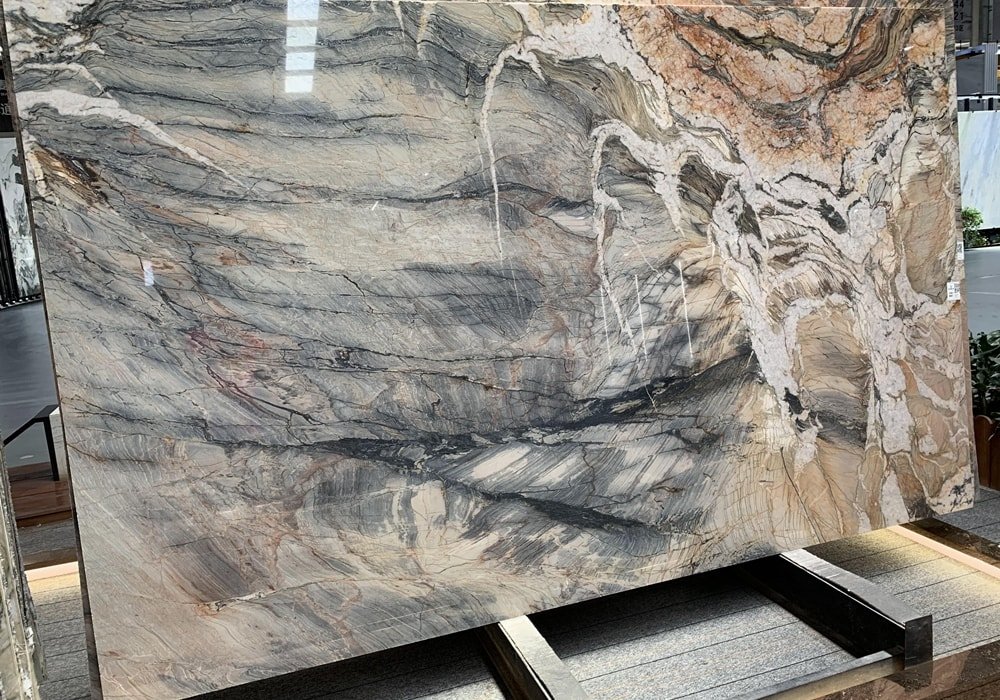
Brazilian granite colors spotlight: performance & popularity
Brazil is famous for a palette of granites that range from uniform blacks and deep greens to dramatic blues and exotic veining. Color correlates with mineralogy and sometimes with porosity or fissuring; thus, color can be a loose indicator of performance but is never a substitute for specification testing.
Brazilian Black granites (engineer’s favorite)
Brazilian blacks—often marketed as Brazilian Black, Absolute Black derivatives, or similar—are typically low-porosity, uniformly colored stones that accept high-polish finishes and perform well for countertops, high-traffic floors, and exterior cladding when properly anchored. Their dense mineralogy usually gives excellent abrasion resistance and relatively low water absorption.
Brazilian Blue (e.g., Blue Bahia / Azul Bahia)
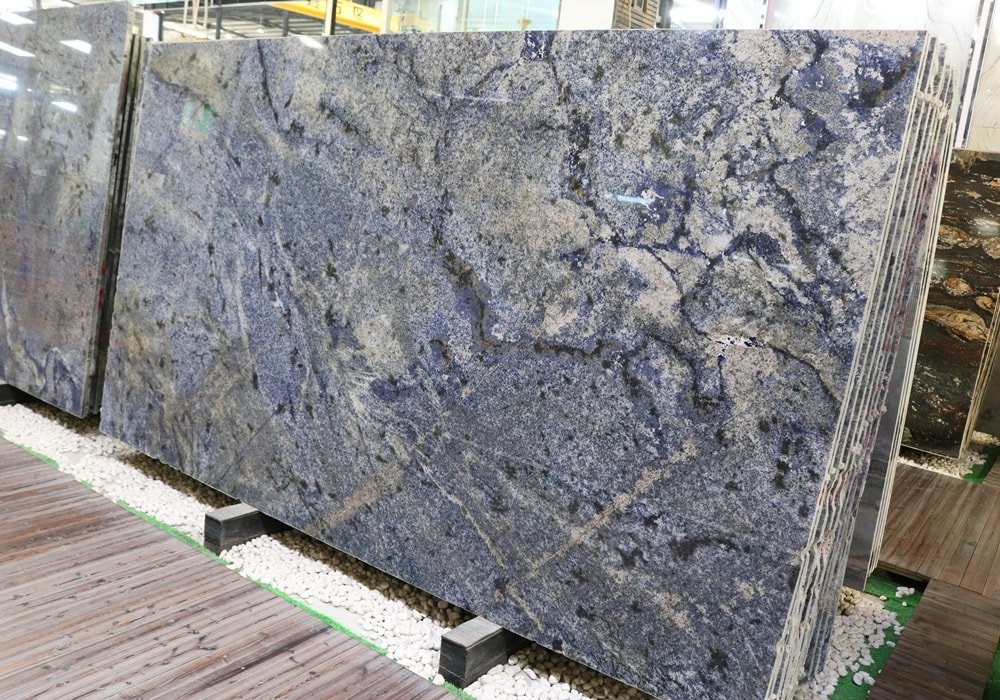
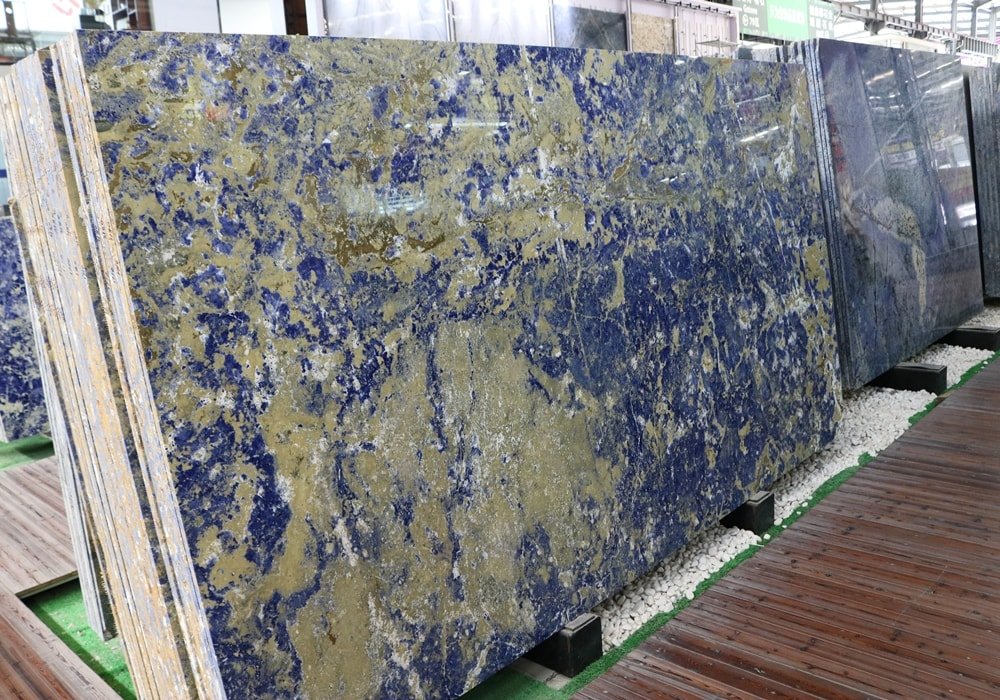
Blue Bahia (Azul Bahia) is one of the world’s most iconic Brazilian stones: a vivid blue granite prized in high-end interiors. It is rarer, more expensive, and is typically used in statement installations (islands, reception desks, feature walls). Because of its value, buyers should verify slab integrity, thickness, and backing—Blue Bahia can be quarried in variable jointing and sometimes requires resin stabilization.
Ubatuba and green-toned Brazilian granites
Ubatuba and other green/coffee-toned Brazilian granites offer classic patterns and robust field performance. They’re widely used in hospitality and commercial projects for their stain resistance and ability to hide wear.
Whites and light-patterned varieties
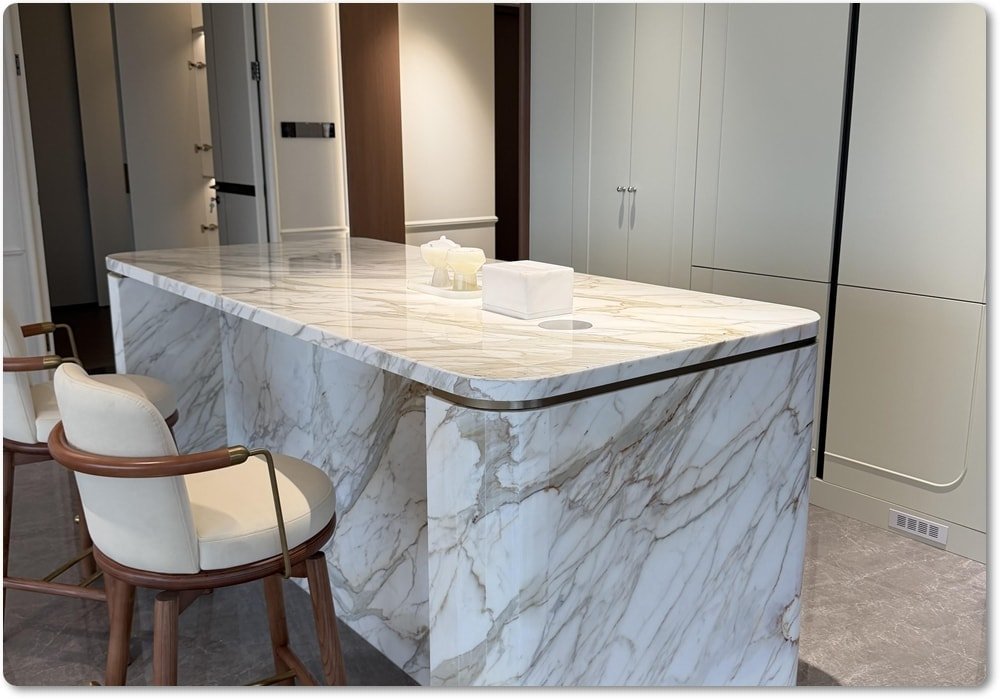
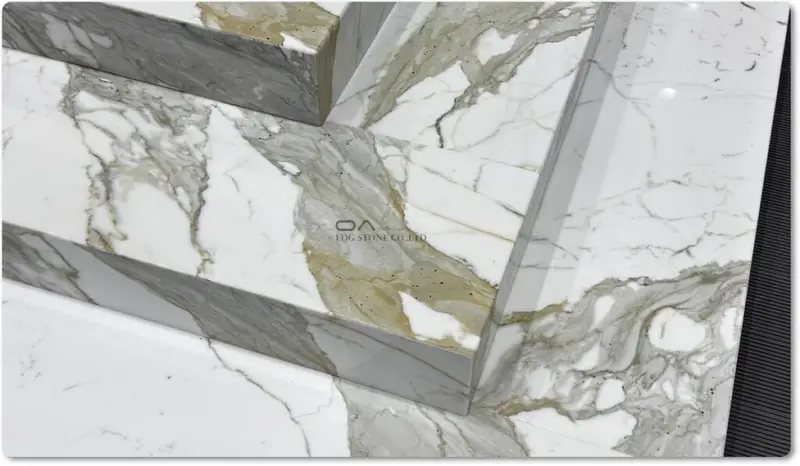
Light granites can be beautifully marble-like but may show thermal or staining tendencies more clearly in some environments; sealing and maintenance plans must match the exposure.
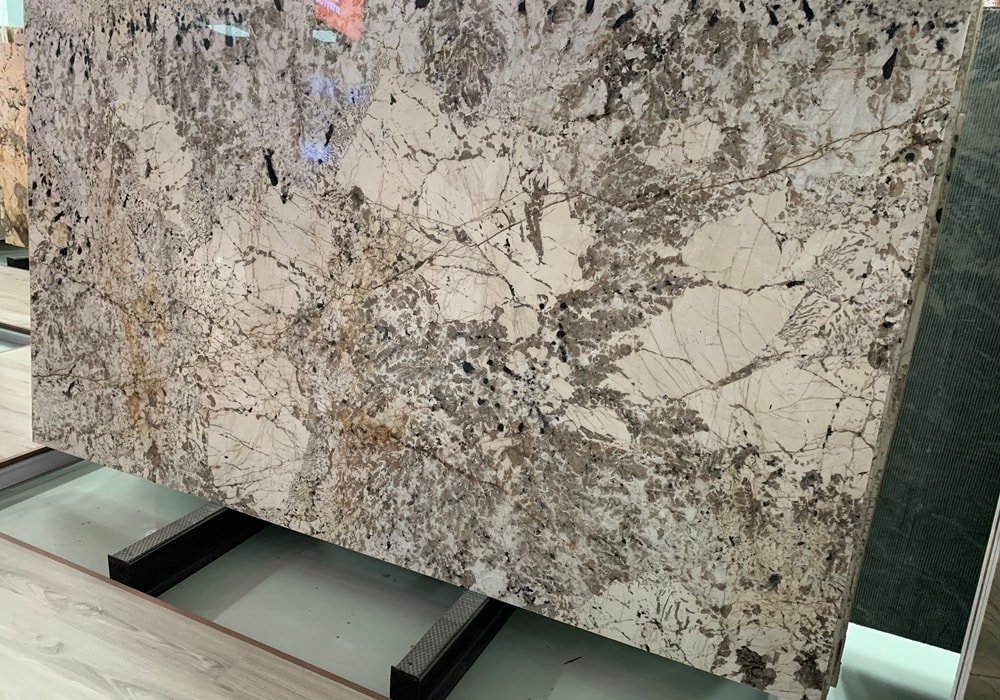
Heat resistance & cracking: At what temperature does granite crack?
The question “At what temperature does granite crack?” has no single universal temperature threshold for every granite type. Granite is formed under extremely high temperatures deep in the earth and can tolerate high absolute temperatures, but rapid temperature differentials and thermal shock—rather than static temperature—are the usual drivers of cracking. Laboratory and field studies show granite’s mechanical properties degrade with increasing temperature cycles and intense thermal shocks, meaning that extreme or repeated cycles (hundreds of degrees differential or repeated high cycles) can cause spalling, micro-cracking, and strength loss. For practical design, avoid conditions that create abrupt thermal gradients (for example, placing ice water on a slab heated by direct sun).
Interpreting lab numbers for field use
Some experimental research examines granite behavior at temperatures from 100 °C up to several hundred degrees; strength can drop significantly at elevated temperatures and with repeated cycles. However, normal kitchen cooking heat (hot pans at ~200–400 °F / 100–200 °C for short durations) is typically tolerated by many granites without immediate cracking—thermal shock is the risk factor.
Does granite get hot in the sun?
Surface temperature depends on color, finish, and ambient conditions. Dark, polished granite in full sun can reach uncomfortable surface temperatures and will absorb and re-radiate heat—use caution for barefoot paving or touch-sensitive features. But granite’s good thermal conductivity also helps disperse heat rather than letting it concentrate in a micro-spot.
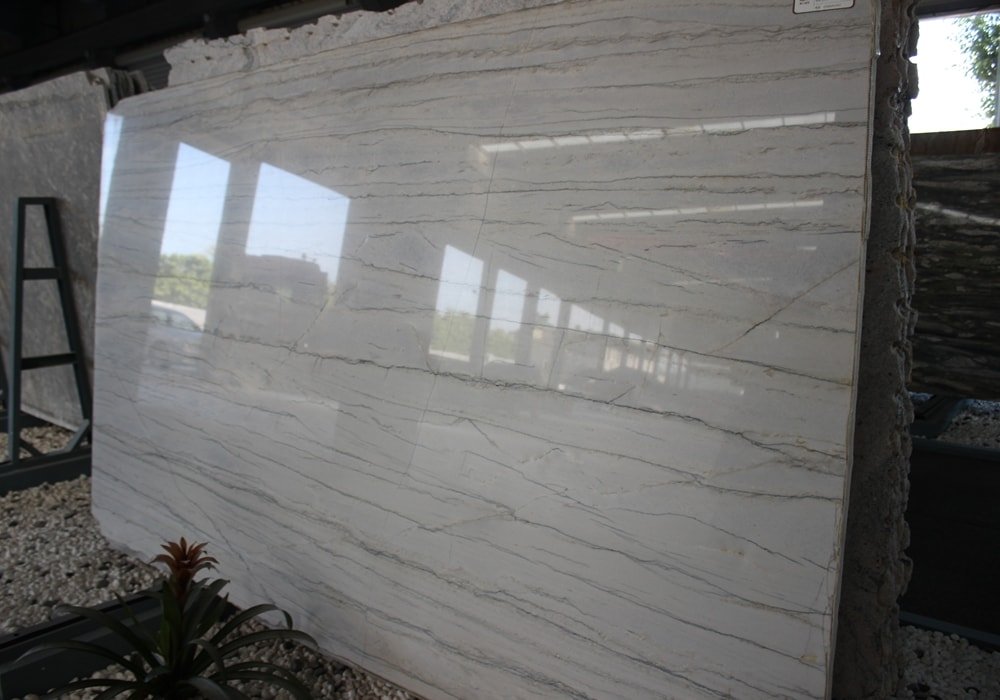
Granite vs quartz vs marble: heat resistance & field performance
When comparing materials:
Granite: natural, generally high heat tolerance and good abrasion resistance; performance varies by quarry and color.
Quartz (engineered): excellent scratch resistance but can be susceptible to resin softening or discoloration under prolonged, concentrated heat exposure—use trivets.
Marble: softer, chemically reactive to acids (etches), and generally less heat-resistant in active kitchen zones.
Engineers should specify materials using lab-verified coefficients for thermal expansion and design details that minimize constraints on slabs to reduce stress concentrations. For hot environments or repeated thermal cycles (commercial kitchens, outdoor BBQ islands), granite tends to outperform marble and many engineered composites in terms of heat tolerance.
Stain, weathering & long-term durability: maintenance reality
Porosity determines stain susceptibility. Dense Brazilian blacks and some blues typically have low water absorption and are easier to keep stain-free; lighter or more open-grained granites may need more frequent sealing. For exterior installations, consider freeze–thaw exposure: if water can be drawn into micro-fissures, freezing can induce spalling over repeated cycles. Chemical exposures (pool salts, acid cleaners) can also affect certain accessory minerals. Routine maintenance—appropriate sealer, timely cleaning, and avoiding harsh acids—preserves finish and color.
Typical maintenance schedule (practical)
Daily: wipe with pH-neutral cleaner or mild dish soap.
Monthly/quarterly: inspect for surface dulling, remove stubborn stains with stone-safe poultices.
Annually–every 3 years: reapply penetrating sealer depending on porosity and traffic.
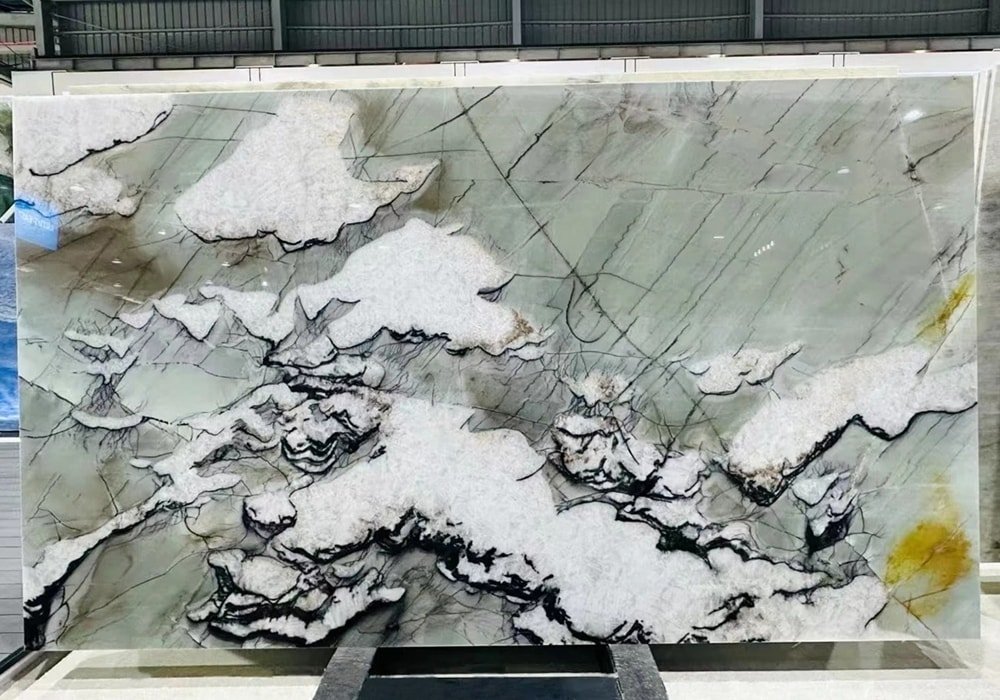
Procurement, fabrication & installation: manufacturer/factory checklist
Sourcing granites for engineering projects should be treated like sourcing any critical material: specify performance, request full slab photos, demand QC test results, and lock lot numbers for large builds.
Must-have documentation from the supplier/factory
Slab lot numbers and high-resolution slab photos.
Water absorption and porosity test results.
Flexural strength/modulus data, if available.
Recommendations on finish and edge profiles for the use case.
Resin impregnation or stabilization records, if used (especially for exotic Blues).
Logistics & QC notes for wholesale orders
Confirm MOQ and lead times; rare colors like Blue Bahia often have limited availability and longer lead times.
Insist on packing and crating standards for transport to avoid edge damage.
Where multiple slabs form a continuous surface, request book-matching and approval of seam placement.
Regulations, sustainability & industry standards shaping procurement
Natural stone can contribute to green building certifications when responsibly extracted and processed. Industry frameworks and local regulations increasingly require environmental and social due diligence in quarrying communities. Project teams should ask suppliers for life-cycle data, quarry reclamation plans, and any third-party standards compliance relevant to the region and client priorities. The Natural Stone Institute and other bodies provide guidance on stone’s environmental attributes and how to document them for certifications like LEED.
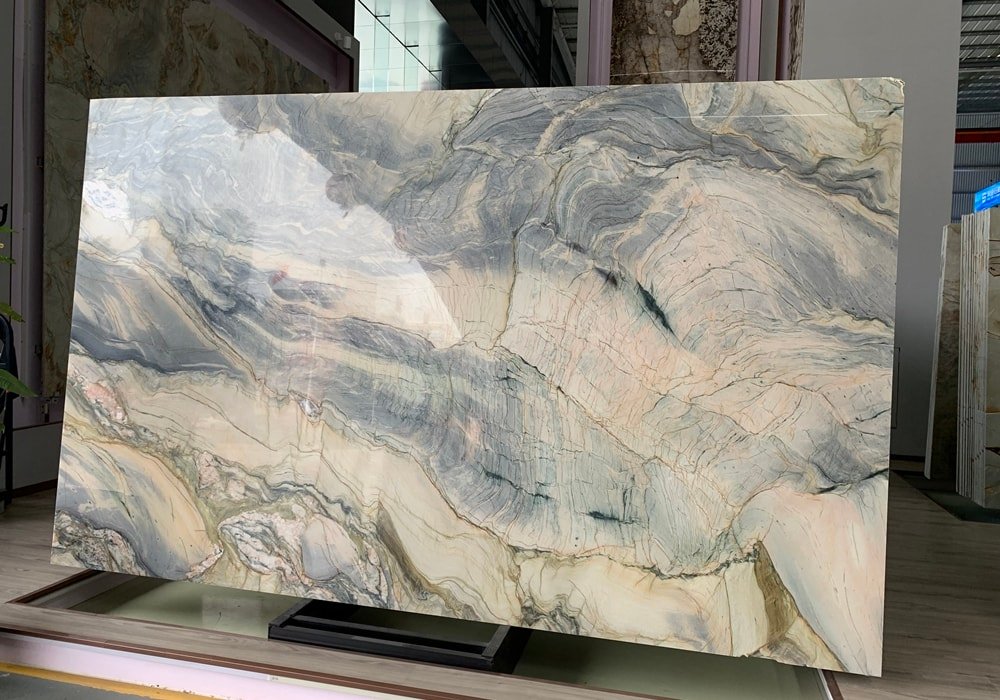
Popular engineering & architectural applications for Brazilian granite colors
High-traffic floors and cladding
Dense dark granites (blacks and deep greens) perform well for floors and vertical façades due to abrasion resistance and uniform coloring. Polished or flamed finishes may be selected based on slip-resistance and lighting.
Countertops and islands
Blues and blacks are popular for statement islands. For heavy-use kitchens, prefer low-porosity slabs and consider leathered finishes to hide micro-scratches and fingerprints.
Outdoor paving & pool surrounds
Select granites with tested freeze–thaw durability and low water absorption; test samples under representative local conditions before major procurement.
Cost, lifecycle & ROI analysis for project decisions
Price depends on rarity, color, thickness, and supply-chain logistics. Exotic Brazilian blues command premium prices and are often used sparingly as feature elements. For large projects, weigh the higher upfront cost of premium granite against lifecycle savings from durability and lower replacement frequency. A lifecycle comparison should include installation, expected maintenance, and replacement cycles versus alternatives like engineered quartz or ceramic tiles.
Myths & pitfalls: debunking durability claims about Brazilian granite
Myth: Granite never cracks from heat. Reality: Granite resists heat but can crack from extreme thermal shock and poor support conditions.
Myth: All Brazilian granite is premium. Reality: quality varies by quarry and lot—always requires testing and documentation.
Myth: Sealing makes granite invincible. Reality: Sealing reduces staining but does not prevent mechanical failure from impact or thermal stress.
People also ask (quick definitions)
What is Brazilian granite? Brazilian granite refers to granites quarried in Brazil, known for diverse colors (black, blue, green, and whites) and often used in premium architectural projects.
Which mineral in granite is most resistant to weathering? Quartz is the most weather-resistant mineral in typical granites, contributing to long-term durability.
Is granite LEED-certified? Natural stone itself is not a certificate-holder, but responsibly sourced stone and certain stone products can contribute to LEED credits; evidence of environmental attributes is needed.
What determines the color of granite? The color is determined by mineral composition (types and amounts of feldspar, quartz, micas, and accessory minerals) and cooling history.
Which granite color is best? “Best” depends on application: dark, dense granites often perform best in high-traffic settings; blues and exotics serve aesthetic statement roles.
FAQ — top 5
Q1 — At what temperature does granite crack?
There isn’t a single definitive temperature at which all granites crack. Granite formed under high temperatures can tolerate substantial heat, but rapid temperature differentials (thermal shock) or repeated extreme thermal cycling cause micro-cracking and eventual failure. Engineering tests show strength degradation at elevated temperatures and through repeated cycles, so design to avoid sudden temperature swings and ensure adequate support and thermal relief.
Q2 — Does granite get hot in the sun, and what colors heat the most?
Yes—surface temperature rises with solar exposure, darker and polished granites absorb more heat and can become uncomfortably hot to touch. Light-colored or textured finishes reflect more sunlight and remain cooler. For outdoor furniture, paving, or pool coping, choose lighter or textured finishes and test sample pieces on-site.
Q3 — Are Brazilian granites of good quality for large engineering projects?
Many Brazilian granites are excellent for large projects, offering desirable density and low absorption in several color families (blacks, greens, and certain blues). Quality varies by quarry and slab batch, so require QC results, slab photos, and sometimes lab testing to confirm suitability for specific engineering loads and exposures.
Q4 — Is granite cheaper or more expensive than quartz for procurement?
Engineered quartz and natural granite overlap in price. Entry-level granites are often cheaper than luxury engineered quartz, while rare Brazilian colors (especially exotics like Blue Bahia) can cost significantly more. Total procurement cost should factor in fabrication complexity, seam visibility, and long-term maintenance.
Q5 — Which Brazilian granite colors are best for outdoor durability?
Dense, low-porosity granites—commonly dark blacks and some greens—are frequently chosen for outdoor durability because they absorb less water and resist staining and freeze–thaw damage when properly installed. For long-term exterior performance, ask suppliers for water absorption and freeze–thaw test data for specific slabs.
Semantic Closure — Quick Take
How: Brazilian granite’s real-world durability is a function of mineralogy, porosity, and fabrication; dense blacks and many greens deliver outstanding wear and weather resistance, while exotic colors require extra QC and sometimes stabilization.
Why: Designers and engineers choose Brazilian granites because they combine aesthetic impact with proven mechanical robustness—when matched correctly to exposure, finish, and support, they outperform many alternatives in longevity and life-cycle cost.
What to consider: Always demand slab-level testing (porosity, flexural strength), verify lot continuity for visual runs, and plan for appropriate sealing and maintenance schedules based on exposure and local climate.
Options & next steps: For procurement, prioritize factories with transparent QC, request sample panels for thermal and freeze–thaw trials if needed, and budget for skilled fabrication to avoid installation-related failures.