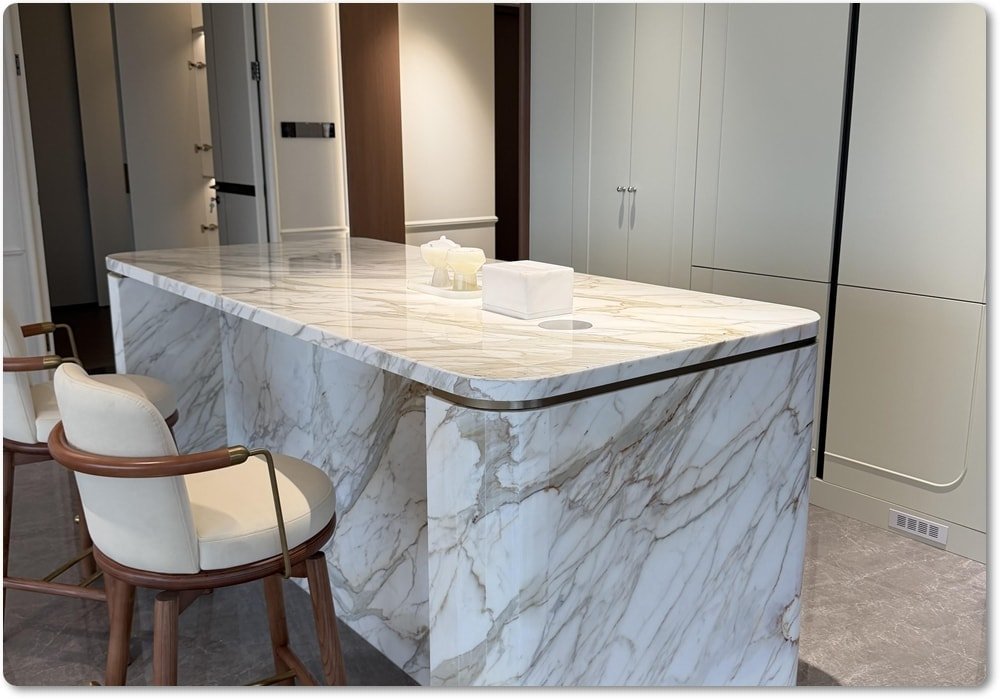
Quick Summary: The Aegean Marble Titans
Heritage: The quarries of Greece and Turkey share a continuous geological spine and a 2,000+ year history, supplying materials for iconic structures from the Parthenon (white marble ancient Greece) to modern skyscrapers.
Distinction: Greek white marble (like Thassos and Volakas) is prized for its high crystallinity and translucency, often commanding premium prices. Turkish White Marble (like Mugla and Marmara) is renowned for its immense quarry reserves, durability, and cost-effectiveness for large-scale commercial projects.
Sourcing Strategy: For wholesale buyers and architects, success lies in understanding these mineral differences. EDG Stone specializes in sourcing premium blocks directly from these historic regions, ensuring consistent quality and specific vein selection for global exports.
The Aegean Sea is not a barrier; it is a bridge. Geologically, the lands of Greece and Turkey are sewn together by a vast, subterranean belt of metamorphic rock that has shaped human history. This is the home of the world’s most coveted material: White Marble.
For thousands of years, these quarries have remained active. They provided the white marble that ancient Greece used to sculpt gods and build temples, and they supplied the Ottoman Empire with the stone for its grand Hamams and palaces. Today, the fervent demand for Greek white stone and Turkish White Marble continues to drive the global luxury construction market.
However, for the modern developer, architect, or marble manufacturer, the distinction between these two giants is critical. While they share a sea, the Greek marble types and Different Types of Turkish White Marbles offer vastly different aesthetic qualities, price points, and technical behaviors. This comprehensive guide explores the heritage, the geology, and the commercial sourcing realities of the Aegean’s white gold, positioning EDG Stone standards as the benchmark for quality.
The Hellenic Legacy: Exploring Iconic Greek White Marbles
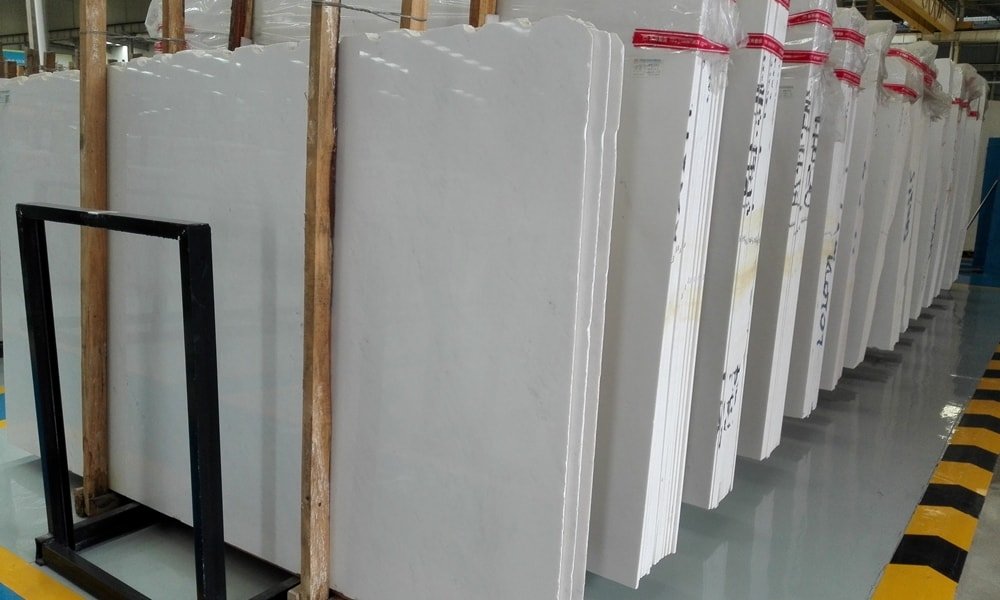
When we speak of Greek marble tiles, we are referencing a legacy of light. Greek marble is geologically distinct due to its high metamorphic grade, often resulting in a stone that doesn’t just reflect light but allows it to penetrate the surface.
Thassos Snow White: The “Diamond” of Greece
Located in the northern Aegean, the island of Thassos produces what is widely considered the whitest marble on Earth.
Geology: Thassos marble is Dolomitic. It is composed of very small crystals that glitter like refined sugar. It has virtually no veins.
Aesthetics: It offers a pristine, brilliant white surface. Because it lacks veins, it provides a monolithic, seamless look that is highly prized in minimalism.
Commercial Reality: It is categorized into classes (A1, A2, A3) based on the presence of pinholes or shading. As a factory, EDG Stone notes that Thassos is brittle; it requires slow cutting speeds and high-quality resin treatment to ensure stability.
Volakas (The “Jazz White”)
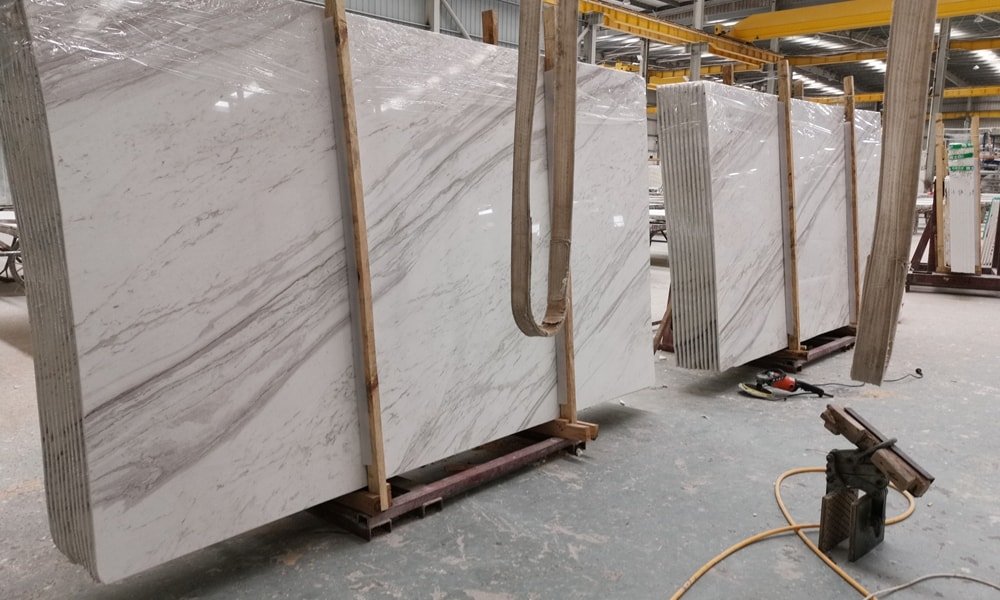
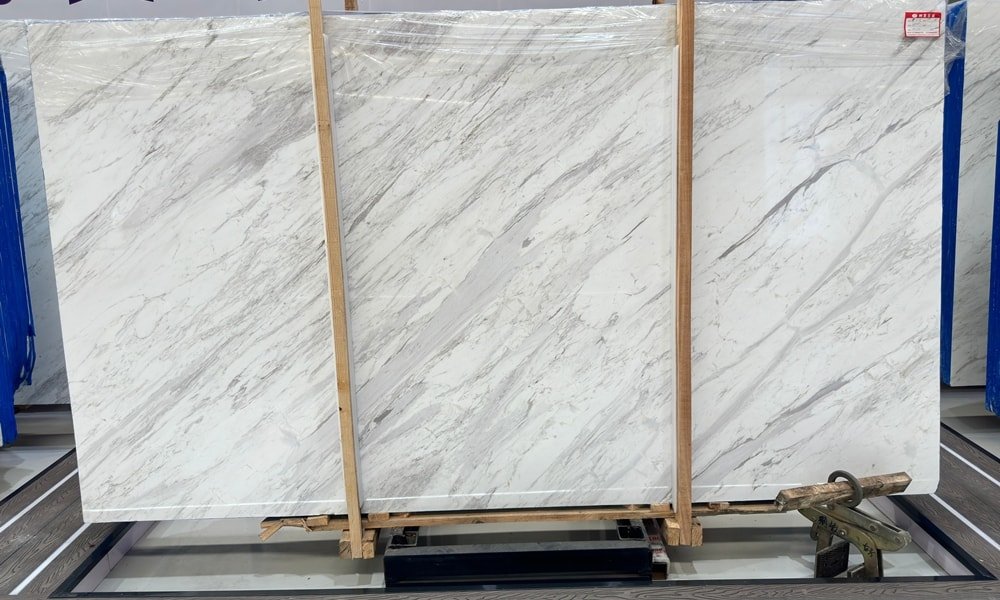
Quarried in the Drama region of Northern Greece, Volakas has become the bestselling Greek white marble of the 21st century.
The “Carrara” Rival: Often called the “Carrara of Greece,” Volakas features a white background with diagonal grey, purple, or brown veins.
Texture: It is softer and warmer than Thassos. The veining is often “cloudy” or ribbon-like, making it ideal for book-matching on large feature walls.
Market Trend: Due to its competitive price compared to Italian stones, Volakas dominates the mid-to-high-end residential market.
Ariston & Pentelic: The Stones of History
Pentelic Marble: The stone of the Acropolis. It is famous for its creamy white hue that develops a golden patina (oxidation) over centuries due to trace iron content. While active quarrying is limited for preservation, it remains the benchmark for white marble in ancient Greece.
Ariston: A premium dolomite from Drama. It is known for its thick, pure white background and very few, elegant veins. It is often called the “Gentleman” of Greek marbles due to its sophisticated, quiet appearance.
The Anatolian Powerhouse: Different Types of Turkish White Marbles
Turkey (Türkiye) possesses some of the world’s largest marble reserves. It is an industrial powerhouse, capable of supplying the volume required for massive airports, malls, and hotel chains. Turkish White Marble is synonymous with reliability and scale.
Mugla White: The Global Workhorse
If you walk into a luxury shopping mall in Dubai or a hotel lobby in New York, you are likely walking on Mugla White (also known as Blanco Ibiza).
Consistency: The quarries in the Mugla region are massive. This allows a manufacturer to supply 10,000 square meters of tiles with a consistent background color—a feat difficult to achieve with smaller Greek quarries.
Appearance: It features a clean white background with subtle, uniform grey sesame-like specks or translucent grey veins. It is arguably the most versatile white marble in existence.
Marmara Equator: The Striated History
Quarried on the island of Marmara, this stone is unique in the geological world.
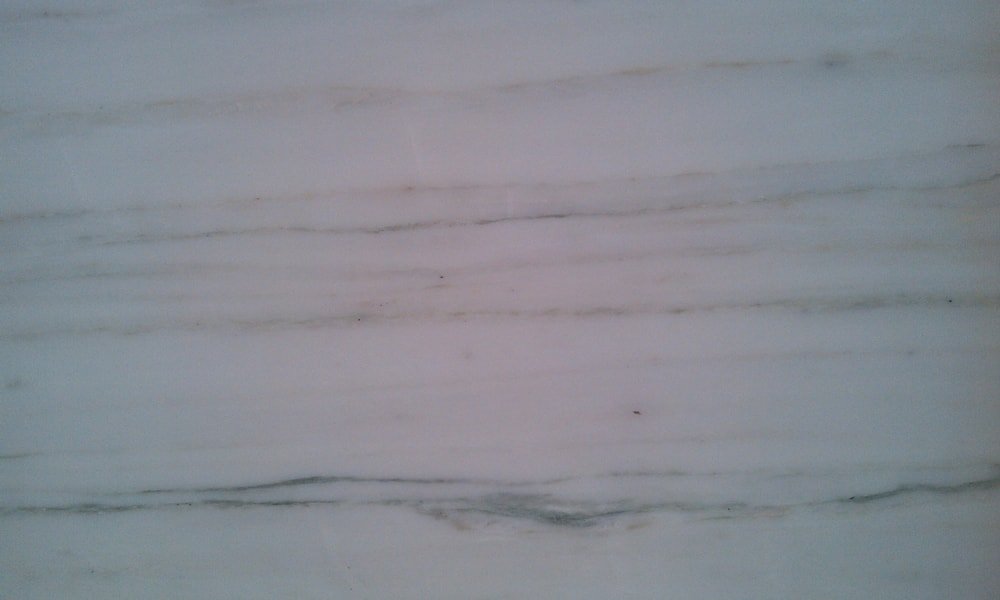
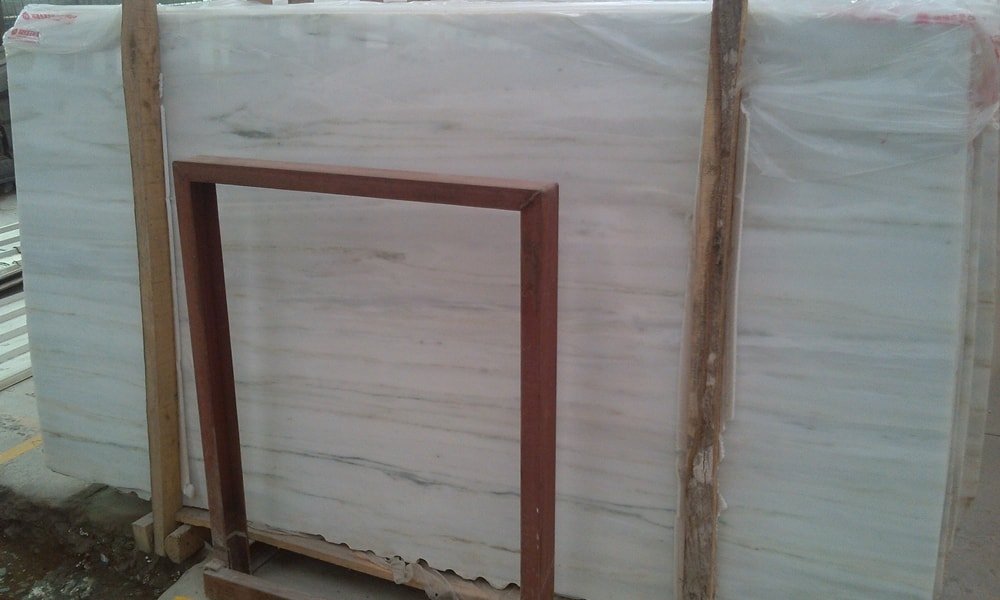
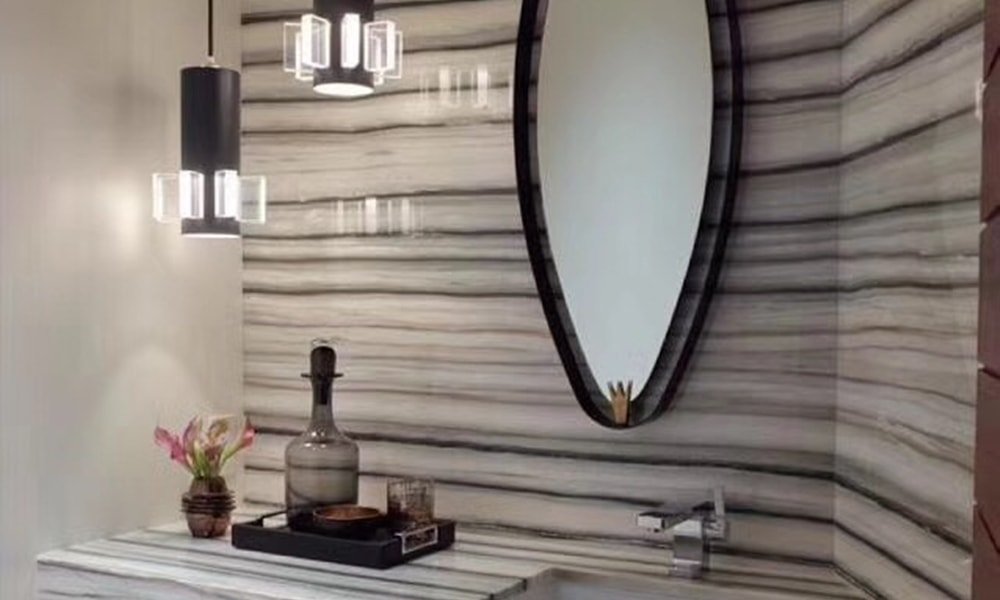
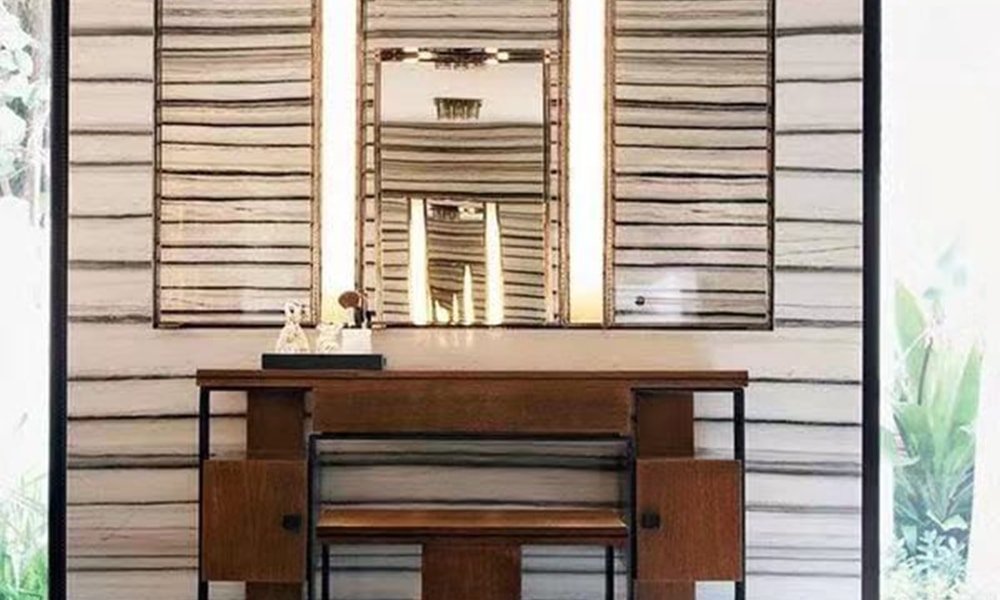
Visuals: It is instantly recognizable by its straight, parallel grey lines (striations).
Function: Historically used in Turkish Hamams (baths) because of its high sulfur content, which provides natural antibacterial properties. Today, it is used by avant-garde designers to create optical illusions in flooring and wall cladding.
Lilac and Calacatta Turc: The Bold Alternatives
Turkey also produces stones that rival the dramatic veining of Italian Calacatta.
Milas Lilac: A white background exploded with chaotic, beautiful purple and violet veins. It is a favorite in the US market for statement kitchen islands.
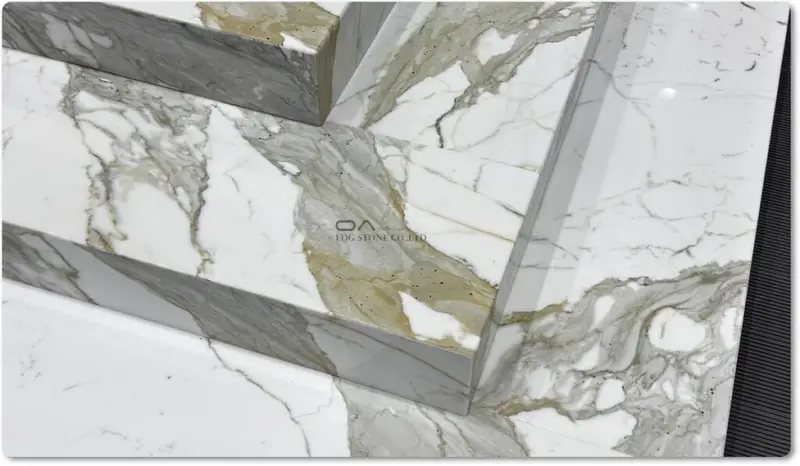
Calacatta Turc: Features strong gold and grey veining. While not as white as the Italian original, it offers a similar aesthetic at a wholesale price point that is 30-50% lower.
Comparative Analysis: Hue, Texture, and Mineralogy
For the wholesale buyer, the decision often comes down to technical specifications. Understanding the science helps avoid costly installation errors.
Dolomite vs. Calcite: The Science of Shine
Greek Whites (Dolomite Rich): Stones like Thassos are Dolomitic. They are harder and more resistant to wear, but can be brittle. They polish to a “glassy” finish. However, they can be sensitive to thermal shock (rapid temperature changes).
Turkish Whites (Calcite Rich): Stones like Mugla are typically Calcitic. They have a “waxy” or “creamy” luster. They are generally easier to process and less prone to cracking during cutting, but they react more quickly to acidic etching (lemon juice, vinegar).
The Translucency Factor
One of the key selling points of Greek white stone is translucency.
Light Transmission: If you hold a flashlight behind a slab of high-grade Volakas or Thassos, the light will glow through the stone (up to 2-3cm deep).
Opacity: Turkish Mugla and Marmara are generally more opaque. They reflect light off the surface rather than absorbing and diffusing it. This makes Greek marble superior for backlit applications (bars, feature walls), while Turkish marble is superior for solid, uniform flooring.
Price and Availability
Premium: Thassos (Greece) and Ariston (Greece) command the highest prices due to scarcity and the high “waste factor” in quarrying (only 10-15% of the mountain is pure white).
Value: Mugla (Turkey) and Kemalpaşa White (Turkey) offer the best price-to-quality ratio. They are the preferred choice for projects with budget constraints that still require natural stone.
📊 Technical Data Sheet: Greek vs. Turkish White Marbles
When specifying natural stone for commercial projects, aesthetics are only half the battle. Physical properties determine longevity, maintenance schedules, and suitability for specific areas (e.g., wet rooms vs. dry lobbies).
Below is a comparative technical analysis of Thassos Snow White (Greece), Volakas (Greece), and Mugla White (Turkey) based on standard industry averages.
Comparative Specifications Table
| Technical Property | Thassos Snow White (Greece) | Volakas White (Greece) | Mugla White (Turkey) |
| Mineral Type | Dolomite (Rich in Magnesium) | Dolomite / Calcite Mix | Calcite (Rich in Calcium) |
| Apparent Density | ~2850 kg/m³ | ~2825 kg/m³ | ~2750 kg/m³ |
| Water Absorption | 0.12% – 0.18% (Very Low) | 0.30% – 0.40% (Medium) | 0.20% – 0.25% (Low) |
| Compressive Strength | ~120 MPa | ~130 MPa | ~85 – 100 MPa |
| Flexural Strength | ~14 MPa | ~10 – 12 MPa | ~12 – 14 MPa |
| Porosity | Very Low | Medium | Low |
| Abrasion Resistance | High | Medium | Medium-High |
| Acid Sensitivity | Moderate | High | High |
| Rec. Sealing Cycle | Every 2-3 Years | Every 1 Year | Every 1-2 Years |
💡 EDG Stone Engineering Analysis
1. Water Absorption (The “Stain Risk”):
Thassos is exceptionally dense with very low absorption (<0.2%). This makes it the premier choice for luxury bathrooms and showers, as it resists water penetration better than almost any other white marble.
Volakas has higher porosity. It must be sealed professionally (impregnated) immediately upon installation; otherwise, it risks absorbing oils or soaps that create dark spots.
2. Flexural Strength (The “Crack Risk”):
Mugla White and Thassos have excellent flexural strength (>12 MPa). This makes them suitable for large-format flooring (e.g., 120x60cm tiles) in high-traffic commercial areas like airports.
Volakas is softer. For large floor tiles, we recommend a thickness of 20mm (standard) rather than 15mm to prevent cracking under heavy foot traffic.
3. Hardness & Composition:
Dolomite (Thassos) is harder than Calcite (Mugla). In a high-traffic lobby, Thassos will retain its polish longer before developing “traffic lanes” (dull paths). However, Mugla is easier for maintenance crews to re-polish and restore on-site.
Disclaimer: Technical values can vary by quarry bench and extraction depth. EDG Stone provides specific batch test reports (SGS/TÜV) for every wholesale order.
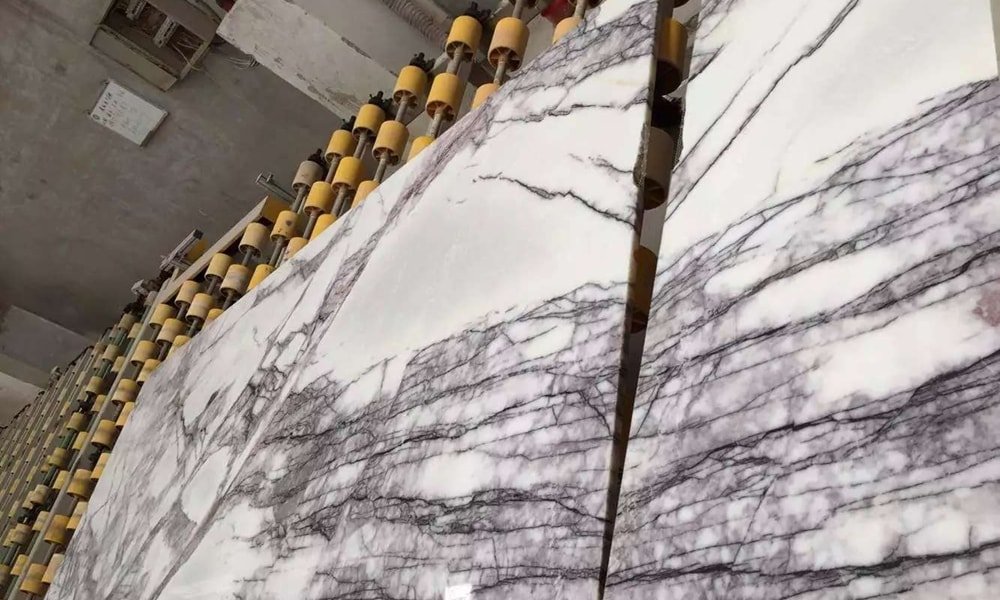
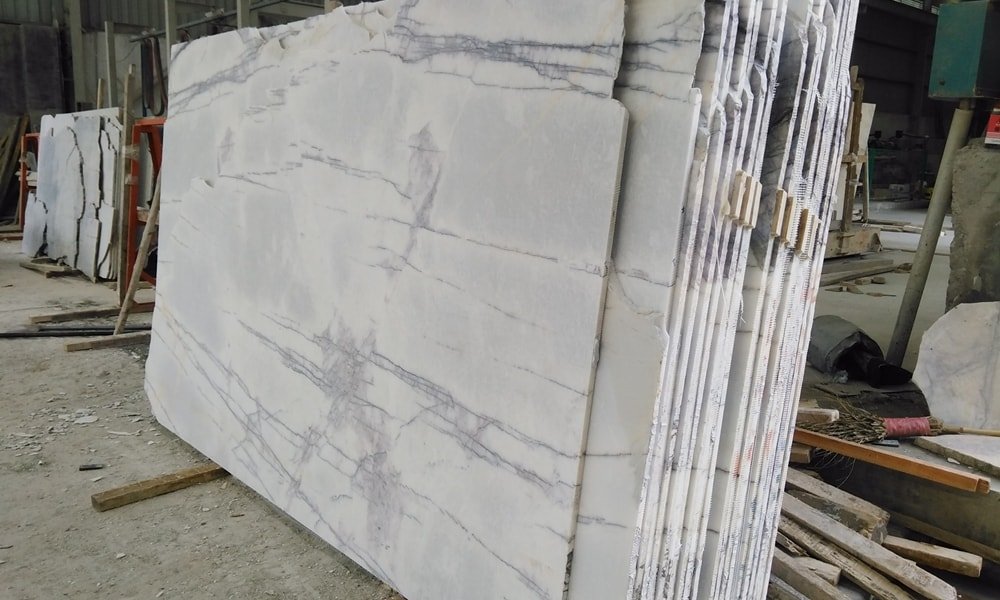
Commercial Sourcing: Wholesale, Factory, and Manufacturer Insights (EDG Stone)
Sourcing directly from the Aegean requires navigating a complex logistics and quality control landscape.
The Importance of “Block Selection”
In the stone trade, the best material is often sold before it is even cut.
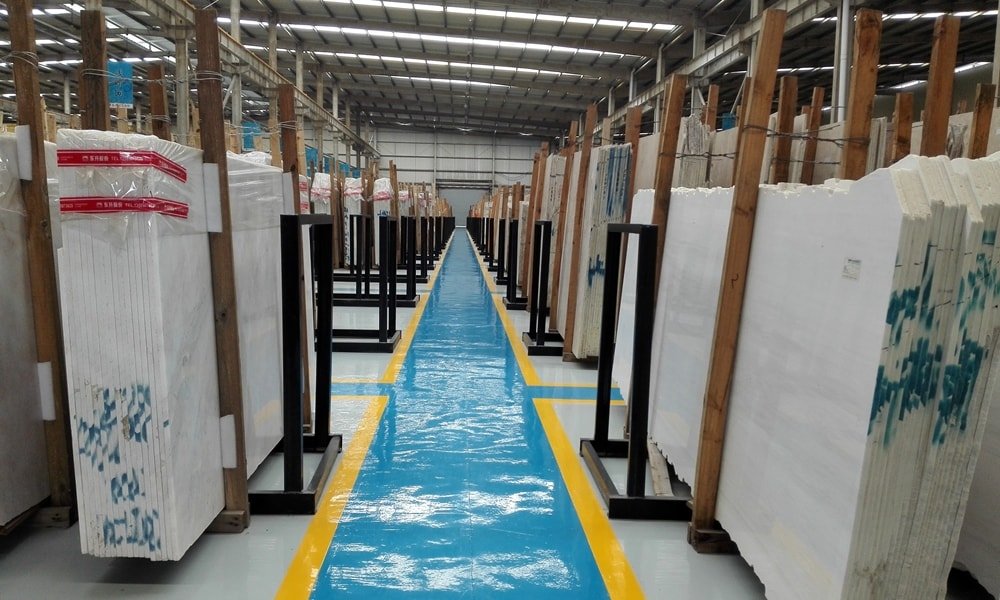
The EDG Stone Advantage: We maintain year-round contracts with quarries in Drama (Greece) and Denizli/Mugla (Turkey). This allows us to inspect blocks at the extraction site.
Why it matters: White marble is prone to “yellowing” or oxidation lines. By inspecting the raw block, we can predict if the veins will be clean or muddy, ensuring our wholesale clients only receive Premium and First Grade material.
Factory Processing: The “Epoxy” Standard
White marble often contains microfissures.
Vacuum Resining: Modern processing involves placing slabs in a vacuum chamber and impregnating them with clear epoxy resin.
The Risk: If a factory uses cheap, yellow-tinted resin, it will ruin the pure white hue of the stone. EDG Stone uses only high-grade, UV-resistant Italian epoxy to ensure the Greek marble tiles remain white for decades.
Logistics: Managing “Pinholes” and “Sugar”
Pinholes: Thassos marble naturally has tiny pinholes. A good manufacturer will fill these seamlessly.
Sugar Texture: Some lower-grade Greek marbles have a “sugary” texture that can crumble. We perform “drop tests” and density checks to ensure the structural integrity of the stone before crating.
Industry Trends, Regulations & Sustainability
The future of the Aegean stone industry is being shaped by environmental stewardship and technology.
Quarry Rehabilitation and EU Law
Greece: As an EU member, Greek quarries are subject to strict environmental regulations. Quarries in the Drama region are now required to reforest extraction sites simultaneously with mining operations. This ensures sustainability but has slightly increased the cost of Greek marble types.
Turkey: Turkey is rapidly modernizing its mining laws to align with European standards, focusing on water recycling and dust suppression in the Mugla region.
The Rise of 10mm Ultra-Thin Technology
Traditionally, marble was cut to 20mm. However, new CNC technologies now allow for cutting Turkish White Marble and Greek stones into 10mm ultra-thin slabs, often backed with aluminum honeycomb.
Benefits: This reduces weight by 50%, making it possible to install marble in elevators, yachts, and on ceiling panels—applications previously impossible due to weight restrictions.
Conclusion
The marble heritage of Greece and Turkey is a testament to the enduring beauty of the Aegean landscape. From the translucent, god-like purity of Thassos to the robust, empire-building strength of Mugla White, these stones tell a story spanning millennia.
For the modern architect or wholesale buyer, the choice is not just about color; it is about character. Do you need the crystalline light of Greece or the creamy consistency of Turkey? At EDG Stone, we bridge these two worlds. By combining direct quarry access with state-of-the-art manufacturing, we deliver the white hues of antiquity to the projects of tomorrow.
FAQ: Google Hot Search Questions
1. What is the whitest marble in the world? Thassos Snow White marble, quarried on the Greek island of Thassos, is widely considered the whitest marble in the world. It is a dolomite stone with small crystals and virtually no veining, giving it a brilliant, diamond-like reflection.
2. Is Turkish white marble cheaper than Greek white marble? Generally, yes. Turkish white marbles like Mugla or Ibiza White are more abundant and cost-effective compared to premium Greek marbles like Thassos or Ariston. Turkey’s large quarry reserves allow for high-volume production, making it ideal for commercial projects with budget constraints.
3. What is the difference between Volakas and Carrara marble? Volakas is a Greek marble, while Carrara is Italian. Volakas typically has a warmer white background with diagonal, ribbon-like veins that can be grey, brown, or purple. Carrara usually has a cooler, greyish-white background with finer, feathery grey veins. Volakas is often preferred for warmer interior palettes.
4. How do I maintain Greek white marble tiles? Greek white marble is porous and should be sealed professionally upon installation. Use pH-neutral cleaners and avoid acidic substances like lemon juice, vinegar, or wine, as they can etch the polished surface. Regular re-sealing every 12-18 months is recommended.
5. Why does some white marble turn yellow over time? Yellowing can be caused by the oxidation of iron minerals naturally present in the stone when exposed to water or humidity. It can also be caused by low-quality resin used during factory processing or improper adhesives used during installation. Choosing high-quality, iron-poor selections prevents this.
References
U.S. Geological Survey (USGS). Mineral Commodity Summaries: Stone, Dimension (2024).
Hellenic Survey of Geology & Mineral Exploration (HSGME). The White Marbles of Drama and Thassos: Mineralogy and Reserves.
Istanbul Mineral Exporters’ Association (IMIB). Turkish Natural Stone Industry Report.
Perrakis, E. The Ancient Quarries of Pentelic Marble: History and Geology. Journal of Archaeological Science.
Architectural Digest. The Enduring Appeal of Greek White Marble in Modern Interiors.
European Committee for Standardization. EN 1469: Natural Stone Products – Slabs for Cladding.
🔍 SGE Insight: Choosing Between Greek and Turkish Marble
WHY Choose Greek?
- Luminosity: For projects requiring backlit features or a “glowing” ambiance, the translucent nature of Greek white stone (especially Thassos and Ariston) is unmatched.
- Prestige: In high-end real estate, specifying “Greek Marble” carries a historical cachet that elevates property value.
- Pattern: The diagonal, ribbon-like movement of Volakas is superior for creating book-matched feature walls.
WHY Choose Turkish?
- Volume & Cost: For airports, malls, or large hotel chains (500+ rooms), Turkish White Marble (Mugla) offers the best balance of white aesthetics and budget.
- Durability: Turkish calcitic marbles are often less brittle than Greek dolomites, leading to less breakage during transport and installation.
- Variety: From the linear striations of Marmara to the chaotic purple of Lilac, Turkey offers bolder visual textures.
Strategic Sourcing Tip
Pro Tip: Do not rely solely on photos. White marble is notoriously difficult to photograph. Always request “Range Samples” (3-4 pieces showing the lightest, medium, and darkest variations) from your manufacturer before finalizing a wholesale order to manage client expectations regarding natural variation.