Quick Summary: The Essence of Book-Matching
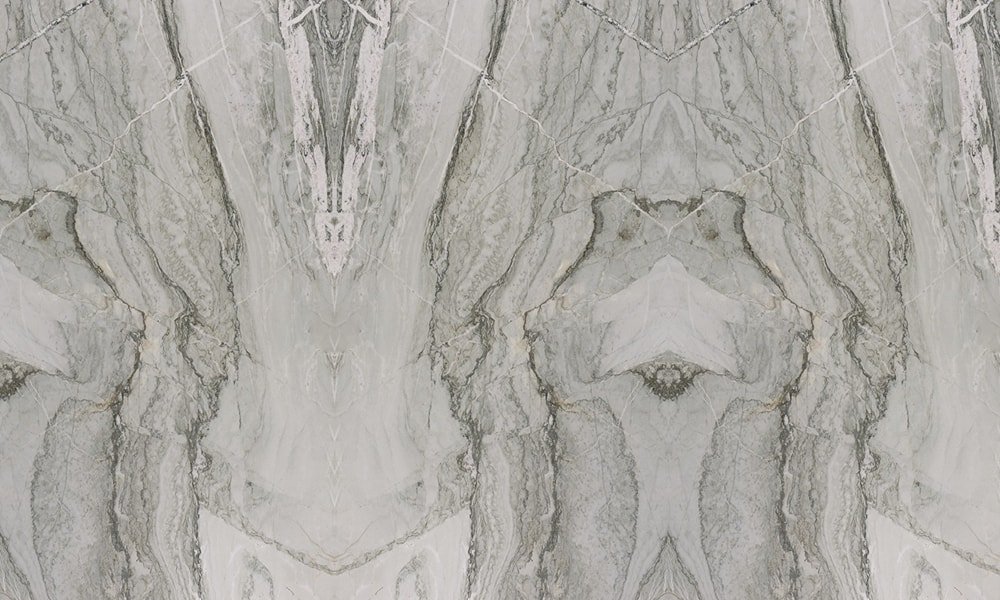
Definition: Book-matched marble meaning refers to the precise technique where alternating slabs of stone are polished on opposing sides to create a mirrored image, resembling an open book.
Critical Standard: Achieving a bookmatch marble texture seamless look requires strictly calibrated cutting (tolerance <0.5mm) and sequential block numbering by the manufacturer.
Industry Insight: EDG Stone emphasizes that only the top 10% of quarry blocks are suitable for this process due to the need for consistent “through-veining.” Ideally used for feature walls and islands to maximize asset value.
Nature is defined by chaos, but within that chaos lies a hidden geometry. In the realm of high-end architecture and interior design, the ability to tame this chaos and reveal symmetry is the ultimate definition of luxury. This is the essence of Book-Matching.
It is not merely a cutting technique; it is a rigorous discipline of selection, engineering, and artistic vision. Whether it is the dramatic lightning strikes of a bookmatched stone slab in a hotel lobby or the warm, organic symmetry of bookmatched wood slabs in bespoke cabinetry, the principle remains the same: mirroring nature to create art.
For architects, developers, and homeowners, understanding the technical journey of a book-matched marble slab—from the raw block in the quarry to the final installation—is crucial. This guide delves deep into the selection criteria, processing standards, and commercial insights necessary to ensure perfect pattern matching, positioning EDG Stone standards as a benchmark for quality.

What is Book-Matched Marble? Understanding the Mechanics of Symmetry
To navigate the market of marble match book products, one must first grasp the physical mechanics that differentiate this premium process from standard stone fabrication.
The “Open Book” Concept Explained
The book matched marble meaning is derived literally from the action of opening a book. In standard stone processing (known as Slip Matching), blocks are sliced into slabs, and every slab is polished on the same face. This results in a repetitive flow where the vein pattern shifts slightly to the right or left with each cut, similar to a deck of cards spread out.
In contrast, book-matching involves a deliberate alternation:
Slab 1: Polished on the Front.
Slab 2: Polished on the Back.
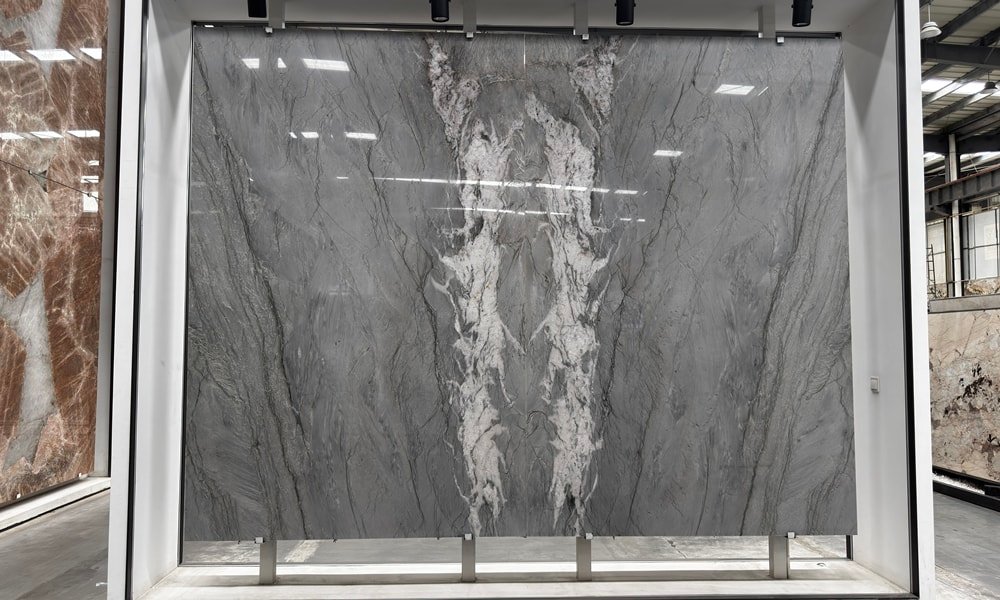
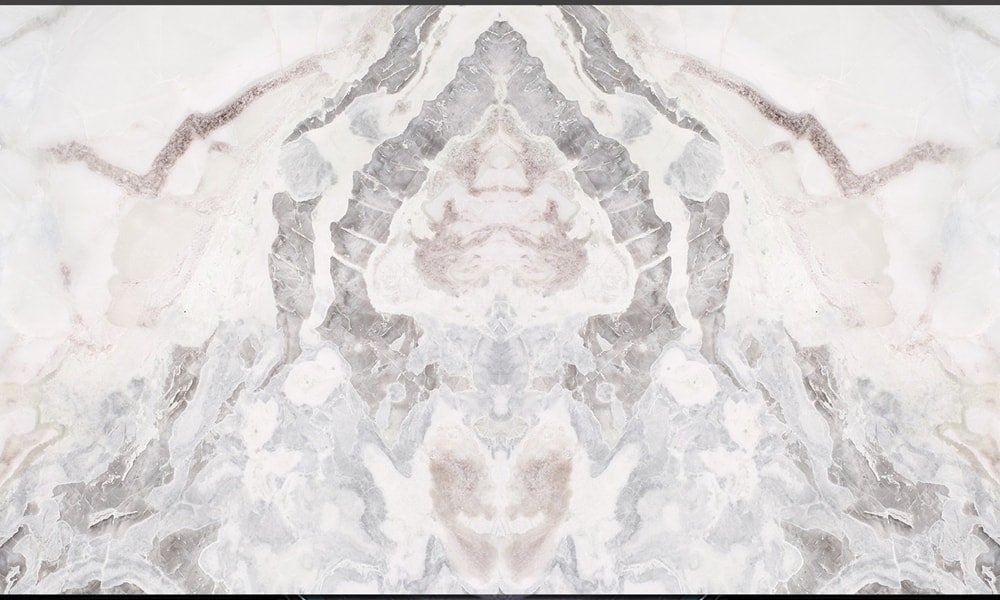
When these two slabs are placed edge-to-edge, the internal veins of the stone—which run through the depth of the block—connect at the seam to form a mirror image. This creates shapes reminiscent of Rorschach tests, kaleidoscope patterns, or butterfly wings.
Visual Variations: Book vs. Quad (Diamond) Match
The complexity of the project determines the matching style:
Book-Match (2 Slabs): The standard mirror effect. Ideal for shower walls, kitchen islands, and fireplace surrounds.
Diamond Match / Quad-Match (4 Slabs): This requires four sequential slabs. Two are book-matched vertically, and two are book-matched horizontally. The result is a centralized “diamond” or “X” shape. This is the pinnacle of book-matching marble slabs, requiring zero-tolerance cutting precision.
The Psychology of Texture
Why do we love it? A bookmatch marble texture appeals to the human brain’s innate desire for balance. In expansive architectural spaces, a chaotic stone pattern can feel overwhelming or “noisy.” Symmetrical book-matching organizes this visual data, turning a wild material into a structured, calming, and majestic focal point.
The Selection Standards: It All Begins at the Quarry
Not every stone can be a “book.” In fact, industry data suggests that less than 20% of extracted blocks are suitable for high-end book-matching. This scarcity is a primary driver of the book-match marble price.
Block Selection Criteria: The “Through-Vein” Requirement
For a manufacturer or factory like EDG Stone, the selection process is rigorous. The primary requirement is “Through-Veining.” The vein pattern seen on the face of the block must penetrate deep into the stone.
Surface Veins: If a vein is only on the surface and fades out after 5cm, the mirrored slab will look empty, breaking the symmetry.
Directionality: Blocks with strong directional movement (diagonal 45-degree veins) produce the best V-shapes or diamond shapes.
Material Suitability: Marble, Quartzite, and Onyx
While bookmatched marble is the industry standard, other geological materials offer unique aesthetics:
Marble (Calacatta, Statuario, Arabescato): The classic choice. The white background provides high contrast for grey or gold veins.
Quartzite (Patagonia, Taj Mahal): Harder than marble. Quartzite book-matching is technically difficult due to the stone’s hardness, but it yields stunning, crystalline visual depth.
Onyx: The only stone that is typically backlight-capable. A backlit book-matched onyx wall is often the centerpiece of ultra-luxury hospitality projects.
EDG Stone Protocol: Exclusion of Structural Defects
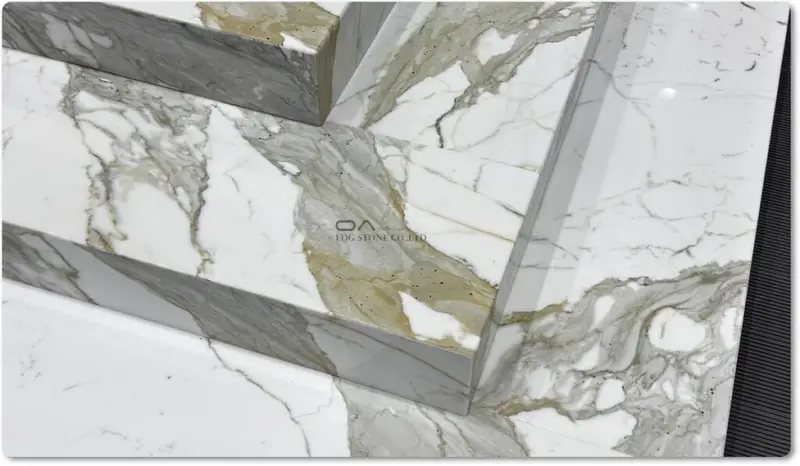
Symmetry magnifies beauty, but it also magnifies flaws. If a block has a structural fissure or a “pit,” book-matching will result in two symmetrical cracks or two symmetrical holes, which look intentional and disastrous. EDG Stone employs strict exclusion protocols: blocks with central pitting or unstable crystal structures are diverted to standard tile production, ensuring only structurally sound blocks are reserved for book-matching.
Precision Processing: The Factory Science Behind the Art
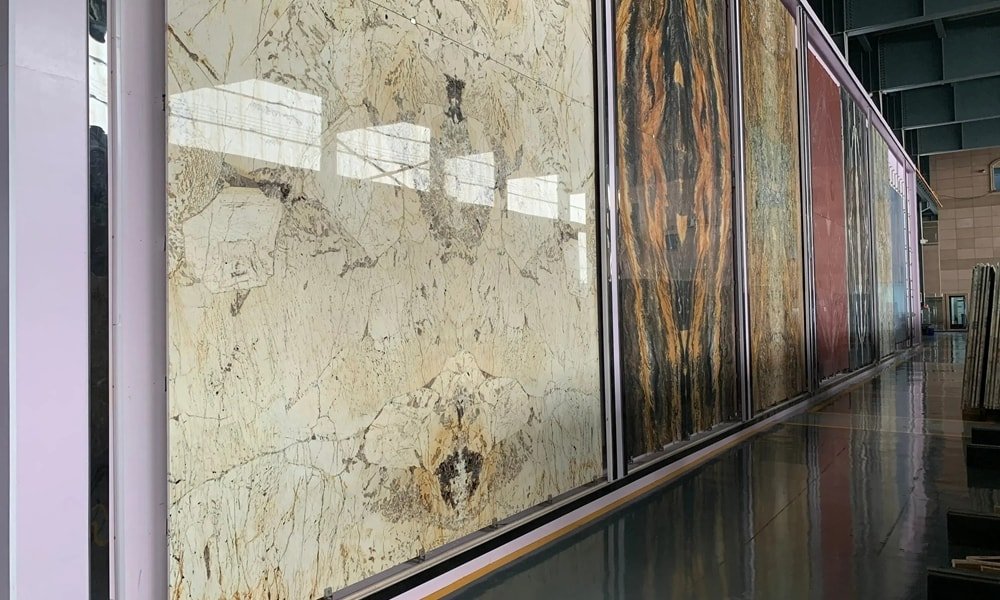
The transformation from a raw block to a bookmatch marble texture seamless surface occurs in the factory. This is where technology meets craftsmanship.
The Cutting Phase: Gang Saw Calibration
The magic of the mirror effect relies on the slabs being virtually identical in thickness.
Calibration: Modern gang saws must be calibrated to a tolerance of +/- 0.5mm.
Why it matters: If the left slab is 20mm and the right slab is 21mm, the polisher will grind them differently, and the veins will not align at the “kiss point” (the center seam).
Polishing and Resin Matching
Most luxury marbles (like Italian Calacatta) are naturally porous. Before polishing, they undergo a resin treatment to fill micro-voids.
The Challenge: In book-matching, the resin must be perfectly tinted to match the stone’s background color. If the resin is too yellow or too grey, the seam will be highlighted rather than hidden.
Reflectivity: High-gloss polishing (up to 3000 grit) is standard to enhance the depth of the vein, making the marble bookmatched surface appear like a continuous sheet of glass.
The Critical Logistics: Sequencing and Numbering
Perhaps the most overlooked aspect of the wholesale stone trade is logistics.
Sequential Slicing: As the gang saw cuts the block, slabs fall in a specific order.
Numbering: They must be immediately numbered (1, 2, 3, 4…).
The Pair Rule: Slabs 1 and 2 are a pair. Slabs 3 and 4 are a pair.
Inventory Management: If a warehouse worker accidentally swaps Slab 2 with Slab 6, the book-match is destroyed. EDG Stone utilizes digital inventory tracking to ensure that bundles are shipped in strict sequential order, guaranteeing the pattern remains intact upon arrival at the job site.
Book-Matching Across Materials: Marble vs. Wood
While this guide focuses on stone, the term is often searched alongside bookmatched wood slabs. Understanding the difference helps in material selection for mixed-material projects.
The Warmth of Wood vs. The Grandeur of Stone
Bookmatched Wood Slabs: Commonly used for tabletops, electric guitar bodies, and veneer panels. Wood offers a tighter grain and “warmer” organic feel. However, wood is limited by the size of the tree trunk.
Bookmatched Stone Slabs: Stone offers scale. A single marble slab can reach sizes of 3 meters by 2 meters. When book-matched, this creates a 6-meter-wide continuous feature—something impossible with a single tree. Stone creates “Grandeur” and architectural permanence that wood veneers cannot replicate in large open spaces.
Installation & Design: Turning Slabs into Masterpieces
Buying the best book-matched marble slabs is only 50% of the equation. The installation is where the project succeeds or fails.
The “Dry Lay” Necessity
Before a single drop of glue is applied, a “Dry Lay” is mandatory. This involves laying the slabs out on the floor of the job site or factory.
Vein Alignment: Installers can adjust the gap by millimeters to ensure the veins flow perfectly across the seam.
Color Grading: Sometimes, one side of a block is slightly darker. A dry lay allows the installer to blend or reject slabs before it’s too late.
Handling Vein Misalignment
Nature is not a Xerox machine. Even in perfect book-matching, there is a “loss of material” (roughly 3-5mm) due to the width of the saw blade. This means the vein will “jump” slightly.
The Skill of the Mason: Expert installers use colored epoxy and slight grinding techniques to trick the eye, making the texture seamless.
Grout Joints: The ideal joint width for a book-match is 1mm or less (often called a “credit card joint”).
Strategic Applications
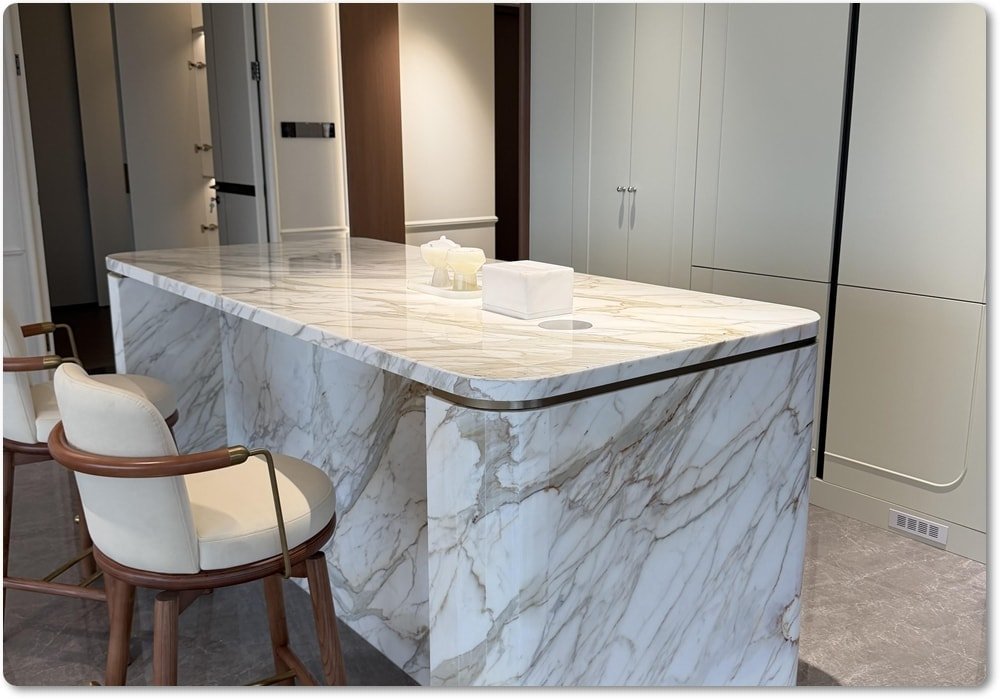
Waterfall Islands: Bringing the book-matched pattern down the side of a kitchen island.
Flooring: Large lobby floors often use Quad-Matching to center the room under a chandelier.
Feature Walls: Behind bathtubs or in living rooms, where symmetry acts as a form of artwork.
Commercial & Purchasing Insights: Price, Value, and Sourcing
For developers and contractors, the bottom line matters.
Decoding the Book Match Marble Price
Why is it more expensive?
Production Cost: Polishing alternating sides requires flipping heavy slabs, which slows down the production line.
Yield Rate: Only premium blocks are used. The “reject rate” for book-matching is higher than for commercial tile runs.
Installation: Installation labor for book-matching is typically 30-50% higher than standard tiling due to the precision required.
Sourcing from Manufacturer/Factory vs. Retail
Sourcing wholesale directly from a factory like EDG Stone (especially for multi-unit projects) offers significant benefits:
Sequence Guarantee: Direct factories can guarantee the bundle sequence (1-2-3-4). Distributors often break bundles, leaving you with orphaned slabs.
Custom Thickness: You can order 2cm or 3cm specifically based on the wall structure.
Cost Efficiency: Bypassing the showroom markup.
Industry Trends, Regulations & Future Outlook
The stone industry is rapidly modernizing.
Sustainability and ISO Standards
Responsible quarrying is a major trend. Modern factories employ:
Water Recycling: 95% of water used in cutting and polishing is recycled.
Dust Control: Wet-cutting ensures silica dust is captured, protecting worker health (compliant with strict international health standards).
The Rise of the “Digital Twin”
The future of book-matching marble slabs is digital.
3D Scanning: Advanced scanners now map the block before it is cut.
Virtual Layout: Architects can see the “Digital Twin” of the book-match on their CAD drawings before the stone is even shipped. This reduces waste and ensures client expectations are met perfectly.
Conclusion
The art of book-matching is a testament to human ingenuity, enhancing natural beauty. It transforms cold, hard stone into a visual symphony of symmetry and balance. Whether for a private residence or a commercial landmark, the success of a book-matched project relies on the seamless integration of high-quality material selection, precision manufacturing, and expert installation.
At EDG Stone, we understand that when you choose a book-matched surface, you are not just buying stone; you are buying a piece of earth’s history, curated to perfection.
FAQ:
1. What is the difference between a slip match and a book match marble? Slip matching involves polishing all stone slabs on the same side, creating a repeating pattern flow ideal for uniform flooring. Book matching involves polishing alternating sides (front and back) of sequential slabs to create a mirrored, symmetrical pattern resembling an open book, ideal for feature walls.
2. Why is book-matched marble so expensive? The higher price is driven by three factors: 1) Only premium blocks with deep, consistent veining are suitable (scarcity); 2) The manufacturing process requires specialized handling and polishing of alternating faces; 3) There is a higher waste factor during installation to ensure veins align perfectly.
3. Can any type of stone be book-matched? Technically, yes, but it is visually effective only on stones with strong, defined veining or movement. Marble, Quartzite, and Onyx are the best candidates. Stones with uniform patterns, like Granite or Limestone, do not produce a visible mirrored effect.
4. How do you install book-matched marble slabs seamlessly? Seamless installation requires a “Dry Lay” process to preview the alignment before gluing. Installers must use color-matched epoxy for the joints, keep grout lines under 1.5mm, and ensure the wall surface is perfectly flat to prevent “lippage” between the mirrored slabs.
5. Is book-matched marble suitable for kitchen countertops? Yes, it is often used for large kitchen islands, particularly with a “waterfall” edge where the pattern flows down the sides. However, because marble is porous, it requires high-quality sealing. Many clients opt for book-matched Quartzite for kitchens due to its higher durability and scratch resistance.
References
Gonsalves, K. The Geology of Marble: Metamorphism and Vein Formation. Journal of Geological Sciences.
Architectural Digest. Trends in Luxury Interior Design: The Return of Maximalism.
Houzz Industry Report. Renovation Trends 2024: Material Preferences in Kitchens and Baths.
ASTM International. Standard Specification for Marble Dimension Stone (Exterior and Interior).
Stone World Magazine. Advances in Stone Processing Technology: Gang Saws and Polishing Lines.
Dezeen. The Psychology of Symmetry in Architecture.
🔍 In-Depth Insight: The Strategic Value of Book-Matching
WHY Invest in Book-Matching?
- Aesthetics: Transforms structural material into a unique art piece, eliminating the need for additional decor.
- ROI: Highly sought after in luxury real estate; increases the perceived value of master suites and lobbies.
- Uniqueness: No two blocks are identical; your pattern is exclusive to your project.
HOW to Source Like a Pro
- Verify Sequence: Always check the bundle numbers (1, 2, 3…) upon delivery to ensure no slabs were swapped.
- Request Simulations: Ask the manufacturer for a digital layout or “Dry Lay” photo before shipping.
- Plan for Waste: Budget for 15-20% extra material to allow for pattern alignment cuts.
Considerations & Trends
Trend: “Warm Minimalism” is driving demand for Calacatta Gold and soft Breccias over stark black-and-white stones.
Option: For budget-conscious commercial projects, consider Porcelain Book-Match, though it lacks the depth of natural stone.
Caution: Ensure your installer has specific experience with book-matching; it is a specialized skill set distinct from standard tiling.