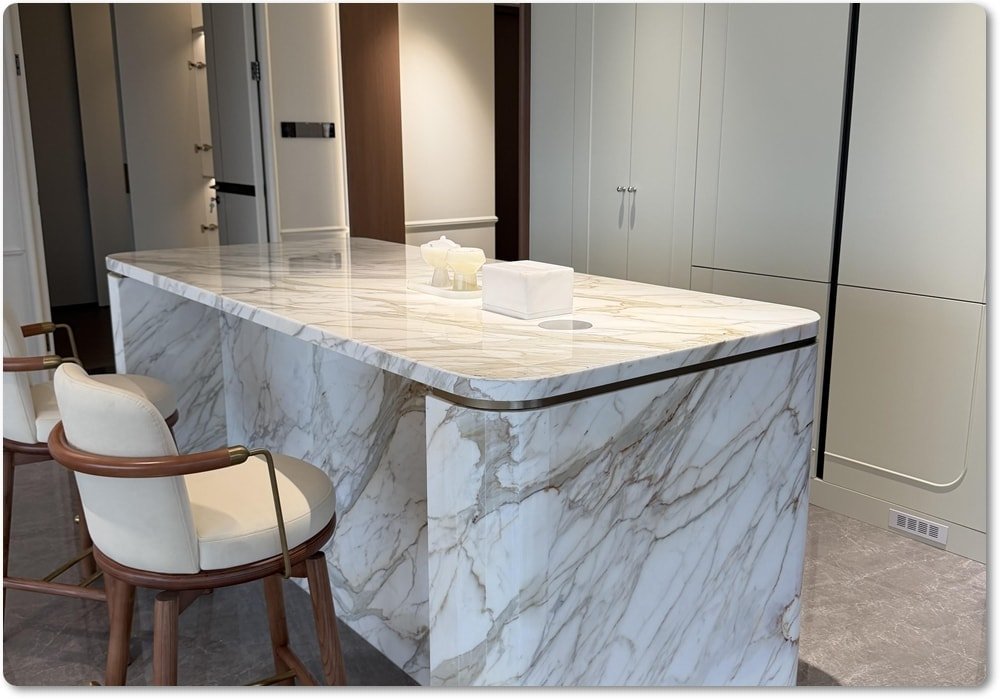
High-Traffic Abrasion Resistance — Quick Summary
——
Introduction: Why abrasion resistance matters in high-traffic commercial spaces?
——
High-traffic public spaces—airport check-in counters, security screening benches, bank teller counters, and retail kiosks—see millions of touches, luggage wheels scraping edges, trolleys bumping corners, and aggressive cleaning regimens. Abrasion resistance determines how long a stone countertop preserves its appearance, resists scratching and surface wear, and retains its structural integrity under repeated mechanical and chemical stress. Choosing the correct material is not purely aesthetic: it affects maintenance budgets, user safety, brand image, and total cost of ownership.
This article explains abrasion metrics (Mohs hardness and PEI grades or their commercial equivalents), compares common countertop materials, offers specification and procurement guidance for manufacturers, factories, and wholesale buyers, and provides practical design + maintenance strategies to maximize service life in demanding public environments.
——
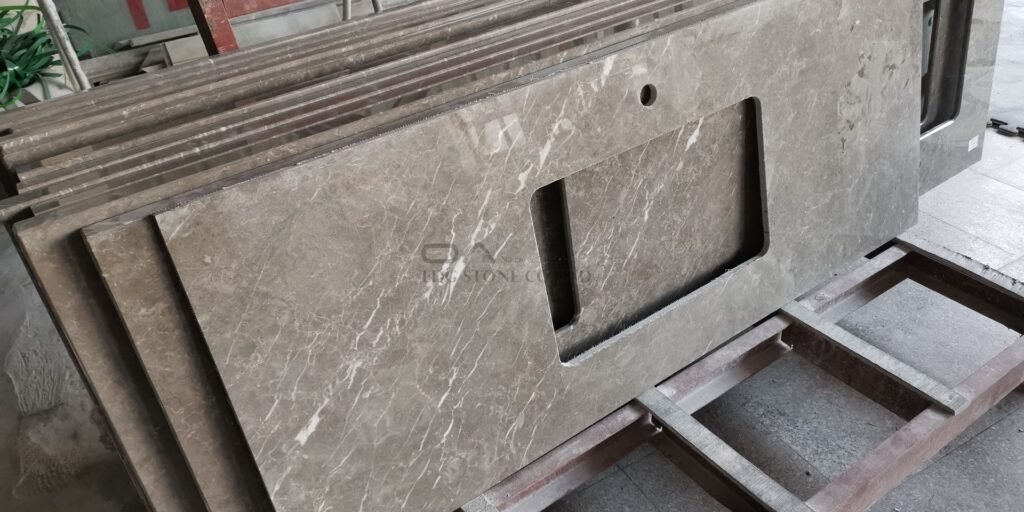
What abrasion resistance ratings mean: Mohs, PEI, and real-world performance?
——
Mohs hardness and PEI (Porcelain Enamel Institute) grades are two commonly referenced scales when discussing scratch and wear resistance for building surfaces. Mohs hardness measures scratch resistance on a scale from 1 (talc) to 10 (diamond). It is widely used for natural stones: many granites and quartzites fall between 6 and 8; marble typically sits around 3–4.
PEI grading was developed for ceramic tiles to classify wear under foot traffic; in countertop contexts, we speak analogously about PEI-like abrasion classes or manufacturer-provided abrasion test results. High-traffic commercial counters need materials with high abrasion resistance and dense microstructure—this reduces surface roughening, reduces dirt trap sites, and slows visual aging.
Important to remember: hardness alone is not the whole story. Toughness, fracture resistance, homogeneity, and the nature of the surface finish (polished vs honed vs textured) all influence how a surface performs when struck by luggage wheels, cart legs, or sharp objects. Engineered surfaces often combine high hardness with controlled microstructure for consistent performance.
——
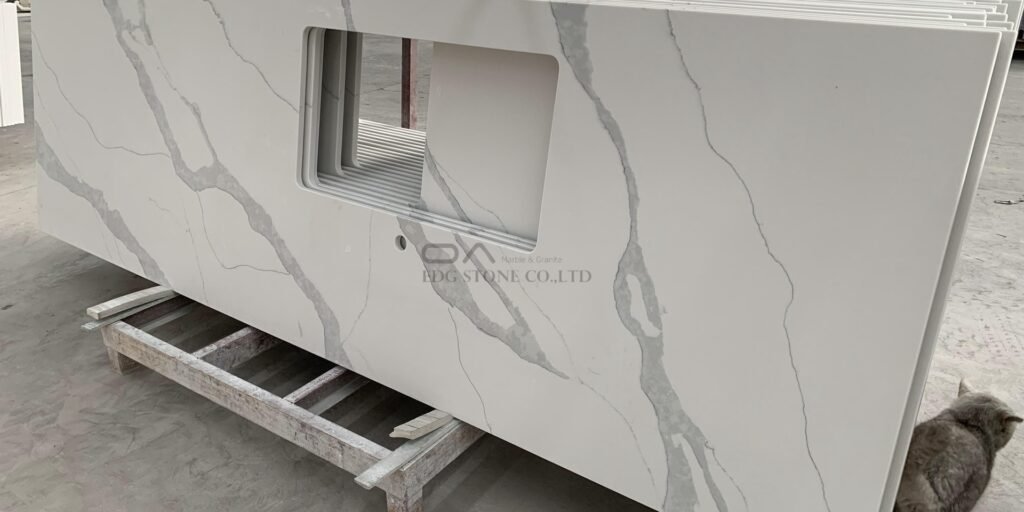
Common countertop materials and their abrasion characteristics
——
Granite (natural)
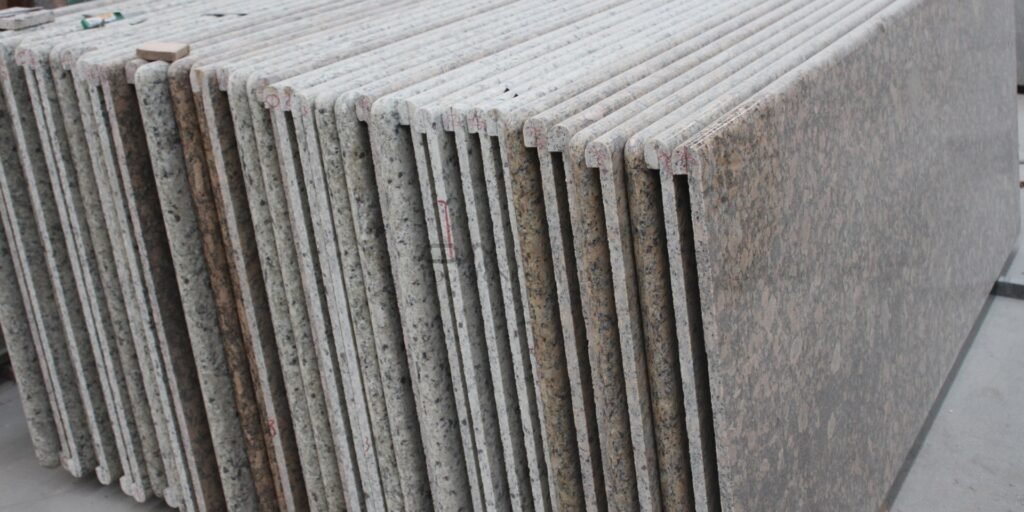
Granite is a crystalline igneous stone with interlocking mineral grains—quartz, feldspar, mica—that provide excellent abrasion resistance and compressive strength. Typical Mohs values: quartz component ~7. A well-selected commercial granite with a dense, low-microfracture matrix resists abrasion and is a proven long-term option in heavy-use settings. Polished granite presents a glossy look but can show micro-scratches over time; leathered or flamed finishes hide wear better.
Marble (natural)
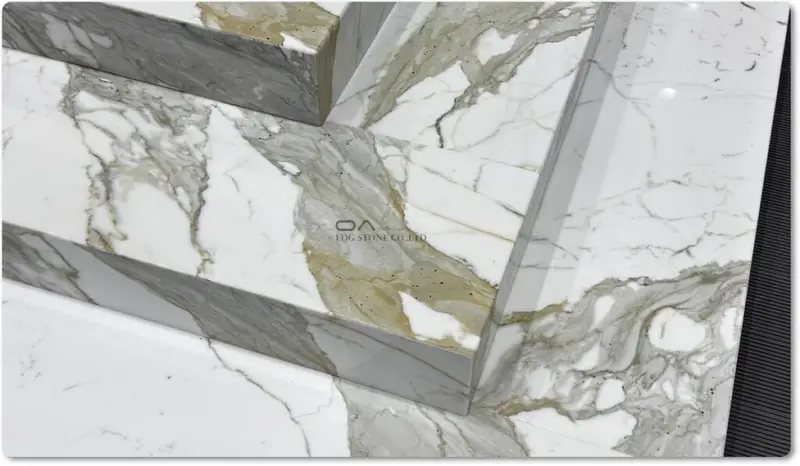
Marble is softer (Mohs ~3–4) and more susceptible to abrasion and acid etching. While visually striking, marble requires protective strategies (overlays, sacrificial polish layers) to function in high-abrasion contexts—generally not recommended as the primary material in airports or busy bank lobbies unless treated as a decorative insert.
Quartzite (natural)
Quartzite is a metamorphic rock with a high quartz content and a Mohs hardness often 7–8. It combines the abrasion resistance of quartz with a natural stone aesthetic, making it one of the best natural choices for heavy-use countertops where scratch resistance and longevity are critical.
Engineered quartz (e.g., premium brands / Calacatta-style quartz)
Engineered quartz combines natural quartz (high hardness) with polymer resins. Premium, high-density formulations can deliver Mohs-like performance comparable to quartzite while offering uniformity and easier fabrication. Manufacturers tag abrasion or PEI-like ratings on commercial-grade products; select formulations designed for public/commercial installations for best results.
Sintered surfaces and sintered stone
Sintered materials (compact, high-temperature-formed stone-like slabs) often provide excellent abrasion resistance and thermal stability due to their engineered microstructure. They can be an excellent choice for spaces requiring ultra-low maintenance and high abrasion performance.
Other (soapstone, solid surfaces)
Soapstone is softer and prized for its patina; not ideal for abrasion-heavy zones. Solid surface materials (acrylic/thermoplastic) scratch more easily and are best suited to lower-traffic applications or decorative use.
——
LCC (Life Cycle Cost) comparison spreadsheet template for Granite vs Quartz vs Quartzite vs Sintered Stone.
Included Table Fields:
| Column Field | Purpose |
|---|---|
| Material Type | Granite / Quartz / Quartzite / Sintered Stone |
| Cost per sq.ft | Estimated installed material cost |
| Abrasion Resistance (Mohs/PEI) | Wear resistance scale for high-traffic usage |
| Porosity Level | Determines stain resistance |
| Heat Resistance | Performance under heat exposure |
| Maintenance Level | Sealing, care frequency required |
| Scratch Resistance | Durability under knives/friction |
| Color & Pattern Variability | Aesthetic diversity |
| Recommended Use | Kitchens, airports, vanity tops, etc. |
| Pros | Benefits summary |
| Cons | Limitations summary |
| Overall Rating (1-10) | Final decision ranking |
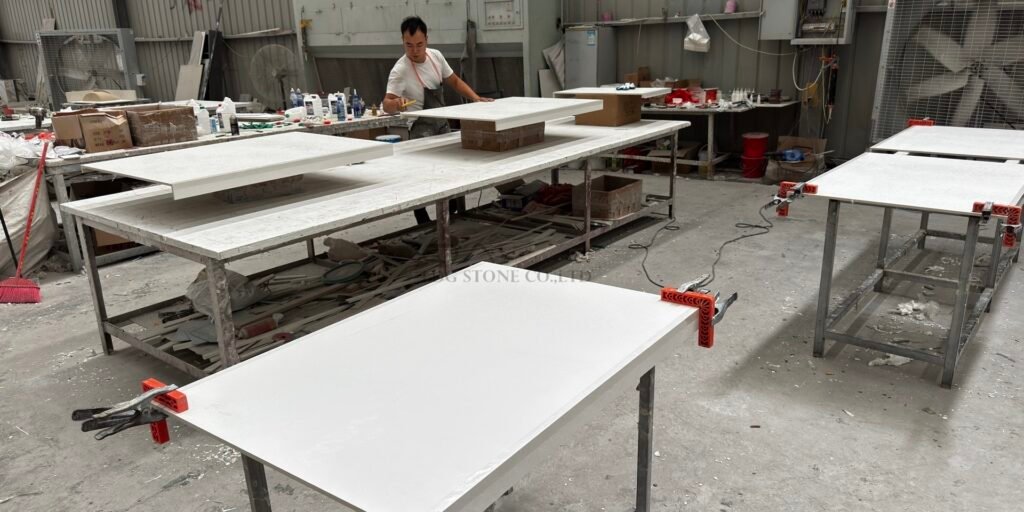
Testing methods and performance indicators (what specifiers should request)
——
Specifiers and buyers should ask manufacturers for test data relevant to abrasion and wear. Useful items to request:
Mohs hardness (or comparable mineral hardness profile) for natural stones.
Manufacturer abrasion tests (Taber abrasion or equivalent test reports).
PEI-type wear class or commercial abrasion class declarations for engineered products.
Density and porosity numbers (lower porosity reduces micro-abrasion caused by embedded grit).
Scratch resistance under defined loads, and resistance to repeated mechanical impacts at edges and seams.
Warranty terms that specify acceptable appearance tolerance over time for commercial installations.
Ask for lab test reports showing the exact protocol and number of cycles; the absence of data is a red flag. Request comparison data for finishes (polished vs honed) because some finishes can hide micro wear better than others.
——
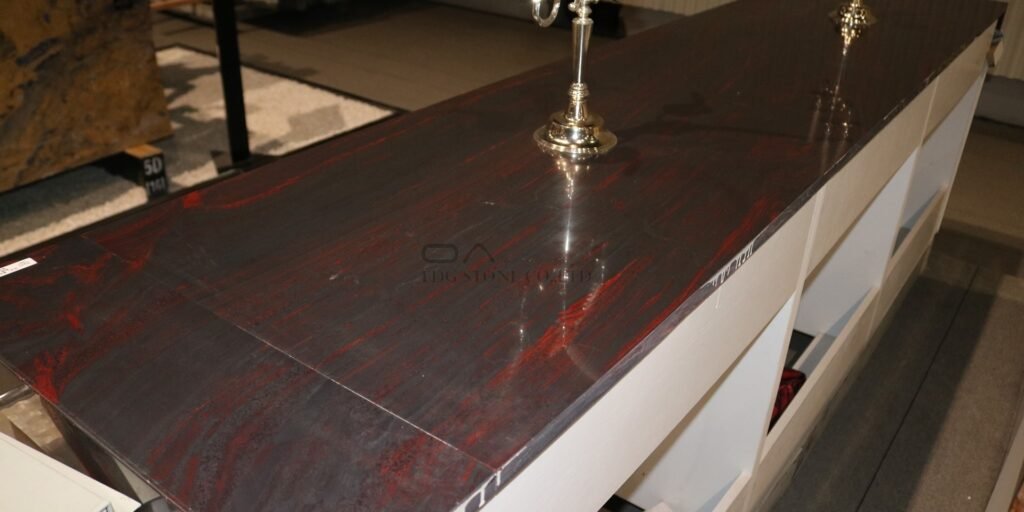
Case studies and real-world observations (airport counters, bank lobbies, commercial kiosks)
——
Case: Major airport check-in counters (observational summary)
Airline check-in islands experience luggage dragging, trolley contact, and frequent cleaning. Installations using dense granite or high-grade quartzite with honed finishes show reduced visible wear and require less cosmetic maintenance. Polished engineered quartz in premium zones keeps its look for longer when protected, but lower-tier engineered products may show micro-scratching sooner.
Case: Bank teller counters
Teller counters face repetitive customer interaction and occasional abrasive contacts (keys, edges of documents, coin trays). Banks that spec granite or commercial-grade quartz report lower lifecycle maintenance and fewer replacements. Edge protection using rounded profiles and stainless steel guard strips at high-contact zones significantly reduces edge chipping and maintenance downtime.
Case: Retail kiosks and food court islands
Exposure to food spills, cleaning chemicals, and high foot traffic demands surfaces that combine chemical resistance and abrasion resistance. Sintered surfaces and engineered quartz designed for heavy commercial cleaning regimens perform best—less discoloration and surface roughening under aggressive cleaning.
Each scenario demonstrates the practical benefits of prioritizing abrasion resistance atthe design stage—reduced downtime, lower LCC (lifecycle cost), and preserved aesthetics.
——
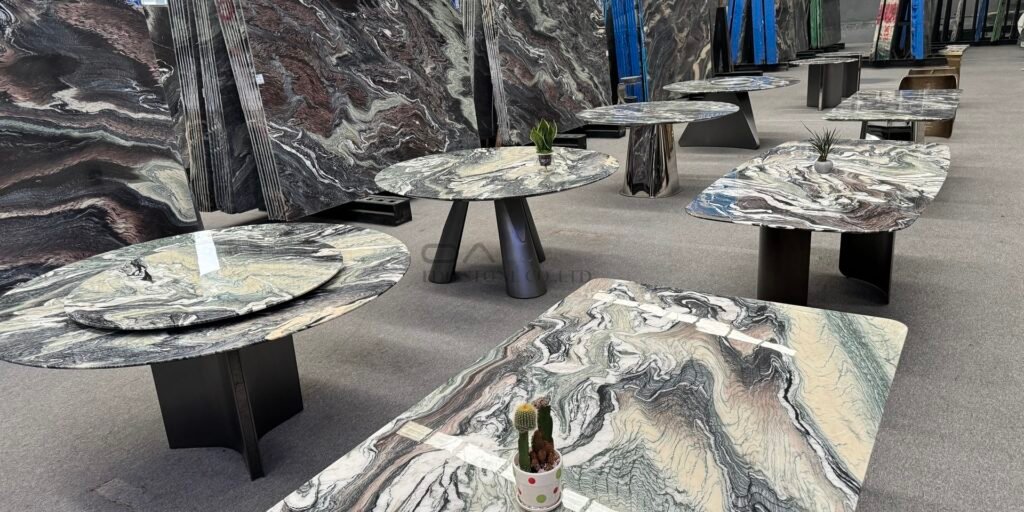
Design, fabrication, and installation best practices to reduce abrasion damage
——
Select the right finish: Honed or leathered finishes hide micro-scratches better than high-gloss polish in heavy-use areas. Polished finishes show scratches but can be easier to clean; weigh aesthetic priority vs practical durability.
Edge detailing: Rounded or eased edges reduce stress concentration and reduce chipping from trolley hits. Overhangs should be supported and corners protected with metal guards in extremely high-impact locations.
Seam and joint engineering: Use full-bonded seams, proper substrate support, and generous joint backing. Seams in high-wear zones should be minimized; consider continuous slabs for long-run counters.
Protective sacrificial layers: In some context,s a replaceable sacrificial surface (a thin laminate or clear hard film) can preserve the stone while being cheaper to replace.
Installation tolerances: Ensure flat, level substrates and uniform adhesive bed thickness to avoid point loading that accelerates local damage.
Cleaning regimen alignment: Use cleaning agents compatible with the stone/resin system. Avoid abrasive scrubbers that introduce micro-scratches; use microfiber and manufacturer-recommended detergents.
——
Maintenance and repair strategies that preserve abrasion performance
——
Routine inspection: Weekly visual inspections for high-use zones detect edge chips or surface dulling early. Early small repairs prevent progressive deterioration.
Cleaning protocols: Avoid scour pads. Use pH-appropriate cleaners; neutral pH cleaners are safest for many engineered surfaces and natural stones. Remove gritty debris before wiping.
Polish and re-seal cycles: Depending on finish and traffic, schedule periodic professional re-polishing for polished natural stone, or maintain engineered surfaces per manufacturer recommendations.
Quick repairs: Small chips and edge fractures can be filled and re-profiled on site to maintain appearance and avoid larger replacements.
Lifecycle budgeting: Plan preventive maintenance in CAPEX/OPEX models; budgeting for professional maintenance prolongs final replacement intervals and lowers total cost.
——
Procurement checklist for manufacturers, factories, and wholesale buyers
——
When buying for airports, banks, or other heavy-use public projects, include the following in your RFQ/RFP:
Specify required abrasion class, Mohs equivalence, or manufacturer-provided test results.
Required surface finish and acceptable variance thresholds (visual and dimensional).
MOQ, slab origin, and traceability (quarry or plant of origin).
Samples and performance tests (request full-size sample slabs where possible).
Warranty terms for commercial installations (service life guarantees and replacement clauses).
Delivery lead times and installation support (prefabrication tolerance, onsite remedial support).
Certifications: quality management systems (e.g., ISO), sustainability claims, and recommended cleaning/maintenance SOP.
A procurement team that requests technical test data and supports manufacturer accountability reduces the risk of early failure and warranty disputes.
——
Commercial selection matrix: recommended options by priority
——
Maximum abrasion resistance / long lifecycle (premium): Quartzite or high-density sintered stone with honed finish. Best for main check-in counters and heavy wheelchair/trolley use.
Balance of cost and durability (mid-tier): Dense, low-porosity granite or premium engineered quartz (commercial-grade, high resin density) with eased edges.
Aesthetics-driven but moderate traffic (select areas): Polished engineered quartz (Calacatta-style) in VIP or lounge areas with lower abrasive exposure.
Not recommended for high-traffic countertops: Marble, soft soapstone, and low-density acrylic solid surfaces unless treated or protected.
——
Risk, limitations and evolving industry trends
——
Risk and limitations: Test methods vary—so reported performance can be non-uniform across suppliers. On-site conditions (grit, untrained cleaning staff, unplanned impacts) amplify abrasion beyond lab scenarios. Installation errors (poor substrate support, thin adhesive beds, bad seam work) cause premature failures that are not material-related.
Trends: The industry is moving toward sintered products and engineered quartz blends that optimize abrasion resistance and reduce maintenance. Sustainability regulations and responsible-sourcing protocols are nudging buyers to favor traceable quarries and manufacturers with low-emission production. Integration of performance data into product labels (e.g., certified abrasion class) will become more common, improving transparency for specifiers.
——
Google-hot FAQ (human-readable answers)
——
Q1 — What does Mohs hardness tell me about a countertop’s abrasion resistance?
Mohs hardness indicates scratch resistance by measuring relative mineral hardness. A higher Mohs value means greater resistance to scratches from common abrasives. However, Mohs alone doesn’t explain toughness or resistance to chipping; choose materials with both high hardness and dense microstructure for heavy-use counters.
Q2 — Is Viatera Calacatta Grande suitable for high-traffic commercial spaces?
Premium engineered quartz styles such as Calacatta-patterned slabs can be suitable if the product is a high-density, commercial-grade formulation with demonstrated abrasion resistance. Confirm manufacturer test data and select a finish that hides micro-wear if heavy mechanical contact is expected.
Q3 — Granite vs. engineered quartz: which is better for bank teller counters?
Both can work. Dense granites offer excellent abrasion resistance and a natural aesthetic, while premium engineered quartz offers uniformity and consistent testable performance. Consider finish, edge protection, seam placement, and lifecycle maintenance costs when choosing between them.
Q4 — How should I communicate abrasion requirements to a manufacturer or factory?
Provide explicit technical requirements: expected traffic/use types, required Mohs/abrasion class or equivalent test results, acceptable surface finish and tolerance, sample sizes, and warranty terms. Request lab test reports and clarify acceptable maintenance procedures.
Q5 — What are practical steps to repair a scratched or slightly abraded countertop quickly?
For minor surface abrasion, cleaning, light polishing, or applying a manufacturer-approved restorative product can restore appearance. Edge chips often need professional resin fills and re-profiling. For severe wear, consider replacing a sacrificial film or localized panel rather than full slab replacement to reduce downtime.
——
——
——
Semantic Closure: How / Why / What / Options / Considerations
How to choose: Start by defining expected load types (trolley, luggage, continuous human contact), cleaning chemistry, and acceptable maintenance intervals. Map those to empirical abrasion data (Mohs or Taber-style test results) and a lifecycle-cost model. Request manufacturer test reports and full-size samples for verification.
Why it matters: Abrasion resistance directly controls replacement frequency, maintenance cost, and guest perception. A slightly higher upfront cost for a material with superior abrasion metrics often delivers lower total lifecycle cost and less service disruption.
What to choose: For maximum durability, prioritize quartzite or industry-grade sintered slabs. For consistent manufacturing and finish options, premium engineered quartz with documented abrasion tests is an excellent alternative. Granite remains a cost-effective and durable natural option.
Options (budget-based):
Economy: Dense granite with sacrificial metal corner guards and planned maintenance cycles.
Balanced: Premium engineered quartz (commercial grade) with honed finish and documented abrasion certification.
High-end: Sintered surface or high-grade quartzite in honed finish, full-edge protection, and proactive maintenance contract.
Considerations (detailed): Confirm environmental and procurement constraints—traceability of quarry, VOC and resin content for engineered products, warranty coverage details, and availability of replacement slabs in future years. Design for maintainability: accessible seams, replaceable sacrificial films, and documented cleaning protocols.
——