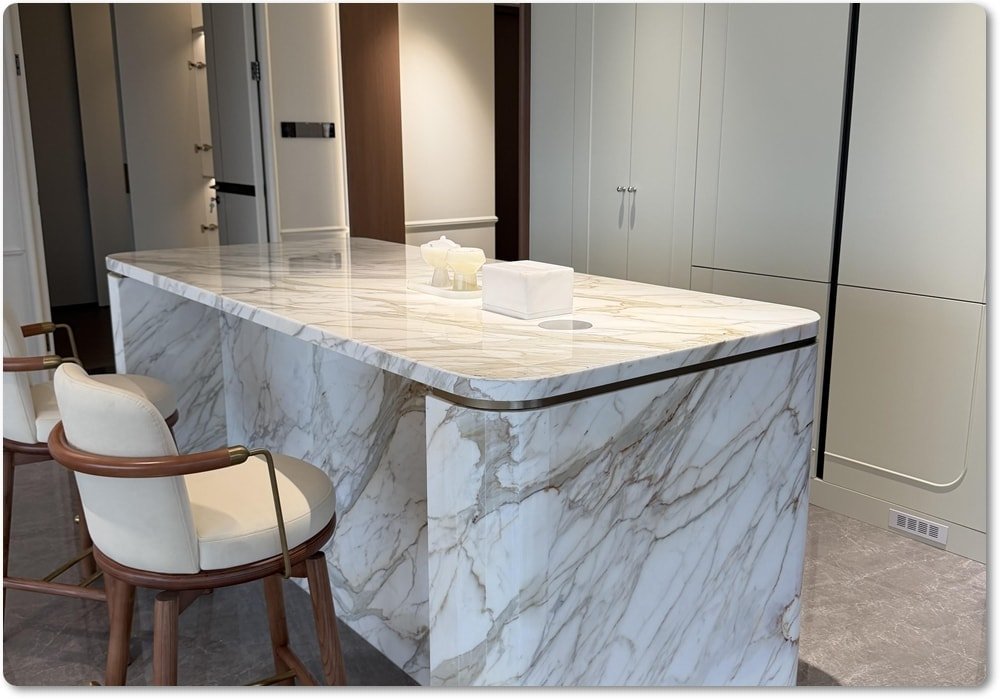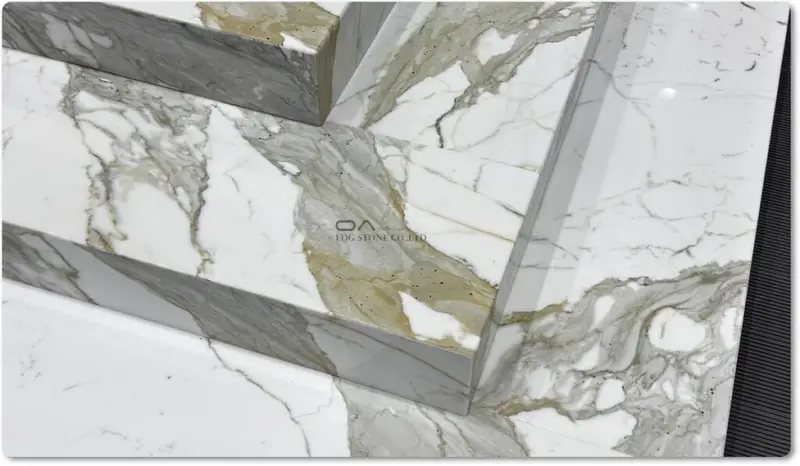
Choosing the right procurement channel for premium white marble involves balancing budget, design requirements, and supply chain logistics. Whether sourcing White Marble Home Depot programs, searching for White Marble Lowes stock, or dealing directly with a Factory Direct Marble manufacturer, each channel offers distinct advantages depending on your project scale.
This guide breaks down the financial, logistical, and material realities of buying natural stone. It compares retail big-box stores, regional distributors, and direct-to-factory wholesale manufacturers to help you make an informed decision.
1. Supply Chain Architecture: Retail vs. Distributor vs. Factory Direct
Understanding how stone moves from the quarry to your job site helps explain the wide price gaps and differences in selection across channels.
[Quarry Extraction] ──> [Factory / Processor] ──> [Wholesale Distributor] ──> [Retailer (Home Depot/Lowe's)] ──> [End Consumer]
                               │                                                                                 ▲
                               └─────────────────────────── [Factory Direct Program] ────────────────────────────┘
The Big-Box Retail Model (Home Depot & Lowe’s)
Retail giants operate on high-volume, standardized inventory models. They buy pre-cut, pre-packaged White Marble Tile Home Depot lines from massive global brokers.
Pros: Immediate local pickup, easy return policies, and clear credit options.
Cons: Limited selection, thin tiles (usually 3/8-inch or 10 mm), and higher per-square-foot markups due to multiple middle steps.
Best For: Small bathroom remodels, DIY kitchen backsplashes, and projects under 500 square feet.
The Independent Distributor Model
Local tile showrooms and stone yards act as regional distributors. They source container-load slabs and tiles from various international quarries.
Pros: You can view and select individual slabs, and they offer high-end varieties like Calacatta or Statuario.
Cons: Prices are higher than factory-direct, and stock levels depend on regional warehouse capacity.
Best For: Custom residential kitchens, medium-scale luxury renovations, and projects requiring matched stone veins.
The Factory Direct & Wholesale Model
Dealing directly with a Factory Direct Marble manufacturer or Wholesale Marble supplier removes the retail markup.
Pros: Lowest cost per square foot, custom slab sizes, matching block runs, and strict quality control at the source.
Cons: Requires full-container or large crate minimum orders, longer shipping lead times, and import logistics.
Best For: Multi-family developments, commercial construction, large residential estates, and stone fabrication businesses.
2. White Marble Price and Specification Comparison
To help you compare, here is a breakdown of average costs, product specs, and grading across these three channels:
| Metric | Big-Box Retail (Home Depot / Lowe’s) | Local Stone Distributor | Factory Direct / Wholesale Manufacturer |
| Average Cost (Tile) | $8.00 – $18.00 / sq. ft. | $15.00 – $45.00 / sq. ft. | $3.50 – $10.00 / sq. ft. (FOB) |
| Average Cost (Slabs) | N/A (Only pre-fabricated vanity tops) | $60.00 – $180.00 / sq. ft. | $18.00 – $45.00 / sq. ft. (FOB) |
| Common Thickness | 3/8-inch (10 mm) | 3/8-inch, 1/2-inch, 3/4-inch (20 mm) | 3/4-inch (20 mm) up to 1-1/4-inch (30 mm) |
| Slab/Tile Selection | Standard Carrara, basic white mosaics | Broad range of Italian, Greek, Turkish varieties | Custom quarry selection, full blocks, bookmatched pairs |
| Minimum Order (MOQ) | 1 Carton / Single Tile | 1 Box or Crate | 1 Crate (tiles) or 1 Container (slabs) |
| Lead Time | Stocked locally or 3–7 days transit | Stocked regionally or 2–4 weeks transit | 6–10 weeks (international ocean freight) |
| Slab Vein Matching | Not available | Possible through physical inspection | High-precision bookmatching from the same block |
3. Physical Analysis: Slabs vs. Tiles
Natural stone behaves differently depending on its thickness and cut. Choosing the wrong specification for your application can lead to structural failures.
White Marble Slabs
Thickness: Typically 20 mm (3/4-inch) or 30 mm (1-1/4-inch). 30 mm is the industry standard for kitchen countertops because it does not require an underlayment support board.
Applications: Kitchen countertops, waterfall islands, seamless shower walls, and custom furniture.
Structural Integrity: Thick slabs offer high flexural strength, making them resistant to cracking under weight load.
White Marble Tiles
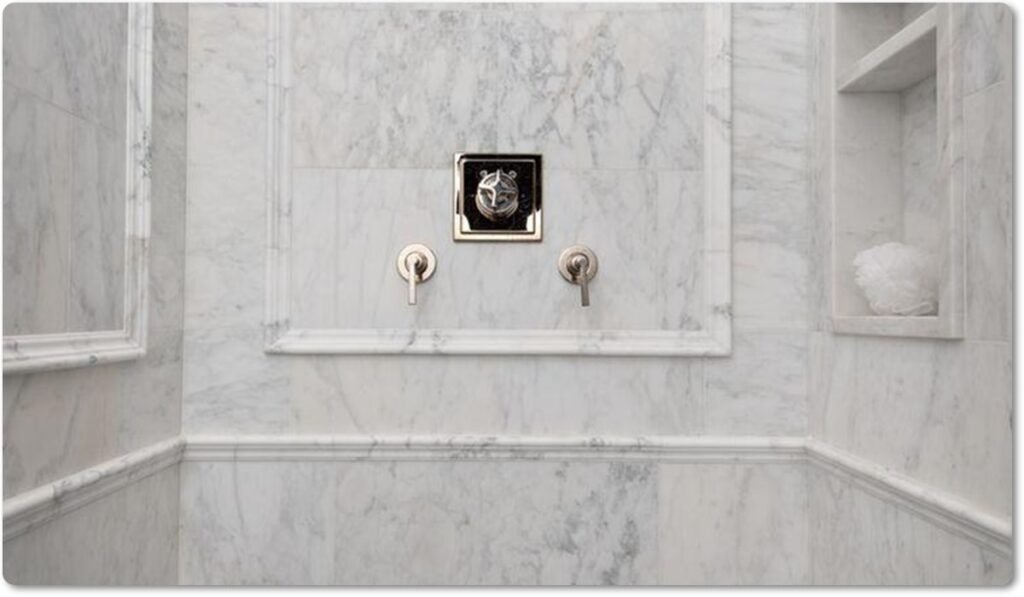
Thickness: Usually 10 mm (3/8-inch) to ensure they are lightweight enough for wall installations.
Applications: Bathroom floors, kitchen backsplashes, and accent walls.
Installation Note: Thin tiles require a flat, cured concrete slab or cement backer board subfloor. Any unevenness in the subfloor can cause the tiles to crack under foot traffic.
4. Case Study: Direct Sourcing for Commercial and High-End Residential Projects
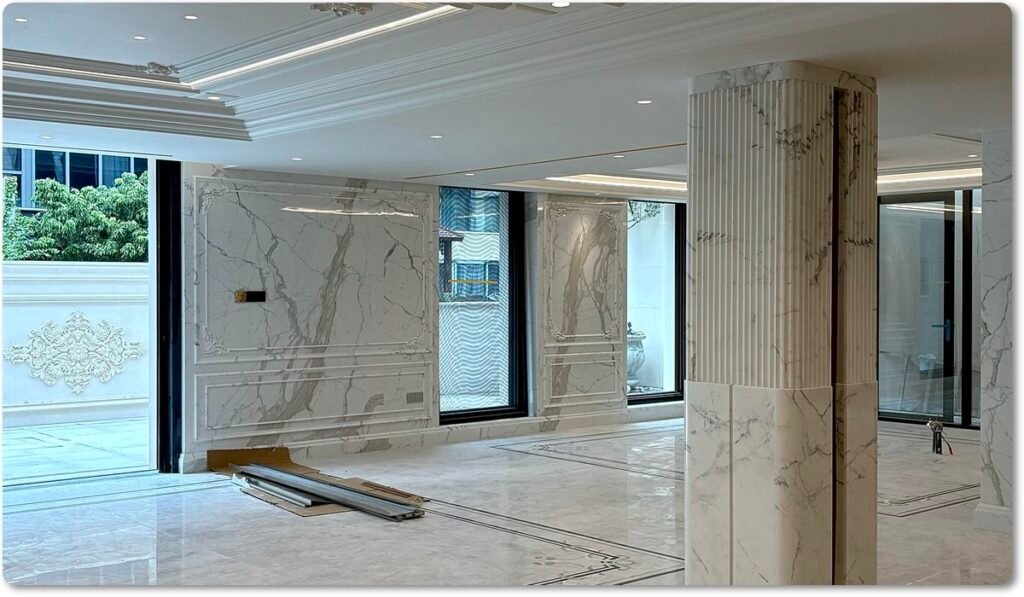
For large projects, sourcing stone directly from global manufacturers is the most cost-effective approach. While big-box retailers handle simple home DIY projects well, they cannot support the customization, volume, and material consistency required for commercial-grade real estate.
Many developers use a mixed-sourcing strategy. They source quartzites and engineered surfaces from dedicated commercial exporters, while importing natural marble blocks directly from regional factories.
Industrial Highlight: EDG Stone Factory As a global manufacturer and exporter specializing in Quartzite Slabs & Countertops, companies like EDG Stone Factory show why direct factory procurement works for commercial builders. They handle bulk raw-block extraction, high-precision calibration, and custom edge fabrication. This ensures that every slab matches the architect’s specifications, with zero middleman retail markups.
5. How-To: Inspecting and Sourcing White Marble Directly
If you decide to buy factory-direct to save on material costs, follow these steps to ensure you receive high-quality stone:
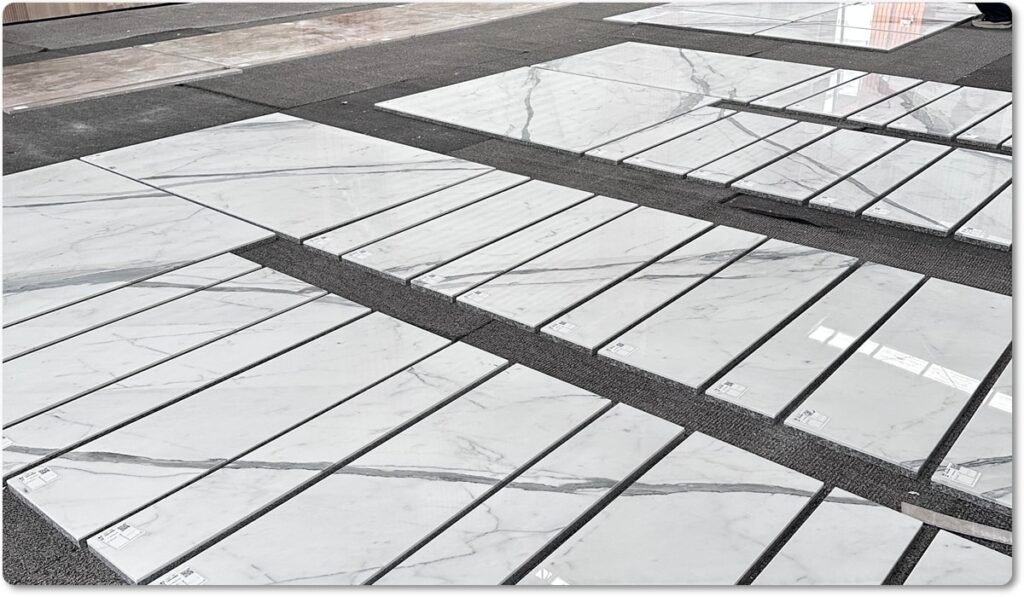
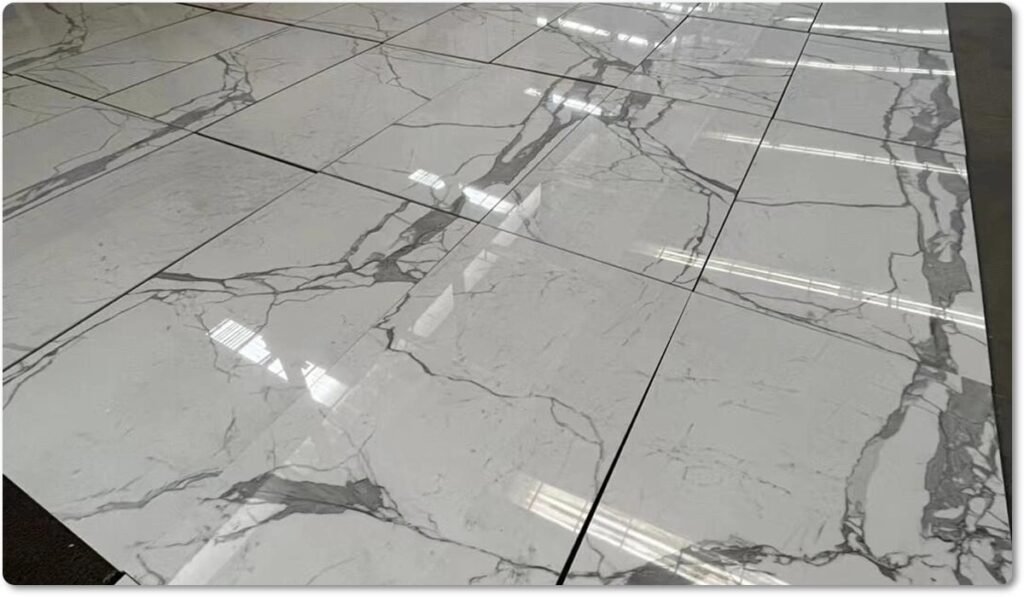
1. Request a Dry-Lay Photo or Video: Before shipment.
Ask the factory to lay out the cut tiles or sequential slabs on their floor. This lets you inspect the color blending, vein continuity, and overall quality across the entire batch before it is packed.
2. Verify Thickness and Backing Quality:: Quality control check.
Ensure the tile thickness is consistent (e.g., exactly 10 mm ±0.5 mm). Check the back of the tiles; high-quality marble should not require heavy fiberglass mesh backing. Too much mesh often indicates a fragile, naturally fractured stone.
3. Request an ASTM Physical Properties Sheet Engineering validation.
Ensure the stone meets global building standards:
Water Absorption: Less than 0.20% (ASTM C97)
Density: Minimum 160 lbs/cu ft (ASTM C97)
Compressive Strength: Minimum 7,500 psi (ASTM C170)
4. Plan the Customs and Logistics shipping preparation.n。
Hire a local licensed customs broker to handle the ocean freight, port clearance, and final flatbed delivery to your job site.
6. Frequently Asked Questions (FAQ)
Question: Is the white marble sold at Home Depot and Lowe’s real natural stone?
Answer: Yes, the white marble tiles and vanity tops sold at Home Depot and Lowe’s are real, natural stone. They are usually sourced from Italian Carrara or Chinese white marble quarries. However, these retail products are cut thinner and have more color and vein variation from box to box compared to premium-graded stone from a dedicated distributor.
Evidence: Product specification sheets at major retailers confirm a 100% natural stone composition with polyester resin fills for natural micro-fissures.
Summary: They are real, but they represent a standard builder-grade quality rather than premium luxury-grade stone.
Question: Why is factory-direct marble so much cheaper than retail stone?
Answer: Factory-direct marble bypasses multiple layers of the supply chain, including international importers, regional wholesale distributors, local retail showrooms, and big-box store overhead. Buying direct from the processor means you pay close to the raw extraction and block-cutting cost.
Evidence: Market reports show that retail markups on natural stone often range from 150% to 300% over the original FOB (Free on Board) factory price.
Summary: Removing the middlemen lowers the cost, though the buyer must handle shipping logistics and minimum order requirements.
Question: How do I prevent white marble from staining and etching?
Answer: Apply a high-quality solvent-based impregnating sealer immediately after installation and reapply it every 12 to 24 months. Clean up acidic liquids like lemon juice, wine, and vinegar right away, as acids chemically react with the calcium carbonate in marble, causing dull spots called etches.
Evidence: Marble Institute of America (MIA) maintenance guides recommend penetrating sealers to block oil and water-based stains.
Summary: Sealers prevent stains, but only careful cleanup and avoiding acids will prevent surface etching.