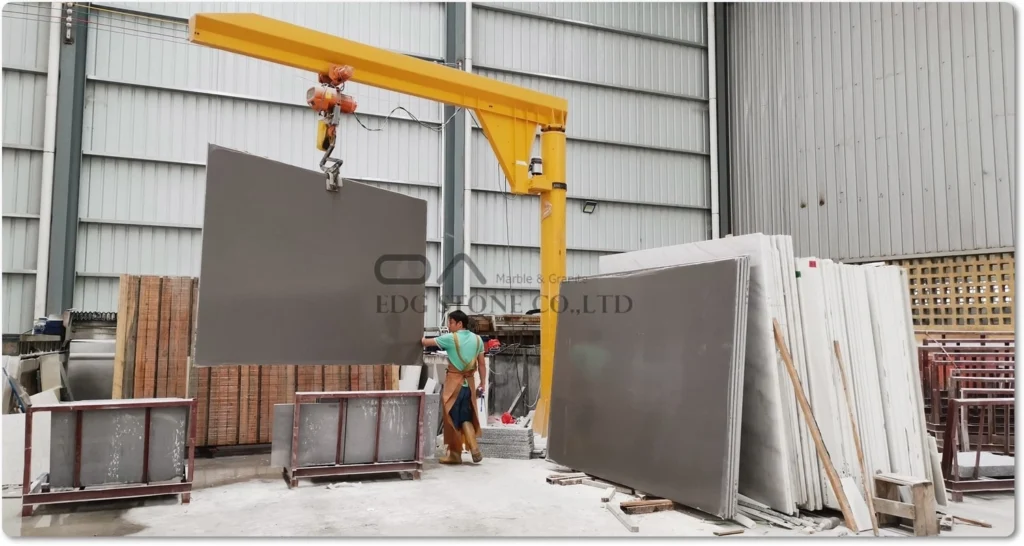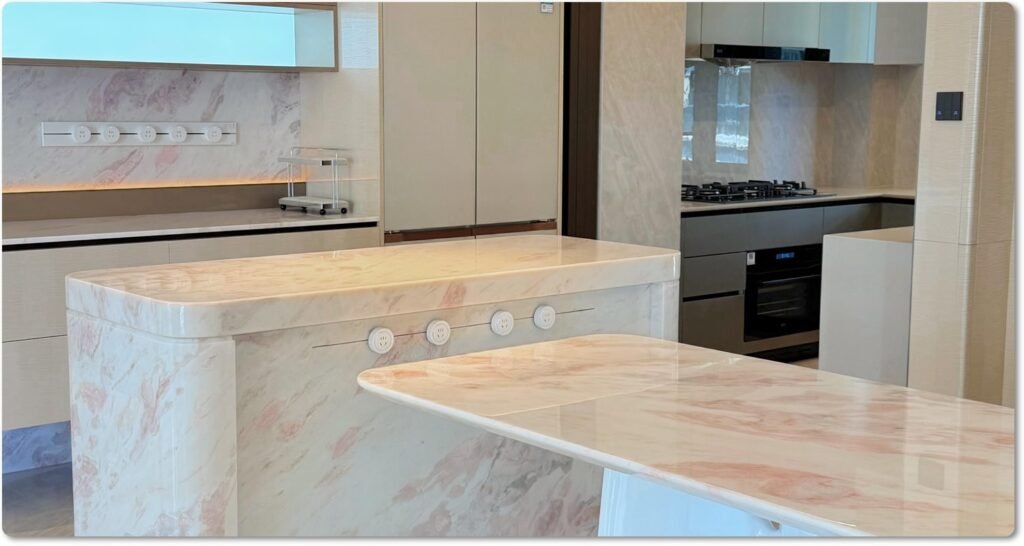
Granite Countertops: Quick Summary of Pros and Cons
Quick Summary:
Granite countertops are natural stone surfaces valued for their durability, distinctive mineral patterns, heat resistance, and long service life. Their main advantages include excellent resistance to everyday wear, natural color and pattern variations, relatively low routine maintenance, and suitability for residential and commercial kitchens. However, granite also has limitations: natural variation makes exact color matching difficult, some varieties require additional stain protection, fabrication and installation require experienced professionals, and heavy slabs need properly engineered support. Granite countertops are particularly suitable for kitchens, hotels, multifamily developments, luxury residential projects, and commercial interiors where natural materials and long-term performance are priorities. Buyers should evaluate each granite variety through physical samples, technical test reports, fabrication quality, and a clearly defined inspection and acceptance agreement before placing an order.

1. Executive Summary: Are Granite Countertops a Good Choice?
Granite countertops remain one of the most established choices in the natural stone countertop market. Their popularity comes from a combination of geological durability, natural aesthetics, practical kitchen performance, and the ability to manufacture customized surfaces for residential and commercial projects.
However, granite is not automatically the best countertop material for every application. Its performance depends on the geological characteristics of the selected stone, mineral composition, porosity, slab condition, surface treatment, fabrication quality, installation method, and maintenance practices.
1.1 Main Advantages of Granite Countertops
The most important advantages include:
Durability: Many granite varieties offer high compressive strength, good abrasion resistance, and strong performance under normal kitchen use.
Heat resistance: Granite is a natural igneous rock that generally tolerates ordinary kitchen heat better than many polymer-based surfaces. Nevertheless, sudden temperature changes can cause thermal stress.
Natural appearance: Every slab has distinctive mineral structures, crystal patterns, colors, and geological characteristics.
Scratch resistance: Many granite varieties are harder than common countertop alternatives, although hardness varies by mineral composition.
Long service life: Properly selected, fabricated, supported, and maintained granite can provide decades of service.
Design flexibility: Granite is available in numerous colors, finishes, thicknesses, and customized edge profiles.
Commercial suitability: It can be specified for residential kitchens, hotel countertops, vanity tops, reception desks, and selected commercial applications.
1.2 Main Disadvantages of Granite Countertops
Buyers should also understand the following limitations:
Natural variation: Different slabs from the same quarry or block may exhibit noticeable differences in color, veining, and mineral distribution.
Porosity: Some granite varieties absorb more moisture and staining substances than others.
Maintenance requirements: Certain varieties benefit from an appropriate penetrating impregnator and periodic reassessment.
Weight: Granite is heavy and requires adequate cabinet support and professional installation.
Repair complexity: Chips, cracks, and damaged edges may require specialist repair.
Fabrication costs: Cutting, polishing, sink openings, edge profiles, reinforcement, packaging, and transportation contribute to the final cost.
Silica exposure during processing: Cutting and grinding can create respirable crystalline silica dust, requiring appropriate occupational controls.
1.3 Who Should Choose Granite Countertops?
Buyer type | Suitability | Main consideration |
|---|---|---|
Residential homeowners | High | Appearance, maintenance and budget |
Kitchen designers | High | Color selection and slab matching |
Hotels and hospitality | High | Durability and project consistency |
Multifamily developers | High | Repeatability and procurement control |
Stone importers | High | Material sourcing and quality inspection |
Wholesale distributors | High | Inventory, SKU selection, and slab yield |
Outdoor kitchen projects | Conditional | Climate, finish, and specific stone performance |
Procurement conclusion: Granite is an excellent candidate when buyers prioritize natural stone aesthetics, durability, and long-term use. However, the correct purchasing decision should be based on the performance of the specific granite variety rather than the word granite alone.
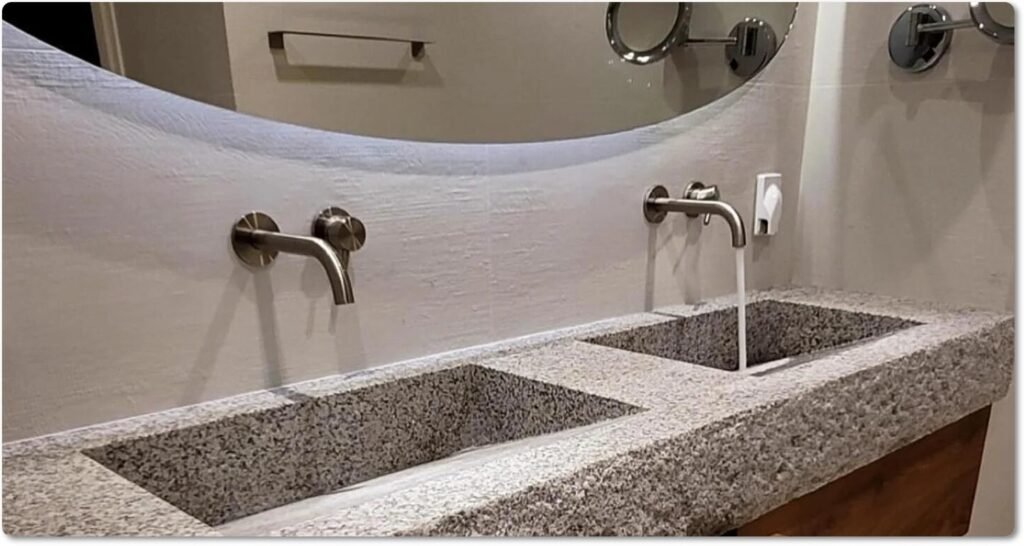
2. Scope and Definitions: Understanding Granite Countertops
2.1 What Are Granite Countertops?
Granite countertops are fabricated surfaces made from natural granite dimension stone. Granite is an intrusive igneous rock formed through the cooling and crystallization of magma beneath the Earth’s surface.
Its principal mineral constituents commonly include:
Quartz
Feldspar
Plagioclase
Mica
Amphibole
Other accessory minerals
The relative proportions of these minerals determine the stone’s appearance, hardness characteristics, color, density, and other physical properties.
For countertop procurement, it is important to distinguish between geological granite and commercial granite.
In the commercial stone industry, the word granite is sometimes used more broadly for several hard, silicate-rich decorative stones. These materials may have different geological classifications and technical properties.
A supplier should therefore identify the actual material rather than relying exclusively on a commercial trade name.
2.2 Granite Slabs vs. Finished Granite Countertops
These two products represent different stages of the supply chain.
Granite Slabs
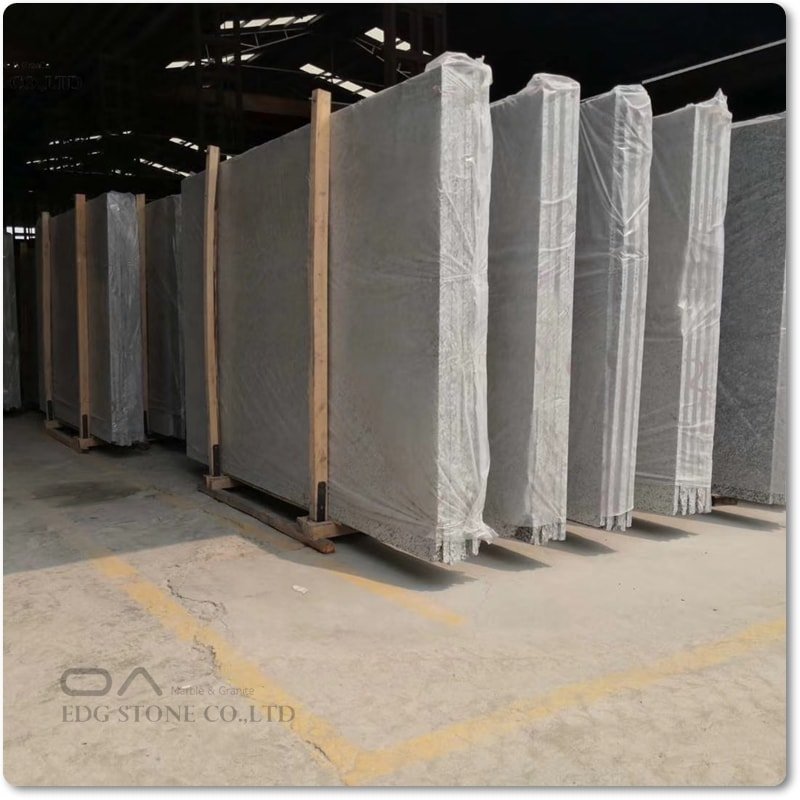
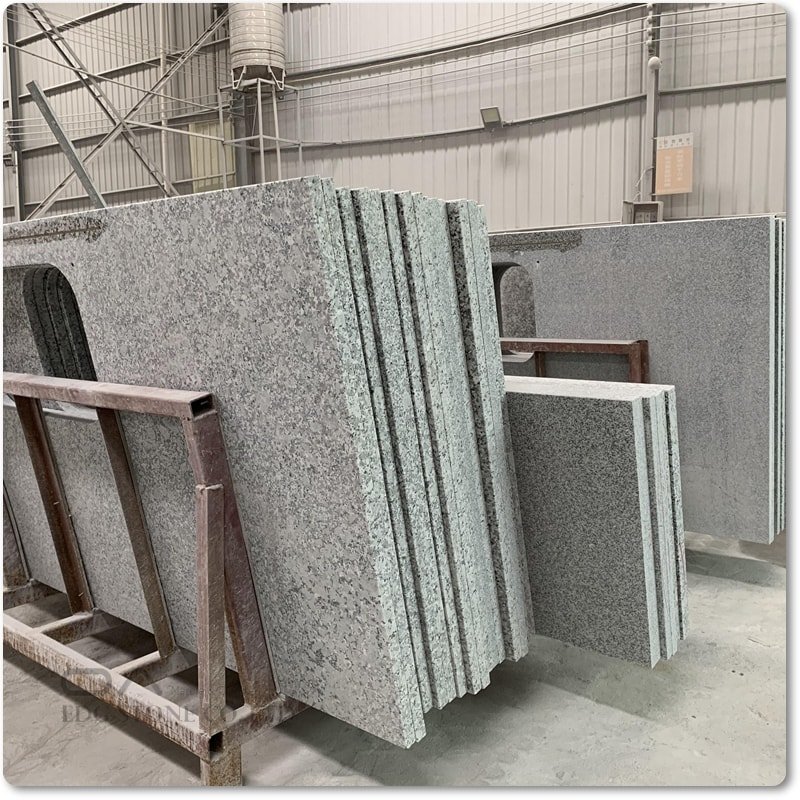
Granite slabs are large, flat pieces of quarried natural stone processed through sawing, surface treatment, and polishing.
Common commercial slab specifications include:
18 mm nominal thickness
20 mm nominal thickness
30 mm nominal thickness
Polished finish
Honed finish
Leathered finish
Flamed or other project-specific finishes
Actual available thicknesses and tolerances must be confirmed with the supplier.
Custom Granite Countertops
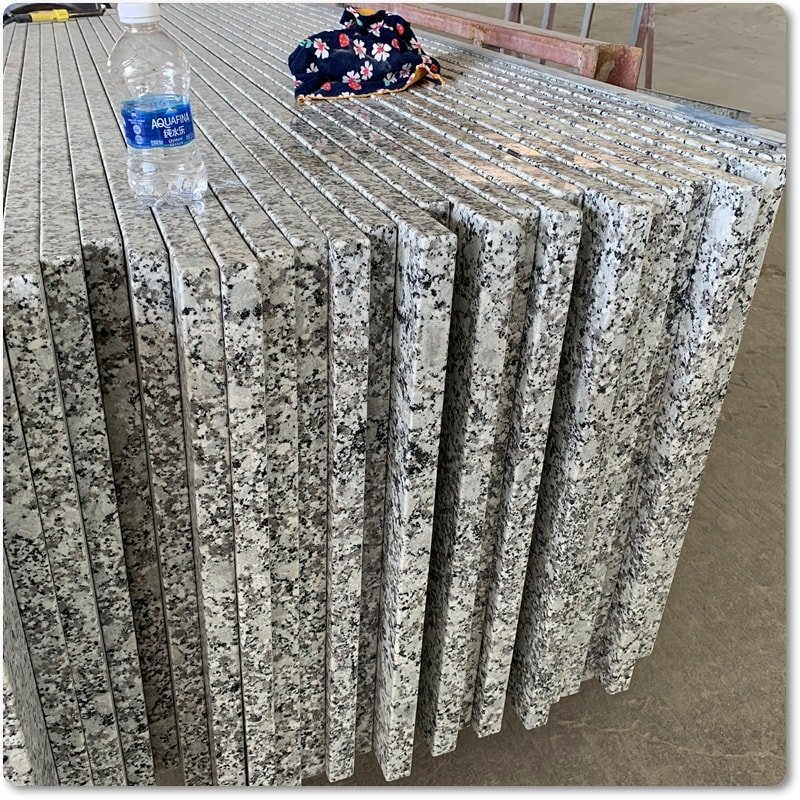
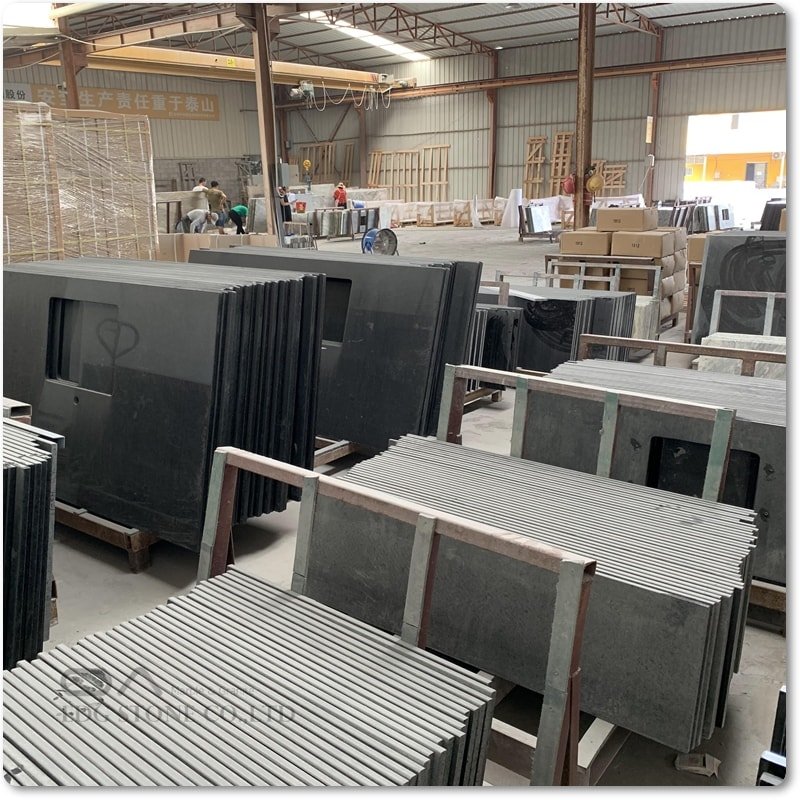
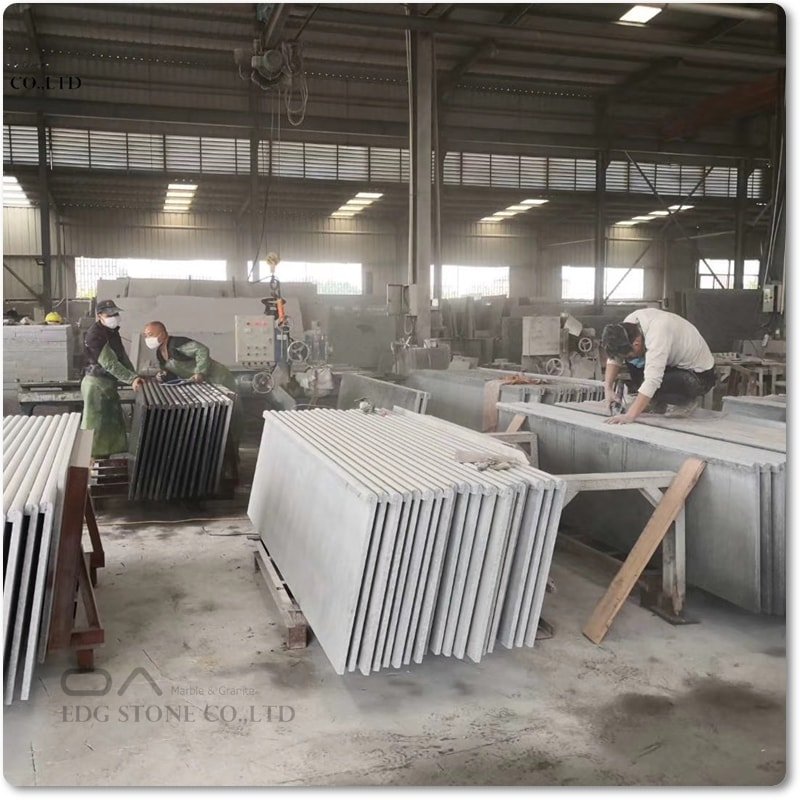
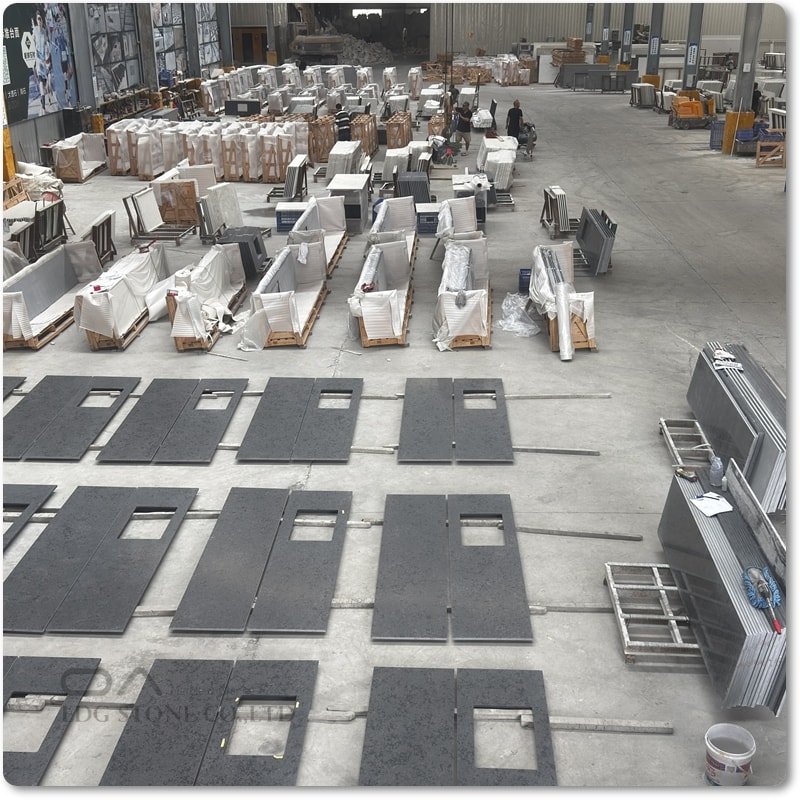
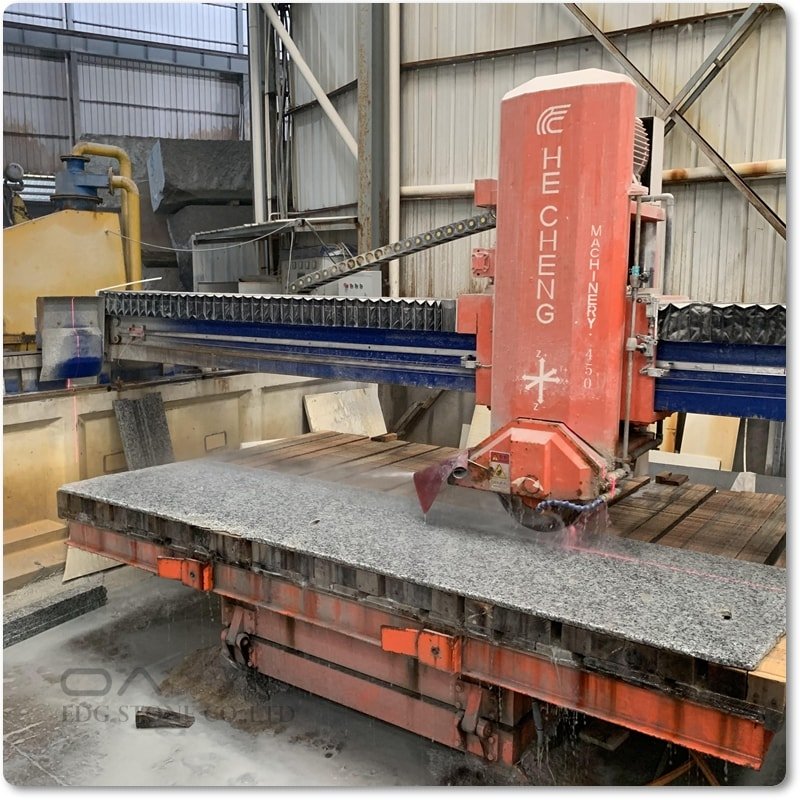
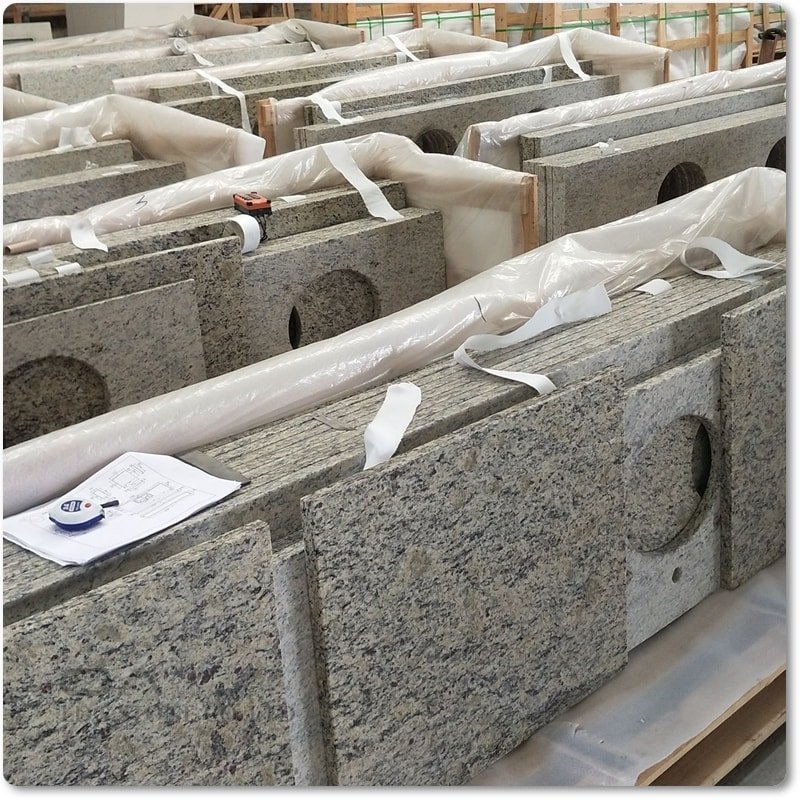
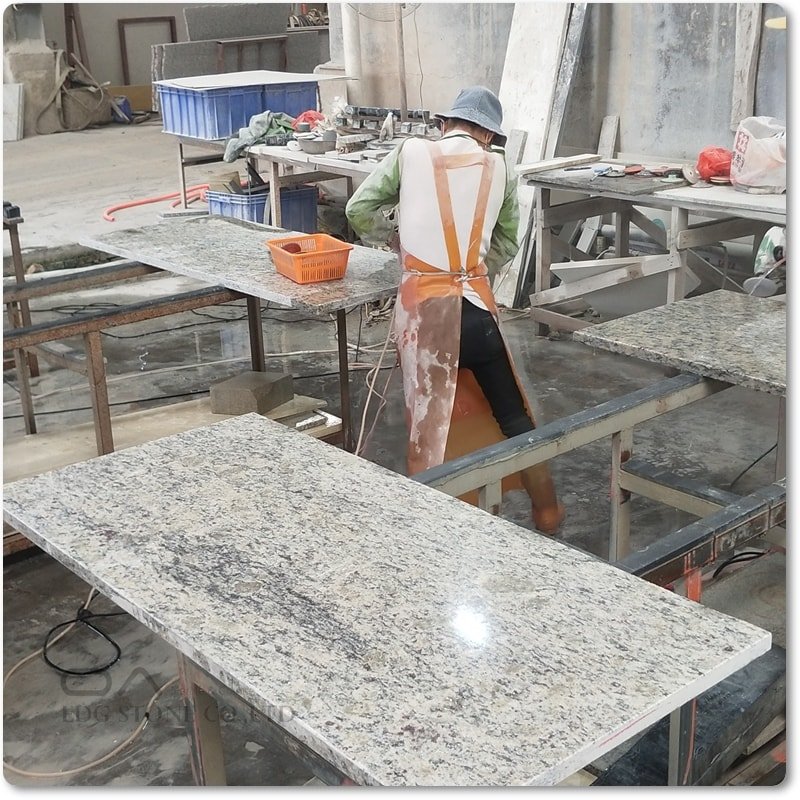
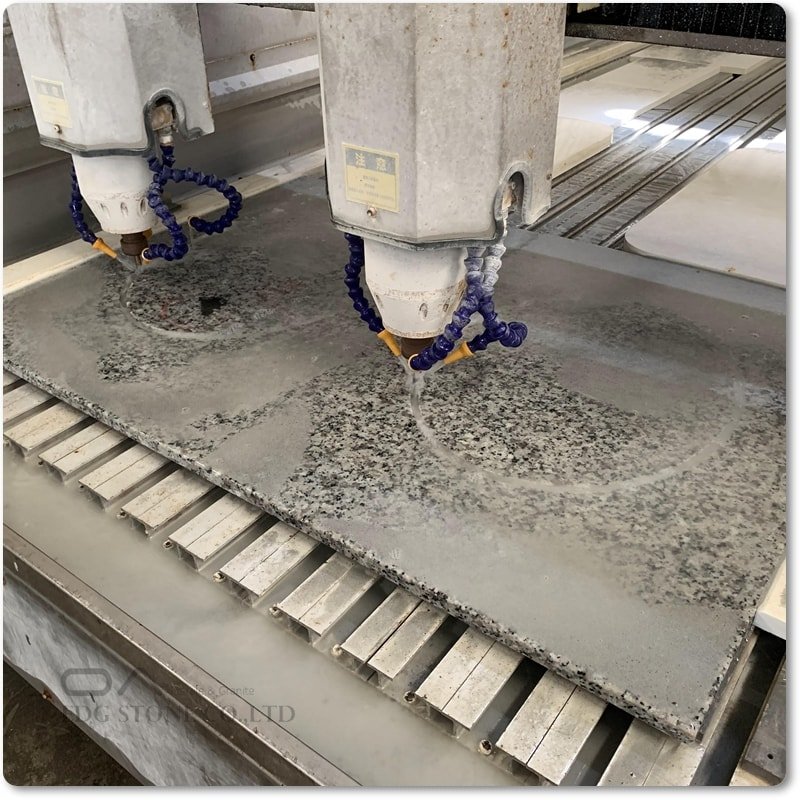
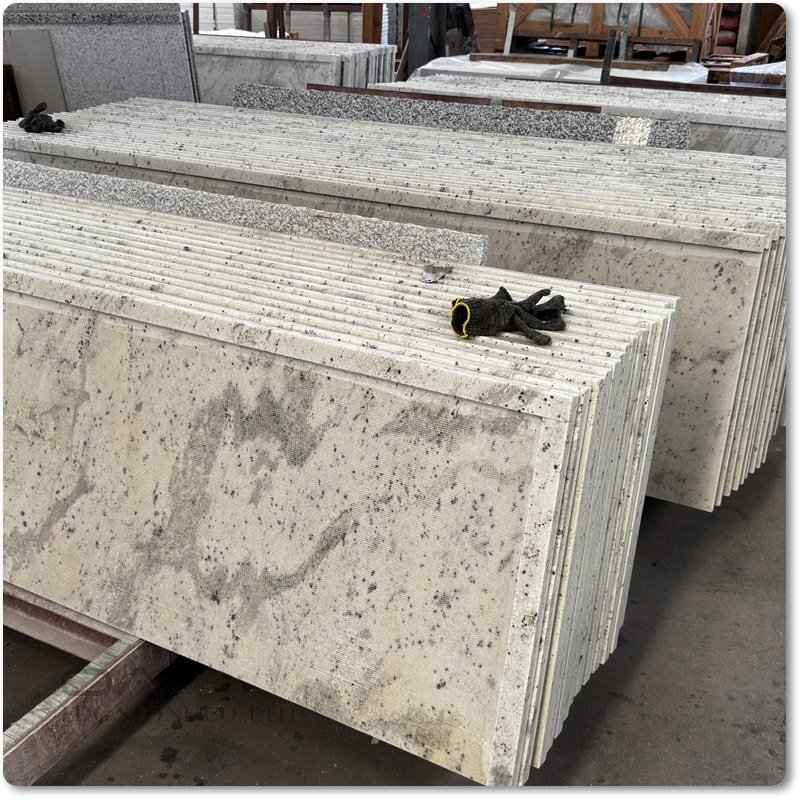
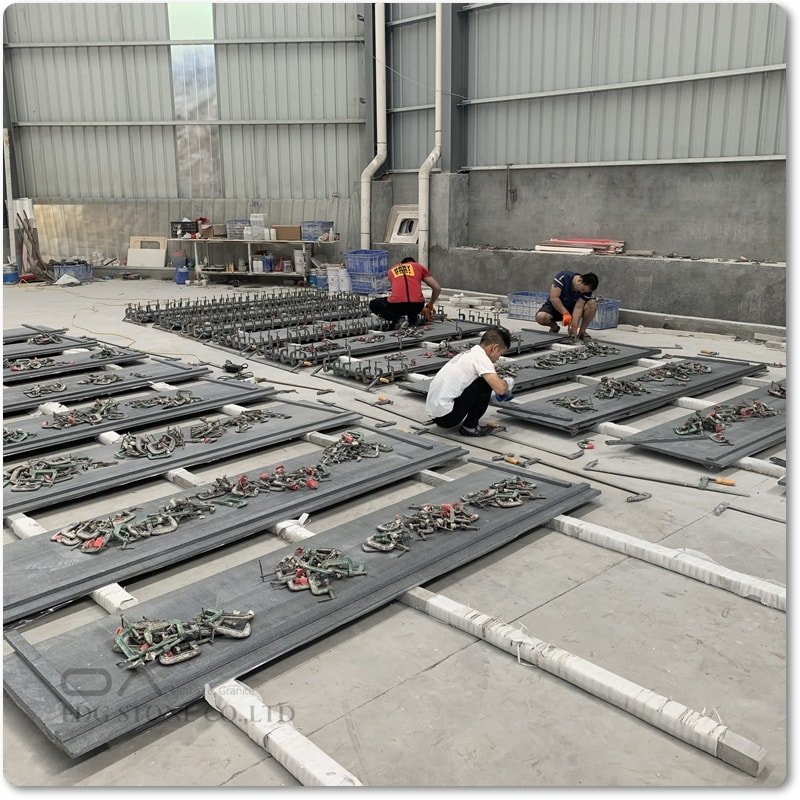
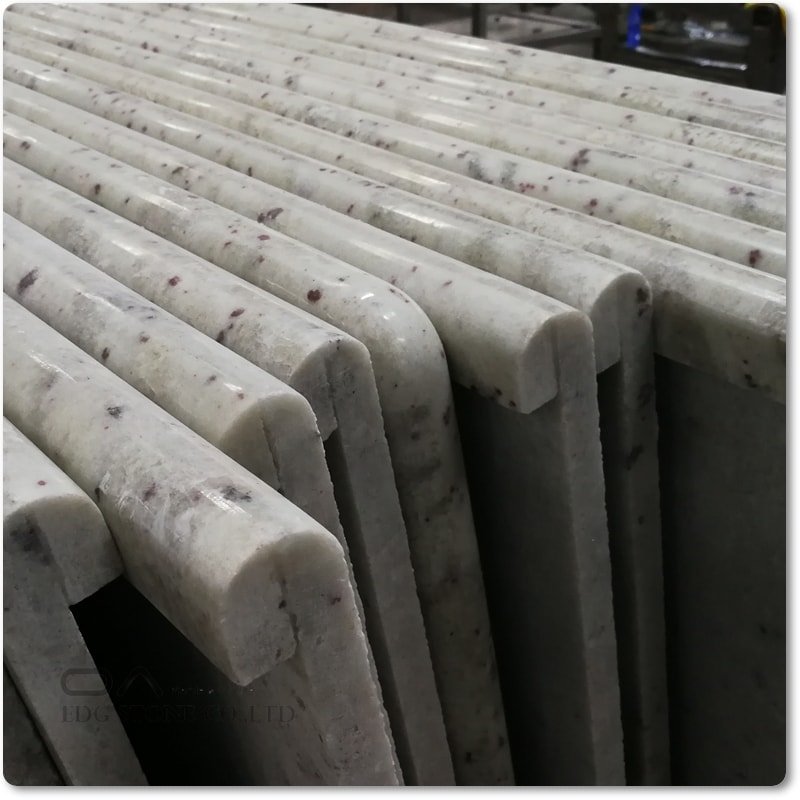
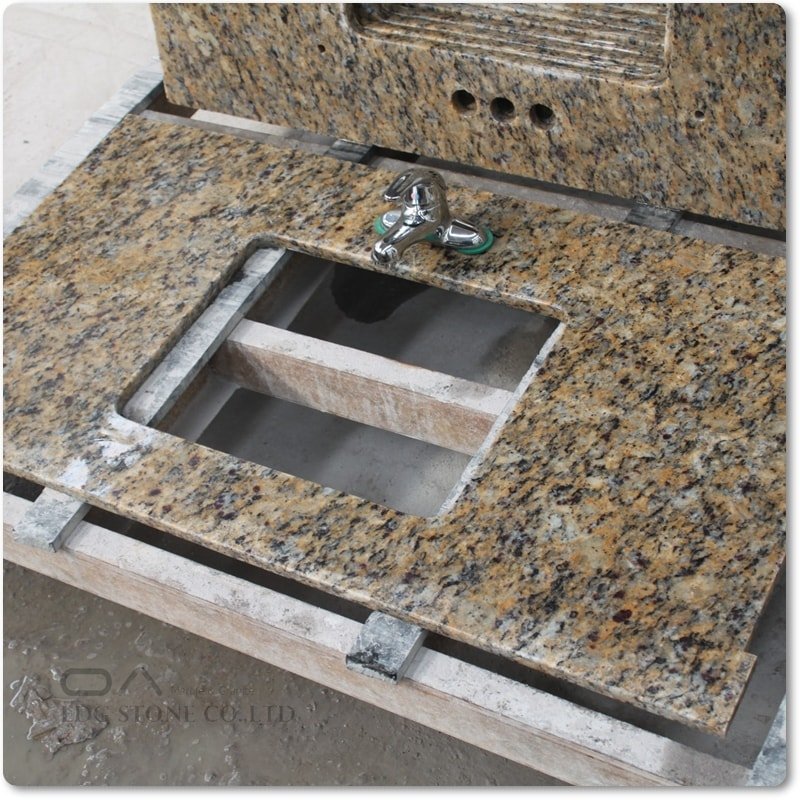
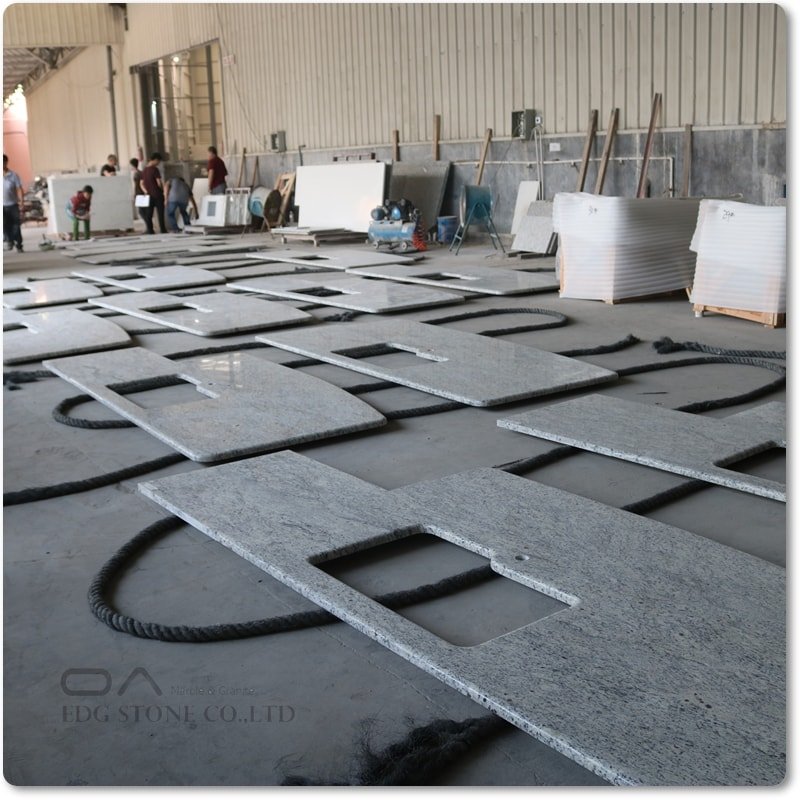
We manufacture finished countertops from slabs according to project drawings and installation requirements.
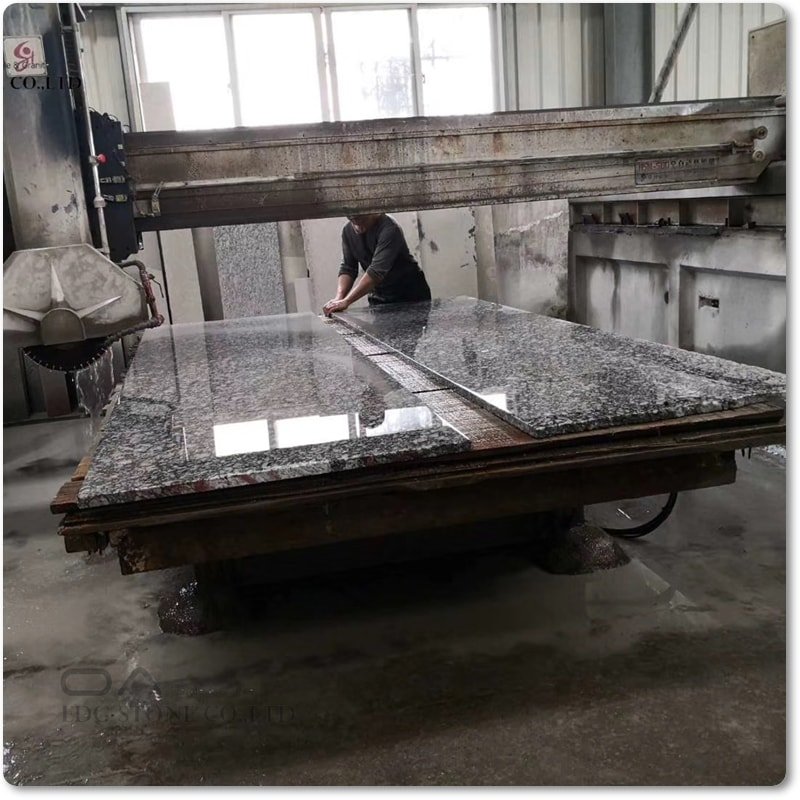
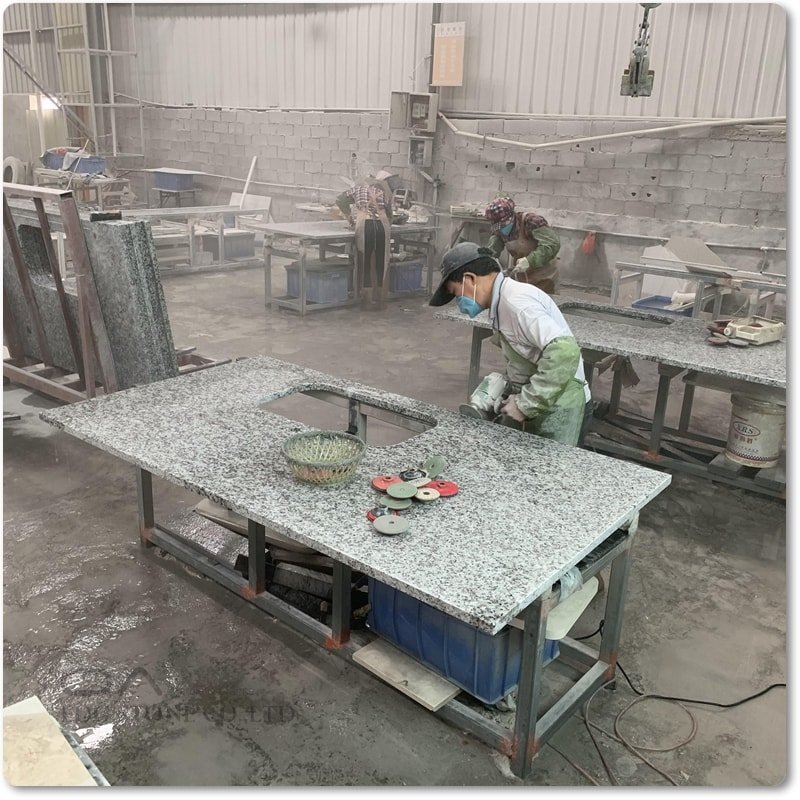
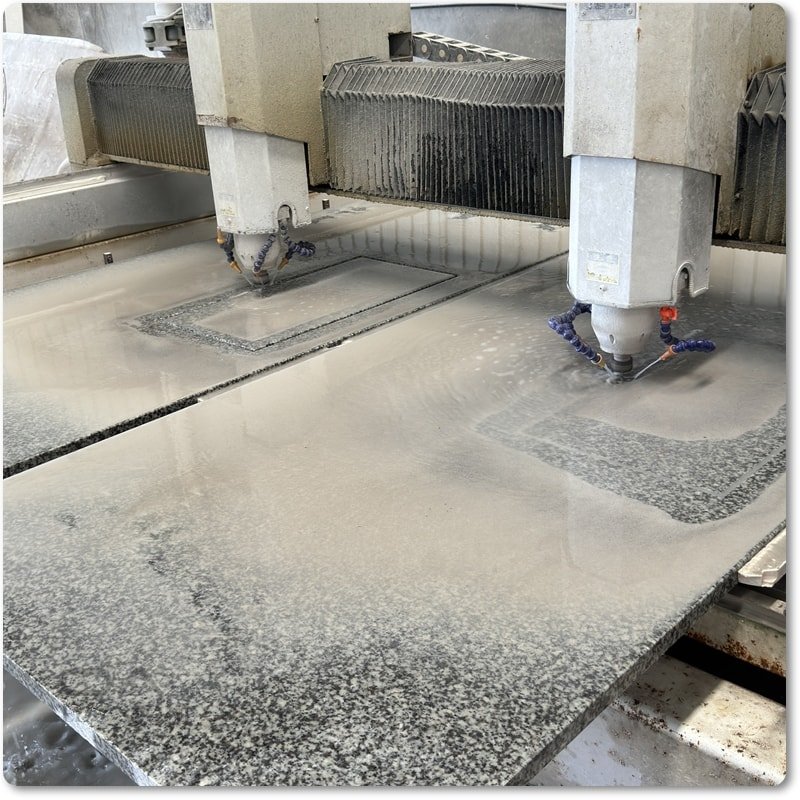
Typical fabrication operations include:
CNC cutting
Bridge saw cutting
Waterjet processing
Edge profiling
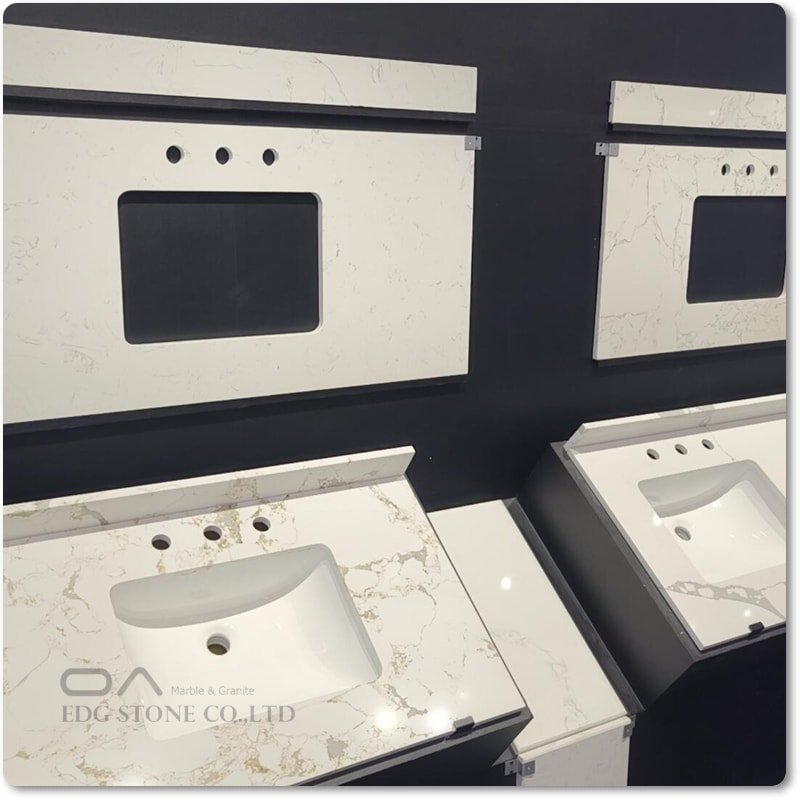
Sink cutouts
Cooktop openings
Faucet holes
Backsplash fabrication
Surface polishing
Edge reinforcement
Dry fitting and inspection
For international buyers, the distinction matters because slab procurement and finished countertop procurement involve different responsibilities, costs, tolerances, and quality-control procedures.
2.3 Granite Countertop Applications
Granite can be used in several applications.
Application | Typical requirements |
|---|---|
Kitchen countertops | Stain resistance, durability, and food-safe maintenance |
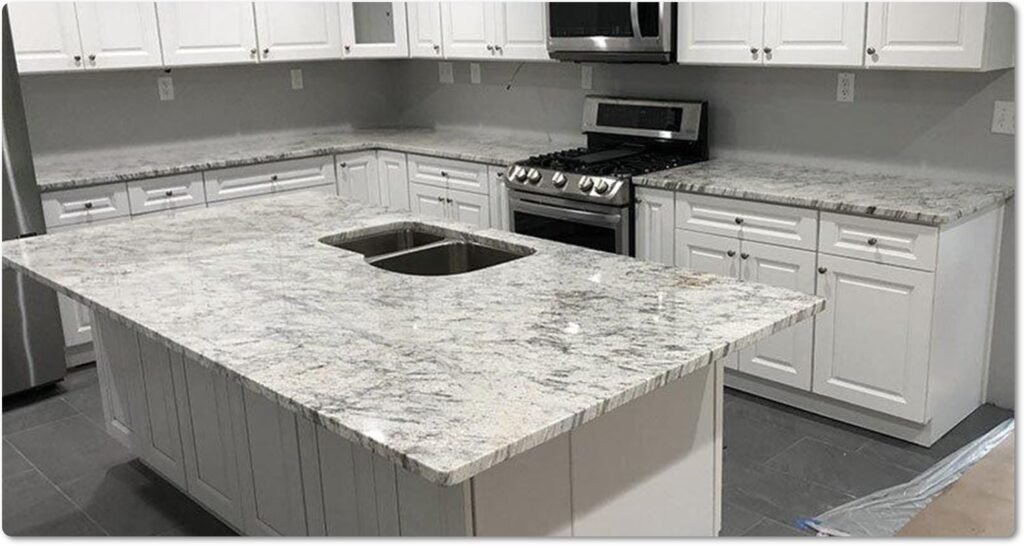
Kitchen islands | Slab appearance, seam placement, and structural support |
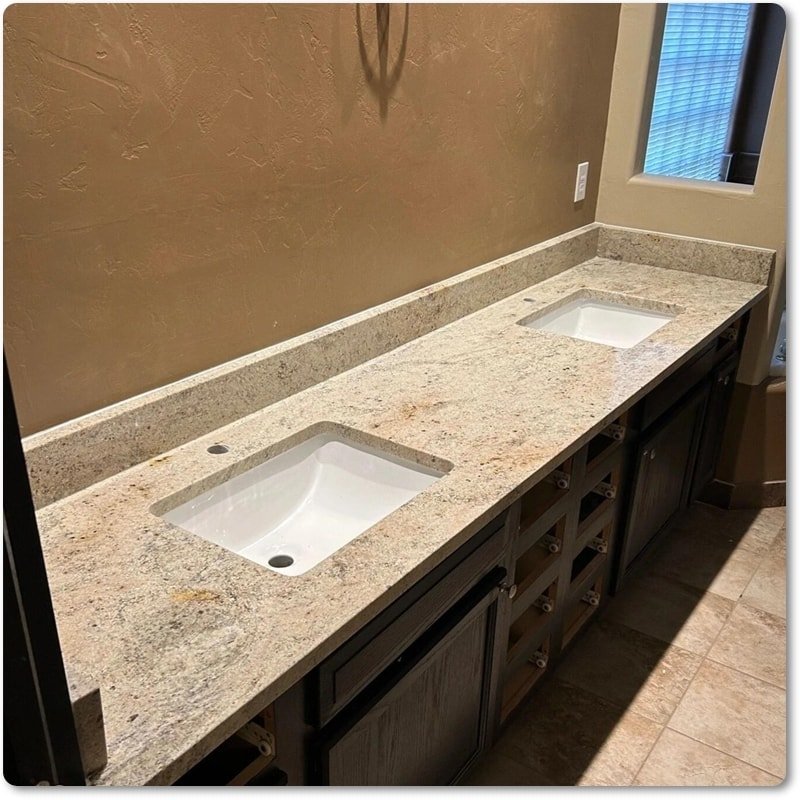
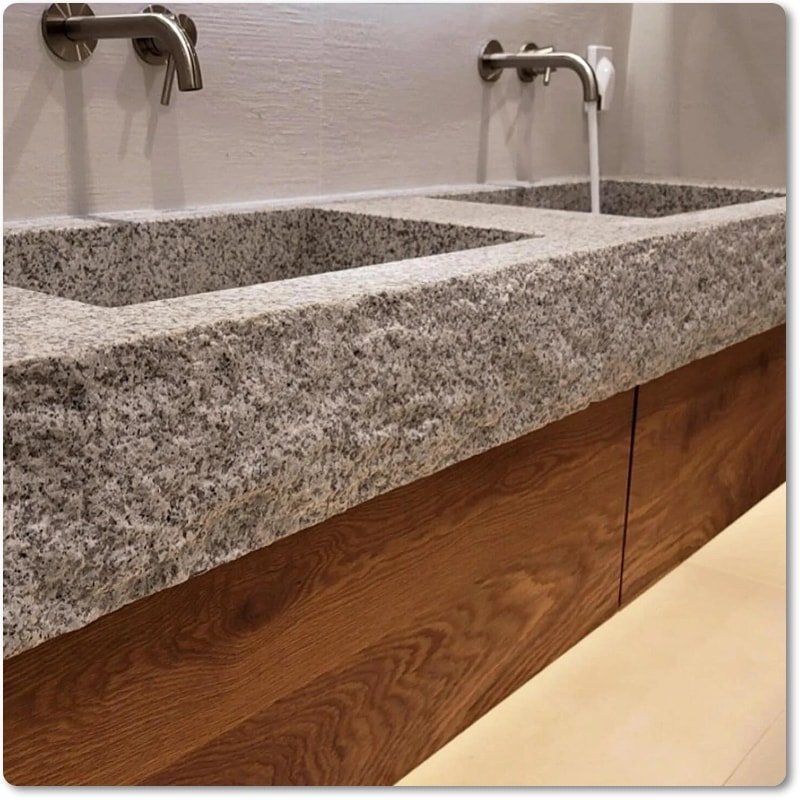
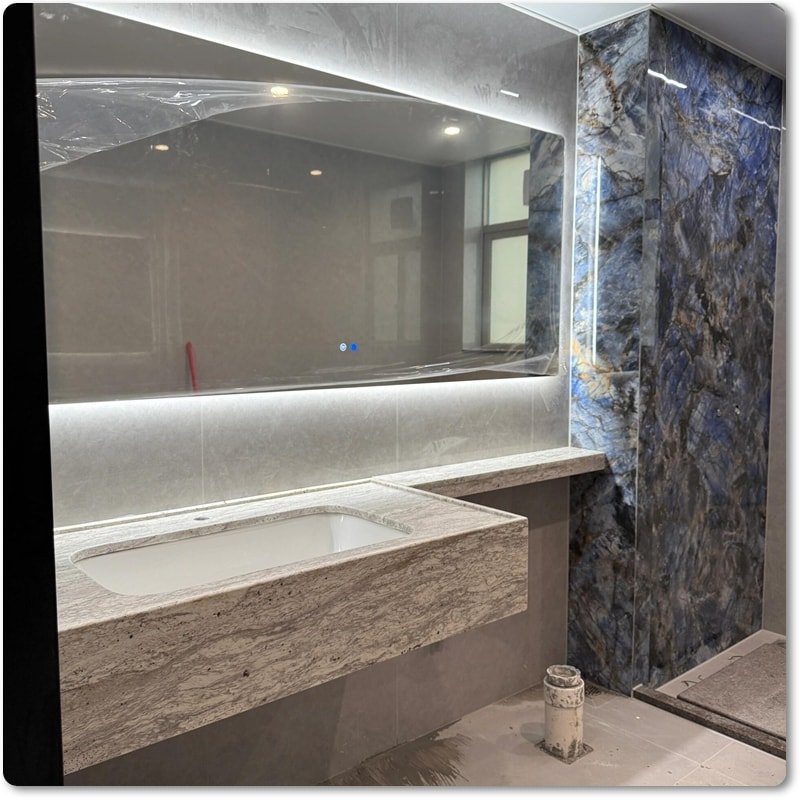
Bathroom vanity tops | Moisture resistance and polished edges |
Hotel countertops | Consistency and repeatable fabrication |
Reception counters | Appearance, large-format fabrication and support |
Outdoor kitchens | Weather suitability and thermal performance |
Commercial counters | Maintenance and project-specific performance |
Not every granite variety suits every application. Selection should consider the environment, expected use, exposure, and maintenance resources.
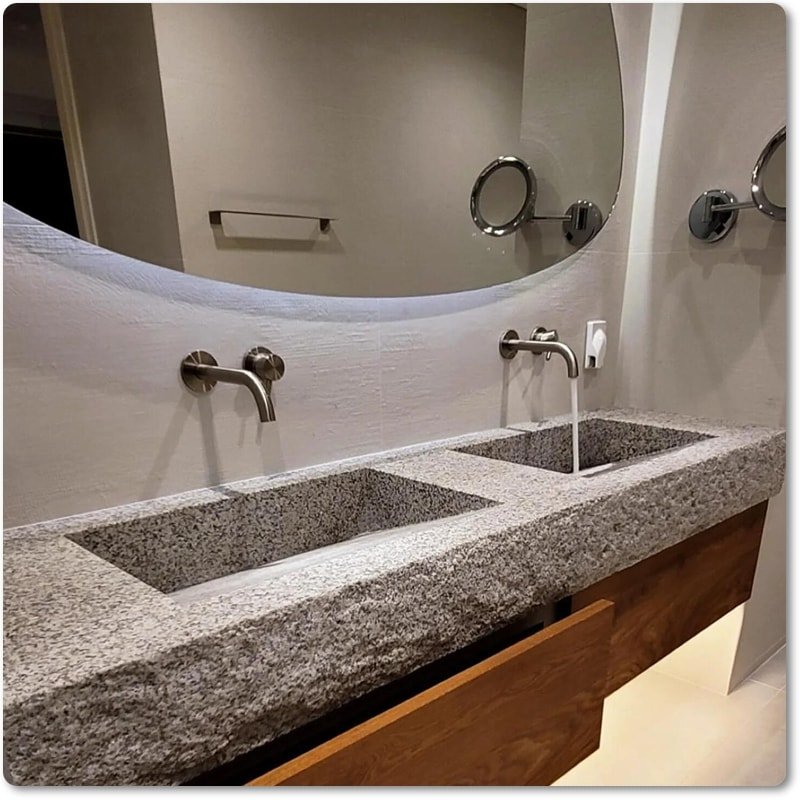
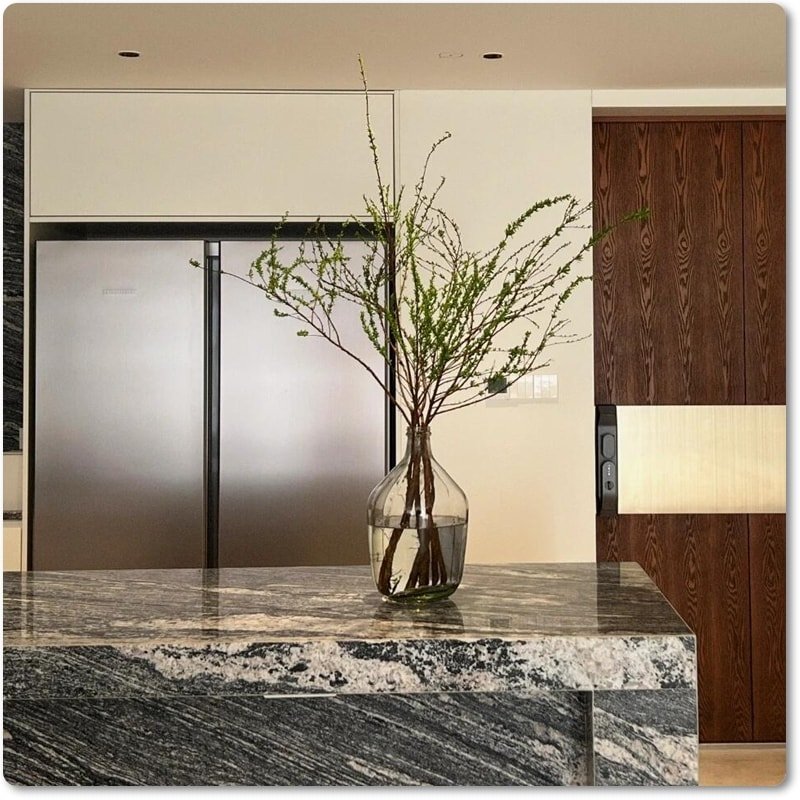
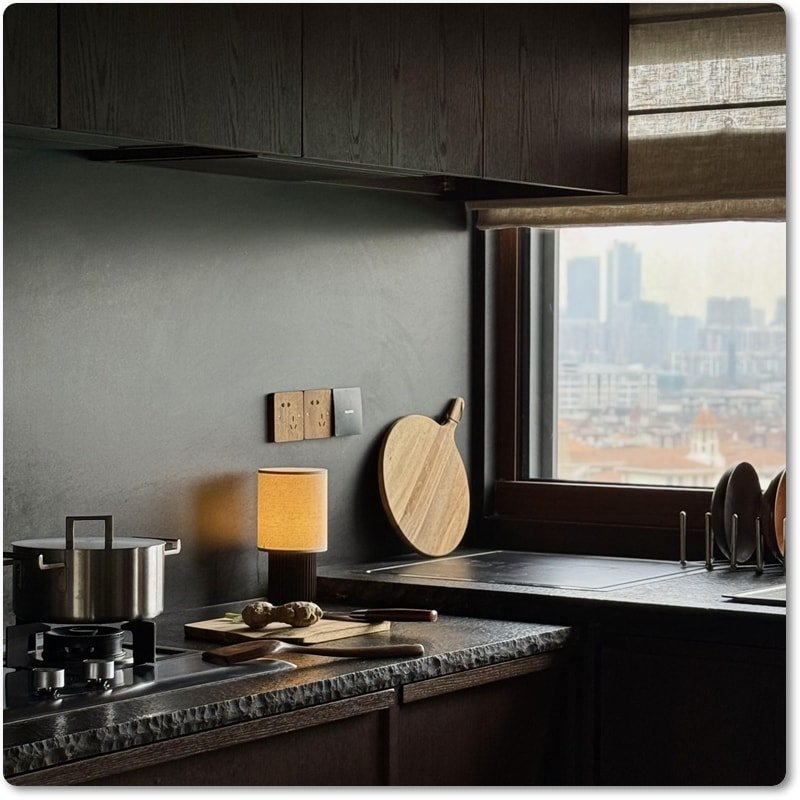
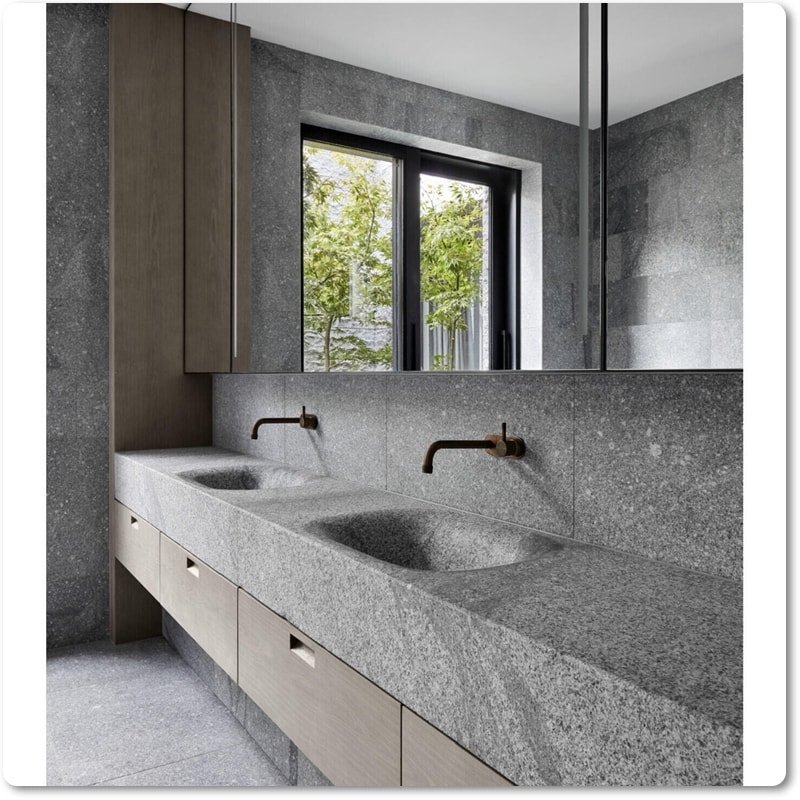
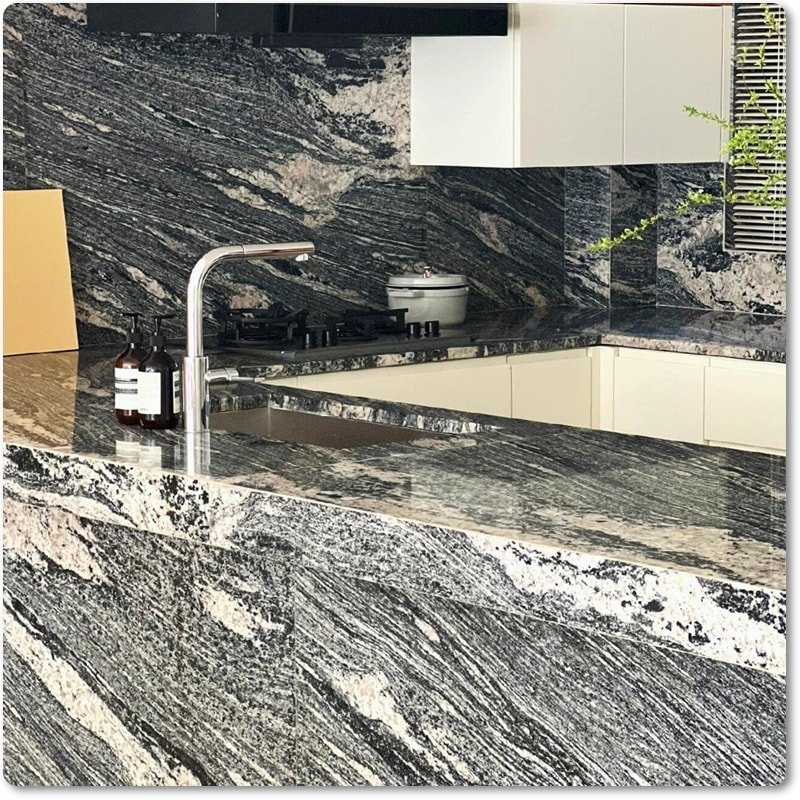
3. Technical Evaluation: Advantages and Disadvantages of Granite Countertops
3.1 Advantage 1: Excellent Durability
One of the strongest arguments for granite countertops is their ability to withstand ordinary daily use.
Granite contains hard crystalline minerals, particularly quartz and feldspar. Many commercial varieties demonstrate good resistance to abrasion, surface wear, and mechanical loading.
This makes granite suitable for:
Frequently used kitchen worktops
Residential kitchen islands
Hotel vanity counters
Commercial reception desks
High-end residential developments
However, granite should not be considered indestructible.
A slab can contain natural fissures, mineral boundaries, weak areas, resin-treated imperfections, or localized defects. These characteristics can influence its performance after fabrication.
What Buyers Should Inspect?
Check the slab for visible open cracks and structurally significant fissures.
Examine areas surrounding natural mineral boundaries.
Verify thickness consistency.
Review the slab’s edges and corners.
Request relevant mechanical test results for demanding applications.
ASTM C615/C615M-23 provides a specification for granite dimension stone, addressing material characteristics, physical requirements, and sampling. It identifies properties including absorption, density, compressive strength, modulus of rupture, abrasion resistance, and flexural strength.
Important: A granite slab passing a general dimension-stone specification does not automatically guarantee the performance of every finished countertop. The actual project design and fabrication details remain important.
3.2 Advantage 2: Good Heat Resistance
Granite is a natural stone formed under high geological temperatures.
It generally performs well under normal kitchen temperature conditions and offers better heat tolerance than many countertop products containing polymer resins.
However, there is an important distinction between heat resistance and thermal shock resistance.
Heat Resistance
Granite generally tolerates:
Warm cookware
Ordinary kitchen temperature fluctuations
Normal food preparation activities
Moderate short-term heat exposure
Thermal Shock Risk
Sudden temperature changes can create localized thermal stress.
Potential problems include:
Cracking near natural fissures
Damage around sink or cooktop cutouts
Stress around unsupported overhangs
Damage caused by extreme localized heating
Buyer recommendation: Use trivets and heat-resistant pads rather than placing extremely hot cookware directly on the surface. This is particularly important when the slab contains natural weaknesses or has been repaired.
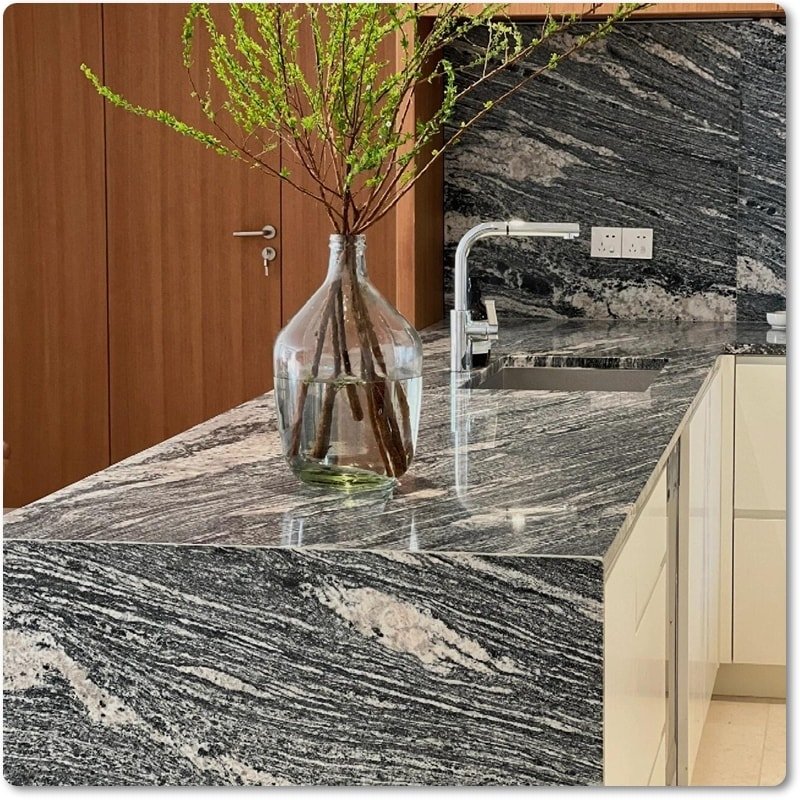
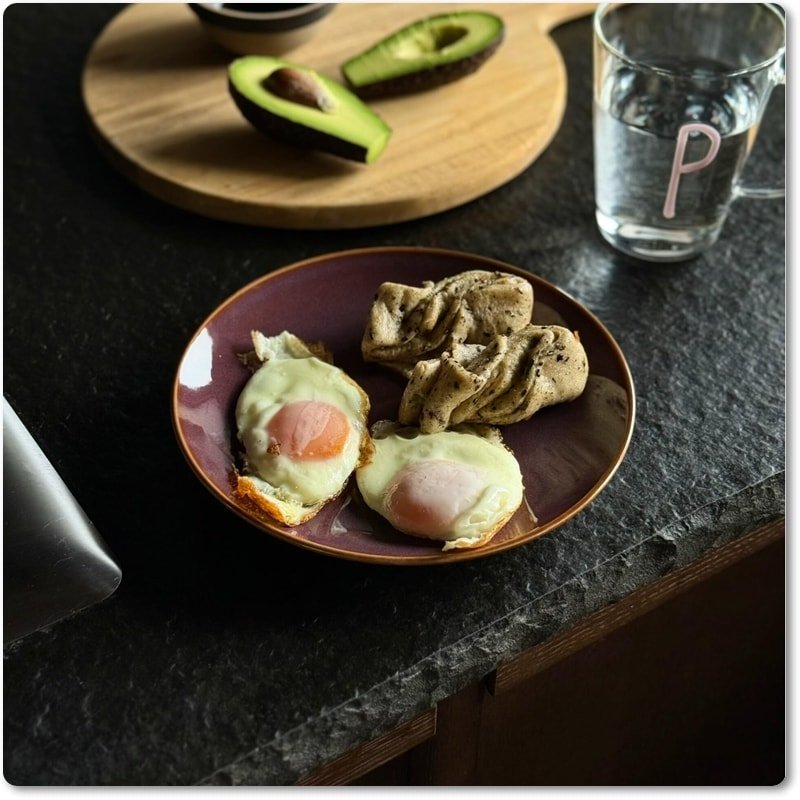
3.3 Advantage 3: Natural Beauty and Unique Patterns
Granite offers a broad range of natural colors and mineral structures.
Popular commercial selections include:
Black Granite
Absolute Black Granite
Black Galaxy Granite
White Granite
River White Granite
Alaska White Granite
Colonial White Granite
Blue Pearl Granite
Blue Bahia Granite
Giallo Ornamental Granite
Tan Brown Granite
Viscount White Granite
These commercial names should be verified against the actual geological material and source.
Why Natural Variation Is Both an Advantage and a Disadvantage?
The natural variation of granite creates distinctive visual appeal.
For residential customers, this uniqueness can be a major design advantage.
For importers and large-scale construction projects, however, it creates a procurement challenge.
A hotel project requiring 100 identical vanity countertops may need carefully coordinated slabs to maintain an acceptable visual range.
The best practice is to approve a representative slab range or complete slab selection before production.
For large projects, buyers should establish:
Approved reference samples
Color variation limits
Pattern variation expectations
Slab identification records
Production batch traceability
Final inspection procedures
3.4 Advantage 4: Good Scratch and Abrasion Resistance
Many granite varieties are resistant to ordinary scratching and surface abrasion.
This is especially beneficial for countertops exposed to repeated food preparation and daily household activity.
However, hardness is not the same as toughness.
A hard material can still chip or fracture under concentrated impact, particularly at exposed edges and unsupported corners.
Factors Influencing Scratch Resistance
Quartz content
Feldspar composition
Mineral grain structure
Surface finish
Presence of weaker mineral inclusions
Quality of fabrication and polishing
Buyers should avoid using a single hardness value as the only indicator of countertop performance.
For commercial specifications, abrasion resistance and other relevant physical properties should be evaluated using appropriate standardized test methods.
3.5 Advantage 5: Relatively Low Routine Maintenance
Granite is generally easier to maintain than many acid-sensitive natural stones.
Most varieties are siliceous rather than predominantly calcium-carbonate-based.
Consequently, they are generally less susceptible to etching from common kitchen acids than marble.
Recommended daily maintenance includes:
Wipe spills promptly.
Use warm water and a neutral cleaner.
Avoid abrasive cleaning products.
Dry the surface when necessary to prevent residue and water marks.
Use cutting boards instead of cutting directly on the stone.
The Natural Stone Institute recommends neutral cleaners or mild dishwashing detergent for general natural stone cleaning and warns against inappropriate acidic cleaning products.
Does Granite Need to Be Sealed?
This is one of the most frequently searched questions about granite countertops.
The answer is: Not every granite countertop requires sealing.
The Natural Stone Institute explains that most granite countertops do not necessarily need to be sealed, although some varieties can benefit from an appropriate penetrating treatment.
Its published guidance also distinguishes between stain resistance and stain-proof performance.
An impregnating sealer can reduce the rate at which liquids penetrate the stone. It does not eliminate porosity or guarantee complete protection.
A professional supplier should recommend treatment based on the specific material, not simply apply a universal sealing schedule.
3.6 Disadvantage 1: Natural Porosity and Staining
Although granite is often relatively resistant to staining, absorption varies considerably between varieties.
Potential staining substances include:
Cooking oil
Coffee
Red wine
Tomato sauce
Cosmetics
Certain cleaning chemicals
The risk depends on:
Water absorption
Open pores
Mineral composition
Surface finish
Previous treatments
Duration of exposure
Type of staining substance
How to Evaluate Granite Porosity
For commercial procurement, request water absorption data where relevant.
ASTM C97/C97M is the recognized test-method designation for absorption and bulk specific gravity of dimension stone.
The actual test report should identify the tested material and sample source.
A test result from a different granite variety should not be used as proof of the performance of the supplied material.
3.7 Disadvantage 2: Heavy Weight and Installation Requirements
Granite is a relatively dense natural stone.
This creates additional engineering and installation considerations.
Potential issues include:
Cabinet structural limitations
Transportation difficulties
Difficulties handling large-format slabs
Increased lifting requirements
Risk of breakage during transportation
Additional support requirements for overhangs
A countertop installation should evaluate the cabinet construction, support points, slab thickness, sink cutouts, and cantilever dimensions.
Long unsupported overhangs should never be approved simply because the granite is thick.
The Natural Stone Institute’s Dimension Stone Design Manual provides industry guidance covering countertop design, support, fabrication, and installation considerations.
Installation Standards+1
3.8 Disadvantage 3: Difficult Repairs
Granite is durable, but damage is possible.
Typical defects include:
Edge chips
Cracks
Surface scratches
Staining
Broken corners
Seam separation
Damage around sink openings
Minor chips may be repaired using color-matched fillers or specialist repair systems.
However, repairs may remain visible under certain lighting conditions.
Structural cracks require more careful assessment. A cosmetic repair does not necessarily restore the original mechanical integrity.
For commercial projects, the buyer should establish an agreed repair and replacement procedure before production.
3.9 Disadvantage 4: Natural Slab Matching Is Difficult
This is particularly important for wholesale buyers, kitchen cabinet manufacturers, hotel procurement teams, and multifamily developers.
Natural granite is not a factory-produced uniform material.
Even when two slabs share the same commercial name, their patterns and mineral distributions may differ.
A supplier should not promise perfect visual identity unless the material and production process can genuinely support the requirement.
For large projects, consider:
Reserving sufficient slabs from a compatible production batch
Photographing each slab before fabrication
Creating a digital slab layout
Confirming seam positions
Approving a first-article countertop
Maintaining identification throughout production
3.10 Disadvantage 5: Silica Dust During Fabrication
An important industry issue in 2026 is occupational exposure to respirable crystalline silica.
Granite contains crystalline silica, although the percentage differs among varieties.
Cutting, grinding, drilling, and polishing can release fine airborne dust.
The February 2026 joint OSHA/NIOSH hazard alert specifically addresses exposure during natural and engineered stone countertop manufacturing, finishing, and installation.
It identifies granite as typically containing approximately 10–50% crystalline silica, depending on the material.
In the United States, relevant workplace requirements include:
OSHA 29 CFR 1910.1053 – General Industry
OSHA 29 CFR 1926.1153 – Construction
These standards include exposure assessment, engineering controls, work practices, respiratory protection where required, training, and other occupational safety measures.
The OSHA permissible exposure limit is 50 micrograms per cubic meter as an eight-hour time-weighted average.
For buyers evaluating a granite countertops manufacturer or factory, workplace safety should be part of supplier qualification.
Relevant evidence may include:
Wet-cutting systems
Local exhaust ventilation
Dust collection systems
Air monitoring records
Respiratory protection programs
Worker training records
Safe housekeeping procedures
California-Specific Consideration
California has additional requirements under Cal/OSHA Title 8, Section 5204.
Its updated requirements include enhanced protections for specified high-exposure tasks involving natural stone containing more than 10% crystalline silica.
These provisions are particularly relevant to California countertop fabrication operations.
This is an important distinction: occupational silica requirements concern worker exposure during processing. They should not be confused with claims that an installed granite countertop automatically creates a dangerous indoor exposure.
3.11 Disadvantage 6: Questions About Granite Radiation and Radon
Some buyers search for information about granite countertops and radioactivity.
Granite can contain naturally occurring uranium, thorium, and their decay products. Concentrations vary between samples and geological sources.
However, the US Environmental Protection Agency explains that the available evidence does not support treating ordinary granite countertops as a major source of indoor radon exposure.
The EPA recommends testing indoor air for radon regardless of whether a home contains granite countertops.
Procurement perspective: Buyers should not reject all granite countertops based on generalized radiation concerns. Where a project has specific regulatory or environmental requirements, obtain appropriate material-specific testing from a qualified laboratory.
4. Granite Countertops vs. Other Countertop Materials
Understanding the differences between granite, marble, quartzite, and engineered quartz helps buyers make better procurement decisions.
4.1 Granite vs. Marble Countertops
Evaluation | Granite | Marble |
|---|---|---|
Geological classification | Igneous | Metamorphic |
Main mineral characteristics | Quartz and feldspar commonly present | Commonly calcite or dolomite |
Acid sensitivity | Generally lower | Generally higher |
Scratch resistance | Generally good | Generally lower |
Heat resistance | Generally good | Generally good |
Maintenance | Relatively straightforward | Requires greater attention |
Natural appearance | Crystalline and granular | Veined and often softer-looking |
Typical use | Kitchens and commercial surfaces | Luxury kitchens, bathrooms and decorative surfaces |
Recommendation: Granite is generally the more practical option for buyers prioritizing everyday kitchen durability and lower acid sensitivity. Marble may be preferred when the visual character of natural veining is more important than minimizing surface wear.
4.2 Granite vs. Quartzite Countertops
Quartzite is another popular natural stone countertop material.
It is generally formed through the metamorphism of quartz-rich sandstone.
Evaluation | Granite | Quartzite |
|---|---|---|
Geological formation | Igneous | Metamorphic |
Mineral structure | Variable mineral composition | Often quartz-rich |
Appearance | Granular crystalline patterns | Often marble-like veining |
Scratch resistance | Generally good | Often very high |
Fabrication | Requires specialist stone equipment | Can be more demanding |
Natural variation | High | High |
Maintenance | Depends on variety | Depends on variety |
Quartzite should not be confused with quartzite-branded commercial materials that may actually be marble or other stone types.
Material verification is essential.
4.3 Granite vs. Engineered Quartz Countertops
Engineered quartz generally consists of mineral aggregates combined with binders and other ingredients. Its composition varies by product.
Evaluation | Natural Granite | Engineered Quartz |
|---|---|---|
Material type | Natural stone | Manufactured composite |
Pattern | Naturally variable | Often more controlled |
Heat exposure | Generally good | Depends on resin system |
UV performance | Depends on variety and finish | Depends on formulation |
Repairs | Specialist natural stone repairs | Product-specific |
Silica exposure | Present during fabrication | Varies by composition |
Natural uniqueness | High | Product-dependent |
An important 2026 consideration is silica safety. OSHA/NIOSH guidance identifies occupational exposure risks in both natural and engineered stone processing, although the silica content varies significantly between products.
Procurement conclusion: Granite is particularly attractive for buyers who want genuine natural stone, unique patterns, and a surface that generally performs well in demanding kitchen environments.
5. Procurement Checklist: How to Buy Quality Granite Countertops?
A successful granite countertop project begins with a clearly defined material specification.
The following checklist can be used by importers, distributors, fabricators, contractors, and project procurement teams.
5.1 Material Selection
5.2 Technical Specifications
5.3 Fabrication Requirements
5.4 Quality Inspection
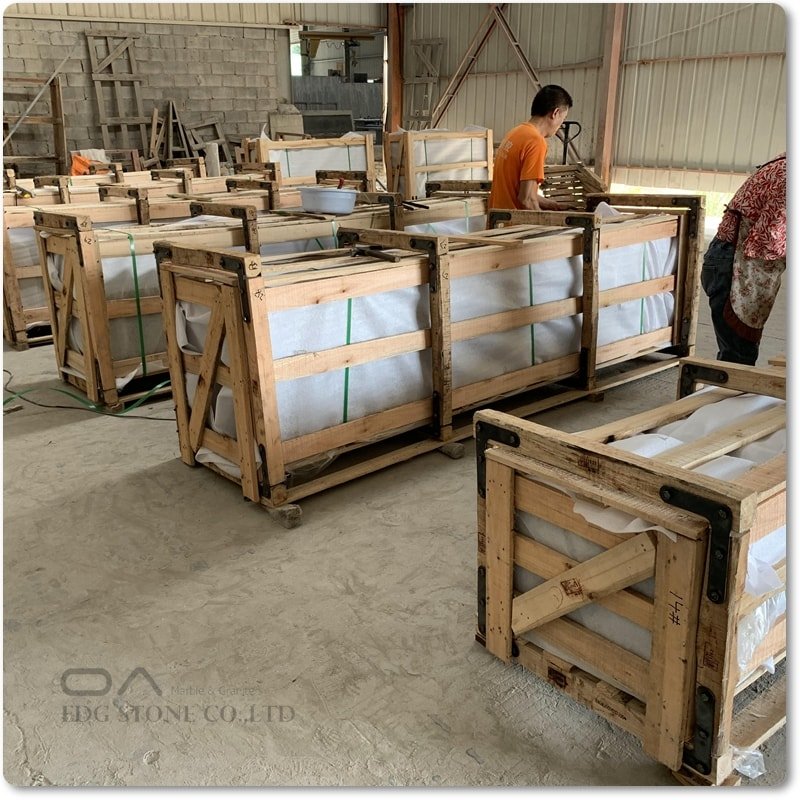
5.5 International Packaging and Shipping
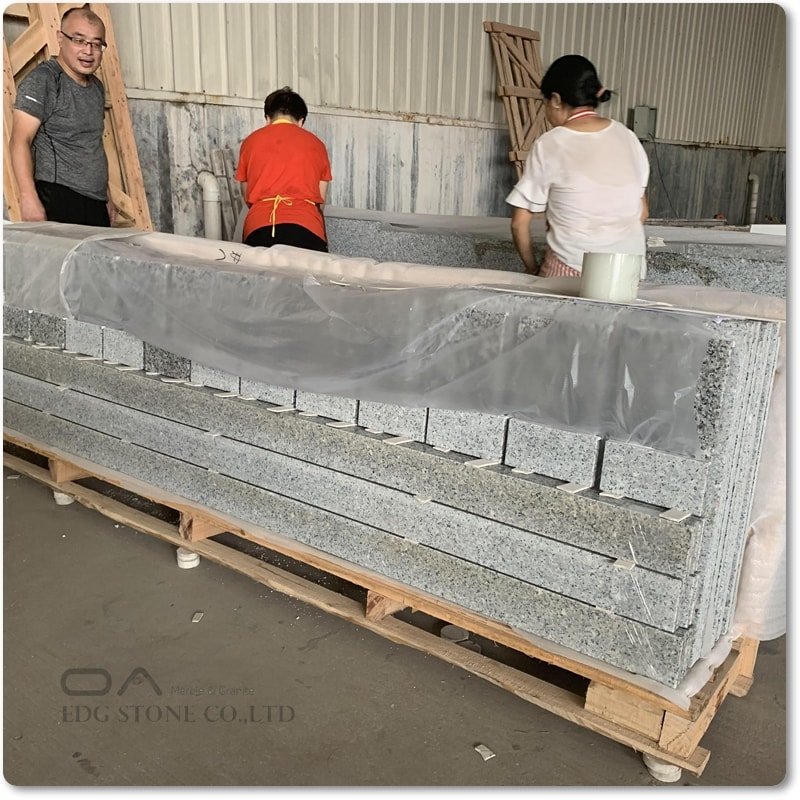
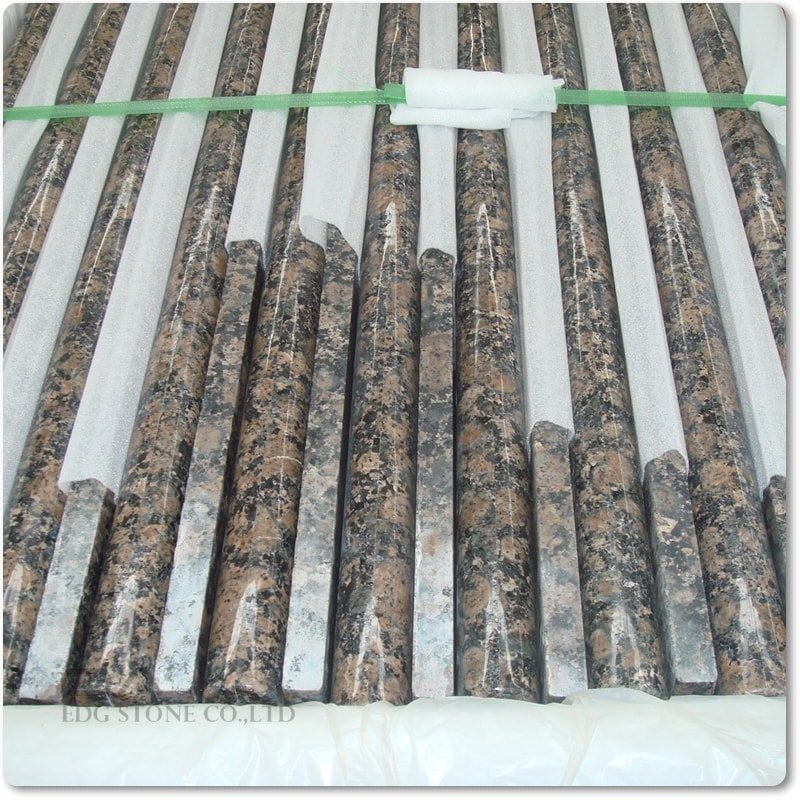
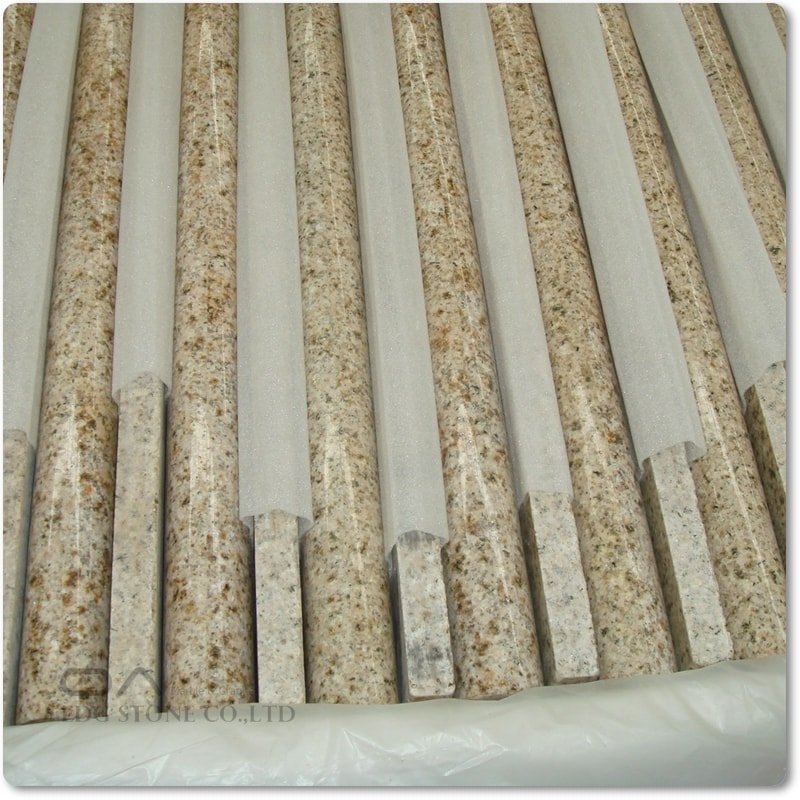
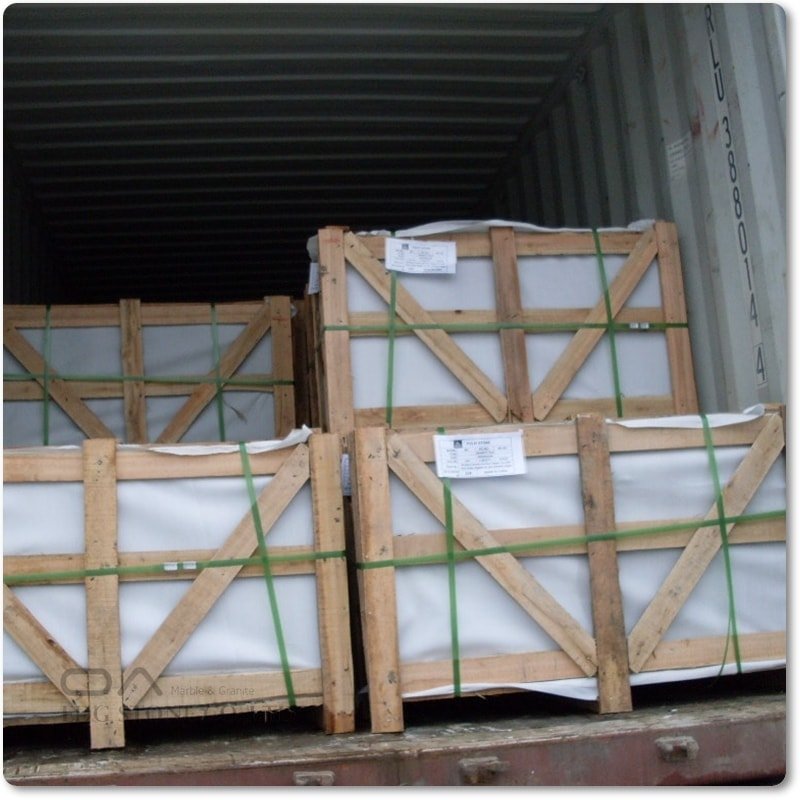
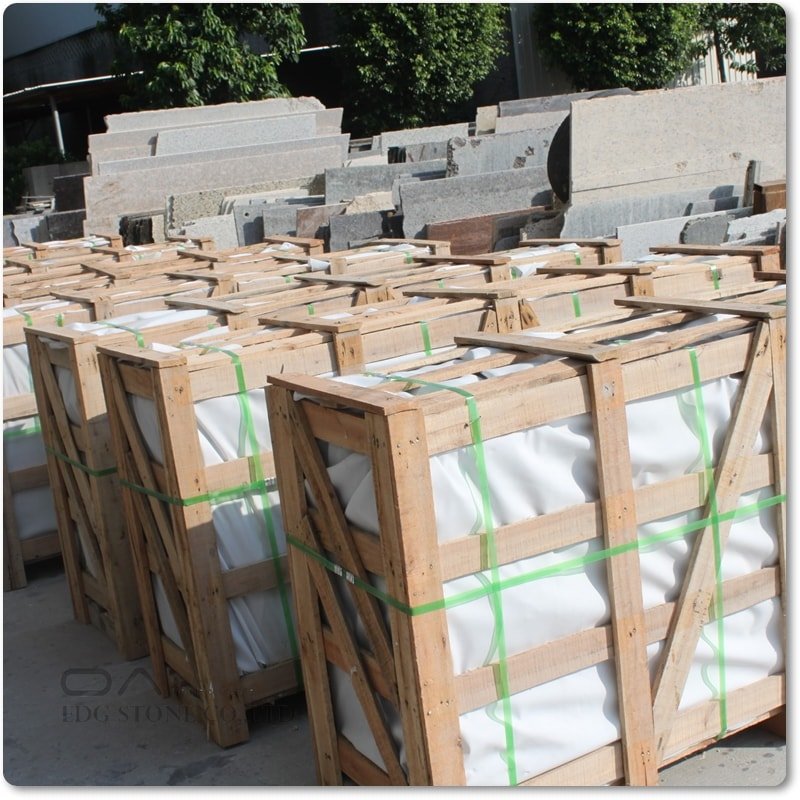
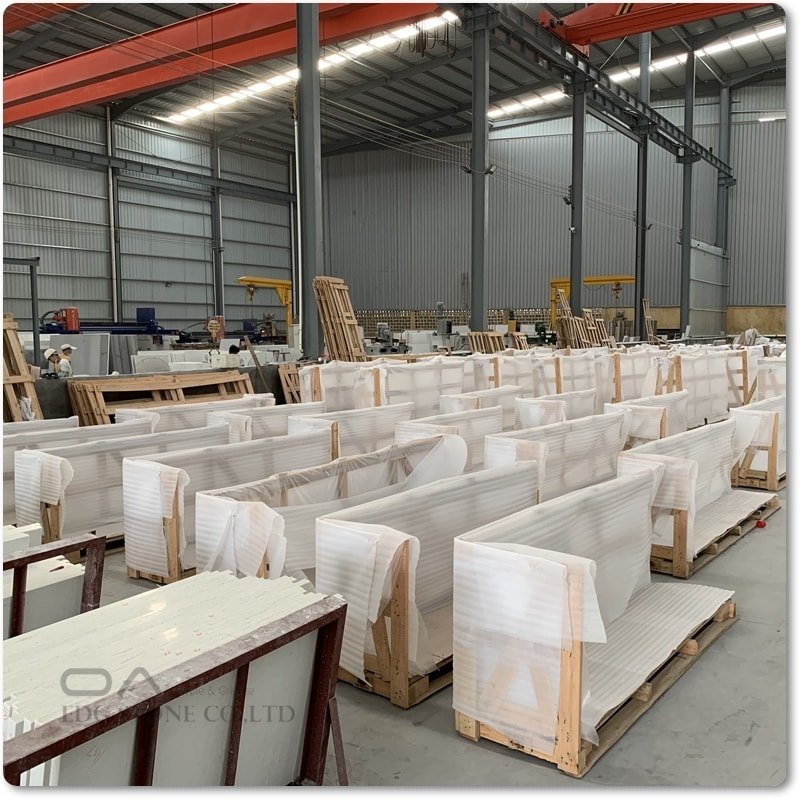
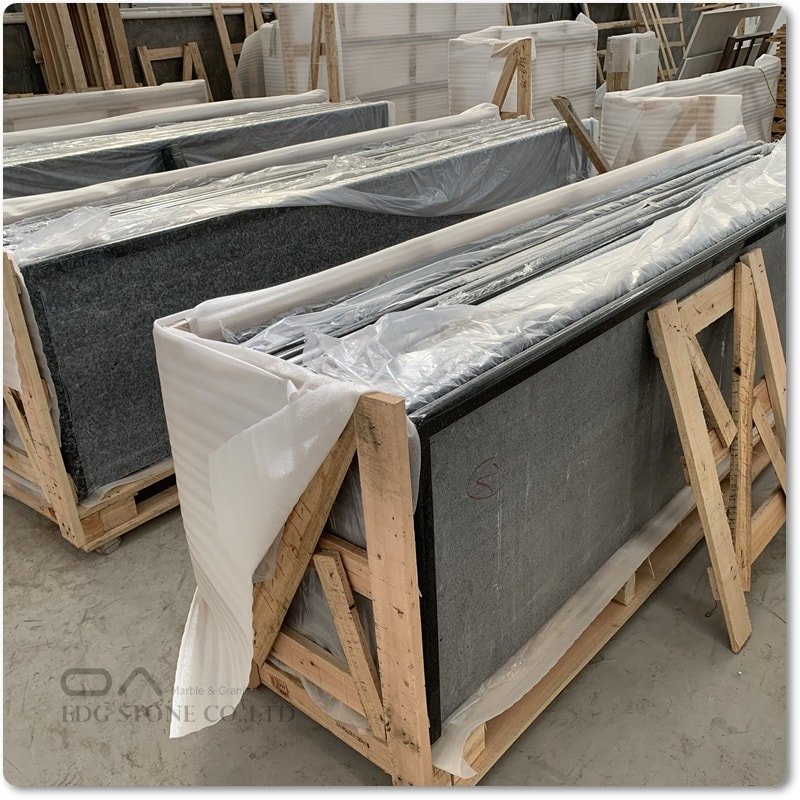
For international granite countertop suppliers, packaging is an important part of quality assurance.
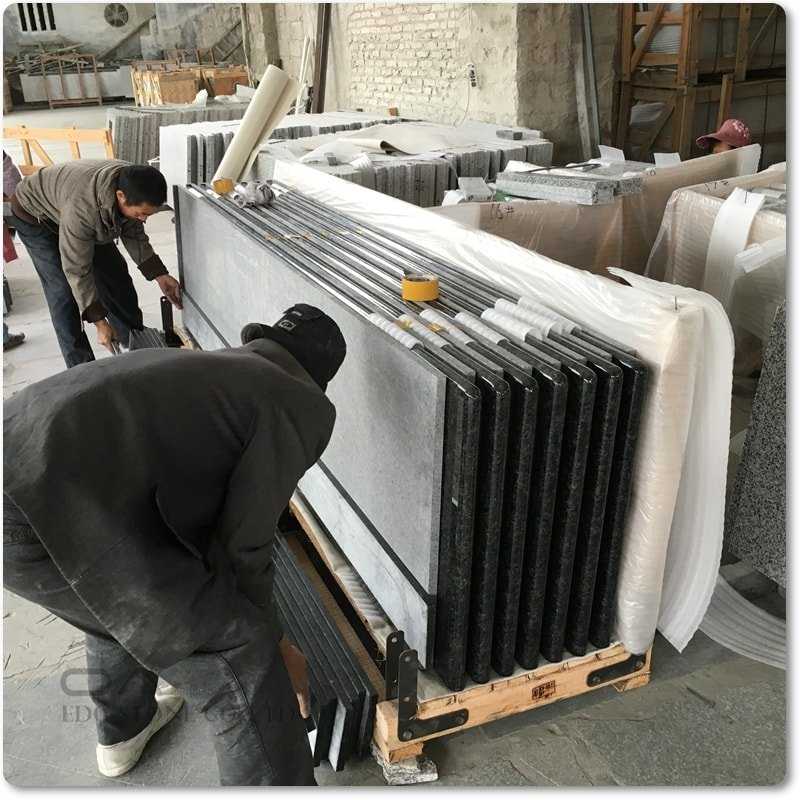
The buyer should confirm:
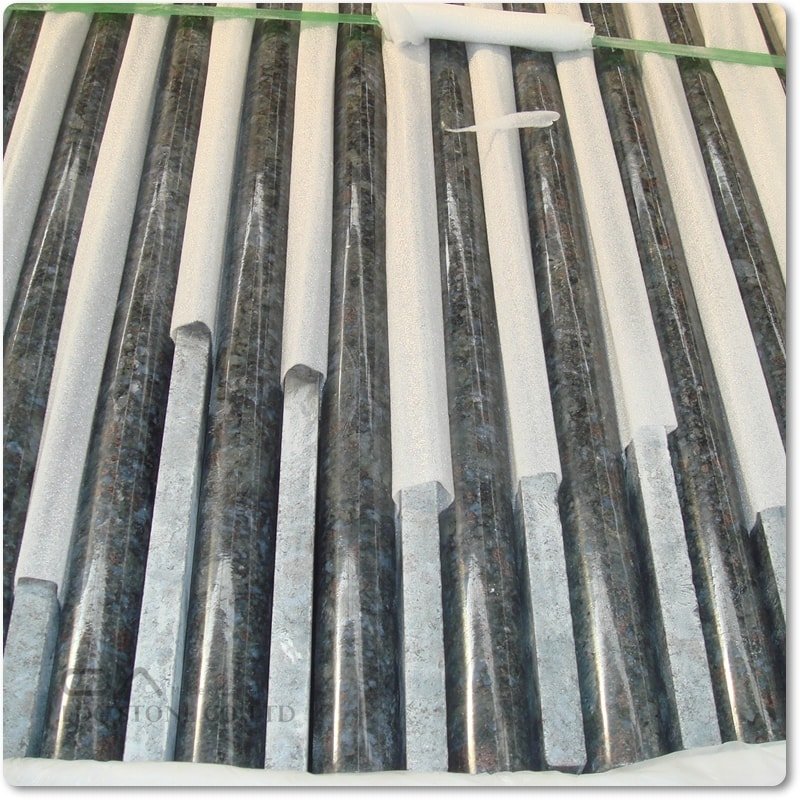
Protective foam or suitable cushioning
Edge and corner protection
Strong export crates
Appropriate moisture protection
Secure internal bracing
Safe container loading
Weight distribution
Product identification labels
Packing lists and shipping documentation
Photographic loading records
For bulk projects, the packaging design should be evaluated against the actual product dimensions, shipping route, and handling conditions.
6. Cost and Risk Factors: What Affects Granite Countertop Prices?
The cost of granite countertops cannot be determined by material price alone.
A complete procurement calculation should include material sourcing, processing, fabrication, packaging, logistics, and installation.
6.1 Major Cost Components
Cost component | Factors affecting cost |
|---|---|
Raw granite material | Quarry, rarity, color, and block quality |
Slab processing | Sawing, calibration, and polishing |
Thickness | 18 mm, 20 mm, 30 mm and other specifications |
Surface finish | Polished, honed, leathered or specialty finishes |
Fabrication | CNC, waterjet, cutting, and edge profiling |
Cutouts | Sink, faucet and cooktop openings |
Reinforcement | Structural design and support requirements |
Packaging | Wooden crates and protective materials |
Transportation | Domestic freight and international shipping |
Import expenses | Duties, customs clearance, and insurance |
Installation | Labor, equipment, and site conditions |
6.2 Why Granite Countertop Prices Differ?
Two granite countertops of similar dimensions can have substantially different prices.
The differences may result from:
Material rarity and quarry availability.
Color and pattern characteristics.
Slab quality and usable yield.
Thickness and finish.
Complexity of fabrication.
Quantity ordered.
Packaging and shipping requirements.
For example, an imported exotic granite with a limited supply chain may have a significantly different material cost from a widely available commercial black granite.
Buyers should avoid comparing supplier quotations solely on a price-per-square-foot basis without confirming the complete specification.
6.3 Factory Direct vs. Wholesale vs. Retail Procurement
Procurement channel | Advantages | Considerations |
|---|---|---|
Granite manufacturer | Direct production coordination | Verify actual manufacturing capability |
Granite factory | Custom processing and bulk orders | Confirm equipment and quality systems |
Wholesale supplier | Material selection and volume purchasing | Verify stock and slab consistency |
Local fabricator | Site measurement and installation | Local labor and fabrication costs |
Retail showroom | Convenient selection and customer service | May include additional distribution costs |
For importers and large-volume purchasers, working directly with a granite countertops manufacturer can improve control over slab selection, fabrication specifications, packaging, and production scheduling.
However, factory-direct procurement is only beneficial when the manufacturer has the required technical capabilities and can meet the buyer’s documentation and quality requirements.
6.4 Common Procurement Risks
Risk 1: Incorrect Material Identification
Commercial stone names do not always establish geological identity.
Mitigation: Request material identification and relevant technical documentation.
Risk 2: Color Inconsistency
Natural slabs may vary even within the same commercial material.
Mitigation: Approve slab photographs and establish a reference range before production.
Risk 3: Fabrication Defects
Poor cutting, polishing, and edge processing can damage otherwise good-quality granite.
Mitigation: Use approved drawings, first-article inspection and documented tolerances.
Risk 4: Transportation Damage
Granite can crack or chip during loading, transit, and unloading.
Mitigation: Require suitable export packaging, internal support, and pre-shipment photographic records.
Risk 5: Unsupported Structural Design
Oversized overhangs and poorly supported sink areas may create mechanical failure risks.
Mitigation: Require appropriate structural design and installation instructions.
Risk 6: Unclear Commercial Responsibilities
Disputes may arise over measurement, installation, damage claims, and acceptance criteria.
Mitigation: Define Incoterms, inspection stages, tolerances, responsibility boundaries, and claims procedures in the purchase contract.
6.5 Environmental and Regulatory Considerations in 2026
The natural stone industry is increasingly influenced by environmental reporting, occupational safety, and supply-chain transparency.
For international buyers, three areas deserve attention.
1. Occupational health and safety
OSHA/NIOSH’s February 2026 hazard alert reinforces the importance of managing respirable crystalline silica exposure during countertop processing.
2. European construction product regulations
Regulation (EU) 2024/3110 entered into force on January 7, 2025, with its principal provisions applying from January 8, 2026.
It establishes a revised framework for construction products, including developments related to environmental performance information and digital product information.
However, individual product obligations depend on the relevant harmonised technical specifications and applicable transition arrangements. Buyers should not assume that every granite kitchen countertop automatically requires a specific declaration under the new regulation.
3. Material traceability
Commercial buyers increasingly benefit from documenting:
Quarry or source identification
Supplier identification
Material specifications
Production batch numbers
Test reports
Packaging records
Shipment information
This improves procurement transparency and makes quality disputes easier to investigate.
7. Supplier Evaluation: How to Choose a Reliable Granite Countertop Manufacturer?
Choosing a granite supplier is not simply a matter of finding the lowest quotation.
A reliable supplier should demonstrate material knowledge, manufacturing capability, quality control, export experience, and the ability to manage project requirements.
7.1 Manufacturer Qualification Criteria
Evaluation category | Required evidence |
|---|---|
Business qualification | Company registration and business information |
Manufacturing capability | Factory photographs and equipment list |
Material sourcing | Quarry or supplier information |
Technical knowledge | Material specifications and test reports |
Fabrication | CNC, bridge saw and edge-processing capabilities |
Quality control | Inspection procedures and records |
Export experience | Previous shipment and packing documentation |
Production capacity | Capacity relevant to the order |
Packaging | Export crate and container-loading procedures |
After-sales support | Written claims and replacement procedures |
7.2 Important Technical Documents
A professional granite countertops manufacturer should be able to provide relevant documentation, depending on the project:
Material specification sheet
Slab photographs
Physical property test reports
Petrographic identification, where required
Approved shop drawings
Inspection reports
Packaging specifications
Commercial invoice
Packing list
Certificate of origin, where applicable
Other destination-specific compliance documentation
Not every document is mandatory for every shipment. The documentation package should be based on the destination market and project specification.
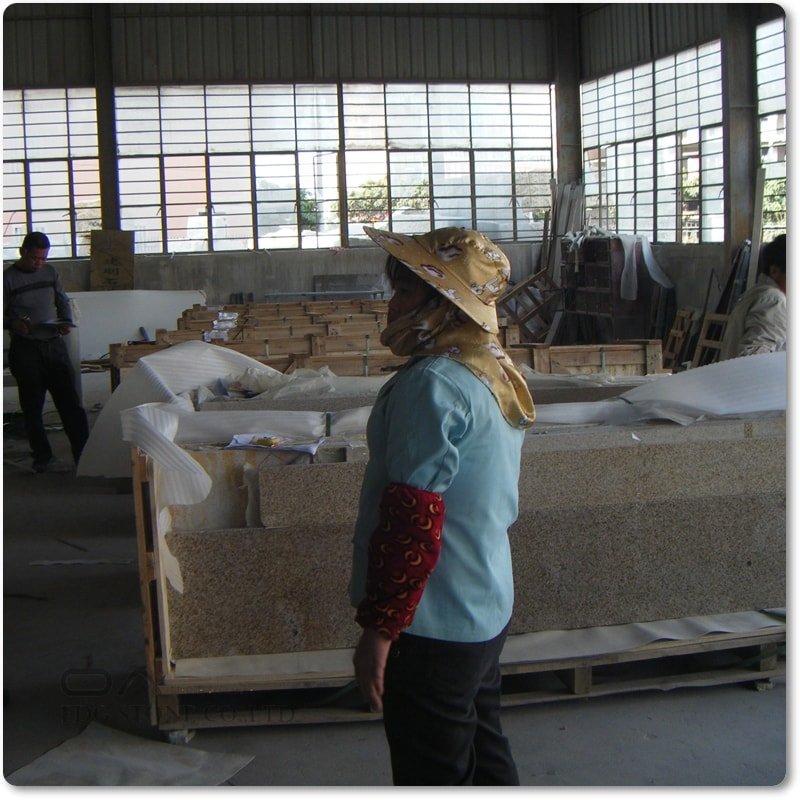
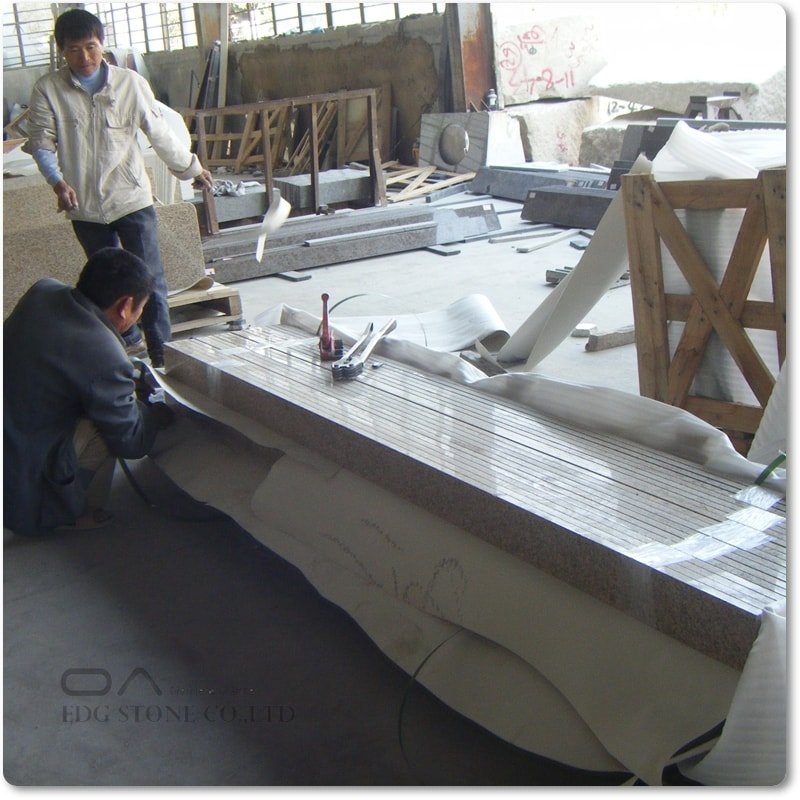
7.3 Why Manufacturing Capability Matters
A granite supplier that only trades slabs may not have the same control over custom fabrication as an integrated manufacturer.
For customized countertop orders, buyers should evaluate whether the factory can coordinate:
Slab selection.
CAD drawing review.
Cutting and processing.
Edge profiling.
Sink and cooktop cutouts.
Quality inspection.
Protective packaging.
Export loading.
For hotel, multifamily, and commercial projects, this integrated process can reduce coordination problems and improve consistency.
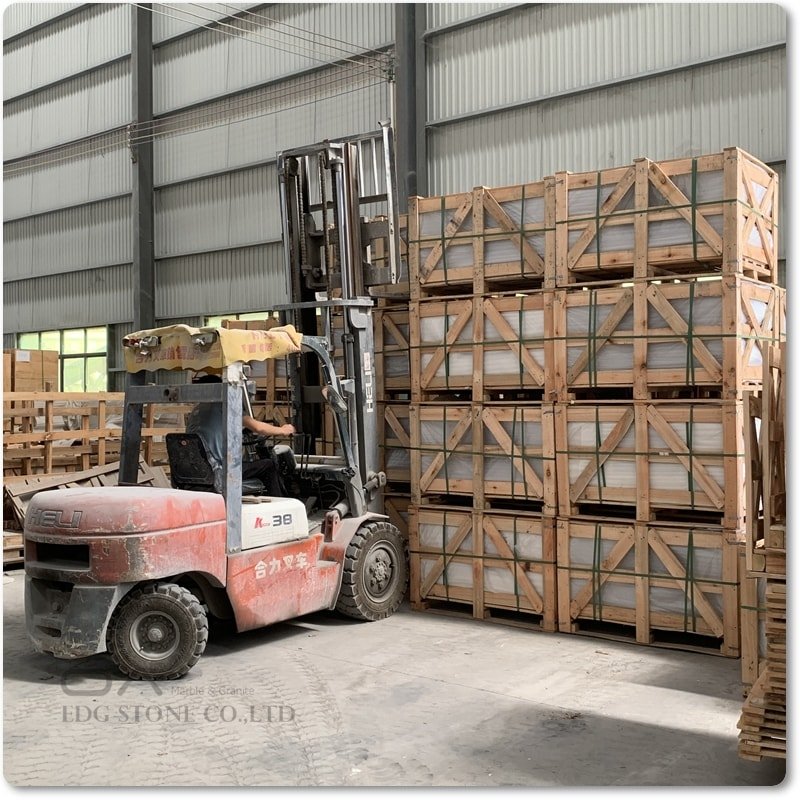
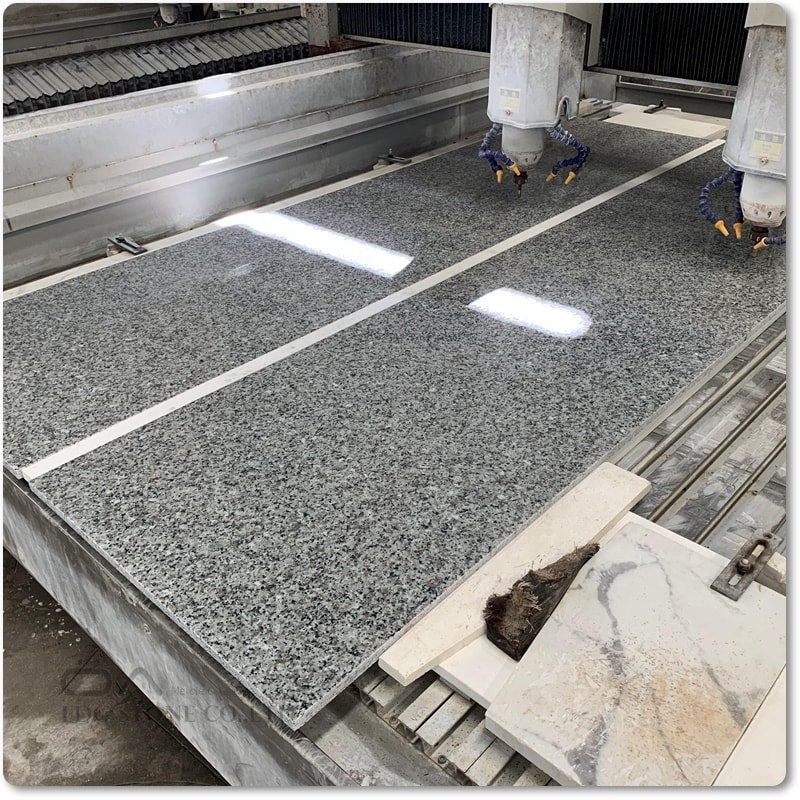
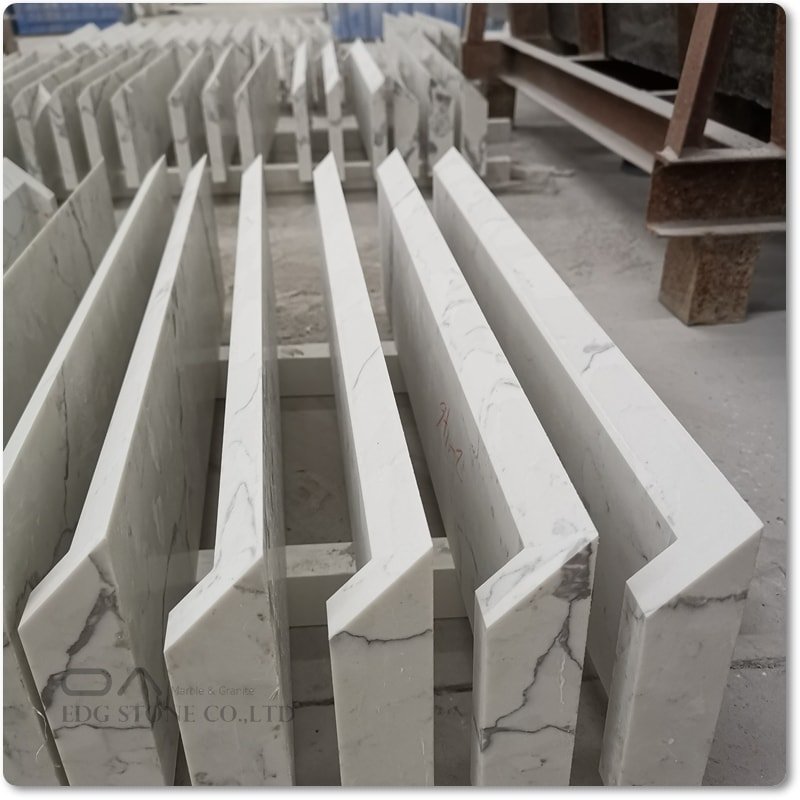
7.4 EDG Stone: Natural Stone Manufacturing and Custom Fabrication
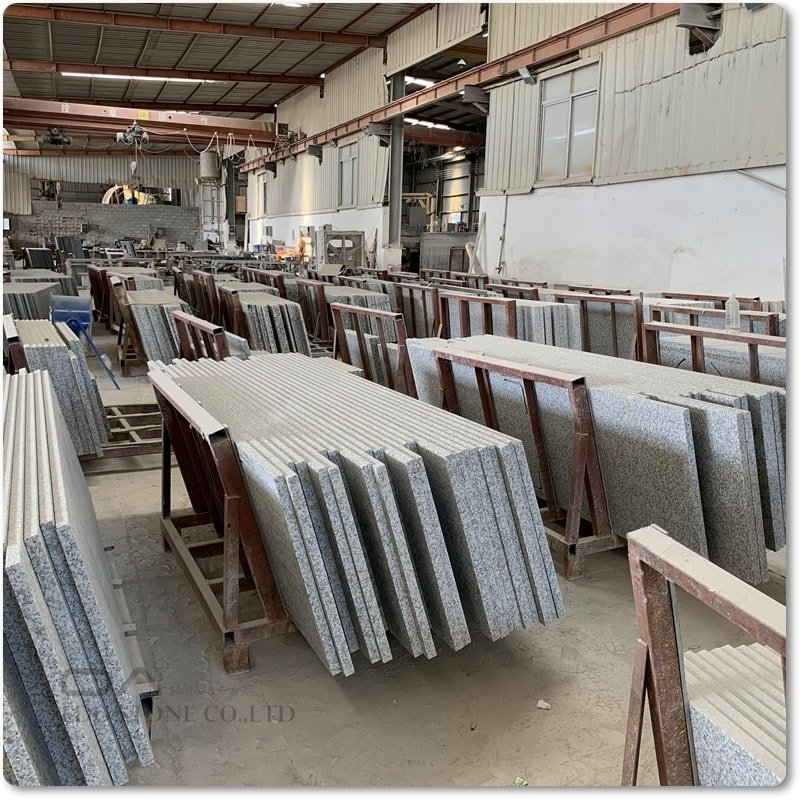
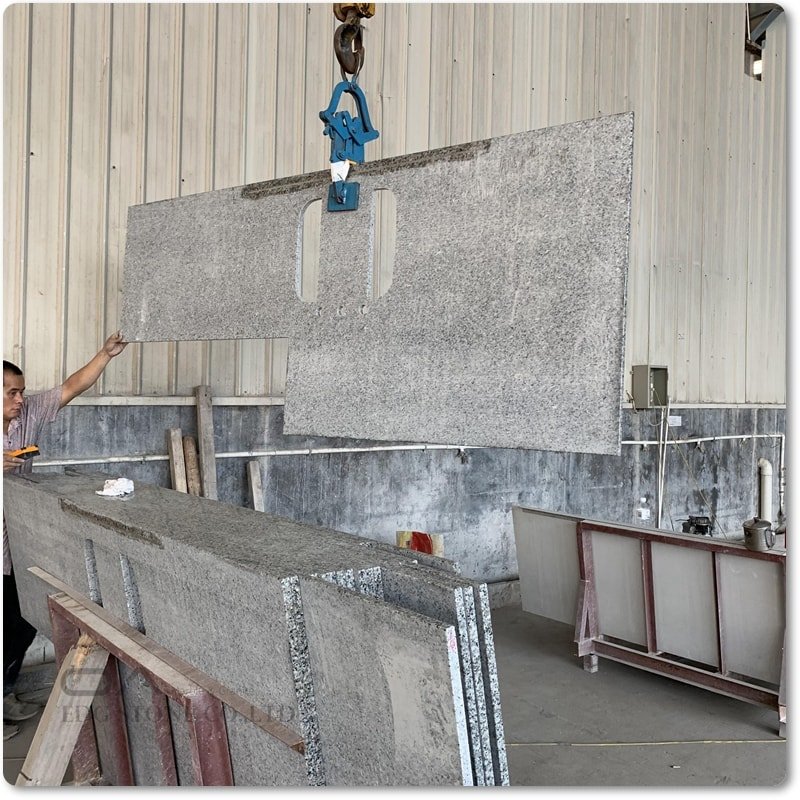
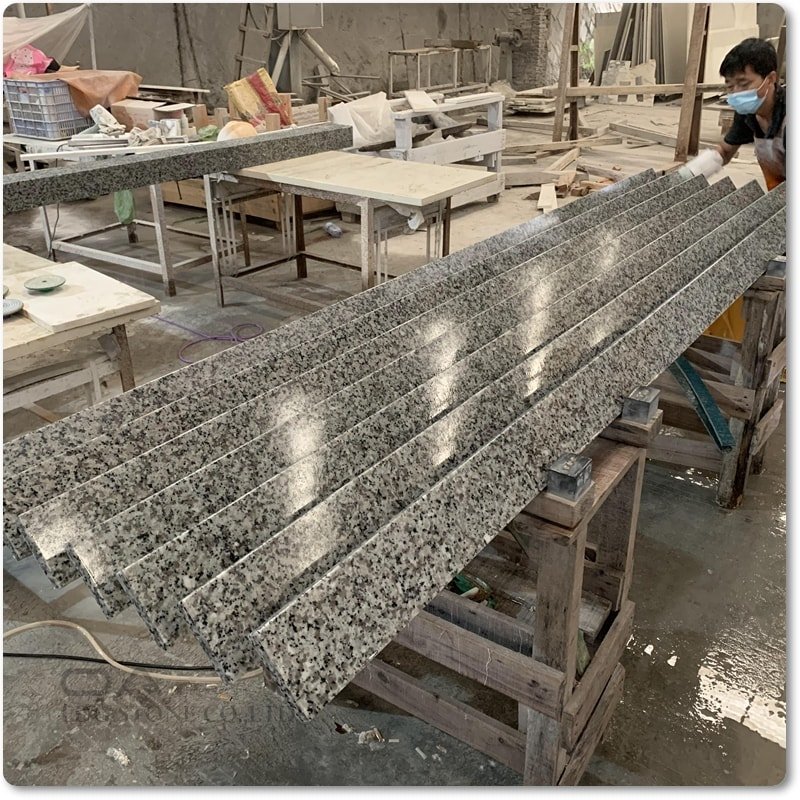
EDG Stone is a Chinese natural stone manufacturer and exporter specializing in natural stone products, slabs, countertops, and customized fabrication.
Its product and manufacturing scope includes:
Granite countertops and slabs
Marble countertops
Quartzite countertops
Natural stone vanity tops
Kitchen islands
Custom cut-to-size stone products
CNC and waterjet processing
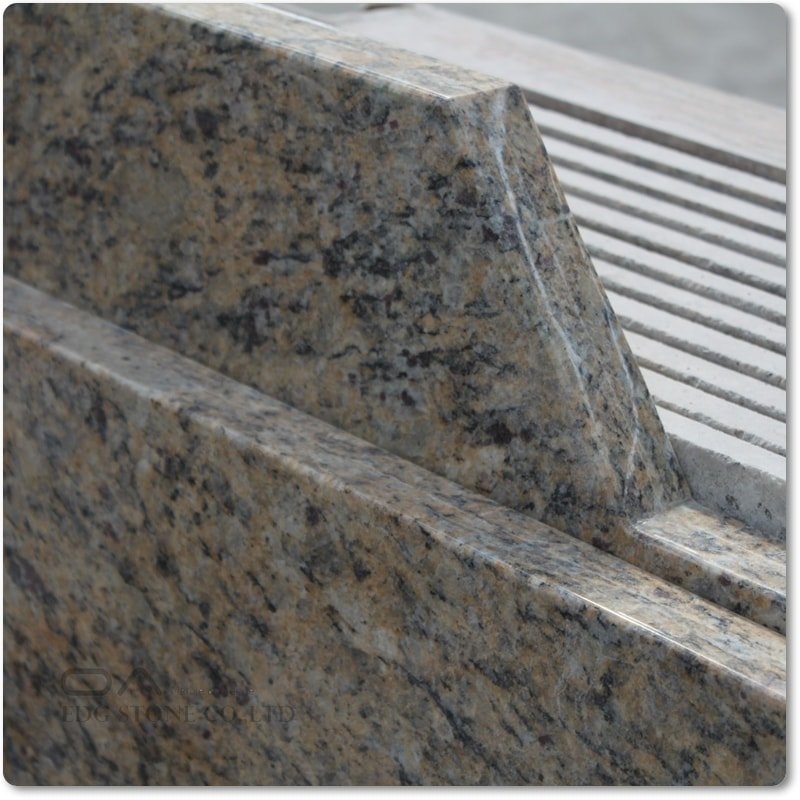
Edge profiling and polishing
Sink and cooktop cutouts
Customized stone fabrication
Export packaging and container loading
For importers, distributors, kitchen cabinet companies, contractors, and hospitality procurement teams, the key consideration is the ability to coordinate material selection, customized processing, inspection, and export packaging according to project specifications.
EDG Stone’s approach to international stone procurement emphasizes matching the material and processing requirements with the actual project rather than treating every countertop order as a standard slab sale.
Explore EDG Stone: EDG Stone – Natural Stone Manufacturer and Exporter.
8. Practical RFQ Template: Granite Countertops Manufacturer Inquiry
For international buyers, a detailed Request for Quotation (RFQ) helps suppliers prepare comparable quotations and reduces misunderstandings.
The following template can be copied into an email or procurement document.
8.1 Granite Countertops RFQ Form
GRANITE COUNTERTOPS – REQUEST FOR QUOTATION (RFQ)
1. BUYER INFORMATION
Company Name:
Contact Person:
Country:
Email:
Website:
2. PROJECT INFORMATION
Project Name:
Project Type:
Residential / Hotel / Multifamily / Commercial
Destination Country:
Delivery Address or Port:
Estimated Order Quantity:
3. MATERIAL SPECIFICATION
Granite Commercial Name:
Preferred Color:
Material Origin (if specified):
Thickness:
18 mm / 20 mm / 30 mm / Other
Surface Finish:
Polished / Honed / Leathered / Other
Resin Treatment:
Required / Not Required / To Be Confirmed
4. COUNTERTOP DIMENSIONS
Length:
Width:
Thickness:
Quantity:
Edge Profile:
Backsplash:
Waterfall Edge:
Sink Cutouts:
Cooktop Cutouts:
Faucet Holes:
5. TECHNICAL REQUIREMENTS
Material Specification:
Water Absorption:
Density:
Mechanical Test Reports:
Applicable ASTM Standards:
Color Variation Acceptance:
Dimensional Tolerances:
6. FABRICATION REQUIREMENTS
CAD Drawings Available:
Template Available:
CNC Processing Required:
Waterjet Processing Required:
Edge Polishing Required:
First Article Approval:
Final Inspection Required:
7. PACKAGING AND SHIPPING
Export Wooden Crates:
Protective Foam:
Container Loading:
Preferred Incoterms:
EXW / FOB / CIF / Other
Preferred Shipping Port:
Required Delivery Schedule:
8. COMMERCIAL REQUIREMENTS
Target Quantity:
Sample Requirement:
MOQ:
Production Lead Time:
Payment Terms:
Quotation Validity:
Warranty / Claims Procedure:
9. DOCUMENTATION
Company Profile:
Material Photographs:
Technical Data Sheets:
Test Reports:
Production Photographs:
Inspection Reports:
Packing Photographs:
Please provide a detailed quotation, technical specifications,
production schedule and packaging proposal.
8.2 Suggested Granite Countertop Inspection and Acceptance Table
Inspection item | Acceptance requirement | Inspection stage |
|---|---|---|
Material identity | Matches approved material | Before production |
Color and pattern | Within approved natural variation | Slab selection |
Thickness | Within agreed tolerance | Production |
Length and width | Match approved drawings | Final inspection |
Edge profile | Matches approved sample | Final inspection |
Surface finish | Uniform and free of unacceptable defects | Final inspection |
Sink cutouts | Match approved dimensions | Final inspection |
Structural condition | No unacceptable cracks or damage | Final inspection |
Packaging | Suitable for international transportation | Pre-shipment |
Quantity | Matches purchase order | Pre-shipment |
The acceptance criteria should be agreed upon before production. Natural mineral characteristics, resin repairs, and other inherent stone features should be evaluated separately from workmanship defects.
9. Frequently Asked Questions About Granite Countertops
The following five questions address common Google searches and purchasing concerns.
Q1. What are the biggest disadvantages of granite countertops?
The main disadvantages of granite countertops are natural color variation, possible porosity, occasional sealing requirements, heavy weight, and the need for professional fabrication and installation.
Some granite varieties are more susceptible to staining than others. Buyers should evaluate the specific stone’s absorption characteristics rather than assuming all granite has identical performance.
Q2. Are granite countertops better than quartz countertops?
Granite and engineered quartz have different advantages.
Granite offers genuine natural stone patterns, good heat tolerance, and geological uniqueness. Engineered quartz generally provides more controlled patterns and manufacturing consistency.
The best choice depends on design preferences, heat exposure, maintenance requirements, material composition, and project specifications.
Q3. Do granite countertops need to be sealed every year?
No. Annual sealing is not a universal requirement.
Some granite varieties may benefit from penetrating impregnating treatments, while others may not require additional protection.
The appropriate maintenance interval depends on the material’s absorption characteristics, treatment product, usage, and manufacturer recommendations.
Q4. How long do granite countertops last?
Properly selected, fabricated, installed, and maintained granite countertops can last for several decades and potentially for the lifetime of a building.
However, service life depends on the quality of the material, structural support, installation conditions, usage, and maintenance.
There is no single guaranteed lifespan applicable to every granite variety and installation.
Q5. Are granite countertops safe for kitchens?
Yes. Granite is widely used for kitchen countertops.
For food preparation areas, buyers should use appropriate cleaning products and ensure that any applied surface treatment is specifically suitable for the intended food-contact application.
Granite fabrication also requires appropriate occupational silica controls to protect manufacturing and installation workers.
10. References: Technical Standards, Industry Guidance and Regulatory Sources
The following references provide a technical foundation for evaluating granite countertop materials, performance, maintenance, occupational safety, and international procurement.
The standards listed below are reference frameworks, not a claim that every countertop product is automatically certified or compliant.
Reference | Standard / publication | Application |
|---|---|---|
ASTM C615/C615M-23 | Standard Specification for Granite Dimension Stone | Granite material requirements |
ASTM C97/C97M | Absorption and Bulk Specific Gravity of Dimension Stone | Water absorption and density |
ASTM C99/C99M | Modulus of Rupture of Dimension Stone | Flexural performance |
ASTM C170/C170M | Compressive Strength of Dimension Stone | Compressive performance |
ASTM C880/C880M | Flexural Strength of Dimension Stone | Flexural performance |
ASTM C241/C241M | Abrasion Resistance of Stone Subjected to Foot Traffic | Abrasion evaluation |
OSHA 29 CFR 1910.1053 | Respirable Crystalline Silica – General Industry | Worker safety |
OSHA 29 CFR 1926.1153 | Respirable Crystalline Silica – Construction | Construction worker safety |
Regulation (EU) 2024/3110 | Construction Products Regulation | European construction product framework |
Note: ASTM standard editions and active status should be verified against the ASTM catalogue when preparing contractual specifications. The listed test methods should be selected according to the project requirements.
10.1 Official Technical References
1. ASTM International
ASTM C615/C615M-23 – Standard Specification for Granite Dimension Stone
ASTM International – Standards Catalogue
2. Natural Stone Institute
Care and Cleaning of Natural Stone
Sealing Natural Stone Countertops
ASTM Standards for Natural Stone
Natural Stone Technical Bulletins
3. Occupational Safety and Health Administration / NIOSH
2026 OSHA/NIOSH Hazard Alert: Worker Exposure to Silica During Countertop Manufacturing, Finishing and Installation
OSHA – Crystalline Silica Safety
4. U.S. Environmental Protection Agency
– EPA – Radon and Radioactivity in Granite Countertops
5. European Commission
European Commission – Construction Products Regulation
Regulation (EU) 2024/3110 – Official Legal Text
11. Granite Countertops: Industry Insights, Selection Strategies and Future Procurement Trends
Understanding What Makes Granite a Valuable Countertop Material
Granite is more than a decorative kitchen surface. It is a natural dimension stone whose commercial value comes from the combination of geological characteristics, material availability, fabrication possibilities, and long-term application performance.
For residential buyers, the most important considerations are appearance, durability, maintenance, and installation.
For professional buyers, these considerations expand to include material identification, physical test results, production repeatability, slab yield, fabrication tolerances, logistics, and supplier reliability.
The purchasing decision should therefore move beyond the simple question of whether granite is a good material.
The more useful question is:
Which granite variety, from which source, with what technical properties and fabrication specifications, is suitable for the intended project?
11.1 How Should Buyers Select the Right Granite?
A professional granite selection process should follow five stages.
Stage 1 – Material Selection
Identify the commercial granite, origin, geological characteristics, colors, and available slab dimensions.
Stage 2 – Technical Evaluation
Examine absorption, density, mechanical properties, natural fissures, and surface treatments.
Stage 3 – Custom Fabrication
Finalize CAD drawings, cutting dimensions, sink openings, edge profiles, and reinforcement requirements.
Stage 4 – Quality Assurance
Approve samples, inspect finished surfaces, verify dimensions, and document production.
Stage 5 – Export and Delivery
Coordinate protective packaging, container loading, shipment documents, and delivery requirements.
11.2 Why Granite Countertop Manufacturing Quality Matters?
Two manufacturers can purchase similar granite slabs but produce very different finished products.
The difference often comes from production management.
Important manufacturing capabilities include:
Accurate slab cutting
Consistent thickness calibration
CNC dimensional processing
Precise sink and cooktop openings
Professional edge profiling
Appropriate reinforcement
Controlled polishing
Systematic inspection
Protective export packaging
For B2B buyers, these capabilities can be more important than a small difference in the initial material quotation.
A reliable granite countertops factory should be evaluated on its ability to deliver the complete specification, not merely its ability to supply stone.
11.3 Why Natural Stone Traceability Is Becoming More Important?
International procurement increasingly requires buyers to understand where materials originate, how they are processed, and what documentation supports their performance.
This trend is influenced by:
Greater attention to supply-chain transparency
Occupational safety requirements
Environmental reporting expectations
Construction product regulatory developments
More demanding project quality assurance
International transportation and damage-claim management
For granite countertop manufacturers and exporters, maintaining organized production and material records can become a competitive advantage.
11.4 What Is the Best Procurement Option for Different Buyers?
Buyer | Recommended sourcing approach |
|---|---|
Homeowners | Local fabricator with approved slab selection |
Kitchen retailers | Reliable wholesale slab and fabrication partner |
Cabinet manufacturers | Custom countertop manufacturer |
Stone distributors | Factory-direct bulk procurement |
Hotel procurement teams | Project-based manufacturer with QC records |
Multifamily developers | Manufacturer with repeatable production and traceability |
Importers | Export-capable factory with technical documentation |
The best supplier is not necessarily the one offering the lowest initial price. It is the one capable of meeting the material, technical, commercial, and delivery requirements of the order.
11.5 Final Buying Insight: Are Granite Countertops Worth Buying in 2026?
For buyers seeking genuine natural stone, granite remains a strong countertop option in 2026.
Its advantages include:
Natural geological beauty
Good resistance to everyday wear
Good heat tolerance
Relatively straightforward maintenance
A wide selection of colors and finishes
Suitability for customized residential and commercial applications
Its limitations include:
Natural material variation
Different absorption characteristics between varieties
Heavy weight
Potential edge and structural damage
Fabrication and installation requirements
Occupational silica risks during processing
The most reliable purchasing strategy is to combine physical slab approval, material-specific technical evidence, qualified manufacturing, clearly defined inspection criteria, and suitable export packaging.
12. EDG Stone – Granite Countertops Manufacturer, Supplier and Custom Fabrication Partner
Whether you are sourcing granite slabs for wholesale distribution, purchasing customized kitchen countertops, or developing a hotel or multifamily project, selecting an experienced natural stone manufacturing partner is an important part of procurement.
EDG Stone specializes in natural stone products and customized stone fabrication for international buyers.
Our product and fabrication scope includes:
Natural granite countertops and slabs
Marble and quartzite countertops
Kitchen and bathroom vanity tops
Custom cut-to-size stone products
Kitchen islands and waterfall countertops
CNC and waterjet fabrication
Sink cutouts and customized edge processing
Stone furniture and architectural stone products
Export packaging and container loading
We welcome inquiries from:
Granite importers and wholesalers
Stone distributors
Kitchen cabinet manufacturers
Countertop fabricators
Hotel and hospitality procurement teams
Multifamily developers
Contractors and project managers
Interior designers and architectural firms
Send EDG Stone your material requirements, drawings, estimated quantities, and destination information to receive a project-specific quotation.
Explore EDG Stone Products and Manufacturing
Granite Countertops & Slabs
Natural granite materials for kitchens and commercial projects.
Wholesale & Project Procurement
Material sourcing, bulk orders, and international export coordination.
Request a Granite Countertops Quotation
To help us evaluate your project, please provide:
Granite material or preferred color.
Countertop dimensions or CAD drawings.
Thickness and surface finish.
Quantity and application.
Destination country and preferred shipping terms.
EDG Stone welcomes both wholesale inquiries and customized one-piece orders.