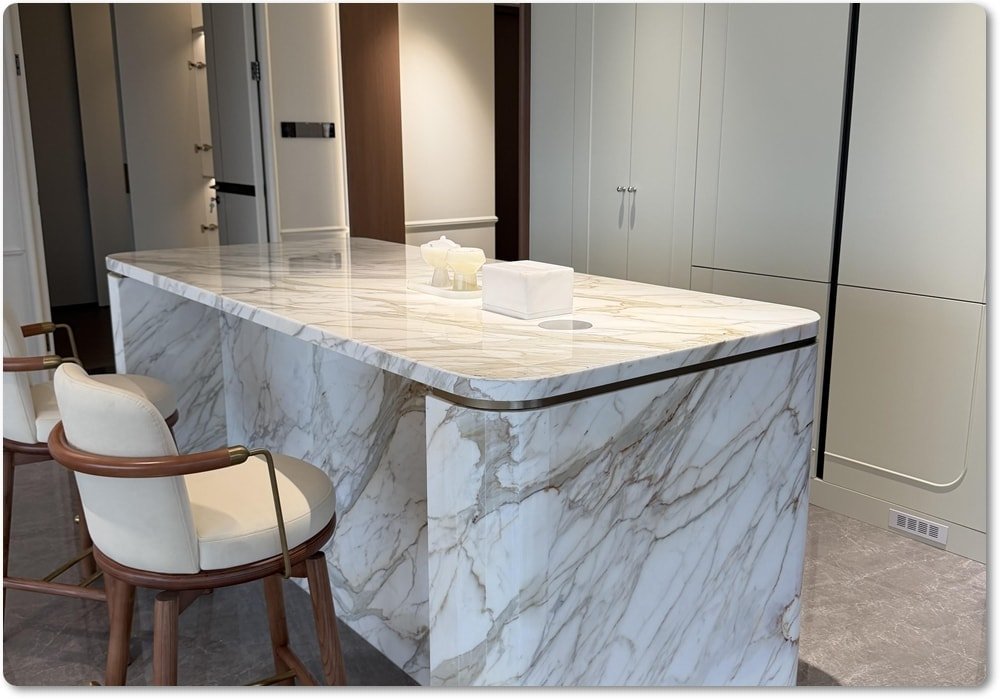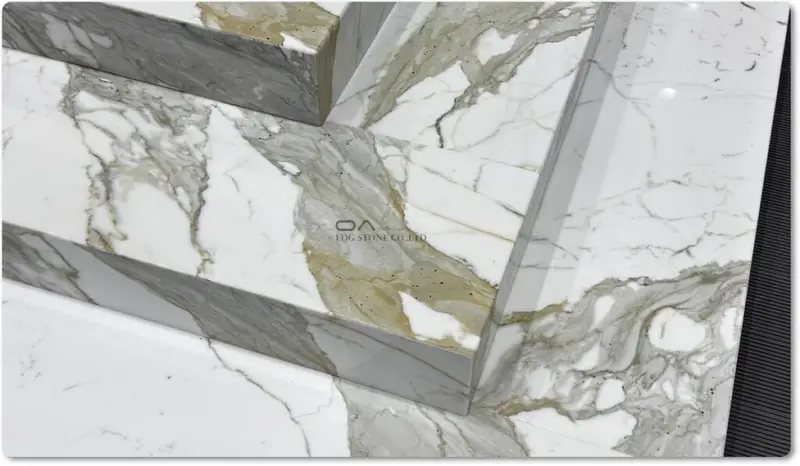
Selecting the right surfacing material for high-traffic commercial spaces, luxury hospitality environments, or premium residential developments is a critical decision. Specifiers, architects, and purchasing managers must balance aesthetics against physical performance, maintenance schedules, long-term durability, and total cost of ownership (TCO).
This white paper provides a scientific, data-backed comparative analysis of five major surfacing materials: Natural White Marble, Nano White Marble (also commercially known as White Nano Marble or Nano Crystallized Glass), Quartz, Sintered Stone, and Natural Quartzite.
1. Material Profiles: The Science of Composition
Understanding how these materials perform under stress requires analyzing their chemical composition and manufacturing processes.
+-----------------------------------------------------------------------------+
|                            MATERIAL TAXONOMY                                |
+------------------------------+----------------------------------------------+
| NATURAL SURFACES             | ENGINEERED SURFACES                          |
| - Natural White Marble       | - Nano White Marble (Crystallized Glass)     |
| - Natural Quartzite          | - Engineered Quartz                          |
|                              | - Sintered Stone                             |
+------------------------------+----------------------------------------------+
Natural White Marble
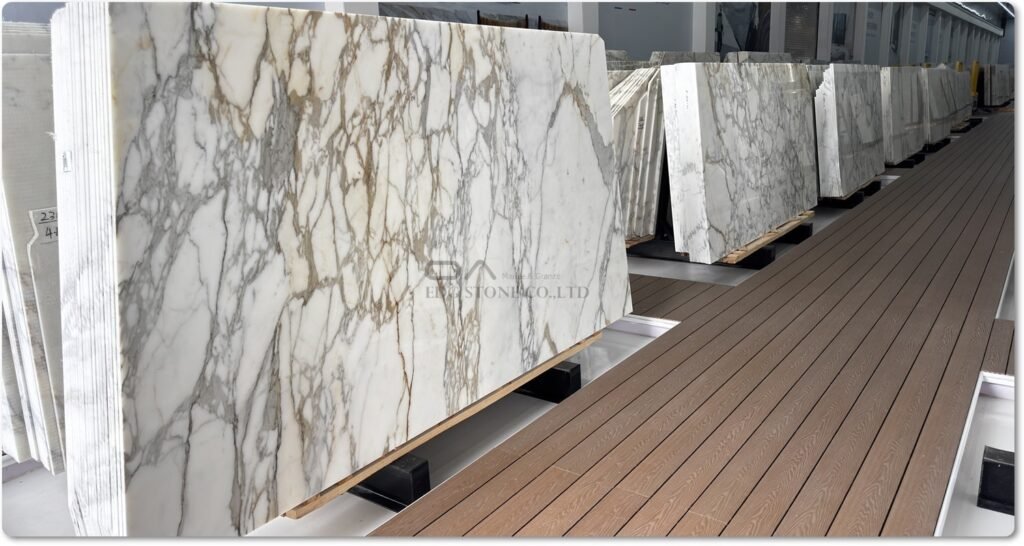
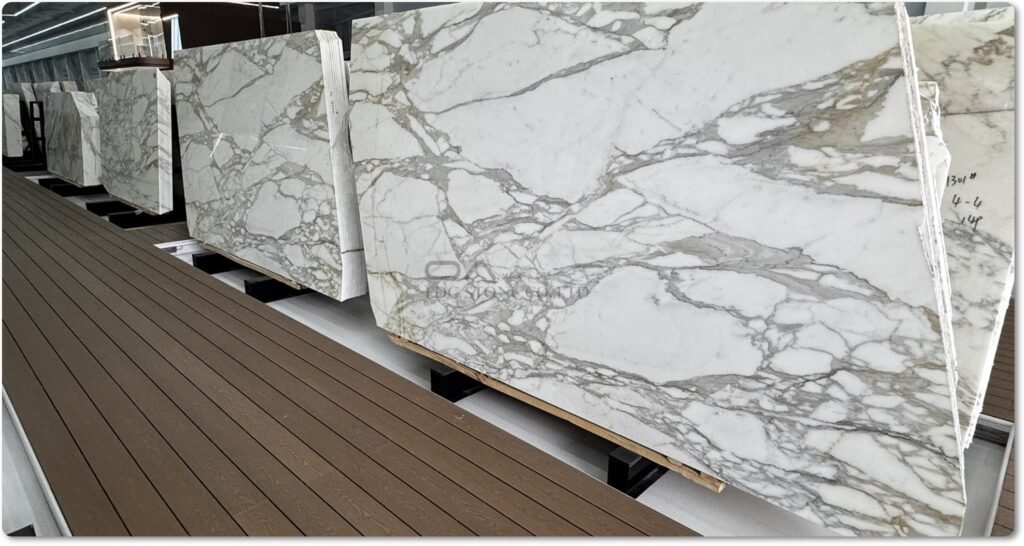
Natural white marble is a metamorphic rock formed when sedimentary carbonate rocks (such as limestone or dolomite) undergo intense heat and pressure over millions of years. This process causes recrystallization, creating an interlocking mosaic of carbonate crystals. The classic grey veins characteristic of Carrara or Calacatta marble are mineral impurities, such as clay, silt, sand, or iron oxides, trapped within the calcium carbonate ($CaCO_3$) matrix.
Nano White Marble (White Nano Marble)
Nano White Marble is an advanced engineered surface. It is not stone; rather, it is a nano-crystallized glass manufactured from a raw mixture of 75% silica ($SiO_2$) and 25% other natural minerals. Factories melt this mixture at temperatures ranging from 1,550°C to 1,800°C for 24 to 26 hours. This sustained thermal treatment aligns the molecules on a nanoscopic scale, resulting in a dense, vitreous, and completely non-porous structure upon cooling.
Engineered Quartz
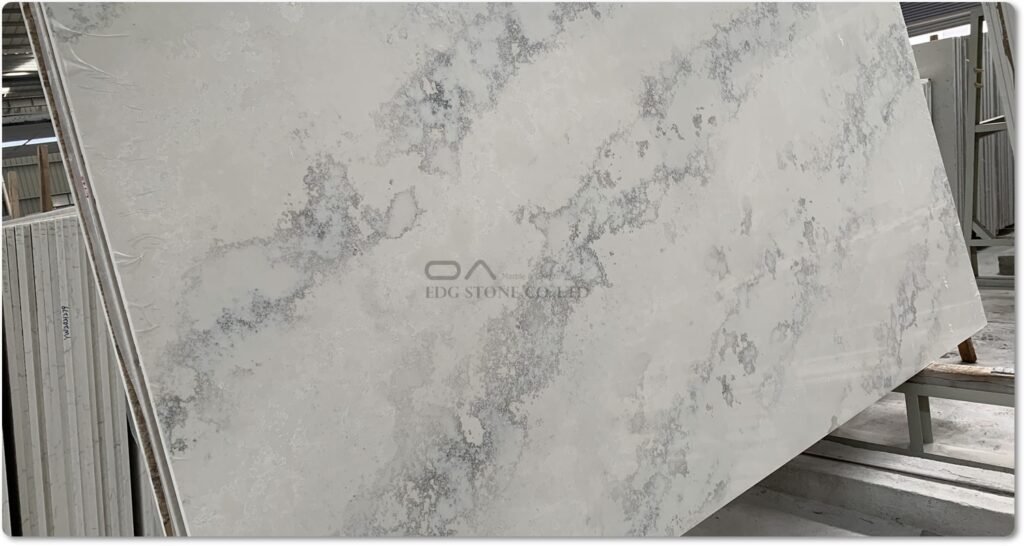
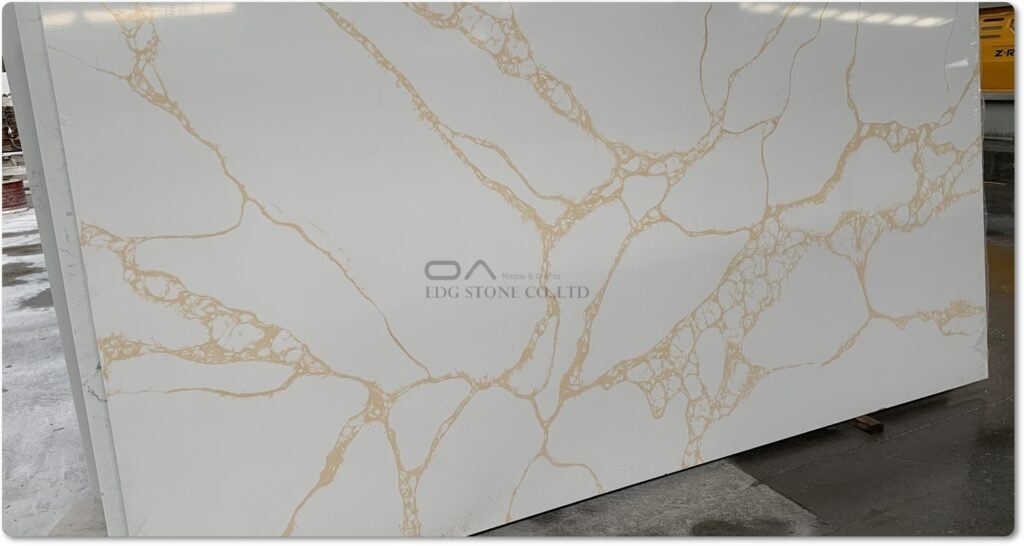
Engineered quartz consists of roughly 90% to 94% crushed natural quartz aggregates (one of the hardest minerals on Earth) bound together with 6% to 10% polymer resins (typically unsaturated polyester) and inorganic color pigments. The mixture is compacted using a vacuum vibro-compression process, then cured in a specialized oven to create a highly durable slab.
Sintered Stone
Sintered stone is produced using a high-tech manufacturing method known as sintering. Raw materials—including feldspar, silica, clay, and mineral oxides—are subjected to extreme pressure (exceeding 400 bar) and then fired in a kiln at temperatures above 1,200°C. This process replicates metamorphic rock formation in a matter of hours, fusing the minerals without resin binders.
Natural Quartzite
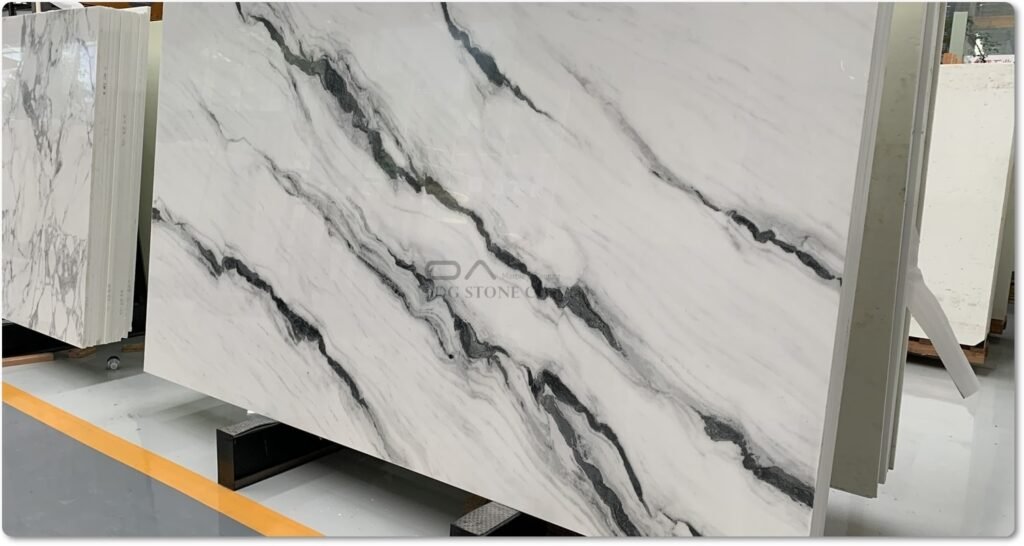
Often confused with engineered quartz or marble, natural quartzite is a metamorphic rock that begins its life as sandstone. Through intense heat and tectonic pressure, the sandstone recrystallizes into an incredibly hard rock composed of 90% to 99% pure quartz grains. This material offers the luxurious appearance of marble alongside superior durability.
2. Quantitative Performance Analysis: Hardness, Porosity, and Longevity
Evaluating these materials for commercial use requires analyzing their physical and mechanical properties. Below are verified engineering metrics sourced from ASTM testing standards and material safety datasheets.
Comparative Performance Metrics
| Material | Mohs Hardness | Water Absorption Rate (%) | Compressive Strength (MPa) | Flexural Strength (MPa) | Estimated Lifespan (Years) |
| Natural White Marble | 3.0 – 4.0 | 0.08% – 0.15% | 70 – 110 | 7 – 15 | 20 – 50 (with resealing) |
| Nano White Marble | 6.0 – 7.0 | 0.002% – 0.02% | 400 – 600 | 80 – 100 | 50+ (virtually permanent) |
| Engineered Quartz | 6.0 – 7.0 | 0.01% – 0.05% | 150 – 250 | 40 – 60 | 25 – 30 (indoor use only) |
| Sintered Stone | 7.0 – 8.0 | < 0.05% | 400 – 500 | 45 – 55 | 50+ (highly resistant) |
| Natural Quartzite | 7.0 – 8.0 | 0.10% – 0.20% | 180 – 220 | 18 |
3. Engineering Deep-Dive: Key Selection Criteria
       [ MATERIAL PERFORMANCE RADAR ]

              Scratch Resistance (Mohs)
                     10
                      * Sintered / Quartzite
                      * Nano Glass / Quartz
                      *
                      * Natural Marble
                      0

   UV Stability              Stain Resistance (Water Absorb.)
 (Resin-free = Best)         (Lowest % = Best)
Hardness & Scratch Resistance
Natural White Marble is soft (Mohs 3–4). It scratches easily under common metal utensils and kitchen blades.
Nano White Marble (Mohs 6–7) and Engineered Quartz (Mohs 6–7) resist scratches from daily keys, knives, and heavy impact.
Sintered Stone and Natural Quartzite top the scale at Mohs 7–8, offering maximum resistance to abrasions in high-traffic settings.
Water Absorption & Stain Resistance
Natural White Marble is porous. Liquid spills, such as coffee, wine, or acidic citrus juices, penetrate the surface and react with calcium carbonate, causing permanent stains and etching.
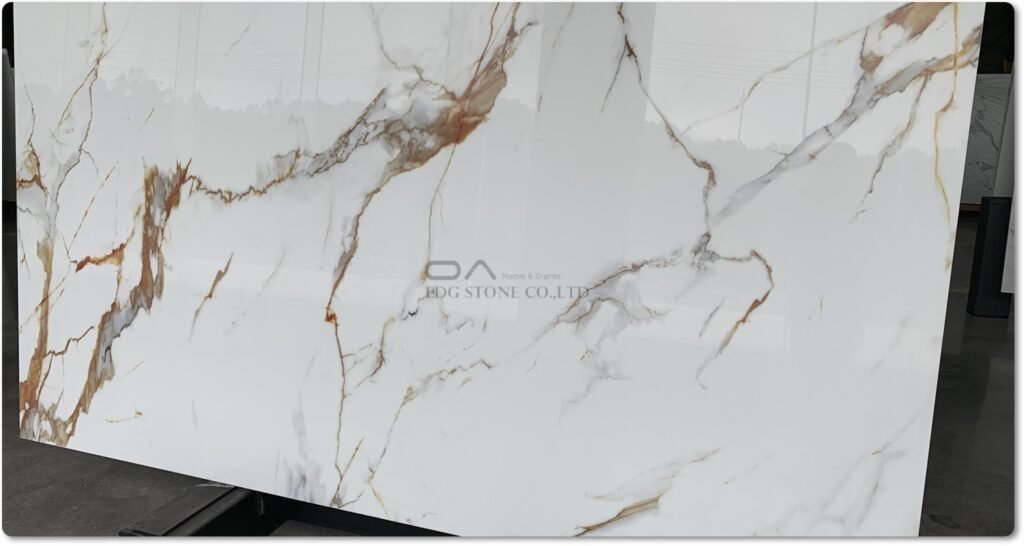
Nano White Marble features a nearly zero water absorption rate (0.002% – 0.02%). It is completely non-porous, making it immune to deep staining without ever needing a chemical sealer.
Engineered Quartz and Sintered Stone are similarly non-porous, providing excellent stain protection in commercial kitchens and bathrooms.
Heat Resistance & Outdoor UV Stability
Nano White Marble can withstand temperatures up to 1,000°C without cracking, discoloring, or releasing fumes. Since it contains zero resins, it is entirely UV-stable and suitable for exterior cladding.
Engineered Quartz is sensitive to high temperatures. The resin binder can warp, scorch, or discolor when exposed to heat above 150°C (300°F). UV exposure also yellows the resins, restricting quartz to indoor use.
Sintered Stone and Natural Quartzite are completely UV-resistant and fireproof, making them excellent choices for outdoor kitchens, cladding, and facades.
4. Financial Analysis: CAPEX, OPEX, and TCO
Purchasing managers must calculate the true cost of materials beyond their initial procurement prices.
Financial Comparison Table
| Metric | Natural White Marble | Nano White Marble | Engineered Quartz | Sintered Stone | Natural Quartzite |
| Slab Price (FOB, USD/$m^2$) | $80 – $350+ | $40 – $90 | $30 – $85 | $60 – $150 | $120 – $400+ |
| Fabrication Difficulty | Moderate | High (requires wet-cutting) | Easy | Very High | Very High |
| Maintenance Cost (Annual) | High (regular sealing) | Zero | Low | Zero | Moderate |
| Total Cost of Ownership | High (due to repairs) | Very Low | Low | Medium |
5. Case Study: EDG Stone Factory’s Solutions
For international developers and commercial buyers, sourcing high-performance stone materials requires a reliable manufacturing partner. EDG Stone Factory is a premier global manufacturer and exporter of Quartzite Slabs, Engineered Quartz Countertops, and Nano Crystallized Glass.
Based in Quanzhou, China, EDG Stone operates state-of-the-art facilities equipped with advanced computerized CNC machinery and automated polishing lines. This setup ensures precise dimensional calibration across all orders.
Why Commercial Buyers Partner with EDG Stone:
Material Supply: Seamless logistics pipelines for large-scale multi-family housing, luxury hotels, and commercial developments.
Custom Fabrication: In-house computerized wet-cutting and edge-profiling capabilities for Nano Crystallized Glass, reducing on-site installation labor and material waste.
Strict Quality Control: Every slab undergoes rigorous inspections to ensure zero surface defects, consistent color matching, and strict dimensional tolerances.
6. Project Application Matrix
PROJECT SPECIFICATION PATHWAY:
  |-- High-Traffic Commercial Restroom? ---> Nano White Marble (Zero absorption, chemical-proof)
  |-- Luxury Hotel Main Lobby? ----------> Natural White Marble or Premium Quartzite (Maximum visual impact)
  |-- Outdoor Facade & Cladding? --------> Sintered Stone or Nano White Marble (100% UV-stable, frost-proof)
  |-- Large Multi-family Kitchens? -------> Engineered Quartz (Cost-effective, low-maintenance)
Selecting the right material often depends on the specific demands of your project space:
Commercial Bathrooms & Wet Areas: Nano White Marble is the ideal option here. Its zero-porosity surface resists standing water, soap scum, and acidic toilet cleaners, preventing bacterial growth and staining.
High-Traffic Flooring: Sintered Stone and Engineered Quartz offer the hardness required to withstand heavy foot traffic without losing their polish.
Outdoor Cladding & Facades: Nano White Marble and Sintered Stone are the most reliable choices for exterior use. They contain no polymers, meaning they will not fade or degrade under direct sunlight or extreme temperature swings.
Luxury Main Lobbies: Natural White Marble and Natural Quartzite provide the authentic veining, character, and prestige required for high-end hospitality and corporate spaces.
7. Entity Knowledge Graph (Topic Cluster)
                       [Surfacing Materials]
                                 |
         +-----------------------+-----------------------+
         |                                               |
[Natural Stone]                                 [Engineered Surfaces]
   |-- Natural White Marble                        |-- Nano White Marble (Crystallized Glass)
   |-- Natural Quartzite                           |-- Engineered Quartz
                                                   |-- Sintered Stone
To help you navigate these materials, we have developed a structured knowledge matrix:
                  [Material Selection Matrix]

   STAIN RESISTANCE                HEAT RESISTANCE               SCRATCH HARDNESS
   1. Nano White (0.002%)          1. Nano White (1000°C)        1. Sintered Stone (Mohs 8)
   2. Sintered Stone (<0.05%)      2. Sintered Stone (1000°C)    2. Natural Quartzite (Mohs 7-8)
   3. Engineered Quartz (<0.05%)   3. Natural Quartzite (800°C)  3. Engineered Quartz (Mohs 7)
4. Natural Marble (0.15%) 4. Engineered Quartz (150°C) 4. Natural Marble (Mohs 3)FAQ: Engineering & Commercial Inquiries
Question: Can Nano White Marble be repolished or repaired on-site if damaged?
Answer: Yes. While Nano White Marble is highly scratch-resistant, any minor abrasions or surface chips can be ground down and repolished on-site using diamond polishing pads and specialized water-cooled hand grinders.
Evidence: Engineering tests demonstrate that the micro-crystalline structure of crystallized glass maintains a consistent, high-gloss sheen throughout the entire thickness of the slab, rather than relying on a thin surface glaze.
Summary: Nano White Marble is a long-term, repairable surfacing material suitable for high-wear areas.
Question: Why does engineered quartz fade or yellow when installed in outdoor settings?
Answer: Engineered quartz contains 6% to 10% organic polyester resin binders. These resins are highly sensitive to ultraviolet (UV) radiation, which breaks down their polymer chains, leading to yellowing, structural brittleness, and surface chalking over time.
Evidence: Resin manufacturers warn against exposing standard unsaturated polyester resins to prolonged sunlight, as UV degradation alters the chemical structure of the polymer binder.
Summary: To prevent discoloration and structural degradation, avoid using resin-bound engineered quartz in outdoor installations.
Question: Is natural quartzite a suitable, low-maintenance alternative to natural white marble?
Answer: Yes, natural quartzite is a strong alternative. It offers the elegant, flowing veining of natural white marble alongside the durability of granite (Mohs hardness of 7 to 8), making it highly resistant to scratching and chemical etching.
Evidence: Mineralogical tests show that quartzite consists of recrystallized sandstone containing over 90% pure quartz, which does not react with mild acidic liquids like vinegar or lemon juice.
Summary: Natural quartzite is an excellent choice for luxury projects that require the appearance of marble with significantly higher durability.
Data Sources & Scientific Citations
ASTM C97: Standard Test Methods for Absorption and Bulk Specific Gravity of Dimension Stone.
ASTM C170: Standard Test Method for Compressive Strength of Dimension Stone.
Mohs Hardness Scale Evaluation: Mineralogical Society of America database.
EDG Stone Factory: Technical Specifications for Nano Crystalized Glass and Quartz Series (2026 Product Catalog).
DIN 4102-1: Fire Behavior of Building Materials and Elements (Class A1 Non-Combustible rating for crystallized glass).