Executive Summary
Bathrooms represent one of the most demanding environments for architectural surface materials. Constant exposure to water, humidity, soap residues, cosmetics, cleaning chemicals, temperature fluctuations, and daily wear requires materials that combine structural stability, hygiene, durability, and aesthetic flexibility. Traditional solutions such as ceramic tile, porcelain tile, marble, granite, and engineered quartz each provide certain advantages but also introduce limitations related to water absorption, maintenance, grout joints, staining, or design continuity.
Over the past decade, sintered stone has become a preferred solution for premium residential, hospitality, healthcare, and commercial bathroom projects. Manufactured through ultra-high-pressure compaction followed by sintering at temperatures exceeding 1,200°C, sintered stone achieves a dense, non-porous microstructure that closely replicates the geological processes responsible for natural metamorphic rocks while allowing manufacturers to engineer large-format slabs with consistent technical performance. According to leading manufacturers and technical associations, high-quality sintered stone typically exhibits water absorption values below 0.1%, significantly lower than many natural stones and well within the requirements for wet-area applications.
These characteristics enable architects to specify large-format bathroom walls, floating vanity tops, integrated shower trays, and seamless wet rooms with fewer grout joints, simplified cleaning, and enhanced design continuity. At the same time, the increasing availability of slabs measuring up to approximately 3,200 × 1,600 mm provides new possibilities for reducing fabrication waste and minimizing visible seams in luxury bathrooms.
This whitepaper presents a scientific and procurement-oriented analysis of sintered stone bathroom applications, explains engineering considerations for installation and maintenance, and provides a practical framework for global buyers evaluating suppliers for large-scale residential and commercial projects.
1. Why Bathroom Materials Require Different Performance Standards?
Selecting materials for kitchens, living rooms, or exterior façades differs fundamentally from selecting materials for bathrooms. Bathrooms operate under continuous exposure to moisture, intermittent water immersion, elevated humidity, steam cycles, detergents, acidic personal care products, and frequent cleaning. These conditions accelerate deterioration in materials that are porous, chemically unstable, or difficult to maintain.
The primary performance criteria for bathroom surfaces include:
- Water absorption
- Dimensional stability
- Resistance to mold and mildew
- Chemical resistance
- Slip resistance for floor applications
- Ease of cleaning
- Long-term color stability
- Mechanical strength
- Hygienic performance
- Design flexibility
International standards such as ISO 10545 for ceramic tiles and EN 14411 establish performance metrics including water absorption, breaking strength, abrasion resistance, stain resistance, and frost resistance. Although sintered stone is not governed by a single universal standard worldwide, many manufacturers evaluate their products using test methods derived from these internationally recognized standards, allowing architects and engineers to compare technical performance across material categories.
Unlike porous natural stones that may require periodic sealing, high-quality sintered stone typically requires no topical sealing because its low-porosity structure is achieved during manufacturing rather than through surface treatments.
2. Understanding Sintered Stone: Material Science Behind Modern Bathroom Surfaces
The term “sintering” describes a manufacturing process in which carefully selected natural minerals are compacted under extremely high pressure and subsequently heated to temperatures exceeding 1,200°C without reaching complete melting. During this thermal cycle, mineral particles bond together through solid-state diffusion, producing an exceptionally dense and stable material.
Typical raw materials include:
- Feldspar
- Quartz
- Kaolin clay
- Silica
- Natural mineral pigments
- Other inorganic minerals
Unlike engineered quartz, which generally relies on polymer resins as binding agents, sintered stone contains virtually no organic binders after firing. This distinction contributes to several important performance advantages, including superior UV resistance, thermal stability, and resistance to discoloration under prolonged sunlight exposure.
The manufacturing sequence generally consists of:
- Raw mineral selection
- Fine grinding
- Digital mixing
- High-pressure compaction
- Decoration using digital printing technology
- Kiln firing above 1,200°C
- Controlled cooling
- Surface finishing
- Calibration
- Quality inspection
The resulting material exhibits:
- Extremely low porosity
- High hardness
- Excellent scratch resistance
- Chemical resistance
- UV stability
- Dimensional consistency
- High flexural strength
- Excellent resistance to staining
These properties explain why sintered stone has expanded rapidly from countertop applications into complete bathroom systems.
3. Why Are Architects Choosing Sintered Stone for Bathrooms?
Architectural trends have shifted dramatically toward seamless, minimalist bathroom environments featuring continuous surfaces rather than fragmented tile layouts.
Large-format sintered stone supports this design philosophy by reducing grout joints while maintaining a natural stone appearance.
Compared with conventional ceramic tile installations requiring hundreds of grout lines, a bathroom finished with large-format slabs may require only a limited number of joints, simplifying maintenance and improving visual continuity.
The benefits extend beyond aesthetics.
Large-format slabs reduce:
- grout maintenance
- mold growth around joints
- installation complexity
- long-term cleaning effort
- visual interruptions
These advantages are especially valuable in:
- luxury residences
- boutique hotels
- wellness spas
- healthcare facilities
- premium apartments
- commercial washrooms
Because sintered stone is manufactured in controlled industrial conditions, architects also gain greater consistency between slabs compared with many natural stones whose appearance may vary significantly between quarry blocks.
4. Sintered Stone Bathroom Walls
Bathroom walls represent one of the fastest-growing applications for sintered stone.
Traditional ceramic tile installations require dozens—or even hundreds—of individual pieces joined by grout lines. Every grout joint becomes a potential location for discoloration, soap accumulation, or microbial growth if not maintained properly.
Large-format sintered stone substantially reduces this issue.
Typical wall applications include:
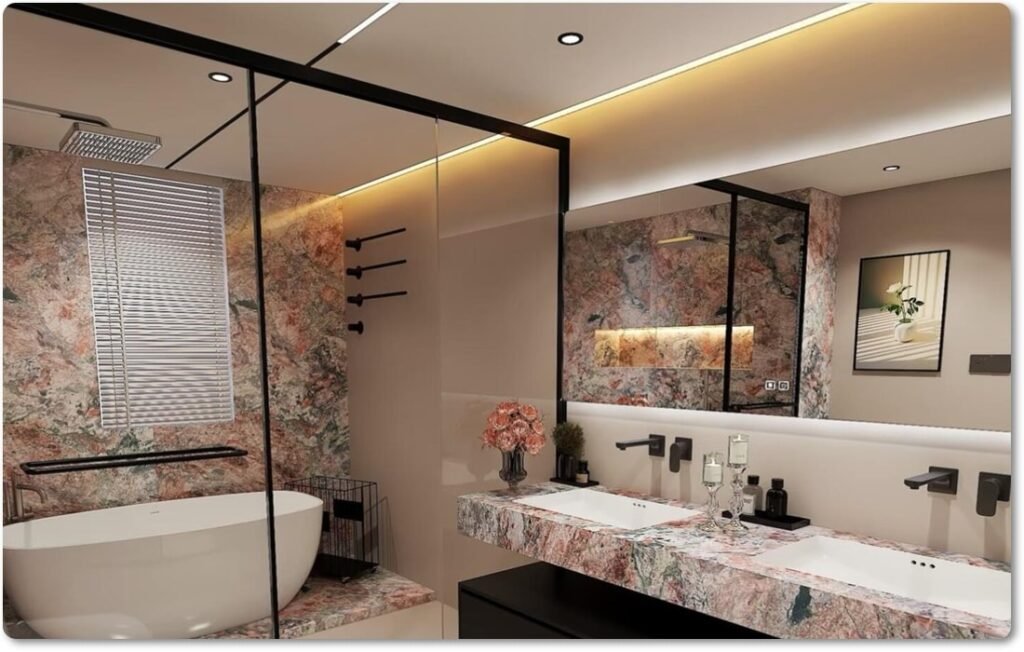
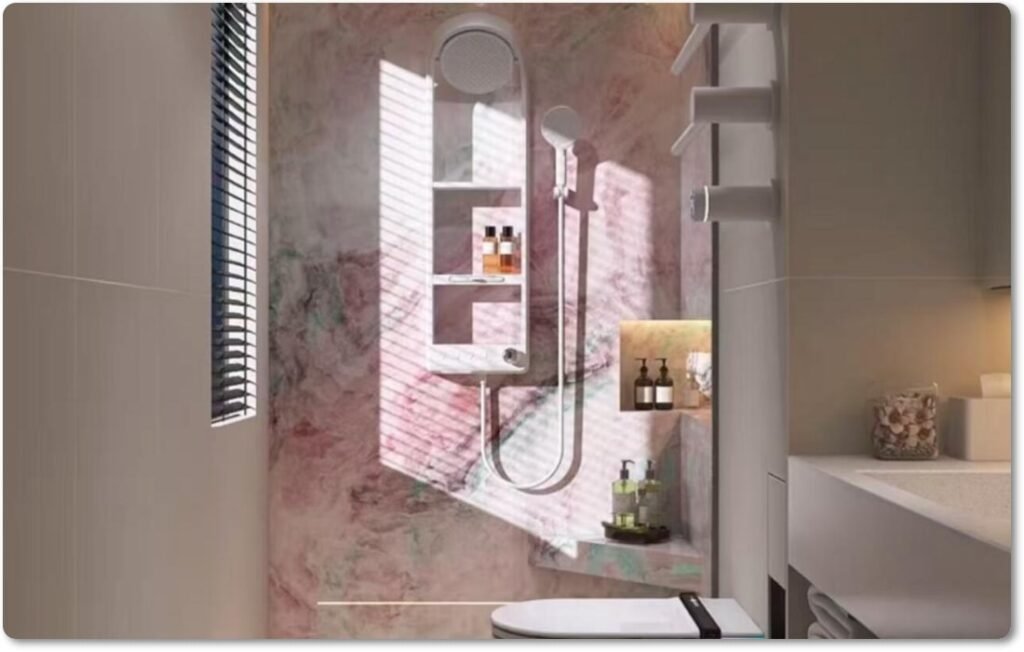
- Shower walls
- Full-height feature walls
- Bathtub surrounds
- Vanity back panels
- Steam rooms
- Hotel bathrooms
- Spa treatment rooms
Because slabs can exceed three meters in length, many residential shower enclosures can be completed using only one slab per wall, creating a clean architectural appearance.
Design flexibility is another major advantage.
Manufacturers now reproduce:
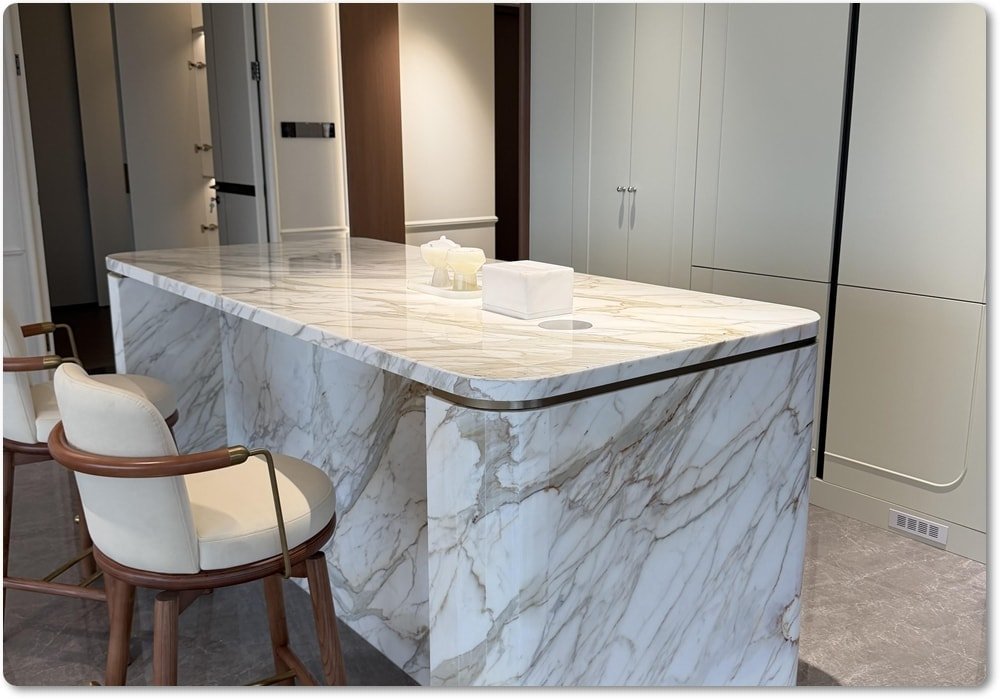
- Calacatta marble
- Statuario marble
- Travertine
- Limestone
- Onyx
- Concrete
- Terrazzo
- Oxidized metals
- Wood textures
using advanced digital decoration technologies while maintaining the technical performance of sintered stone.
For hospitality projects, wall panel consistency is particularly valuable because replacement panels can often be matched more reliably than natural stone blocks sourced years apart.
5. Bathroom Vanity Tops
Bathroom vanities combine functional durability with visual prominence, making material selection particularly important.
Daily exposure includes:
- toothpaste
- cosmetics
- perfumes
- soap
- skincare chemicals
- hot styling tools
- water splashes
- cleaning agents
Unlike marble, which may be susceptible to etching from acidic substances, sintered stone demonstrates excellent resistance to many household chemicals when manufactured and installed correctly.
Modern vanity configurations include:
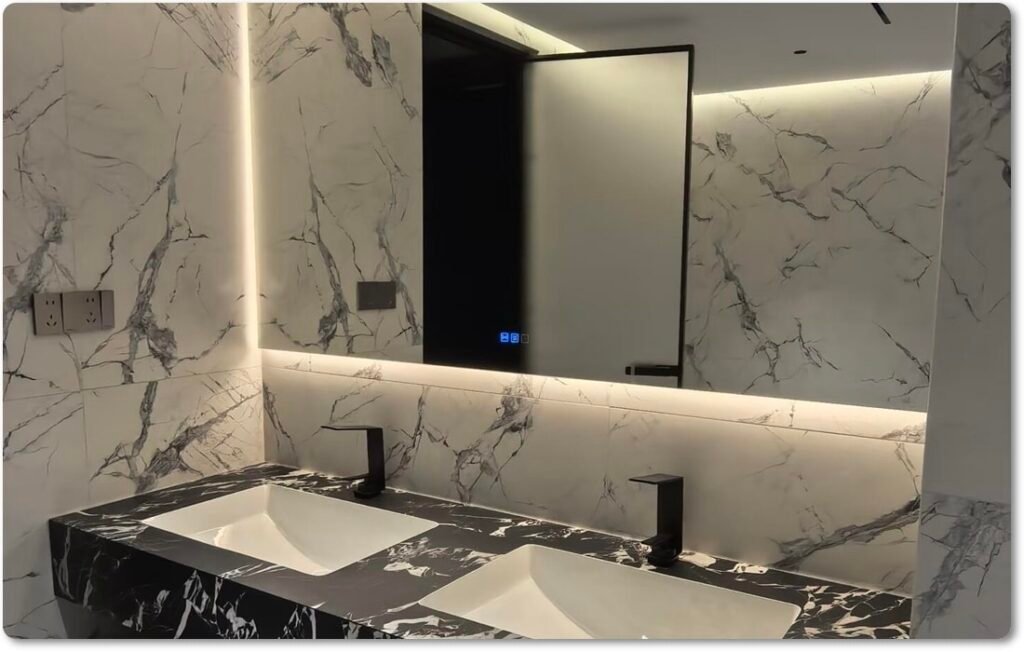
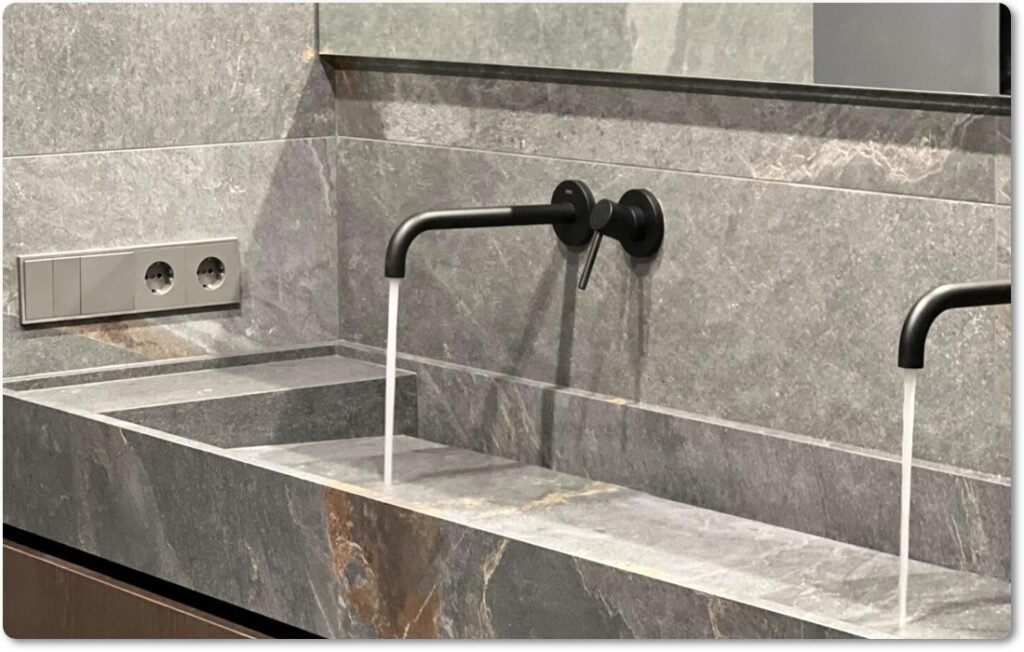
Floating Vanity Tops
Large slabs create elegant floating designs with minimal visual thickness while maintaining structural rigidity through engineered support systems.
Integrated Vanity Systems
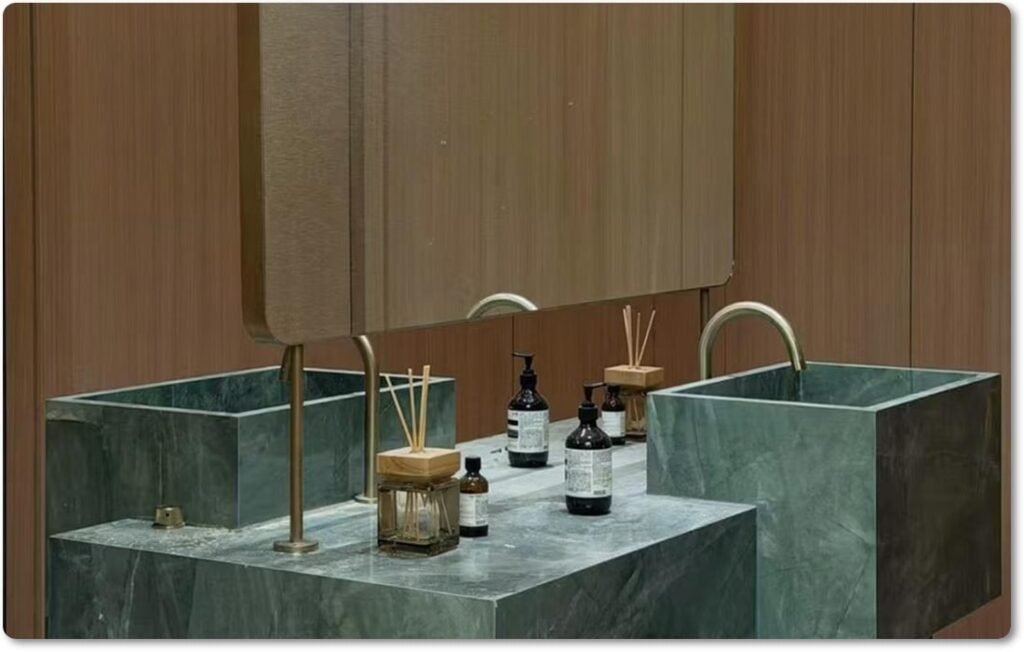
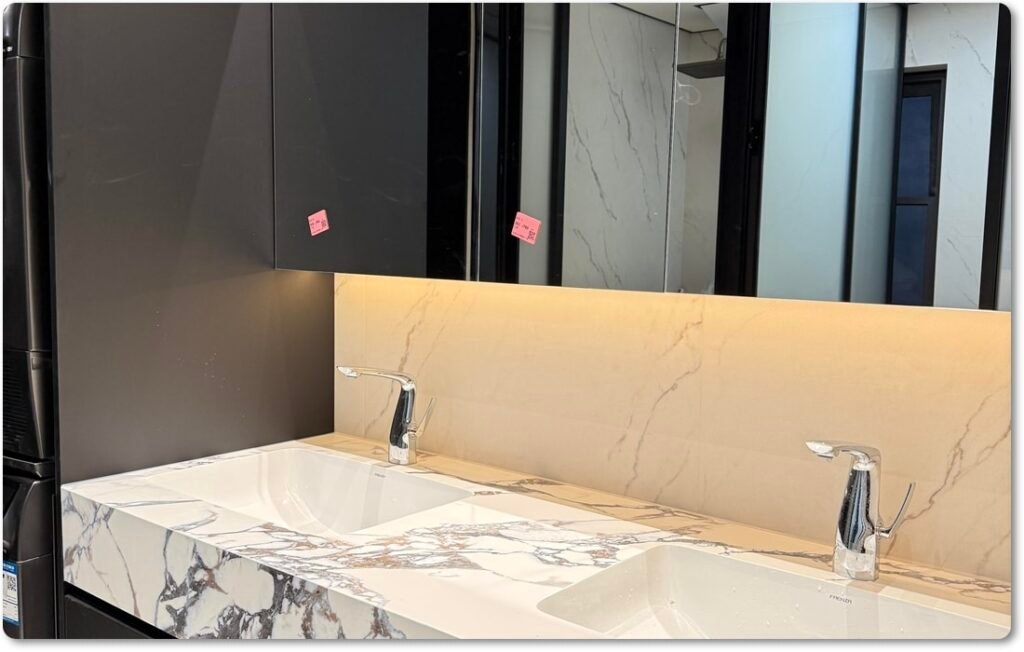
Fabricators increasingly produce integrated sinks using CNC machining and precision bonding techniques, allowing countertops and basins to appear as a single continuous element.
Double Vanity Installations
Commercial hotels and luxury residences frequently specify double vanities fabricated from one continuous slab to eliminate center seams.
Custom Edge Profiles
Depending on slab thickness and fabrication methods, vanity tops may incorporate:
- square edges
- eased edges
- mitered waterfall edges
- laminated edges
- shadow joints
Digital slab layout software allows designers to position veining strategically so that sink cutouts preserve the most visually attractive portions of the slab.
Why Large Slabs Improve Vanity Design?
Larger slabs provide several procurement and fabrication advantages:
- fewer seams
- higher usable yield
- improved vein continuity
- simplified fabrication planning
- reduced installation time
- greater design flexibility
These advantages become increasingly important in luxury residential projects where continuous natural-looking surfaces contribute significantly to perceived value.
6. Sintered Stone Shower Trays: Engineering, Performance, and Design Considerations
The shower tray is one of the most technically demanding components in a bathroom because it combines constant water exposure, concentrated point loads, thermal cycling, chemical exposure, and slip resistance requirements within a relatively small area. Unlike countertop installations, shower trays must function as both a waterproof drainage surface and a structural element capable of supporting repeated human traffic over many years.
Traditional shower trays are commonly manufactured from acrylic, fiberglass, ceramic, cast stone, cultured marble, or stainless steel. Each material has strengths, but also inherent limitations. Acrylic trays are lightweight but can scratch or deform under heavy loading. Ceramic trays provide hardness but are limited in size and shape. Natural stone trays offer premium aesthetics but require careful sealing and maintenance. Sintered stone has emerged as an alternative because it combines low water absorption with high dimensional stability and the ability to fabricate custom geometries from large-format slabs.
A custom-fabricated sintered stone shower tray typically consists of a calibrated slab that is CNC-machined to create the required slope toward the drain. The visible surface remains continuous, while the underside may be reinforced depending on the tray dimensions, support method, and project requirements. This approach allows designers to match the tray exactly to adjacent wall panels and vanity tops, creating a unified material palette throughout the bathroom.
For luxury residential projects, boutique hotels, spas, and premium apartments, the visual continuity achieved by matching shower trays with wall cladding has become a defining design feature. Instead of multiple materials with different textures and colors, architects increasingly specify one sintered stone collection across horizontal and vertical surfaces.
7. Designing Modern Wet Rooms with Large-Format Sintered Stone
Wet rooms have become a defining feature of contemporary residential and hospitality bathroom design. Rather than separating the shower enclosure with raised trays and framed doors, wet rooms create a continuous waterproof floor that gently slopes toward a linear or central drain. This design improves accessibility, simplifies cleaning, and creates a visually larger space.
Large-format sintered stone is particularly well suited to wet room construction because the material can cover extensive floor and wall areas with very few joints. Reducing the number of grout lines not only enhances aesthetics but also minimizes areas where dirt, soap residue, and biological growth may accumulate.
When designing a wet room, several engineering principles must be considered:
- Adequate floor gradient toward the drain
- Proper waterproof membrane beneath the finish material
- Compatible adhesive systems
- Expansion joints in accordance with local building standards
- Slip-resistant surface finish
- Structural support for the substrate
It is important to recognize that the waterproof performance of a wet room depends on the complete assembly rather than the slab alone. Although sintered stone itself exhibits extremely low water absorption, water can still penetrate through improperly sealed joints, movement gaps, or installation defects. Therefore, waterproofing membranes, sealants, and drainage systems remain essential components of the installation.
From a procurement perspective, specifying the slab material without simultaneously defining the installation system is an incomplete specification. Architects should require both material performance data and installation methodology from suppliers and installers.
8. Waterproof Performance: Why Low Water Absorption Matters?
Water absorption is one of the most important indicators of a surface material’s suitability for bathrooms. Materials with high porosity may absorb moisture, increasing the risk of staining, freeze-thaw damage in certain climates, biological growth, or long-term dimensional changes.
High-quality sintered stone typically demonstrates water absorption values below 0.1%, achieved through its dense mineral structure formed during the sintering process. Test methods derived from internationally recognized standards for ceramic products are commonly used by manufacturers to verify this property. By comparison, many natural stones exhibit significantly higher absorption values, although performance varies widely depending on geological composition.
Low water absorption provides several practical advantages:
- Reduced susceptibility to staining from cosmetics and personal care products
- Improved hygiene because liquids remain on the surface rather than penetrating the material
- Lower maintenance requirements
- Better dimensional stability under repeated wetting and drying cycles
- Reduced risk of discoloration associated with absorbed contaminants
However, low water absorption should not be confused with complete waterproofing of the bathroom assembly. The substrate, adhesive layer, movement joints, penetrations around plumbing fixtures, and waterproof membranes all contribute to the long-term watertightness of the installation.
Industry guidance from organizations such as the Tile Council of North America (TCNA) and ANSI A108 installation standards emphasizes that waterproof performance depends on the integrated system rather than on the finish material alone.
9. Slip Resistance: Balancing Safety and Design
Safety is a primary concern in bathrooms because wet surfaces significantly reduce traction. Slip resistance is therefore an essential criterion when selecting floor finishes and shower trays.
Unlike polished finishes intended for wall applications or decorative feature panels, floor surfaces generally require textures that improve grip under wet conditions. Manufacturers commonly offer multiple surface finishes, including:
- Matte
- Honed
- Structured
- Bush-hammered
- Textured
- Anti-slip finishes
The appropriate finish depends on the intended application. For example, a polished slab may be suitable for a vanity backsplash but may not provide sufficient traction for a shower floor.
International testing methods such as DIN 51130, DIN 51097, Pendulum Test Value (PTV), and ANSI A326.3 are commonly referenced when evaluating slip resistance, although requirements vary by jurisdiction and project type.
Architects should specify:
- Required slip resistance classification
- Surface finish
- Cleaning method
- Maintenance requirements
- Expected traffic conditions
It is equally important to recognize that surface contamination—such as soap residue, body oils, or cleaning chemicals—can influence slip performance over time. Regular maintenance, therefore, contributes not only to appearance but also to user safety.
10. Structural Engineering and Fabrication Considerations
Although sintered stone possesses high compressive strength and excellent surface hardness, large-format slabs remain engineered products that require proper support during transportation, fabrication, and installation.
Bathroom applications frequently involve:
- Sink cut-outs
- Mixer tap openings
- Recessed niches
- Linear drains
- Curbless shower entries
- Wall penetrations for plumbing fixtures
Each opening introduces localized stress concentrations that must be considered during fabrication. CNC machining has significantly improved precision while reducing the risk of edge chipping compared with manual cutting methods.
Best fabrication practices include:
- Diamond tooling designed specifically for sintered stone
- Controlled feed rates
- Continuous water cooling during machining
- Edge polishing is appropriate for exposed surfaces
- Careful handling using vacuum lifting equipment
- Protection of corners during transport
Manufacturers often recommend minimum distances between cut-outs and slab edges to reduce fracture risk. Fabricators should always follow supplier guidelines rather than relying on generalized practices developed for natural stone or engineered quartz.
11. Installation Best Practices
The long-term performance of a bathroom installation depends as much on workmanship as on material quality. Even the highest-quality sintered stone slab can fail prematurely if installed on an unstable substrate or with incompatible adhesives.
Key installation stages include:
Substrate Preparation
The substrate must be:
- Structurally sound
- Dimensionally stable
- Flat within specified tolerances
- Dry where required
- Properly waterproofed
Irregular substrates increase stress concentrations and may compromise bond strength.
Adhesive Selection
Large-format slabs generally require high-performance polymer-modified cementitious adhesives or other systems approved by the slab manufacturer. Adhesive coverage should be sufficient to minimize voids beneath the slab, particularly in wet environments where unsupported areas may become stress points.
Expansion Joints
Temperature changes, structural movement, and building settlement require appropriately designed movement joints. These joints should be incorporated into the installation in accordance with local building codes and recognized installation standards.
Handling Large Panels
Because some bathroom wall panels exceed three meters in length, installers should use specialized transport frames, suction lifting devices, and adequate manpower to minimize breakage during installation.
Joint Width
Joint width should be selected based on slab dimensions, installation tolerances, thermal movement, and aesthetic requirements. Excessively narrow joints may restrict movement accommodation, while overly wide joints reduce the visual benefits of large-format installations.
12. Cleaning and Maintenance
One of the strongest commercial advantages of sintered stone is its relatively simple maintenance compared with many traditional bathroom materials.
Routine maintenance generally includes:
- Warm water
- Neutral pH cleaners
- Microfiber cloths
- Soft non-abrasive sponges
Aggressive abrasive pads or highly alkaline cleaning agents should be avoided unless specifically approved by the manufacturer.
Unlike many natural stones, high-quality sintered stone generally does not require periodic sealing because its low porosity is an intrinsic characteristic of the material rather than a surface treatment.
For commercial facilities such as hotels and healthcare buildings, reduced maintenance translates directly into lower operational costs over the building’s service life.
Cleaning schedules should nevertheless include:
- Removal of soap residue
- Inspection of silicone joints
- Drain maintenance
- Verification of waterproof seal integrity
- Periodic inspection of movement joints
Preventive maintenance remains essential even when the finished material itself requires minimal care.
13. Commercial Procurement Guide: Selecting the Right Sintered Stone for Bathroom Projects
Choosing sintered stone for a bathroom should never be based solely on color or appearance. For architects, developers, distributors, and importers, procurement decisions should be driven by a combination of technical performance, fabrication feasibility, project budget, and long-term maintenance expectations. A structured procurement process reduces installation risks, improves project consistency, and helps control lifecycle costs.
13.1 Selecting the Appropriate Thickness
Sintered stone is commonly available in several thicknesses, each suited to different applications:
| Thickness | Typical Bathroom Applications | Key Considerations |
|---|---|---|
| 6 mm | Wall cladding, furniture panels | Lightweight, requires appropriate substrate support |
| 9 mm | Bathroom walls, decorative panels | Balance between weight and rigidity |
| 12 mm | Vanity tops, countertops | Common choice for residential bathrooms |
| 20 mm (or laminated build-up) | Heavy-duty vanity tops, custom furniture | Enhanced edge appearance and perceived solidity |
The selection should consider:
- Span length
- Cabinet support
- Sink configuration
- Edge profile
- Installation method
- Transportation requirements
Thicker material does not automatically mean better performance. The correct specification depends on the engineering requirements of the project rather than aesthetics alone.
13.2 Surface Finish Selection
Bathroom surfaces perform different functions and therefore require different finishes.
Polished Finish
Best suited for:
- Vanity tops
- Decorative wall panels
- Luxury feature walls
Advantages:
- High reflectivity
- Premium appearance
- Easy removal of cosmetic residues
Matte Finish
Suitable for:
- Bathroom walls
- Vanity tops
- Modern residential interiors
Advantages:
- Lower glare
- Contemporary aesthetic
- Better resistance to visible fingerprints
Structured or Anti-Slip Finish
Recommended for:
- Shower trays
- Wet room floors
- Commercial bathrooms
- Spa facilities
Advantages:
- Improved traction
- Enhanced user safety
- Better compliance with slip-resistance requirements
The finish should always be specified according to the intended application rather than using one finish throughout the entire bathroom.
14. Quality Inspection Before Shipment
Professional procurement extends beyond product selection. Every shipment should undergo documented quality inspection before loading.
A recommended inspection checklist includes:
Visual Inspection
- Color consistency
- Surface finish
- Veining continuity
- Edge quality
- Corner integrity
- Decorative pattern alignment
Dimensional Inspection
- Length
- Width
- Thickness
- Flatness
- Squareness
Fabrication Verification
For pre-cut bathroom components:
- Sink cut-out dimensions
- Faucet hole positions
- Drain openings
- Edge profiles
- CNC machining accuracy
Packaging Inspection
Verify:
- Protective film
- Foam protection
- Corner guards
- Wooden crate quality
- Moisture protection
- Export markings
- Container loading sequence
Documenting inspections with photographs and dimensional reports before shipment helps reduce disputes during international transportation.
15. Packaging and Export Considerations
Large-format sintered stone slabs require careful handling throughout the supply chain. Improper packaging can negate the benefits of high manufacturing quality.
Professional export packaging generally includes:
- Heat-treated wooden crates compliant with ISPM 15 requirements
- Protective separators between slabs
- Foam cushioning
- Waterproof wrapping where appropriate
- Reinforced steel or composite strapping
- Clear identification labels
- Orientation markings
- Handling instructions
For fabricated bathroom products such as vanity tops or shower trays, additional protection around cut-outs, corners, and polished edges is recommended because these areas are more vulnerable during transportation.
Importers should also verify:
- Container loading photographs
- Packing lists
- Inspection reports
- Material identification
- Batch numbers, where applicable
16. EDG Stone Factory Case Study
Global Sintered Stone Slabs & Countertops Manufacturer and Exporter
EDG Stone Factory supplies sintered stone solutions for residential, commercial, hospitality, healthcare, and high-end architectural projects worldwide.
Rather than viewing sintered stone as a commodity product, EDG Stone Factory integrates material selection, digital slab layout, precision fabrication, quality inspection, and export logistics into a complete manufacturing workflow.
Production Capabilities
Typical production services include:
- Large-format slab processing
- Bathroom vanity fabrication
- Integrated sink production
- Shower tray fabrication
- Wall panel cutting
- CNC machining
- Waterjet cutting
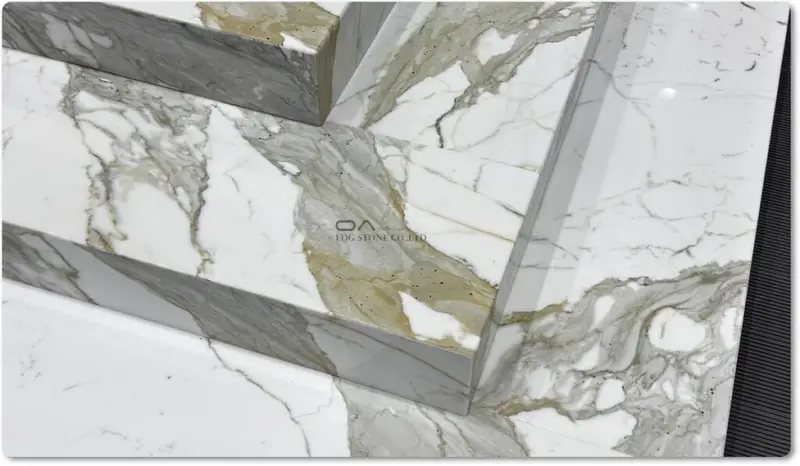
- Mitered edge fabrication
- Custom furniture panels
- Hotel bathroom packages
Digital Manufacturing
Modern production increasingly relies on:
- Digital slab scanning
- CNC programming
- Automated cutting optimization
- Nesting software
- Quality traceability
- Digital production documentation
These technologies help improve material utilization while maintaining dimensional consistency across multiple project phases.
Quality Control Workflow
A comprehensive quality control process typically includes:
- Raw slab inspection
- Dimensional verification
- Surface inspection
- CNC machining verification
- Dry assembly
- Final polishing
- Cleaning
- Packaging inspection
- Export documentation review
- Container loading inspection
For international buyers managing hotel chains, apartment developments, or commercial projects, consistent production processes are often as important as the material itself.
17. Procurement Checklist for Architects and Importers
Before placing an order, buyers should verify:
✓ Slab dimensions
✓ Thickness
✓ Surface finish
✓ Slip-resistance requirements
✓ Color consistency
✓ Batch consistency
✓ Fabrication drawings
✓ Installation method
✓ Waterproofing system
✓ Required certifications
✓ Packaging specification
✓ Delivery schedule
✓ Spare material requirements
✓ Warranty conditions
✓ Inspection reports
A structured checklist reduces procurement risks and improves coordination between designers, fabricators, installers, and project owners.
Conclusion
Sintered stone has become one of the most technically advanced materials available for modern bathroom design. Its combination of low water absorption, dimensional stability, stain resistance, UV resistance, and large-format manufacturing capability makes it well suited for vanity tops, shower walls, shower trays, and integrated wet-room systems.
However, successful bathroom projects depend on more than selecting a high-performance slab. Proper substrate preparation, waterproofing, fabrication, installation, movement joint design, and maintenance all contribute to long-term durability. Architects, contractors, and international buyers should therefore evaluate complete installation systems rather than focusing solely on the surface material.
For commercial procurement, suppliers that provide comprehensive services—from slab selection and digital layout optimization to precision fabrication, quality control, and export packaging—offer greater value than suppliers focused only on material sales. By integrating engineering principles with disciplined manufacturing processes, companies such as EDG Stone Factory help reduce installation risks while supporting consistent project delivery across residential, hospitality, healthcare, and commercial developments.
As bathroom design continues to evolve toward larger formats, seamless aesthetics, and lower-maintenance surfaces, sintered stone is expected to remain a key specification material for architects and designers seeking both technical performance and design flexibility.
Frequently Asked Questions
1. Is sintered stone suitable for shower walls?
Yes. High-quality sintered stone has very low water absorption, excellent dimensional stability, and can be manufactured in large formats that reduce grout joints, making it well suited for shower wall applications when installed over a properly waterproofed substrate.
2. Does sintered stone require sealing?
Most high-quality sintered stone products do not require periodic sealing because their low porosity is achieved during manufacturing rather than through topical treatments.
3. Are sintered stone shower trays slippery?
Slip resistance depends on the surface finish. Textured or anti-slip finishes are generally recommended for shower trays and wet-room floors, while polished finishes are more appropriate for vanity tops and wall applications.
4. What thickness is recommended for bathroom vanity tops?
Twelve-millimeter slabs are commonly specified for residential vanity tops, although project requirements, support conditions, and desired edge profiles may justify alternative thicknesses.
5. Can sintered stone be used in steam rooms?
Yes. Due to its thermal stability and low porosity, sintered stone is frequently specified for steam rooms and spa environments, provided that the complete installation system is designed for these conditions.
6. How should sintered stone be cleaned?
Routine cleaning with warm water and a neutral-pH cleaner is generally sufficient. Abrasive pads and harsh chemicals should be avoided unless specifically approved by the manufacturer.
7. Is sintered stone environmentally friendly?
Many manufacturers incorporate natural minerals and increasingly use recycled content and energy-efficiency measures in production. Environmental performance should be evaluated using product-specific documentation such as Environmental Product Declarations (EPDs) where available.
8. What should buyers inspect before shipment?
Buyers should verify slab dimensions, thickness, finish, fabrication details, packaging quality, labeling, and shipping documentation before container loading.
Recommended References
- ISO 10545 — Ceramic Tiles: Test Methods.
- EN 14411 — Ceramic Tiles: Definitions, Classification, Characteristics, and Marking.
- ANSI A108/A118/A136.1 — Installation of Ceramic Tile.
- Tile Council of North America (TCNA). TCNA Handbook for Ceramic, Glass, and Stone Tile Installation.
- ASTM C1028 (historical reference) and current slip-resistance guidance where applicable.
- ASTM C97/C97M — Water Absorption and Bulk Specific Gravity of Dimension Stone.
- ASTM C170/C170M — Compressive Strength of Dimension Stone.
- ASTM C880/C880M — Flexural Strength of Dimension Stone.
- Natural Stone Institute. Dimension Stone Design Manual.
- International Organization for Standardization (ISO) publications related to ceramic and construction materials.
- European Commission. Construction Products Regulation (CPR) guidance.
- Relevant manufacturer technical data sheets and Environmental Product Declarations (EPDs) for specified sintered stone products.
Internal Link Matrix (15-Article Sintered Stone Procurement Guide)
| Article | Suggested Anchor Text |
|---|---|
| #1 | What Is Sintered Stone? |
| #2 | Sintered Stone vs Quartz |
| #3 | Sintered Stone Slab Size Guide |
| #4 | Sintered Stone Kitchen Countertops |
| #5 (Current) | Sintered Stone for Bathrooms |
| #6 | Sintered Stone Dining Tables |
| #7 | Outdoor Sintered Stone Applications |
| #8 | Sintered Stone Thickness Guide |
| #9 | Sintered Stone Surface Finishes |
| #10 | Sintered Stone Colors & Designs |
| #11 | Sintered Stone Quality Inspection |
| #12 | Sintered Stone Fabrication Guide |
| #13 | Sintered Stone Packaging & Shipping |
| #14 | Sintered Stone Commercial Projects |
| #15 | Sintered Stone Procurement & Supplier Selection |