Executive Summary
Selecting the right surface material has become one of the most important decisions in modern architecture and interior design. Designers, developers, contractors, distributors, and importers frequently compare Sintered Stone vs Quartz because both materials offer outstanding aesthetics, durability, and low maintenance.
However, these materials are fundamentally different in their composition, manufacturing technologies, performance characteristics, and ideal applications. Choosing the wrong material can result in unnecessary maintenance costs, limited outdoor performance, or higher long-term ownership expenses.
This white paper provides an evidence-based comparison between sintered stone and engineered quartz using published information from leading manufacturers, international standards organizations, and industry associations. It explains where each material performs best and offers practical procurement recommendations for residential, commercial, and hospitality projects.
Key Takeaways
- Sintered stone is manufactured using extremely high pressure and temperatures that simulate natural geological processes.
- Engineered quartz typically contains approximately 90–95% natural quartz combined with polymer resins and pigments.
- Quartz generally offers excellent stain resistance and consistent appearance for indoor applications.
- Sintered stone provides superior UV stability and heat resistance, making it suitable for both indoor and outdoor installations.
- Material selection should always consider project location, environmental exposure, fabrication requirements, lifecycle cost, and maintenance expectations rather than initial purchase price alone.
Understanding Modern Engineered Surfaces
Over the last two decades, advances in material science have transformed architectural surface materials. Traditional natural stones such as granite and marble remain popular, but engineered materials now offer enhanced consistency, predictable performance, and wider design flexibility.
Among these innovations, sintered stone and engineered quartz have emerged as two of the fastest-growing categories in residential kitchens, commercial interiors, hospitality projects, healthcare facilities, and luxury retail environments.
Although these materials may appear visually similar, their internal structures and manufacturing technologies differ significantly, directly influencing their long-term performance.
Material Composition
Understanding material composition is the first step toward selecting the appropriate surface.
What Is Sintered Stone?
Sintered stone is an ultra-compact surface manufactured by compressing carefully selected natural minerals—including feldspar, silica, natural clays, kaolin, and mineral oxides—under extremely high pressure before firing them at temperatures typically exceeding 1200°C.
Unlike engineered quartz, no polymer resin is required to bind the material together. Instead, mineral particles fuse through a process known as sintering, creating a dense, nearly non-porous structure that closely resembles naturally formed metamorphic rock.
Because the finished product contains virtually no organic binders, it demonstrates exceptional resistance to ultraviolet radiation, thermal shock, and high temperatures.
What Is Engineered Quartz?
Engineered quartz consists primarily of crushed natural quartz crystals combined with polymer resins, pigments, and performance additives.
Most premium quartz manufacturers produce slabs containing approximately 90–95% natural quartz, although exact formulations vary among brands and manufacturers.
The resin matrix improves workability, allows highly consistent colors and patterns, and creates a smooth, non-porous surface suitable for kitchens, bathrooms, laboratories, and commercial interiors.
However, because polymer resins are organic materials, prolonged exposure to intense sunlight and excessive heat may gradually affect color stability or surface appearance over time.
Natural Stone Compared
Unlike engineered products, natural stone forms over millions of years through geological processes.
Examples include:
- Granite
- Marble
- Quartzite
- Limestone
- Travertine
Natural stone provides unique veining and mineral variation but often requires periodic sealing depending on mineral composition and porosity.
Each slab is naturally unique, whereas engineered materials prioritize appearance consistency and standardized performance.
Material Comparison Overview
| Property | Sintered Stone | Engineered Quartz | Natural Stone |
|---|---|---|---|
| Main Components | Natural minerals | Quartz + resin | Natural minerals |
| Resin Content | None | Typically 5–10% | None |
| UV Stability | Excellent | Moderate | Depends on stone |
| Heat Resistance | Excellent | Good | Excellent |
| Color Consistency | Excellent | Excellent | Variable |
| Pattern Repeatability | High | High | Unique |
Manufacturing Process
Manufacturing technology largely determines the performance characteristics of each surface material.
Sintered Stone Production
The production of sintered stone closely replicates natural geological formations but accelerates the process from millions of years to several hours.
Typical manufacturing stages include:
- Selection of mineral raw materials
- Fine particle grinding
- Homogeneous mixing
- High-pressure compaction (often exceeding 400 bar, depending on the equipment)
- High-temperature firing above 1200°C
- Controlled cooling
- Surface finishing
- Dimensional inspection
- Quality control testing
- Packaging
The resulting slab possesses an extremely dense microstructure, minimal water absorption, and excellent dimensional stability.
Engineered Quartz Manufacturing
Quartz slab production follows a different approach.
Natural quartz aggregates are blended with pigments and polymer binders before being compacted under vacuum conditions. The slabs then undergo vibration, compression, curing, polishing, and inspection.
This process allows manufacturers to achieve:
- Highly consistent color
- Controlled veining
- Uniform thickness
- Predictable mechanical properties
- Large-scale production efficiency
Modern Bretonstone® technology has become the benchmark production system adopted by many premium quartz manufacturers worldwide.
Manufacturing Differences That Affect Performance
The presence or absence of resin has significant implications.
Because engineered quartz relies on polymer binders:
- Prolonged UV exposure may cause discoloration in some formulations,
- Direct contact with very hot cookware can damage the resin,
- Fabrication is generally easier than with ultra-compact sintered materials.
Conversely, resin-free sintered stone exhibits:
- exceptional thermal resistance,
- outstanding outdoor durability,
- high scratch resistance,
- Greater fabrication complexity requires specialized tooling.
For architects and fabricators, these manufacturing differences influence installation methods, cutting equipment, edge detailing, transportation, and project costs.
Scratch Resistance
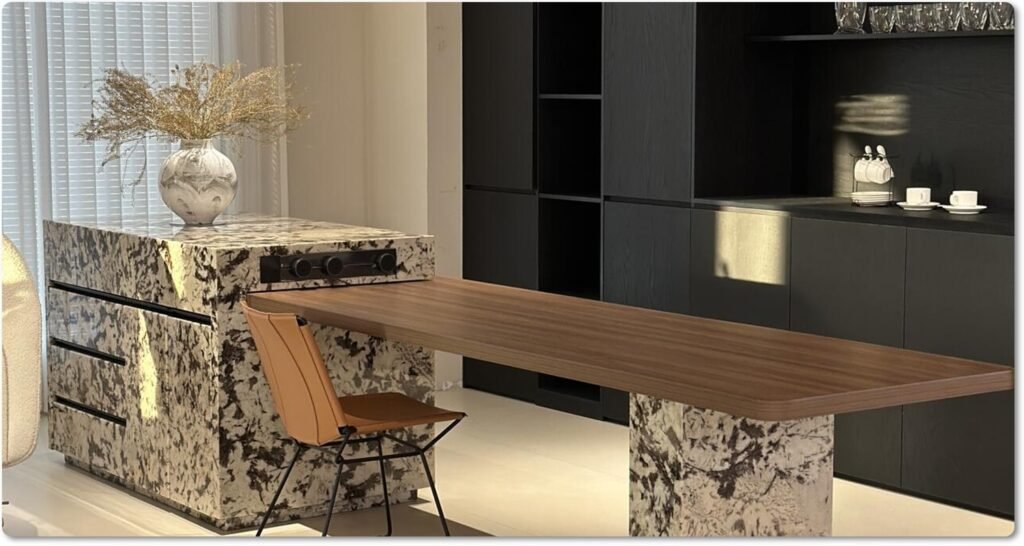
Scratch resistance is one of the most important criteria for countertops, worktops, wall cladding, laboratory benches, and commercial service areas. Frequent contact with cookware, utensils, equipment, and abrasive materials places continuous stress on surface finishes.
Although both sintered stone and engineered quartz are considered highly durable, they achieve their performance through different material structures.
Sintered Stone Scratch Resistance
Sintered stone is composed entirely of densely fused inorganic minerals. Because it contains virtually no polymer resin, its surface hardness remains stable under normal operating temperatures and prolonged use.
Many premium sintered stone manufacturers report Mohs hardness values of approximately 6–7, depending on the mineral formulation and surface finish. This level of hardness provides excellent resistance to scratches caused by common kitchen utensils, ceramic dishes, and everyday household use.
Typical applications include:
- Commercial kitchens
- Restaurant worktops
- Hotel reception counters
- Laboratory work surfaces
- Retail display fixtures
- Outdoor kitchens
While highly scratch-resistant, no architectural surface is completely scratch-proof. Materials with greater hardness—such as diamonds or certain industrial abrasives—can still damage the surface.
Engineered Quartz Scratch Resistance
Engineered quartz derives its hardness primarily from natural quartz crystals, which rank 7 on the Mohs hardness scale. Because quartz particles are embedded within a resin matrix, overall surface performance depends on both quartz content and manufacturing quality.
Premium engineered quartz slabs typically perform exceptionally well under residential conditions, resisting scratches from knives, utensils, cookware, and food preparation. However, repeated cutting directly on the surface is not recommended, as it can dull kitchen knives and may eventually leave visible marks.
For best practice, cutting boards should always be used regardless of countertop material.
Comparative Analysis
| Performance Factor | Sintered Stone | Engineered Quartz |
|---|---|---|
| Mohs Hardness | Approximately 6–7 | Approximately 7 (quartz particles) |
| Everyday Scratch Resistance | Excellent | Excellent |
| Abrasion Resistance | Excellent | Very Good to Excellent |
| Surface Wear in Commercial Use | Excellent | Very Good |
| Outdoor Performance | Excellent | Limited |
Procurement Insight
For projects involving intensive daily use—such as airports, hotels, hospitals, universities, and restaurants—scratch resistance should be evaluated alongside repairability, fabrication complexity, and lifecycle maintenance costs rather than hardness alone.
Heat Resistance
Heat resistance is one of the most significant differences between sintered stone and engineered quartz.
Why Heat Resistance Matters?
Kitchen countertops, outdoor cooking areas, hotel buffet stations, and commercial food preparation facilities are frequently exposed to:
- Hot cookware
- Steam
- Boiling liquids
- Thermal cycling
- Direct sunlight
- High ambient temperatures
Surface materials that cannot tolerate these conditions may discolor, deform, or crack over time.
Sintered Stone Heat Performance
Because sintered stone is manufactured at temperatures exceeding 1200°C, it exhibits exceptional thermal stability.
Most manufacturers state that sintered stone can tolerate direct contact with hot cookware under normal use without permanent damage. The absence of polymer resins eliminates the risk of resin softening or thermal discoloration.
Additional advantages include:
- High resistance to thermal shock
- Low coefficient of thermal expansion
- Stable color under heat exposure
- Suitable for fireplaces and outdoor kitchens
- Excellent dimensional stability
Nevertheless, designers should still follow manufacturer installation guidelines, particularly for large-format slabs subjected to structural movement.
Engineered Quartz Heat Performance
Although quartz crystals themselves are highly heat resistant, the polymer resin used in engineered quartz is more sensitive to elevated temperatures.
Most manufacturers recommend avoiding direct placement of:
- Hot pans
- Dutch ovens
- Electric skillets
- Slow cookers
- Air fryer baskets
Direct exposure to excessive heat may result in:
- Resin discoloration
- Surface cracking
- Thermal shock
- Gloss reduction
- Permanent marks
Heat-resistant pads or trivets are therefore recommended during everyday use.
Performance Summary
| Condition | Sintered Stone | Engineered Quartz |
|---|---|---|
| Hot Cookware | Excellent | Use Trivet |
| Outdoor BBQ | Excellent | Generally Not Recommended |
| Fireplace Surround | Excellent | Limited |
| Commercial Kitchen | Excellent | Suitable for Protection |
Featured Snippet Answer
Is sintered stone more heat-resistant than quartz?
Yes. Sintered stone generally offers superior heat resistance because it contains no polymer resin and is manufactured at temperatures above 1200°C. Engineered quartz contains resin binders that may discolor or degrade when exposed to excessive heat.
UV Stability
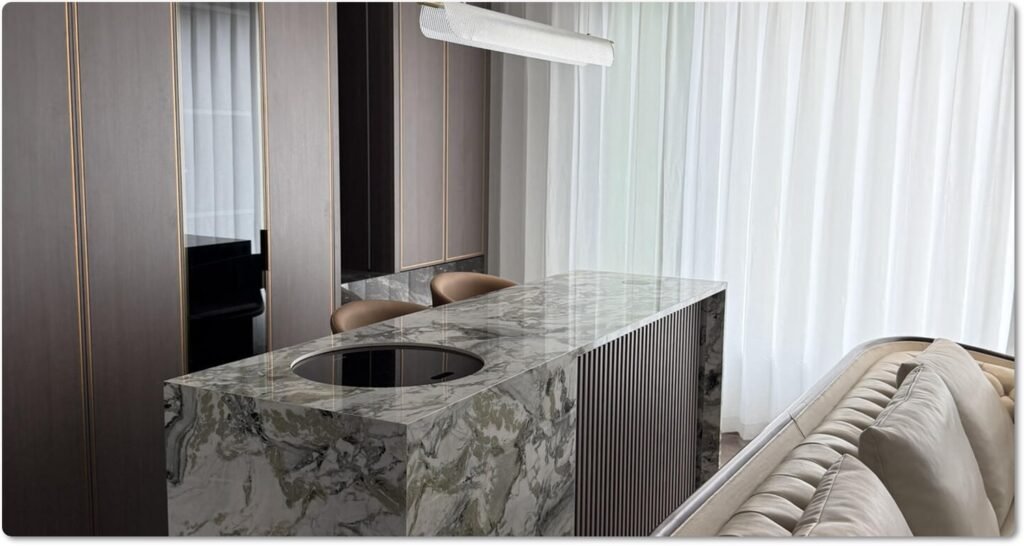
Exposure to ultraviolet (UV) radiation is an increasingly important consideration as outdoor kitchens, rooftop terraces, hospitality venues, and mixed indoor-outdoor living spaces become more common.
Sintered Stone UV Resistance
Because sintered stone consists almost entirely of inorganic minerals, it demonstrates outstanding resistance to ultraviolet radiation.
Benefits include:
- No resin yellowing
- Stable pigmentation
- Long-term outdoor appearance
- Minimal fading under sunlight
- Suitable for exterior façades and cladding
This makes sintered stone an excellent choice for:
- Outdoor kitchens
- Garden furniture
- Exterior wall systems
- Pool surrounds
- Balcony countertops
- Rooftop entertainment areas
Engineered Quartz UV Resistance
Engineered quartz is primarily designed for indoor use.
While many manufacturers continue improving UV-resistant resin technologies, prolonged exposure to direct sunlight may gradually cause:
- Color fading
- Yellowing
- Surface appearance changes
For this reason, many quartz manufacturers recommend avoiding installation in permanently exposed outdoor environments unless products are specifically certified for exterior use.
Comparative Assessment
| UV Performance | Sintered Stone | Engineered Quartz |
|---|---|---|
| Outdoor Kitchens | Excellent | Limited |
| Direct Sunlight | Excellent | Moderate |
| Exterior Cladding | Excellent | Generally Not Recommended |
| Pool Areas | Excellent | Indoor Preferred |
Procurement Recommendation
For projects located in tropical climates, coastal regions, or areas with high solar radiation, UV stability should be prioritized during material selection. In these environments, sintered stone generally provides greater long-term color stability and reduced maintenance requirements.
Chemical Resistance
Chemical resistance is essential in kitchens, healthcare facilities, laboratories, hotels, schools, and commercial food service environments.
Sintered Stone Chemical Performance
The dense, non-porous structure of sintered stone offers excellent resistance to many common household and commercial chemicals, including:
- Coffee
- Tea
- Wine
- Vinegar
- Lemon juice
- Olive oil
- Household detergents
Its low water absorption also reduces the likelihood of staining when spills are cleaned promptly.
Engineered Quartz Chemical Performance
Engineered quartz also provides very good resistance to everyday household staining because of its non-porous surface.
However, manufacturers generally advise against prolonged exposure to:
- Paint removers
- Strong alkalis
- Industrial solvents
- Hydrofluoric acid
- Highly concentrated bleach
Proper cleaning with pH-neutral detergents helps preserve long-term appearance.
Best Cleaning Practices
Regardless of the material selected:
- Clean spills promptly.
- Avoid abrasive scouring pads.
- Use pH-neutral cleaners whenever possible.
- Follow the manufacturer’s maintenance instructions.
- Avoid exposing surfaces to harsh industrial chemicals unless specifically certified for such applications.
Cost Comparison
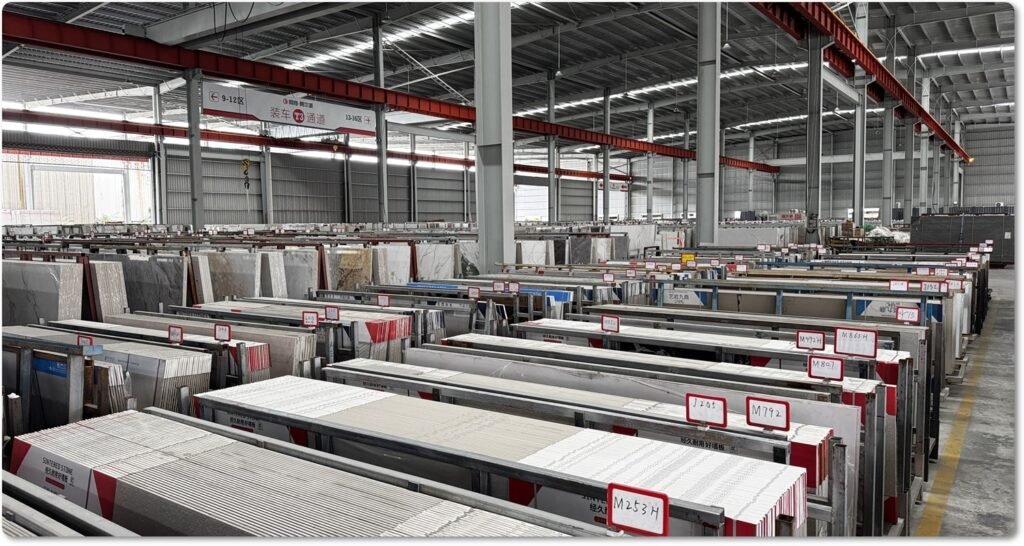
When comparing Sintered Stone vs Quartz, many buyers initially focus on the purchase price per square meter or square foot. However, procurement professionals increasingly evaluate total lifecycle cost (TCO) rather than material price alone.
Lifecycle cost includes:
- Initial material cost
- Fabrication and installation
- Transportation
- Maintenance requirements
- Expected service life
- Repair or replacement costs
- Operational downtime for commercial projects
Initial Material Cost
Pricing varies significantly depending on:
- Brand
- Country of origin
- Slab thickness
- Surface finish
- Color complexity
- Project volume
In global wholesale markets:
- Engineered quartz generally offers a lower entry price and is widely available from manufacturers in China, Europe, and North America.
- Sintered stone often commands a higher material price due to advanced manufacturing equipment, higher energy consumption, and specialized fabrication requirements.
However, market competition has narrowed this price gap over recent years.
Fabrication Cost
Fabrication represents one of the largest cost differences.
Engineered Quartz
Advantages include:
- Easier cutting
- Faster edge profiling
- Familiar fabrication methods
- Lower tooling wear
- Shorter installation times
Sintered Stone
Ultra-compact sintered stone requires:
- Diamond tooling
- CNC bridge saws
- Waterjet cutting for intricate designs
- Experienced fabricators
- Careful transportation and handling
Although fabrication costs may be higher, these are often offset in projects where long-term durability is prioritized.
Maintenance Cost
Both materials are non-porous and generally do not require periodic sealing.
Typical maintenance includes:
- Mild detergent cleaning
- Routine wiping
- Avoidance of harsh chemicals
Compared with many natural stones, maintenance costs remain relatively low over the product lifecycle.
Lifecycle Value
| Evaluation Factor | Sintered Stone | Engineered Quartz |
|---|---|---|
| Initial Material Cost | Higher | Moderate |
| Fabrication Cost | Higher | Lower |
| Maintenance Cost | Low | Low |
| Outdoor Longevity | Excellent | Limited |
| Commercial Lifespan | Excellent | Excellent (Indoor) |
| Overall Lifecycle Value | Excellent | Excellent |
Commercial Applications
Commercial environments place higher demands on architectural surfaces than most residential settings.
Hospitality
Hotels often specify sintered stone for:
- Reception counters
- Exterior wall cladding
- Restaurant tables
- Buffet stations
- Outdoor dining areas
Quartz remains a preferred choice for:
- Guest room vanities
- Indoor bar tops
- Bathroom countertops
Healthcare
Healthcare facilities prioritize:
- Hygiene
- Chemical resistance
- Easy cleaning
- Low porosity
Both materials perform well in clinical environments when properly specified.
Retail
Luxury retail stores frequently use:
- Large-format sintered stone feature walls
- Quartz service counters
- Display tables
- Cashier stations
Office Buildings
Modern commercial offices increasingly incorporate engineered surfaces into:
- Reception desks
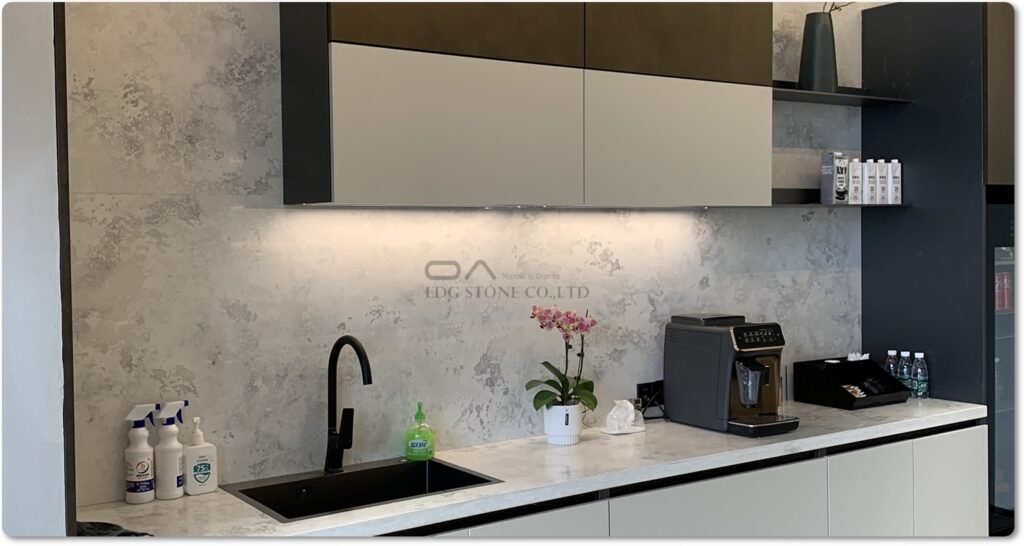
- Pantry countertops
- Meeting room tables
- Breakroom kitchens
Residential Applications
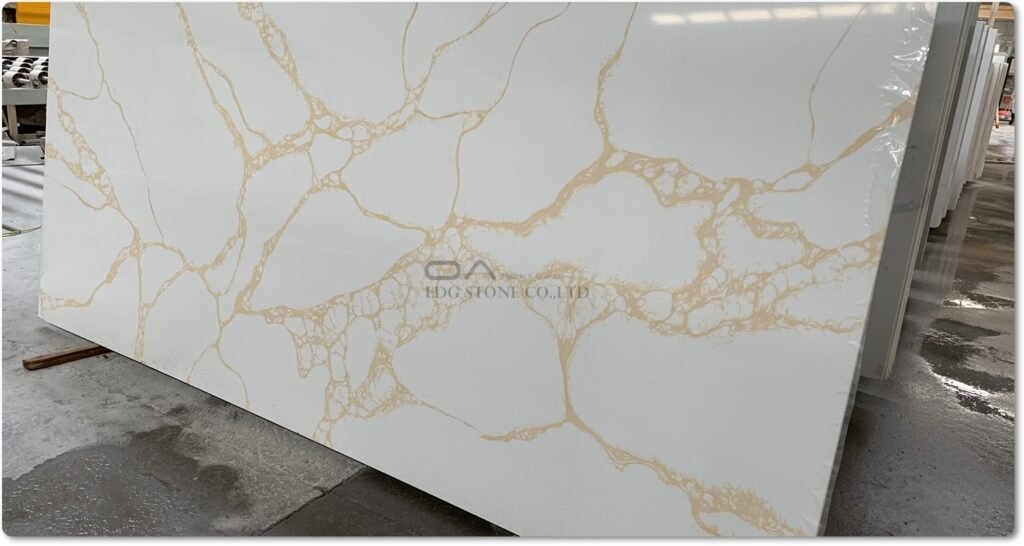
Residential buyers typically prioritize aesthetics, functionality, and maintenance.
Kitchens
For indoor kitchens, both materials provide outstanding performance.
Choose engineered quartz when:
- Color consistency is critical.
- Budget efficiency is important.
- Indoor installation is planned.
Choose sintered stone when:
- Heat resistance is a priority.
- Outdoor continuity is desired.
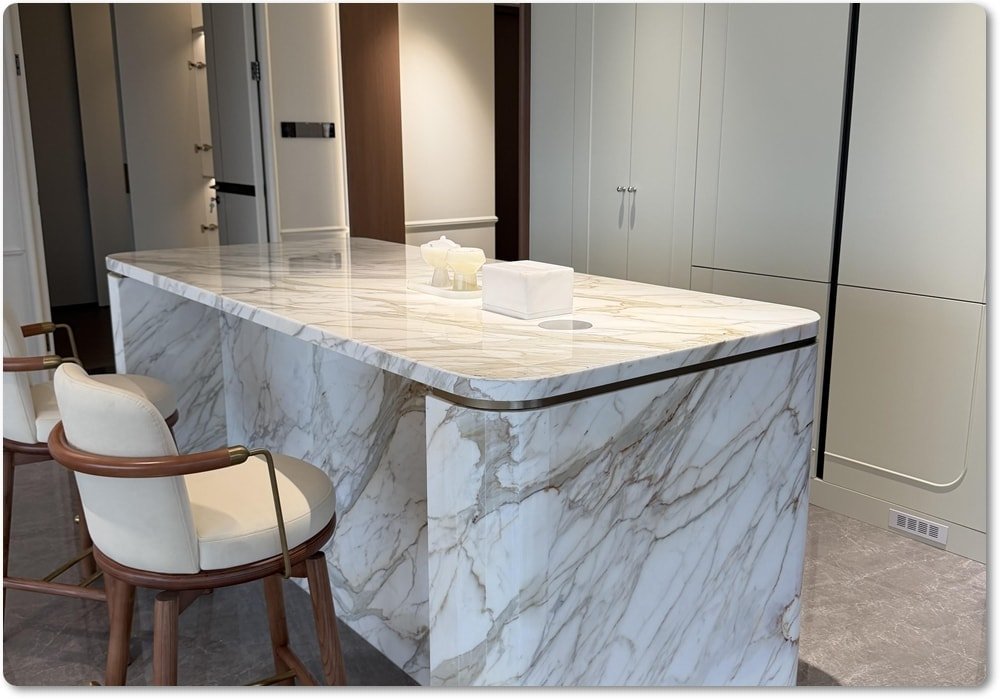
- Waterfall islands require exceptional durability.
Bathrooms
Both materials are suitable for:
- Vanity tops
- Shower walls
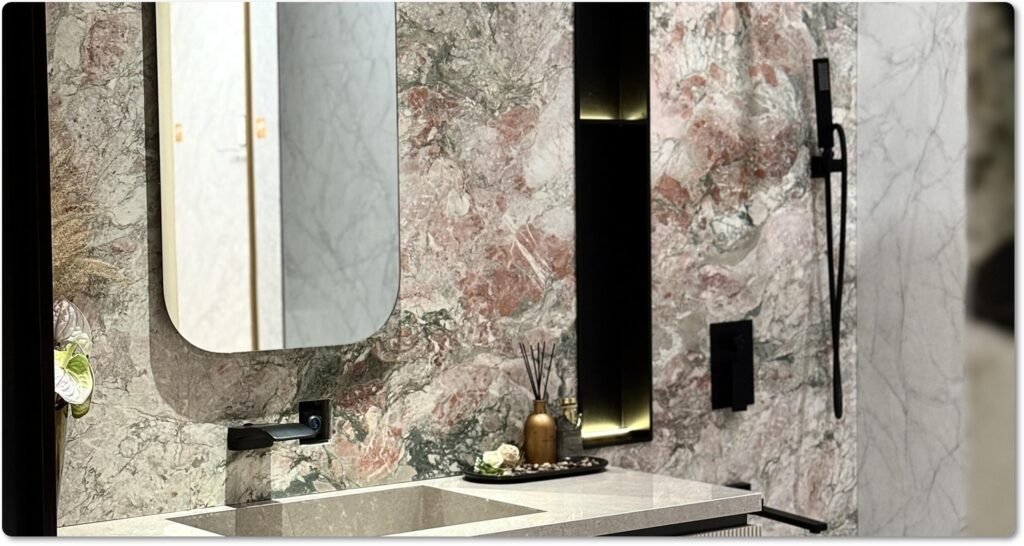
- Feature walls
- Shelving
Outdoor Living Spaces
For outdoor kitchens, patios, barbecue stations, and poolside entertainment areas, sintered stone is generally the preferred solution because of its superior UV stability and thermal performance.
Case Study – EDG Stone Factory
Global Quartzite Slabs & Countertops Manufacturer and Exporter
As global demand for premium architectural surfaces continues to grow, reliable manufacturing partners play a crucial role in ensuring consistent quality, supply stability, and project success.
EDG Stone Factory is an experienced manufacturer and exporter specializing in:
- Quartzite Slabs
- Quartz Countertops
- Sintered Stone Slabs
- Marble Countertops
- Granite Countertops
- Custom Vanity Tops
- Commercial Stone Fabrication
Manufacturing Advantages
EDG Stone Factory provides:
- Professional slab inspection
- CNC fabrication
- Waterjet cutting
- Bookmatching production
- Custom edge profiling
- Large-format project support
- OEM & Private Label manufacturing
- International export packaging
Typical Export Markets
- North America
- Europe
- Australia
- Middle East
- Southeast Asia
Typical Project Types
- Hotels
- Apartments
- Luxury villas
- Commercial buildings
- Retail stores
- Healthcare facilities
- Residential developments
For international distributors and contractors, working with an experienced manufacturer helps reduce quality risks, improve delivery reliability, and simplify global procurement.
Importer Recommendations
Selecting the right surface should begin with project requirements—not product popularity.
Choose Sintered Stone If:
- The project includes outdoor installations.
- High heat resistance is essential.
- UV exposure is significant.
- Long-term durability outweighs fabrication cost.
Choose Engineered Quartz If:
- The installation is entirely indoors.
- Budget efficiency is important.
- Consistent color and pattern are required.
- Fabrication speed is a priority.
Questions Every Importer Should Ask
- What international certifications are available?
- What quality control procedures are implemented?
- Are slabs inspected individually before shipment?
- What packaging standards protect long-distance transportation?
- Can customized dimensions and OEM branding be provided?
- What is the production capacity for large commercial orders?
FAQ
Is sintered stone better than quartz?
Neither material is universally better. Sintered stone excels in outdoor durability, UV stability, and heat resistance, while engineered quartz offers excellent consistency, affordability, and ease of fabrication for indoor projects.
Can quartz countertops be used outdoors?
Most engineered quartz products are designed primarily for indoor use. Long-term exposure to ultraviolet radiation may affect appearance unless the manufacturer specifically certifies the product for exterior applications.
Which material lasts longer?
Both materials can provide decades of service when properly installed and maintained. Environmental exposure, installation quality, and maintenance practices have a greater influence on service life than the material alone.
Which surface scratches more easily?
Both materials offer excellent scratch resistance under normal residential and commercial use. Cutting boards are recommended regardless of the countertop material.
Which material is easier to maintain?
Both are non-porous, easy to clean, and generally require no sealing.
Which is more suitable for restaurants?
For commercial kitchens with high heat exposure, sintered stone is often preferred. Indoor dining counters and service areas may use either material depending on project requirements.
Conclusion
The comparison between Sintered Stone vs Quartz demonstrates that both materials represent advanced engineered surface technologies capable of meeting demanding architectural requirements.
Sintered stone offers exceptional performance in outdoor environments, superior heat resistance, and long-term UV stability, making it an excellent choice for hospitality, commercial, and exterior applications.
Engineered quartz continues to dominate indoor residential and commercial markets due to its consistent appearance, ease of fabrication, and cost-effective performance.
Rather than asking which material is universally superior, architects, designers, distributors, and importers should evaluate the intended application, environmental conditions, lifecycle costs, and fabrication capabilities before making procurement decisions.
Internal Link Matrix
To strengthen topical authority across your 2026 Sintered Stone Procurement Guide series, link this article naturally to:
| Anchor Text | Target Article |
|---|---|
| What Is Sintered Stone? | Article 1 |
| Sintered Stone Applications | Article 2 |
| Sintered Stone vs Porcelain | Article 3 |
| Sintered Stone Cost Guide | Article 4 |
| Sintered Stone Kitchen Countertops | Article 5 |
| Sintered Stone Bathroom Guide | Article 6 |
| Sintered Stone Dining Tables | Article 7 |
| Outdoor Sintered Stone Applications | Article 8 |
| Sintered Stone Quality Standards | Article 9 |
| OEM Manufacturing Guide | Article 10 |
| Surface Finish Guide | Article 11 |
| Installation Guide | Article 12 |
| Packaging & Export Guide | Article 13 |
| Global Import Guide | Article 14 |
| Complete Procurement Guide | Article 15 |
Authoritative References
- ASTM International — Standards for Dimension Stone and Surface Materials
- ISO 13006 — Ceramic Tiles Classification and Technical Requirements
- ANSI A137.3 — Gauged Porcelain Tile Standard
- Natural Stone Institute — Dimension Stone Design Manual
- Marble Institute of America (MIA) Technical Documents
- NSF International — Food Equipment Material Standards
- Cosentino Technical Documentation (Dekton®)
- Neolith Technical Manual
- Caesarstone Technical Data Sheets
- Breton S.p.A. — Bretonstone® Manufacturing Technology
- European Committee for Standardization (CEN) EN Standards for Ceramic Products
- International Organization for Standardization (ISO) Material Testing Standards
- Building Stone Institute Technical Publications
- Ceramic World Review – Large Format Sintered Surface Manufacturing Reports
- TCNA (Tile Council of North America) Handbook for Ceramic, Glass, and Stone Tile Installation