
Introduction
Quartz slabs for kitchen projects have become one of the most requested surfaces in modern residential, hospitality, and multi-unit construction. The reason is simple: buyers want a countertop material that looks premium, performs consistently, supports fast fabrication, and helps projects stay on schedule. For designers, builders, and developers, quartz slabs for countertops also offer a predictable specification path, broad color availability, and strong perceived value at the point of sale.
This guide is written for kitchen procurement, specification, and project delivery. It explains why quartz dominates kitchen design, how to evaluate performance standards, how slab format affects workflow, and how to calculate ROI across residential and commercial applications.
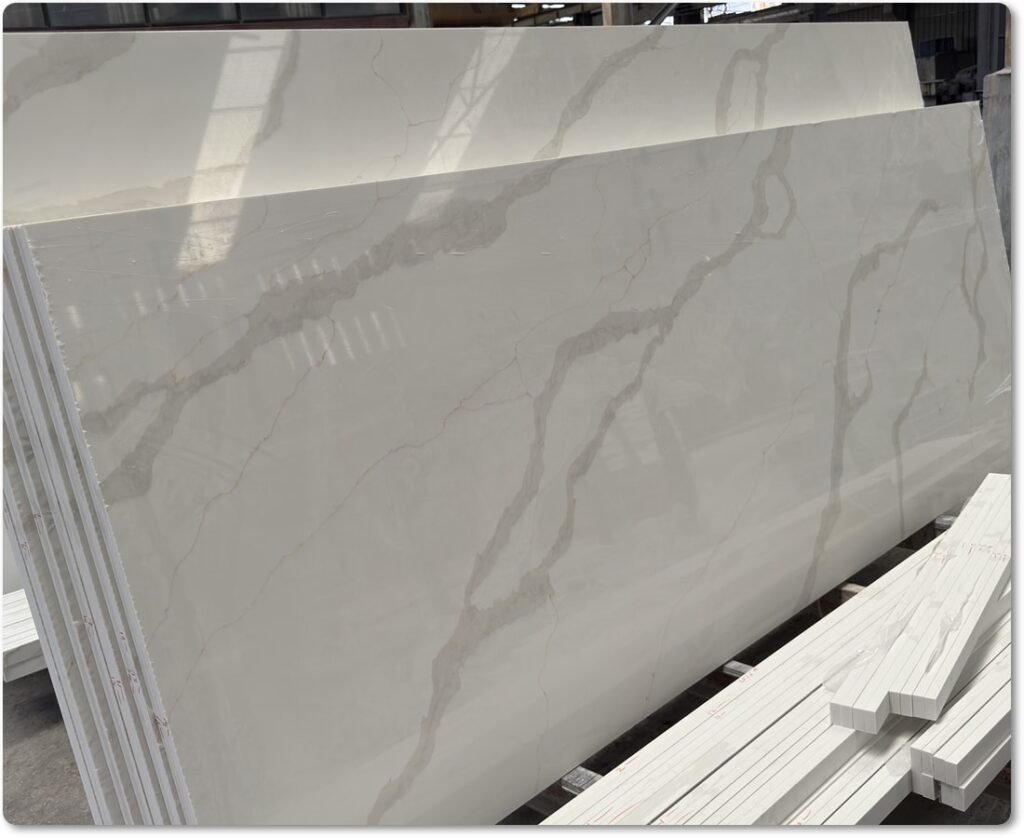
Why Quartz Dominates Modern Kitchens?
Quartz has become a default choice in many kitchen projects because it balances design consistency with operational reliability. In a kitchen, the countertop is not just a decorative surface. It is a working interface that must handle preparation, spills, heat exposure around appliances, cleaning cycles, and long-term visual stability.
Quartz slabs for kitchen projects are attractive because they deliver:
- A uniform appearance that is easier to specify across multiple units
- Strong color and pattern consistency from slab to slab
- A broad range of premium looks, including marble-inspired veining
- A non-porous surface that is easier to maintain than many natural stones
- Efficient fabrication for standard kitchen layouts and large islands
For developers and contractors, consistency matters as much as aesthetics. When a project includes dozens or hundreds of kitchens, a material that reduces variation, simplifies QA, and shortens install risk can outperform more “luxury” materials in total project value.
Design versatility drives adoption
Quartz is especially popular in open-plan kitchens, where countertops are visually connected to living and dining zones. That makes the surface part of the home’s architectural language. Quartz countertop slabs can be selected to complement cabinet finishes, flooring, and backsplash materials without forcing the designer to accept the natural variation found in many stones.
Buyer confidence supports conversion
From a sales perspective, quartz also helps close deals. End users often associate quartz with modernity, cleanliness, and low maintenance. Builders can present it as a practical upgrade, while designers can specify it as a high-end visual anchor.
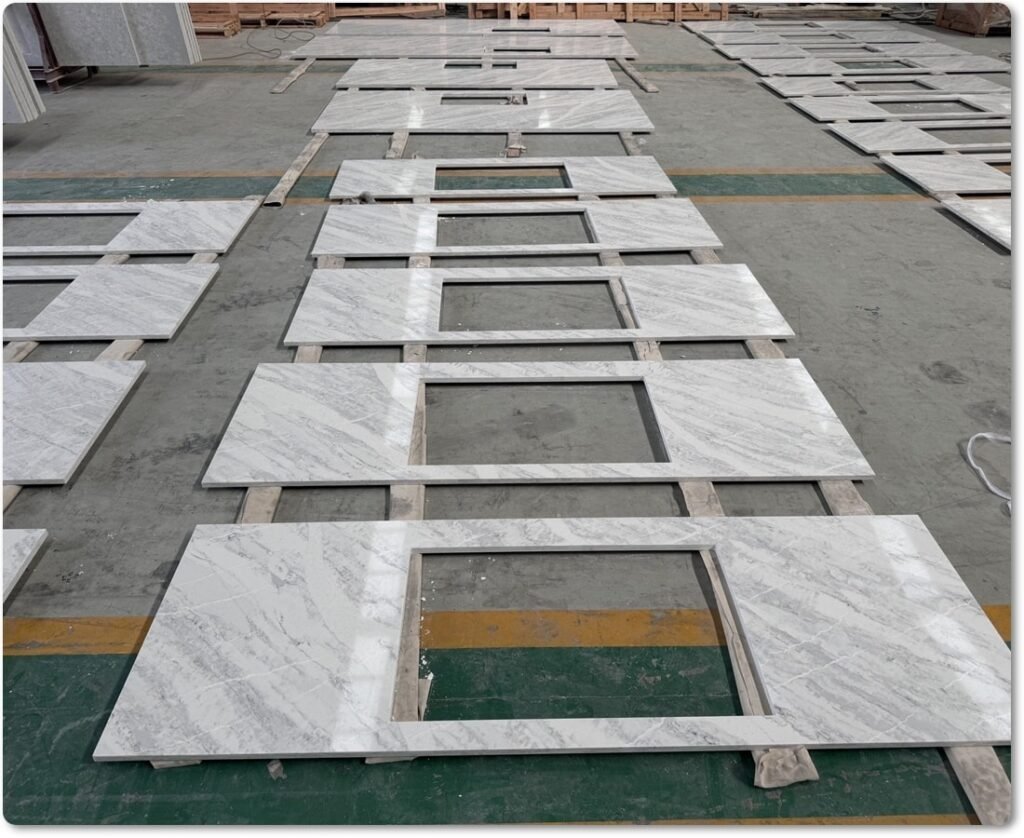
Food Safety & NSF Standards
Kitchen counters are expected to support food preparation, so surface safety is a major consideration. Quartz is often marketed as a hygienic choice because the surface is non-porous and does not easily absorb liquids when properly fabricated and sealed at joints.
For procurement teams, the real question is not simply whether quartz “looks clean.” It is whether the supplied slab system, adhesives, fabrication methods, and installation practices support food-contact environments.
What to check in a kitchen quartz specification?
When comparing quartz slabs for kitchen projects, confirm the following:
- Whether the product is non-porous in normal use
- Whether the supplier provides any food-safety or hygiene-related documentation
- Whether the fabrication shop uses approved adhesives and sealants
- Whether seam finishing and sink cutouts are executed to reduce contamination risk
- Whether local code or project requirements specify a recognized standard, such as NSF/ANSI 51 for food equipment surfaces
Why standards matter for commercial kitchens?
Commercial kitchens, café counters, and hospitality prep zones may have stricter hygiene expectations than private homes. Even when quartz is used for front-of-house counters rather than direct food-production zones, project teams often ask for supporting documentation because it reduces approval friction.
For local SEO and GEO optimization, this is also a high-intent keyword cluster. Pages that cover food safety, hygiene, and standards tend to attract builders, kitchen contractors, and commercial buyers seeking practical specification support.
Scratch & Stain Resistance
Quartz is commonly chosen because it performs well under daily kitchen use. That said, the real value of quartz is not “indestructibility.” It is stable, with predictable resistance to the types of wear that matter most in kitchens.
Scratch resistance in daily workflow
Quartz slabs for countertops are generally resistant to light abrasion from plates, utensils, and general cleaning. In real kitchen use, the bigger concern is not a single event but repeated contact over time. That is why builders and developers should consider how the material will behave after years of usage, not just on installation day.
Key note: quartz is still a surface, not a cutting board. Knife use directly on the counter can damage the surface and dull tools.
Stain resistance and spill management
Kitchen countertops must withstand coffee, tea, wine, oils, sauces, citrus, and other common spills. Quartz performs well here because it does not absorb liquids in the same way as porous natural stones. This makes routine maintenance easier and reduces the chance of visible staining when spills are cleaned promptly.
For project teams, this translates into lower after-sales complaints and fewer maintenance calls. For end users, it means less worry about everyday cooking and entertaining.
The limits still matter
Quartz is resistant, not invincible. Project specs should still warn users about:
- High heat exposure from hot pans
- Harsh chemicals or abrasive cleaners
- Direct cutting on the surface
- Long-term neglect of seams, caulk lines, and sink areas
The best SEO pages are honest about these limits. Honest content performs better because it matches buyer intent and reduces bounce from unrealistic promises.
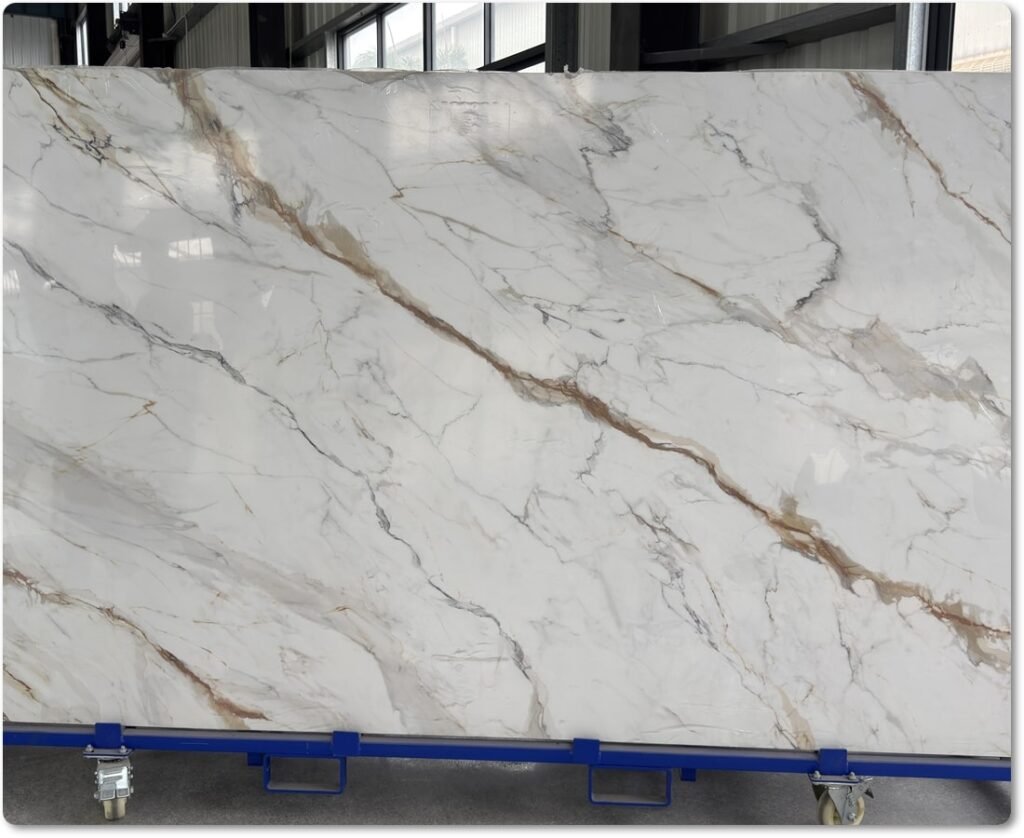
Waterfall Islands & Jumbo Slabs
Large kitchen islands are one of the main reasons quartz slab demand continues to grow. The waterfall island trend has made slab size and pattern flow more important than ever.
Why jumbo format matter?
Jumbo slabs reduce seam visibility and improve design continuity across long islands, oversized peninsulas, and full-height waterfall returns. When a kitchen requires extended bookmatching or uninterrupted veining, the slab format becomes a critical procurement decision.
Design advantages of jumbo quartz slabs
- Fewer seams on large islands
- Better visual continuity for veined patterns
- Easier matching across countertop and waterfall faces
- Reduced waste in some large-format layouts
- Stronger premium perception in luxury kitchens
Procurement risks to watch
Jumbo slabs are not automatically the best solution for every project. They can create handling and fabrication challenges if the shop, transport, or installer is not prepared. Before specifying jumbo quartz countertop slabs, check:
- Truck access and unloading conditions
- Shop equipment and slab handling capacity
- Template accuracy for oversized surfaces
- Installer experience with mitered waterfall edges
- Crack prevention strategy during transport and installation
In short, the bigger the slab, the more important workflow planning becomes.
Commercial vs Residential Kitchens
The specification logic for quartz slabs in kitchen projects changes depending on whether the project is residential or commercial.
Residential kitchens
In homes, the main buying drivers are visual appeal, easy maintenance, and resale value. Homeowners usually want a countertop surface that feels premium without demanding special care. Quartz slabs for kitchen use in residential projects are often selected for:
- Modern white and light-gray palettes
- Marble-look veining
- Waterfall islands
- Matching backsplashes
- Strong resale appeal
Commercial kitchens
In commercial kitchens, the focus shifts to consistency, compliance, durability, and maintenance efficiency. Quartz may be used in back-of-house support zones, service counters, food prep-adjacent areas, or front-of-house display spaces where aesthetics and hygiene both matter.
For commercial buyers, the strongest arguments are:
- Predictable replacement planning
- Faster specification approval
- Easier cleaning routines
- Better appearance retention under heavy use
- Simplified multi-site standardization
Developer logic
Developers often sit between these two use cases. They need a product that feels residential enough to improve sales, yet standardized enough to simplify volume purchasing. Quartz is especially strong here because it fits both branding and operational goals.
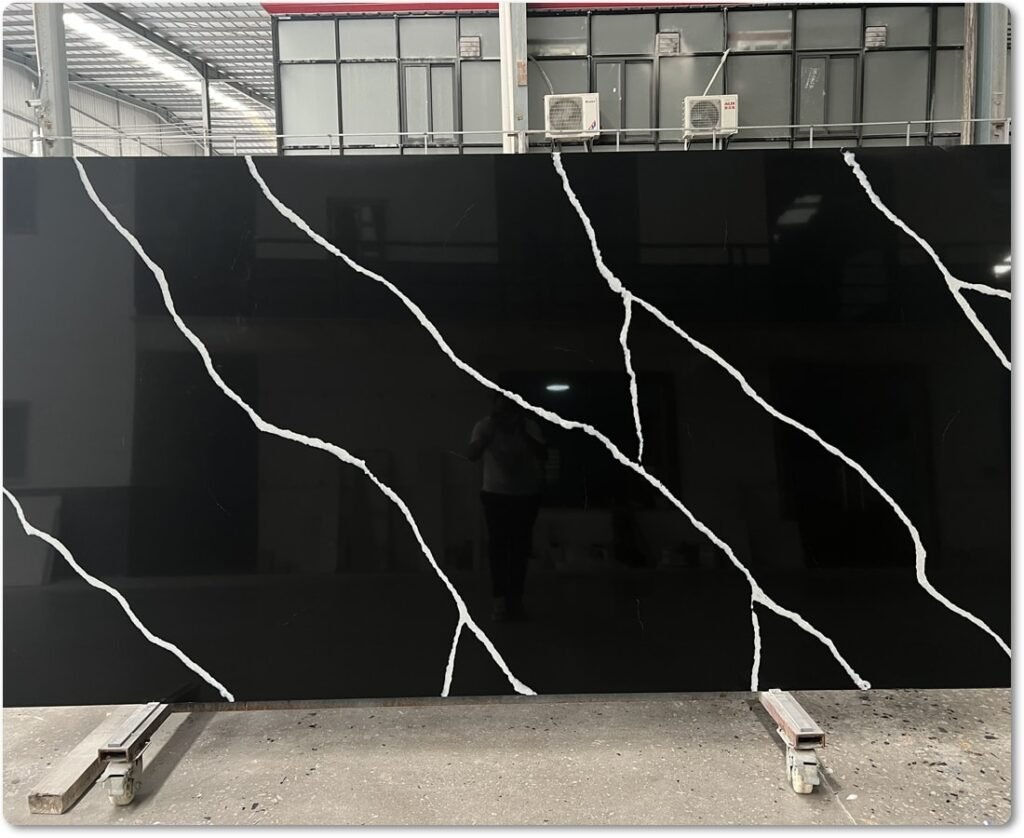
Workflow-Based Kitchen Design
A successful kitchen project is not only about choosing a good surface. It is about fitting the surface into the full workflow of design, fabrication, delivery, and installation.
Step 1: Layout and use-case mapping
Before selecting quartz slabs, define the kitchen workflow:
- Cooking frequency
- Island use
- Sink placement
- Appliance placement
- Backsplash height
- Storage and traffic movement
This matters because the countertop should support how the kitchen is actually used.
Step 2: Slab selection by visual logic
Choose the slab pattern based on the room’s visual hierarchy. In some projects, the countertop should be subtle and clean. In others, it should become a statement feature. Quartz slabs for countertops are available in a wide range of visual styles, so the slab should match the project’s design intent rather than follow a trend alone.
Step 3: Template and fabrication planning
This is where many projects succeed or fail. Fabricators should confirm:
- Sink and cooktop cutouts
- Seam location
- Overhang requirements
- Backsplash transitions
- Waterfall return alignment
- Edge profile selection
Step 4: Installation and final handoff
Installation quality influences final ROI. Even premium quartz can look cheap if seams are poor, edges are inconsistent, or the caulk lines are visible. A kitchen project should be treated as a workflow system, not just a product sale.
Quartz Edge Profiles
Edge profiles influence both style and cost. For kitchen projects, the edge detail can shift the entire design from basic to premium.
Common quartz edge profiles
- Straight edge
- Eased edge
- Beveled edge
- Bullnose edge
- Ogee edge
- Mitered waterfall edge
How to choose the right edge?
For contemporary kitchens, straight or eased edges are often preferred because they create a clean architectural look. For luxury homes and statement kitchens, mitered waterfall details can make quartz slabs feel more substantial and custom.
Cost implications
More complex edge profiles usually mean:
- Higher fabrication labor
- More waste
- More installation risk
- Longer lead times
That does not mean they are not worth it. It means the choice should align with margin, market position, and buyer expectations.
Maintenance Economics
One of the strongest arguments for quartz is that it reduces maintenance complexity over the life of the kitchen. This is especially important in value engineering and ROI discussions.
What does maintenance economics mean in practice?
When comparing quartz slabs for kitchen projects with other surfaces, the buyer should consider:
- Daily cleaning labor
- Risk of staining or repair
- Resilience against routine wear
- Frequency of replacement
- Customer satisfaction and complaint rates
Quartz often wins because it requires less specialized care. That makes it attractive for developers, property managers, hospitality operators, and homeowners who want low-friction ownership.
Lifecycle value over sticker price
The lowest upfront price is not always the best value. A slightly more expensive quartz slab may generate better ROI if it reduces callbacks, improves resale, or shortens sales cycles. That is why the right question is not “What is the cheapest slab?” but “What delivers the highest total project value?”
ROI logic for builders
For builders, quartz can support ROI in three ways:
- It improves the perceived quality of the kitchen
- It helps sell upgrades at a premium
- It reduces service issues after handover
That combination makes quartz one of the most commercially efficient countertop options in many mid- to high-end projects.
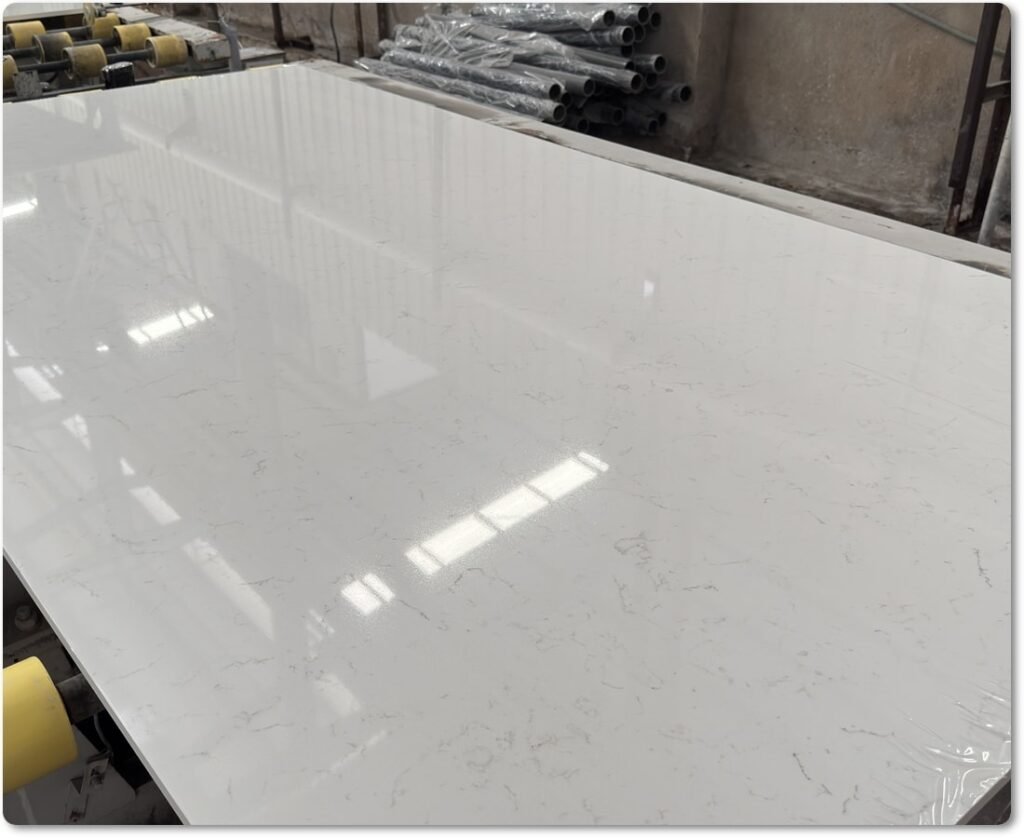
Builder & Developer Specifications
For builders and developers, the specification sheet is more important than the showroom sample. Quartz slab decisions should be documented clearly so that purchasing, fabrication, and site teams stay aligned.
What should be specified?
A complete quartz countertop slab specification should include:
- Slab thickness
- Color name and batch control
- Finish type
- Edge profile
- Seam location expectations
- Sink and cutout requirements
- Installation method
- Maintenance instructions
- Warranty terms
Why specification discipline matters?
When project teams do not specify clearly, substitutions and site delays become more likely. In multi-unit work, even a small variation can create large cost overruns. A precise quartz specification protects design intent and keeps procurement efficient.
GEO optimization note for local market pages
If you are publishing this topic on a local website, add location-specific language such as:
- quartz slabs for kitchen projects in [city]
- quartz countertop slabs supplier in [region]
- kitchen quartz fabrication for builders in [market]
This helps the page rank for both national and local search intent, especially when paired with case studies, service-area pages, and project photos.
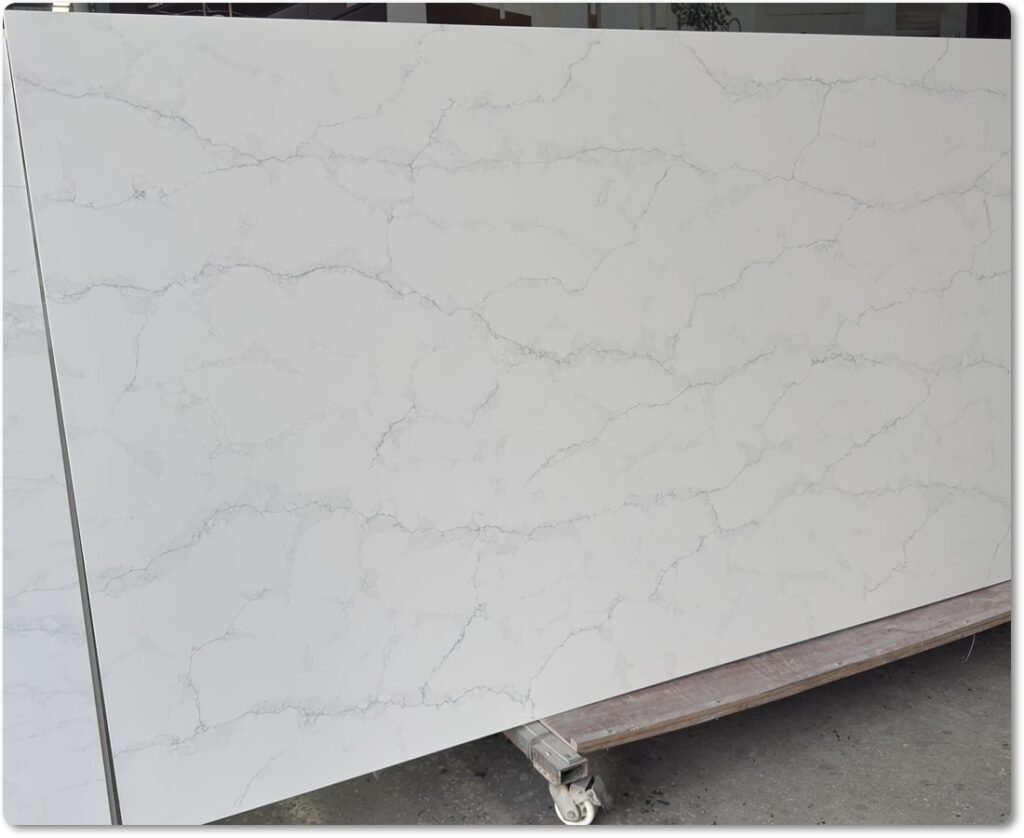
EDG Stone Factory Kitchen Project Supply Cases
Below are practical project supply case examples you can adapt for EDG Stone Factory positioning on a published blog or product page. These are written as representative supply scenarios, not as verified client claims.
Case 1: Multi-unit residential kitchen package
A developer needs a standardized quartz surface for a 120-unit apartment project. The goal is to maintain a clean, modern look while keeping procurement and installation predictable. In this type of project, light-toned quartz slabs for countertops are often selected because they pair well with neutral cabinetry and make compact kitchens feel brighter.
Supply focus: consistent slab tone, simplified repeatable fabrication, delivery scheduling, and batch matching across units.
Case 2: Luxury villa, waterfall island project
A custom villa requires a large island with waterfall sides and minimal seam visibility. Here, jumbo quartz slabs are preferred because they support visual continuity and reduce interruption in the veining pattern.
Supply focus: jumbo slab availability, miter-edge fabrication, template accuracy, and premium finish control.
Case 3: Hospitality kitchen and service counter project
A hospitality buyer needs surfaces that can support high-frequency cleaning, design consistency, and brand presentation. Quartz offers a clean aesthetic and low-maintenance performance that works well in guest-facing food-service environments.
Supply focus: documentation, reliable logistics, edge durability, and stain resistance.
Case 4: Builder upgrade package for resale homes
A homebuilder wants a countertop upgrade that improves the sales story without creating excessive cost risk. Quartz slabs for kitchen projects are a strong fit because they are easy to market, easy to maintain, and visually aligned with what buyers expect from a modern kitchen.
Supply focus: value-oriented colors, fast lead times, consistent stock, and simple installation workflows.
These supply-case narratives help position EDG Stone Factory as a practical kitchen project partner for builders, developers, and fabricators.
How to Choose the Right Quartz Slab Supplier?
The supplier decision matters as much as the slab itself. For project buyers, the best supplier is not only a source of product. It is a risk-control partner.
Evaluate suppliers on these points
- Product consistency across multiple slabs
- Kitchen project experience
- Jumbo slab availability
- Factory production capacity
- Sample matching process
- Export packaging quality
- Documentation and communication speed
- After-sales support
Red flags to avoid
- Inconsistent slab color or veining
- Poor communication on batch control
- Weak packaging for export shipments
- No clear fabrication guidance
- Unclear warranty or claim support
For a commercial website, this section is useful because it attracts high-intent buyers who are comparing suppliers, not just browsing design inspiration.
Buying Checklist for Kitchen Quartz Projects
Before you approve quartz slabs for kitchen use, confirm these points:
- Does the slab match the project design language?
- Is the format suitable for island size and waterfall needs?
- Are the finish and edge profile aligned with budget?
- Has the supplier confirmed batch consistency?
- Is the fabrication shop experienced with the selected format?
- Are care instructions clear for the end user?
- Does the total lifecycle value justify the price?
A good checklist increases conversion because it helps buyers feel confident about moving from sample to order.
Conclusion
Quartz slabs for kitchen projects succeed because they solve multiple problems at once. They support modern design, simplify maintenance, fit both residential and commercial workflows, and create reliable ROI for builders and developers. When specified correctly, quartz slabs for countertops are not just a beautiful surface choice. They are a project delivery tool that improves consistency, reduces risk, and strengthens the marketability of the kitchen.
For buyers searching for quartz countertop slabs, the winning strategy is to focus on the full system: material performance, slab format, fabrication workflow, installation planning, and supplier reliability. That is where the real commercial value appears.
If your website is targeting kitchen procurement traffic, this topic is strong for SEO, strong for GEO, and strong for conversion because it matches the exact language builders, developers, and homeowners use when they are ready to specify a surface.
FAQ
1. Are quartz slabs good for kitchen countertops?
Yes. Quartz slabs for kitchen countertops are popular because they offer strong stain resistance, consistent appearance, and low-maintenance performance for daily use.
2. What is the best quartz slab thickness for kitchen projects?
The best thickness depends on design and budget. Common options are 20mm and 30mm, with thicker-looking edges often achieved through mitered fabrication.
3. Can quartz slabs be used for waterfall islands?
Yes. Quartz slabs are widely used for waterfall islands, especially when jumbo slabs are available, and the vein direction is planned carefully.
4. Is quartz safe for food preparation areas?
Quartz is commonly used in kitchen prep areas because it is non-porous and easy to clean. For commercial or regulated applications, always confirm relevant documentation and project requirements.
5. What affects the ROI of quartz in kitchen projects?
ROI is influenced by slab consistency, maintenance savings, design appeal, resale value, installation quality, and the supplier’s ability to reduce project risk.