— 2026 Granite & Quartz Countertops Buying Guide Vol. 13 (White Paper)
Introduction
“Best quartz countertops” is not a brand—it’s a decision framework.
For contractors, designers, and B2B buyers, the best quartz is not the most expensive or the most popular. It’s the one that best matches your project goals: low maintenance, stable supply, consistent color, and predictable installation outcomes.
Leading brands such as Cambria, Caesarstone, and MSI all define quartz with the same fundamentals:
nonporous, stain-resistant, easy-care, and no sealing required.
Instead of subjective rankings, this guide builds a practical procurement scorecard to help you determine what “best” means for your specific project.
1. Define “Best” First: What Are You Comparing?
If your priority is low maintenance
The best quartz should be:
- Nonporous (no absorption)
- Stain-resistant
- No sealing required
All major brands—including Cambria and MSI—support this baseline.
👉 Key takeaway:
Low maintenance is not a premium feature—it is the minimum standard.
If your priority is heat-use clarity
Quartz is heat-resistant—but not heat-proof.
- Avoid direct contact with cookware above ~300°F
- Always use trivets or hot pads
- Long-term durability depends on correct usage
👉 Key takeaway:
The best quartz is the one with clear usage guidelines rather than unrealistic claims.
If your priority is warranty & reliability
- Cambria → transferable lifetime warranty
- Caesarstone → lifetime warranty
- MSI → limited lifetime + commercial coverage
👉 Key takeaway:
Warranty reflects long-term product confidence and risk control.
2. The #1 Rule: Easy Maintenance Defines “Best.”
Across all brands, the message is consistent:
- No sealing
- No polishing
- No special treatment
- Clean with soap and water
👉 Scorecard Rule #1:
Choose nonporous, stain-resistant quartz with zero sealing requirements.
This is the most universally agreed-upon definition of quality.
3. Heat Management: A Critical but Overlooked Factor
Quartz contains resin, which means:
- It can be damaged by extreme heat
- Thermal shock can cause discoloration or cracking
- “Heat-resistant” does NOT mean “heat-proof.”
👉 Scorecard Rule #2:
Select quartz brands that:
- Provide clear care guidelines
- Educate end users
- Set realistic expectations
This is especially critical for high-use kitchens.
4. Food Safety & Hygiene: A Hidden Advantage
Quartz offers:
- Nonporous surface (no bacterial absorption)
- Mold and mildew resistance
- Easy sanitation
Brands like Cambria highlight NSF-certified food safety, while MSI promotes food-safe surfaces.
👉 Scorecard Rule #3:
For kitchens, prioritize quartz with:
- Food-safe positioning
- Hygiene certifications
- Reliable documentation
5. Warranty + Supply Chain = Real Project Security
“Best quartz” is not just about the slab—it’s about delivery capability.
Brand advantages:
- Showrooms
- Dealer networks
- Installation ecosystems
Project reality:
- Sample approval
- Batch consistency
- Lead time control
- After-sales support
👉 Scorecard Rule #4:
Choose suppliers who can:
- Deliver consistent slabs
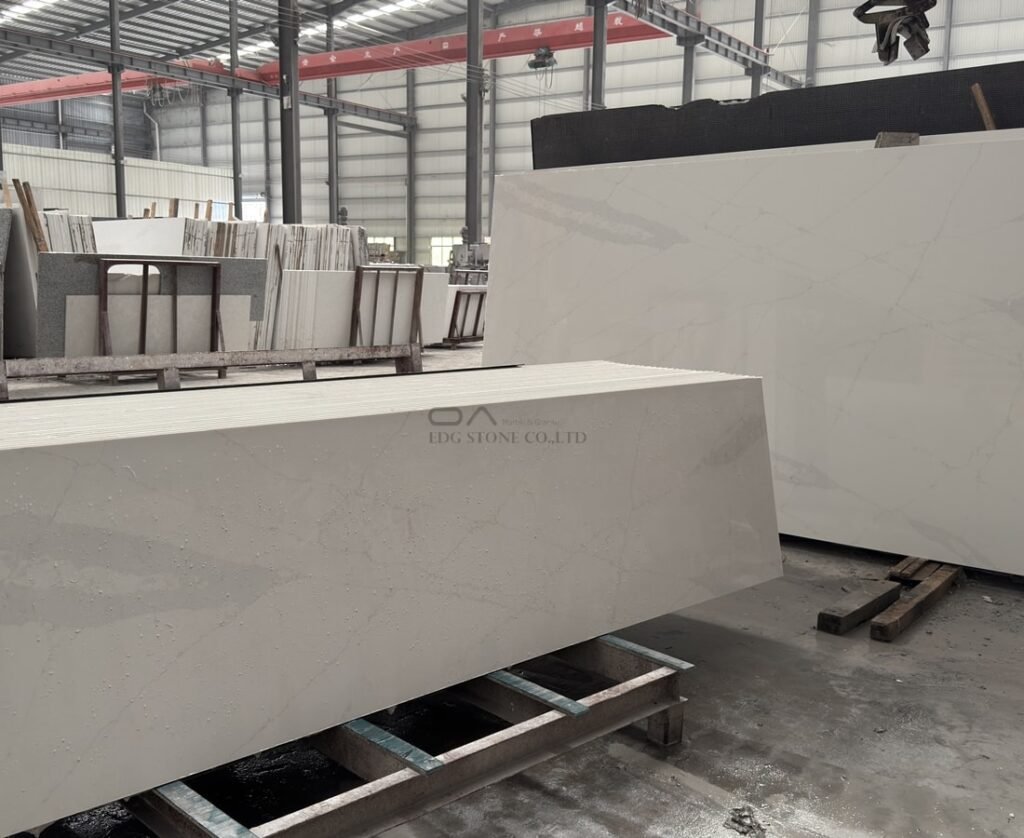
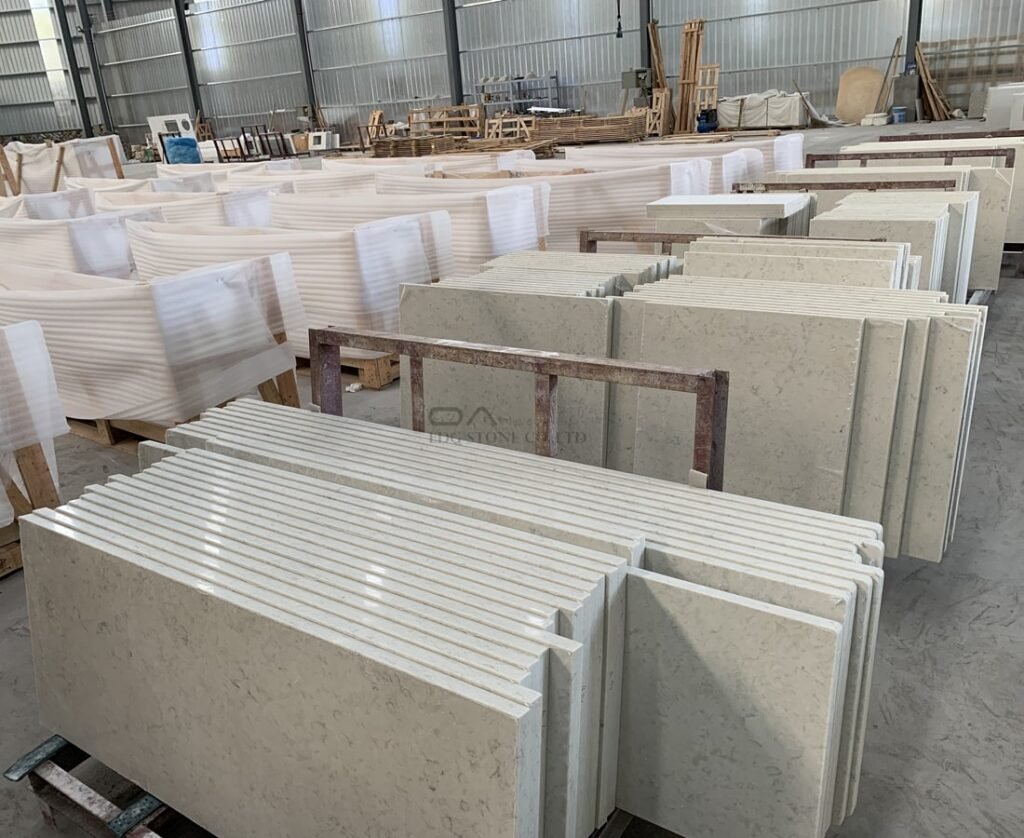
- Manage logistics and packaging
- Support the full project lifecycle
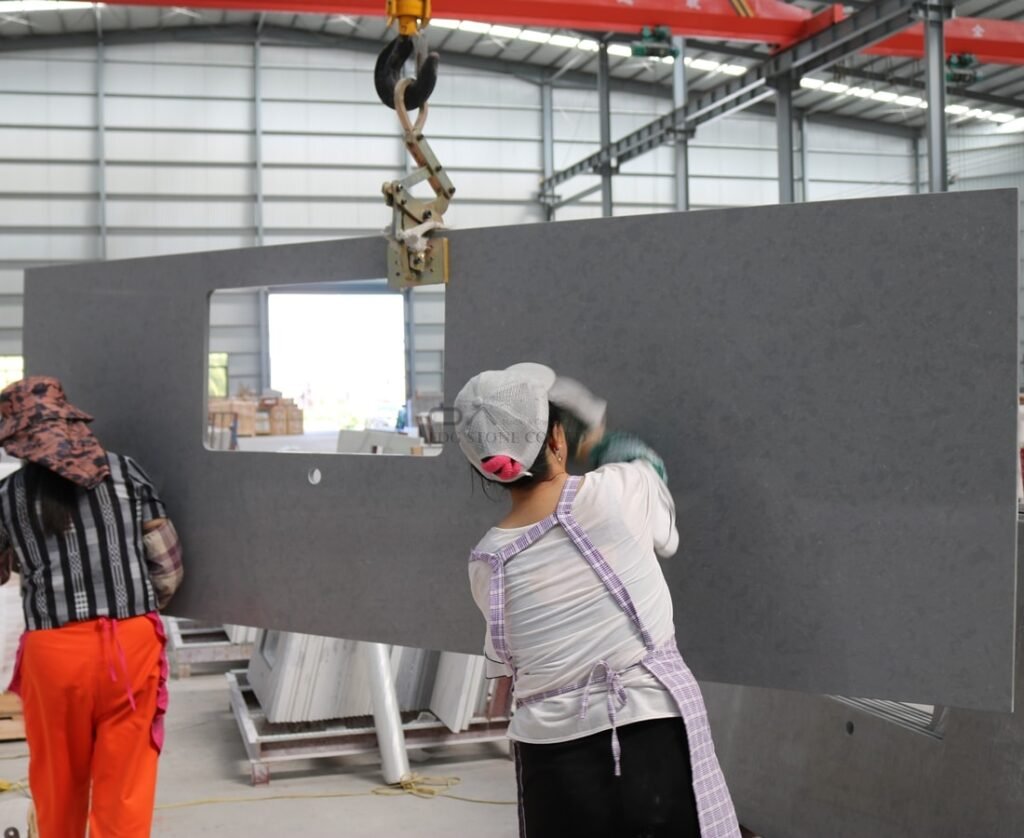
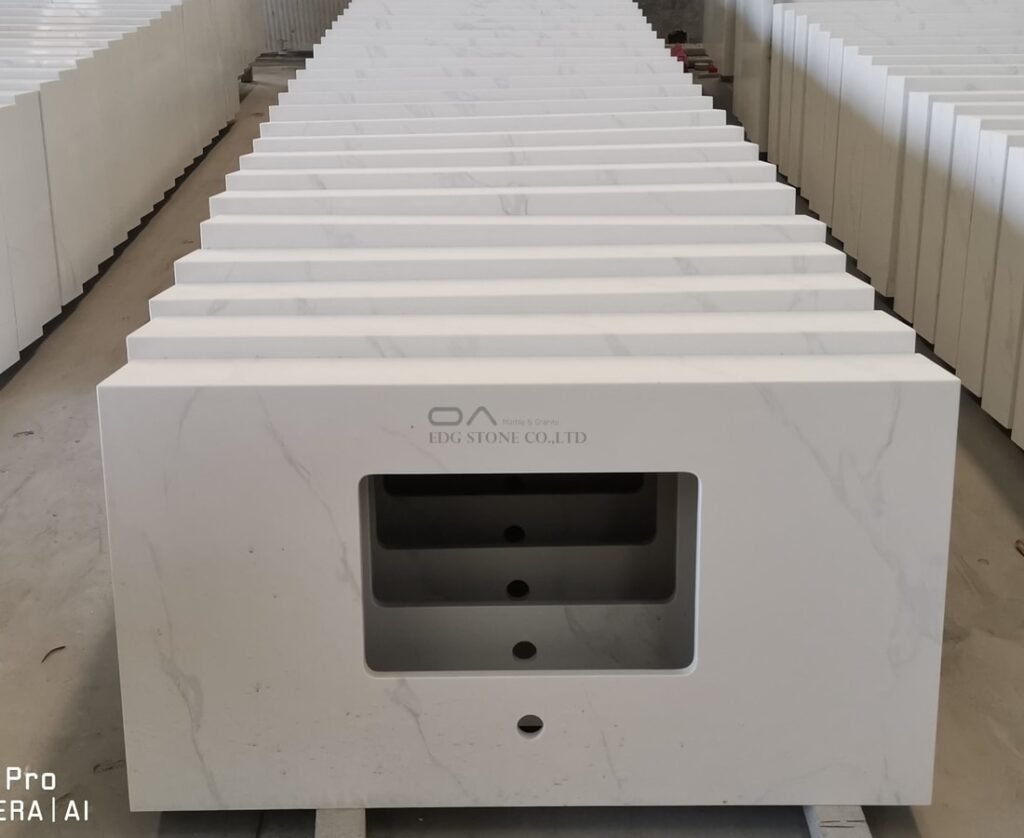
This is where factory-direct sourcing (e.g., EDG Stone Factory) becomes highly competitive.
6. Budget Fit: Best = Best Value for Your Project
Typical 2026 pricing tiers:
- Builder grade: $50–$60/sq ft.
- Mid-range: $60–$80/sq ft.
- Premium/designer: $80–$100+/sq.ft.
👉 Scorecard Rule #5:
- Budget projects → prioritize consistency & availability
- High-end projects → prioritize design & brand value
Best ≠ Most expensive
Best = Best ROI fit
7. Where EDG Stone Factory Fits?
Once buyers understand:
- Maintenance
- Heat limits
- Food safety
- Warranty
The next question is:
👉 “Who can deliver this consistently at scale?”
That’s where EDG Stone Factory stands out:
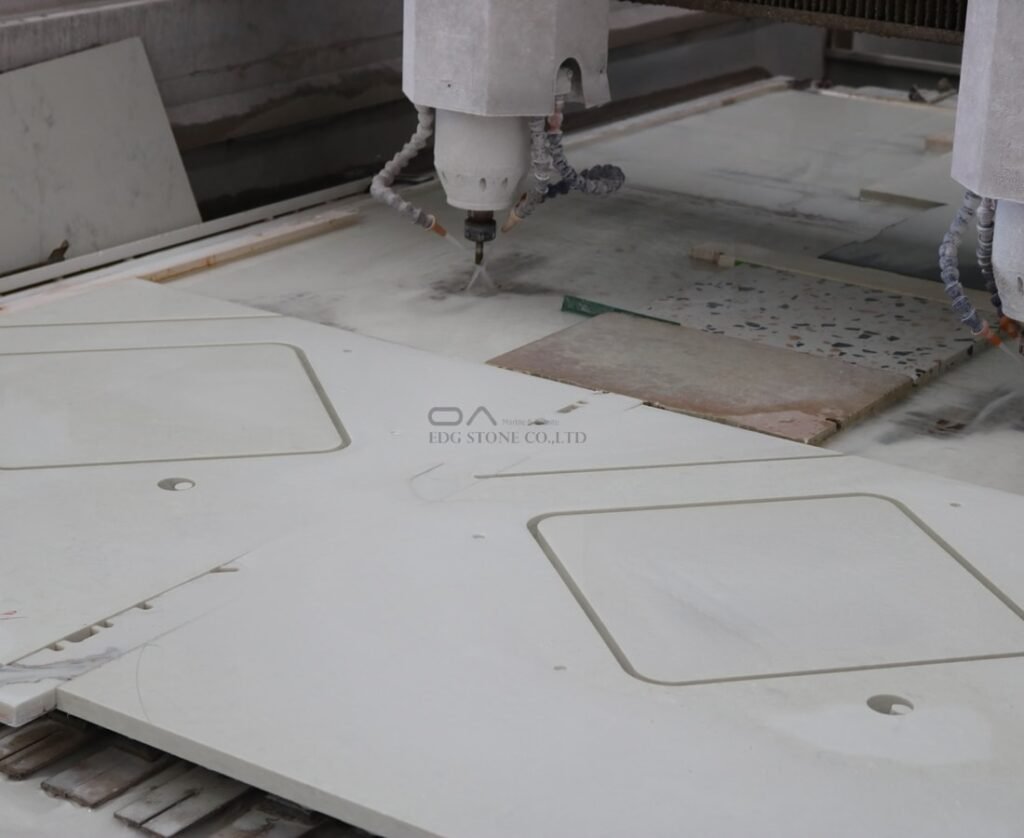
- Custom fabrication
- Bulk production capability
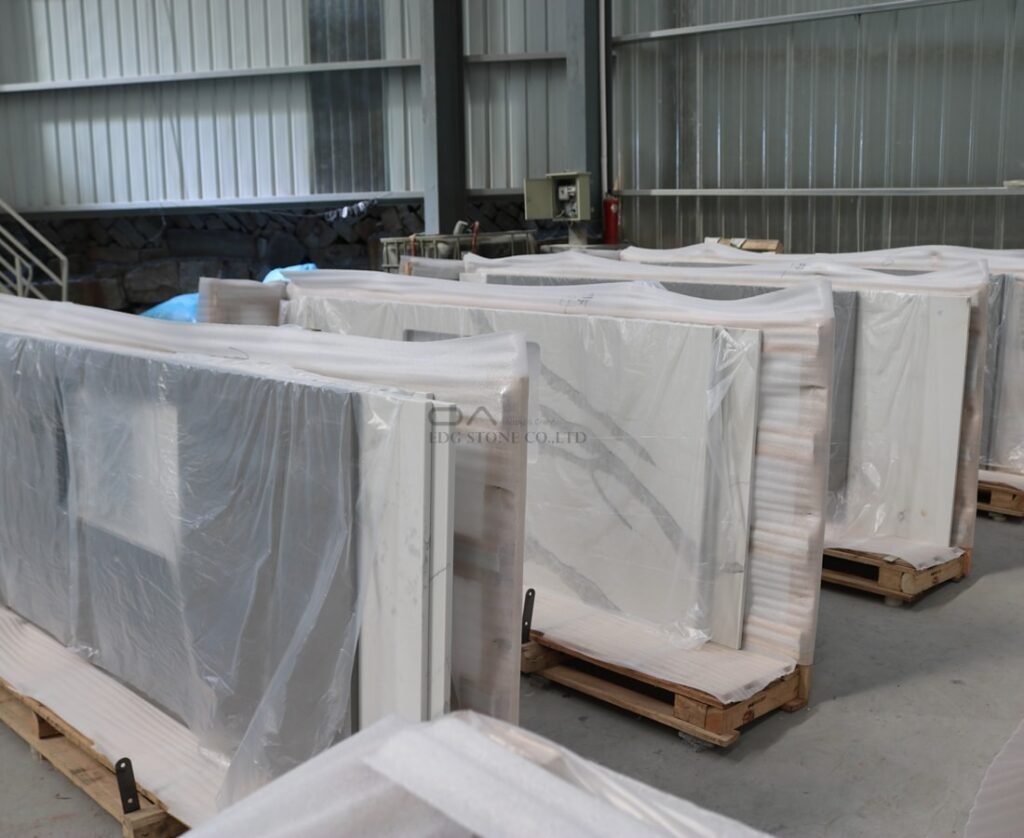
- Export packaging control
- No MOQ flexibility
- Fast lead times
👉 Positioning insight:
Brands sell systems & marketing
Factories deliver execution & scalability
Conclusion
If you summarize this guide into one line:
👉 The best quartz countertop is not the most beautiful slab—
It is the one that fits your usage, maintenance, budget, and supply chain reality.
Across Cambria, Caesarstone, and MSI, the consensus is clear:
- Nonporous
- Stain-resistant
- Easy-care
- No sealing
- Supported by strong warranties
But “best” only becomes meaningful when applied to a real project context.
FAQ (Google Featured Snippet Ready)
Q1: What is the best quartz countertop brand?
There is no universal best. Cambria, Caesarstone, and MSI all offer strong performance, but differ in design, pricing, and supply models.
Q2: What should I look for in the best quartz countertops?
Look for nonporous, stain-resistant, low-maintenance surfaces with clear care instructions and strong warranty coverage.
Q3: Are quartz countertops heat-resistant?
Yes, but not heat-proof. Always use trivets or hot pads and avoid direct contact with very hot cookware.
Q4: Do quartz countertops need sealing?
No. Most quartz countertops are nonporous and do not require sealing.
Q5: What is the best quartz for kitchen countertops?
The best quartz combines low maintenance, food safety, heat-use clarity, and reliable warranty support.