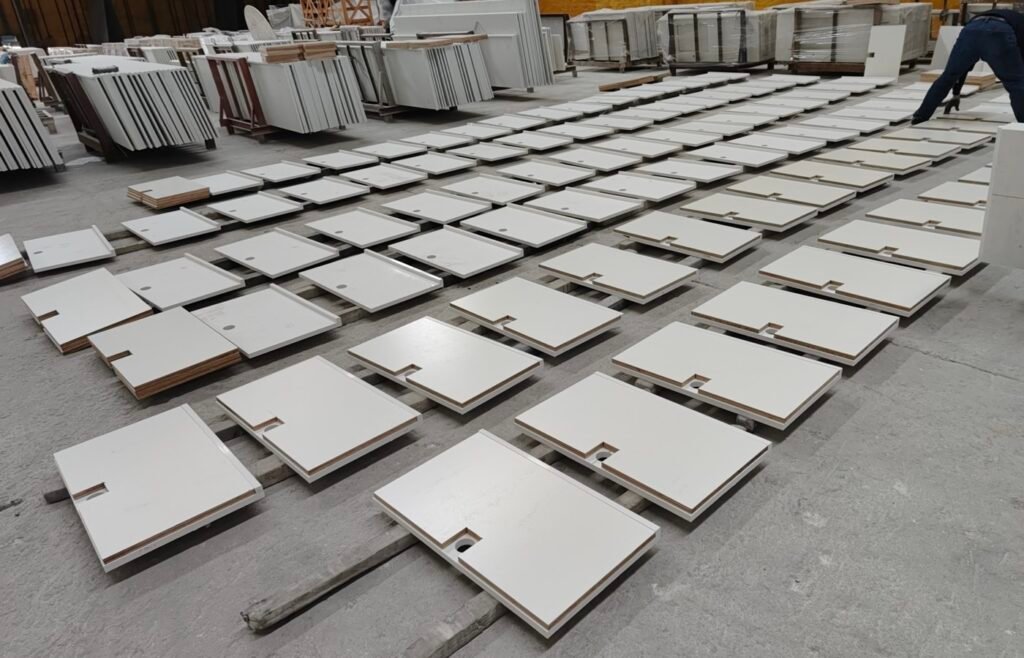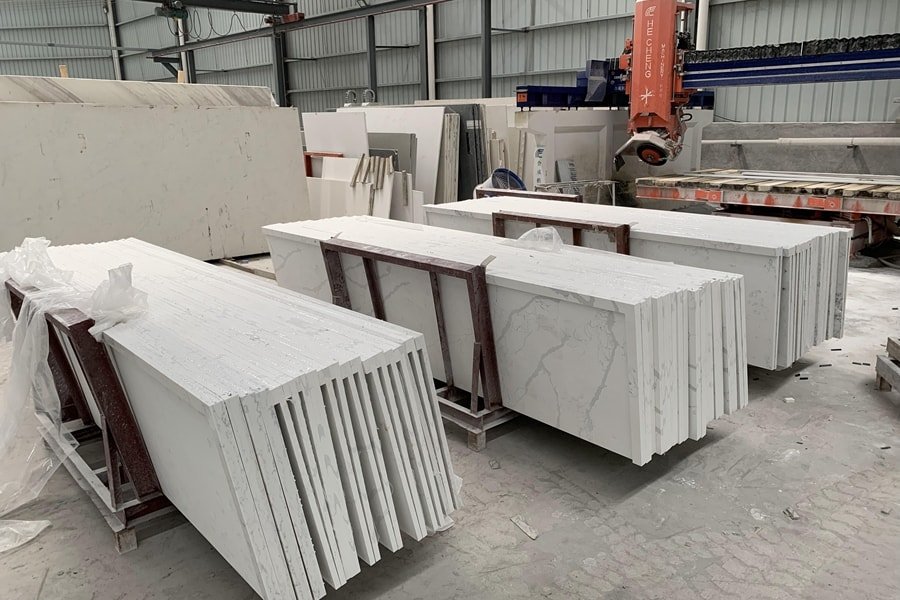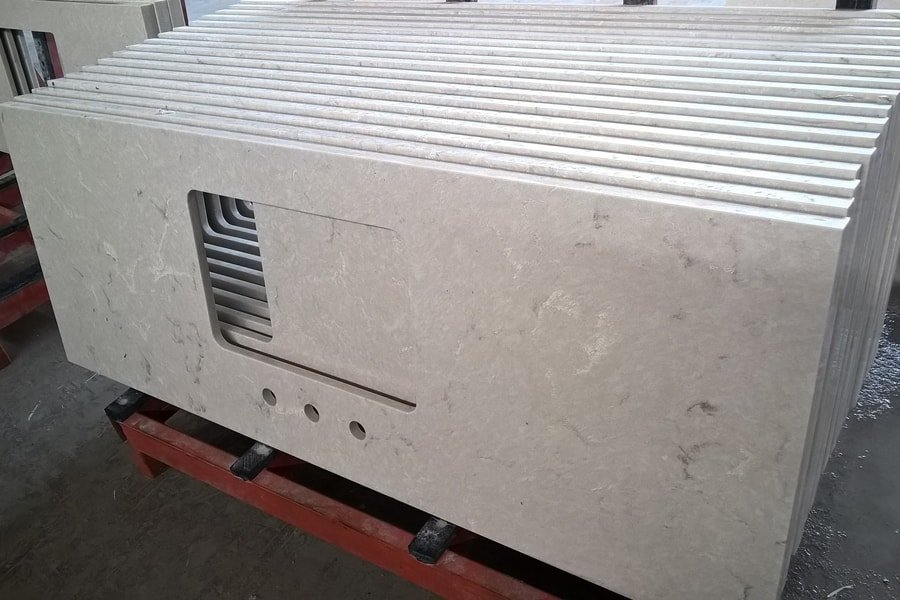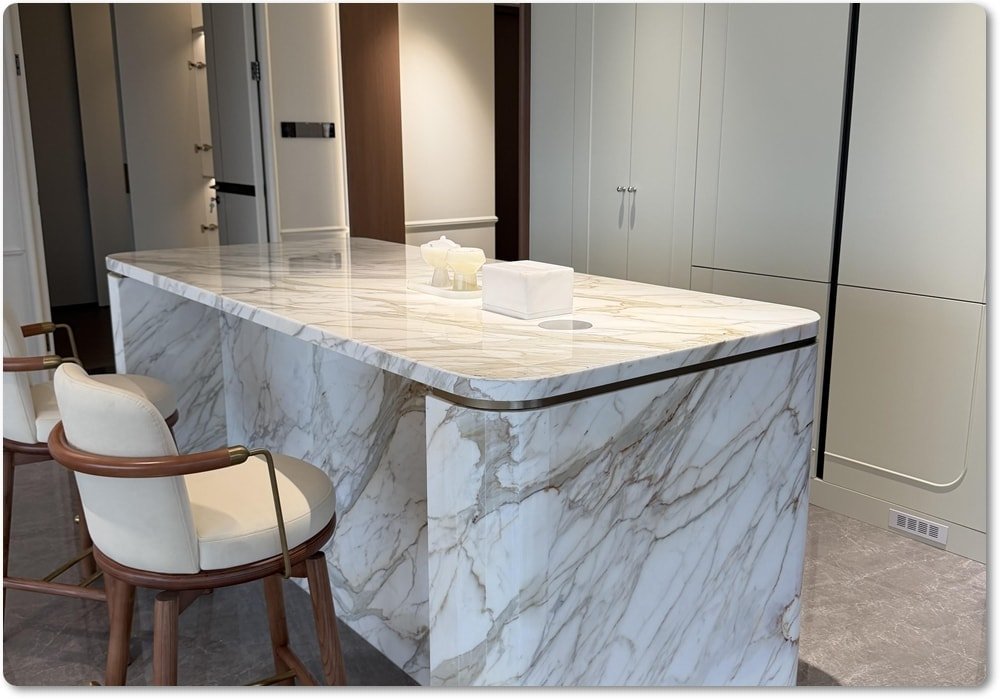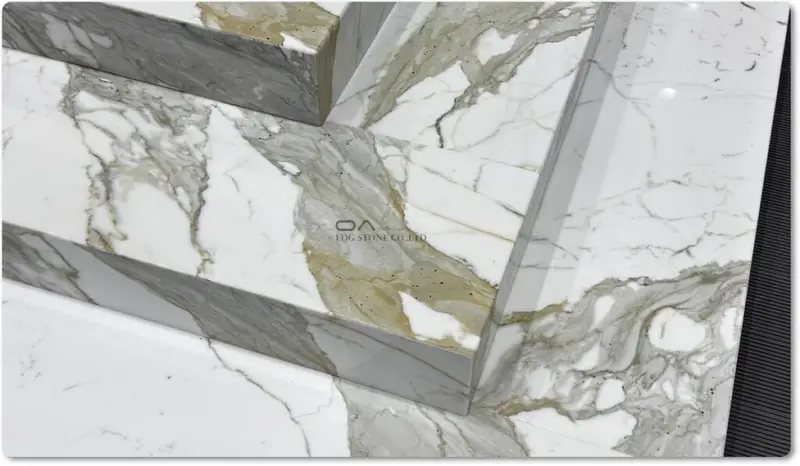
What Are Quartz Countertops?

The Complete 2026 Guide to Engineered Stone for Kitchens & Bathrooms


Introduction

In today’s global construction and interior design market, quartz countertops have rapidly become one of the most dominant materials for kitchen countertops and bathroom vanity tops.

From residential kitchens in North America to large-scale commercial projects in Europe and Australia, quartz surfaces are now widely preferred due to their:

👉 Consistency, low maintenance, and scalability

However, for buyers, developers, and designers, a critical question remains:

👉 What exactly is quartz? How is it different from granite, marble, and quartzite? And is it the best countertop material in 2026?

This white paper provides a complete knowledge framework, covering:

  • Material composition
  • Manufacturing process
  • Performance advantages
  • Application scenarios
  • Procurement strategy
quartz countertops

1. What Is Quartz? (Material Definition & Structure)

1.1 Definition of Quartz Countertops

Quartz countertops are engineered stone surfaces, made from:

  • ~90–95% natural quartz crystals
  • ~5–10% resins, polymers, and pigments

Unlike natural stones, quartz is manufactured under controlled conditions, ensuring:

✔ Uniform color
✔ Predictable patterns
✔ Consistent performance


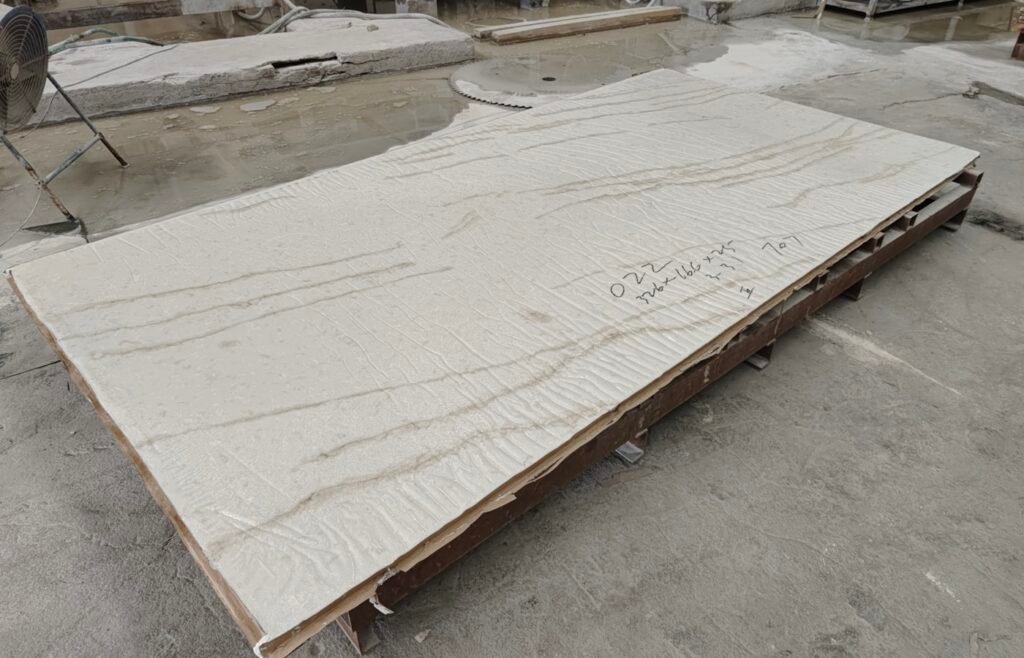
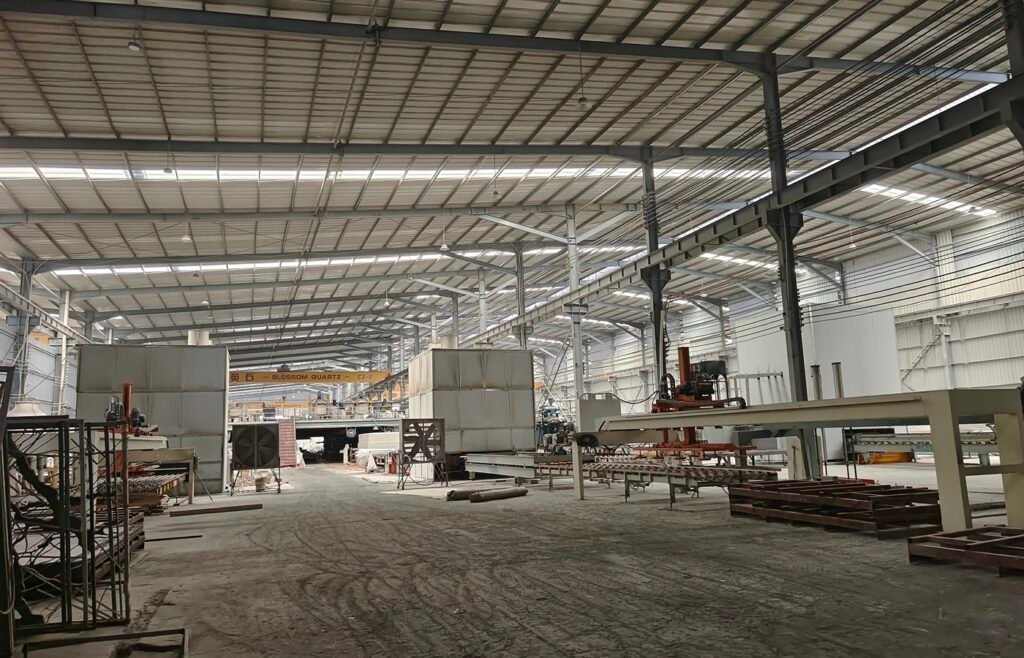
1.2 How Quartz Countertops Are Made?

https://images.openai.com/static-rsc-4/DGMZXNcSBFjPHCgUpC7WvuiHavDNfQHa6I-MVRAQyLAr2S4wjZpFjorz6sCnjkjmlxMj4wtZV_Kw0CScnCM_4XRmUp6IMH9Tl5nEqSGgSbojbFXVcuIVobkjhLANZnG1vWnjXqQ0bupPaKksmYId1Kzan3d55r9-Jz8PS_FOG2VQJH5vXx17LxROykKWuAc2?purpose=fullsize
https://images.openai.com/static-rsc-4/DIQz2I4Aj93-nXOFTESXbe04wr1D9mrVC3NCo_Zr6gObsHL5wuLVh6zRgQbmv3B_akjJmsBzFHaW-LPzNoiFZVp_U4w42umjvn3tZhGQ8z1Y9suY_uSB-fCLkpLGvGbfqQnU1Fcwy8or-4Ce1wHRPoYsS5ZlZ-uxzSwB1qb3RW46RTNe9vJ7LoU2TwHM-eoU?purpose=fullsize
https://images.openai.com/static-rsc-4/UlAbK8lzyo8x1rWYFsWUUDngHCmUR96l2cRXkcDJpL_mQOqDh2Lz8h3nah7PEt8308mGCqlwxTmEMOu7eYLgcDweJZVM0OmS0MKxH0Mp1f-YLADRT9eBuSXwZz8mbB_Bi1O4lDu8PfZjVaTDuNZ3FjsG-aKqn9R8bb40WbdpQTvvNx1YvanusVawTqkYHPIV?purpose=fullsize

The production process typically involves:

  1. Raw quartz crushing
  2. Mixing with resin and pigments
  3. Vibro-compression under vacuum
  4. High-temperature curing
  5. Surface polishing (honed, polished, leathered)

👉 This industrial process is what gives quartz its high consistency and scalability


1.3 Quartz vs Natural Stone (Core Difference)

MaterialTypeNaturalKey Feature
QuartzEngineeredUniform & stable
GraniteIgneous rockNatural & heat-resistant
MarbleMetamorphicElegant but soft
QuartziteMetamorphicVery hard & natural

👉 Core insight:
Quartz = engineered precision
Granite = natural uniqueness
engineered quartz

2. Key Advantages of Quartz Countertops

2.1 Non-Porous Surface (Major Advantage)

Unlike granite or marble:

👉 Quartz is non-porous

This means:

  • No sealing required
  • Resistant to stains
  • Hygienic for food preparation

✔ Ideal for kitchens and bathrooms


2.2 Low Maintenance

Quartz requires minimal care:

  • No annual sealing
  • Easy cleaning with mild soap
  • Resistant to common kitchen stains

👉 This is why quartz dominates modern residential projects


2.3 Consistent Appearance (Project-Friendly)

https://images.openai.com/static-rsc-4/Q0Cn4GXZgbNmNvcN1Y2eTcEQ3VQF1OCjO4a3oBNikXv_5MSLYUbQmvqXvYHLh3CNIWbn1_PxAEs0ZiJJ9DsR3KAJqdxduCcmcv4AVt9MK-CPNy1xRzH9qNnwk5PYmOqJlHpknUErSP6DRCNrrzhxNDVHMQGZ5xNUGucGMYXHGR-2oD33bg5erGKcvVMc97tg?purpose=fullsize
 
https://images.openai.com/static-rsc-4/OJFiUdI85qcDVJayl3S2JVgS-vOEDD_ilJAlyMylHn56vtO_rCwv39hFVhhk1r48NGqffibcSpfrpnJ3rSuGmcnCMvRYkgp7urvpMM42YDplyw_5CofeyU5b19Srcym8ozbKAWAgpnQSG1omvJ2SxGgl5zU2r2sthDQftSGLfXTQ2NSXXon7m4vOAwIf3sxK?purpose=fullsize
 

Because quartz is manufactured:

✔ Same color across batches
✔ Predictable veining
✔ Perfect for large-scale projects

👉 Critical for:

  • Hotels
  • Apartments
  • Commercial developments

2.4 Wide Design Options

Quartz offers:

  • Marble-look (Calacatta, Carrara)
  • Solid colors
  • Industrial concrete styles

👉 Enables designers to achieve natural aesthetics with engineered control


2.5 Durability

  • Mohs hardness: ~6–7
  • Scratch-resistant
  • Impact-resistant (to a degree)

👉 Suitable for high-traffic kitchens
quartz kitchen countertops

3. Limitations of Quartz Countertops

3.1 Heat Sensitivity

Unlike granite:

👉 Quartz contains resin

This means:

  • Direct hot pots may cause discoloration
  • Heat resistance is lower than that of natural stone

✔ Use trivets or heat pads


3.2 Not Fully UV Stable

  • Prolonged sunlight exposure may cause fading

👉 Not ideal for outdoor applications


3.3 Less “Natural” Feel

Compared to granite:

  • Patterns are engineered
  • Some high-end clients prefer natural stone

4. Quartz in Kitchen Countertops

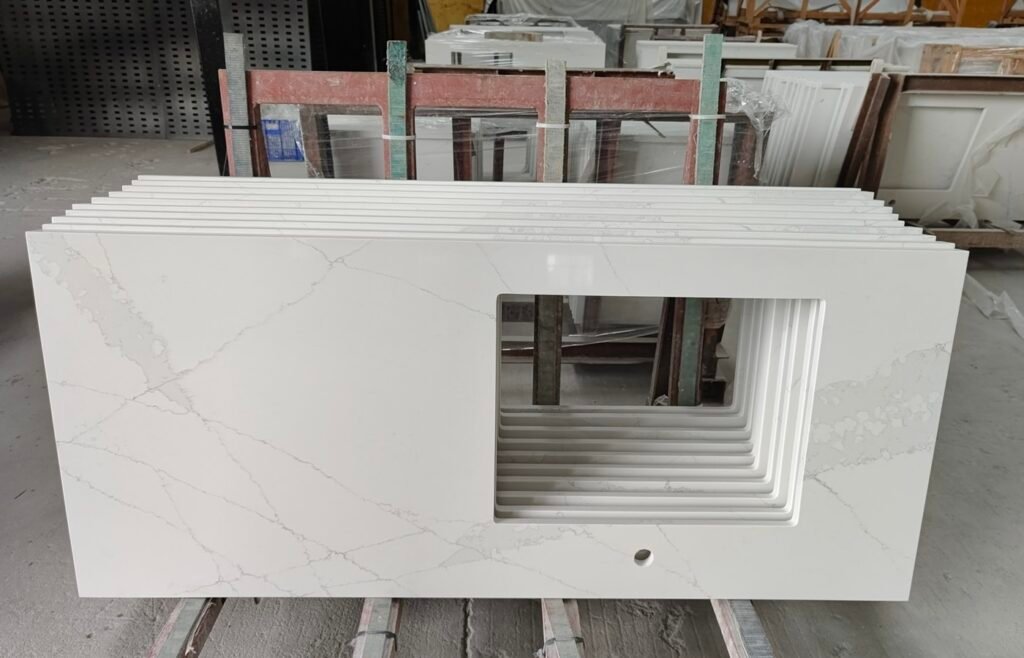
4.1 Typical Kitchen Structure

A quartz kitchen countertop includes:

  • Main slab
  • Backsplash
  • Sink cut-out
  • Cooktop cut-out

4.2 Why Quartz Dominates Modern Kitchens?

👉 Key reasons:

  • Easy maintenance
  • Clean aesthetic
  • Cost predictability
  • Batch consistency

4.3 Popular Quartz Colors

  • White Quartz (Calacatta style) → Luxury kitchens
  • Grey Quartz → Commercial projects
  • Black Quartz → Modern minimalism
quartz bathroom countertops

5. Quartz in Bathroom Vanity Tops

5.1 Advantages

  • Water-resistant
  • Mold-resistant
  • Easy cleaning

5.2 Application Scenarios

  • Vanity tops
  • Wall cladding
  • Shower benches

👉 Especially popular in hotel bathrooms


6. Quartz vs Granite: Procurement-Level Comparison

FactorQuartzGranite
MaterialEngineeredNatural
Maintenance⭐⭐⭐⭐⭐⭐⭐⭐
Heat Resistance⭐⭐⭐⭐⭐⭐⭐⭐
Consistency⭐⭐⭐⭐⭐⭐⭐⭐
AestheticsControlledNatural variation

👉 Procurement Insight:

  • Residential developers → Quartz
  • Luxury villas → Granite
  • Large-scale projects → Quartz
countertop trends 2026

7. Why Quartz Dominates Global Supply Chains?

7.1 Scalability

Quartz production allows:

✔ Mass production
✔ Stable lead times
✔ Standardized quality


7.2 Cost Control

Compared to natural stone:

  • Less waste
  • Predictable pricing
  • Easier logistics

7.3 Role of Professional Manufacturers (EDG Stone)

In real-world procurement:

👉 Material alone is NOT enough

What matters:

  • Slab selection control
  • Fabrication precision
  • Edge finishing quality
  • Export packaging

A professional supplier like EDG Stone provides:

  • No MOQ customization
  • Global project supply
  • Fast production cycles
  • Consistent slab matching
quartz slabs exporter

Conclusion

Quartz countertops have become the dominant material in modern kitchen and bathroom design due to their:

✔ Low maintenance
✔ Consistent appearance
✔ Scalable production
✔ Design flexibility

While natural stones like granite and quartzite still lead in luxury and authenticity, quartz is unmatched in:

👉 Efficiency + reliability + large-scale project suitability

For buyers in 2026:

👉 Quartz is not just an option — it is the industry standard for engineered surfaces

FAQ (For Google Featured Snippets)

Q1: What are quartz countertops made of?

Quartz countertops are made from natural quartz crystals combined with resins and pigments to create a durable engineered surface.


Q2: Do quartz countertops need sealing?

No, quartz countertops are non-porous and do not require sealing.


Q3: Are quartz countertops better than granite?

Quartz is easier to maintain and more consistent, while granite offers better heat resistance and natural beauty.


Q4: Can quartz countertops handle heat?

Quartz is heat-resistant but not heat-proof. Direct contact with hot cookware should be avoided.


Q5: Are quartz countertops good for bathrooms?

Yes, quartz is ideal for bathrooms due to its water resistance and low maintenance.

References

  1. Natural Stone Institute — Engineered Stone vs Natural Stone Guide
  2. ASTM International — Engineered Stone Standards
  3. NSF International — Food Safety for Countertop Surfaces
  4. OSHA — Silica Safety in Stone Fabrication
  5. Breton S.p.A — Quartz Slab Manufacturing Technology
  6. Forbes Home — Best Countertop Materials 2026
  7. HomeAdvisor — Quartz Countertop Cost Guide
  8. Marble Institute of America — Stone Industry Resources
Spread the love

Send Your Inquiry Today