Understanding Water Absorption in the Quartz Industry
What is the Water Absorption Rate in Quartz Stone?
Water absorption is the percentage increase in mass of a material after exposure to water according to standardized test procedures. For agglomerated and engineered stone products, recognized methods measure apparent density and water uptake under defined conditions so manufacturers, specifiers, and regulators can compare materials objectively. European test methods for agglomerated stone explicitly define apparent density and water absorption procedures used across the supply chain.
Water absorption matters because even tiny differences—fractions of a percent—translate into large differences in stain resistance, susceptibility to mold, freeze-thaw durability (in exterior contexts), and long-term dimensional stability. ASTM and industry test suites (often invoked by designers and testing programs) set expectations and allow apples-to-apples comparisons between natural and engineered surfaces.
Why Water Absorption Is a Core Quality Indicator?
Low water absorption indicates fewer open pores and micro-capillaries at the slab level. That reduces opportunities for liquids, oils, and contaminants to penetrate the matrix, which improves stain resistance, reduces bacterial niches in foodservice environments, and delivers a more durable finish over decades. For specifiers, a slab with lower measured absorption is easier to justify for wet environments and commercial kitchens because it performs more predictably under heavy use.
The Secret Behind High-Density Quartz Stone
Raw Material Selection: Quartz Purity Makes the Difference
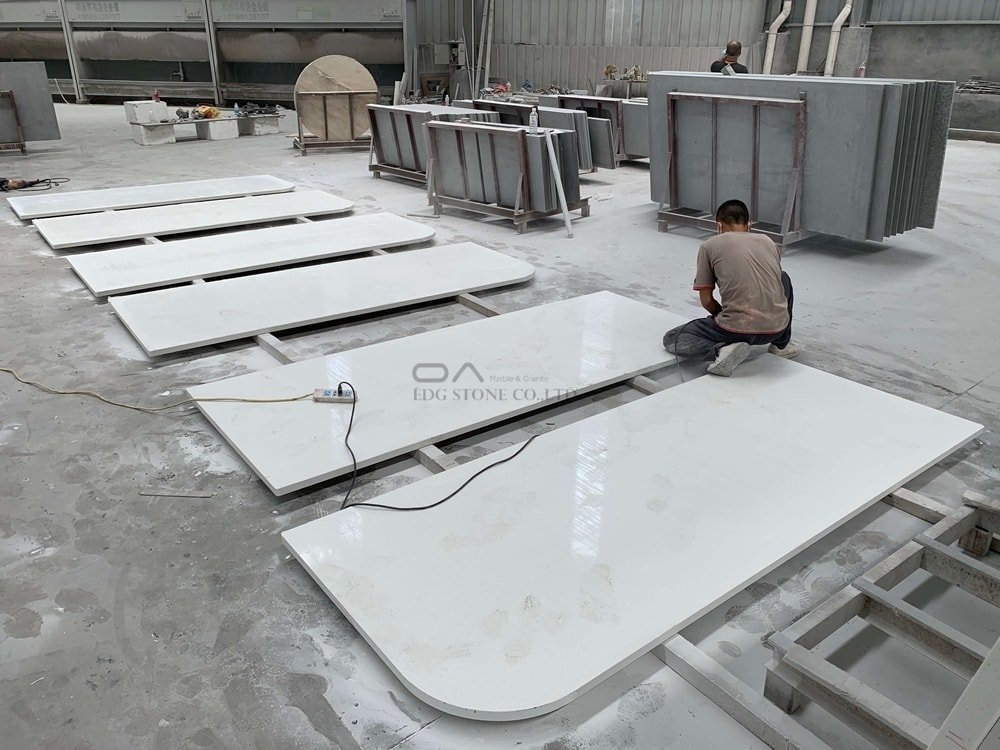
High-density quartz formulations begin with high-quality, coarse crystalline quartz as the bulk aggregate. Engineered stone performance correlates strongly with the percentage of inert quartz (and its particle-size distribution) relative to fillers, recycled glass, pigments, and resin. Slabs that use a larger proportion of properly sized quartz crystals pack more tightly and establish fewer voids at the aggregate–resin interface, lowering intrinsic porosity and therefore water absorption.
EDG Stone’s approach uses controlled feedstock grading (selecting sieve fractions and crystalline purity) to maximize particle packing density before compaction. This attention to raw material grading is a principal reason our slabs test below typical industry absorption values.
Advanced Manufacturing Technology That Reduces Porosity
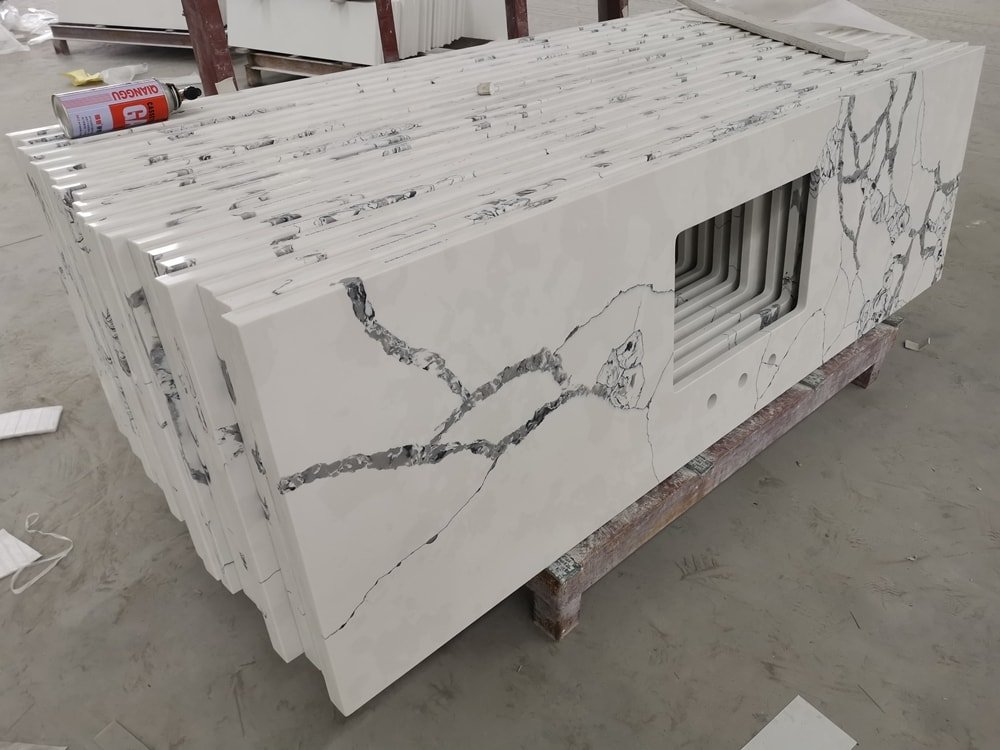
The vacuum vibro-compression (Breton-style) process—vibration plus vacuum plus high-pressure compaction—produces an isotropic slab with dramatically reduced entrapped air and micro-voids. During compaction, the quartz/resin mix is consolidated so that resin fills tiny interstitial spaces rather than leaving open capillary channels; the result is a denser, less porous slab. The engineered-stone production process and its capability to achieve “virtually no porosity” are widely documented in industry technical descriptions.
In contrast, lower-grade production lines that omit strict vacuum degassing, reduce compaction pressure, or under-cure the matrix produce slabs with micro-pores and higher measured absorption—even when visually similar from the surface.
Resin System Engineering: The Invisible Factor
Resin selection and formulation are invisible to buyers but crucial to water-uptake performance. Unsaturated polyester resins, modified polyester, or advanced hybrid resin systems differ in cross-link density, hydrophobicity, and UV stability. A premium resin engineered for deep penetration into micro-gaps and tight chemical bonding to the quartz surface will block the formation of capillary pathways, lowering measured absorption.
Poor resin chemistry or sub-optimal resin-to-aggregate ratios leave microscopic channels, capillaries, and micro-voids through which water can migrate—this is the technical explanation behind why two visually identical slabs from different factories can show very different absorption and long-term stain behavior.
Compaction, Curing, and Post-Manufacture QA
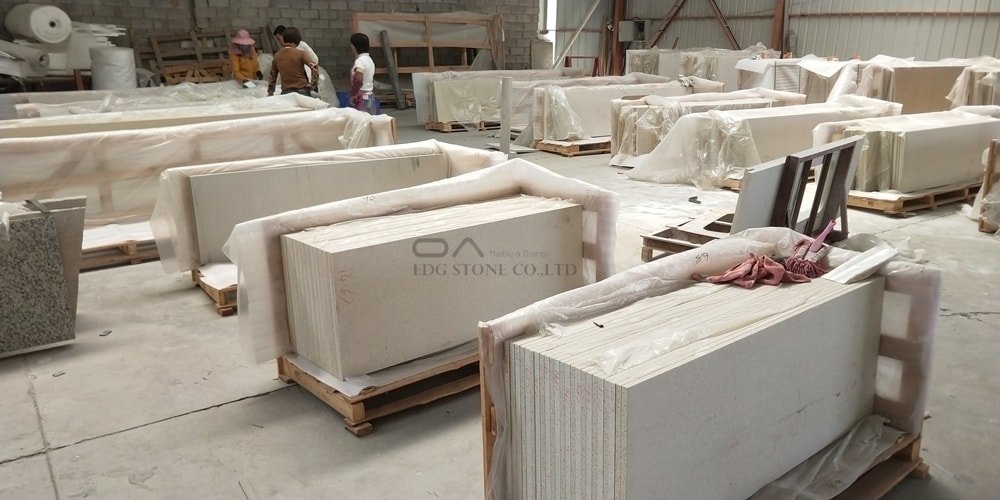
High-density slabs require not only proper compaction but precise thermal and post-cure cycles. Controlled heat profiles ensure resins fully cross-link and shrink uniformly; insufficient cure yields internal micro-stresses and nanopores. EDG Stone’s factory quality controls include batch-level absorption testing, sample cross-section microscopy, and random-lot destructive testing to validate density and water uptake before slabs are shipped.
Data-Backed Comparison: EDG Stone vs Industry Average
Typical Engineered Quartz Water Absorption Benchmarks
Many premium engineered quartz products report water absorption values at or below 0.10% by mass according to agglomerated stone test methods; this is consistent with manufacturer technical data sheets for high-density products. Lower-grade quartz or poorly compacted slabs can show measurably higher values. A manufacturer’s technical sheet showing ≤0.10% for a premium quartz product is representative of the performance tier EDG Stone targets.
Why a Lower Figure Matters in Practice?
A measured absorption reduction from, for example, 0.20% to 0.08% may appear numerically small, but in real usage, it reduces the rate at which staining fluids reach internal microstructures. Over a 10–20 year service life, this creates fewer deep stains, less microbial risk in food-prep zones, and more predictable polishing and edge integrity. Low absorption also correlates with higher apparent density (kg/m³), which supports better machining and edge finishing.
Application Impact: Where Low Water Absorption Matters Most?
Quartz Countertops in Kitchens
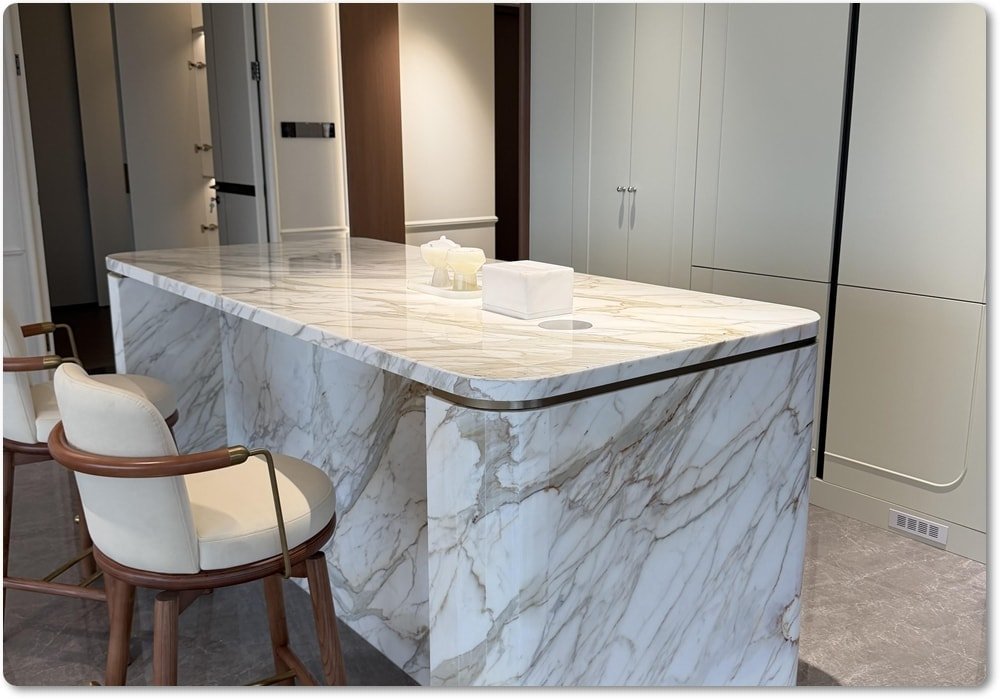
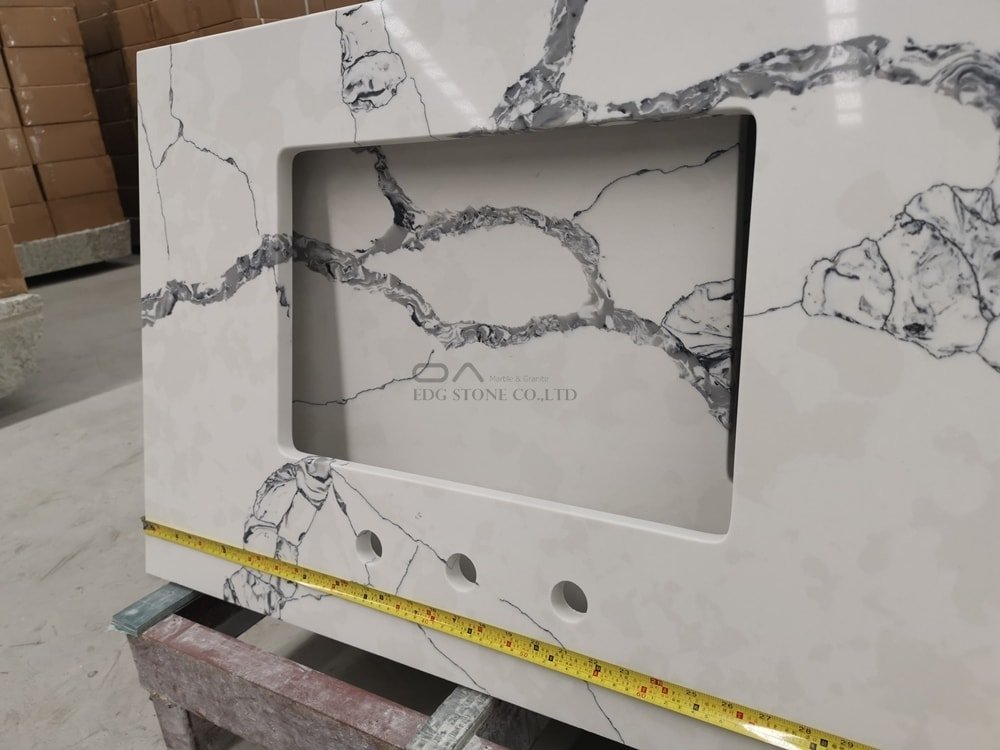
For kitchen countertops, low water absorption means better long-term resistance to wine, coffee, oil, and acidic juices. It also simplifies daily maintenance: surfaces that don’t wick liquids readily are easier to clean and less likely to hold microscopic residues. In commercial kitchens and foodservice installations, specifying low-absorption engineered quartz supports hygiene goals and can simplify certification for food contact where relevant.
Can Quartz Be Used for Shower Walls?
Yes—but with qualification. High-density, low-absorption engineered quartz can be suitable for shower walls provided the formulation is UV-resistant (if any sunlight reaches the installation), properly sealed at cut edges, and the product was manufactured and cured for wet environments. Many manufacturers advise caution or provide specialized outdoor/off-UV collections for exterior exposure—standard polyester-resin quartz surfaces may discolor or degrade under sustained UV exposure. For wet interior applications, however, a low-absorption slab with correct detailing performs very well. Caesarstone and other brand guidance documents emphasize product-specific instructions for wet or outdoor use.
Typical Failure Cases With High-Absorption Quartz
Common failures include: persistent dark staining along seams, edge delamination when water reaches under-bonded areas, and mold growth in grout/edge interfaces. These are often traceable to either higher-absorption slabs, poor edge finishing, or inadequate installation detailing—not simply the slab color or surface polish.
Regulatory Standards & Industry Direction (2025–2030)
Standards to Watch
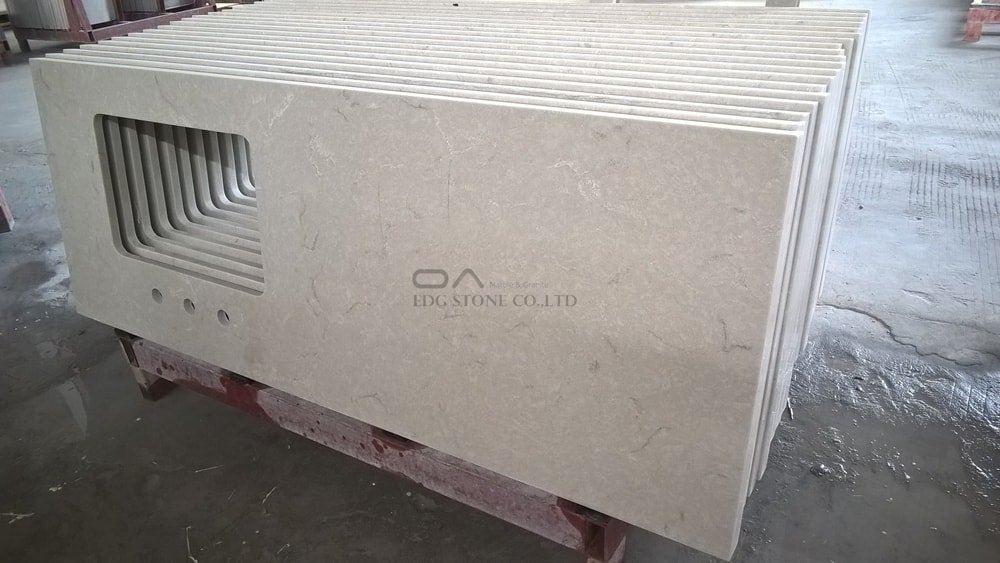
European EN methods for agglomerated stone (apparent density and water absorption) and ASTM dimension-stone testing remain the backbone of objective performance testing for stone and agglomerated products. These standards are used by laboratories and QA teams to validate manufacturer claims and to set minimum acceptance criteria in specifications.
Emerging Regulatory & Market Drivers
Green building standards, hygiene codes for food preparation areas, and client demand for long-life, low-maintenance finishes are pushing specifiers toward low-porosity engineered surfaces. In some commercial projects, certification or traceable test reports (batch certificates showing water absorption and density) are becoming contractual expectations rather than optional extras. The market trend is clear: manufacturers that can document lower water absorption with rigorous testing will command premium positions in commercial and high-end residential sectors.
Quartz Stone Economic Value & Market Positioning
Why Low Absorption Adds Economic Value?
Low absorption extends perceived and real product lifetime: fewer long-term repairs, less need for deep cleaning or replacement, and superior resale value. For manufacturers, offering product lines with demonstrably lower absorption supports factory-direct, higher-margin positioning (manufacturer → dealer → installer) because performance differentiation is easier to defend than cosmetic differences alone.
Buyer Considerations: Manufacturer VS Trader
Buying direct from a manufacturer or factory that publishes batch test reports and enforces QA yields more reliable water-absorption performance than sourcing visually similar slabs via traders with minimal traceability. Wholesale supply chains that mix lots from different factories risk inconsistent absorption across the same color or SKU—an expensive problem for large builds.
Future Outlook: High-Density Quartz as the Industry Baseline
Will Low-Density Quartz Be Phased Out?
Market dynamics and regulation will progressively favor low-absorption, high-density engineered quartz for many interior uses. Low-density, low-cost alternatives will remain in price-sensitive segments, but in professional spec writing, low absorption and test documentation will increasingly be treated as assumed baseline attributes for mid-to-high end projects.
Practical Buying & Specifying Checklist
How to Specify Low-Absorption Quartz (Practical Steps)?
— Request the vendor’s last five batch absorption results and density figures.
— Ask for the test standard used (EN 14617 or ASTM method).
— Specify resin type if UV or outdoor exposure is expected.
— Insist on factory QA certificates and a warranty that references performance metrics rather than cosmetic faults.
— For shower walls, require sealed edges and installation details that protect cut faces.
FAQ — Google Hot Search Questions (Natural-language Q&A)
Q1: What is the ideal water absorption rate for quartz countertops?
A1: For engineered quartz, premium slabs commonly report water absorption at or below 0.10% by mass when measured under agglomerated-stone methods. This low figure indicates very limited porosity and correlates with superior stain resistance and hygiene performance. Manufacturers who supply batch certificates showing ≤0.10% are typically producing high-density material.
Q2: Is low water absorption quartz better for shower walls?
A2: Yes—low water absorption reduces penetration of moisture into the matrix and lowers mold and staining risk in constantly damp environments. However, ensure the selected product is intended for wet areas, properly sealed at cut edges, and not exposed to direct UV (some resins yellow under sunlight). Installation detailing is as important as slab performance when using quartz in showers.
Q3: How can I identify lower-grade quartz before buying?
A3: Ask for the manufacturer’s standardized test results (apparent density, water absorption) and the test method used (EN 14617 or an equivalent). Visually similar slabs can vary dramatically—always request batch test reports, check edge finish consistency, and audit the supplier’s QA practices.
Q4: Does quartz absorb more water than granite?
A4: Engineered quartz is designed to be essentially non-porous and typically demonstrates lower water absorption than many natural granites that are not specifically low-absorption graded. However, properly specified and sealed natural granite can also show low absorption. The important distinction is tested performance rather than material label: rely on measured absorption values.
Q5: Why do some quartz countertops stain despite being “non-porous”?
A5: Staining can result from higher absorption in lower-grade slabs, poor resin formulation, inadequate cure, or installation issues (unprotected cut edges, poorly sealed seams). Even a material labeled “non-porous” can stain if micro-capillaries exist or if solvents/chemicals attack the resin over time. Insist on test data and proper installation to avoid surprises.
Semantic Closed-Loop Content Block — How / Why / What / Options / Considerations
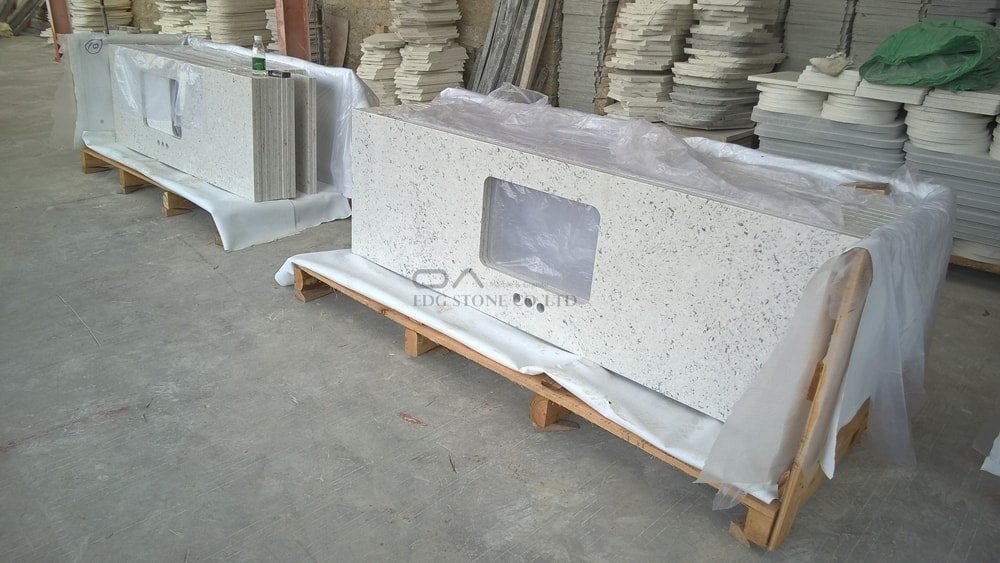
How EDG Stone achieves low water absorption: Carefully selected quartz feedstock, tightly controlled particle grading, vacuum vibro-compression compaction, premium resin chemistry, and rigorous batch testing combine to produce slabs with fewer capillary paths and lower measured absorption than industry averages.
Why this matters: Reduced absorption leads to improved stain resistance, hygiene, and lifetime value—critical in kitchens, commercial foodservice, and wet areas such as showers. Low absorption also makes material performance predictable across multi-batch projects and improves warranty defensibility.
What differentiates EDG Stone: factory control of raw materials, documented test data per batch, and an engineer-level approach to resin formulation. These differences change outcomes in heavy-use installations where maintenance cycles and repair costs drive lifecycle economics.
Options for designers and buyers: prioritize products with published EN/ASTM test figures; require batch certificates; choose UV-stable formulations if the installation receives sunlight; and demand professional edge sealing and seam detailing for wet zones.
Considerations for procurement: verify the test standard used (EN 14617 or equivalent), compare apparent density and absorption numbers rather than marketing language, and prefer manufacturer-direct sources for large or sensitive projects where consistency matters.
Reference (no links; authoritative sources and professional sites)
ASTM International — ASTM C97: Standard Test Method for Absorption and Bulk Specific Gravity of Dimension Stone (ASTM test suite overview).
European Committee for Standardization (CEN) — EN 14617-1: Methods for determining apparent density and water absorption of agglomerated stone products.
Natural Stone Institute — Overview of stone testing and relevant ASTM standards for dimension stone.
Santa Margherita / VEGA SM QUARTZ — Technical data for quartz-based engineered stones (example water absorption values ≤0.10%).
Engineered Stone process and characteristics — industry technical review (engineered stone production, vibro-compression method).
NSF International — NSF/ANSI standards and examples of food-contact certified quartz products (relevant for hygiene certifications).