Introduction: Why textured finishes matter outdoors?
Textured stone finishes such as flamed and bush-hammered surfaces are widely used in outdoor architecture because they balance aesthetics with critical functional performance: traction, durability, low maintenance, and thermal stability. Where polished stone can become dangerously slick when wet, flamed and bush-hammered stones intentionally introduce micro and macro texture to break water films and increase friction. This makes them especially suitable for pool decks, terraces, stairs, public plazas, and vehicular pavements.
What readers will learn: clear answers up front
What flamed and bush-hammered finishes are and how they differ.
How to measure and specify performance (slip resistance, water absorption, compressive strength).
Installation, drainage, and substrate choices that protect long-term performance.
Procurement and factory QA language to demand when buying at the manufacturer/factory/wholesale scale.
Maintenance and lifecycle considerations that affect the total cost of ownership.
Quick visual/functional comparison: flamed vs bush-hammered vs other finishes
Flamed: thermally fractured grain creates a rough, granular texture—excellent for traction and color stability.
Bush-hammered: mechanical impacts produce a pockmarked, uniform textured surface—very high coarse traction but a different aesthetic.
Sandblasted/honed/polished: generally smoother and less appropriate for high-wet, high-traffic outdoor zones.
What are flamed and bush-hammered finishes? (definitions & manufacturing)
Flamed finish — process and characteristics
A flamed finish is produced by rapidly heating the stone surface with a high-temperature torch or flame and then quenching it with water. The rapid thermal shock causes the surface minerals to fracture and pop, producing a granular, slightly rough texture that follows the stone’s natural grain. Flamed finishes are common for granites and hard igneous stones because their mineral composition tolerates the thermal process without excessive fracturing.
Typical outcomes:
A non-directional, grainy texture.
Enhanced color contrast and a natural, matte look.
Good resistance to UV and chemical degradation on most granites.
Bush-hammered finish — process and characteristics
Bush-hammering is a mechanical process in which a hammering head (with multiple pointed or pyramidal tips) repeatedly impacts the stone surface to produce a uniformly dimpled texture. Modern bush-hammer machines allow control over impact depth, spacing, and pattern density.
Typical outcomes:
A coarse, pockmarked texture with regular patterns.
Very high friction values for pedestrian safety.
A flatter, matte appearance that can be tuned from coarse to fine grain by adjusting hammering intensity.
Variations and hybrid treatments
Manufacturers often combine treatments—e.g., flamed plus sandblasted edges, or bush-hammered pathways adjacent to honed thresholds—to balance appearance and slip performance. Factory production flow typically includes raw slab selection, CNC trimming, surface treatment (flame/bush hammer), edge profiling, and QC tests for flatness, thickness,s and visual consistency.
Performance metrics: slip resistance, porosity, strength, and durability
Slip resistance
Slip performance is the single most important metric for wet outdoor areas. Common test methods include pendulum tests (dynamic coefficient of friction) and ramp/rating systems (R-values). Flamed and bush-hammered stones typically show significantly higher coefficients of friction than polished or honed stone; bush-hammered finishes often provide the highest coarse traction because of their deeper pitting.
What to expect:
Flamed granite: good dynamic CoF suitable for pool surrounds and terraces when installed with proper drainage.
Bush-hammered granite: very high coarse slip-resistance, often recommended for public plazas and stairs.
When specifying: require laboratory slip testing (pendulum or equivalent) performed on finished samples.
Water absorption and porosity
Natural granite generally exhibits low water absorption; many granites absorb <0.5% by weight, making them suitable for freeze/thaw climates and pool environments. Porosity influences staining, freeze/thaw resilience, and how adhesives or grouts behave.
Specification tip: ask manufacturers for water absorption test results (standard method values) on finished samples.
Mechanical performance and durability
Key mechanical parameters include compressive strength and abrasion resistance. Granite and other hard stones typically have high compressive strengths and excellent abrasion resistance, which supports heavy pedestrian and occasional vehicular loads when slabs or pavers are properly sized and supported.
Thermal behavior and color stability
Granite’s mineralogy favors color stability under UV; flamed finishes also help disguise minor surface weathering because the texture reduces perceptible fading compared with polished surfaces.
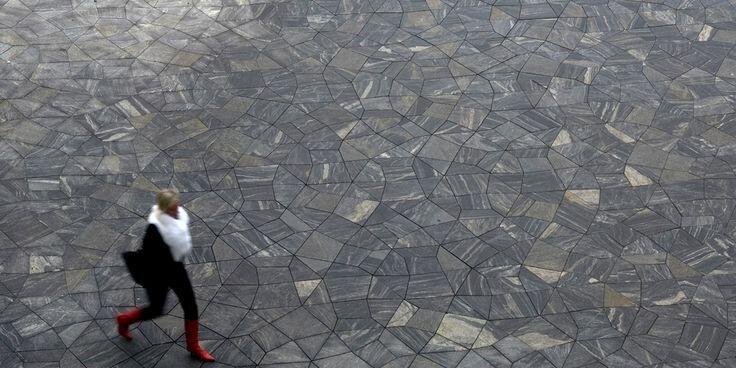
Typical outdoor applications & design patterns
Pool decks and wet edges
Recommendations:
Prefer flamed or bush-hammered granite for pool coping and deck tiles to reduce slip risk.
Use larger tile formats with regular joints (e.g., 300×600 mm, 600×600 mm) to minimize grout lines where possible, but maintain joint widths that allow drainage and movement.
Integrate anti-trip nosing and ensure flush but textured transitions between coping and deck.
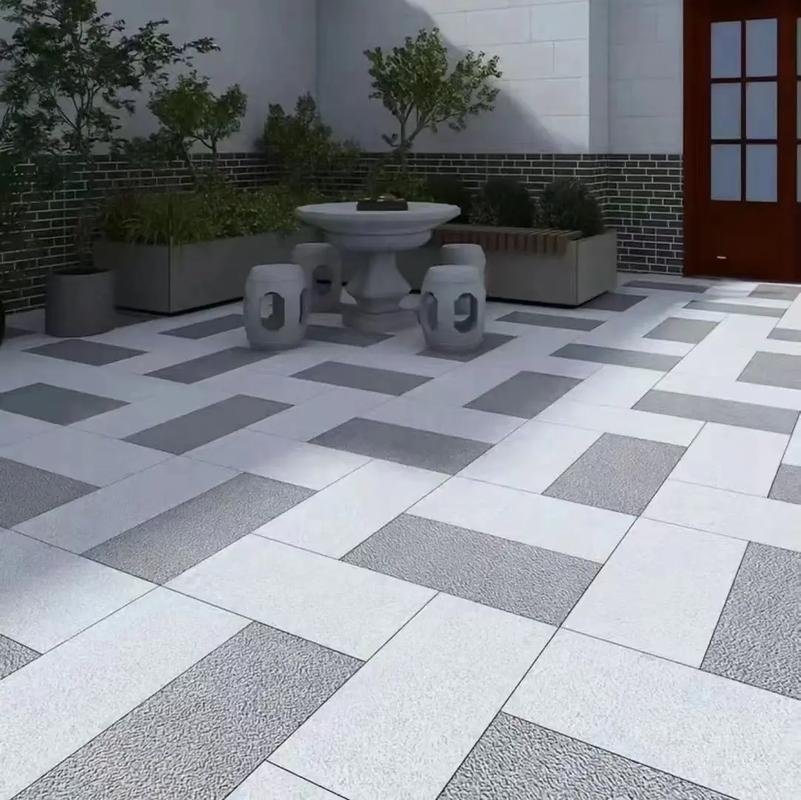
Terraces, patios, and plazas
Design patterns:
Running bond and modular layouts work well; consider rotation and variation to mask repetitive hammer patterns.
For high-aesthetic-value projects, combine flamed field tiles with bush-hammered steps or pathways for contrast.
Steps, landings, and ramps
Edge treatment guidance:
Avoid overly coarse textures on nosings that might increase tripping hazards; use bullnose or setback nosings with textured treads.
Ensure consistent tactile response (texture continuity) across step runs to avoid balance surprises.
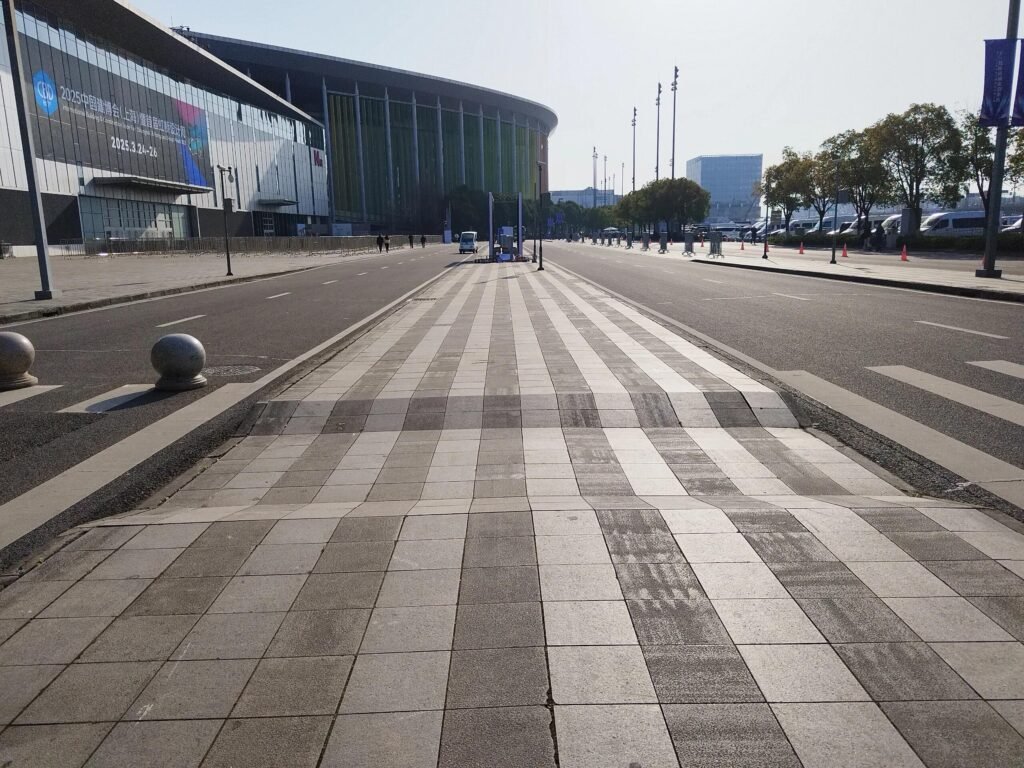
Driveways and vehicular areas
Where vehicular load occurs, increase slab thickness and depth of bedding. Bush-hammered surfaces may be used on low-speed driveways; for heavy driveways, verify flexural and compressive capacities.
Specification checklist for architects & procurement teams
What to request from the manufacturer/factory
Finished sample panels showing the exact flamed or bush-hammered texture.
Lab reports for: dynamic coefficient of friction (pendulum), water absorption, compressive strength, frost resistance, and abrasion.
Factory inspection photos and production tolerances (thickness ± mm, flatness).
Minimum technical values to require (example)
Water absorption: target <0.5% for poolside/freeze climates.
Slip resistance: Pendulum dynamic CoF ≥ recommended threshold for wet barefoot areas (specify numeric target based on local standard).
Thickness: 20–30 mm for pedestrian pavers; 30–50 mm for terraces with heavier loading.
Compliance and sustainability questions
Ask for chain-of-custody or quarry traceability, evidence of responsible quarrying, and any factory sustainability certifications. For EU projects, request documentation showing conformity with regional product regulations where applicable.
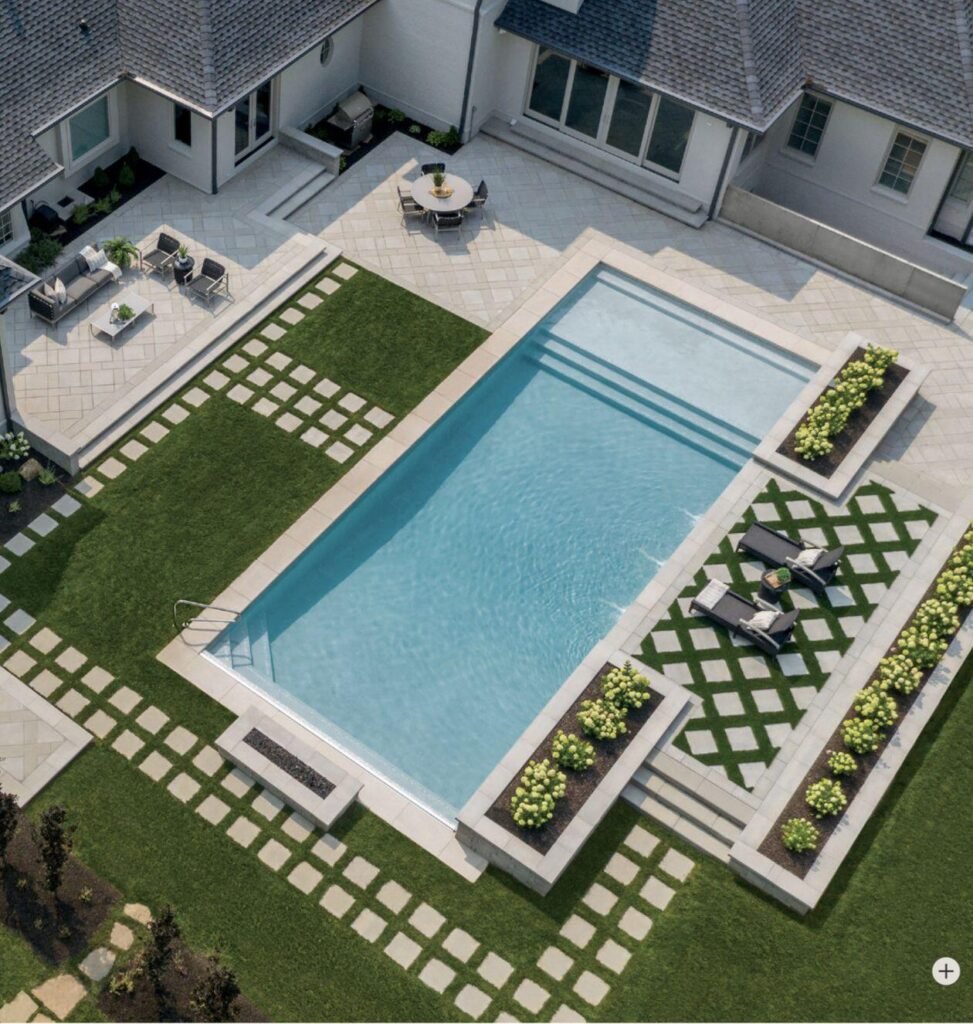
Installation best practices and substrate preparation
Bedding systems
Choose the correct bedding: traditional mortar beds for heavy loadings, modified thin-set systems for lighter terraces, or adjustable pedestal systems for roof terraces and elevated decks.
Drainage and falls
Provide consistent slopes (commonly 1–2% minimum) toward drains and ensure joints and grout allow positive runoff. For pool decks, prioritize cross-fall to avoid water pooling near structures.
Fixing for steps and tolerance control
Use stainless-steel anchors or strong adhesives appropriate for stone; ensure thermal expansion joints are included for long runs and that joint spacing follows slab sizing and anticipated movement.
Anti-slip maintenance treatment: what to avoid
Avoid aggressive grinding or coatings that can polish or clog the texture and reduce traction. If coatings are used, choose breathable, slip-enhancing products compatible with textured surfaces.
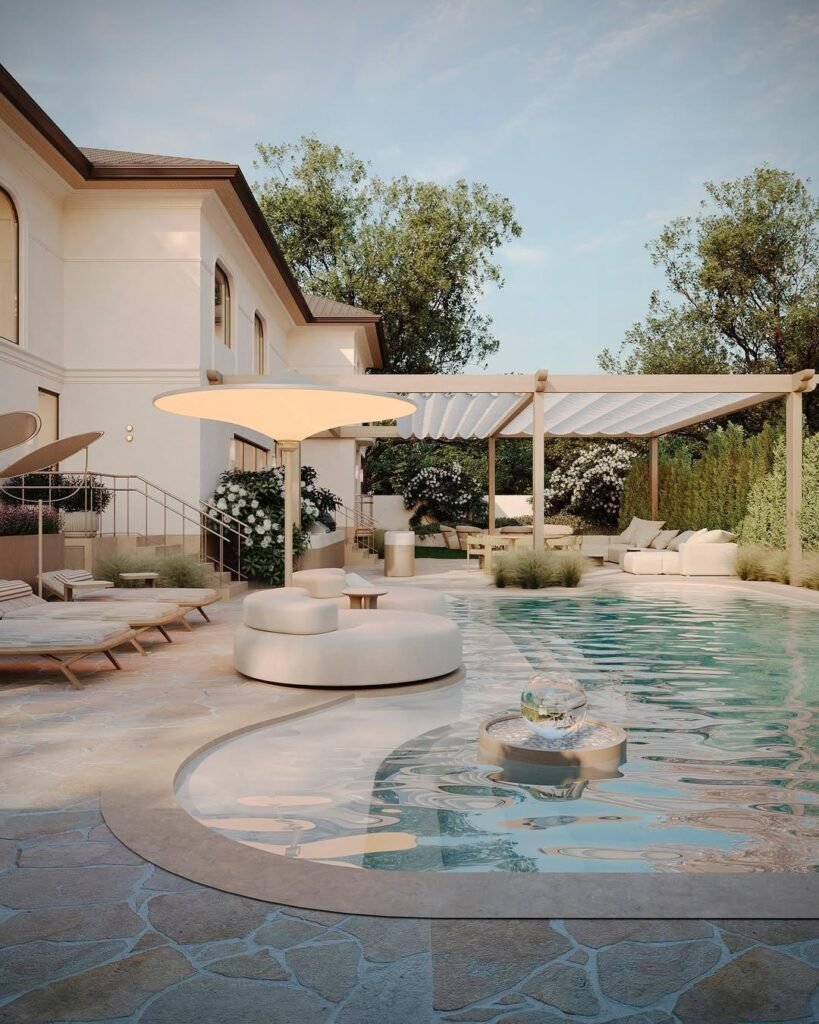
Long-term maintenance, cleaning, and lifecycle costs
Routine cleaning regime
For pool areas: regular rinsing to remove chlorinated residues; avoid high-pH detergents that may impact grout or certain stone types.
For terraces and plazas: pressure washing at controlled pressures and periodic neutral pH cleaners.
Periodic sealing — when it helps
Sealers may limit staining but can slightly change surface texture and friction if not chosen carefully. For highly textured finishes, breathable, penetrating sealers are preferred if staining is a concern.
Repair strategies
Small chips on textured surfaces can sometimes be patched with color-matched mortars; large defects usually require slab replacement. Keep spare tiles or a cutting plan to minimize visual mismatch during repairs.
Expected service life & total cost of ownership
Hard, low-absorption granites with proper installation can last decades with minimal lifecycle costs compared with soft stones or non-stone alternatives. Consider initial material cost, installation, maintenance frequency, and replacement costs when comparing options.
Risk, safety, and legal/regulatory considerations
Accessibility and ADA considerations
While textured surfaces improve traction, extremely coarse textures may be unsuitable where wheelchair access is required because vibration or resistance can affect maneuverability. Balance slip resistance needs with accessibility standards.
Public pools and institutional procurement clauses
Public facilities often require documented testing and acceptance criteria in contracts; include sample testing, field testing (pendulum), and acceptance windows in procurement documents.
Handover & documentation
Document third-party test results, batch numbers, and on-site verification reports to limit post-installation liability.
Procurement & commercial tips: sourcing from manufacturer/factory/wholesale
Evaluating suppliers
Request completed sample packs, including edge profiles and installation photos.
Ask for factory QC reports and third-party lab test results for named batches.
Lead times, MOQ, and packing
Stone projects often have lead times due to quarrying and treatment; plan early.
For export, ensure proper packing and separation layers; request container loading diagrams to prevent shifting.
Negotiation tips for large wholesale orders
Negotiate warranty terms tied to passing specified lab tests and pathways for replacement material from the same production batch or acceptable visual match clauses.
Case studies & short examples
Hotel pool deck (example)
A boutique hotel opted for flamed granite for its pool deck to maintain a natural look while maximizing barefoot traction. The procurement required pendulum CoF testing and water absorption ≤0.4%. Installation used 30 mm slabs on a bedding mortar with integrated drains and narrow joints to reduce slipping hazards.
Public plaza (example)
A municipal plaza used bush-hammered granite pavers in main circulation routes to resist heavy foot traffic and weathering. The project specified slab thickness for vehicle access lanes and included fall-through joints for rapid drainage.
Private terrace in freeze/thaw climate (example)
A mountain villa required a granite with water absorption <0.3% and a flamed finish for terraces. Full third-party frost resistance tests and factory sealing recommendations were requested before acceptance.
Data & references (authoritative standards and guidance — no links)
ASTM International — Standard test methods for dynamic coefficient of friction (pendulum) and related floor surface testing. (ASTM International)
EN 13755 — Natural stone — Determination of water absorption. (European Committee for Standardization / CEN)
DIN 51130 / DIN 51097 — Slip resistance and ramp testing standards. (German Institute for Standardization / DIN)
British Standards Institution — Guidance on slip resistance in public spaces. (BSI)
International Organization for Standardization — Relevant stone and ceramic testing guidance. (ISO)
Stone Federation GB — Best practice guidance for stone selection and installation. (Stone Federation Great Britain)
Industry technical case studies — leading quarry/stone producer technical whitepapers (various industry authors).
Regional building code guidance summaries — public pool and accessibility requirements (various municipal and national building authorities).
Manufacturer factory QA protocols — typical content from major stone producers (industry practice documents).
FAQ — Google hot-search style (five questions)
Q1: What is the difference between flamed and bush-hammered finishes?
A1: A flamed finish is produced by thermal treatment that fractures surface minerals, producing a grainy texture that follows the stone’s mineral structure. A bush-hammered finish is produced mechanically by repeated impacts to create a uniform pockmarked surface. Both increase slip resistance but offer distinct visual aesthetics and texture depths.
Q2: Are flamed and bush-hammered finishes safe for pool decks?
A2: Yes—when specified and installed correctly, both finishes provide excellent traction for wet areas. For pool decks, require laboratory slip testing on finished samples, ensure proper drainage, and select stones with low water absorption to minimize freeze/thaw and staining risks.
Q3: How should I specify a manufacturer or factory when buying bush-hammered granite wholesale?
A3: Request finished sample panels, third-party lab test results (pendulum/CoF, water absorption, compressive strength), factory QC photos, production tolerances, and clear acceptance criteria within your purchase contract. Confirm lead times, MOQ, and packing for international shipment.
Q4: Do textured finishes require special maintenance?
A4: Routine cleaning (controlled pressure washing and neutral cleaners) and periodic inspections are usually sufficient. Penetrating sealers can reduce staining but must be chosen to preserve surface texture and slip characteristics. Avoid coatings that fill texture pits and reduce traction.
Q5: Can bush-hammered surfaces be used where accessibility (wheelchair) requirements apply?
A5: Generally, yes, but extremely coarse textures may hinder mobility. Balance slip resistance with accessibility by testing in situ and choosing texture depths that provide traction without excessive rolling resistance; include accessibility review in the specification stage.
Semantic Closure: How / Why / What / Options / Considerations — Flamed & Bush-Hammered Stone for Outdoors
How: Flamed finishes are created by high-temperature thermal shock to fracture the surface minerals; bush-hammered finishes are produced by mechanical impacts. Both are applied at the factory to finished slabs and pavers and must be tested after finishing for slip resistance and water absorption.
Why: The core value is safety plus longevity—textured finishes actively break water films and generate traction, reducing slip incidents in wet environments while preserving granite’s inherent durability and UV stability.
What: The product offering spans from fine flamed garden pavers to deeply bush-hammered public plaza slabs. Select based on desired aesthetic, required CoF/ramp rating, and maintenance strategy.
Options: Combine finishes (flamed field tiles with bush-hammered stair treads), choose slab thickness based on loading, and select pedestal or mortar beds depending on substrate and drainage needs.
Considerations: Always require finished sample testing and independent lab reports, specify acceptance criteria in procurement contracts, balance texture with accessibility requirements, plan for drainage and expansion joints, and account for lifecycle maintenance costs.
In short, Flamed and bush-hammered stone surfaces are proven outdoor solutions when specified and installed using performance-based criteria. They are not purely decorative; they are engineered finishes that need test data, clear procurement language, and suitable installation to deliver safe, durable outdoor spaces.