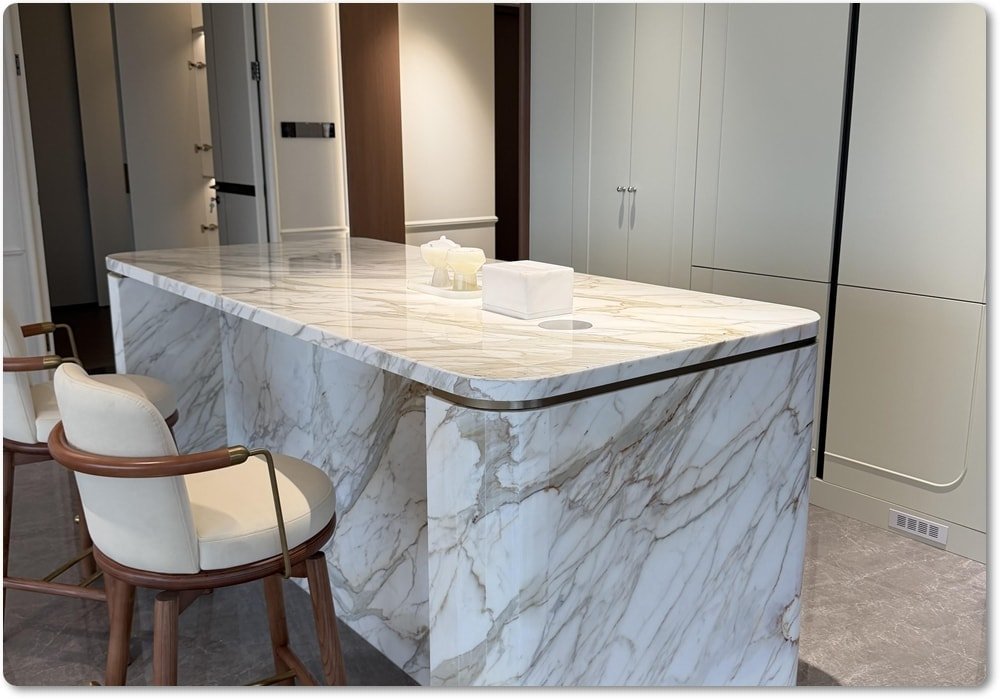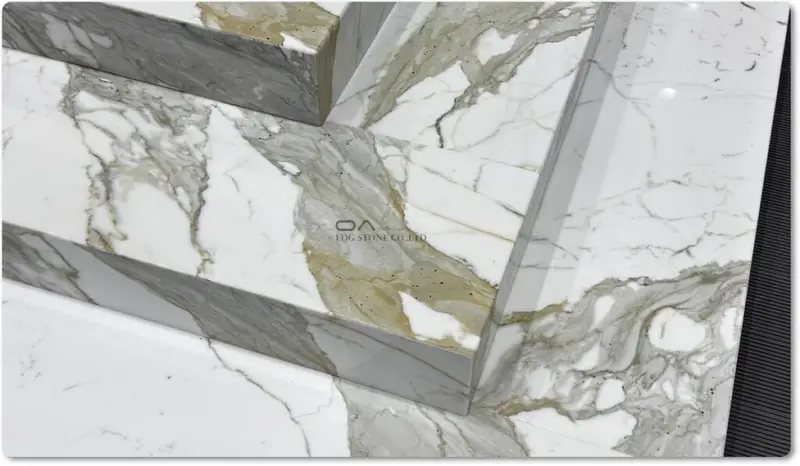
Quick Summary:
Source of Rare Stone: Procuring unique natural-stone slabs (amethyst, agate, malachite, onyx, geode and other semi-precious/translucent slabs) for a custom luxury home requires a clear procurement pathway: define function (backlit wall, island, feature), verify translucency & resin stabilization, choose an appropriate supply channel (quarry → manufacturer/factory → wholesale broker), confirm legal and sustainability documentation, and plan logistics, fabrication, and insurance. This guide explains how to find rare slabs, evaluate price signals, negotiate factory or wholesale purchases, manage fabrication for backlit/large slabs, and comply with modern regulatory and sustainability standards.
Quick buyer’s checklist
Confirm the stone type and intended use (backlit wall, island countertop, vanity, floor).
Ask for actual slab samples or high-resolution translucency photos and mockups.
Request TDS/SDS, provenance, and export permits (if applicable).
Verify stabilization treatment (resin/epoxy fill) and whether the slab is suitable for fabrication.
Check MOQ, lead time, factory finish options, and warranty.
Quote shipping, customs, insurance, and on-site handling separately from the slab price.
Build in contingency for waste, breakage, and re-fabrication.
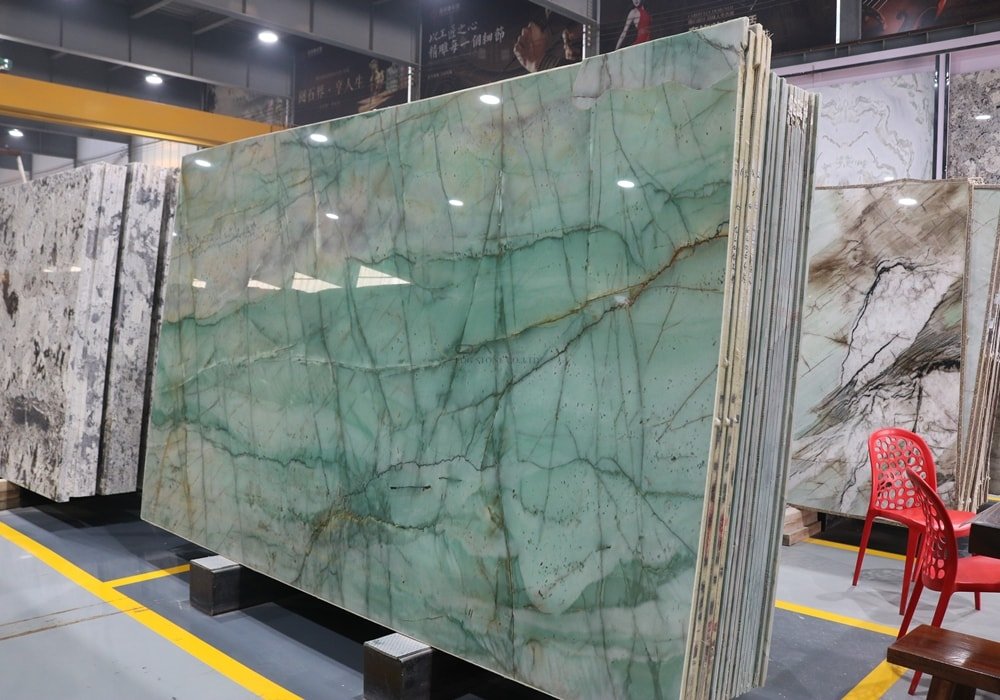
Types of rare and high-impact slabs and applications
Amethyst slabs & backlit amethyst
Amethyst gemstone slabs are valued for deep violet banding and translucency; when backlit, they produce dramatic, jewel-like effects for bars, headwalls, and feature islands. Because amethyst slabs are often made by slicing and bonding semi-precious material, expect variability in color intensity and often a need for resin stabilization for structural integrity. Price ranges vary widely by quality, from entry luxury to extremely high-end pieces priced per square foot.
Agate, geode, and crystal slabs
Agate and geode slabs are famed for concentric bands and crystalline centers that read exceptionally in vertical, backlit installations (feature walls, fireplace surrounds). These slabs can be thin and fragile, and many are stabilized or laminated to create structurally safe panels for architectural use. Agate slabs are often sold as matched bookmatched pairs for symmetry.
Malachite, onyx, and unique marbles/granites
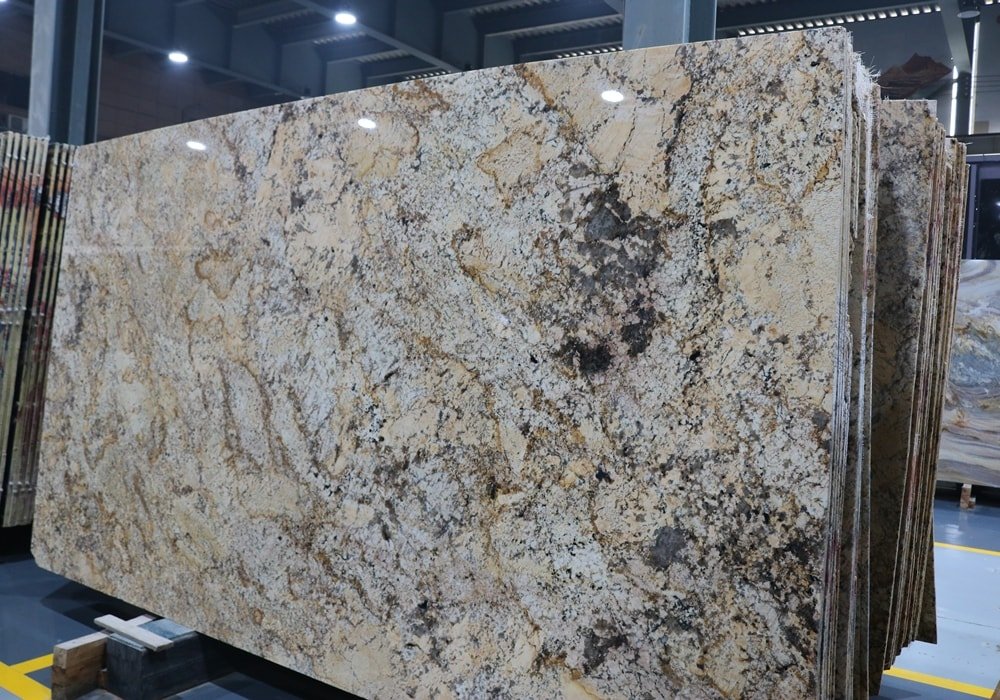
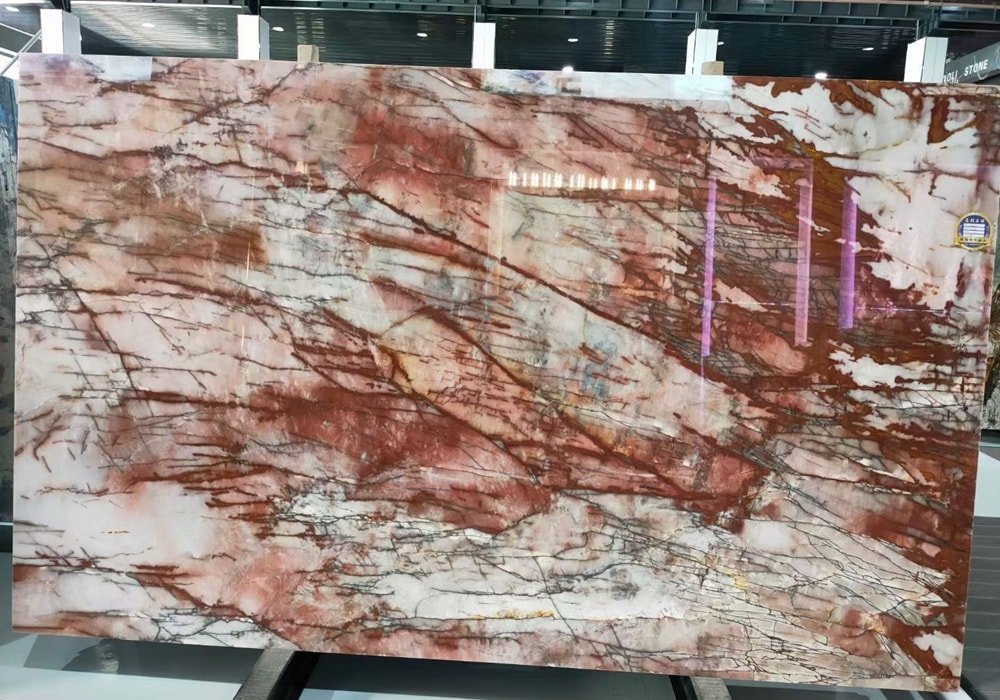
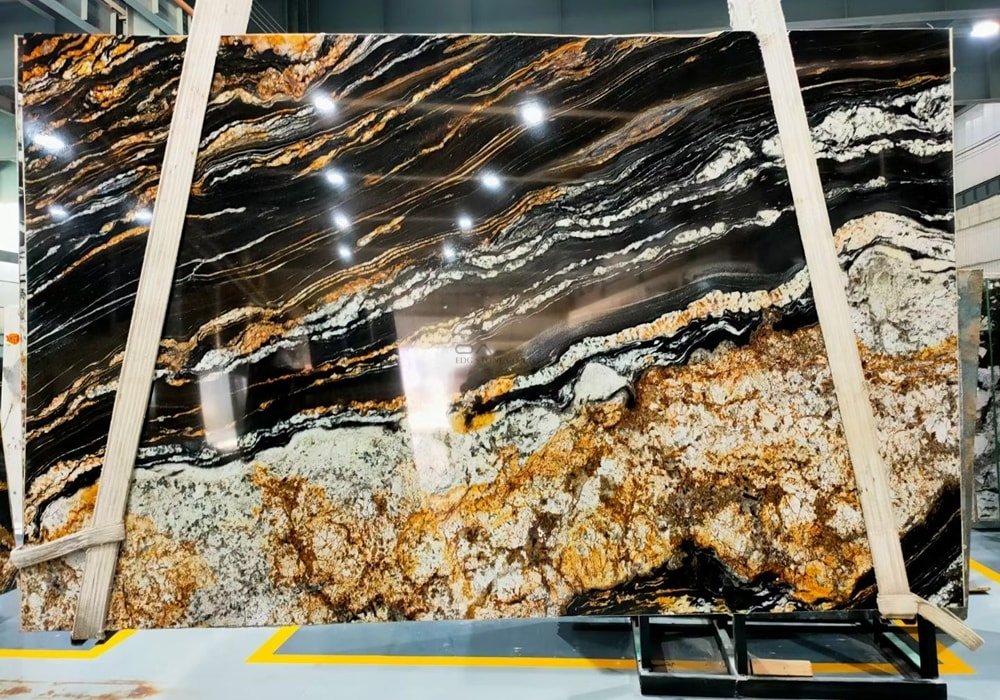
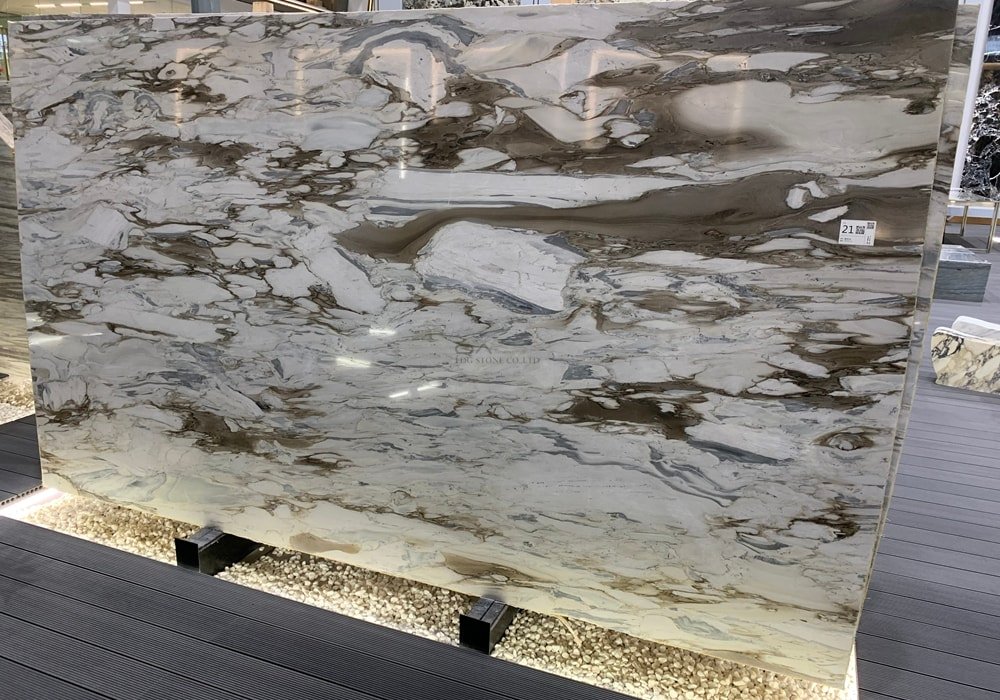
Malachite and certain onyxes command premium prices due to rarity and striking color/veining patterns; malachite typically requires careful handling and often higher per-square-foot pricing due to scarcity and the need for resin backing. Exotic marbles and unique granites (e.g., striking veins, rare color variants) are commonly used where durability and dramatic aesthetics are both required.
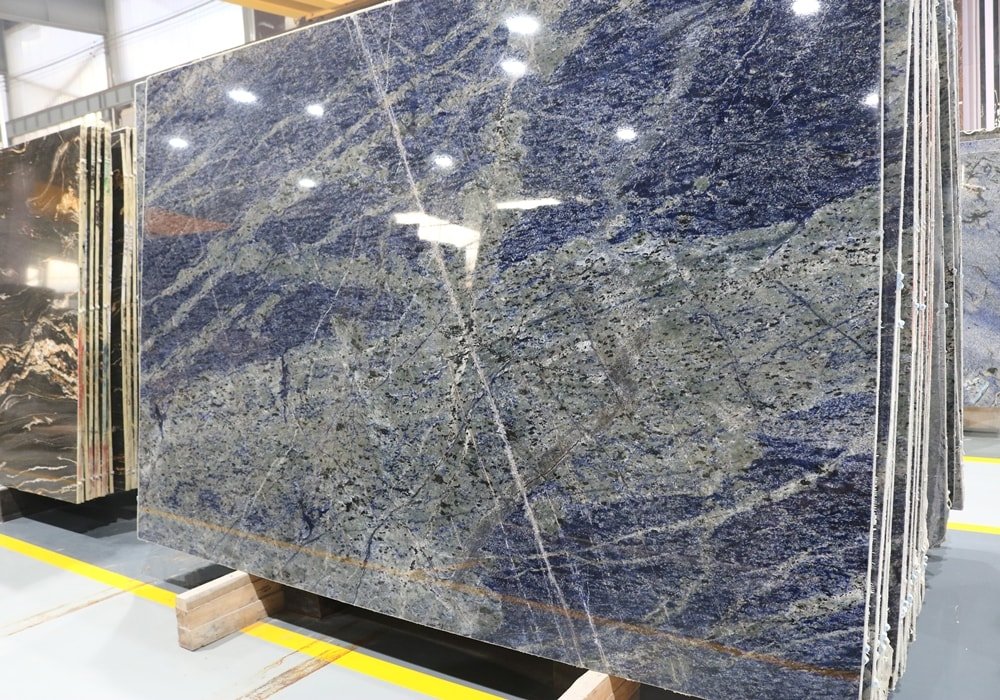
Supply-chain pathways: where to source rare slabs?
There are four typical sourcing channels for rare slabs:
1) Direct quarry or exclusive mining partnerships
Quarry or mine direct is ideal when you need exclusive runs or large contiguous slabs with known provenance; this path is common for custom commercial projects where cost and exclusivity justify minimums and long lead times.
2) Manufacturer/factory (value: pre-finish & customization)
Manufacturers and factories (often in stone-processing hubs) can stabilize, laminate, and finish slabs to your specs before shipping—useful for preventive resin stabilization, bookmatching, and pre-cut templating to reduce on-site risk. Factory direct purchases can reduce per-square-meter cost when MOQ and lead times are acceptable.
3) Wholesale distributors & slab yards
Wholesalers and slab distributors in major markets are best when you need variety and faster turnaround; they curate stock from many quarries and manufacturers and can often supply smaller quantities for bespoke projects. For unusual finds, specialist wholesale houses maintain semi-precious inventories and offer sample programs.
4) Brokers & agents (one-off sourcing)
Brokers or sourcing agents can locate one-off or hard-to-find slabs globally, handle negotiation and logistics, and often solve customs or documentation issues—but they add fees and require trust and clear contracts.
Step-by-step procurement: from spec to site
Step 1: Define function & performance requirements
Specify whether the slab will be structural (island, countertop), vertical and backlit (feature wall), or decorative (tabletop). Translucent applications require thickness control and light-diffusion testing; countertop use demands abrasion and thermal resistance.
Step 2: Research & shortlist suppliers
Request portfolios that demonstrate similar installations (backlit demo panels, bookmatched slabs). Shortlist suppliers based on stock photos, actual slab samples, and TDS/SDS availability.
Step 3: Sample & mock-up
Obtain a minimum of one physical slab sample and, for backlit projects, a translucency demo (small cut), plus a mockup with intended LED specs to achieve the color temperature and uniformity you want.
Step 4: Contract, inspection criteria & acceptance testing
Include acceptance terms (flatness tolerance, visible defects allowance, color variance tolerance), delivery condition (crate specs), and remedy for unacceptable or damaged slabs at arrival.
Step 5: Fabrication & pre-stabilization
Decide whether stabilization (resin infusion, lamination, backing) will occur at the factory or post-delivery; factory stabilization often yields more consistent results and reduces on-site risk.
Pricing signals & negotiation levers
What drives price
Material rarity & patterning (scarce amethyst veins or malachite complexity increase price).
Slab size/yield — larger, seamless slabs command premiums.
Stabilization/treatment — resin filling, lamination, and backlighting prep add cost.
Finish & cut — bookmatching, polishing, and edge work increase fabrication charges.
Logistics & duties — heavy slabs are expensive to ship, and import duties vary by origin.
Real-world price examples vary widely: high-end semi-precious slabs can range from low hundreds to several hundred dollars per square foot,ot depending on stone and treatment. Negotiation levers include bulk purchasing, repeat-buyer discounts, seasonal purchasing, consolidating shipments to reduce freight costs, and leveraging factory packaging for reduced breakage.
Fabrication & installation for fragile/translucent slabs
Cutting & reinforcement
Large translucent slabs are often cut with waterjet or diamond gangsaws and may require lamination to a stable substrate or phenolic/fiberglass backing to prevent cracking. Seams should be planned where visually acceptable; for bookmatched pairs, seam placement is critical.
Backlighting technical specs
Backlit installations require:
LED panels with consistent color temperature (typically 2700K–4000K, depending on desired warmth).
Even diffuser layers to prevent hot spots; thin slabs may need edge lighting plus diffuser matrices.
Thermal management to avoid LED heat degrading adhesives or slabs.
Accessible cable and driver locations for maintenance.
Surface stabilization & sealing
Many semi-precious slabs are stabilized with clear resin to fill voids and lock crystals in place; sealing protocols must be agreed upon (factory-applied vs. on-site) and documented.
Legal, regulatory & sustainability trends shaping procurement
Export/import & CITES
Some materials derived from biological species or protected sources fall under CITES or national export restrictions; confirm that your material is legally sourced and that the supplier can provide export documentation. For stone, this is rarer than for wood or wildlife products, but provenance documentation is increasingly requested by high-end architects.
Environmental rules & adhesives/sealants
Modern regulation of adhesives, coatings, and resins (e.g., VOC limits under CARB and regional AQMD rules) affects how slabs are treated and which adhesives can be used during fabrication or installation. Ensure factory processes and stabilizers comply with your jurisdiction’s VOC or indoor-air quality rules.
Sustainability & traceability
Standards such as the Natural Stone Sustainability Standard (NSC/ANSI 373) are tools for specifying environmentally responsible stone; many specifiers now require documentation on chain-of-custody, labor practices, and reclamation plans—especially for high-visibility public or certified buildings.
Risk management, insurance, and contracts
Transit insurance and declared value
Declare realistic replacement value—including freight, handling, and fabrication—to ensure insurance covers both material and installation costs. Use “all-risk” maritime or land transit insurance for international shipments and check force-majeure clauses carefully.
On-site handling & storage
Plan crates, forklift capacity, slab racks, and climate-controlled storage if required. Include acceptance windows and inspection clauses in your contract so that damage discovered after delivery has a clear remediation path.
Warranties & responsibility
Distinguish manufacturer warranty (material defects) from installer warranty (fabrication/installation workmanship) in writing. For rare stones, require photographic documentation at each stage (slab, crate, arrival, pre-cut, installed) to simplify claims.
Case studies & procurement lessons
Case A — Backlit amethyst feature wall (condensed lesson)
A luxury homeowner commissioned a 12-foot backlit amethyst wall. The team pre-qualified suppliers for translucency samples, required factory resin stabilization, and specified LED specs for warm white 3000K panels with diffusers. Factory lamination reduced on-site repair risk, and the installation included accessible driver cabinets for maintenance. Lesson: early mockups and factory stabilization saved costly rework.
Case B — Malachite Island (condensed lesson)
A custom kitchen island used a single malachite slab bookmatched across a waterfall edge. Negotiated factory backing and phenolic reinforcement, contractor insisted on reinforced support cabinets and a metal support frame to carry seam loads. Lesson: Structural integration between cabinetry and slab support must be designed into the budget.
FAQ
Q1: Where can I find rare amethyst, agate, or geode slabs?
A1: Start with specialty semi-precious slab manufacturers and curated wholesale slab houses that maintain inventory of translucent and semi-precious material; manufacturers in stone-processing hubs can produce stabilized slabs to your specs. If you need a single, unique piece, a sourcing broker or direct quarry relationship is often the fastest path to locating rare cuts.
Q2: How much does a backlit amethyst or malachite slab typically cost?
A2: Prices vary widely by quality, thickness, and treatment—semi-precious slabs often range from a few hundred to several hundred dollars per square foot for high-quality amethyst or malachite, with stabilized, bookmatched, or large seamless slabs commanding premiums. Always request an itemized quote that separates slab cost, stabilization, fabrication, and shipping so you can compare the true installed value.
Q3: Are geode and agate slabs safe for countertops?
A3: Geode and agate slabs can be used for countertops, but they often require resin stabilization and backing reinforcement because of natural voids and crystalline structures that compromise surface hardness and cohesion. For horizontal surfaces subject to impact and heat, choose slabs that have been factory stabilized and confirm with your fabricator that the slab meets structural and serviceability criteria.
Q4: Should I buy direct from a quarry or through a wholesale supplier?
A4: Buy direct from a quarry for exclusive runs or when provenance and large continuous slabs matter; use a reputable wholesale supplier for quicker access to wide varieties and smaller quantities. Consider factory-finish and stabilization options—factories can add value by pre-laminating and cutting to reduce on-site risk, which may offset higher freight by minimizing damage and rework.
Q5: What documentation should I request when buying a rare stone?
A5: Ask for TDS/SDS, provenance paperwork, export permits if applicable, stabilization and resin treatment records, warranty terms, and photographic proof of slab condition pre-shipment. For projects with sustainability goals, request chain-of-custody or NSC/ANSI 373 compliance documentation where available.
Semantic Closure: How / Why / What / Options / Considerations
Why: Unique stone slabs deliver unmatched visual impact and material storytelling for luxury homes, but introduce fabrication, transport, and legal complexity that must be managed through clear contracts, inspection protocols, and documentation.
What: Options include raw slabs (require factory stabilization), factory-laminated panels, and pre-assembled bookmatched pairs. For backlit installations, choose slabs with verified translucency tests and plan LED and diffuser systems in the early design stage.
Options & Considerations: Factor in price volatility (rare materials vary), sustainability proof (NSC/ANSI 373 or provenance), and regulatory constraints (export permits, VOC limits on resins and adhesives). Negotiate itemized quotes and include insurance and acceptance tests in contract language to protect the client and project timeline.