Quick Summary:
Quick Summary: We translate North American kitchen design standards into supplier-ready action: NKBA-driven planning dimensions and trend signals, AWI-driven workmanship tolerances and finishes, and OSHA/NIOSH-aligned fabrication safety documentation. That combination shortens approvals, reduces RFIs, and ensures countertop & cabinetry assemblies meet designer expectations and regulatory checks — delivering faster installs, higher-spec sign-off, and better homeowner outcomes.
Executive introduction
When North American architects, kitchen designers, and specifiers evaluate stone suppliers, they evaluate more than slabs: they test whether a partner understands how kitchens are planned, detailed, and approved in the region. That means being fluent with planning clearances, cabinet integration tolerances, accessible-design expectations, ventilation requirements, and fabrication safety obligations. Our competitive edge is translating the rules (and the trends) into supplier assets — NKBA-aligned planning diagrams, AWI-level workmanship notes on shop drawings, and OSHA/NIOSH-ready silica-control documentation — so design and construction teams experience fewer RFIs, faster approvals, and cleaner installs.
Key standards, associations, and regulators we follow
We build our North American product and fabrication playbooks around the organizations and codes designers expect to see cited on specifications and shop drawings:
NKBA — planning guidelines, trend research, and typical kitchen diagrams that define functional clearances and popular design directions.
AWI — workmanship standards and tolerances for casework that directly influence seam placement, edge treatment, and on-site fit quality.
OSHA — silica exposure rules and enforcement focus that affect fabrication processes and supplier documentation.
NIOSH — independent research and guidance on engineered stone and silicosis risks; useful when recommending fabrication controls.
ICC — model building and mechanical code references that inform ventilation and exhaust requirements for kitchen appliances.
These are not “nice-to-know” citations on a product page — they are operational anchors. When our spec sheet cites NKBA diagrams and AWI tolerances, design teams immediately recognize the work level and accept our shop drawings faster. When we provide silica-control checklists aligned with OSHA/NIOSH expectations, fabricators accept material sources faster and reduce onboarding friction.
How AWI & NKBA shape kitchen design — practical effects on stone countertops
AWI: workmanship that drives how stone meets cabinetry
AWI standards codify tolerances for casework, define finishing expectations, and establish acceptable dimensional ranges for cabinetry surfaces. For stone suppliers, that means we must present seam tolerances, edge profiles and substrate clearance notes that align with AWI-class expectations. Hence, the final visual seam and edge match the cabinetry finish level. AWI-aware shop drawings reduce on-site adjustments, minimize scribe work, and protect perceived project value.
NKBA: functional planning that defines countertop geometry
NKBA planning diagrams set typical landing zones, minimum walkways, counter heights, knee spaces, and work-triangle expectations. For example, predictable NKBA clearance references allow our engineers to propose overhang limits, safe island seating depths, and landing dimensions near ovens and dishwashers that align with designer expectations — removing a common source of RFIs on kitchen projects.
Practical shop-drawing impact
We embed AWI and NKBA callouts into every shop drawing: seam notations, edge callouts, ADA/universal-design options, and appliance-landing annotations. That documentation often shortens design review cycles and increases first-pass approval rates from design teams and building inspectors.

2026 kitchen trends that matter for stone manufacturers & suppliers
Palette, texture, and finish priorities (what designers are searching)
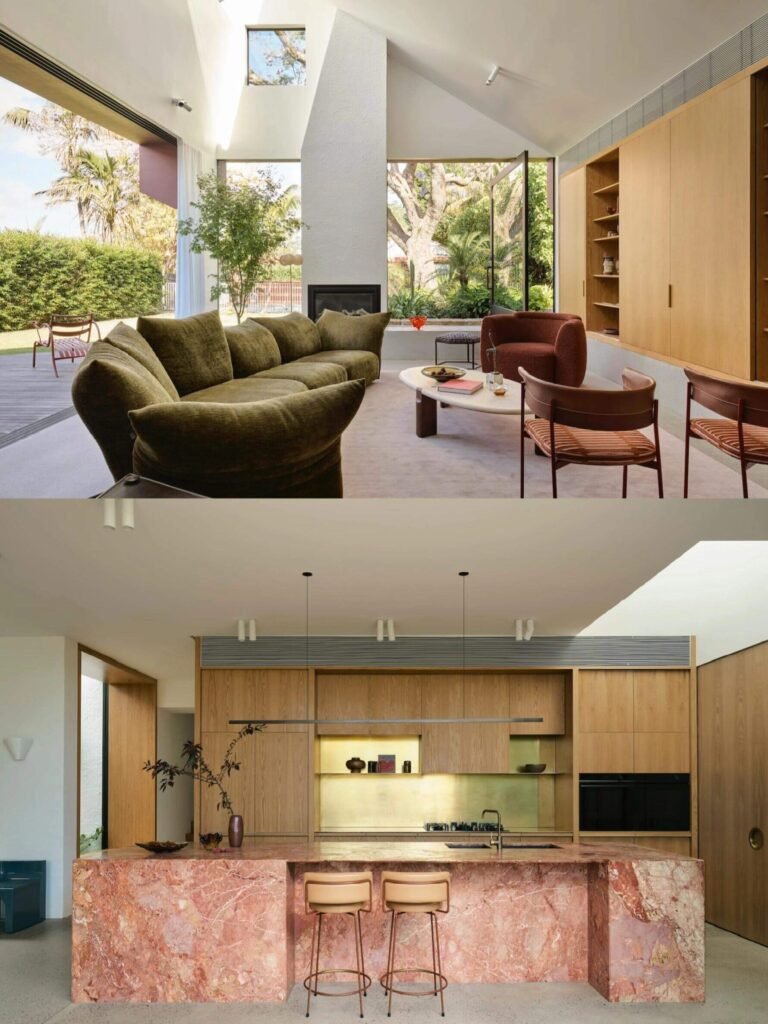
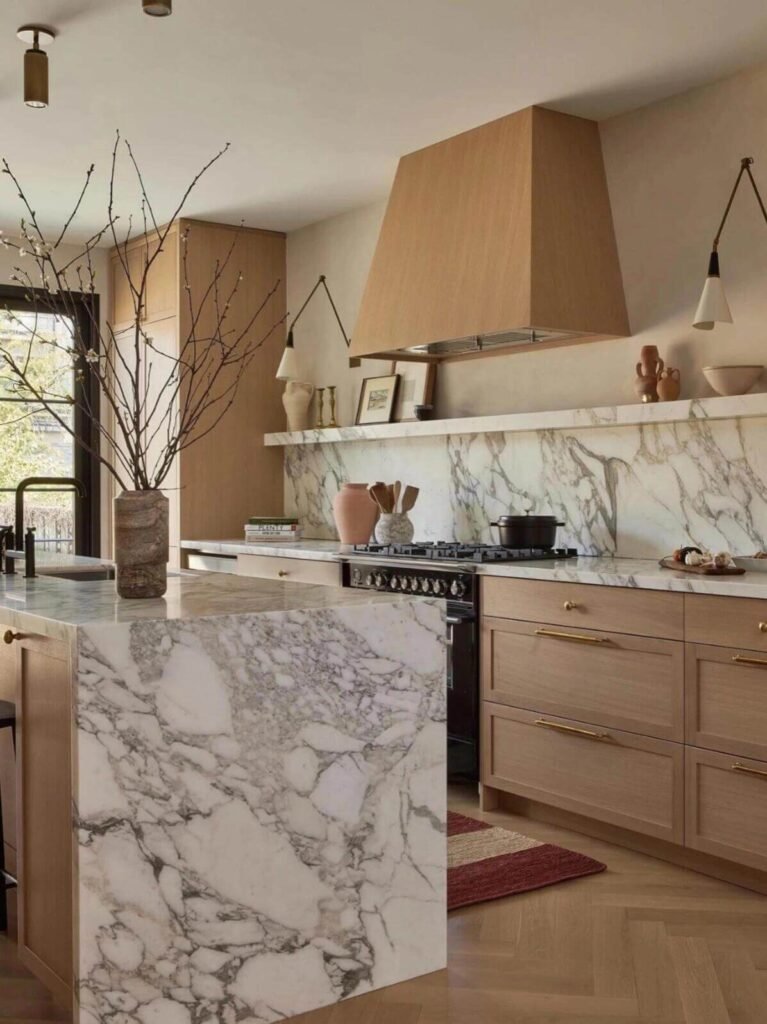
Design research for 2026 highlights a move toward warm, nature-inspired palettes, mixed-material kitchens, and tactile finishes — leathered or honed stone surfaces that moderate glare and age gracefully in active family kitchens. These are the styles buyers search for with terms like “2026 kitchen trends pictures” and “2026 kitchen design ideas.” Present product galleries with lifestyle images showing kitchen pairings (stone + warm wood cabinetry) to match that intent.
Small-kitchen strategies (search intent: “Small kitchen trends 2026”)
Small kitchens are trending toward multifunctional islands, integrated appliances, and thin-profile visual strategies that make rooms feel larger. For stone suppliers, this translates to: offering pre-configured small-kitchen slab kits, thinner visual-edge treatments, and documented seating-overhang recommendations that preserve circulation. These product kits simplify procurement for designers working on apartments and condos.
Appliance & ventilation pairings (search intent: “2026 kitchen appliance trends”)
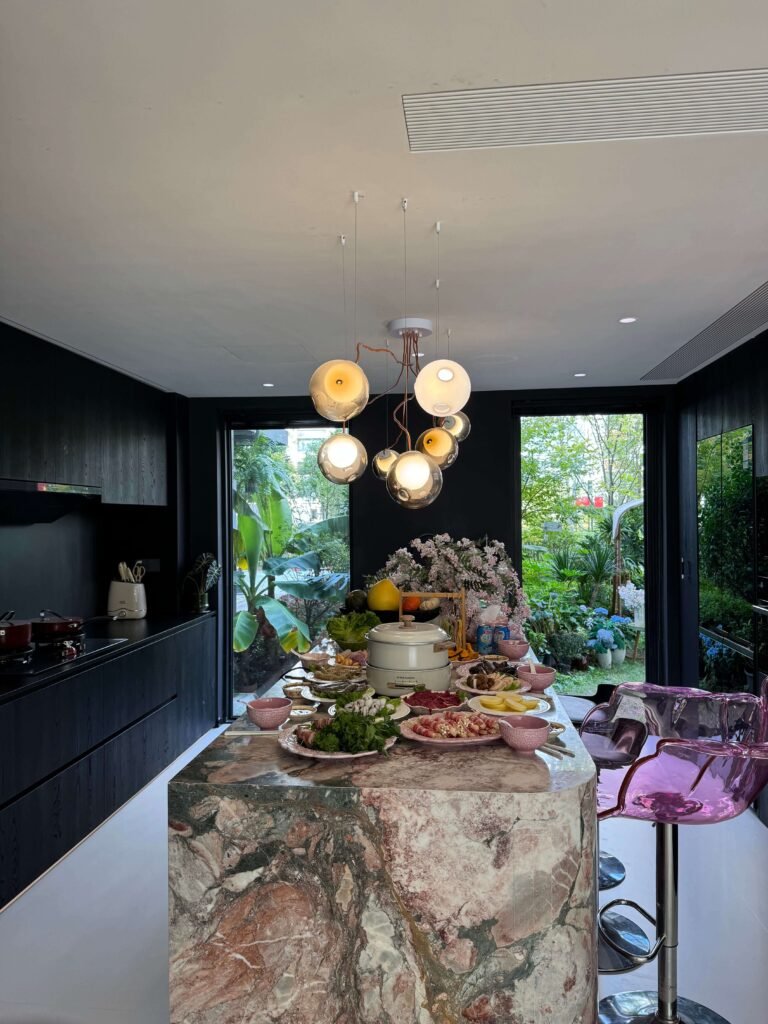
As ranges integrate more tech (induction, built-in refrigeration, under-counter appliances), designers increasingly require clarity on hood clearances, duct routing, and hood performance. Stone suppliers should include hood-cutout templates, recommended clearance dimensions, and a short note on ducting best practices in spec sheets — especially for islands and flush-mounted hoods where the stone layout directly interacts with mechanical systems.
Compliance & regulation: silica, ventilation, and accessible design impacts
Silica & the engineered stone reality
Engineered quartz and many manufactured surfacing products contain high percentages of crystalline silica. Cutting, grinding, and polishing generate respirable crystalline silica (RCS), which is associated with silicosis and other serious diseases. OSHA’s respirable crystalline silica standards and NIOSH research focus on enforcement and prevention in countertop fabricating operations; suppliers who offer documented silica-control plans, SDS, and wet-cutting/LEV recommendations build trust with fabricators and general contractors.
State and enforcement trends
Multiple jurisdictions have increased inspection focus on engineered stone facilities, and OSHA has specific initiatives targeting silica exposure in countertop fabrication. The practical supplier implication is simple: provide fabrication partners with clear SOPs, documented engineering controls, and medical-surveillance guidance so they can onboard materials without regulatory hesitation.
Ventilation and appliance code considerations
Kitchen exhaust requirements in model mechanical codes influence where vents can be routed, whether recirculating hoods are acceptable, and how much ducting is required. These constraints influence stone backsplash planning, hood-cutout sizing, and island hood detailing. For projects where code requires outdoor exhaust, our shop drawings add duct-penetration templates and pre-checked hood-clearance notes so contractors can coordinate earlier.
Accessibility and universal design
While ADA is typically applied in public/commercial projects, universal design principles are increasingly required (or at least requested) in residential builds: lower prep zones, accessible knee spaces, and adaptable island designs are popular. Including accessible mounting options (knee spaces, lower food prep counters) in the product spec increases acceptance among inclusive-design-minded specifiers.
Design-to-spec: case studies and specification playbooks
Case study: compact urban condo kitchen (28–40 sq ft)
Challenge: tight circulation, integrated under-counter fridge, and bar seating for two.
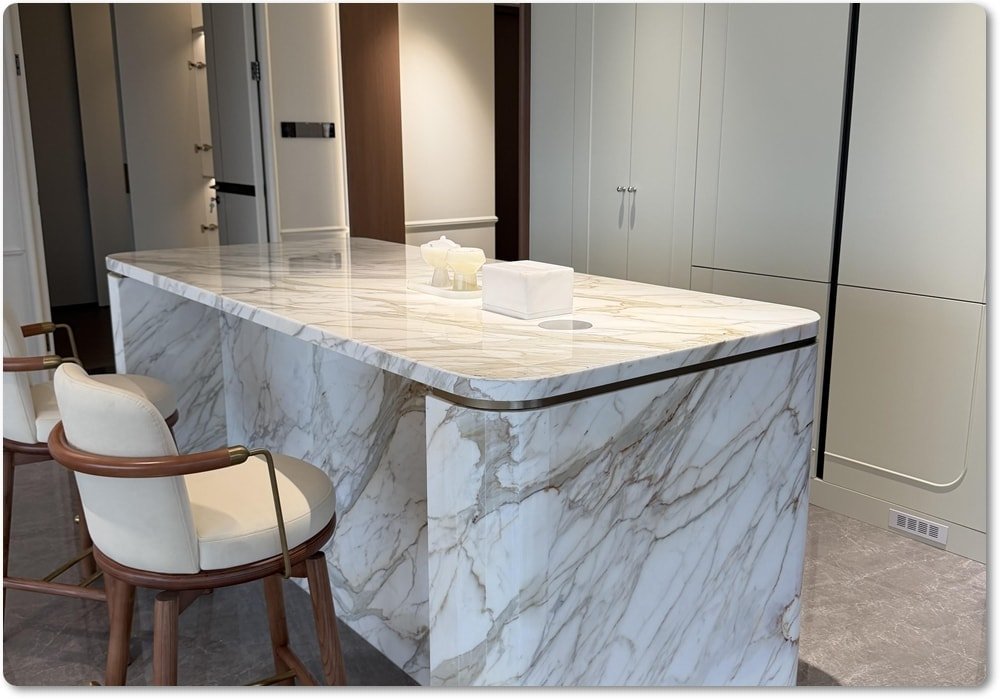
Supplier response: preconfigured narrow island slab with 1.5″ eased edge look, integrated seam behind cooktop, and a pre-cut undermount sink template. Shop drawings referenced NKBA clearances and included ventilation cutout instructions for a low-profile hood. Result: fewer on-site modifications and a 48–72 hour install window.
Case study: luxury open-plan kitchen with book-matched island
Challenge: large single-piece visual, precise book-matching, and a flush integrated sink.
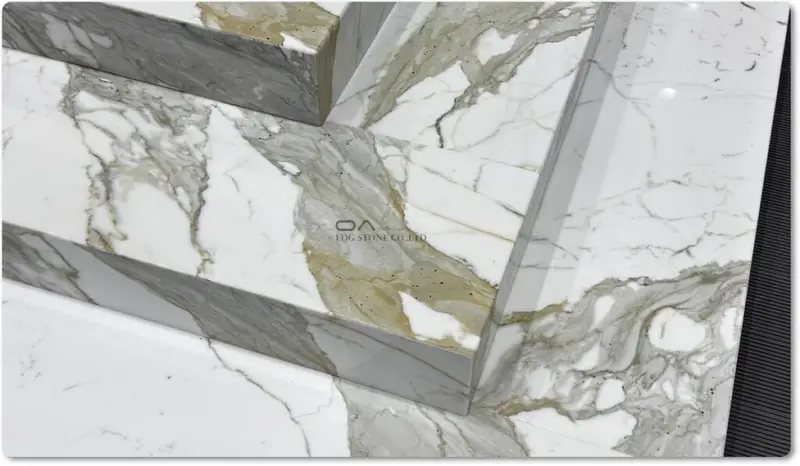
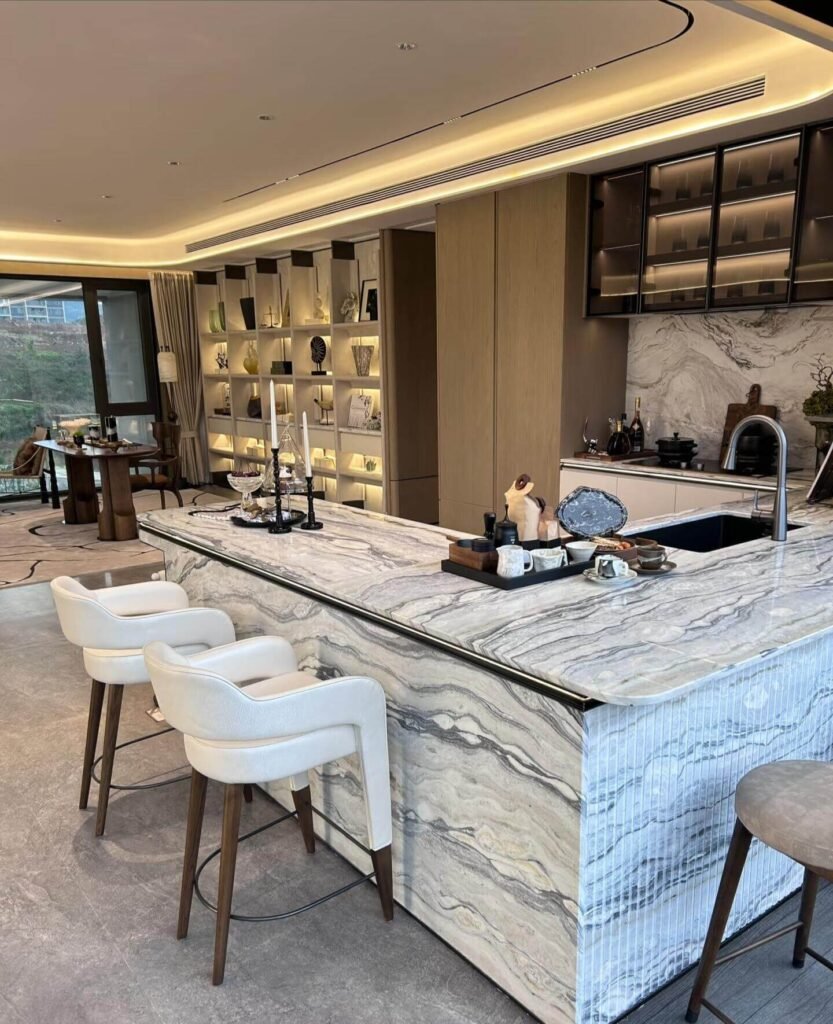
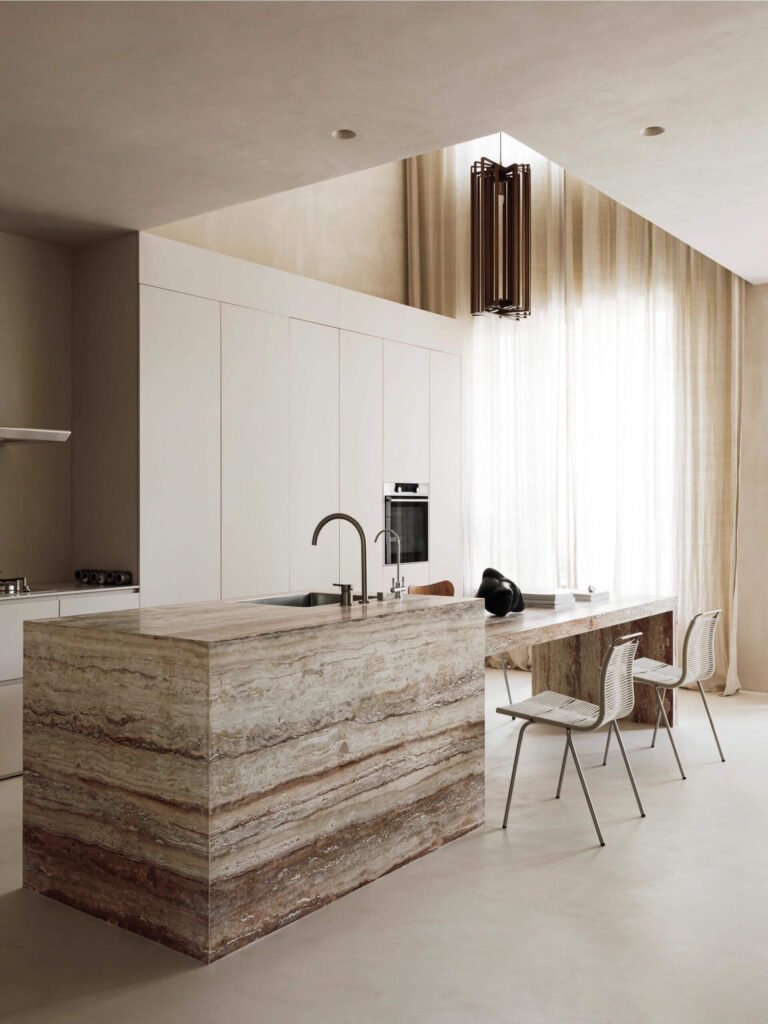
Supplier response: AWI-level edge tolerances for mitered seams, documented substrate flatness tolerances, and an engineered approach to seam placement that preserved the visual rhythm of the book-match. Result: first-pass design approval and premium client satisfaction.
Specification playbook (what we deliver with every project)
Sample packet (high-res images + material finish swatches)
Shop drawings annotated to NKBA planning diagrams and AWI-quality notes
Fabrication SOP (wet cutting / LEV recommendations, PPE list)
Installation guide (substrate tolerances, adhesive types by climate, seam protection)
Owner aftercare (stain removal and recommended cleaners)
Implementation checklist (fabrication → install → handover)
Pre-sale packet — images, spec sheet, SDS, silica-control summary, AWI reference note.
Order confirmation — slab ID, color/lot number, seam plan, finishing instructions.
Shop drawing pack — NKBA clearances, seam locations, hood cutouts, and AWI edge tolerance notes.
Fabrication SOP — wet cutting/LEv documentation and PPE; medical-surveillance checklist for partner shops.
Installation protocol — substrate flatness, adhesive and climate notes, final inspection checklist.
Owner handover — care instructions, warranty summary, and contact for service calls.
Semantic Closure: How/Why/What/Options/Considerations
How we support North American kitchen projects: We map product specs to NKBA planning diagrams and AWI workmanship standards, supply fabrication SOPs addressing OSHA/NIOSH silica controls, and deliver installer-ready shop drawings that reduce RFIs and code delays. :contentReference[oaicite:18]{index=18}
Why this matters: Designers and contractors expect compliance-ready documentation. When a supplier demonstrates AWI/NKBA alignment and silica-control readiness, procurement friction falls, and projects move faster to install and final sign-off.
What to choose: For high-traffic kitchens, recommend durable, low-porosity materials with leathered/honed finishes; when fabrication-safety is a concern, propose natural stone or engineered mixes with lower silica content and documented controls.
Options (detailed): (A) Premium quartzite slabs with AWI-level edge tolerance for luxury builds; (B) Lower-silica engineered mixes for large-volume commercial installs; (C) Thin-profile, pre-sealed slab kits for small kitchens to preserve visual space.
Considerations (detailed): Check local OSHA/state silica guidance before routing to a new fabricator; confirm local mechanical code for hood venting; include universal-design options where homeowner demographics or project type indicate value.
FAQ — Google-style hot questions
Q1 — What NKBA dimensions should I reference for countertop heights and walkways?
A: NKBA recommends standard countertop heights near 36 inches for typical adult use, with inclusive-design options for lower prep zones. Walkway clearance recommendations commonly fall between 36 and 48 inches, depending on circulation type; these dimensions are intended to optimize workflow and safety in the kitchen. Specifying these NKBA dimensions on shop drawings reduces guesswork and speeds approval during design review.
Q2 — Are there safety concerns with manufactured quartz and engineered stone?
A: Yes. Engineered quartz often contains high levels of crystalline silica; fabrication tasks (cutting, grinding, polishing) can produce respirable crystalline silica (RCS), which is linked to silicosis and other serious lung diseases. OSHA and NIOSH recommend engineering controls such as wet cutting and local exhaust ventilation, monitoring, and appropriate PPE for fabrication shops. Suppliers who provide SDS and silica-control SOPs help fabricators comply with regulations and protect workers.
Q3 — How do AWI workmanship standards affect countertop installation?
A: AWI standards define tolerances for cabinetry and millwork that directly influence seam placement, edge details, and fit. When suppliers reference AWI in their shop drawings — for example, specifying acceptable seam gaps and edge finishes — installers can achieve consistent on-site results with fewer adjustments. That improves client perception and reduces punch-list items.
Q4 — What 2026 kitchen trends should stone suppliers highlight to increase leads?
A: Focus on warm, nature-inspired palettes, mixed-material pairings (stone + warm wood), textured finishes (leathered, honed), and small-kitchen solution kits. Product pages optimized for image search (“2026 kitchen trends pictures”) and trend-driven keyword phrases will capture both consumer inspiration searches and pro-specifier queries.
Q5 — What documentation does a reliable supplier provide to fabricators and contractors?
A: A reliable supplier supplies: high-resolution slab photos with lot IDs; shop drawings mapped to NKBA dimensions and AWI notes; an SDS and silica-control summary; fabrication SOP (wet cutting/LEV recommendations); hood-cutout templates; and a homeowner aftercare guide. These materials reduce onboarding time for fabricators and give contractors confidence to accept the material source.
References (title | author | source — no links)
NKBA 2026 Kitchen Trends Report | National Kitchen & Bath Association | NKBA research publication
Kitchen Planning Guidelines | NKBA Editorial Team | NKBA technical guide
AWI Standards for Architectural Woodwork | Architectural Woodwork Institute | AWI standards publication
Architectural Woodwork Standards, 2nd Edition | Woodwork Institute | Standards compendium
Silica, Crystalline — Overview | Occupational Safety and Health Administration | OSHA guidance publication
Worker Exposure to Silica during Countertop Fabrication | OSHA/NIOSH collaborative report | Government publication
Engineered Stone and Silicosis (NIOSH blog) | Alyson Fortner et al. | NIOSH/CDC technical blog
KBIS/NKBA 2026 Press Release | KBIS/NKBA Communications | Industry press release
HouseBeautiful: Trends from KBIS 2026 | Editorial coverage | HouseBeautiful features
Forbes: Inside the NKBA/KBIS 2026 Kitchen Trends Report | Terri Williams | Forbes industry coverage