1. What is Rosso Levanto Marble? — origin, color profile, and history
Rosso Levanto is a red–to–burgundy marble characterized by a deep wine-red background crossed by bright white or pale veins. Historically prized since Roman times, the stone takes its name from the commune of Levanto in Liguria (northwestern Italy), where the classic material is quarried.
Important practical note: in today’s global market, you’ll find “Rosso Levanto” textures and colours supplied from different countries (including Italian quarries and imports/analogues from Turkey and other producing regions). When specifying, ask for quarry origin, batch/lot photos, and the factory certificate to avoid surprises at the slab yard.
2. Visual & technical characteristics (what to expect)
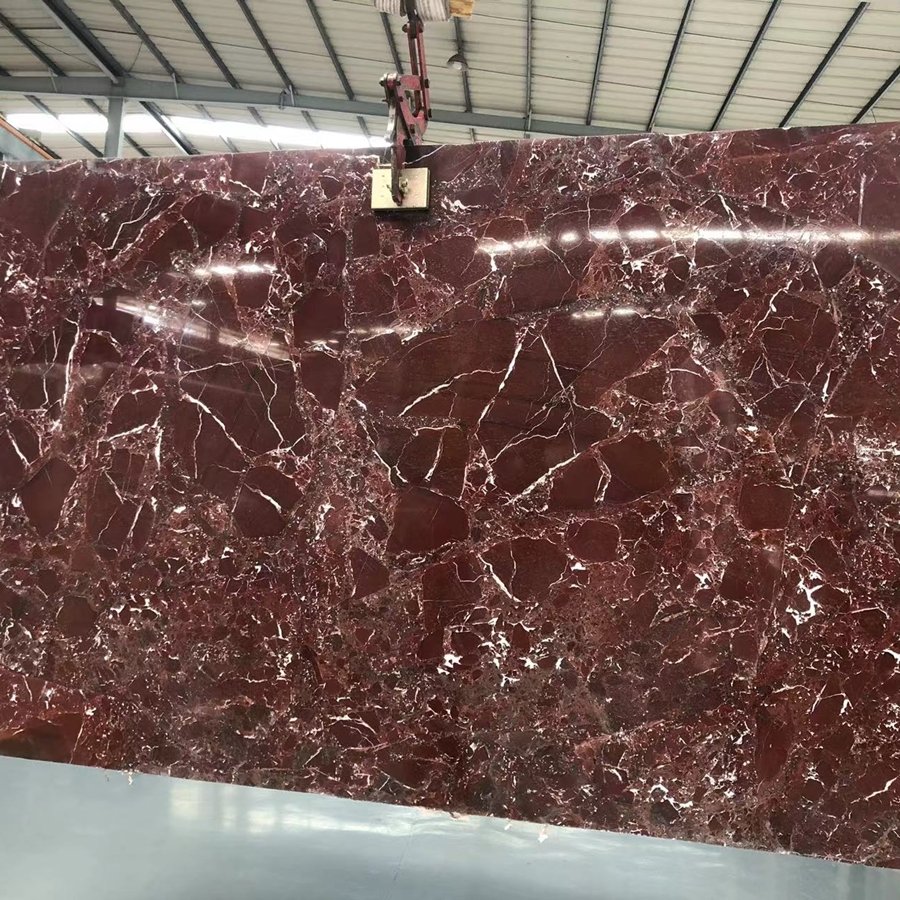
Color & veining: deep burgundy to purple-red ground; veins range from fine, net-like white veins to bolder, more dramatic streaks.
Finish options: polished (high gloss), honed (satin), leathered or brushed (for textured counters).
Density & weight: typical decorative marble densities are ~2.6–2.8 g/cm³; practical weight for a 3 cm slab is commonly cited at ~17.4 lb/ft² (use this for structural and shipping calculations).
Porosity & sealing: marble is calcareous (calcium carbonate). It is softer and more reactive to acids than engineered quartz — periodic sealing and proper care are standard.
Common uses: countertops, sinks, bathroom walls, fireplace surrounds, stair treads, and statement flooring.
(Technical and safety tip: always request test certs for water absorption, flexural strength, and slip resistance when using marble in wet public spaces.)
3. Price signals and procurement guidance
Retail and wholesale pricing fluctuates by slab grade, origin, thickness, finish, and supply chain costs. Sample price points from established stone merchants indicate a common retail band between ~$44/ft² and $64/ft² for typical 2 cm–3 cm slabs — premium, bookmatched or rare lots can be substantially higher. These representative listings help you build a realistic budget for residential and light-commercial projects.
Buying tips:
For large projects, request direct manufacturer/factory quotes (no-MOQ or slab-lot pricing if offered), full-slab photos, and matching/ reserve slabs for future repairs.
Factor in waste and layout (~10–25% depending on veining and cut pattern).
Shipping and import duties (country-dependent) can add materially to landed cost — get a CIF or DDP quote from the supplier.
Long-tail / buyer-intent examples to use when sourcing:
“Rosso Levanto marble slab manufacturer Italy factory price”
“Buy Rosso Levanto marble wholesale slab supplier”
“Rosso Levanto marble countertop factory direct price per sq ft”
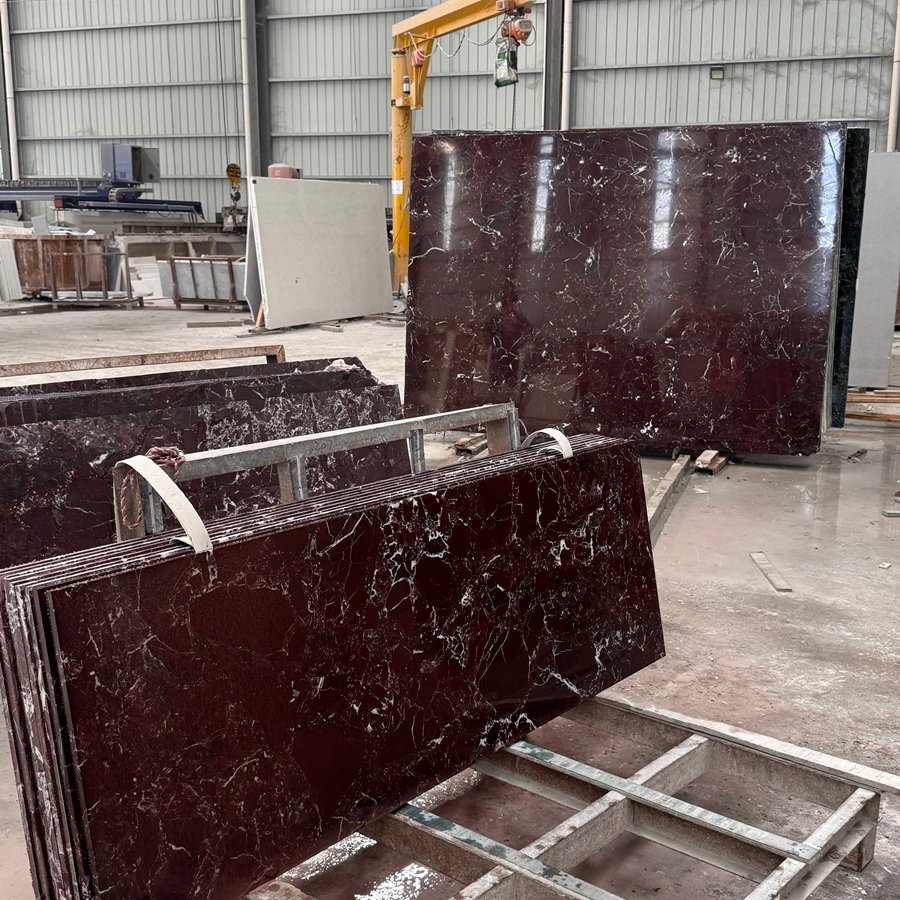
4. Fabrication & installation considerations
Seam placement: due to bold veining, plan seams strategically — in islands or near sinks, not across focal veins.
Edge profiles & thickness: for large spans, consider 3 cm slabs or laminated 2 cm + plywood substrate for stability.
Support & cabinetry: calculate weight per slab (≈17.4 lb/ft² for thicker slabs) and ensure cabinetry and support brackets meet local code for load-bearing.
Cutting & polishing: marble requires diamond tooling and experienced fabricators to avoid chipping and hairline cracks.
Sealing & finishing: Use a penetrating sealer rated for calcareous stone; leathered finishes will hide wear better in some settings.
5. Care, maintenance, and lifespan
Marble is repairable and patinas beautifully with age when maintained correctly. For countertops:
Clean spills immediately, avoid acidic cleaners (vinegar, lemon).
Re-seal periodically (frequency depends on use: 6–24 months).
For etches and stains, use a poultice and consult a professional restorer for deep stains.
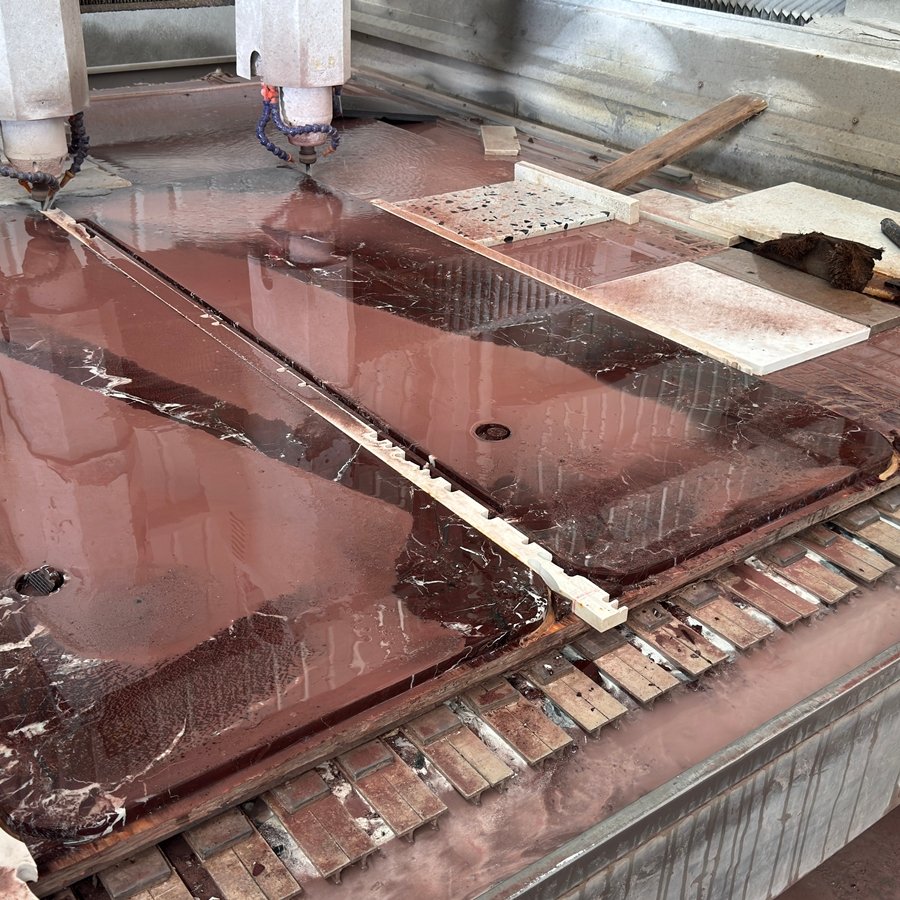
6. Rosso Levanto vs Rosso Alicante (and similar reds)
Rosso Levanto (Italian origin) is often compared with Rojo/Rosso Alicante (Spanish) or Turkish red marbles marketed under similar names. Differences lie in hue, vein density, and quarry provenance. Always verify the geological origin on the quarry declaration — two stones marketed with similar names can have different mechanical and aesthetic properties, which affect installation and maintenance.
7. Regulatory & market trends that influence purchase decisions (2024–2025 snapshot)
Two regulatory shifts are reshaping how building materials (including natural stone) are marketed and specified:
EU Green Claims and anti-greenwashing rules. The European Commission has tightened rules to stop misleading environmental claims; manufacturers must substantiate sustainability claims with verifiable data. This affects how stone sellers advertise “low-carbon” or “sustainably quarried” marble.
Construction Products Regulation (CPR) updates & Digital Product Data: recent policy and industry guidance (and preparatory documents) emphasize harmonized product data, digital product passports (DPPs) and lifecycle indicators for construction materials. Suppliers that provide third-party verified EPDs (Environmental Product Declarations), traceable quarry data and DPPs will be easier to specify on public projects and in EU markets.
Practical buying consequence: prioritize suppliers who can provide EPDs, chain-of-custody or quarry origin documentation, and clear environmental claim substantiation — especially for public-sector or high-profile commercial projects where compliance is audited.
6. Rosso Levanto vs Rosso Alicante (and similar reds)
Rosso Levanto (Italian origin) is often compared with Rojo/Rosso Alicante (Spanish) or Turkish red marbles marketed under similar names. Differences lie in hue, vein density, and quarry provenance. Always verify the geological origin on the quarry declaration — two stones marketed with similar names can have different mechanical and aesthetic properties, which affect installation and maintenance.
7. Regulatory & market trends that influence purchase decisions (2024–2025 snapshot)
Two regulatory shifts are reshaping how building materials (including natural stone) are marketed and specified:
EU Green Claims and anti-greenwashing rules. The European Commission has tightened rules to stop misleading environmental claims; manufacturers must substantiate sustainability claims with verifiable data. This affects how stone sellers advertise “low-carbon” or “sustainably quarried” marble.
Construction Products Regulation (CPR) updates & Digital Product Data: recent policy and industry guidance (and preparatory documents) emphasize harmonized product data, digital product passports (DPPs) and lifecycle indicators for construction materials. Suppliers that provide third-party verified EPDs (Environmental Product Declarations), traceable quarry data and DPPs will be easier to specify on public projects and in EU markets.
Practical buying consequence: prioritize suppliers who can provide EPDs, chain-of-custody or quarry origin documentation, and clear environmental claim substantiation — especially for public-sector or high-profile commercial projects where compliance is audited.
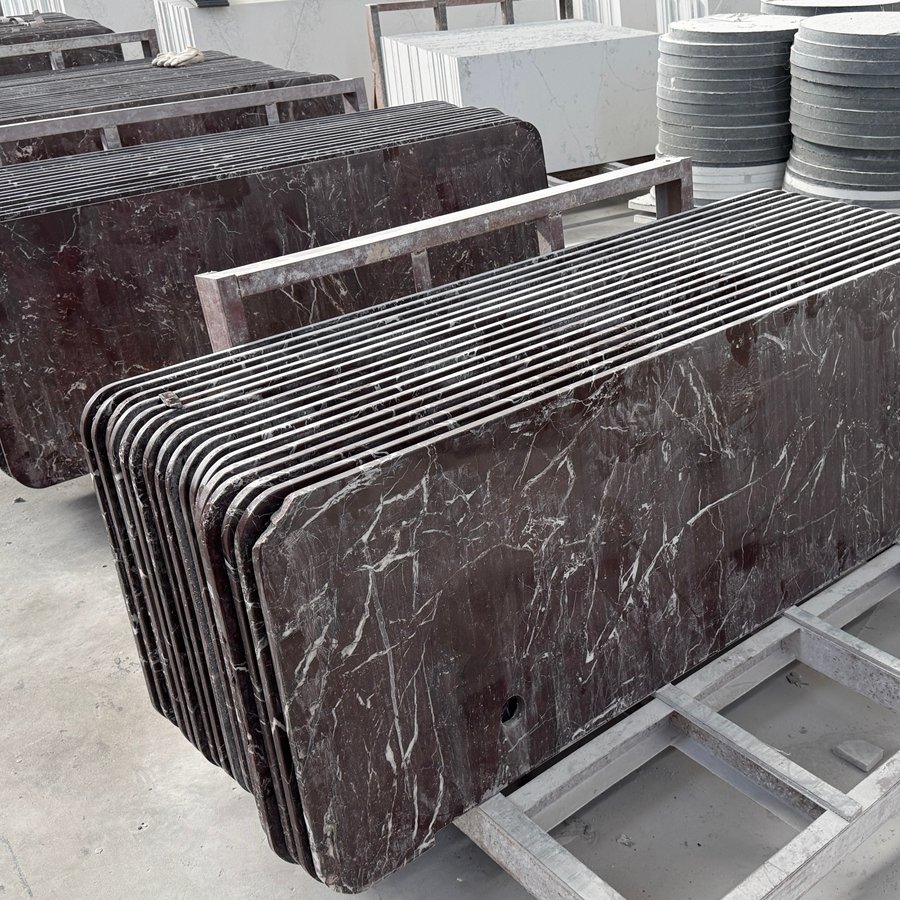
8. Sourcing from EDG Stone — how to specify and what to request?
When sourcing Rosso Levanto or similar reds from a manufacturer like EDG Stone, ask for:
Quarry origin certificate (geographic location and lot number).
High-resolution slab photos and vein-matching imagery for bookmatching.
Material test reports: water absorption, flexural strength, and density.
Shipping terms, lead time, and factory capacity for repeating orders.
EPD or sustainability documentation if the project requires it.
Use buyer keywords when searching:
“Rosso Levanto slab factory direct price”
“Rosso Levanto marble manufacturer export CIF”
“Rosso Levanto wholesale slab supplier EDG Stone”
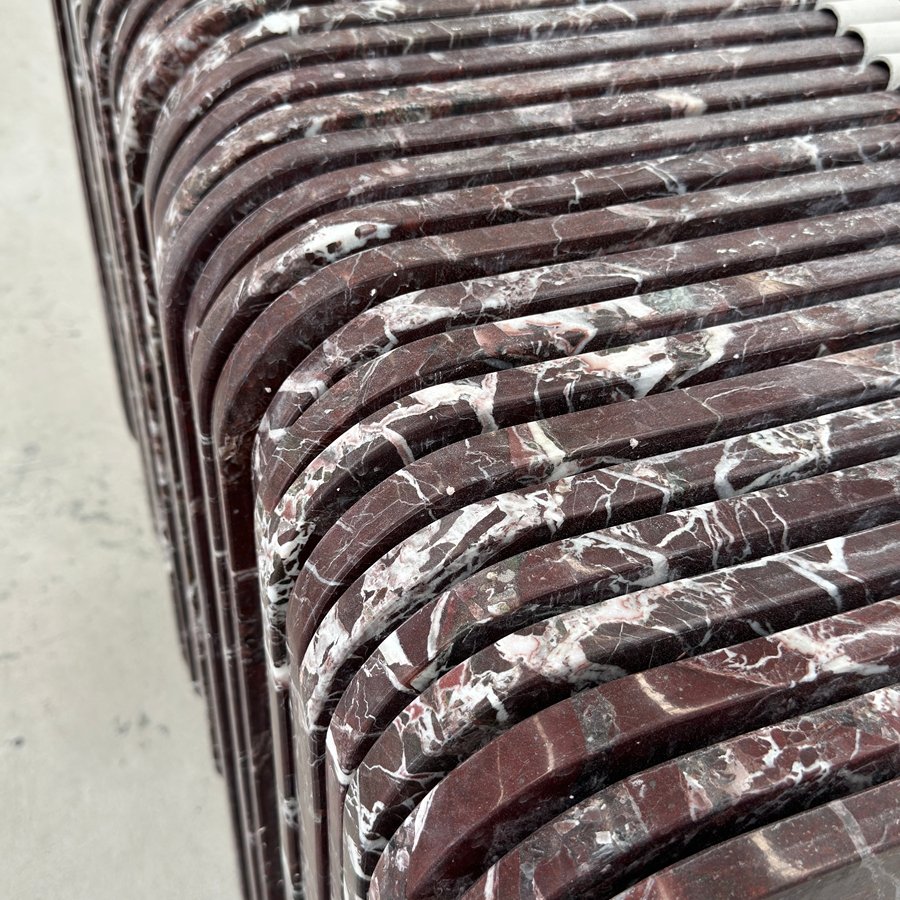
9. Case uses — design inspiration & real-world examples
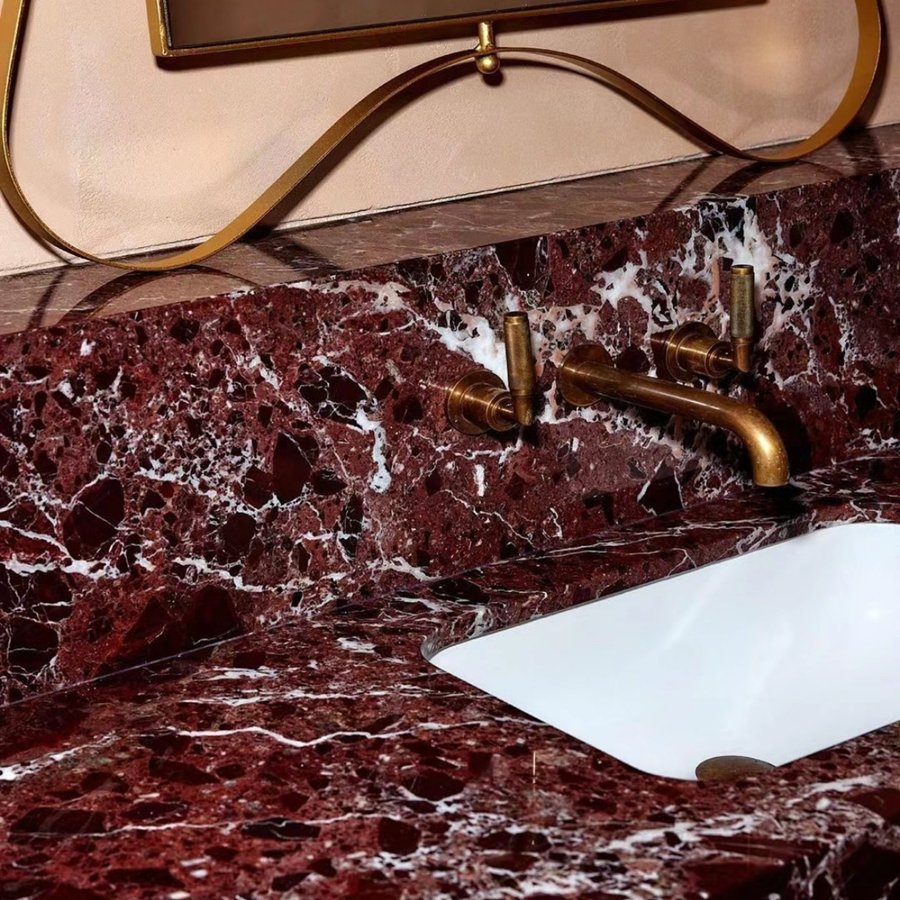
Luxury bathroom: full-height Rosso Levanto wall panels behind a freestanding tub create a theatrical backdrop. Pair with warm brass fixtures and a honed finish to reduce glare.
Statement countertop: a bookmatched Rosso Levanto island with white vein alignment becomes the kitchen’s visual center — tempered with neutral cabinetry.
Hospitality lobby: alternating panels of Rosso Levanto and light marble for contrast; use honed or leathered finish in high-traffic public areas for resilience.
10. Pricing checklist & negotiation levers
Confirm slab grade (A/B/C) and visible defects allowance.
Negotiate on lot purchase (buying contiguous slabs yields a better match and sometimes lower per-sqft pricing).
Ask about factory stocking — “no MOQ” options can be useful for small designers, but may increase unit price.
Request sample tiles and a small test slab to evaluate finish and sealer compatibility.
11. Risk management & warranty
Ask for a written warranty on fabrication and surface finish when the slab is provided by a supplier-fabricator bundle.
For commercial installations, include acceptance criteria for colour and veining variability, and retain reserved slabs for future repairs.
Semantic Closed-Loop Content Block — How / Why / What / Options / Considerations
Why: Why designers choose Rosso Levanto — a unique deep-red visual language that reads as luxury, pairs well with light marbles and metallic finishes, and delivers strong focal impact in hospitality and residential interiors.
What: What to expect technically — a calcareous marble with moderate porosity, heavier-than-manufactured surfaces per square foot (support plan), and a need for regular sealing in wet environments.
Options (Detailed): Finish choices (polished for glamour, honed/leathered for tactile, textured surfaces for slip resistance). Sourcing options include Italian quarry-direct, reputable Turkish suppliers, or branded engineered alternatives when budget/consistency is top priority.
Considerations (Detailed): Regulatory verification (Green Claims & CPR/DPP in EU), lifecycle & embodied carbon transparency (EPD), and operational maintenance costs (sealing, repair). Prioritize suppliers who supply both aesthetic samples and verifiable technical documentation.
FAQ — top Google-search style questions (short answers)
What is Rosso Levanto marble used for?
Rosso Levanto is used for countertops, bathroom walls, floors, fireplace surrounds, and decorative panels where a dramatic red marble accent is desired.Where does Rosso Levanto come from?
Classic Rosso Levanto originates from quarries near Levanto in Liguria, Italy, although stones with similar color/veins are supplied from other producing countries — always verify quarry origin.How much does Rosso Levanto marble cost per square foot?
Retail price bands commonly range from roughly $40–$70+/ft² for typical slabs at retail; premium bookmatched or rare lots can cost more. Always request factory/wholesale quotes for project pricing.Is Rosso Levanto suitable for bathroom countertops and wet areas?
Yes, but because marble is calcareous, it requires proper sealing and maintenance. For heavy-use wet commercial spaces, choose honed finishes and ensure slip- and water-resistance tests pass local code.How can I buy wholesale or factory-direct Rosso Levanto slabs?
Search using buyer-intent phrases like “Rosso Levanto marble slab manufacturer factory price” or contact EDG Stone with quarry/lot requests, EPDs, and export lead-time requirements. Ask suppliers for CIF/DDP quotes and full-slab photos.